
Reports >
Life Sciences
>
Nephrostomy Devices Market Report

Nephrostomy Devices Market Report
First published: 20 October 2024 | Last updated: 25 May 2026 | Report Code: nephrostomy-devices
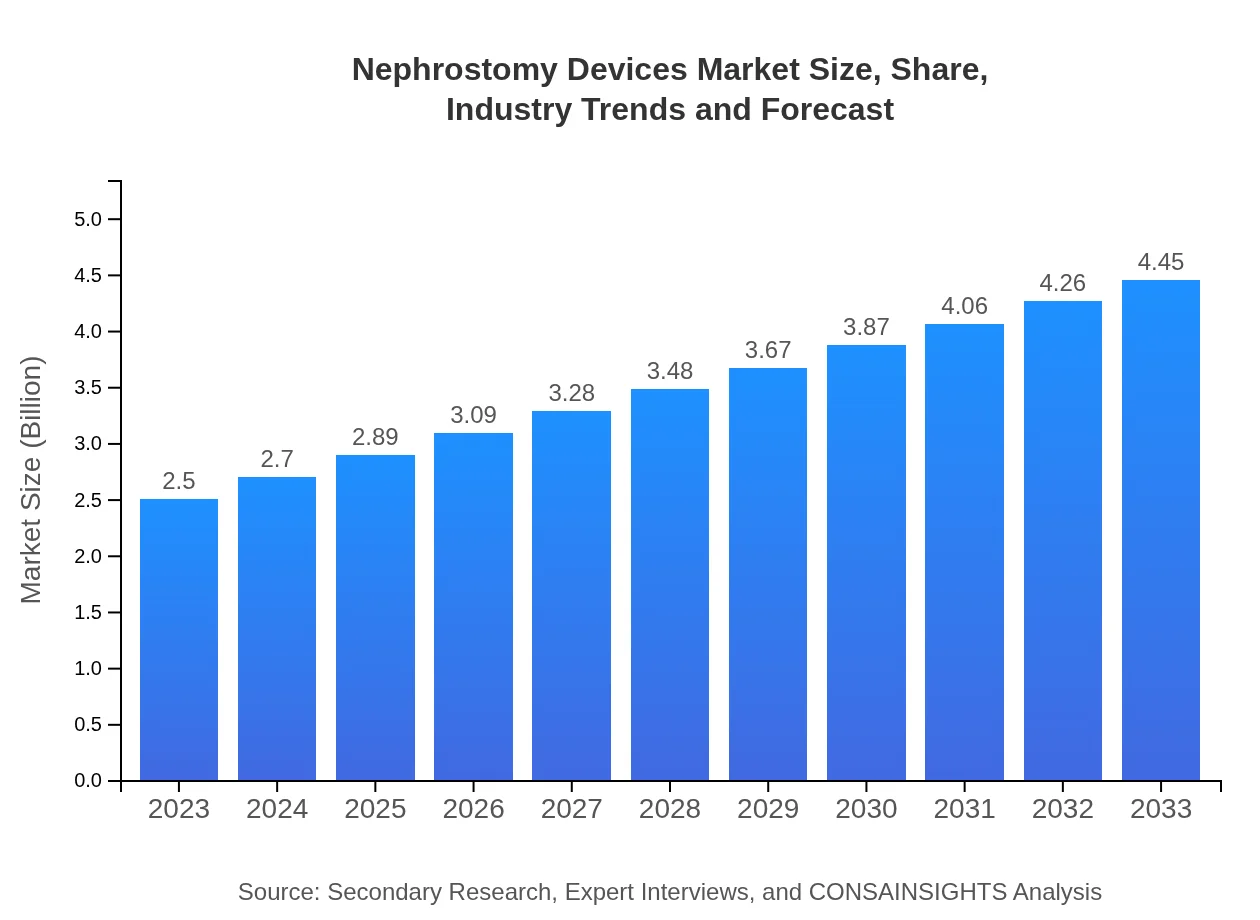
Nephrostomy Devices Market — USD 2.5 billion in 2023, Growing to USD 4.45B by 2033 at 5.8% CAGR
This report offers a comprehensive analysis of the nephrostomy devices market from 2023 to 2033, detailing market size, trends, regional insights, and key player analyses to help stakeholders make informed decisions.
Key Takeaways
- Global market projected from $2.50 Billion in 2023 to $4.45 Billion in 2033 at a 5.8% CAGR.
- Europe is largest regional market, while no single fastest-growing region is stated because regional CAGR differences remain within 0.15 percentage points.
- Europe leads regionally, rising from $0.89 Billion in 2023 to $1.59 Billion in 2033.
- North America grows from $0.85 Billion to $1.51 Billion between 2023 and 2033.
- Asia Pacific expands from $0.41 Billion to $0.73 Billion over the forecast period.
- Market segmentation highlights nephrostomy catheters, accessories, and end users such as hospitals and ambulatory surgical centers.
Nephrostomy Devices Market Report — Executive Summary
Europe remains largest market by forecast-period value, while no single fastest-growing region is stated because top regional growth rates are separated by less than 0.15 percentage points. This report outlines market dynamics underpinning the Nephrostomy Devices Market Report and identifies key demand drivers, structural trends, and competitive positioning. Market size advances from $2.50 Billion in 2023 to $4.45 Billion in 2033, reflecting a 5.8% CAGR for 2023 to 2033. Growth is supported by rising prevalence of renal conditions, increased adoption of minimally invasive procedures, and product innovation led by firms such as Boston Scientific Corporation, Medtronic plc, Bard Medical, Cook Medical, and Coloplast A/S. The analysis dissects end-user channels—hospitals, ambulatory surgical centers, and home care—and product types, notably nephrostomy catheters and accessories. Regional performance is mapped with Europe as the largest market, while other regions show measurable expansion. Methodology combines expert interviews, company reports, and data triangulation to validate findings and highlight actionable opportunities for manufacturers, providers, and investors.
Key Growth Drivers
- Increasing incidence of kidney disorders boosting demand for drainage and management solutions.
- Rising preference for minimally invasive urological procedures supporting device adoption in clinical settings.
- Advances in catheter materials and accessory design enhancing safety and procedural efficiency.
- Expansion of healthcare infrastructure in multiple regions enabling greater access to nephrostomy interventions.
| Metric | Value |
|---|---|
| Study Period | 2023 - 2033 |
| 2023 Market Size | $2.50 Billion |
| CAGR (2023-2033) | 5.8% |
| 2033 Market Size | $4.45 Billion |
| Top Companies | Boston Scientific Corporation, Medtronic plc, Bard Medical, Cook Medical, Coloplast A/S |
| Published Date | 20 October 2024 |
| Last Modified Date | 25 May 2026 |
Nephrostomy Devices Market Overview
Customize Nephrostomy Devices Market Report market research report
- ✔ Get in-depth analysis of Nephrostomy Devices market size, growth, and forecasts.
- ✔ Understand Nephrostomy Devices's regional dynamics and industry-specific trends.
- ✔ Identify potential applications, end-user demand, and growth segments in Nephrostomy Devices
What is the Market Size & CAGR of Nephrostomy Devices Market Report market in 2023?
Nephrostomy Devices Industry Analysis
Nephrostomy Devices Market Segmentation and Scope
Tell us your focus area and get a customized research report.
Nephrostomy Devices Market Report Market Analysis Report by Region
Europe Nephrostomy Devices Market Report:
Europe is largest regional market, rising from $0.89 Billion in 2023 to $1.59 Billion in 2033. Regional demand is supported by well-developed healthcare infrastructure, increasing renal disease management programs, and active participation by leading device manufacturers.Asia Pacific Nephrostomy Devices Market Report:
Asia Pacific grows from $0.41 Billion in 2023 to $0.73 Billion in 2033. Growth drivers include expanding healthcare access, rising awareness of kidney diseases, and gradual adoption of improved nephrostomy technologies in hospitals and outpatient centers.North America Nephrostomy Devices Market Report:
North America grows from $0.85 Billion in 2023 to $1.51 Billion in 2033. Regional growth reflects expanded clinical adoption of minimally invasive urological procedures, robust hospital procedure volumes, and investments in advanced device procurement and training.South America Nephrostomy Devices Market Report:
Latin America grows from $0.03 Billion in 2023 to $0.05 Billion in 2033. Regional expansion is influenced by incremental investments in healthcare facilities and growing adoption of standardized renal care practices in select urban centers.Middle East & Africa Nephrostomy Devices Market Report:
Middle East and Africa grows from $0.32 Billion in 2023 to $0.56 Billion in 2033. Drivers include increased healthcare spending, infrastructure enhancements, and rising demand for effective renal drainage solutions across clinical settings.Tell us your focus area and get a customized research report.
Research Methodology
Nephrostomy Devices Market Analysis By Device Type
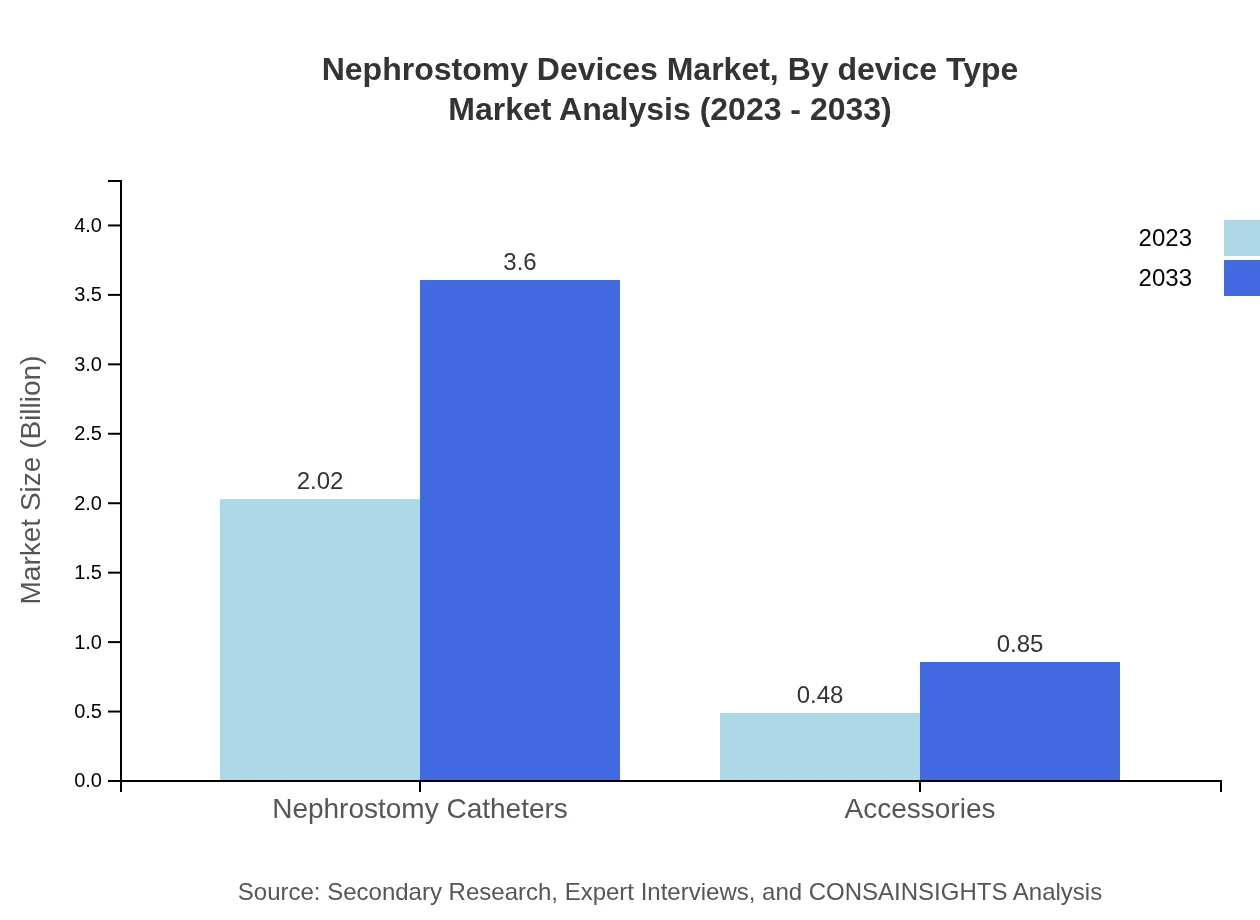
The nephrostomy devices market showcases key product types, with nephrostomy catheters accounting for a substantial share. In 2023, nephrostomy catheters comprised approximately $2.02 billion of the total market, projected to grow to $3.60 billion by 2033, reflecting around 80.91% market share by this product type.
Nephrostomy Devices Market Analysis By Application
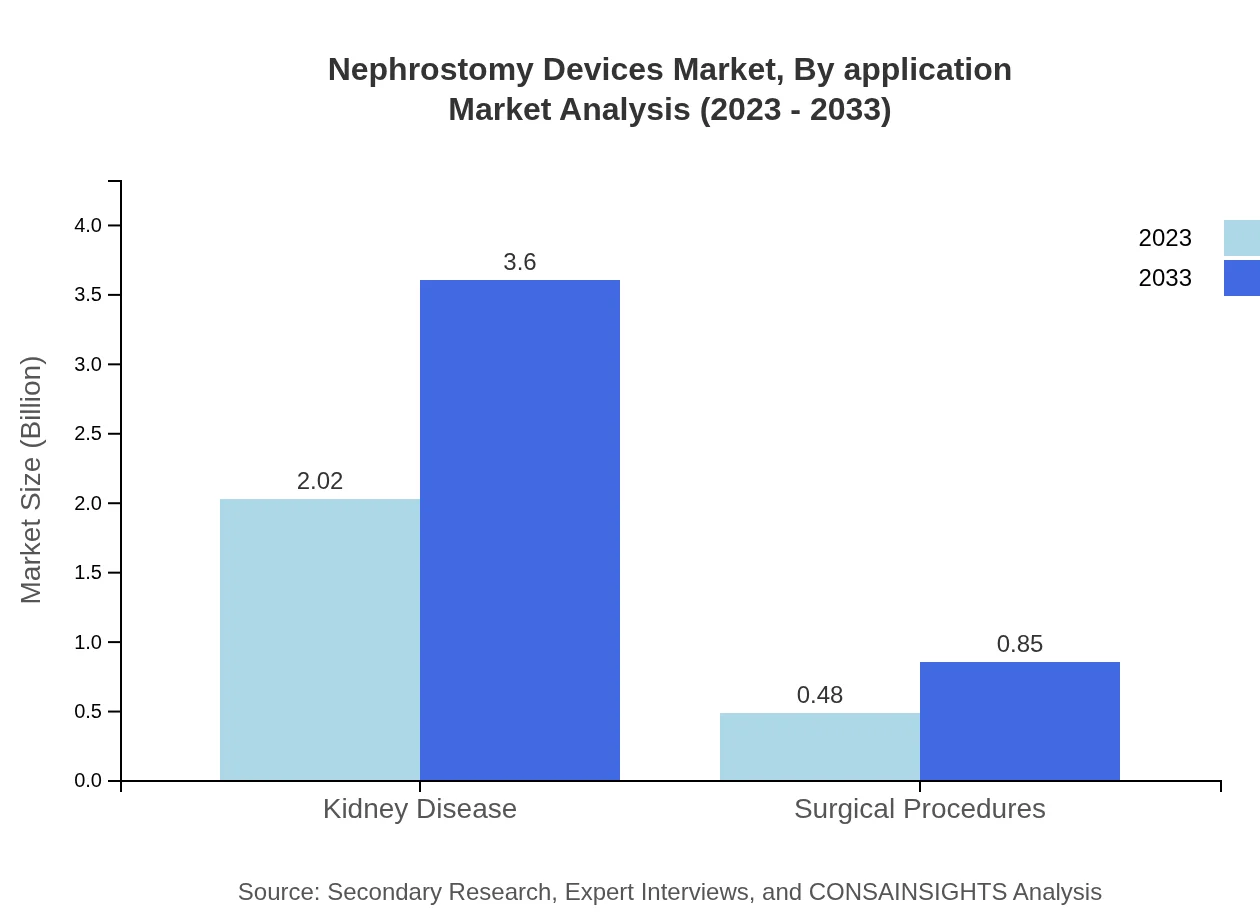
Focusing on application, the market is dominated by the kidney disease segment, estimated at $2.02 billion in 2023 and expected to reach $3.60 billion by 2033. This segment is critical, representing an 80.91% market share due to the rising prevalence of kidney disorders requiring such drainage procedures.
Nephrostomy Devices Market Analysis By End User
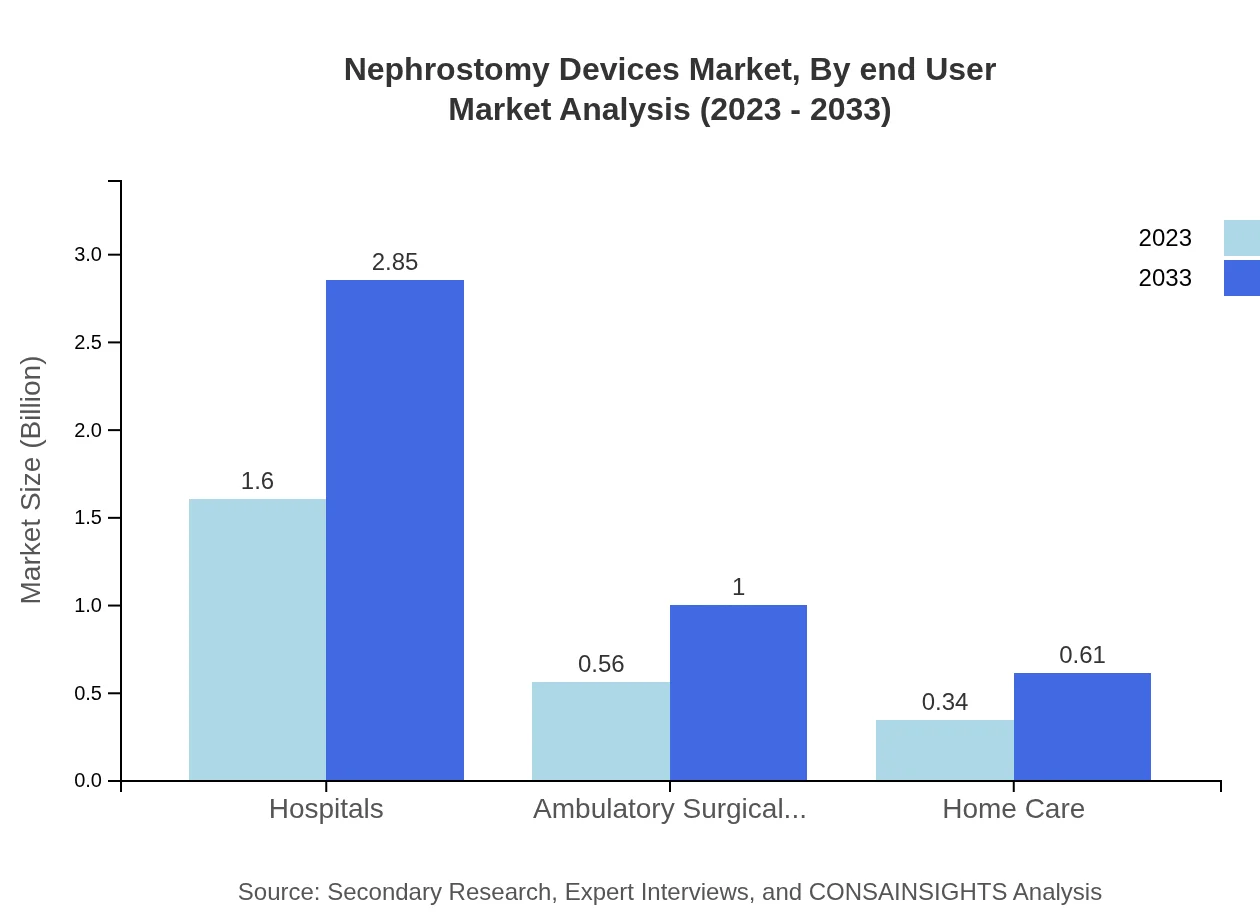
In terms of end-user segmentation, hospitals lead the market with a size of $1.60 billion in 2023, expected to expand to $2.85 billion by 2033. The hospital segment accounts for 64.01% of the total market, driven by the high volume of surgical procedures and increasing hospital admissions for renal treatments.
Nephrostomy Devices Market Analysis By Region
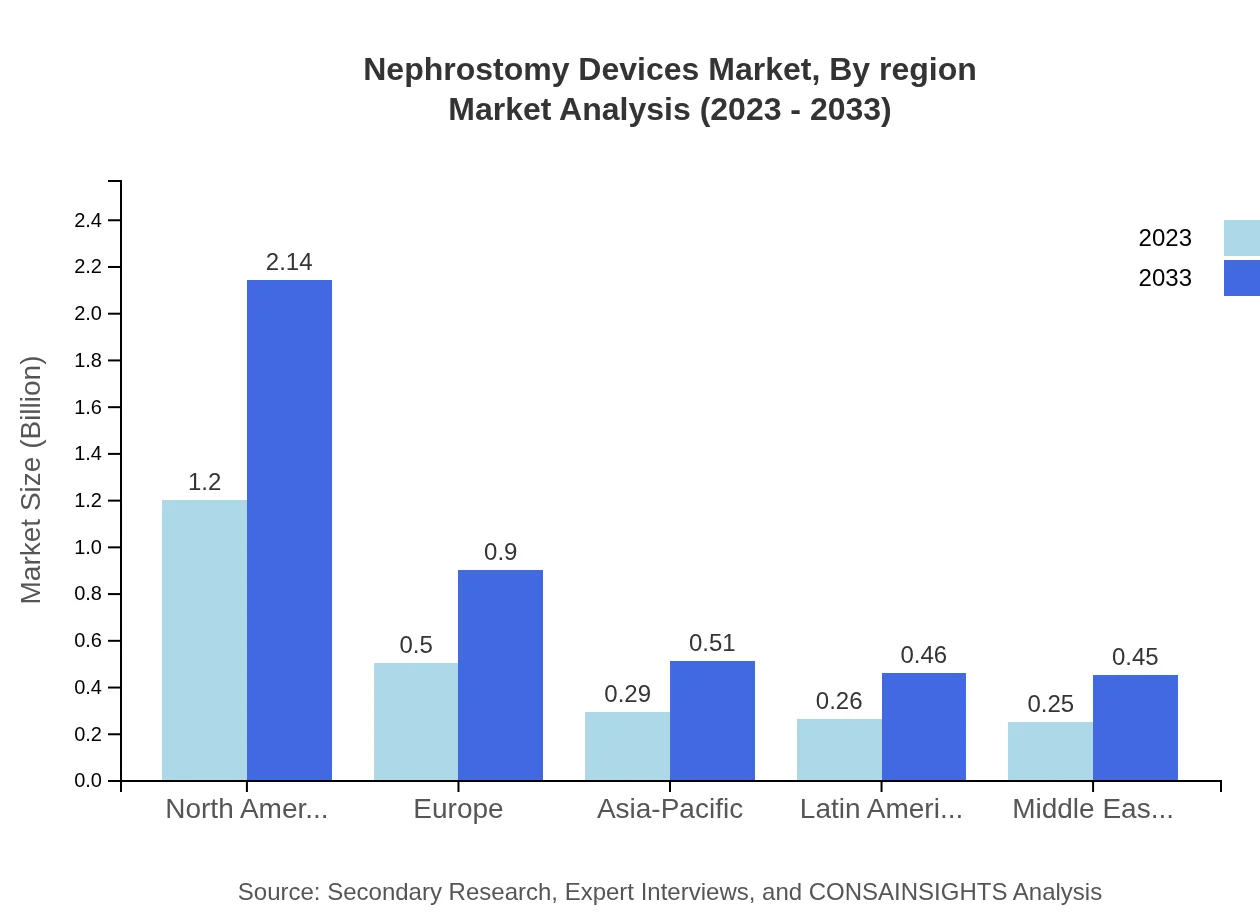
The regional analysis highlights North America maintaining its position as the market leader, followed by Europe and Asia Pacific, which are both witnessing rapid growth due to technological advancements and increasing healthcare access. Each region presents unique opportunities and challenges that can influence market trajectories significantly.
Nephrostomy Devices Market Trends and Future Forecast
Tell us your focus area and get a customized research report.
Global Market Leaders and Top Companies in Nephrostomy Devices Industry
Boston Scientific Corporation:
A renowned leader in the medical device industry providing comprehensive solutions, including nephrostomy devices and related technologies.Medtronic plc:
A global healthcare leader offering a broad range of products, including innovative nephrostomy devices, contributing to improved patient outcomes.Bard Medical:
Specializing in urology, Bard Medical provides a variety of nephrostomy and drainage devices critical for renal health management.Cook Medical:
Cook Medical is dedicated to advancing medical technology in various sectors, including nephrostomy devices, offering state-of-the-art patient care.Coloplast A/S:
A leading international company providing personal healthcare products and solutions, including nephrostomy devices, to enhance quality of life.We're grateful to work with incredible clients.








FAQs
What is the market size of the nephrostomy devices market in 2023?
The market size in 2023 is $2.50 Billion, as reported for the base year of the forecast period 2023 to 2033.
How big will the nephrostomy devices market be in 2033?
The market is projected to reach $4.45 Billion by 2033 according to the provided forecast figures for 2023 to 2033.
What is CAGR for the forecast period?
The compound annual growth rate for the 2023 to 2033 forecast period is 5.8%, based on the supplied market projections.
Is there a single fastest Growing region in the Nephrostomy Devices Market Report market?
No single fastest-growing region is stated for the Nephrostomy Devices Market Report market because the top regional implied CAGR values are within 0.15 percentage points of each other, making the ranking too close to call reliably.
Which companies are highlighted in the market?
Top companies listed include Boston Scientific Corporation, Medtronic plc, Bard Medical, Cook Medical, and Coloplast A/S as key market participants.
What are primary product segments covered?
Primary product segments include nephrostomy catheters and accessories, reflecting core device categories used in renal drainage procedures.
How big is the North American market in the forecast?
North America is reported to grow from $0.85 Billion in 2023 to $1.51 Billion in 2033 based on the region-specific figures provided.
What drives demand in hospitals for these devices?
Demand in hospitals is driven by procedural volumes, adoption of minimally invasive techniques, and the need for reliable renal drainage solutions in clinical care.