

Rare Hemophilia Factors Market Report
First published: 20 October 2024 | Last updated: 25 May 2026 | Report Code: rare-hemophilia-factors
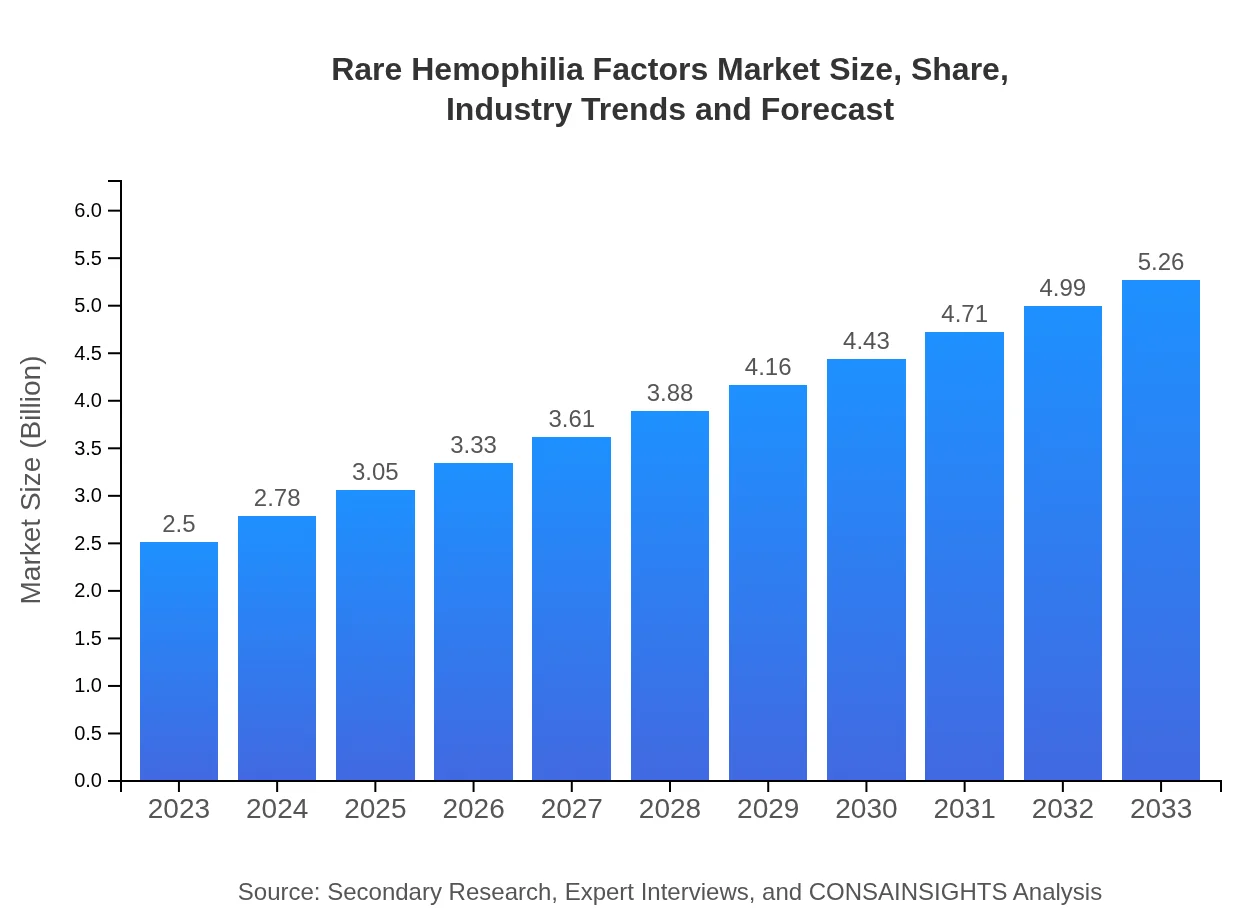
Rare Hemophilia Factors Market — USD 2.5 billion in 2023, Growing to USD 5.26B by 2033 at 7.5% CAGR
This report provides an in-depth analysis of the Rare Hemophilia Factors market, presenting insights on market trends, sizes, and forecasts from 2023 to 2033. Key segments are explored, along with regional breakdowns and competitive analyses of the leading companies in the industry.
Key Takeaways
- Global market expands from $2.50 Billion in 2023 to $5.26 Billion in 2033 at a 7.5% CAGR.
- North America is largest regional market, while no single fastest-growing region is stated because regional CAGR differences remain within 0.15 percentage points.
- North America leads regional revenue, rising from $0.86 Billion in 2023 to $1.82 Billion in 2033.
- Europe and Asia Pacific show notable increases: Europe from $0.67 Billion to $1.4 Billion, Asia Pacific from $0.49 Billion to $1.03 Billion.
- Top manufacturers include Bayer AG, CSL Behring, and Shire (now part of Takeda Pharmaceutical Company).
- Market momentum driven by improved diagnostics, therapeutic innovation, and patient-centered treatment delivery models.
Rare Hemophilia Factors Market Report — Executive Summary
North America remains largest market by forecast-period value, while no single fastest-growing region is stated because top regional growth rates are separated by less than 0.15 percentage points. The Rare Hemophilia Factors market is on a steady expansion path, driven by advances in diagnostic methods, diversification of therapeutic modalities, and heightened awareness of rare bleeding disorders. The market size grows from $2.50 Billion in 2023 to $5.26 Billion in 2033, supported by developing product portfolios and growing demand for personalized care. North America represents the largest regional revenue pool, increasing from $0.86 Billion to $1.82 Billion over the forecast. While regional growth rates are close enough that no single Europe, Asia Pacific, Latin America, and Middle East and Africa also record rising values. Key participants such as Bayer AG, CSL Behring, and Shire (now part of Takeda Pharmaceutical Company) remain central to pipeline activity and market access initiatives. The report structure covers market dynamics, segment performance by factor and end user, regional breakdowns, and competitive positioning to support strategic planning and investment decisions.
Key Growth Drivers
- Rising clinical awareness and improved diagnostic capacity increase identification and treatment initiation for rare hemophilia cases.
- Innovation in therapeutic options, including recombinant and extended half-life products, expands treatment effectiveness and adoption.
- Greater emphasis on personalized and patient-centric care drives demand for tailored factor therapies and home-based treatment models.
- Strengthened collaborations among biotech and pharmaceutical companies accelerate product development and market access.
- Expanded distribution channels, including hospital systems and online pharmacies, improve treatment reach and continuity of care.
| Metric | Value |
|---|---|
| Study Period | 2023 - 2033 |
| 2023 Market Size | $2.50 Billion |
| CAGR (2023-2033) | 7.5% |
| 2033 Market Size | $5.26 Billion |
| Top Companies | Bayer AG, CSL Behring, Shire (now part of Takeda Pharmaceutical Company) |
| Published Date | 20 October 2024 |
| Last Modified Date | 25 May 2026 |
Rare Hemophilia Factors Market Overview
Customize Rare Hemophilia Factors Market Report market research report
- ✔ Get in-depth analysis of Rare Hemophilia Factors market size, growth, and forecasts.
- ✔ Understand Rare Hemophilia Factors's regional dynamics and industry-specific trends.
- ✔ Identify potential applications, end-user demand, and growth segments in Rare Hemophilia Factors
What is the Market Size & CAGR of Rare Hemophilia Factors Market Report market in 2023?
Rare Hemophilia Factors Industry Analysis
Rare Hemophilia Factors Market Segmentation and Scope
Tell us your focus area and get a customized research report.
Rare Hemophilia Factors Market Report Market Analysis Report by Region
Europe Rare Hemophilia Factors Market Report:
Europe grows from $0.67 Billion in 2023 to $1.4 Billion in 2033. Regional expansion is driven by greater disease awareness, investment in treatment options, and collaborations between healthcare providers and industry to broaden access.Asia Pacific Rare Hemophilia Factors Market Report:
Asia Pacific grows from $0.49 Billion in 2023 to $1.03 Billion in 2033. Growth is supported by improving diagnostic capabilities, increasing adoption of innovative therapies, and market development efforts to reach diverse patient populations.North America Rare Hemophilia Factors Market Report:
North America is largest regional market, rising from $0.86 Billion in 2023 to $1.82 Billion in 2033. This expansion reflects mature healthcare infrastructure, concentrated industry activity, and established pathways for adoption of advanced therapies and diagnostics.South America Rare Hemophilia Factors Market Report:
Latin America grows from $0.18 Billion in 2023 to $0.37 Billion in 2033. Market increases reflect growing diagnosis rates, gradual expansion of treatment infrastructure, and efforts to improve access to factor therapies across care settings.Middle East & Africa Rare Hemophilia Factors Market Report:
Middle East and Africa grows from $0.31 Billion in 2023 to $0.64 Billion in 2033. Regional gains are associated with rising awareness, incremental improvements in healthcare delivery, and targeted initiatives to increase availability of hemophilia treatments.Tell us your focus area and get a customized research report.
Research Methodology
Rare Hemophilia Factors Market Analysis By Factor

Factors designated for hemophilia treatment exhibit varying growth rates. Factor I's market size is anticipated to grow from $1.27 billion in 2023 to $2.68 billion by 2033. Factor II and Factor VII are also important, with values of $0.60 billion and $0.37 billion in 2023, respectively, and are expected to reach $1.27 billion and $0.77 billion in 2033.
Rare Hemophilia Factors Market Analysis By Therapy Type
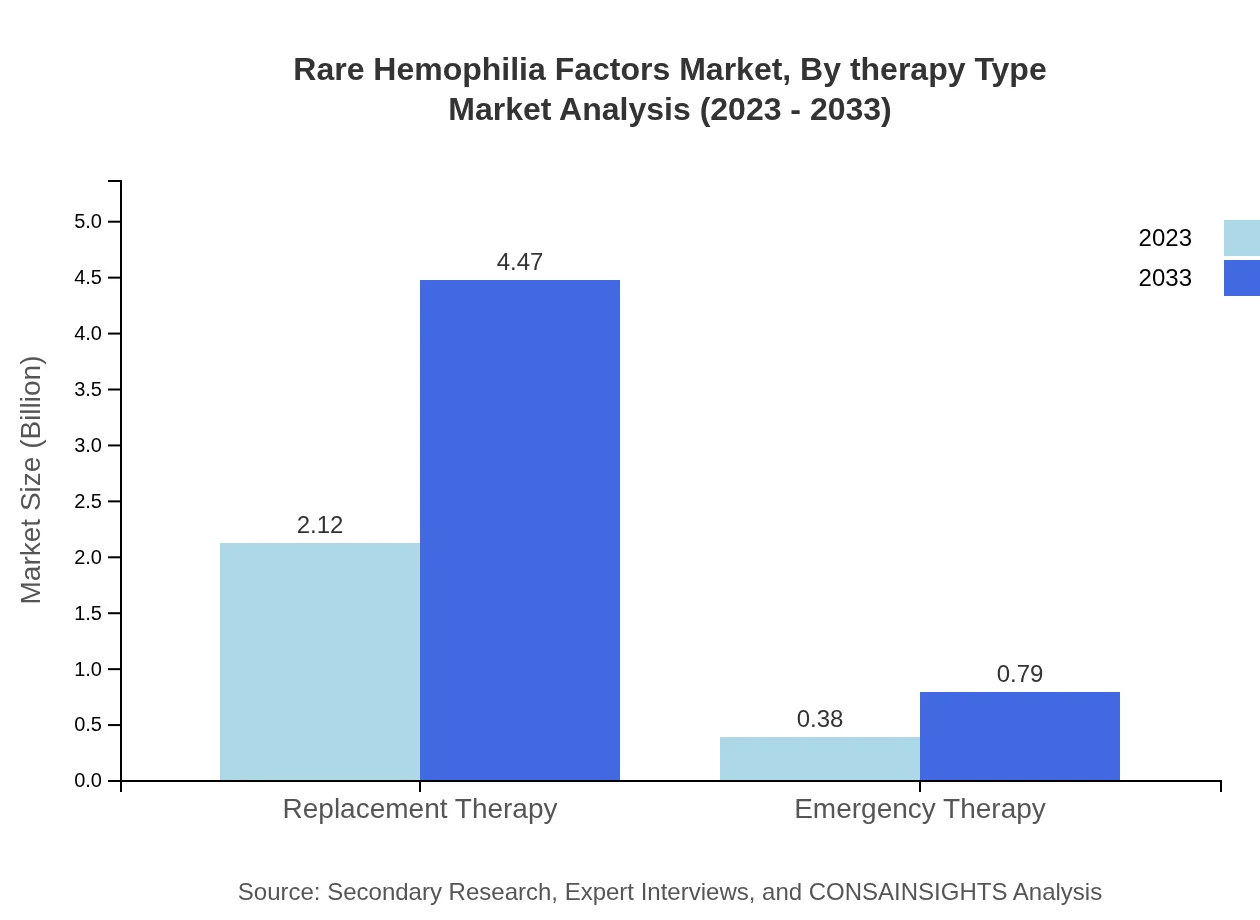
The therapy types include replacement and emergency therapies. Replacement Therapy has a dominant market share of 84.9% in 2023 and $2.12 billion in market size, growing to $4.47 billion by 2033. Emergency Therapy, while smaller, is also expected to double from $0.38 billion to $0.79 billion during the same period.
Rare Hemophilia Factors Market Analysis By Application
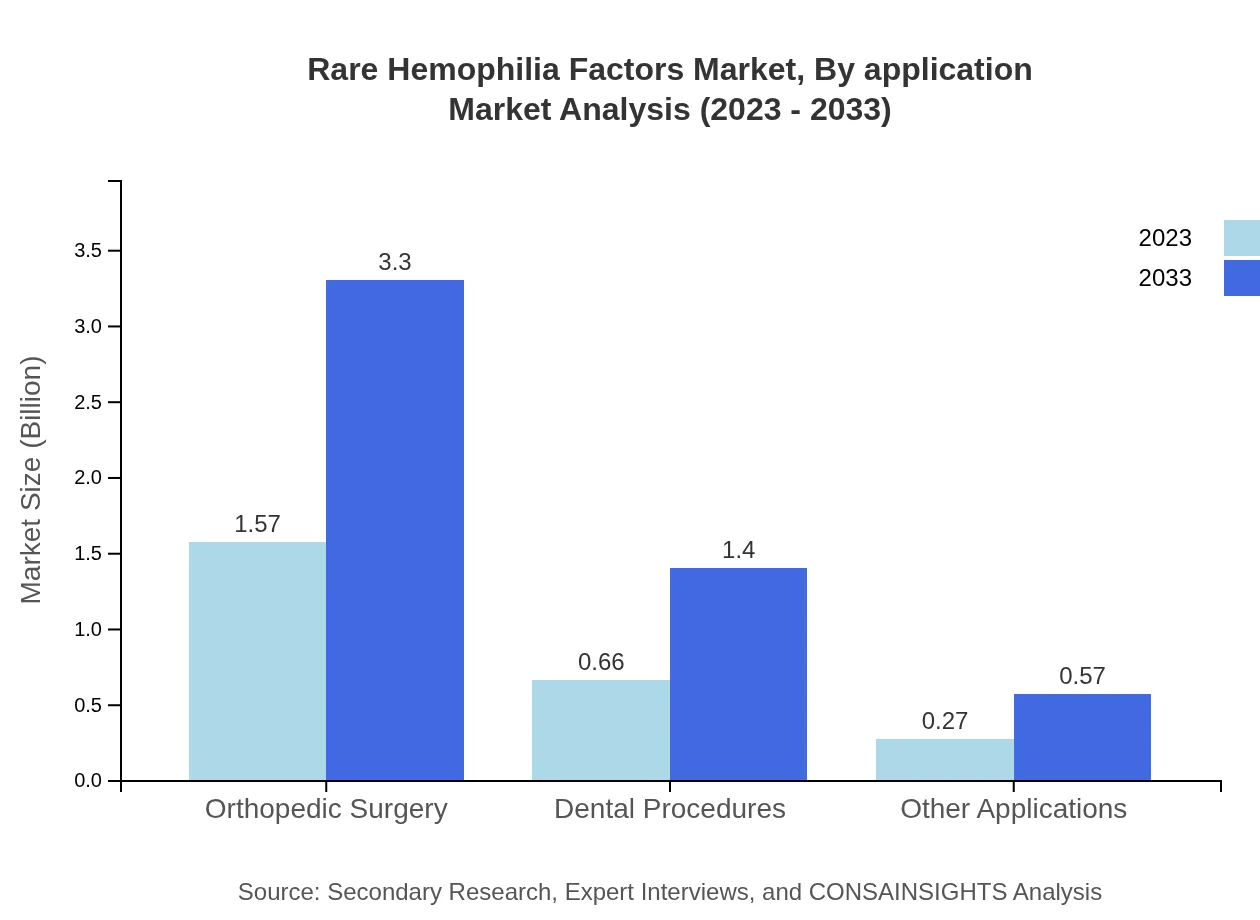
Key applications consist of hospitals, clinics, and pharmacies. Hospitals and Clinics hold considerable market shares, with expected growth from $1.57 billion in 2023 to $3.30 billion by 2033 for hospitals, while clinics are projected to climb from $0.66 billion to $1.40 billion.
Rare Hemophilia Factors Market Analysis By Distribution Channel
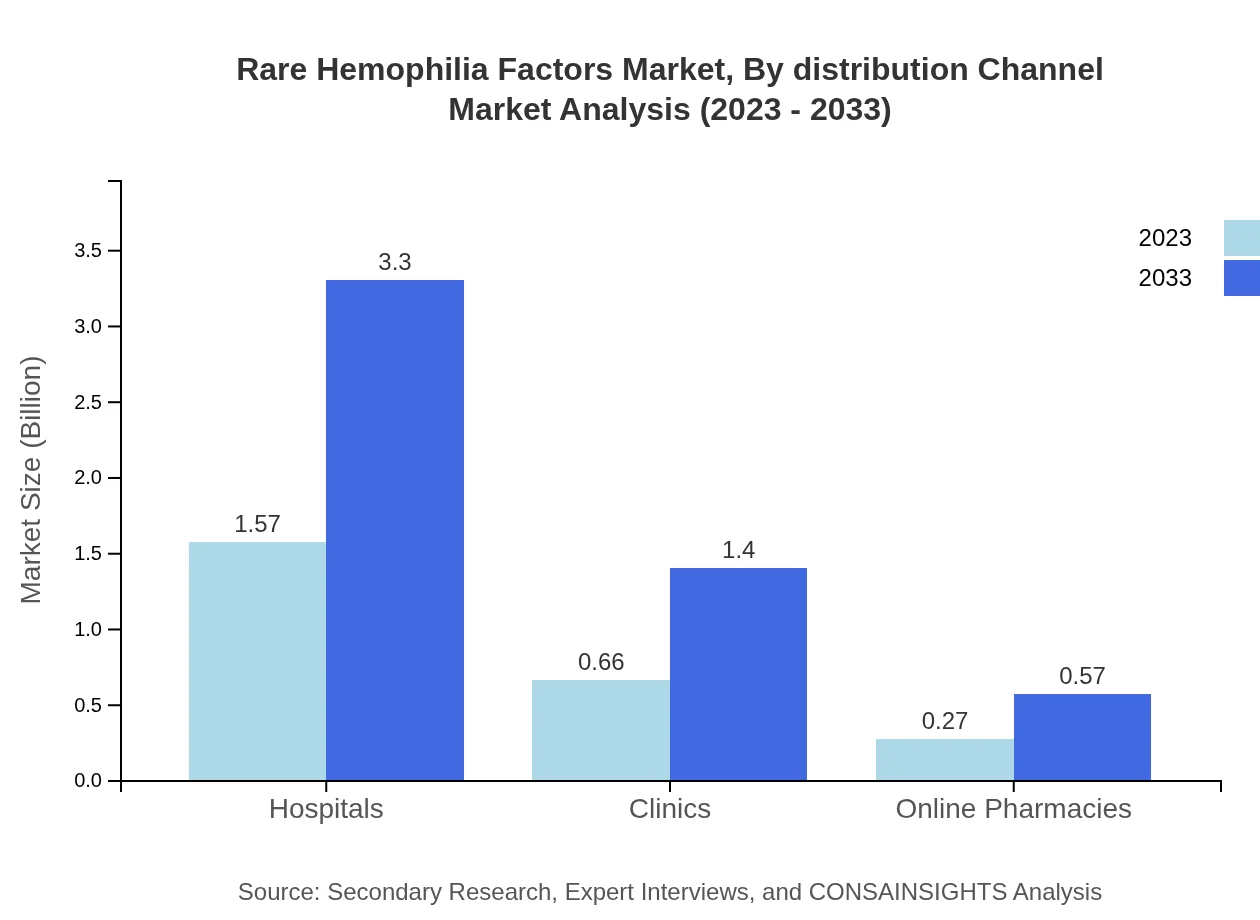
Distribution channels primarily include hospitals, clinics, online pharmacies, and home care settings. Hospital-based distribution retains a 62.64% share, reflecting its importance as patients frequently receive care in these settings. Home care settings are escalating in relevance, moving from $0.66 billion in 2023 to $1.40 billion by 2033.
Rare Hemophilia Factors Market Analysis By End User
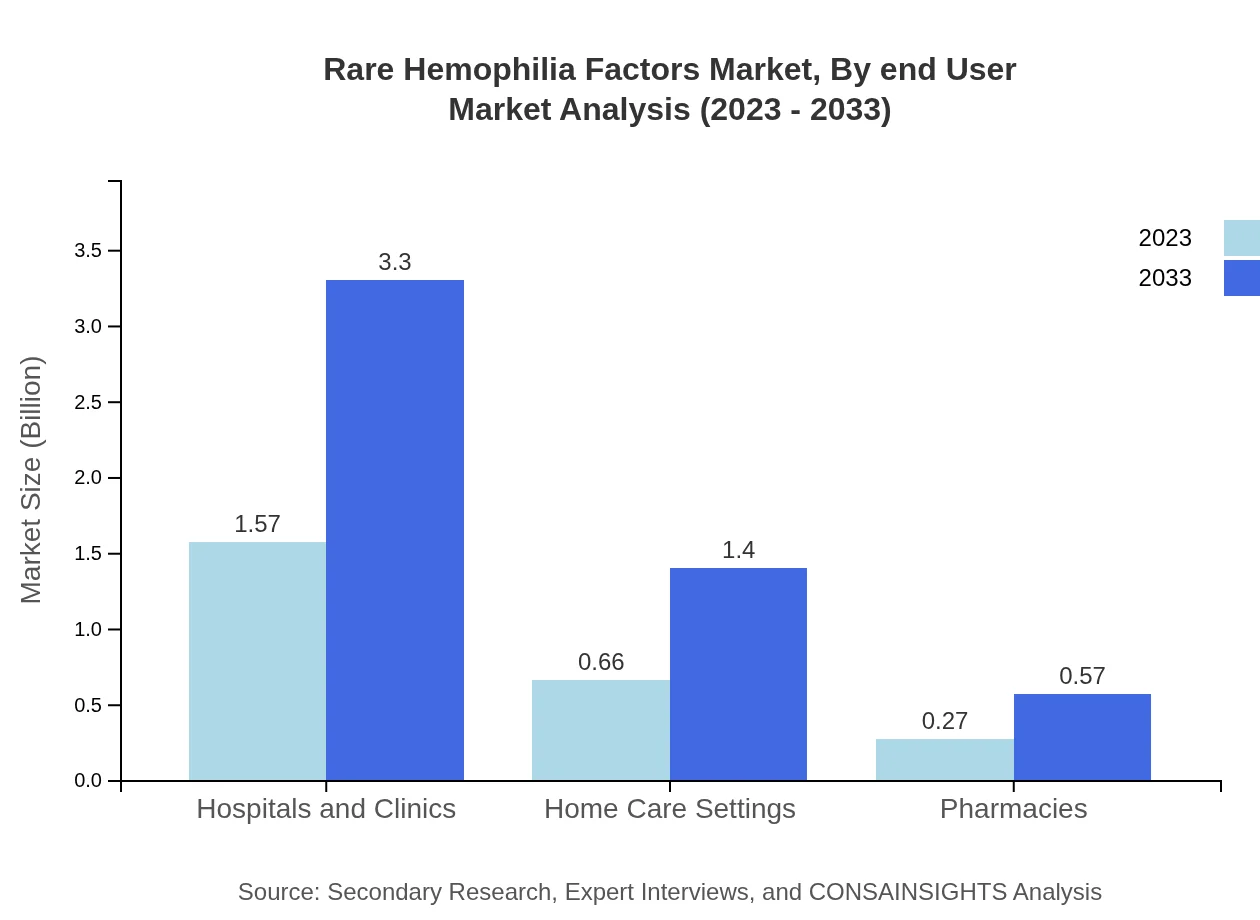
End-user segmentation outlines the major consumers of Rare Hemophilia Factors products. Hospitals and clinics, with their significant market share, are the largest end-users, while home care settings are seeing growing adoption as awareness about self-management of therapy increases, expected to reach a market value of $1.40 billion by 2033.
Rare Hemophilia Factors Market Trends and Future Forecast
Tell us your focus area and get a customized research report.
Global Market Leaders and Top Companies in Rare Hemophilia Factors Industry
Bayer AG:
Bayer AG is a leading global pharmaceutical and life sciences company known for its innovative therapies including Kovaltry, a factor VIII treatment for hemophilia A, contributing significantly to market growth.CSL Behring:
CSL Behring is a global leader in biotherapy, delivering life-saving therapies for people with bleeding disorders through products like Berinert and Corifact.Shire (now part of Takeda Pharmaceutical Company):
Shire has a strong portfolio of hemophilia products, including Adynovate for hemophilia A, emphasizing patient access and innovative therapy solutions.We're grateful to work with incredible clients.









FAQs
What is the market size of the Rare Hemophilia Factors Market Report in 2023?
The market size in 2023 is $2.50 Billion, as reported. This baseline establishes the starting point for the forecast period of 2023 to 2033.
How big will the Rare Hemophilia Factors market be in 2033?
The market is projected to reach $5.26 Billion by 2033, reflecting the cumulative growth trends and market developments noted through the forecast period.
What is CAGR for the forecast period?
The compound annual growth rate for the forecast period 2023 to 2033 is 7.5%, as stated in the report data.
Is there a single fastest Growing region in the Rare Hemophilia Factors Market Report market?
No single fastest-growing region is stated for the Rare Hemophilia Factors Market Report market because the top regional implied CAGR values are within 0.15 percentage points of each other, making the ranking too close to call reliably.
Why is North America the largest region?
North America’s larger market size is tied to established care infrastructure, concentration of industry participants, and broader access to advanced therapies and diagnostics.
What companies lead the market?
Top companies listed include Bayer AG, CSL Behring, and Shire (now part of Takeda Pharmaceutical Company), noted for their product portfolios and market presence.
Which segments are covered in the report?
The report includes segmentation by factor type, end user, application, therapy type, and distribution channel with multiple subsegments listed for each category.
How is regional performance described?
Regional performance is detailed using start and end values for each region, highlighting revenue growth across North America, Europe, Asia Pacific, Latin America, and Middle East and Africa.
What drives market growth overall?
Key growth drivers include therapeutic innovation, improved diagnostics, patient-focused care models, and strengthened industry collaborations that facilitate product development.
Who contributed to the research methodology?
Research included primary interviews with industry experts, secondary review of company reports and publications, followed by data triangulation and validation.