
Reports >
Life Sciences
>
Nitinol Medical Devices Market Report

Nitinol Medical Devices Market Report
First published: 14 October 2024 | Last updated: 28 May 2026 | Report Code: nitinol-medical-devices
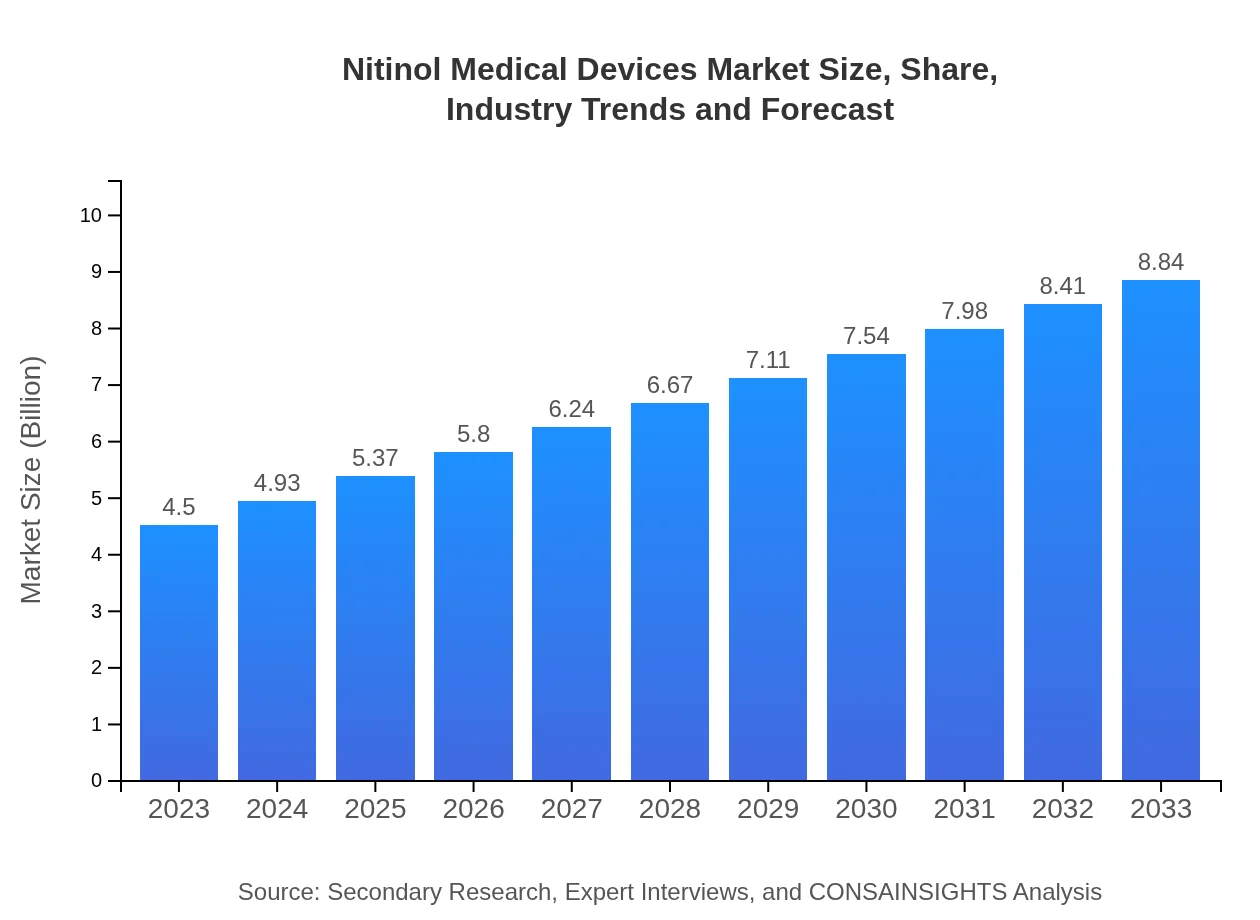
Nitinol Medical Devices Market — USD 4.5 billion in 2023, Growing to USD 8.84B by 2033 at 6.8% CAGR
This report provides a comprehensive analysis of the Nitinol Medical Devices market, covering insights on market size, growth trends, segmentation, regional analysis, and industry leaders within the forecast period from 2023 to 2033.
Key Takeaways
- Global market expands from $4.50 Billion in 2023 to $8.84 Billion in 2033 at a 6.8% CAGR.
- Europe is largest regional market; Latin America is regional market region based on implied CAGR across 2023 to 2033.
- Latin America is identified as the regional market region, increasing from $0.02 Billion in 2023 to $0.04 Billion in 2033.
- North America grows from $1.5 Billion in 2023 to $2.95 Billion in 2033, reflecting sustained regional demand.
- Key suppliers include Medtronic, Abbott Laboratories, Boston Scientific, and Cook Medical, focusing on device innovation.
Nitinol Medical Devices Market Report — Executive Summary
Regional analysis shows Europe as largest market and Latin America as fastest-growing region by implied CAGR. This report examines the Nitinol medical devices market dynamics and structure across 2023 to 2033. The market is projected to grow from $4.50 Billion in 2023 to $8.84 Billion in 2033 at a 6.8% CAGR, driven by demand for minimally invasive procedures, material advantages like superelasticity and shape memory, and rising prevalence of chronic conditions. Regional trajectories differ: Europe is the largest market and Latin America shows the highest implied growth rate. Product segments span stents, guidewires, catheters, and others, while end users include hospitals, ambulatory surgical centers, and specialty clinics. Leading firms such as Medtronic, Abbott Laboratories, Boston Scientific, and Cook Medical are investing in R&D and product refinement. The assessment covers market structure, segmentation by design and manufacturing process, and implications for manufacturers and healthcare providers.
Key Growth Drivers
- Rising preference for minimally invasive interventions increases adoption of flexible Nitinol devices.
- Material properties such as superelasticity and shape memory support broader clinical applications.
- Expanding procedural volumes for cardiovascular, urological, and orthopedic conditions boost demand.
- Manufacturers’ R&D and product customization enhance device performance and clinical fit.
- Aging populations and higher chronic disease incidence sustain long-term market needs.
| Metric | Value |
|---|---|
| Study Period | 2023 - 2033 |
| 2023 Market Size | $4.50 Billion |
| CAGR (2023-2033) | 6.8% |
| 2033 Market Size | $8.84 Billion |
| Top Companies | Medtronic , Abbott Laboratories, Boston Scientific, Cook Medical |
| Published Date | 14 October 2024 |
| Last Modified Date | 28 May 2026 |
Nitinol Medical Devices Market Overview
Customize Nitinol Medical Devices Market Report market research report
- ✔ Get in-depth analysis of Nitinol Medical Devices market size, growth, and forecasts.
- ✔ Understand Nitinol Medical Devices's regional dynamics and industry-specific trends.
- ✔ Identify potential applications, end-user demand, and growth segments in Nitinol Medical Devices
What is the Market Size & CAGR of Nitinol Medical Devices Market Report market in 2023?
Nitinol Medical Devices Industry Analysis
Nitinol Medical Devices Market Segmentation and Scope
Tell us your focus area and get a customized research report.
Nitinol Medical Devices Market Report Market Analysis Report by Region
Europe Nitinol Medical Devices Market Report:
Europe is largest regional market, rising from $1.59 Billion in 2023 to $3.12 Billion in 2033. 59 Billion in 2023 to $3.12 Billion in 2033 and is the largest regional market. The expansion reflects strong clinical adoption, investments in minimally invasive care, and supplier presence supporting product availability.Asia Pacific Nitinol Medical Devices Market Report:
Asia Pacific grows from $0.78 Billion in 2023 to $1.53 Billion in 2033. Growth is supported by expanding healthcare access, rising procedure volumes, and increased adoption of technologically advanced devices.North America Nitinol Medical Devices Market Report:
North America grows from $1.5 Billion in 2023 to $2.95 Billion in 2033. Regional demand is driven by high uptake of interventional cardiology procedures, advanced healthcare infrastructure, and continuous innovation by established device manufacturers.South America Nitinol Medical Devices Market Report:
Latin America is fastest-growing region by implied CAGR, increasing from $0.02 Billion in 2023 to $0.04 Billion in 2033. 02 Billion in 2023 to $0.04 Billion in 2033 and is identified as the regional growth market at an implied 7.18% CAGR. Development is tied to improving healthcare services and growing demand for minimally invasive treatments.Middle East & Africa Nitinol Medical Devices Market Report:
Middle East and Africa grows from $0.61 Billion in 2023 to $1.2 Billion in 2033. 61 Billion in 2023 to $1.2 Billion in 2033, reflecting gradual expansion in healthcare capacity and growing adoption of specialized medical devices across the region.Tell us your focus area and get a customized research report.
Research Methodology
Nitinol Medical Devices Market Analysis By Product
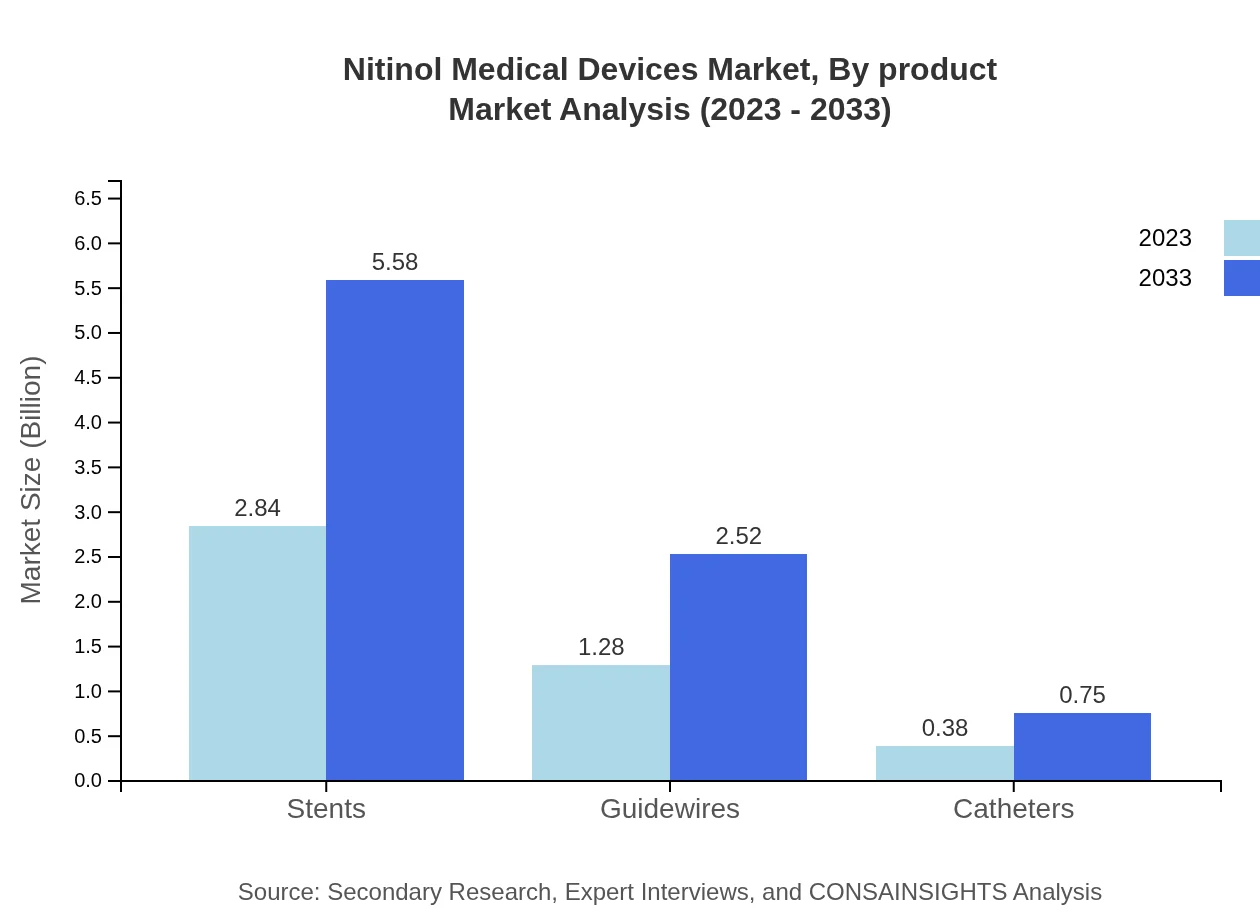
In 2023, the Nitinol Medical Devices segmented by product demonstrated a robust performance. The standard design segment leads with a market size of $3.81 billion, projected to rise to $7.49 billion by 2033. Custom design contributes with $0.69 billion in 2023 and is expected to reach $1.36 billion. Stents, a significant contributor, account for $2.84 billion in 2023, expected to grow to $5.58 billion. Guidewires hold a market size of $1.28 billion, anticipated to reach $2.52 billion, while catheters start at $0.38 billion and can reach $0.75 billion by 2033.
Nitinol Medical Devices Market Analysis By Application
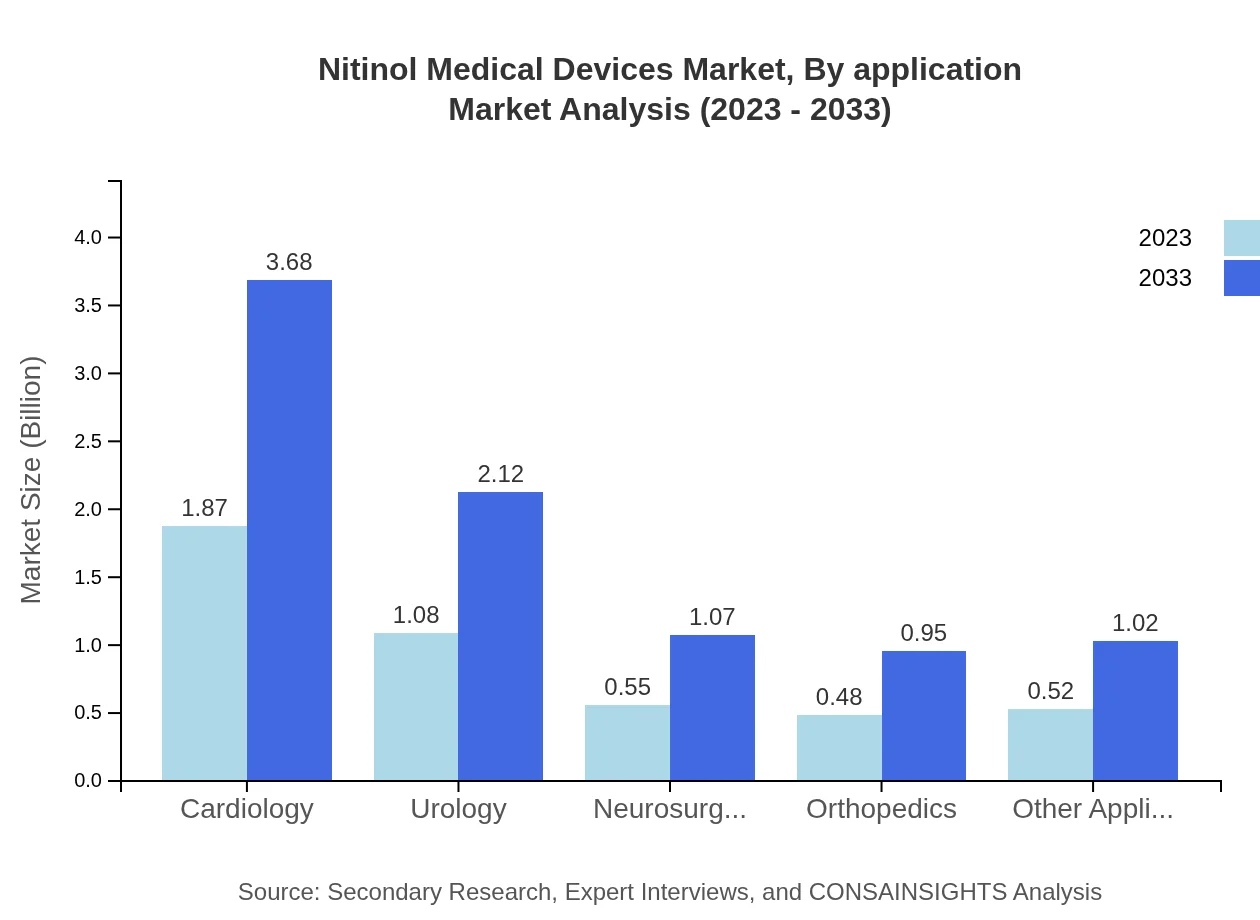
Applications of Nitinol devices are mainly in cardiology, urology, and neurosurgery, with cardiology leading at $1.87 billion in 2023 and projected to grow to $3.68 billion. Urology has an initial market size of $1.08 billion, estimated to climb to $2.12 billion while neurosurgery starts at $0.55 billion, advancing to $1.07 billion. A smaller share, other applications see growth from $0.52 billion to $1.02 billion over the decade.
Nitinol Medical Devices Market Analysis By End User
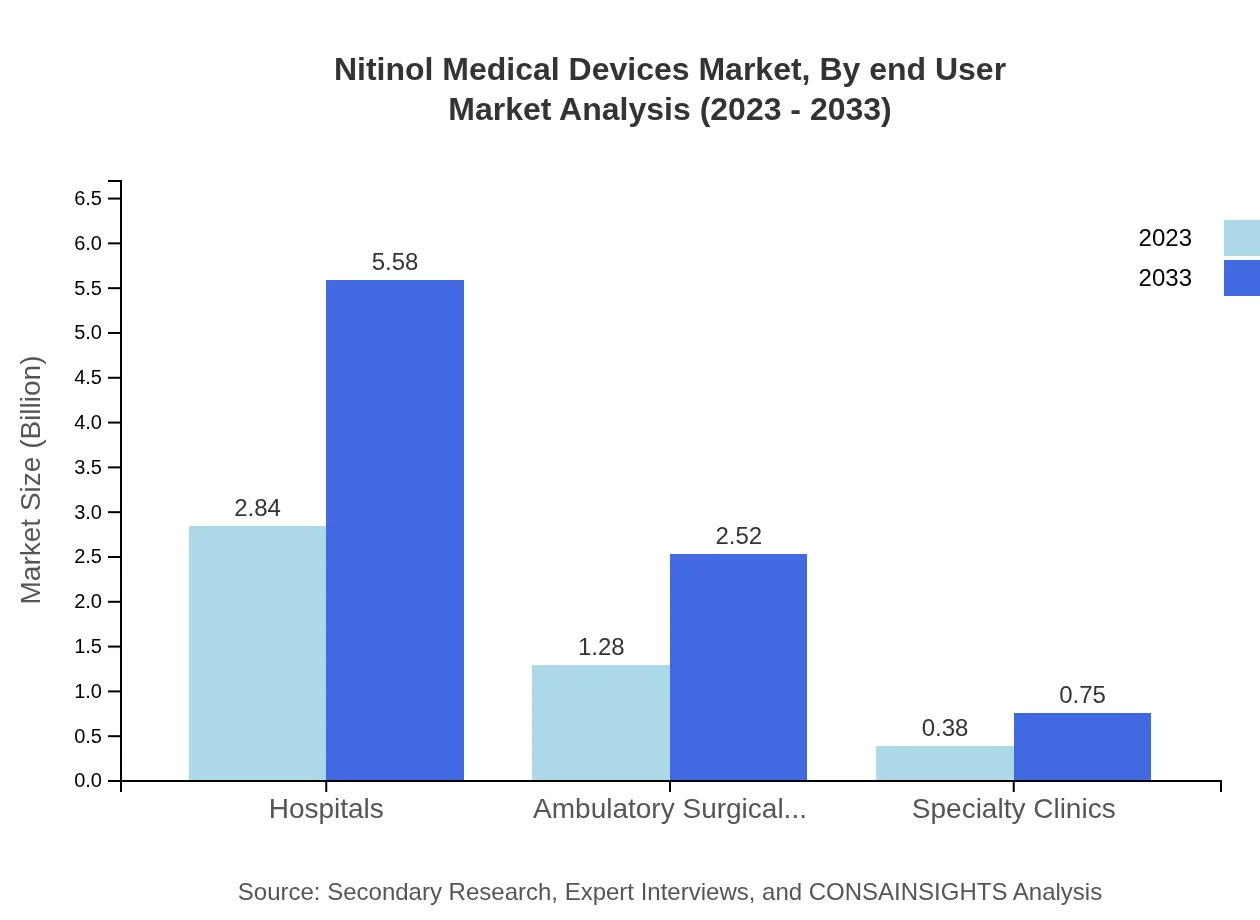
The end-user analysis reveals hospitals as the primary consumers, starting at $2.84 billion, growing to $5.58 billion in 2033, while ambulatory surgical centers begin at $1.28 billion, with projected growth to $2.52 billion. Specialty clinics represent a smaller fraction, starting at $0.38 billion, anticipated to double by 2033.
Nitinol Medical Devices Market Analysis By Design
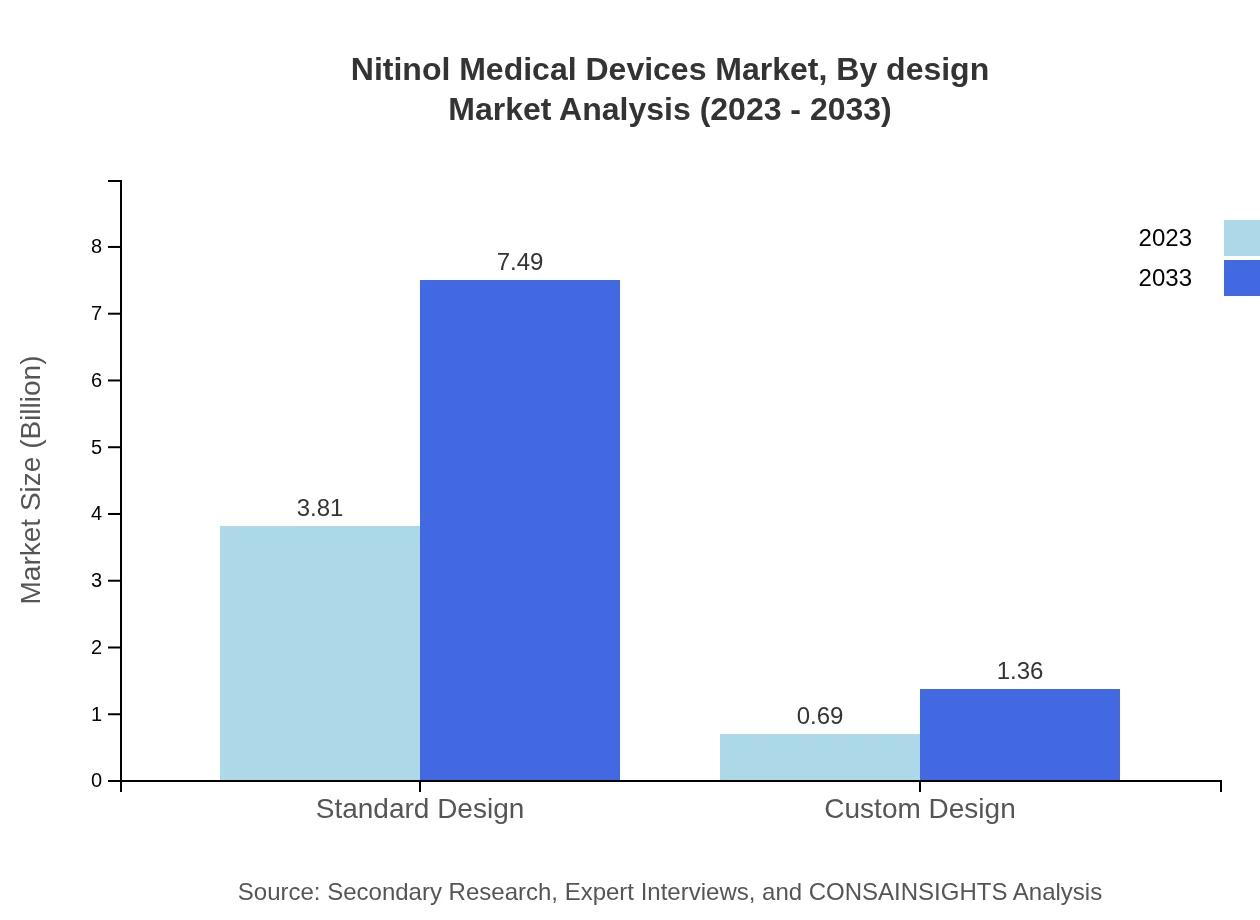
Products designed using Nitinol, such as shape memory alloy and superelastic processing, show significant potential. The shape memory alloy processing market is valued at $3.81 billion in 2023 and is expected to grow to $7.49 billion, while superelastic processing remains at $0.69 billion, with a forecasted rise to $1.36 billion.
Nitinol Medical Devices Market Analysis By Manufacturing Process
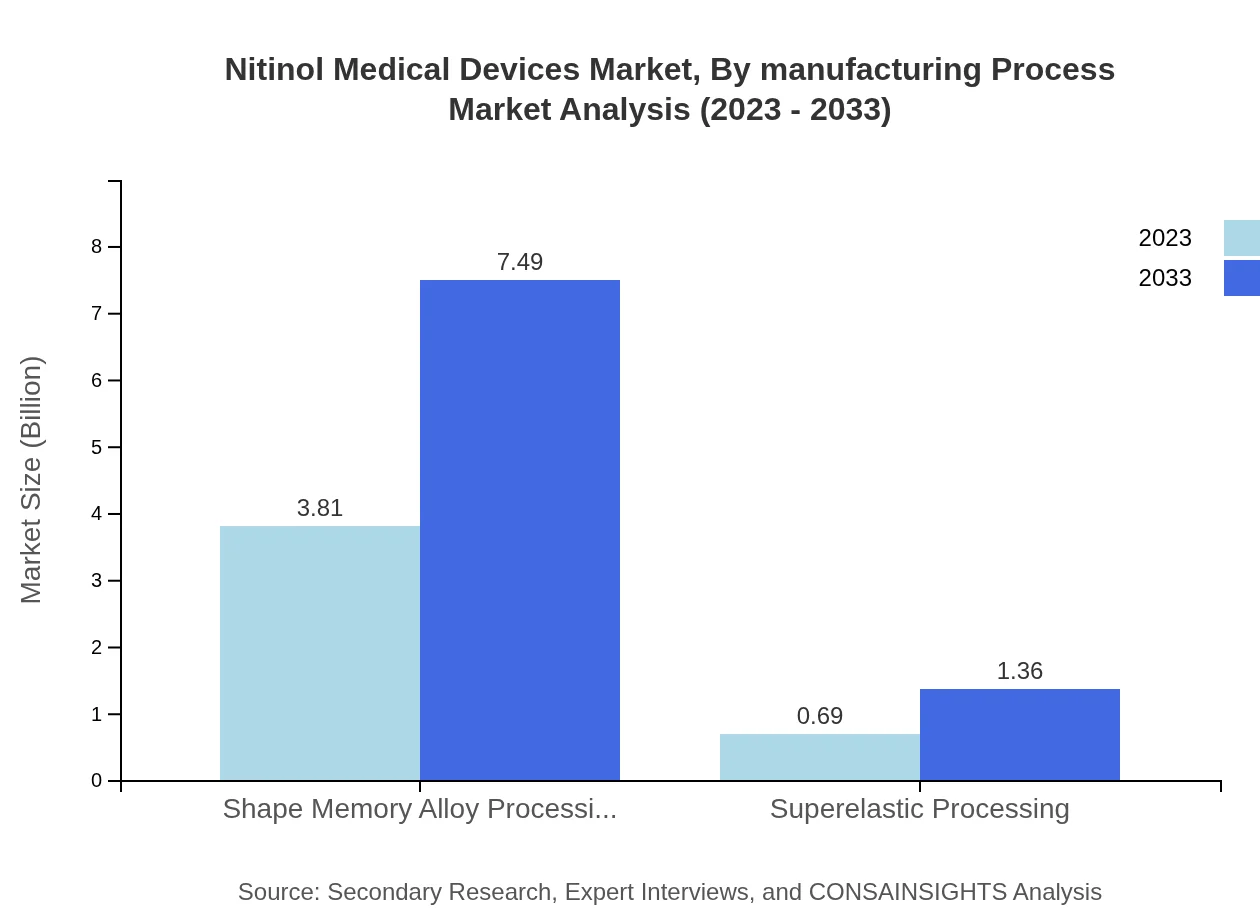
Manufacturing processes significantly define the market dynamics of Nitinol devices. Technologies such as standard and custom designs dominate the landscape, with various applications across medical fields driving innovations and efficiency improvements in production.
Nitinol Medical Devices Market Trends and Future Forecast
Tell us your focus area and get a customized research report.
Global Market Leaders and Top Companies in Nitinol Medical Devices Industry
Medtronic :
A pioneer in medical technology, Medtronic produces a range of Nitinol devices, improving patient outcomes through innovation and advanced solutions in interventional procedures.Abbott Laboratories:
Abbott plays a crucial role in Nitinol device markets, focusing on stents and guidewires, with a dedication to enhancing minimally invasive techniques across various applications.Boston Scientific:
Boston Scientific is renowned for its development of Nitinol-based products, particularly in cardiology and urology, emphasizing innovation and technology to address patient needs.Cook Medical:
Cook Medical specializes in customized Nitinol device solutions, encouraging advancements in therapeutic procedures within the healthcare sector.We're grateful to work with incredible clients.








FAQs
What is the market size of the Nitinol medical devices market in 2023?
The market size in 2023 is $4.50 Billion, as reported for the global Nitinol medical devices market.
How big will the market be in 2033?
The projected market value for 2033 is $8.84 Billion, reflecting growth over the 2023 baseline through 2033.
What is CAGR for the forecast period?
The compound annual growth rate for the 2023 to 2033 forecast period is 6.8%.
Which region is the fastest Growing in the Nitinol Medical Devices Market Report market?
Latin America is the fastest-growing region, projected to expand from $0.02 Billion in 2023 to $0.04 Billion in 2033, reflecting an implied 7.18% CAGR over the forecast period.
Which region is the fastest Growing?
Latin America is identified as the regional market region, rising from $0.02 Billion in 2023 to $0.04 Billion in 2033 at an implied 7.18% CAGR.
Who are the main companies in this market?
Top companies listed include Medtronic, Abbott Laboratories, Boston Scientific, and Cook Medical, noted for product development and market presence.
What are common product categories?
Primary product categories include stents, guidewires, and catheters, reflecting core applications in vascular and endovascular procedures.
How do manufacturing processes vary?
Manufacturing approaches include Shape Memory Alloy Processing and Superelastic Processing, which influence device behavior and clinical performance.
What end users purchase Nitinol devices?
Key end users are hospitals, ambulatory surgical centers, and specialty clinics, which acquire devices for a range of clinical procedures.
Why are Nitinol devices favored clinically?
Nitinol devices are valued for superelasticity and shape memory, enabling conformability to anatomy and suitability for minimally invasive techniques.