
Reports >
Life Sciences
>
Cell Expansion Market Report

Cell Expansion Market Report
First published: 12 October 2024 | Last updated: 25 May 2026 | Report Code: cell-expansion
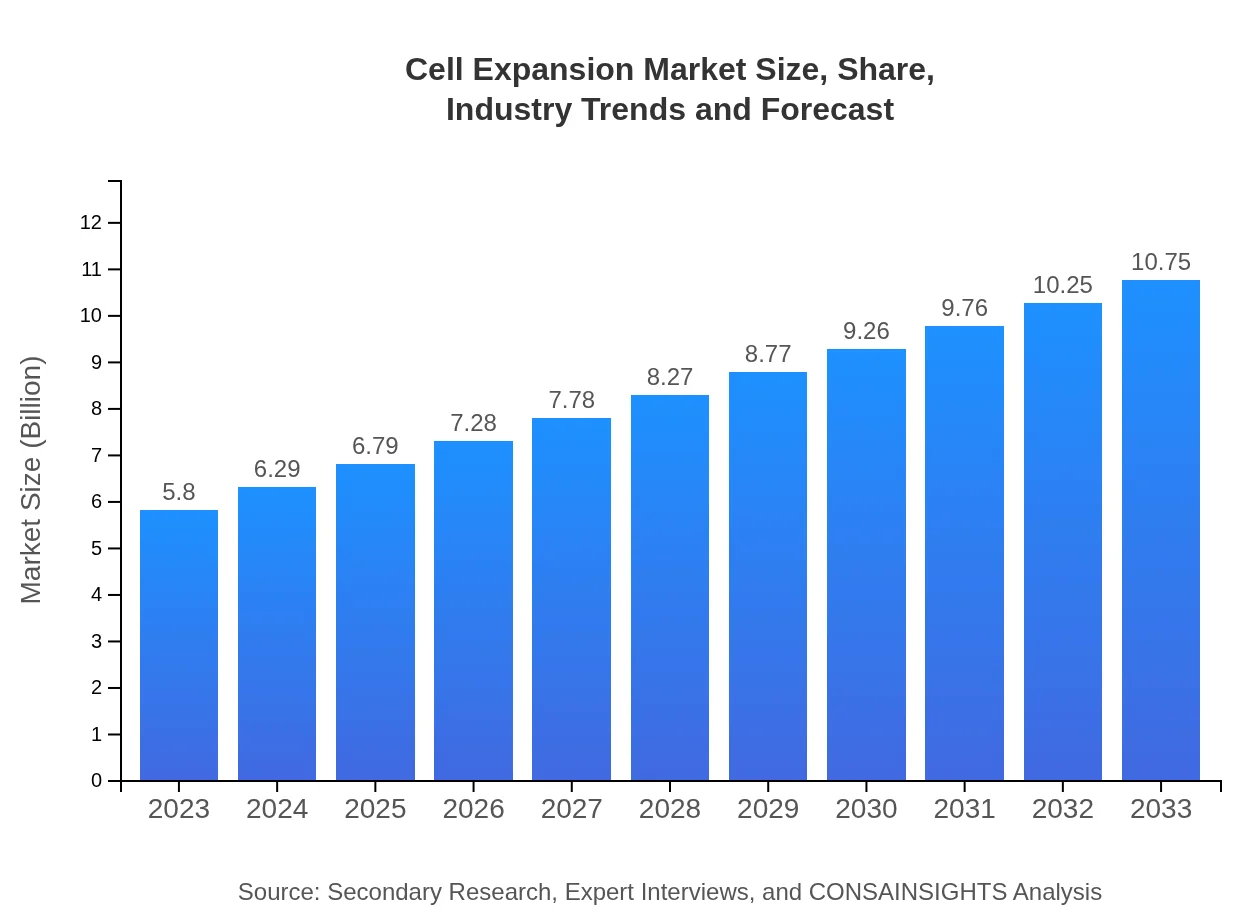
Cell Expansion Market — USD $5.8 Billion in 2023, Growing to USD 10.75B by 2033 at 6.2% CAGR
This report provides a comprehensive analysis of the Cell Expansion market, including current trends, market size, growth forecasts from 2023 to 2033, and insights into key factors driving industry changes.
Key Takeaways
- Global market projected from $5.80 Billion in 2023 to $10.75 Billion in 2033 at a 6.2% CAGR.
- Europe is largest regional market, while no single fastest-growing region is stated because regional CAGR differences remain within 0.15 percentage points.
- North America grows from $1.88 Billion in 2023 to $3.48 Billion by 2033, reflecting strong R&D and biopharma investment.
- Automated and advanced techniques alongside cell culture media and bioreactors drive adoption across pharmaceutical and biotech end users.
- Principal competitors include Thermo Fisher Scientific, Corning Inc., and Merck KGaA, focusing on product portfolios and collaborations.
Cell Expansion Market Report — Executive Summary
Europe remains largest market by forecast-period value, while no single fastest-growing region is stated because top regional growth rates are separated by less than 0.15 percentage points. This report examines the cell expansion sector, which is expected to advance from $5.80 Billion in 2023 to $10.75 Billion in 2033 at a 6.2% CAGR. Growth is supported by rising demand for cell-based therapeutics, investments in biotechnology research, and adoption of automated and advanced cultivation methods. The analysis covers product categories such as cell culture media, bioreactors and consumables, end users including pharmaceutical companies, research institutes and biotechnology firms, and applications spanning drug discovery, regenerative medicine and vaccine production. Regional performance is detailed with Europe identified as the largest market. Competitive dynamics emphasize major providers Thermo Fisher Scientific, Corning Inc. and Merck KGaA, and strategic moves include collaborations, technology upgrades and expanded service offerings. The report combines primary expert interviews with secondary literature and data triangulation to present validated market insights.
Key Growth Drivers
- Increased investment in biopharmaceutical R&D fuels demand for scalable cell expansion solutions.
- Shift from manual to automated and advanced techniques improves reproducibility and throughput.
- Rising need for cell-based therapies and personalized medicine expands end-user adoption across pharma and biotech.
- Growing use of bioreactors and optimized cell culture media enhances process efficiency and product yields.
- Outsourcing of cell culture operations by pharmaceutical firms drives market for specialized instruments and consumables.
| Metric | Value |
|---|---|
| Study Period | 2023 - 2033 |
| 2023 Market Size | $5.80 Billion |
| CAGR (2023-2033) | 6.2% |
| 2033 Market Size | $10.75 Billion |
| Top Companies | Thermo Fisher Scientific, Corning Inc., Merck KGaA |
| Published Date | 12 October 2024 |
| Last Modified Date | 25 May 2026 |
Cell Expansion Market Overview
Customize Cell Expansion Market Report market research report
- ✔ Get in-depth analysis of Cell Expansion market size, growth, and forecasts.
- ✔ Understand Cell Expansion's regional dynamics and industry-specific trends.
- ✔ Identify potential applications, end-user demand, and growth segments in Cell Expansion
What is the Market Size & CAGR of Cell Expansion Market Report market in 2023?
Cell Expansion Industry Analysis
Cell Expansion Market Segmentation and Scope
Tell us your focus area and get a customized research report.
Cell Expansion Market Report Market Analysis Report by Region
Europe Cell Expansion Market Report:
Europe is largest regional market, rising from $2.14 Billion in 2023 to $3.96 Billion in 2033. 14 Billion in 2023 to $3.96 Billion in 2033 and is identified as the largest regional market. Adoption is propelled by active regenerative medicine programs, strong biotech investment and collaborations between industry and research institutions.Asia Pacific Cell Expansion Market Report:
Asia Pacific grows from $0.92 Billion in 2023 to $1.7 Billion in 2033. 92 Billion in 2023 to $1.7 Billion in 2033 as academic and commercial research expands, pharmaceutical manufacturing scales up and regional investment supports technology adoption for cell-based therapies.North America Cell Expansion Market Report:
North America grows from $1.88 Billion in 2023 to $3.48 Billion in 2033. Local drivers include concentrated biopharmaceutical R&D spending, extensive clinical research activity and demand for scalable cell expansion platforms among contract and in-house manufacturers.South America Cell Expansion Market Report:
Latin America grows from $0.14 Billion in 2023 to $0.26 Billion in 2033. 14 Billion in 2023 to $0.26 Billion in 2033, with growth supported by expanding research capacity, emerging biotech initiatives and increasing interest in localized vaccine and therapeutic manufacturing.Middle East & Africa Cell Expansion Market Report:
Middle East and Africa grows from $0.73 Billion in 2023 to $1.35 Billion in 2033. 73 Billion in 2023 to $1.35 Billion in 2033, driven by investments in healthcare infrastructure, growing clinical research efforts and partnerships that enable access to cell expansion technologies.Tell us your focus area and get a customized research report.
Research Methodology
Cell Expansion Market Analysis By Product
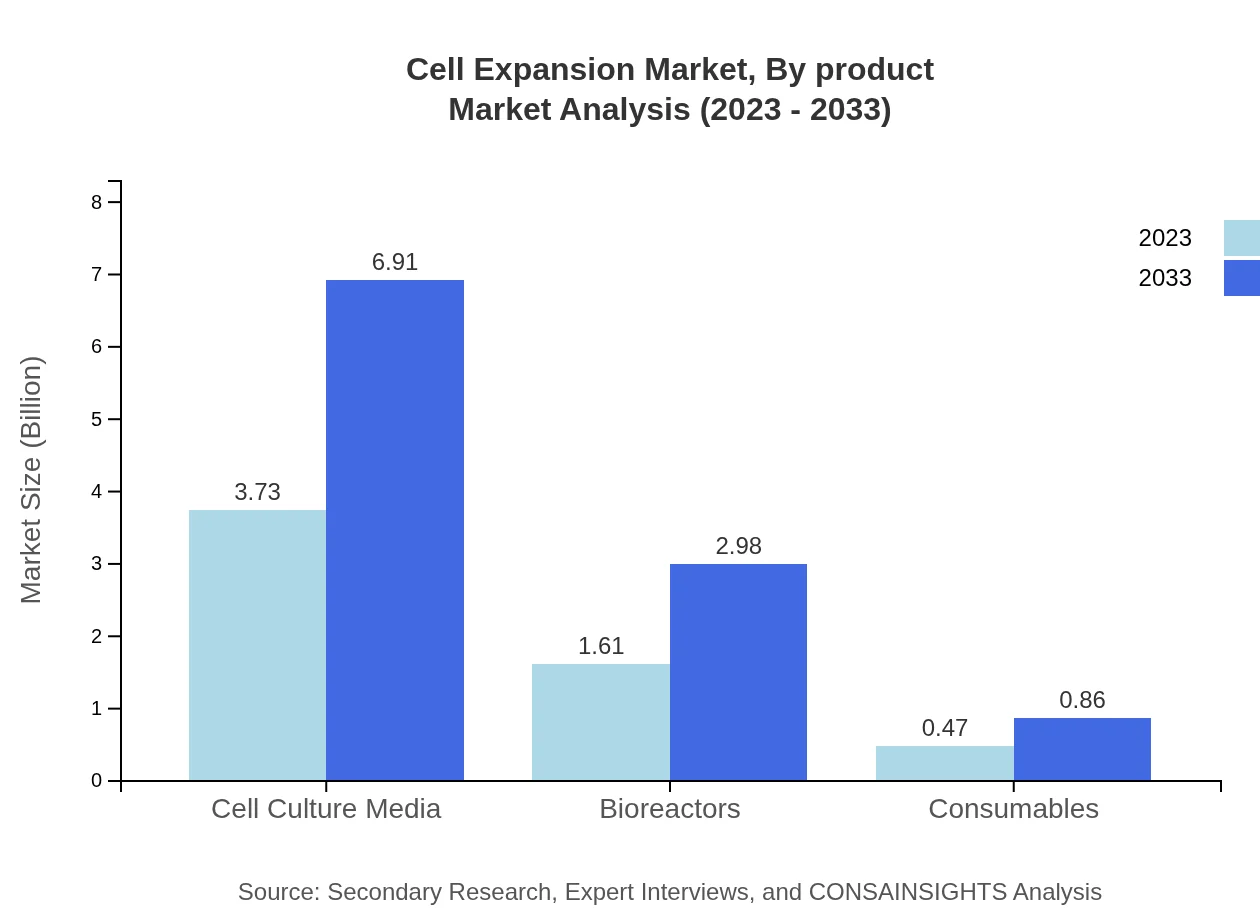
In 2023, the bioreactors segment is projected to reach a market size of $1.61 billion, growing to $2.98 billion by 2033. Consumables will mirror this growth, expanding from $0.47 billion to $0.86 billion during the same period. Culture media remains vital, maintaining a significant share of around 64.28% across several years.
Cell Expansion Market Analysis By Cell Type
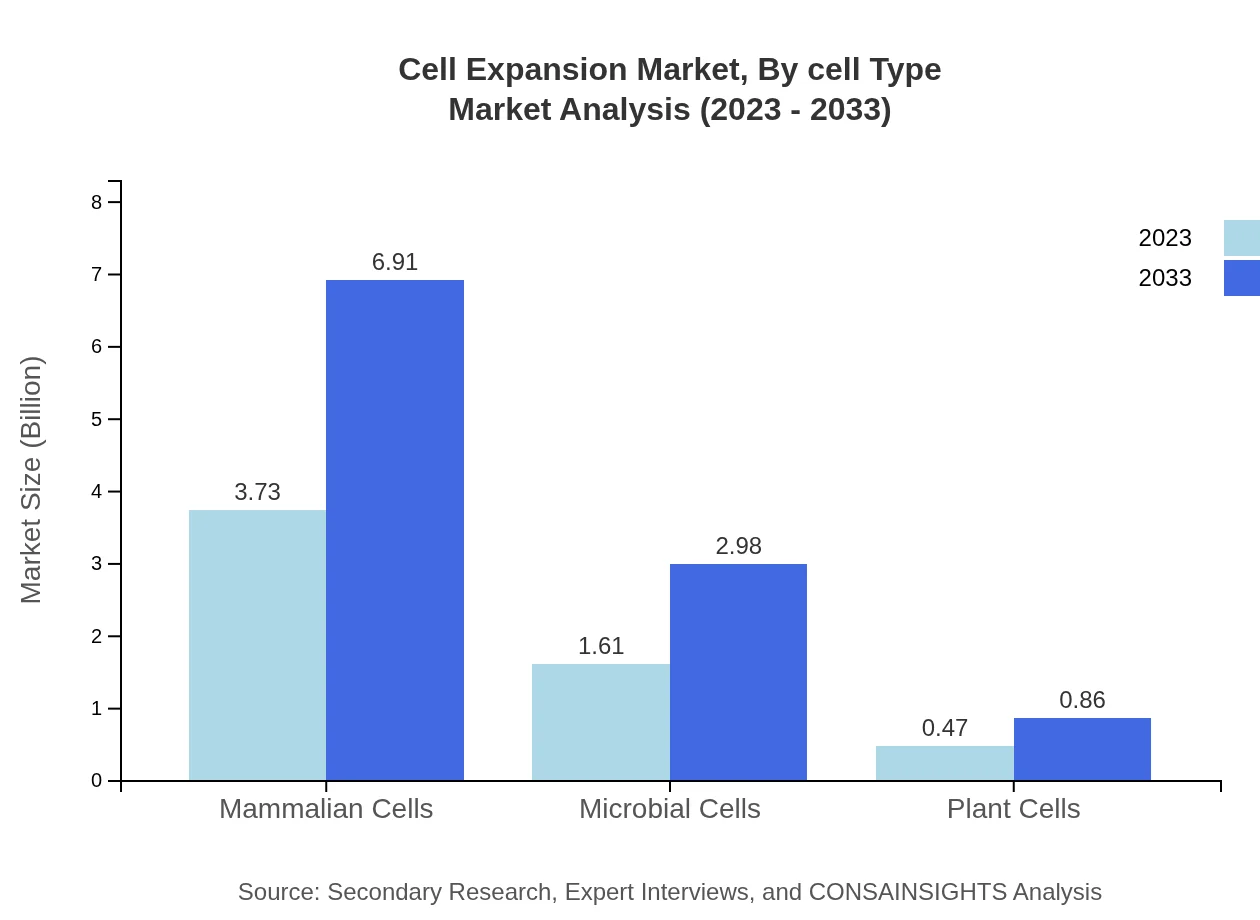
Mammalian cells dominate the segment, valued at $3.73 billion in 2023, and are expected to grow to $6.91 billion by 2033. Microbial and plant cell expansion also show promising growth, owing to increased use in various applications, particularly drug testing and genetic modifications.
Cell Expansion Market Analysis By Application
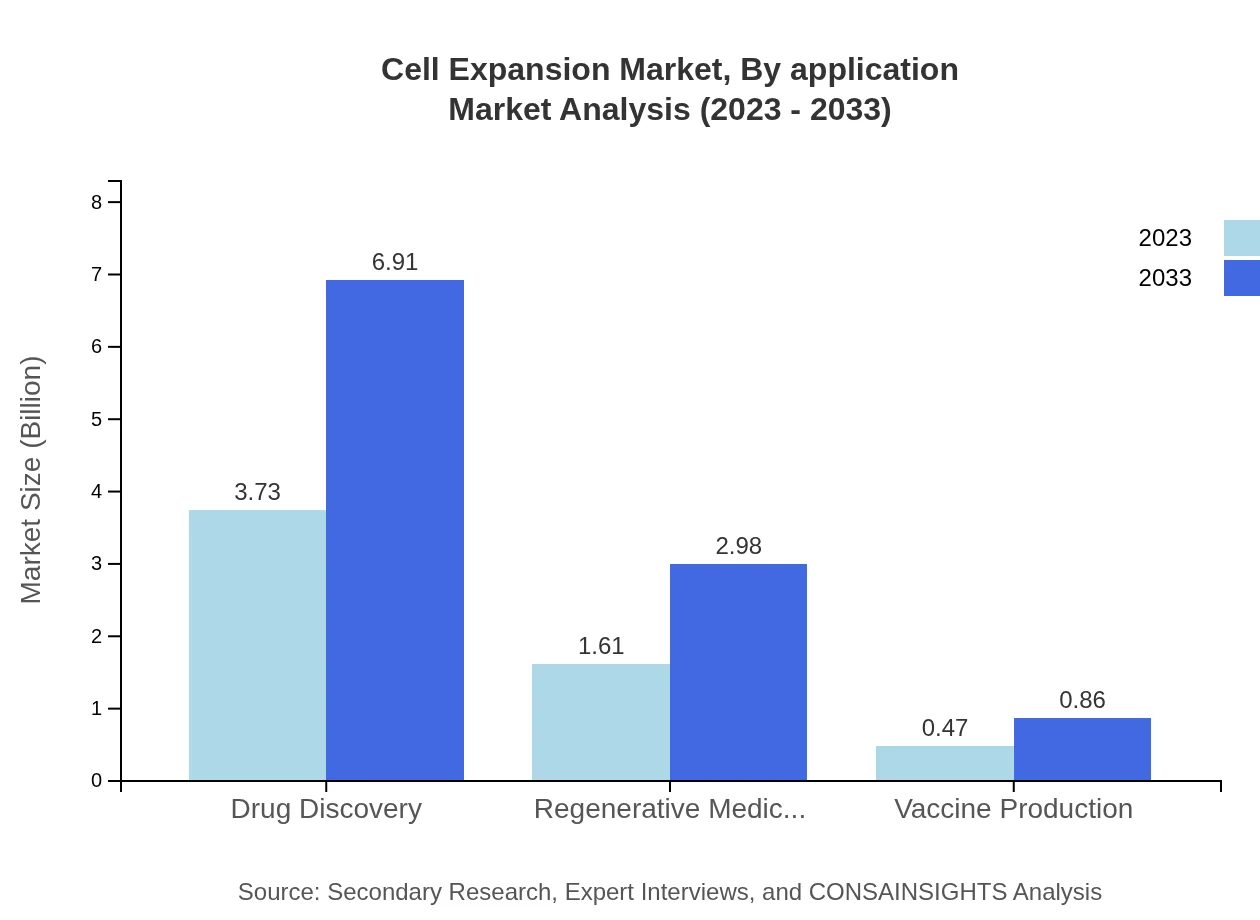
Drug discovery is a major contributor to the market, with a size of $3.73 billion in 2023 and expected to reach $6.91 billion by 2033. Regenerative medicine and vaccine production follow closely, utilizing advanced cell expansion technologies to support innovative treatments.
Cell Expansion Market Analysis By End User
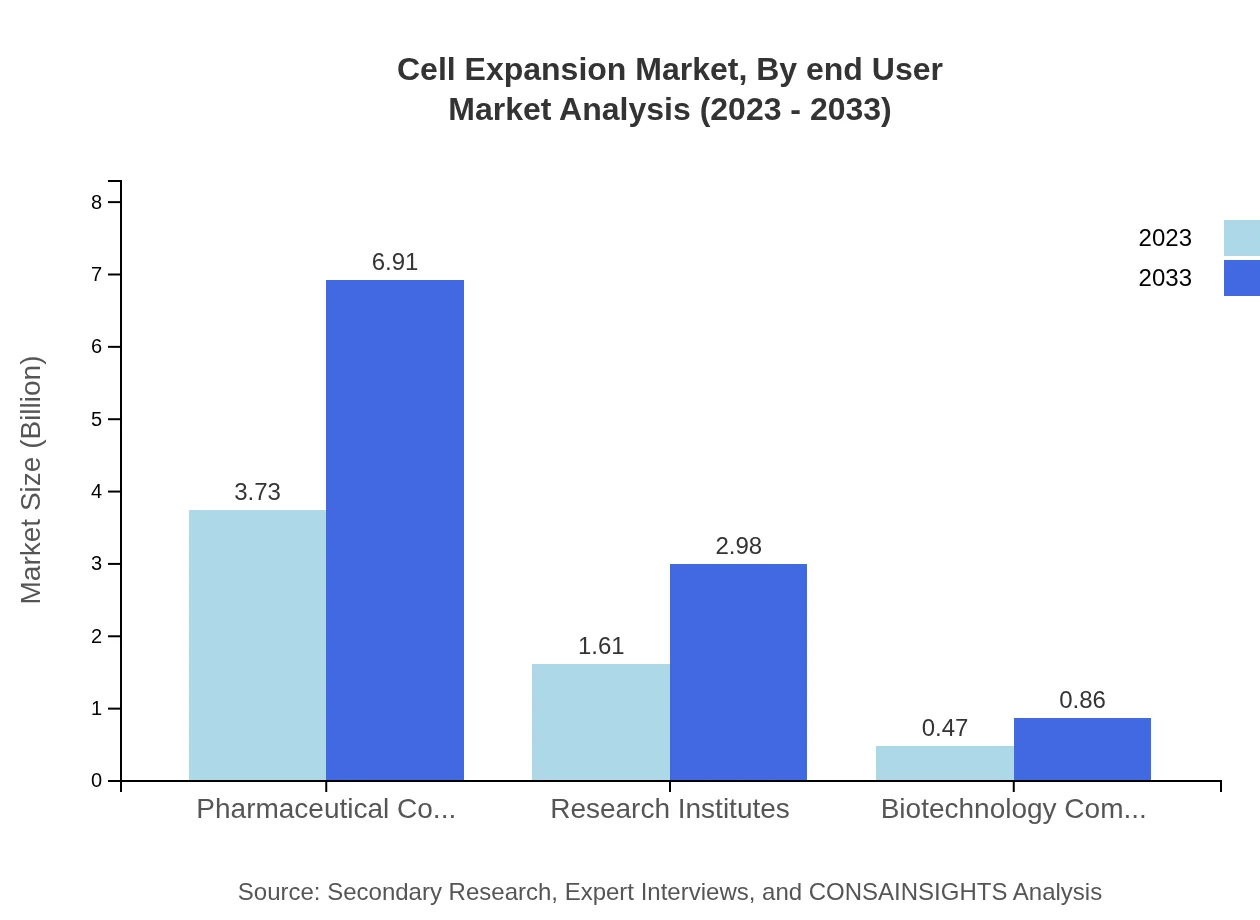
Pharmaceutical companies lead the end-user segment, contributing $3.73 billion in 2023, with projections to grow to $6.91 billion by 2033. Research institutes and biotechnology companies equally gain momentum, innovating in cellular therapies and biological treatments through expanded research capabilities.
Cell Expansion Market Analysis By Region
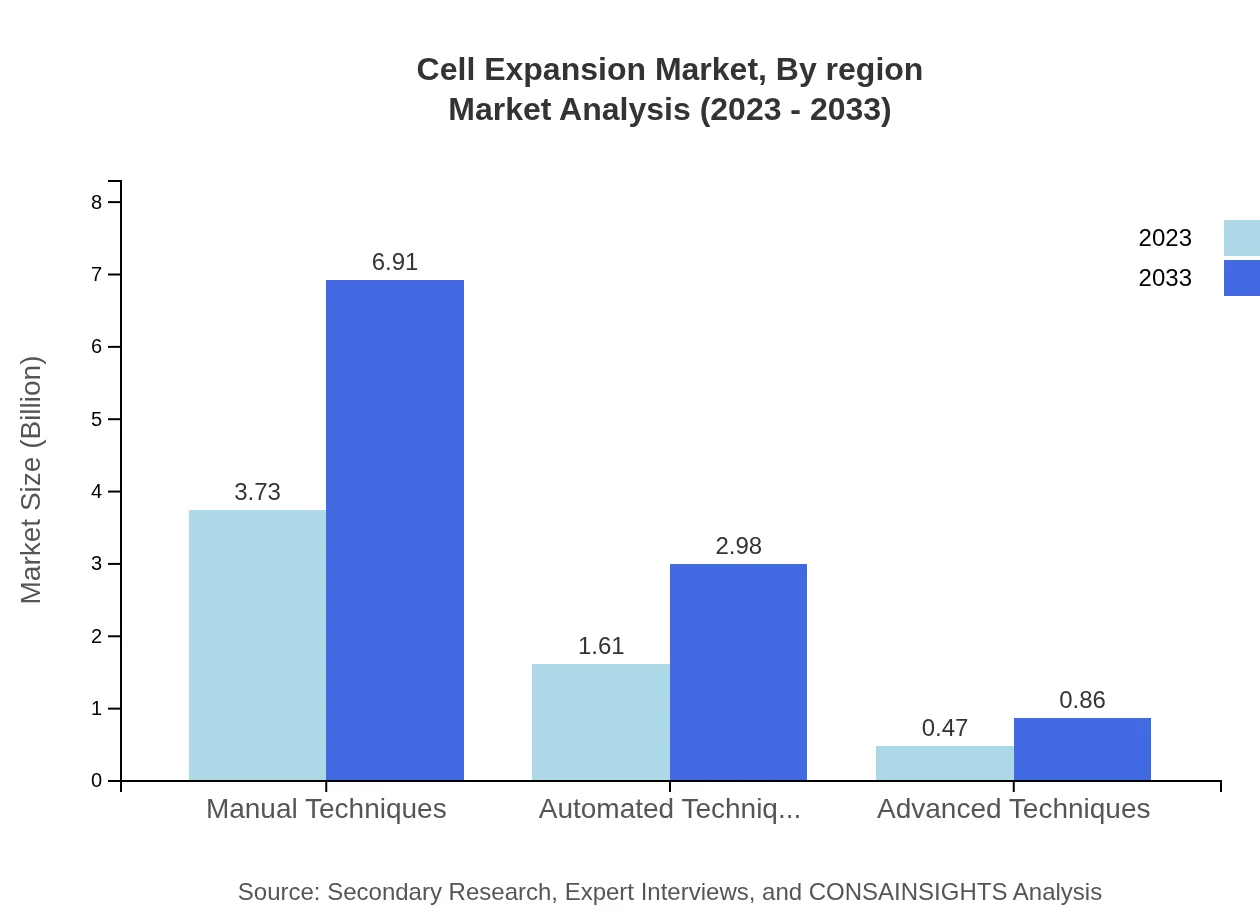
The market, driven by technological innovations, witnesses a shift towards automation and AI integration in cell culture processes. The manual techniques segment is expected to grow from $3.73 billion to $6.91 billion, while automated techniques will increase from $1.61 billion to $2.98 billion, showcasing a growing preference for efficiency and scalability in cell expansion practices.
Cell Expansion Market Trends and Future Forecast
Tell us your focus area and get a customized research report.
Global Market Leaders and Top Companies in Cell Expansion Industry
Thermo Fisher Scientific:
A leading global provider of scientific instruments and laboratory equipment, Thermo Fisher offers comprehensive solutions for cell culture, including bioreactors and consumables, addressing diverse research needs.Corning Inc.:
Corning is renowned for its advanced technologies in glass and polymer-based products for the life sciences industry. The company excels in offering validated cell culture systems and high-performance cell expansion products.Merck KGaA:
Merck KGaA offers innovative biopharmaceutical solutions, with a strong focus on cell culture and expansion technologies, contributing significantly to R&D in drug development and therapeutic interventions.We're grateful to work with incredible clients.









FAQs
What is the market size of the Cell Expansion Market Report in 2023?
The reported market size for 2023 is $5.80 Billion based on the provided valuation for the starting year of the forecast period.
How big is the market expected to be in 2033?
The market is projected to reach $10.75 Billion by 2033 according to the provided end-period estimate for the forecast window.
What is CAGR for the forecast period?
The compound annual growth rate for the 2023 to 2033 forecast period is stated as 6.2% in the input data.
Is there a single fastest Growing region in the Cell Expansion Market Report market?
No single fastest-growing region is stated for the Cell Expansion Market Report market because the top regional implied CAGR values are within 0.15 percentage points of each other, making the ranking too close to call reliably.
Which companies are listed as top players?
Top companies named in the input include Thermo Fisher Scientific, Corning Inc., and Merck KGaA as principal competitors in the market.
What are the primary product categories covered?
Product categories specified include cell culture media, bioreactors and consumables, reflecting core tools used in cell expansion processes.
How does the report define end users?
End users listed are pharmaceutical companies, research institutes and biotechnology companies, which are the main purchasers of cell expansion solutions.
What research methods were used for this report?
Methodology incorporates primary interviews with industry experts, secondary company reports and publications, plus data triangulation and internal validation.
What applications are emphasized in the analysis?
Key applications cited include drug discovery, regenerative medicine and vaccine production as primary use cases for expanded cells.
Which segmentation types are included?
Segmentation covered by the input includes technique, product, end-user, cell type and application groups with specified subsegments.