

Non Invasive Ventilators Market Report
First published: 21 October 2024 | Last updated: 25 May 2026 | Report Code: non-invasive-ventilators
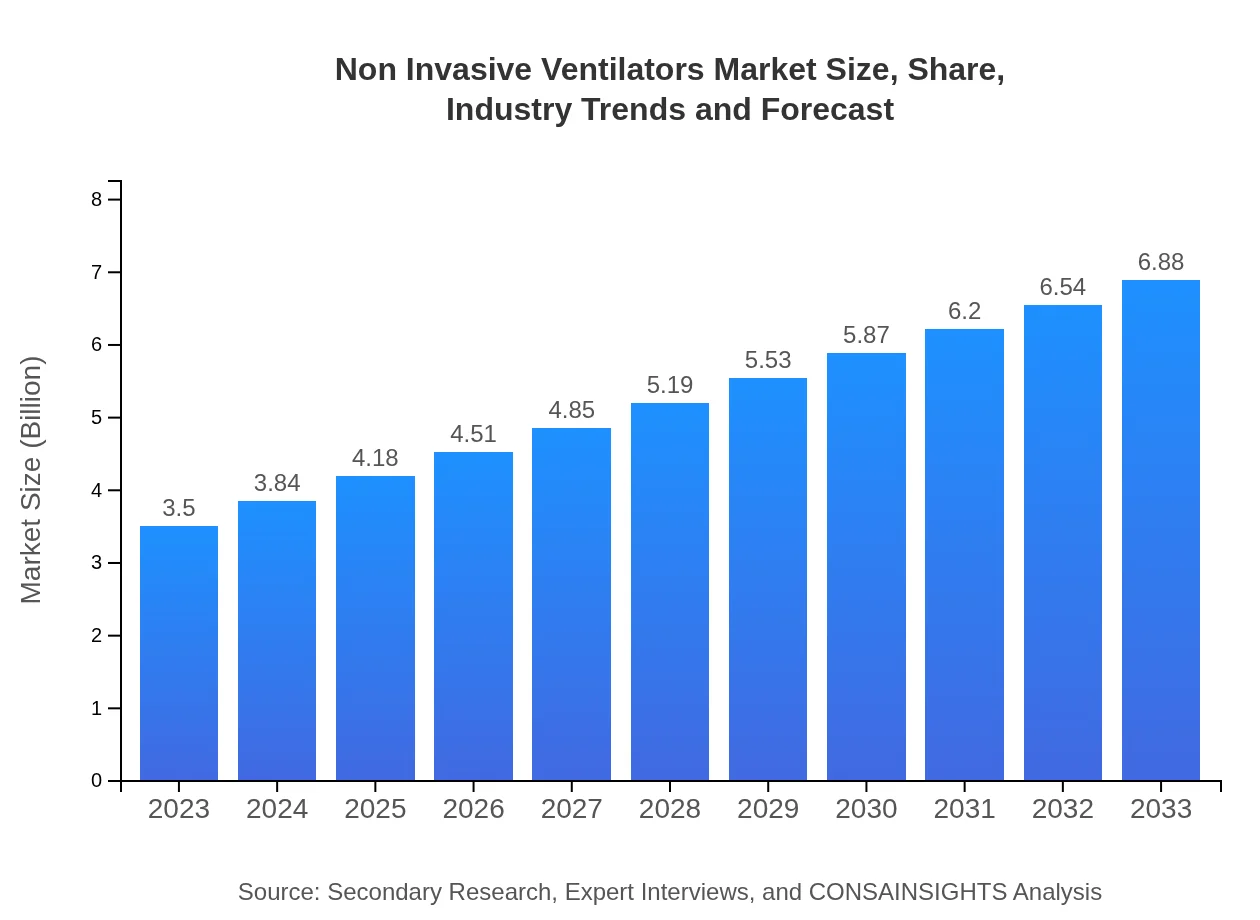
Non Invasive Ventilators Market — USD 3.5 billion in 2023, Growing to USD 6.88B by 2033 at 6.8% CAGR
This report provides a comprehensive analysis of the Non Invasive Ventilators market, covering market trends, regional insights, and competitive landscape from 2023 to 2033.
Key Takeaways
- Global market value increases from $3.50 Billion (2023) to $6.88 Billion (2033) at a 6.8% CAGR.
- North America is largest regional market, while no single fastest-growing region is stated because regional CAGR differences remain within 0.15 percentage points.
- North America leads regional sales, expanding from $1.31 Billion to $2.58 Billion between 2023 and 2033.
- Europe moves from $1.06 Billion to $2.08 Billion over the forecast interval, reflecting strong clinical and homecare demand.
- Asia Pacific grows from $0.62 Billion to $1.21 Billion, supported by rising access to respiratory care solutions.
- Top manufacturers include Philips Healthcare, ResMed, Medtronic, General Electric (GE) Healthcare, and F&P Healthcare.
Non Invasive Ventilators Market Report — Executive Summary
North America remains largest market by forecast-period value, while no single fastest-growing region is stated because top regional growth rates are separated by less than 0.15 percentage points. The Non Invasive Ventilators Market Report outlines market expansion driven by increasing prevalence of respiratory conditions, technological improvements in portable ventilation, and expanding homecare adoption. Market value is projected to grow from $3.50 Billion in 2023 to $6.88 Billion by 2033 at a 6.8% CAGR across 2023 to 2033. Regional dynamics show notable contributions from North America, Europe and Asia Pacific. Product and service innovation, integration of smart monitoring features, and broader telehealth uptake are primary trend areas. Hospitals, homecare settings, and emergency care centers form core end-user channels, while device types such as CPAP, BiPAP and volume-cycled ventilators shape product demand. Competitive intensity is led by established names including Philips Healthcare, ResMed, Medtronic, General Electric (GE) Healthcare and F&P Healthcare. The report combines primary interviews, secondary sources and triangulated data to support strategic decisions for manufacturers, payers, and health systems.
Key Growth Drivers
- Rising incidence of respiratory disorders and chronic conditions increasing demand for non-invasive ventilation.
- Greater adoption of homecare models and portable ventilator solutions expanding patient access outside hospitals.
- Technology enhancements in device control and monitoring improving clinical outcomes and user convenience.
- Increased investment by leading manufacturers to introduce differentiated, patient-focused products and services.
- Broader telehealth integration enabling remote monitoring and follow-up for ventilator-supported patients.
| Metric | Value |
|---|---|
| Study Period | 2023 - 2033 |
| 2023 Market Size | $3.50 Billion |
| CAGR (2023-2033) | 6.8% |
| 2033 Market Size | $6.88 Billion |
| Top Companies | Philips Healthcare, ResMed, Medtronic , General Electric (GE) Healthcare, F&P Healthcare |
| Published Date | 21 October 2024 |
| Last Modified Date | 25 May 2026 |
Non Invasive Ventilators Market Overview
Customize Non Invasive Ventilators Market Report market research report
- ✔ Get in-depth analysis of Non Invasive Ventilators market size, growth, and forecasts.
- ✔ Understand Non Invasive Ventilators's regional dynamics and industry-specific trends.
- ✔ Identify potential applications, end-user demand, and growth segments in Non Invasive Ventilators
What is the Market Size & CAGR of Non Invasive Ventilators Market Report market in 2023?
Non Invasive Ventilators Industry Analysis
Non Invasive Ventilators Market Segmentation and Scope
Tell us your focus area and get a customized research report.
Non Invasive Ventilators Market Report Market Analysis Report by Region
Europe Non Invasive Ventilators Market Report:
Europe grows from $1.06 Billion in 2023 to $2.08 Billion in 2033. Growth is supported by growing homecare adoption, increasing awareness of respiratory conditions, and regulatory frameworks that facilitate clinical deployment of non-invasive ventilators.Asia Pacific Non Invasive Ventilators Market Report:
Asia Pacific grows from $0.62 Billion in 2023 to $1.21 Billion in 2033. Expanding access to respiratory care, rising healthcare investments, and higher demand for portable and home-use ventilator devices underpin regional expansion.North America Non Invasive Ventilators Market Report:
North America is largest regional market, rising from $1.31 Billion in 2023 to $2.58 Billion in 2033. Local drivers include established clinical infrastructure, high adoption rates of advanced ventilator technologies, and significant presence of major manufacturers influencing market uptake.South America Non Invasive Ventilators Market Report:
Latin America grows from $0.15 Billion in 2023 to $0.3 Billion in 2033. Local market movement reflects broader efforts to enhance respiratory care availability and the gradual adoption of non-invasive ventilation technologies in clinical and home settings.Middle East & Africa Non Invasive Ventilators Market Report:
Middle East and Africa grows from $0.36 Billion in 2023 to $0.71 Billion in 2033. Drivers include increasing healthcare infrastructure investments, rising focus on non-invasive respiratory treatment options, and wider distribution of ventilator products.Tell us your focus area and get a customized research report.
Research Methodology
Non Invasive Ventilators Market Analysis By Device Type
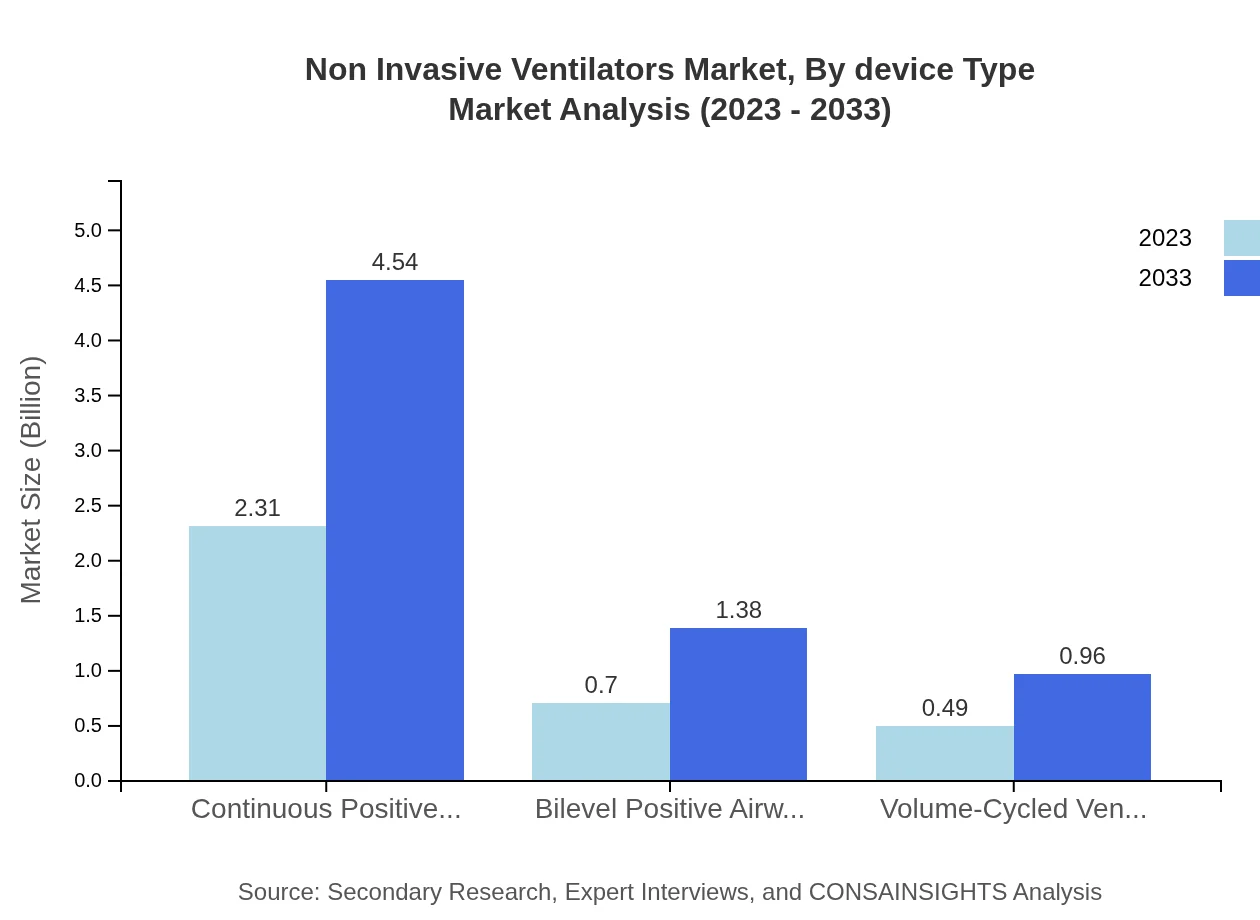
The Non-Invasive Ventilators market analysis by device type indicates that Electronic Control devices dominate the segment, accounting for approximately 84.87% market share in 2023, and are expected to grow from $2.97 billion to $5.84 billion by 2033. Mechanical Control devices also play a role, with a smaller share of 15.13% and growth from $0.53 billion to $1.04 billion during the same period.
Non Invasive Ventilators Market Analysis By Application
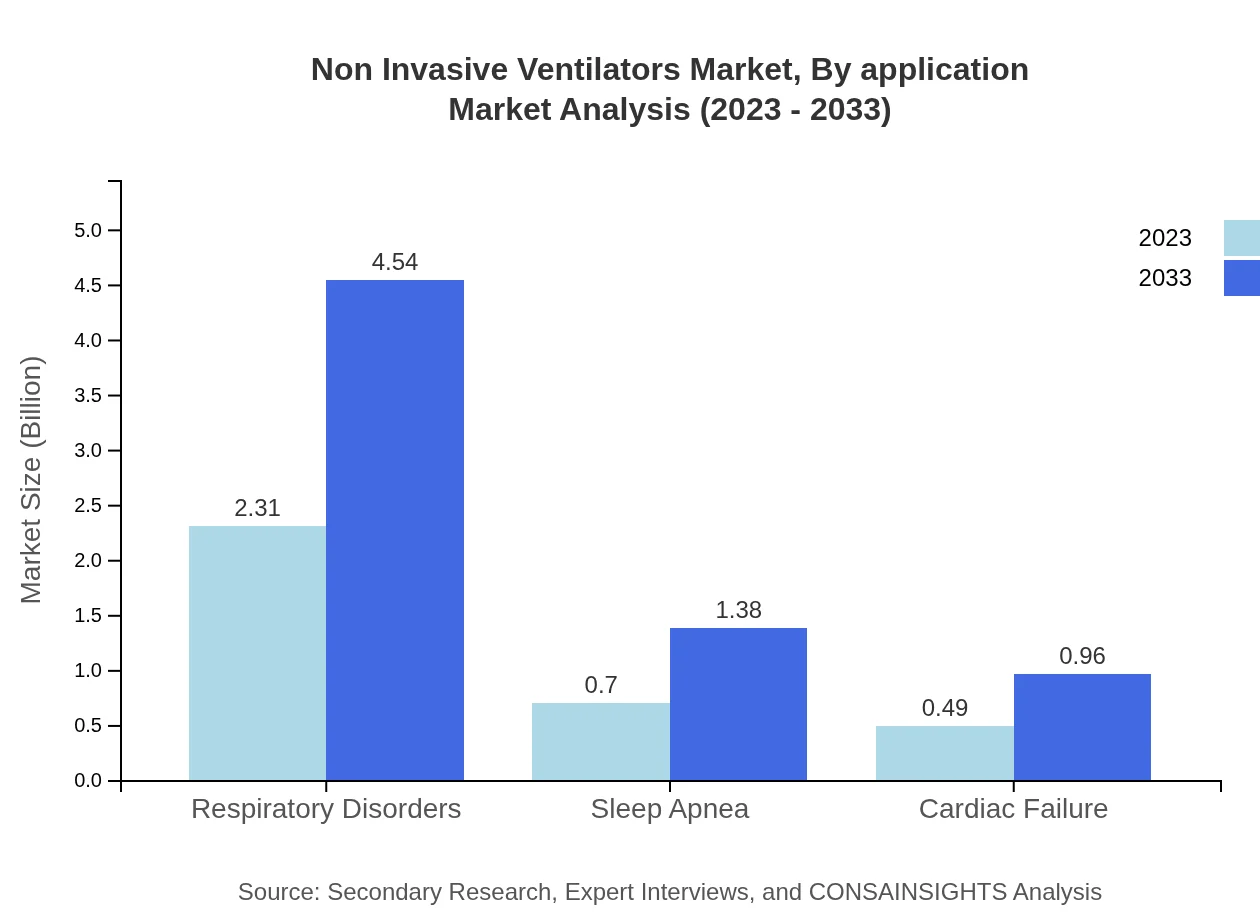
In terms of application, respiratory disorders lead the Non-Invasive Ventilators market, with a size projected to grow from $2.31 billion in 2023 to $4.54 billion in 2033, sustaining a 65.95% market share. Sleep apnea follows, significantly contributing to market growth, expected to increase from $0.70 billion to $1.38 billion.
Non Invasive Ventilators Market Analysis By End User
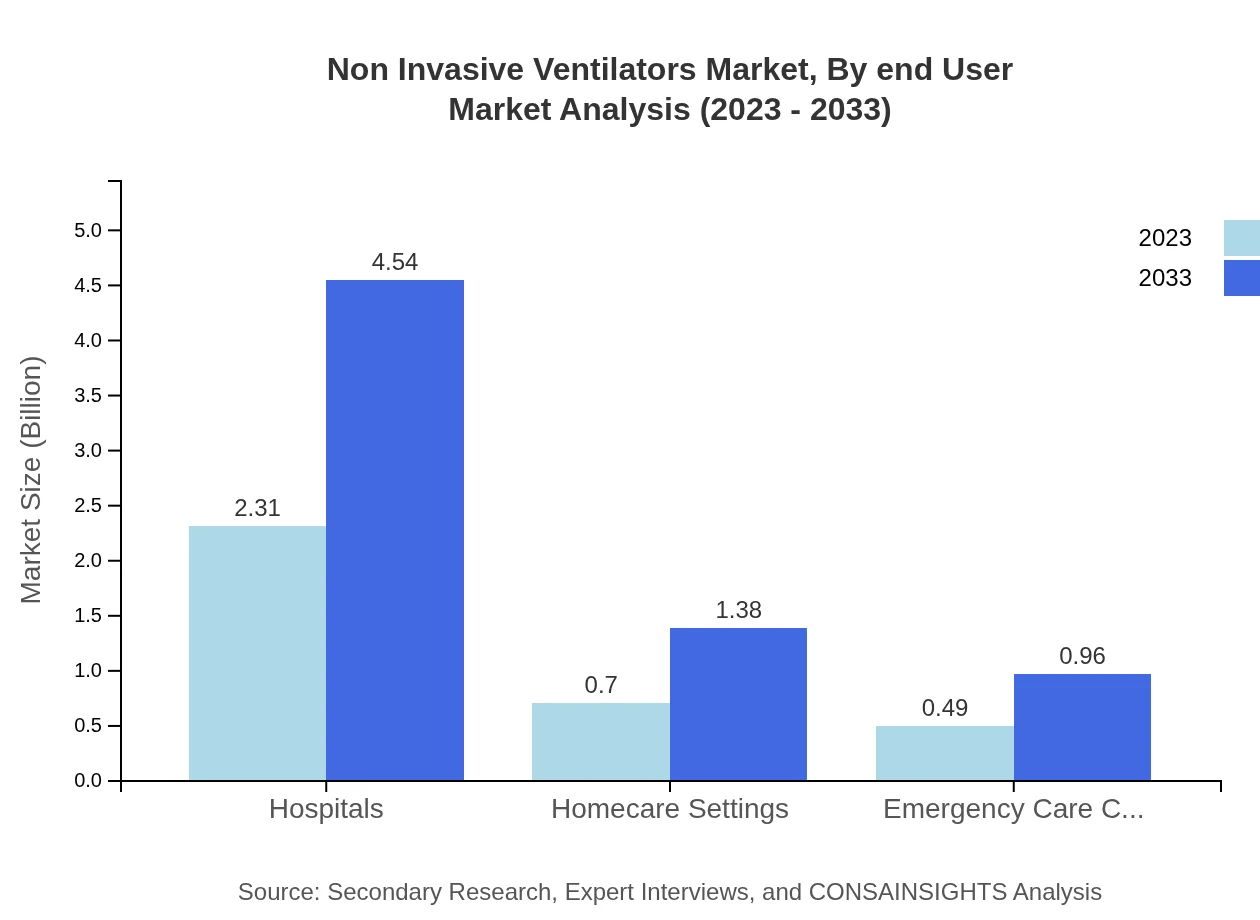
The market by end-user reflects hospitals as the primary segment, expected to maintain a market share of 65.95% from $2.31 billion in 2023 to $4.54 billion by 2033. Homecare settings and emergency care centers also show substantial growth potential.
Non Invasive Ventilators Market Analysis By Technology
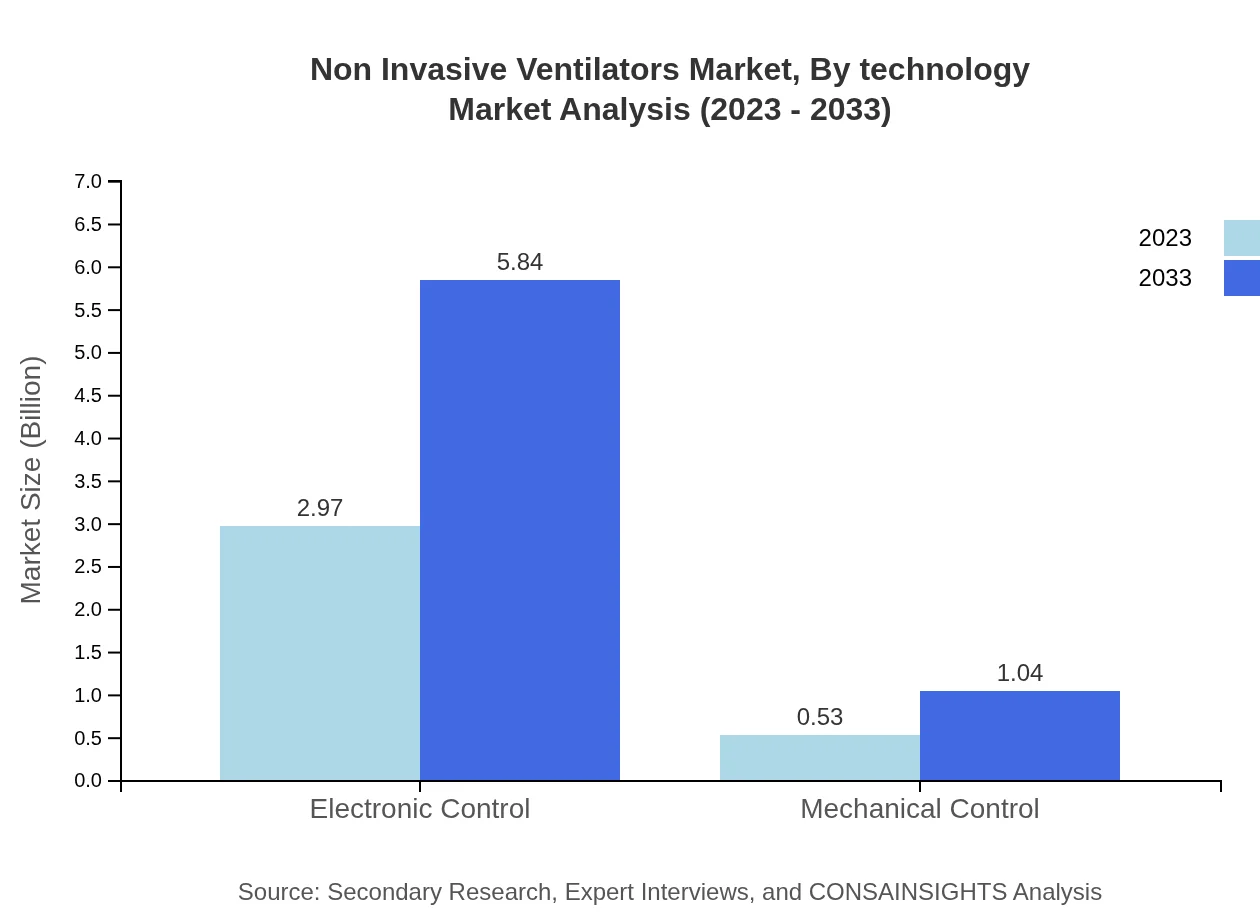
Technological advancements in the Non-Invasive Ventilators market emphasize smart technologies. The Electronic Control technology segment outpaces others, improving patient care with features like real-time monitoring and tailored therapeutic approaches, reinforcing the segment’s continuous growth trajectory.
Non Invasive Ventilators Market Analysis By Sales Channel
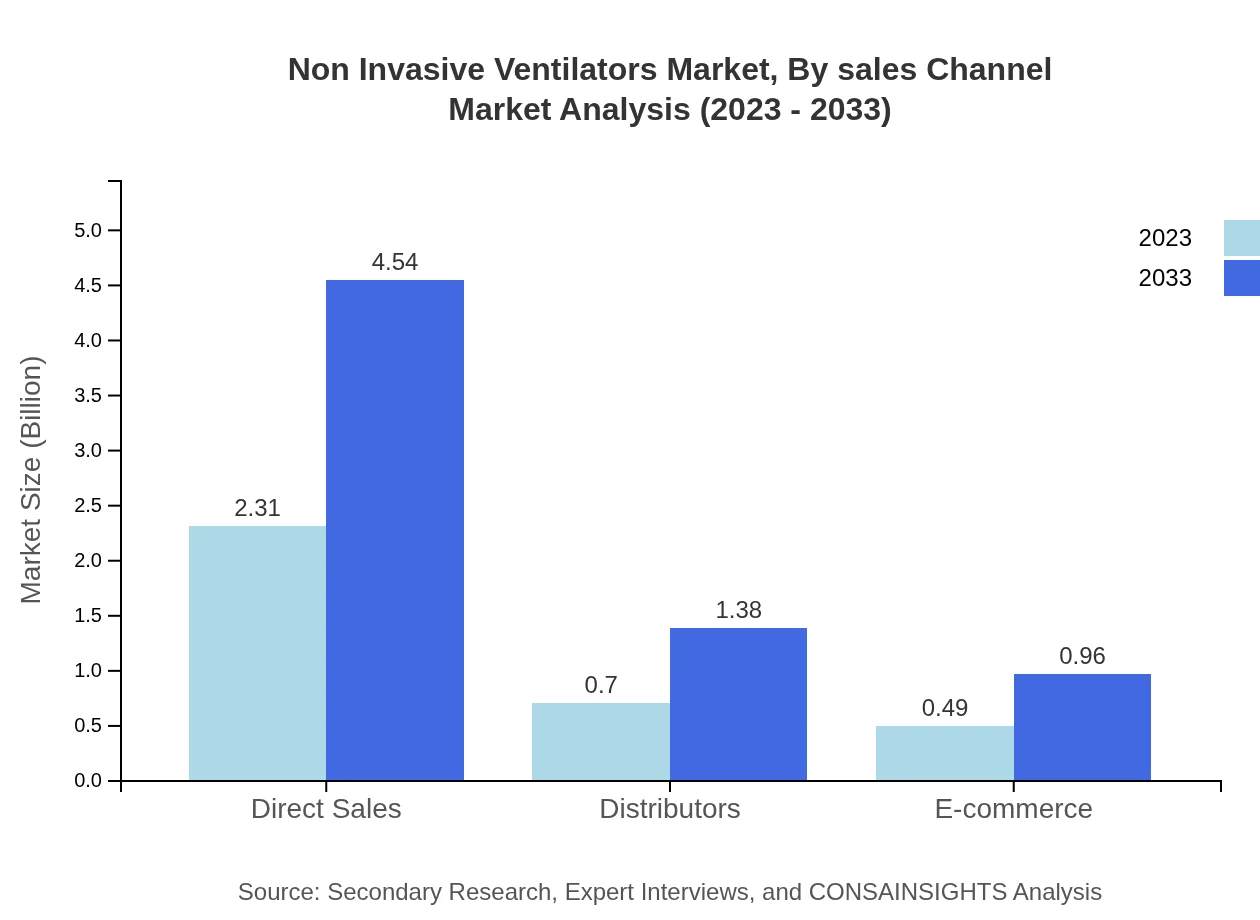
The sales channel analysis highlights a strong direct sales channel, dominating with a 65.95% share from $2.31 billion in 2023 and projected to reach $4.54 billion by 2033. Distributors and e-commerce channels are gradually gaining traction, signaling shifts in buyer preferences.
Non Invasive Ventilators Market Trends and Future Forecast
Tell us your focus area and get a customized research report.
Global Market Leaders and Top Companies in Non Invasive Ventilators Industry
Philips Healthcare:
A leading player in the healthcare industry, known for its commitment to providing innovative solutions in respiratory care, including advanced Non Invasive Ventilators.ResMed:
Specializing in sleep and respiratory disorders, ResMed has a significant foothold in the Non Invasive Ventilators market with a range of user-friendly products designed for both hospital and home use.Medtronic :
With a diverse portfolio, Medtronic is a key competitor, providing innovative Non Invasive Ventilators that enhance patient outcomes in critical care settings.General Electric (GE) Healthcare:
A prominent medical technology and digital solutions innovator, GE Healthcare plays a significant role in advancing Non Invasive Ventilators through technology integration and improved patient care.F&P Healthcare:
Fisher & Paykel Healthcare is renowned for its innovative respiratory care solutions, including Non Invasive Ventilators designed to meet diverse patient needs.We're grateful to work with incredible clients.









FAQs
What is the market size of the Non Invasive Ventilators Market Report in 2023?
The market size in 2023 is $3.50 Billion according to the report’s baseline figure for that year.
How big will the market be in 2033?
The projected market value for 2033 is $6.88 Billion as stated in the report’s forecast endpoint.
What is CAGR of the market for the forecast period?
The compound annual growth rate for 2023 to 2033 is 6.8%, as reported for the overall market expansion.
Is there a single fastest Growing region in the Non Invasive Ventilators Market Report market?
No single fastest-growing region is stated for the Non Invasive Ventilators Market Report market because the top regional implied CAGR values are within 0.15 percentage points of each other, making the ranking too close to call reliably.
Which companies lead the Non Invasive Ventilators market?
Top companies named in the report include Philips Healthcare, ResMed, Medtronic, General Electric (GE) Healthcare, and F&P Healthcare.
What are the primary end User segments covered?
Key end-user segments include Hospitals, Homecare Settings, and Emergency Care Centers, reflecting clinical and out-of-hospital demand channels.
What is driving product innovation in this sector?
Product innovation is driven by advances in portable technologies, smart monitoring capabilities, and manufacturer investment in differentiated ventilator features.
How is regional growth characterized in the report?
Regional growth is detailed with start and end values for each geography; North America is the largest regional market by end-period value.