

Human Insulin Drugs And Delivery Devices Market Report
First published: 21 October 2024 | Last updated: 25 May 2026 | Report Code: human-insulin-drugs-and-delivery-devices
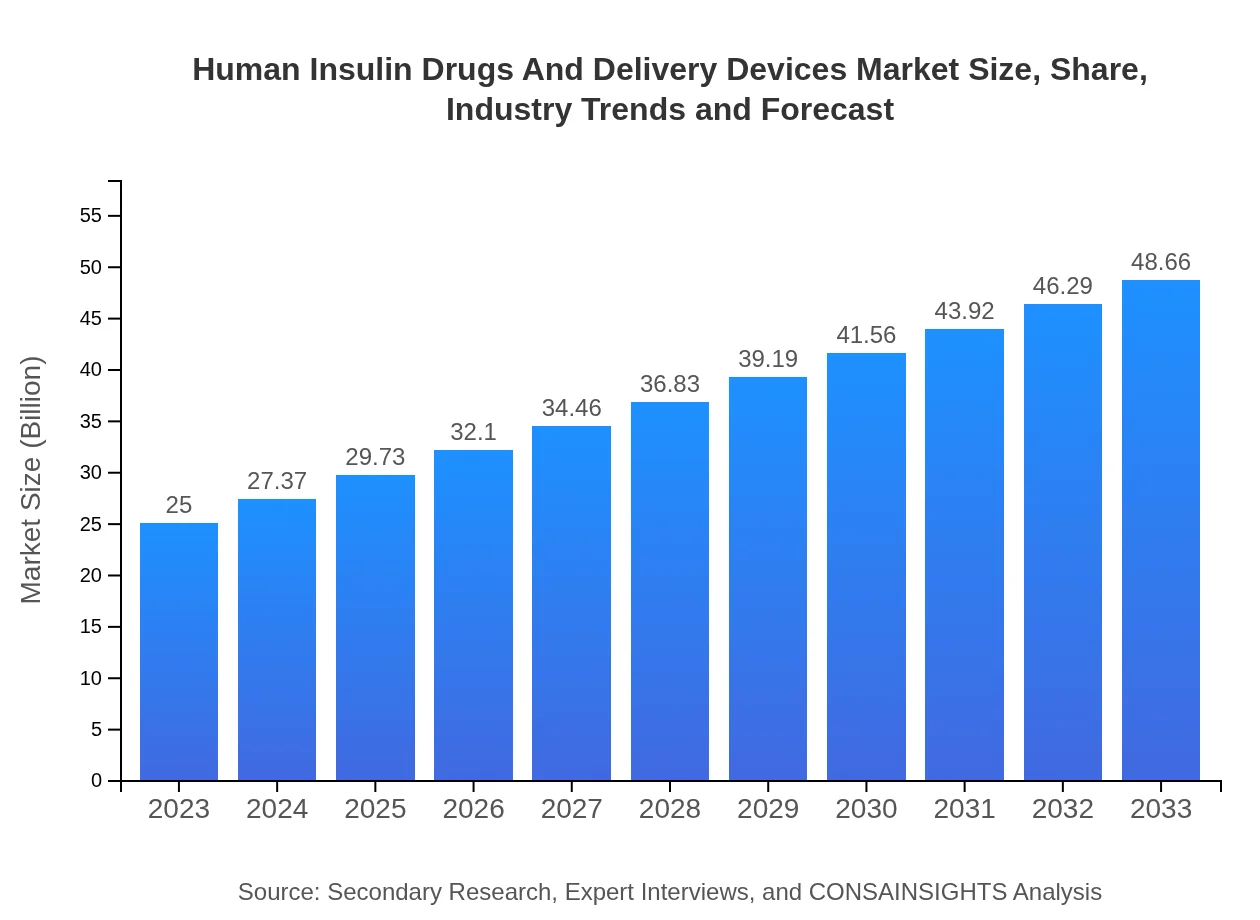
Human Insulin Drugs And Delivery Devices Market — USD 25 billion in 2023, Growing to USD 48.66B by 2033 at 6.7% CAGR
This report offers a comprehensive analysis of the Human Insulin Drugs and Delivery Devices market from 2023 to 2033, focusing on market dynamics, size, segmentation, regional performance, and leading companies in the sector.
Key Takeaways
- Global market projected from $25.00 Billion in 2023 to $48.66 Billion in 2033 at a 6.7% CAGR.
- North America is largest regional market, while no single fastest-growing region is stated because regional CAGR differences remain within 0.15 percentage points.
- North America leads regionally, rising from $9.46 Billion in 2023 to $18.42 Billion in 2033.
- Europe expected to grow from $6.98 Billion in 2023 to $13.58 Billion in 2033.
- Asia Pacific expands from $4.79 Billion in 2023 to $9.33 Billion in 2033, reflecting rising demand.
- Primary manufacturers include Novo Nordisk, Sanofi, Boehringer Ingelheim, Bristol-Myers Squibb, and Eli Lilly.
Human Insulin Drugs And Delivery Devices Market Report — Executive Summary
North America remains largest market by forecast-period value, while no single fastest-growing region is stated because top regional growth rates are separated by less than 0.15 percentage points. The Human Insulin Drugs And Delivery Devices market is forecast to expand from $25.00 Billion in 2023 to $48.66 Billion by 2033 at a 6.7% CAGR. Growth is underpinned by rising diabetes care needs, advances in delivery technologies, and greater emphasis on personalized treatment approaches. Product innovation focuses on improved dosing accuracy and patient adherence, while collaborations and supportive policies enhance distribution and education. The report examines product and user segments, regional trajectories, and competitive activity among leading firms such as Novo Nordisk, Sanofi, Boehringer Ingelheim, Bristol-Myers Squibb, and Eli Lilly, with structured analysis to guide strategic decisions.
Key Growth Drivers
- Increasing prevalence of diabetes and broader access to care driving demand for insulin therapies and delivery systems.
- Advances in delivery technology improving dosing precision and patient adherence, stimulating device adoption.
- Greater focus on tailored treatment approaches prompting diversified insulin formulations for different patient groups.
- Collaborations between manufacturers and healthcare organizations improving product availability and patient education.
- Regulatory and policy support facilitating market entry and wider reimbursement for diabetes management solutions.
| Metric | Value |
|---|---|
| Study Period | 2023 - 2033 |
| 2023 Market Size | $25.00 Billion |
| CAGR (2023-2033) | 6.7% |
| 2033 Market Size | $48.66 Billion |
| Top Companies | Novo Nordisk, Sanofi, Boehringer Ingelheim, Bristol-Myers Squibb, Eli Lilly |
| Published Date | 21 October 2024 |
| Last Modified Date | 25 May 2026 |
Human Insulin Drugs And Delivery Devices Market Overview
Customize Human Insulin Drugs And Delivery Devices Market Report market research report
- ✔ Get in-depth analysis of Human Insulin Drugs And Delivery Devices market size, growth, and forecasts.
- ✔ Understand Human Insulin Drugs And Delivery Devices's regional dynamics and industry-specific trends.
- ✔ Identify potential applications, end-user demand, and growth segments in Human Insulin Drugs And Delivery Devices
What is the Market Size & CAGR of Human Insulin Drugs And Delivery Devices Market Report market in 2023?
Human Insulin Drugs And Delivery Devices Industry Analysis
Human Insulin Drugs And Delivery Devices Market Segmentation and Scope
Tell us your focus area and get a customized research report.
Human Insulin Drugs And Delivery Devices Market Report Market Analysis Report by Region
Europe Human Insulin Drugs And Delivery Devices Market Report:
Europe grows from $6.98 Billion in 2023 to $13.58 Billion in 2033. Regional expansion is driven by increasing emphasis on diabetes care, regulatory frameworks that support device adoption, and ongoing innovation from pharmaceutical and device companies.Asia Pacific Human Insulin Drugs And Delivery Devices Market Report:
Asia Pacific grows from $4.79 Billion in 2023 to $9.33 Billion in 2033. Demand reflects rising diabetes prevalence, expanding healthcare access, and adoption of newer delivery technologies to improve patient management.North America Human Insulin Drugs And Delivery Devices Market Report:
North America is largest regional market, rising from $9.46 Billion in 2023 to $18.42 Billion in 2033. Growth is supported by established healthcare infrastructure, strong provider networks, and active participation from leading manufacturers concentrated in the region.South America Human Insulin Drugs And Delivery Devices Market Report:
Latin America grows from $2.27 Billion in 2023 to $4.42 Billion in 2033. Market advancement is influenced by growing awareness of diabetes management, improving healthcare delivery, and increasing availability of insulin products and devices.Middle East & Africa Human Insulin Drugs And Delivery Devices Market Report:
Middle East and Africa grows from $1.5 Billion in 2023 to $2.91 Billion in 2033. Progress is supported by increasing focus on chronic disease care, expanding healthcare services, and efforts to improve access to diabetes therapies and delivery systems.Tell us your focus area and get a customized research report.
Research Methodology
Human Insulin Drugs And Delivery Devices Market Analysis By Product
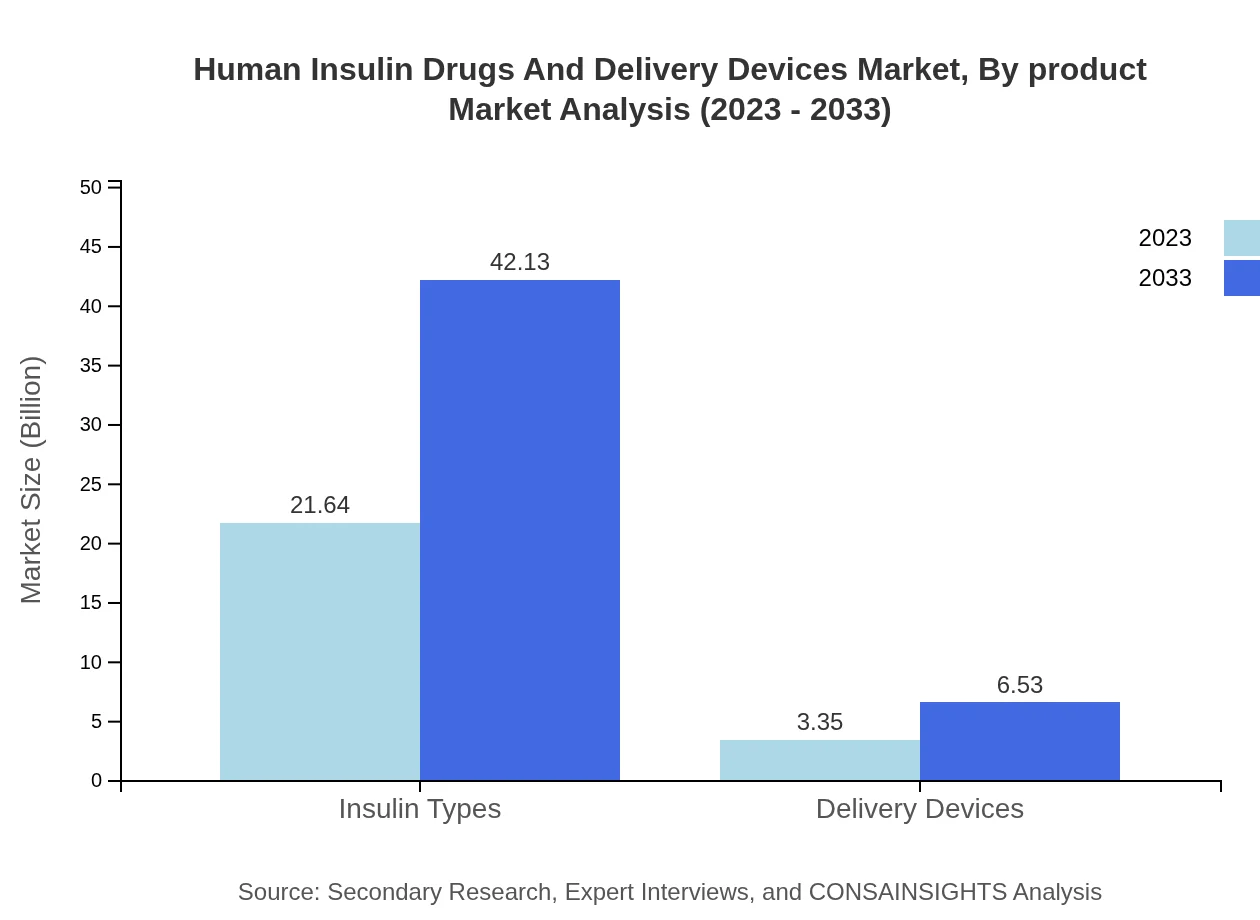
In 2023, the insulin types market size stands at $21.64 billion, with a 86.58% market share, rising to $42.13 billion by 2033. Delivery devices are smaller, at $3.35 billion (13.42% market share) in 2023, projected to rise to $6.53 billion by 2033.
Human Insulin Drugs And Delivery Devices Market Analysis By Application
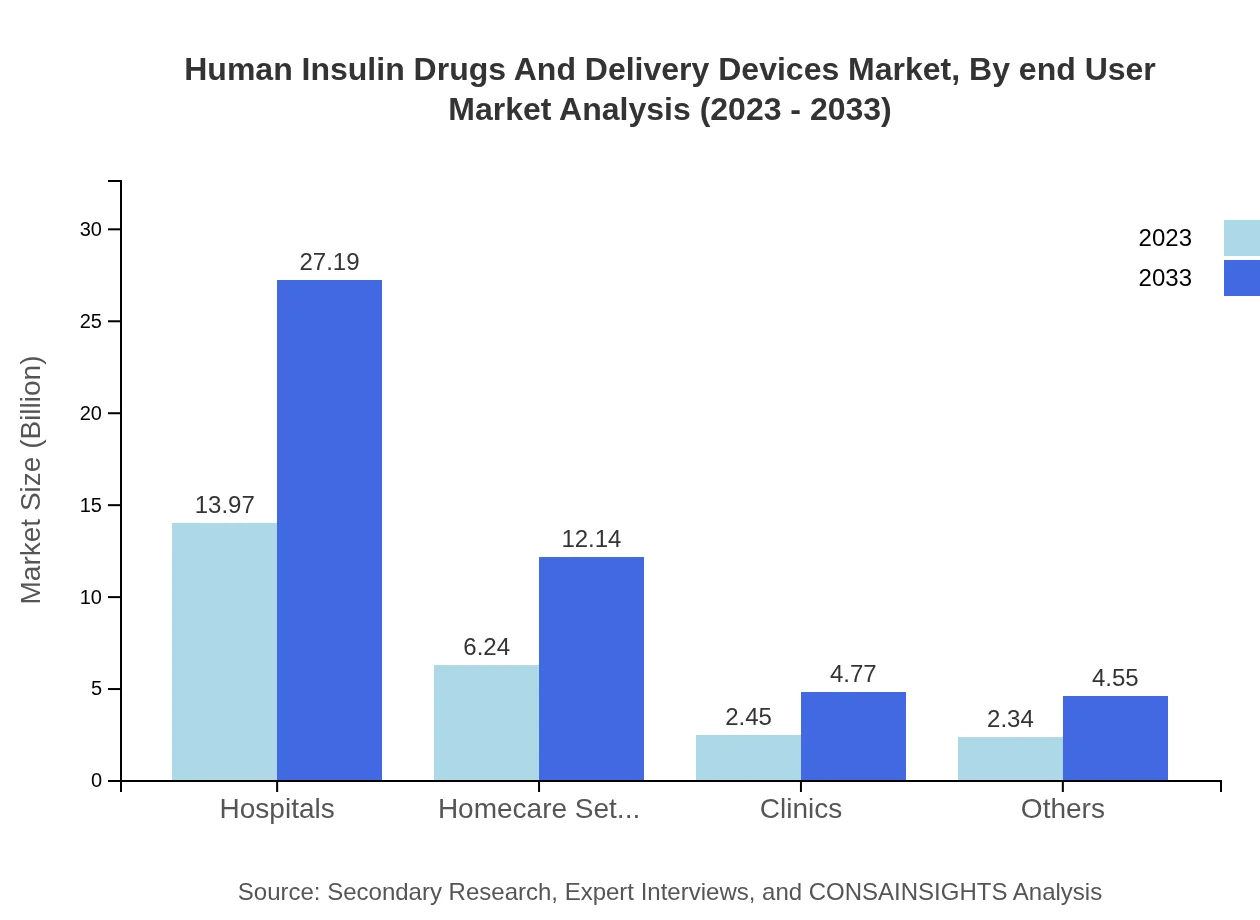
The market size for hospital applications amounts to $13.97 billion in 2023 (55.88% share) and $27.19 billion by 2033. Homecare settings present a size of $6.24 billion (24.96% share) in 2023, potentially reaching $12.14 billion by 2033.
Human Insulin Drugs And Delivery Devices Market Analysis By End User
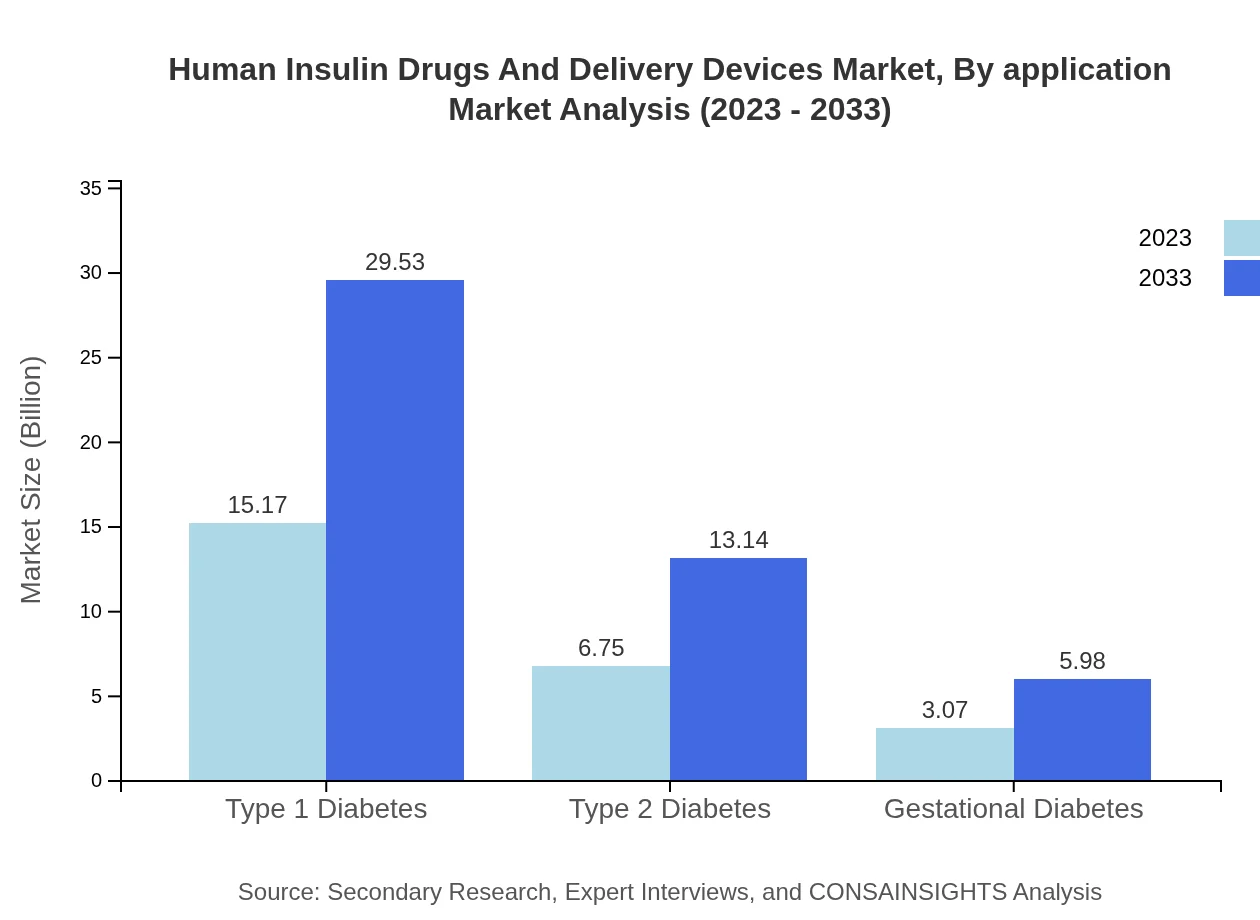
The pediatric market equivalent is $15.17 billion in 2023, forecasted to reach $29.53 billion by 2033, representing a 60.7% share. Adult end-users account for $6.75 billion (27.01% share) in 2023, expanding to $13.14 billion by 2033.
Human Insulin Drugs And Delivery Devices Market Analysis By Mode Of Delivery
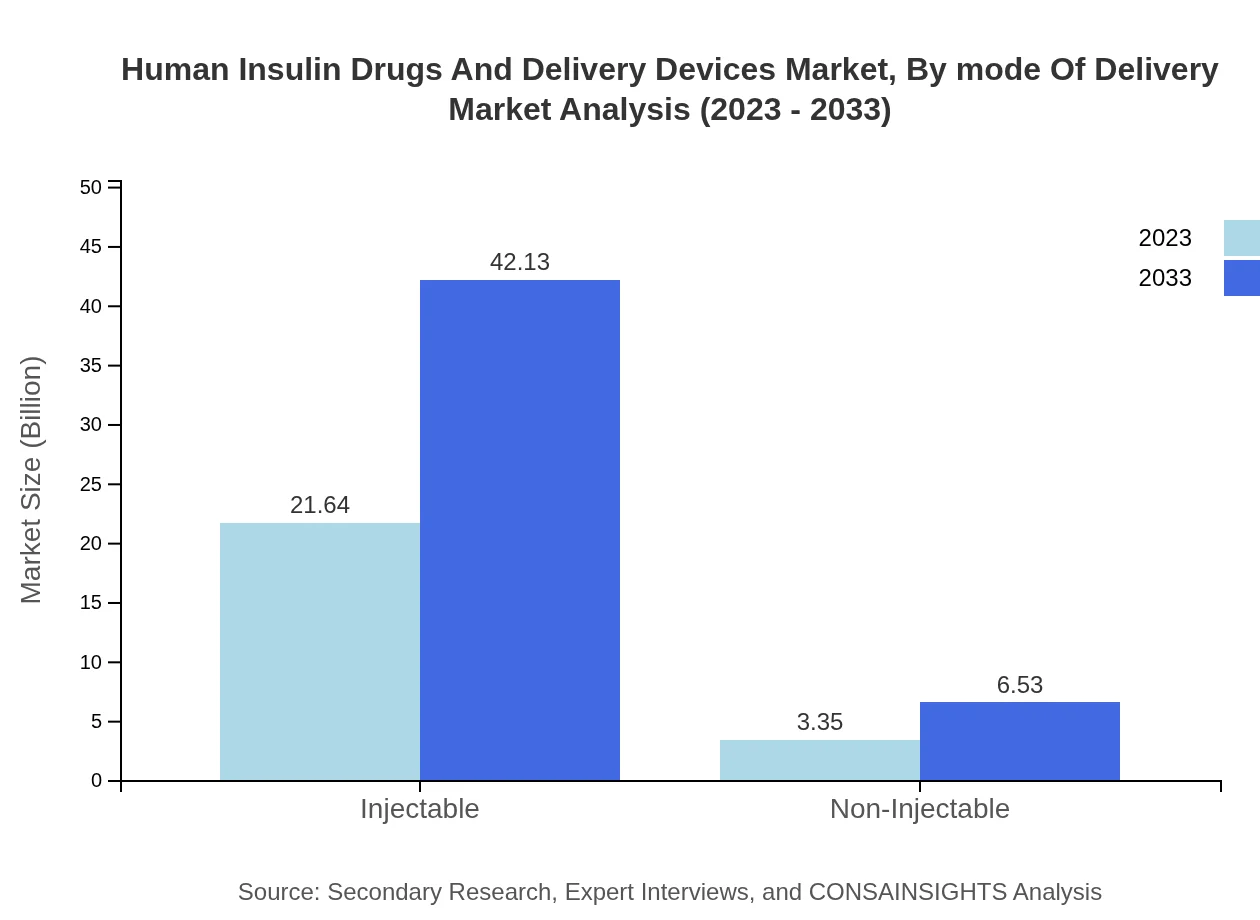
Injectable insulin types dominate the market with $21.64 billion (86.58%) in 2023, expected to double by 2033. Conversely, non-injectable types hold a lesser market of $3.35 billion (13.42%) in 2023, expanding to $6.53 billion by 2033.
Human Insulin Drugs And Delivery Devices Market Analysis By Age Group
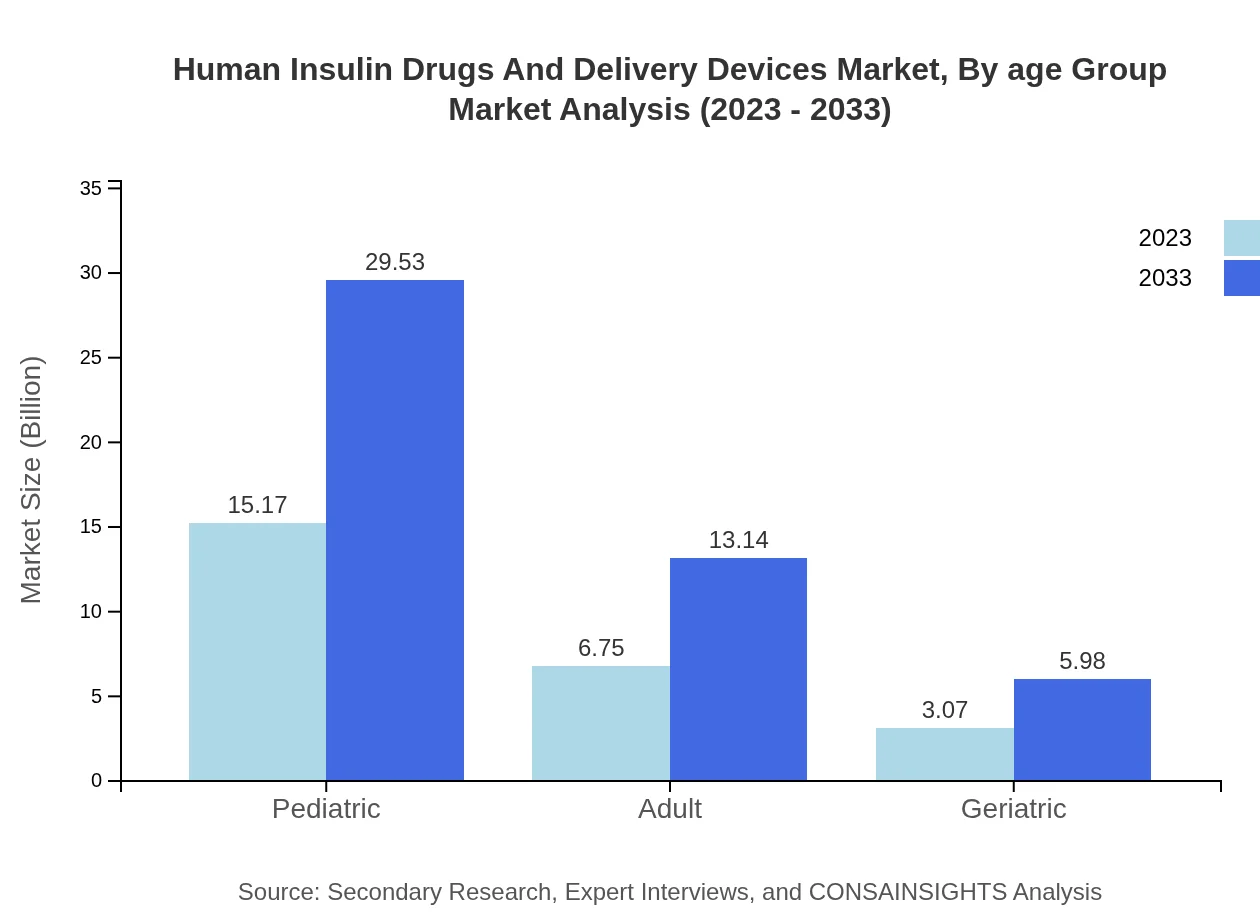
Among age groups, the pediatric segment has historically been prevalent, contributing $15.17 billion in 2023, growing to $29.53 billion by 2033. Geriatric segments, valued at $3.07 billion (12.29%), are expected to increase to $5.98 billion by 2033.
Human Insulin Drugs And Delivery Devices Market Trends and Future Forecast
Tell us your focus area and get a customized research report.
Global Market Leaders and Top Companies in Human Insulin Drugs And Delivery Devices Industry
Novo Nordisk:
A global leader in diabetes care, Novo Nordisk is renowned for its innovative insulin therapies and cutting-edge delivery devices, with a wide array of product offerings targeting various patient needs.Sanofi:
Sanofi specializes in diabetes management solutions, including insulin and insulin delivery devices, committed to enhancing patient quality of life through effective treatment options.Boehringer Ingelheim:
With a focus on biopharmaceuticals, Boehringer Ingelheim is a significant player in the insulin and delivery device market, known for its strong pipeline of innovative therapies.Bristol-Myers Squibb:
Bristol-Myers Squibb has diversified offerings in diabetes management, contributing to improved therapeutic solutions for patients globally.Eli Lilly:
Eli Lilly is a major insulin producer known for its advanced insulin formulations and patient-centric delivery mechanisms, focusing on improving adherence to therapy.We're grateful to work with incredible clients.








FAQs
What is the market size of the Human Insulin Drugs And Delivery Devices market in 2023?
The market size for 2023 is $25.00 Billion as stated in the report, representing the baseline for the 2023 to 2033 forecast period and future growth tracking.
How big will the market be in 2033?
The report projects the market will reach $48.66 Billion by 2033, reflecting anticipated expansion across products, devices, and regional markets over the forecast period.
What is CAGR for the forecast period?
The forecast period 2023 to 2033 shows a compound annual growth rate (CAGR) of 6.7%, indicating steady expansion across the market driven by multiple demand-side factors.
Is there a single fastest Growing region in the Human Insulin Drugs And Delivery Devices Market Report market?
No single fastest-growing region is stated for the Human Insulin Drugs And Delivery Devices Market Report market because the top regional implied CAGR values are within 0.15 percentage points of each other, making the ranking too close to call reliably.
Which companies are highlighted as key players?
Top companies listed in the report include Novo Nordisk, Sanofi, Boehringer Ingelheim, Bristol-Myers Squibb, and Eli Lilly, representing major industry participation in products and devices.
What are main product segments covered?
The report covers insulin types and delivery devices as primary product categories, addressing different formulations and mechanisms for administering human insulin to patients.
How are end User segments defined in the report?
End-user segmentation includes hospitals, homecare settings, clinics, and others, reflecting diverse care environments where insulin therapies and delivery devices are utilized.
What research methods were used to compile the report?
The study is based on expert interviews, company reports and publications, data triangulation, internal validation, and expert-led trend analysis to ensure robust insights.