

Plasma Protein Therapeutics Market Report
First published: 21 October 2024 | Last updated: 25 May 2026 | Report Code: plasma-protein-therapeutics
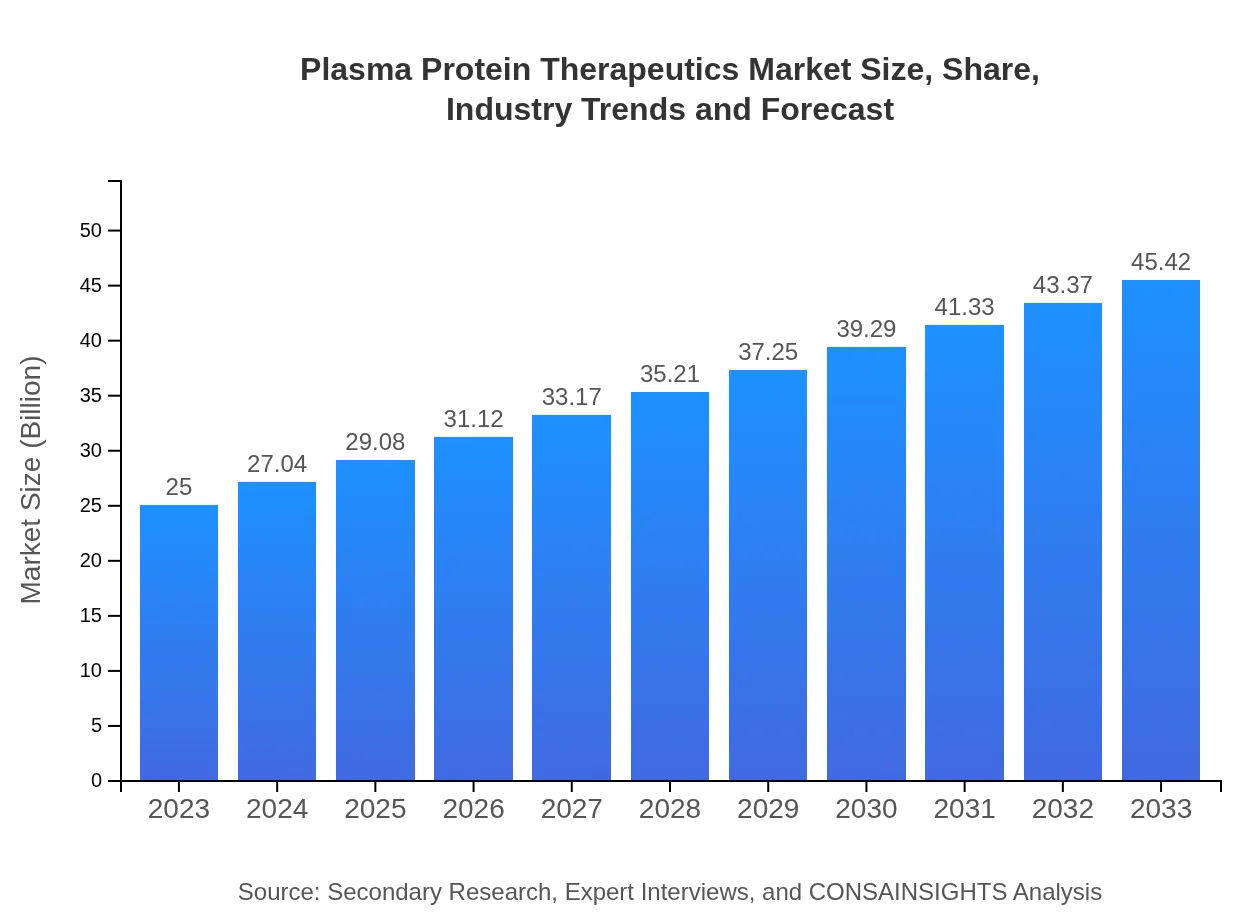
Plasma Protein Therapeutics Market — USD 25 billion in 2023, Growing to USD 45.42B by 2033 at 6% CAGR
This report comprehensively analyzes the Plasma Protein Therapeutics market, highlighting key trends, growth forecasts, and detailed insights across different regions and segments from 2023 to 2033.
Key Takeaways
- Global market grows from $25.00 Billion in 2023 to $45.42 Billion by 2033 at a 6% CAGR.
- North America is largest regional market, while no single fastest-growing region is stated because regional CAGR differences remain within 0.15 percentage points.
- Europe expands from $8.26 Billion in 2023 to $15 Billion in 2033, reflecting sustained therapeutic demand.
- Asia Pacific increases from $4.21 Billion in 2023 to $7.65 Billion in 2033 amid growing treatment adoption.
- Top industry players include Grifols, CSL Behring, Takeda Pharmaceutical Company, AbbVie, and Octapharma.
Plasma Protein Therapeutics Market Report — Executive Summary
North America remains largest market by forecast-period value, while no single fastest-growing region is stated because top regional growth rates are separated by less than 0.15 percentage points. The market for plasma-derived protein therapies is projected to advance from $25.00 Billion in 2023 to $45.42 Billion by 2033, at a 6% CAGR. Growth is supported by rising demand for immunoglobulins and albumin therapies, ongoing biopharmaceutical R&D, and increased healthcare spending. The market structure includes major biopharmaceutical companies, academic research contributors, and diverse distribution routes such as direct sales and wholesale distributors. Regional dynamics vary: North America holds the largest share, while Europe and Asia Pacific show notable expansion in absolute terms. Product segmentation spans immunoglobulins, albumin, coagulation factors and other products; end users include hospitals, clinics and home care. Competitive activity centers on established manufacturers investing in capacity and therapeutic innovation to address immunological, hematological and neurological indications.
Key Growth Drivers
- Rising use of immunoglobulin therapies to manage autoimmune and immune-deficiency conditions.
- Advances in extraction and processing technologies that increase product availability and safety.
- Growing healthcare expenditure and aging populations supporting broader treatment adoption.
- Investment in R&D by major biopharmaceutical companies to expand indications and formulations.
- Expanded distribution networks, including direct sales and wholesale channels, improving market access.
| Metric | Value |
|---|---|
| Study Period | 2023 - 2033 |
| 2023 Market Size | $25.00 Billion |
| CAGR (2023-2033) | 6% |
| 2033 Market Size | $45.42 Billion |
| Top Companies | Grifols, CSL Behring, Takeda Pharmaceutical Company, AbbVie, Octapharma |
| Published Date | 21 October 2024 |
| Last Modified Date | 25 May 2026 |
Plasma Protein Therapeutics Market Overview
Customize Plasma Protein Therapeutics Market Report market research report
- ✔ Get in-depth analysis of Plasma Protein Therapeutics market size, growth, and forecasts.
- ✔ Understand Plasma Protein Therapeutics's regional dynamics and industry-specific trends.
- ✔ Identify potential applications, end-user demand, and growth segments in Plasma Protein Therapeutics
What is the Market Size & CAGR of Plasma Protein Therapeutics Market Report market in 2023?
Plasma Protein Therapeutics Industry Analysis
Plasma Protein Therapeutics Market Segmentation and Scope
Tell us your focus area and get a customized research report.
Plasma Protein Therapeutics Market Report Market Analysis Report by Region
Europe Plasma Protein Therapeutics Market Report:
Europe grows from $8.26 Billion in 2023 to $15 Billion in 2033. Demand for immunoglobulins and albumin, supportive healthcare frameworks and research activity underpin regional growth over the forecast period.Asia Pacific Plasma Protein Therapeutics Market Report:
Asia Pacific grows from $4.21 Billion in 2023 to $7.65 Billion in 2033. Growth is driven by expanding healthcare access, rising therapeutic adoption and increased local investment in biopharmaceutical capabilities.North America Plasma Protein Therapeutics Market Report:
North America is largest regional market, rising from $9.03 Billion in 2023 to $16.4 Billion in 2033. Expansion reflects high treatment uptake, established plasma collection and processing capacity, and significant investment by major biopharmaceutical companies.South America Plasma Protein Therapeutics Market Report:
Latin America grows from $0.69 Billion in 2023 to $1.25 Billion in 2033. Market expansion is linked to improving healthcare infrastructure, greater treatment availability and gradual increases in therapeutic uptake.Middle East & Africa Plasma Protein Therapeutics Market Report:
Middle East and Africa grows from $2.81 Billion in 2023 to $5.11 Billion in 2033. Progress reflects developing clinical services, increased health spending and efforts to broaden access to plasma-derived treatments.Tell us your focus area and get a customized research report.
Research Methodology
Plasma Protein Therapeutics Market Analysis By Product
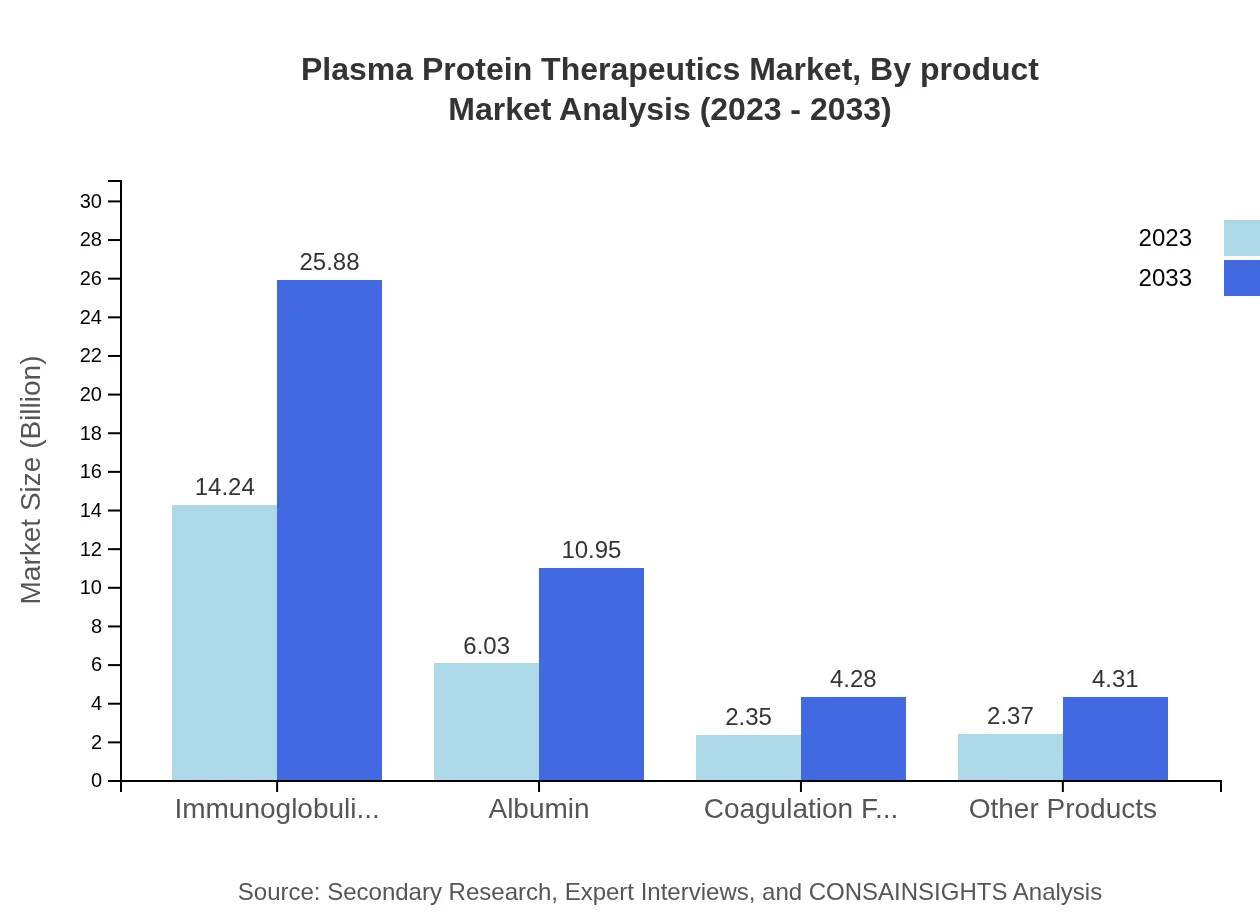
The product segmentation reveals that immunoglobulins dominate the market, expected to total USD 25.88 billion in size by 2033, holding around 56.98% market share. Albumin follows, projected to reach USD 10.95 billion representing 24.12% of the market share. Coagulation factors and other products contribute significantly, underscoring the diverse therapeutic potentials of plasma protein therapies.
Plasma Protein Therapeutics Market Analysis By Application
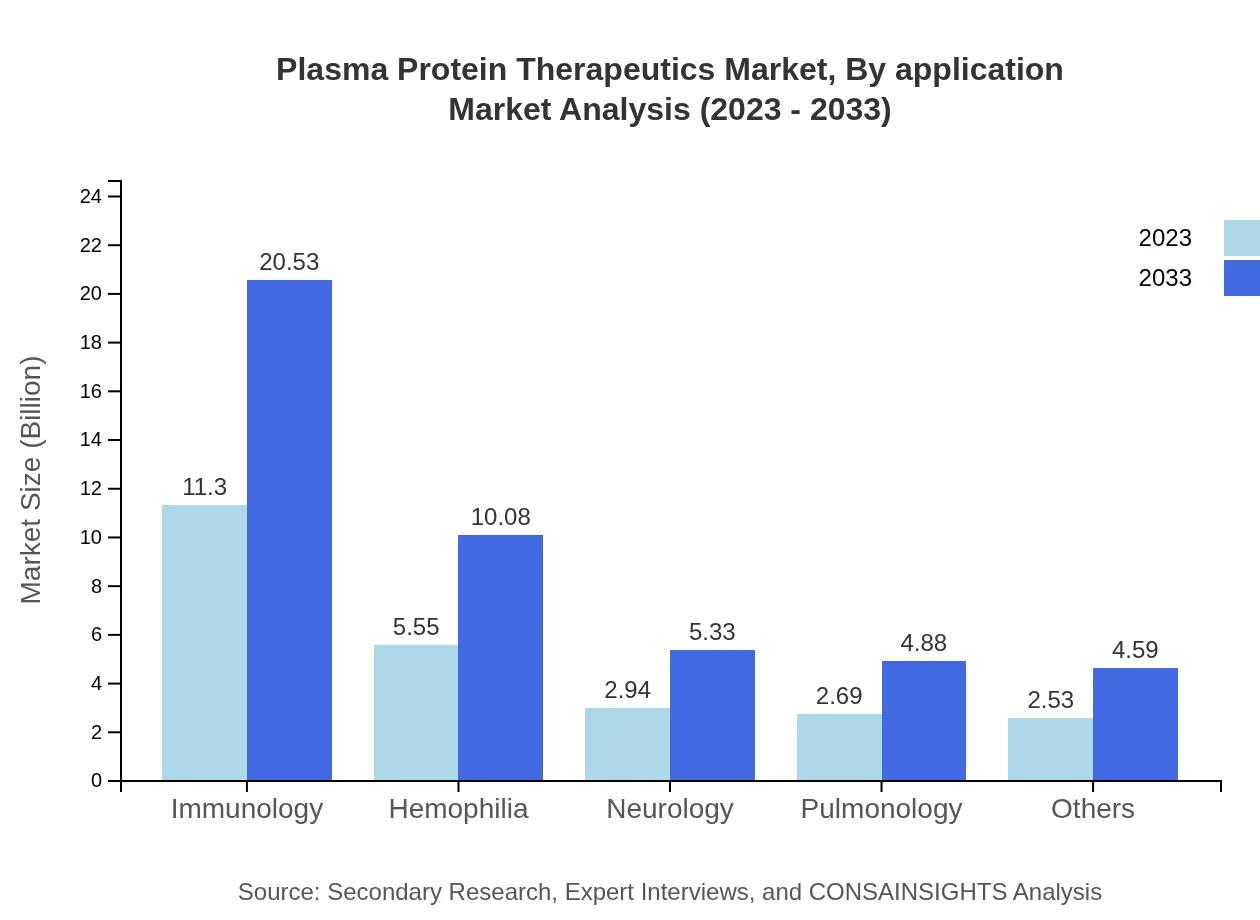
In terms of application, the immunology segment leads with expected revenues of USD 20.53 billion by 2033, comprising 45.21% of the market share. Hemophilia represents a major segment as well, with estimations of USD 10.08 billion. This indicates that treatment for chronic conditions is a key focus area in the plasma protein market.
Plasma Protein Therapeutics Market Analysis By End User
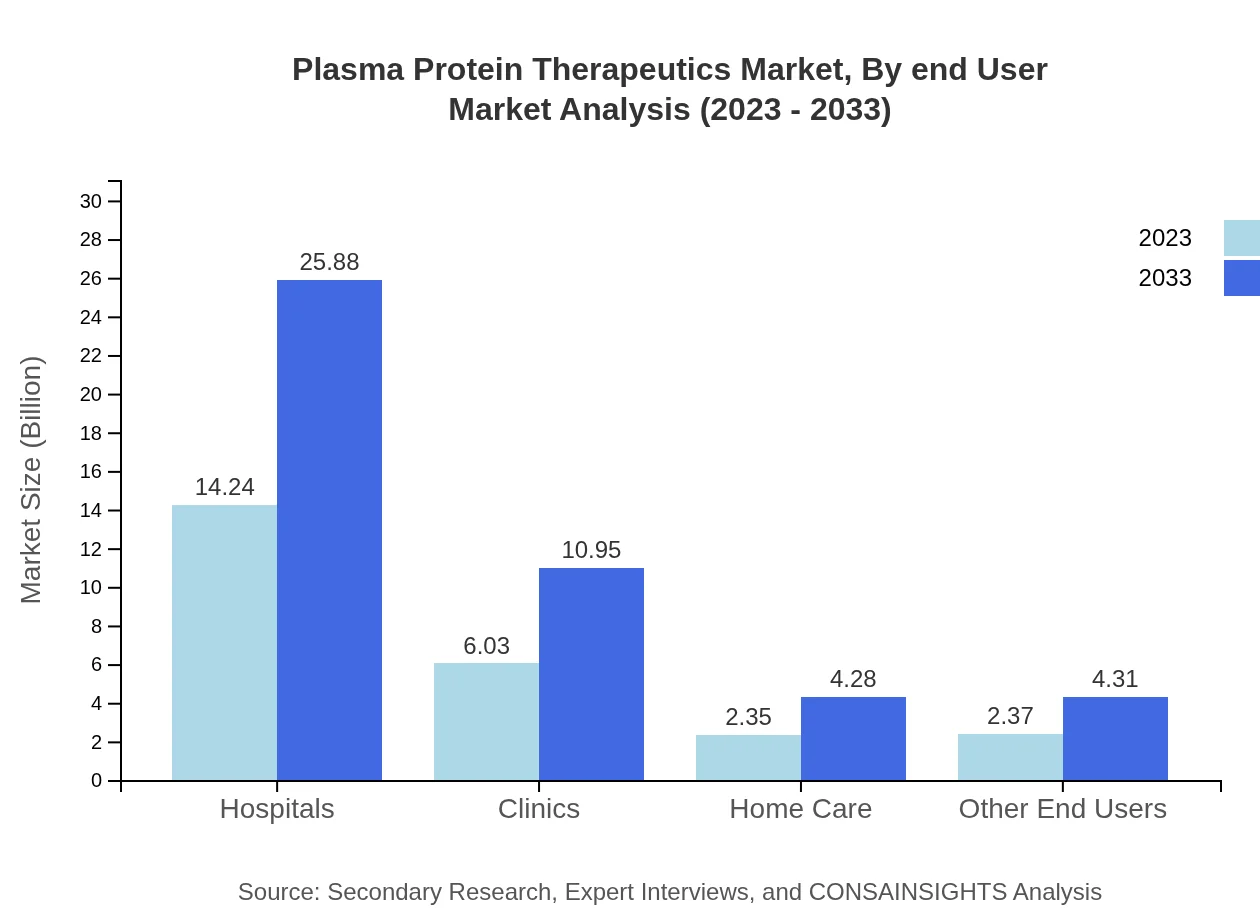
Hospitals, as the primary end-user, are projected to hold USD 25.88 billion market share by 2033 (56.98%). Clinics and home care settings will also see increased adoption, highlighting shifts in patient treatment modalities and care settings in the plasma therapeutics landscape.
Plasma Protein Therapeutics Market Analysis By Distribution Channel
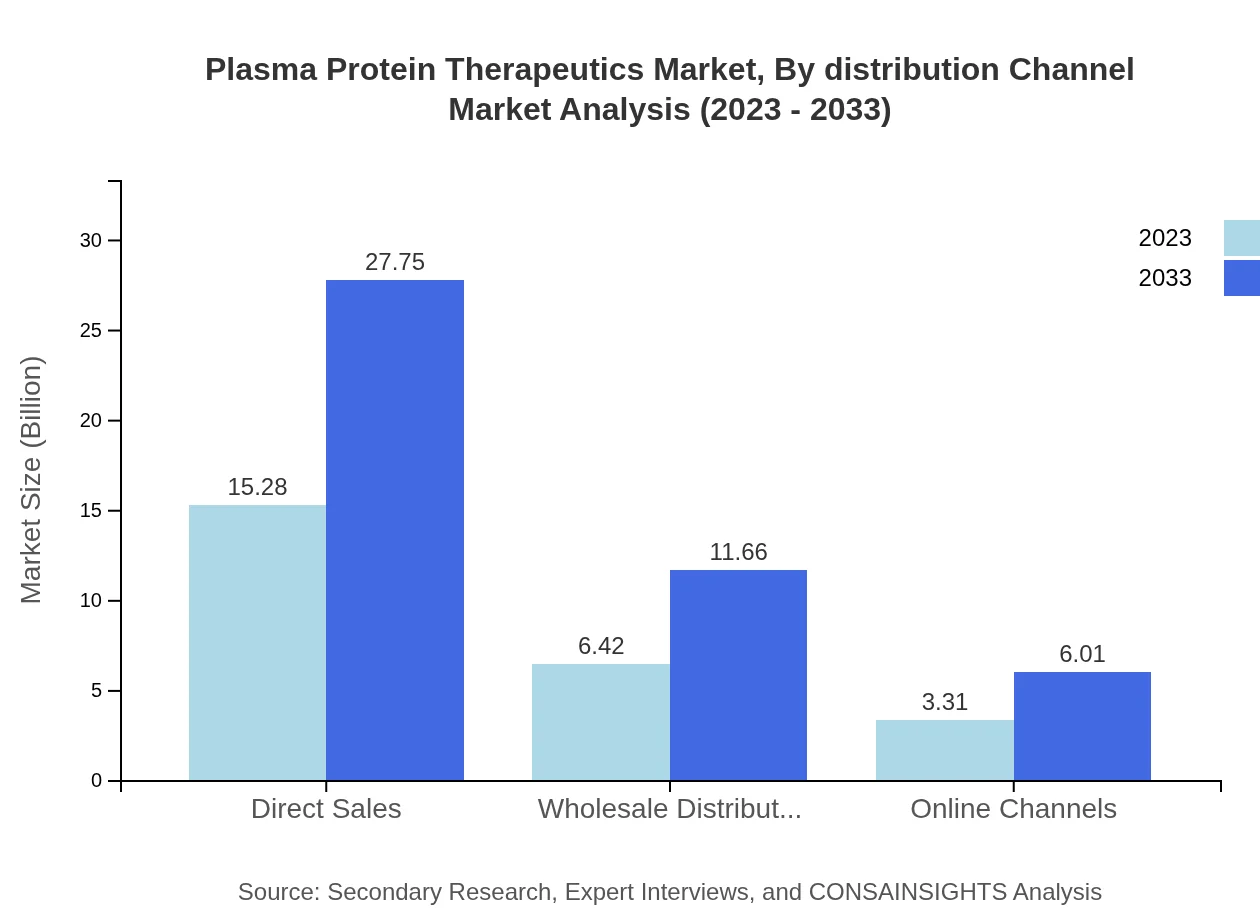
The distribution channels segment reflects a dominance of direct sales, representing 61.1% of market share. Emerging channels such as online sales are also on the rise, showcasing the evolution of how therapies are accessed by healthcare providers and patients alike.
Plasma Protein Therapeutics Market Analysis By Manufacturer
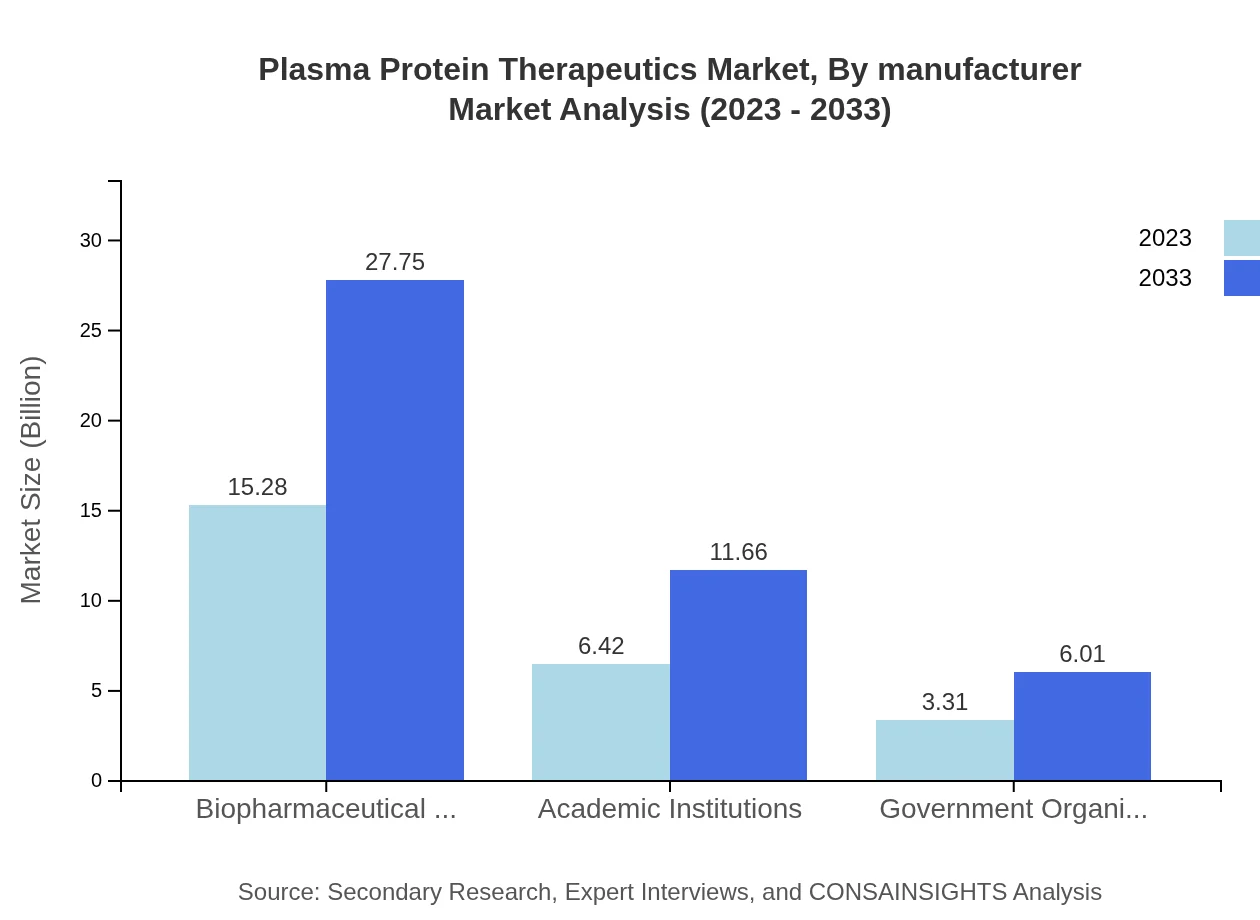
Biopharmaceutical companies dominate the manufacturer segment with approximately 61.1% of the market share. Their focus on innovation and expansion into diverse therapeutic areas is crucial for continued growth in the Plasma Protein Therapeutics sector.
Plasma Protein Therapeutics Market Trends and Future Forecast
Tell us your focus area and get a customized research report.
Global Market Leaders and Top Companies in Plasma Protein Therapeutics Industry
Grifols:
A global healthcare company specializing in the production of plasma-derived medicines, Grifols leads the industry in innovation and research initiatives.CSL Behring:
Recognized for its extensive range of therapies derived from human plasma, CSL Behring maintains a strong market presence through continual product development and outreach.Takeda Pharmaceutical Company:
With a focus on transformative therapies for patients, Takeda invests heavily in R&D, enhancing its portfolio in plasma therapeutics.AbbVie:
A major player with extensive offerings in immunology, AbbVie is instrumental in expanding treatment options for patients with plasma-derived therapies.Octapharma:
Known for its high-quality plasmaderived therapies, Octapharma emphasizes innovation and patient-centered care in its approach.We're grateful to work with incredible clients.









FAQs
What is the market size of the Plasma Protein Therapeutics Market Report in 2023?
The market size in 2023 is $25.00 Billion, reflecting current demand for plasma-derived therapies such as immunoglobulins, albumin and coagulation factors.
How big will the market be in 2033?
By 2033 the market is projected to reach $45.42 Billion according to the forecast, driven by therapeutic demand and industry investment.
What is CAGR for the forecast period?
The reported compound annual growth rate for 2023 to 2033 is 6%, representing steady expansion over the ten-year outlook.
Is there a single fastest Growing region in the Plasma Protein Therapeutics Market Report market?
No single fastest-growing region is stated for the Plasma Protein Therapeutics Market Report market because the top regional implied CAGR values are within 0.15 percentage points of each other, making the ranking too close to call reliably.
Why are immunoglobulins important to market growth?
Immunoglobulins are key therapeutic agents for immune disorders, contributing significantly to demand and supporting broader market expansion.
Who are the top companies in this market?
Key companies listed include Grifols, CSL Behring, Takeda Pharmaceutical Company, AbbVie and Octapharma as prominent market participants.
What is the major product segmentation?
Product segmentation covers immunoglobulins, albumin, coagulation factors and other products, reflecting the clinical uses of plasma-derived therapies.
How are distribution channels organized?
Distribution channels include direct sales, wholesale distributors and online channels, enabling manufacturers to reach hospitals, clinics and home care providers.
What drives regional variation in market growth?
Regional differences stem from healthcare spending, treatment adoption rates, R&D investment and availability of plasma collection and processing infrastructure.
Which end users purchase plasma protein therapeutics?
Primary end users comprise hospitals, clinics and home care services, with other end users also participating based on local care models.