

Orthobiologics Market Report
First published: 11 October 2024 | Last updated: 28 May 2026 | Report Code: orthobiologics
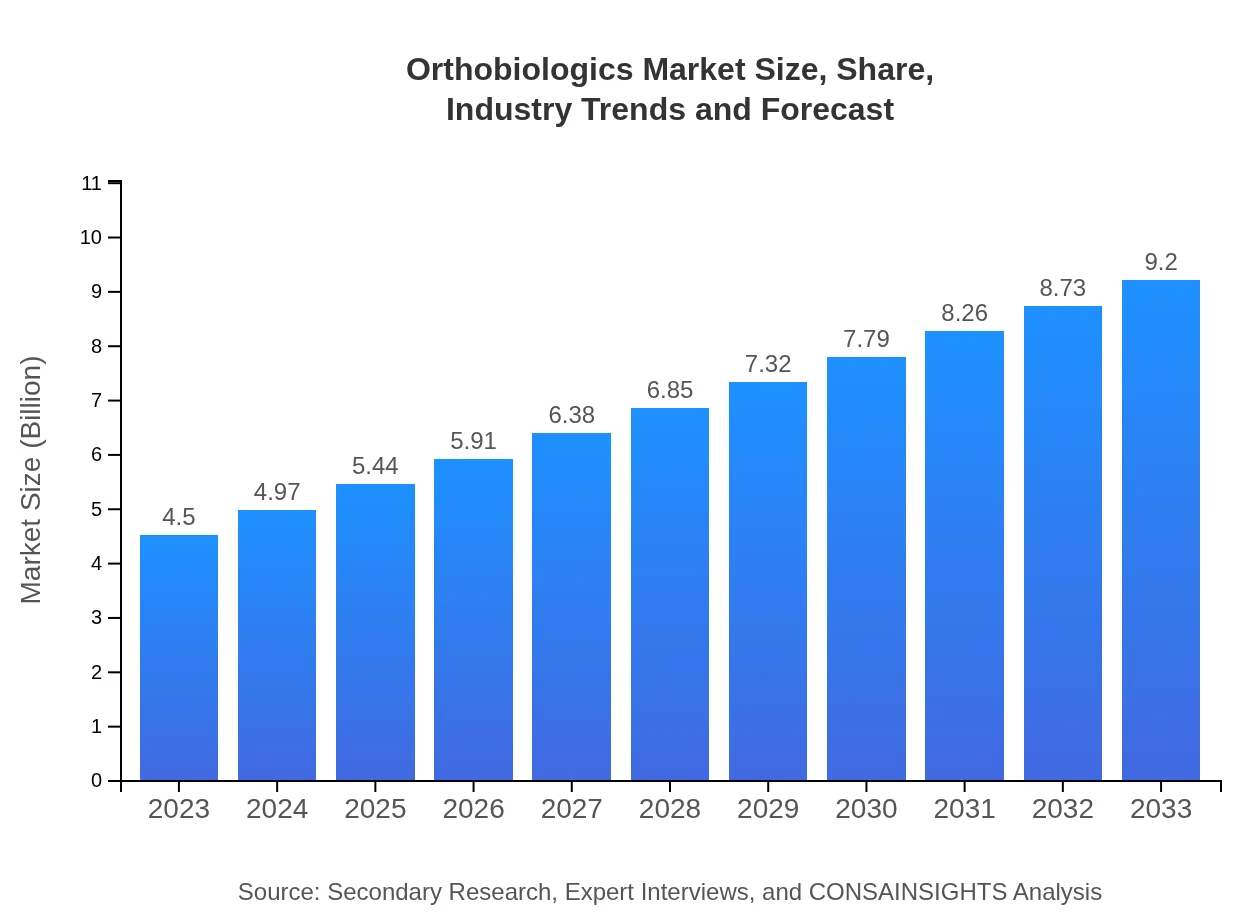
Orthobiologics Market — USD $4.5 Billion in 2023, Growing to USD 9.20null by 2033 at 7.2% CAGR
This report delves into the Orthobiologics market, providing comprehensive insights and data analysis for the forecast period from 2023 to 2033. It includes key trends, market segmentation, and regional dynamics, aimed at equipping stakeholders with essential information for strategic planning.
Key Takeaways
- Global market expands from $4.50 Billion in 2023 to $9.20 Billion in 2033 at a 7.2% CAGR.
- North America is largest regional market; Latin America is regional market region based on implied CAGR across 2023 to 2033.
- Latin America is identified as the regional market region, increasing from $0.08 Billion in 2023 to $0.17 Billion in 2033.
- Europe moves from $1.4 Billion in 2023 to $2.86 Billion in 2033, reflecting steady regional development.
- Top companies include Medtronic, DePuy Synthes (Johnson & Johnson), Stryker Corporation, and Zimmer Biomet.
Orthobiologics Market Report — Executive Summary
Regional analysis shows North America as largest market and Latin America as fastest-growing region by implied CAGR. The Orthobiologics market shows sustained growth driven by rising demand for regenerative treatments and minimally invasive procedures. Market value increases from $4.50 Billion in 2023 to $9.20 Billion in 2033, supported by technological advances in cellular and acellular therapies and broader clinical acceptance. North America remains the largest regional market while Latin America is identified as the regional market region. Key product segments include cellular and acellular therapies used across orthopedic surgery, sports medicine, and dental applications. Major firms such as Medtronic, DePuy Synthes (Johnson & Johnson), Stryker Corporation, and Zimmer Biomet influence competitive dynamics through product introductions and partnerships. The report’s structure covers market sizing, segmented demand by product and end user, regional performance, and regulatory and clinical trends shaping adoption. Stakeholders can use these findings to prioritize investment, distribution, and R&D strategies aligned with emerging clinical needs and demographic shifts.
Key Growth Drivers
- Increasing prevalence of orthopedic disorders and sports injuries boosting demand for regenerative solutions.
- Advances in cellular and acellular therapy technologies improving treatment options and clinical outcomes.
- Growing preference for minimally invasive surgeries that integrate orthobiologic products.
- Expansion of geriatric patient populations and rising healthcare awareness supporting larger procedural volumes.
- Active participation of established medical-device firms introducing new orthobiologic offerings and partnerships.
| Metric | Value |
|---|---|
| Study Period | 2023 - 2033 |
| 2023 Market Size | $4.50 Billion |
| CAGR (2023-2033) | 7.2% |
| 2033 Market Size | $9.20 Billion |
| Top Companies | Medtronic , DePuy Synthes (Johnson & Johnson), Stryker Corporation, Zimmer Biomet |
| Published Date | 11 October 2024 |
| Last Modified Date | 28 May 2026 |
Orthobiologics Market Overview
Customize Orthobiologics Market Report market research report
- ✔ Get in-depth analysis of Orthobiologics market size, growth, and forecasts.
- ✔ Understand Orthobiologics's regional dynamics and industry-specific trends.
- ✔ Identify potential applications, end-user demand, and growth segments in Orthobiologics
What is the Market Size & CAGR of Orthobiologics Market Report market in 2023?
Orthobiologics Industry Analysis
Orthobiologics Market Segmentation and Scope
Tell us your focus area and get a customized research report.
Orthobiologics Market Report Market Analysis Report by Region
Europe Orthobiologics Market Report:
Europe grows from $1.4 Billion in 2023 to $2.86 Billion in 2033. Growth reflects increasing clinical uptake of regenerative treatments, ongoing development in cellular and acellular products, and broader utilization in orthopedic surgery and sports medicine.Asia Pacific Orthobiologics Market Report:
Asia Pacific grows from $0.8 Billion in 2023 to $1.63 Billion in 2033. Regional drivers include rising procedure volumes, expanding access to advanced therapies, and a growing geriatric population increasing demand for regenerative orthopedic solutions.North America Orthobiologics Market Report:
North America is largest regional market, rising from $1.7 Billion in 2023 to $3.47 Billion in 2033. Regional expansion is linked to advanced clinical infrastructure, early adoption of novel orthobiologic therapies, and active participation by major device and biotech companies.South America Orthobiologics Market Report:
Latin America is fastest-growing region by implied CAGR, increasing from $0.08 Billion in 2023 to $0.17 Billion in 2033. 08 Billion in 2023 to $0.17 Billion in 2033 and is named the regional growth market at an implied 7.83% CAGR. Growth is supported by expanding healthcare capacity and growing interest in regenerative treatment options.Middle East & Africa Orthobiologics Market Report:
Middle East and Africa grows from $0.53 Billion in 2023 to $1.08 Billion in 2033. Market progress is driven by improving healthcare infrastructure, rising awareness of orthobiologic interventions, and gradual adoption of advanced biomaterials and therapies.Tell us your focus area and get a customized research report.
Research Methodology
Orthobiologics Market Analysis By Product
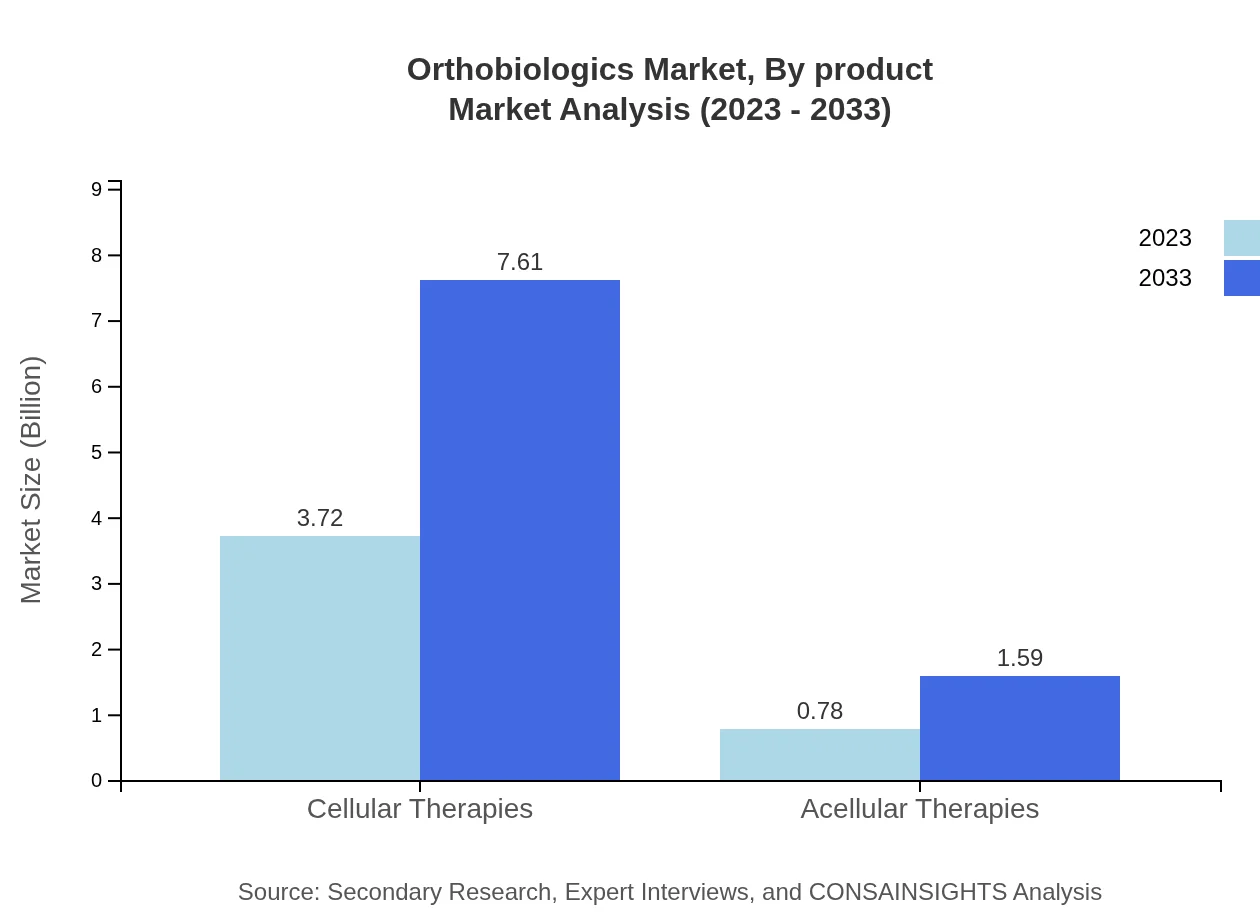
In terms of product analysis, cellular therapies dominate the sector, expected to grow from $3.72 billion in 2023 to $7.61 billion by 2033, maintaining a market share of 82.7%. Conversely, acellular therapies are projected to increase from $0.78 billion in 2023 to $1.59 billion by 2033, capturing a market share of 17.3%.
Orthobiologics Market Analysis By Application
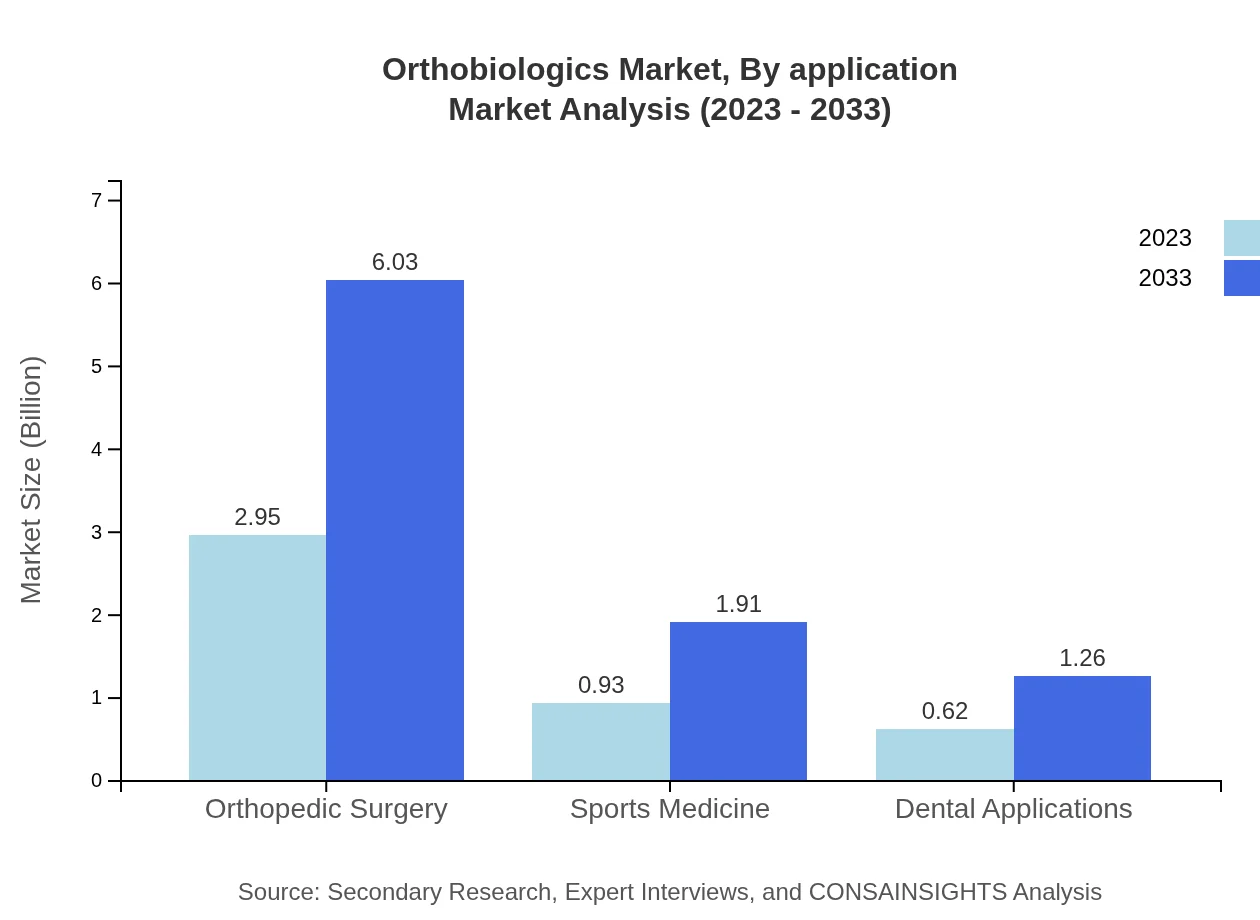
The market segmentation by application sees orthopedic surgery leading with a size of $2.95 billion in 2023, growing to $6.03 billion by 2033, representing a stable share of 65.51%. The sports medicine application also shows growth, progressing from $0.93 billion to $1.91 billion by 2033.
Orthobiologics Market Analysis By End User
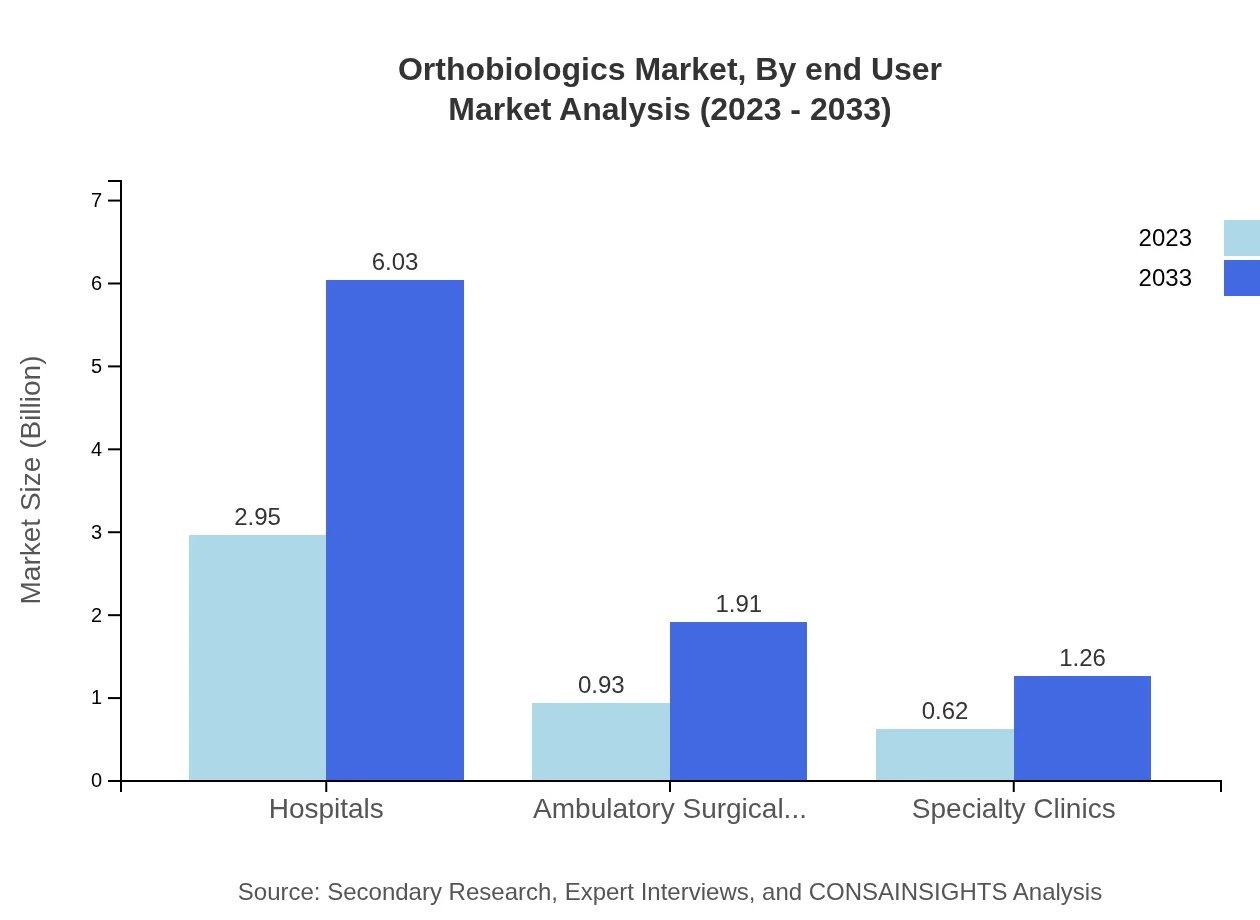
Hospitals remain the primary end-user, with a market size growth from $2.95 billion in 2023 to $6.03 billion by 2033, holding a share of 65.51%. Other significant end-users include ambulatory surgical centers and specialty clinics, which are crucial to market dynamics.
Orthobiologics Market Analysis By Route Of Administration
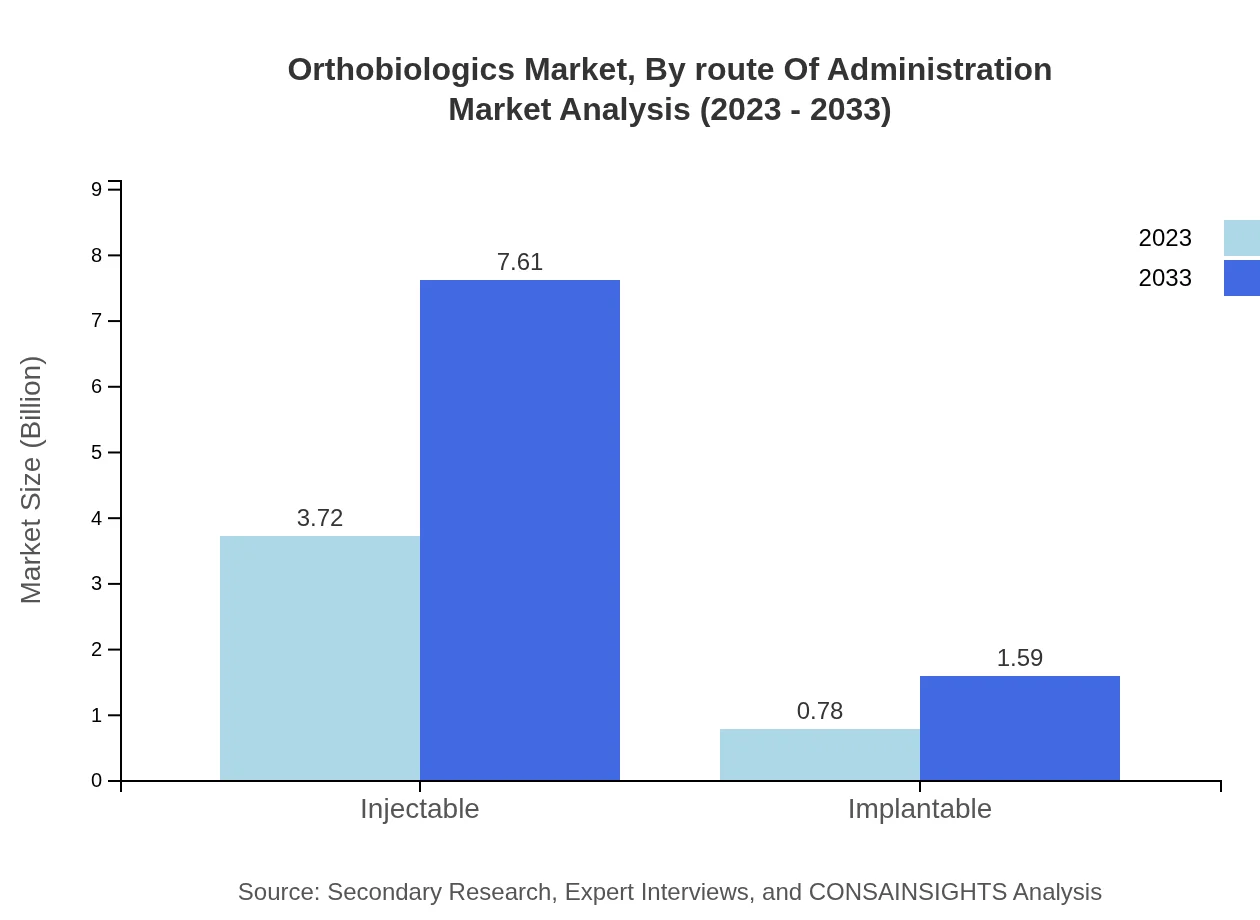
Injectable products are forecasted to dominate, achieving a size of $3.72 billion by 2033, while implantable products are expected to reach $0.78 billion. Both categories are essential in offering tailored solutions for patients undergoing interventions.
Orthobiologics Market Analysis By Region Type
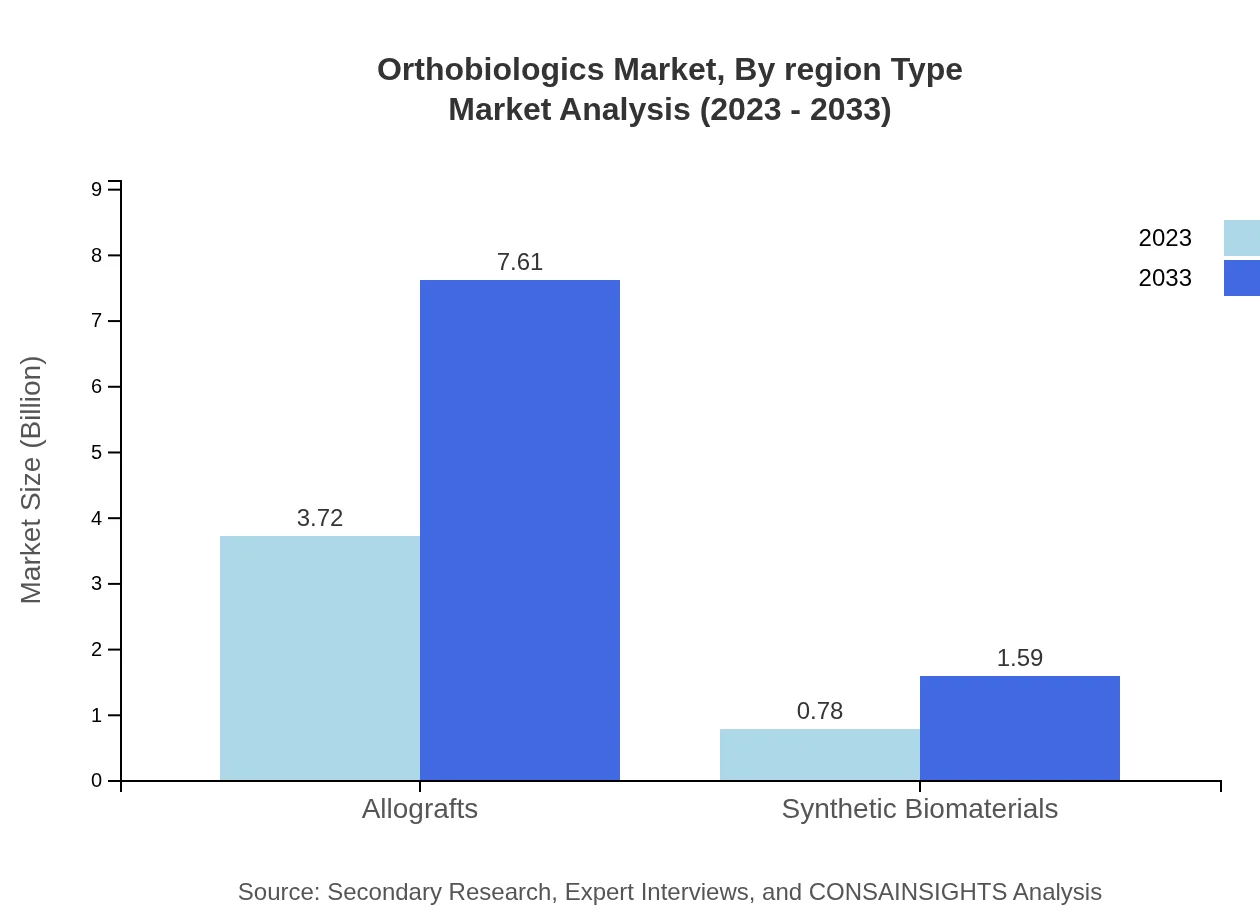
The assessment by region reaffirms the strong position of North America and Europe in the Orthobiologics market, while emerging markets in Asia Pacific and Latin America showcase lucrative potentials for growth owing to increasing investments and the demand for innovative medical solutions.
Orthobiologics Market Trends and Future Forecast
Tell us your focus area and get a customized research report.
Global Market Leaders and Top Companies in Orthobiologics Industry
Medtronic :
A leading player in the global market, Medtronic specializes in innovative technologies for surgical solutions, orthopedic, and regenerative medicine, contributing significantly to the Orthobiologics landscape.DePuy Synthes (Johnson & Johnson):
Known for its advanced solutions in orthopedic care, DePuy Synthes is recognized for its broad portfolio of Orthobiologics that supports patient healing and rehabilitation.Stryker Corporation:
Stryker focuses on enhancing surgical outcomes through innovative orthopedic solutions and has made substantial advancements in the Orthobiologics sector.Zimmer Biomet:
Zimmer Biomet has established itself as a pioneer in orthopedic solutions, providing a wide range of products in Orthobiologics aimed at enhancing the recovery process.We're grateful to work with incredible clients.








FAQs
What is the market size of the Orthobiologics Market Report in 2023?
The market size in 2023 is $4.50 Billion, as stated in the report data and used as the base year reference for the 2023 to 2033 forecast period.
How big is the Orthobiologics market expected to be in 2033?
The projected market value for 2033 is $9.20 Billion, based on the provided forecast which runs from 2023 to 2033 with documented growth assumptions.
What is CAGR for the Orthobiologics market over the forecast period?
The compound annual growth rate for 2023 to 2033 is 7.2% as specified in the provided market data for the forecast horizon.
Which region is the fastest Growing in the Orthobiologics Market Report market?
Latin America is the fastest-growing region, projected to expand from $0.08 Billion in 2023 to $0.17 Billion in 2033, reflecting an implied 7.83% CAGR over the forecast period.
Which region is described as the fastest Growing?
Latin America is called the regional market region with an implied 7.83% CAGR, moving from $0.08 Billion in 2023 to $0.17 Billion in 2033.
Who are the leading companies noted in the report?
Top companies listed include Medtronic, DePuy Synthes (Johnson & Johnson), Stryker Corporation, and Zimmer Biomet as key market participants.
What are the primary product segments covered in the report?
The report covers cellular therapies and acellular therapies as principal product categories, each serving multiple clinical applications across orthopedic care.
How big is Europe’s orthobiologics market in 2023 and 2033?
Europe’s market is reported at $1.4 Billion in 2023 and grows to $2.86 Billion by 2033 according to the regional figures provided.
What drives adoption of orthobiologic therapies in hospitals and clinics?
Adoption is driven by improved clinical evidence, demand for regenerative treatments, and integration into orthopedic surgery and sports medicine pathways.
What factors influence market forecasts in this report?
Forecasts rely on trends in technology, clinical acceptance, demographic shifts, regional performance, and company activities as described in the research inputs.