

Pandemic Influenza Vaccine Market Report
First published: 07 October 2024 | Last updated: 25 May 2026 | Report Code: pandemic-influenza-vaccine
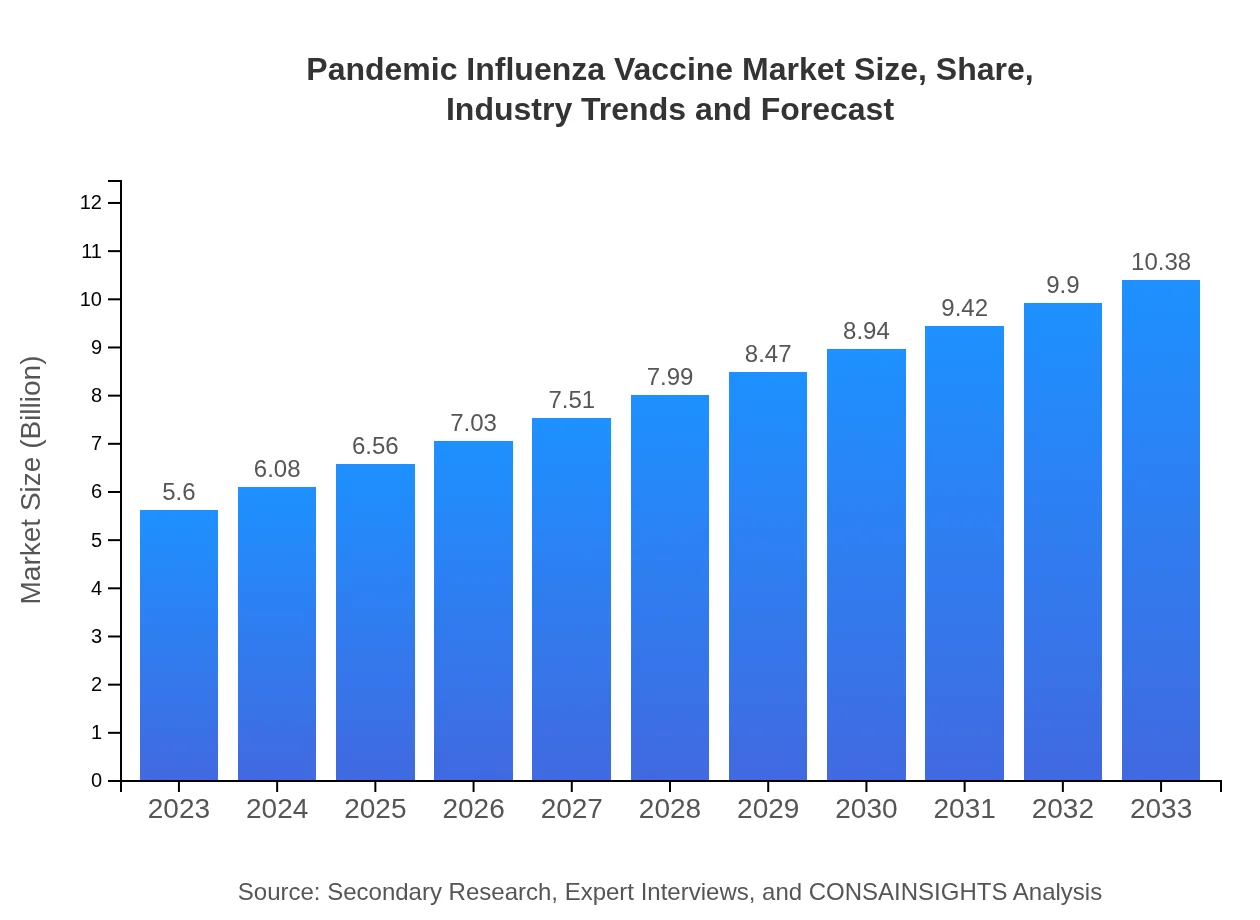
Pandemic Influenza Vaccine Market — USD 5.6 billion in 2023, Growing to USD 10.38B by 2033 at 6.2% CAGR
This report provides a comprehensive analysis of the Pandemic Influenza Vaccine market, complete with insights on segmentation, regional performance, growth forecasts, and key industry trends from 2023 to 2033.
Key Takeaways
- Global market projected to expand from $5.60 Billion (2023) to $10.38 Billion (2033) at a 6.2% CAGR.
- North America is largest regional market, while no single fastest-growing region is stated because regional CAGR differences remain within 0.15 percentage points.
- Europe and Asia Pacific show substantial increases: Europe from $1.5 Billion to $2.79 Billion; Asia Pacific from $1.13 Billion to $2.09 Billion.
- Top firms include Pfizer Inc., Sanofi Pasteur, GlaxoSmithKline (GSK), Moderna, Inc., and Merck & Co.
- Segments cover by-product, application, manufacturer, and distribution-channel with multiple subsegments listed in the report.
Pandemic Influenza Vaccine Market Report — Executive Summary
North America remains largest market by forecast-period value, while no single fastest-growing region is stated because top regional growth rates are separated by less than 0.15 percentage points. This report assesses the Pandemic Influenza Vaccine market through 2023 to 2033, documenting growth drivers, segment structures, and regional performance. Market value increases from $5.60 Billion in 2023 to $10.38 Billion in 2033, reflecting a 6.2% CAGR. Demand is supported by heightened pandemic preparedness, public health initiatives, and technological advances in vaccine platforms. The analysis examines product categories, applications for human and animal use, manufacturer types, and distribution channels such as government programs, hospitals, and pharmacies. The competitive overview highlights established vaccine producers including Pfizer Inc., Sanofi Pasteur, GlaxoSmithKline (GSK), Moderna, Inc., and Merck & Co. Methodology combines expert interviews, company publications, and data triangulation to validate trends and projections. Regional detail identifies North America as the largest market by 2033. The report is intended for stakeholders seeking a concise, data-driven view of market structure and near-term opportunities.
Key Growth Drivers
- Expanded public health preparedness and government vaccination initiatives supporting procurement and distribution.
- Advances in vaccine technologies and production methods improving efficacy and scalability.
- Rising awareness of pandemic risks driving higher immunization rates and policy support.
- Broadening manufacturer participation from large pharmaceutical and biotech firms increasing supply options.
| Metric | Value |
|---|---|
| Study Period | 2023 - 2033 |
| 2023 Market Size | $5.60 Billion |
| CAGR (2023-2033) | 6.2% |
| 2033 Market Size | $10.38 Billion |
| Top Companies | Pfizer Inc., Sanofi Pasteur, GlaxoSmithKline (GSK), Moderna, Inc., Merck & Co. |
| Published Date | 07 October 2024 |
| Last Modified Date | 25 May 2026 |
Pandemic Influenza Vaccine Market Overview
Customize Pandemic Influenza Vaccine Market Report market research report
- ✔ Get in-depth analysis of Pandemic Influenza Vaccine market size, growth, and forecasts.
- ✔ Understand Pandemic Influenza Vaccine's regional dynamics and industry-specific trends.
- ✔ Identify potential applications, end-user demand, and growth segments in Pandemic Influenza Vaccine
What is the Market Size & CAGR of Pandemic Influenza Vaccine Market Report market in 2023?
Pandemic Influenza Vaccine Industry Analysis
Pandemic Influenza Vaccine Market Segmentation and Scope
Tell us your focus area and get a customized research report.
Pandemic Influenza Vaccine Market Report Market Analysis Report by Region
Europe Pandemic Influenza Vaccine Market Report:
Europe grows from $1.5 Billion in 2023 to $2.79 Billion in 2033. Regional expansion is tied to public vaccination campaigns, regulatory frameworks supporting immunization, and adoption of newer vaccine technologies.Asia Pacific Pandemic Influenza Vaccine Market Report:
Asia Pacific grows from $1.13 Billion in 2023 to $2.09 Billion in 2033. Growth reflects increasing awareness of pandemic risk, strengthening health infrastructure, and growing engagement with vaccine producers.North America Pandemic Influenza Vaccine Market Report:
North America is largest regional market, rising from $2.02 Billion in 2023 to $3.75 Billion in 2033. This regional rise aligns with extensive public health procurement, significant presence of major vaccine manufacturers, and policy emphasis on pandemic readiness.South America Pandemic Influenza Vaccine Market Report:
Latin America grows from $0.18 Billion in 2023 to $0.33 Billion in 2033. Uptake is influenced by government initiatives and efforts to improve vaccine access within national immunization strategies.Middle East & Africa Pandemic Influenza Vaccine Market Report:
Middle East and Africa grows from $0.77 Billion in 2023 to $1.43 Billion in 2033. Regional progress is driven by expanding vaccination programs, health system investments, and targeted pandemic preparedness measures.Tell us your focus area and get a customized research report.
Research Methodology
Pandemic Influenza Vaccine Market Analysis By Product
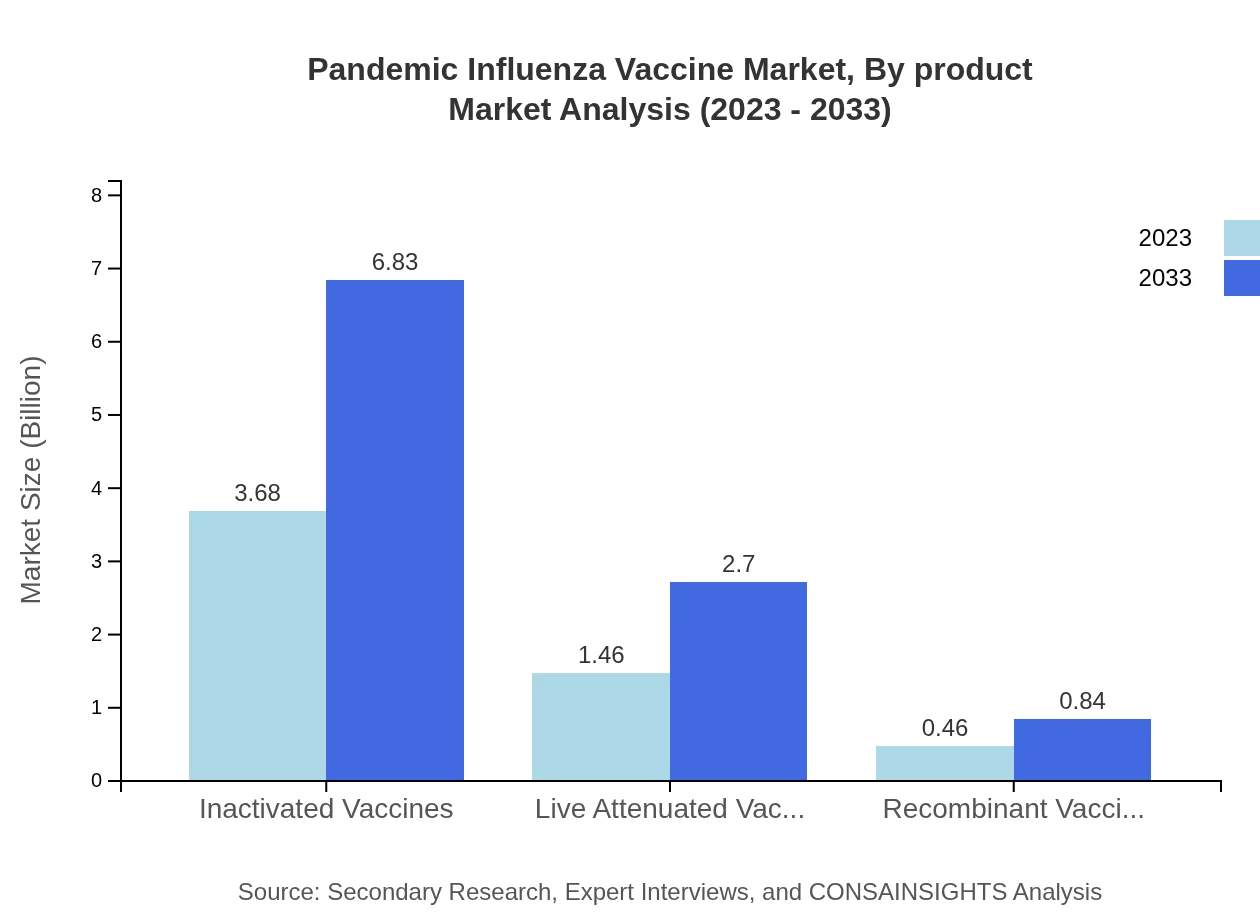
The analysis shows that Inactivated Vaccines dominate the market, representing a size of $3.68 billion in 2023, expected to grow to $6.83 billion by 2033, maintaining a market share of 65.79%. Live Attenuated Vaccines accounted for $1.46 billion in 2023, with projections of $2.70 billion by 2033 and a consistent market share of 26.07%. Recombinant Vaccines start smaller with $0.46 billion, expected to reach $0.84 billion.
Pandemic Influenza Vaccine Market Analysis By Application
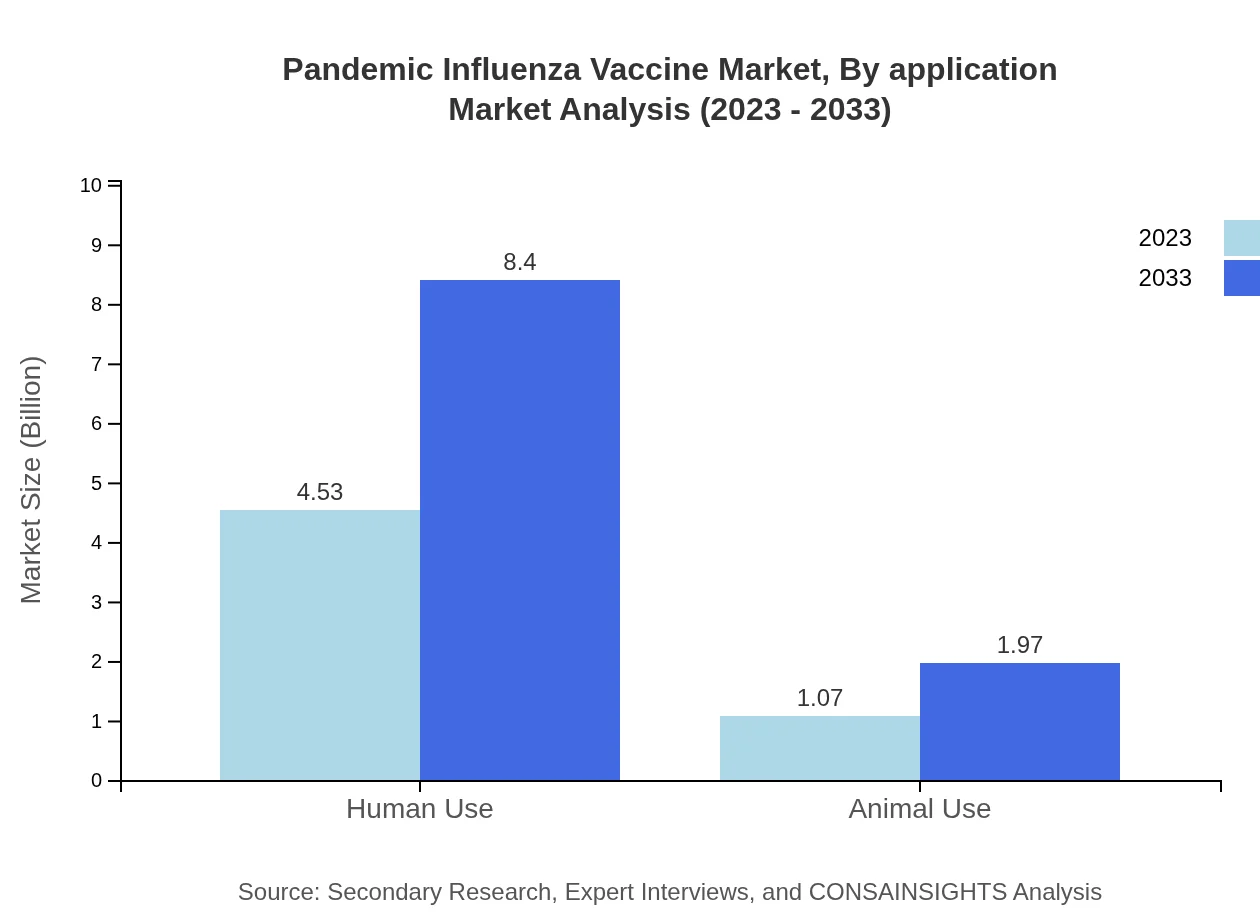
When analyzed by application, Human Use comprises a significant $4.53 billion in 2023, projected to increase to $8.40 billion in 2033, holding a market share of 80.98%. Conversely, the Animal Use segment at $1.07 billion is forecasted to grow to $1.97 billion, maintaining a market share of 19.02%. This segmentation highlights the larger societal focus on human health concerning pandemic influenza.
Pandemic Influenza Vaccine Market Analysis By Distribution Channel
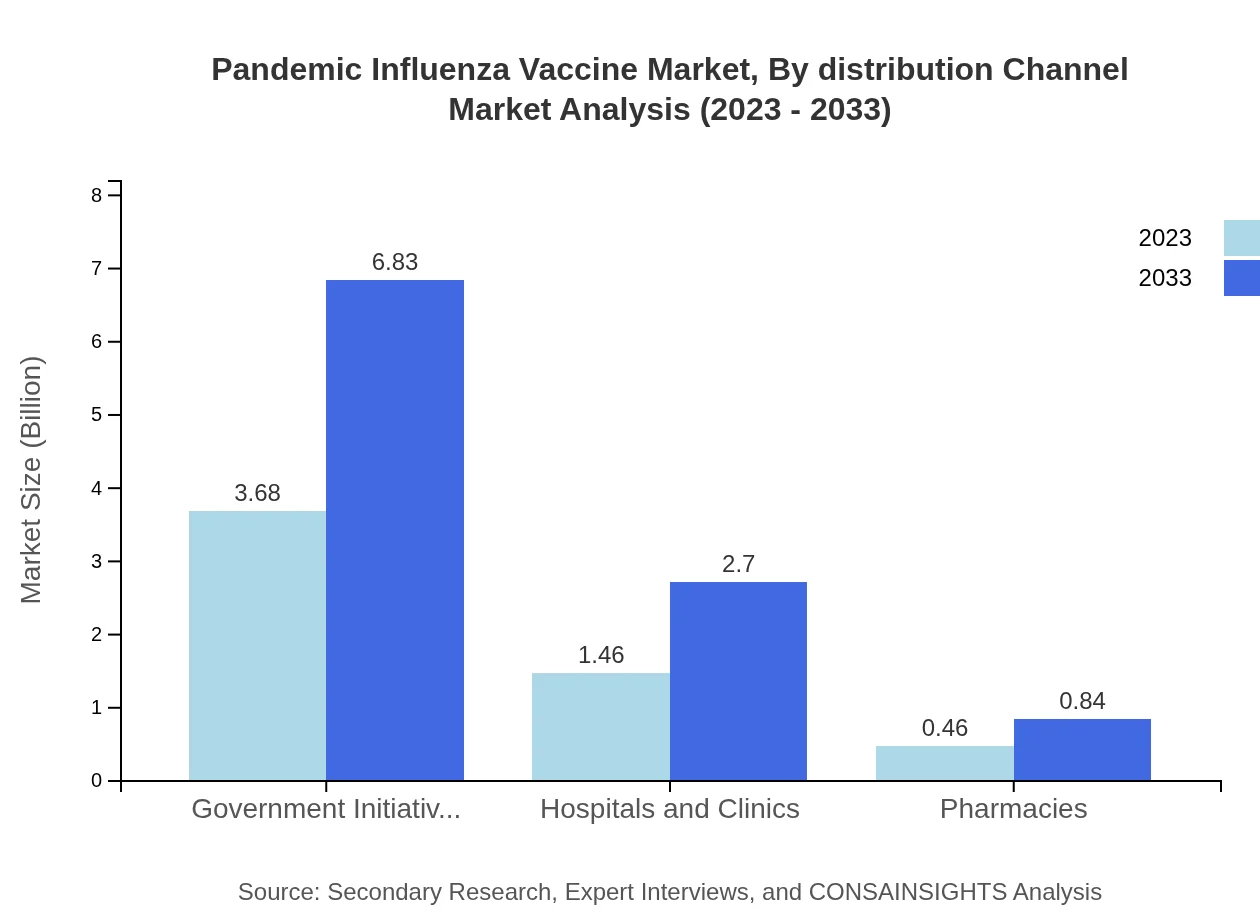
Distribution analysis reveals that Government Initiatives dominate with $3.68 billion in 2023, expected to increase to $6.83 billion by the end of the forecast period, reaffirming their 65.79% market share. Hospitals and Clinics follow with $1.46 billion, while Pharmacies represent a niche at $0.46 billion.
Pandemic Influenza Vaccine Market Analysis By Manufacturer
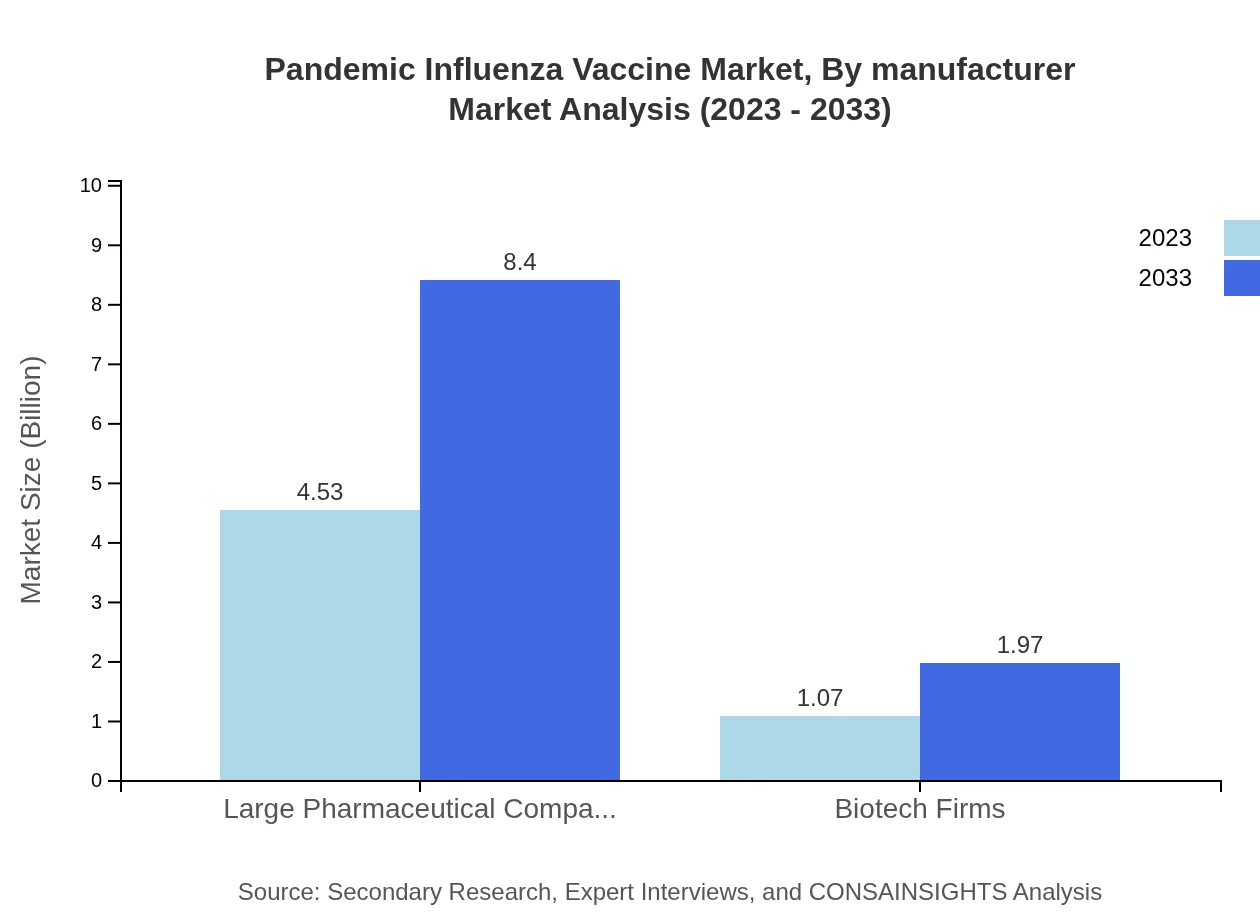
Analysis of the manufacturer segment indicates that Large Pharmaceutical Companies lead with a substantial $4.53 billion in 2023, expected to reach $8.40 billion by 2033, holding a marked market share of 80.98%. Smaller Biotech Firms, however, are gradually increasing their market presence from $1.07 billion to $1.97 billion within the same time frame.
Pandemic Influenza Vaccine Market Trends and Future Forecast
Tell us your focus area and get a customized research report.
Global Market Leaders and Top Companies in Pandemic Influenza Vaccine Industry
Pfizer Inc.:
A leading pharmaceutical company known for its innovative vaccines developed using advanced recombinant technology, Pfizer has a strong portfolio in pandemic preparedness.Sanofi Pasteur:
With a historical emphasis on vaccine research and development, Sanofi Pasteur is a significant player in providing vaccines for widespread use, including pandemic influenza.GlaxoSmithKline (GSK):
GSK specializes in developing both preventive and therapeutic vaccines, playing a vital role in combating influenza pandemics through comprehensive vaccine programs.Moderna, Inc.:
Emerging as a frontrunner in mRNA vaccine technology, Moderna focuses on innovative approaches to rapidly develop impactful vaccines, including those for influenza.Merck & Co.:
Merck is recognized for a diverse portfolio in therapeutic and preventive vaccines, continuously investing in research to enhance the efficacy and safety of influenza vaccines.We're grateful to work with incredible clients.









FAQs
What is the market size of the pandemic influenza vaccine market in 2023?
The market size in 2023 is $5.60 Billion, based on reported values for that year in this analysis covering the pandemic influenza vaccine sector.
How big will the market be in 2033?
The market is reported at $10.38 Billion for 2033, reflecting the projected expansion over the 2023 to 2033 forecast period documented in the report.
What is CAGR for the forecast period?
The compound annual growth rate (CAGR) for 2023 to 2033 is 6.2%, as specified for the market projection covering that decade.
Is there a single fastest Growing region in the Pandemic Influenza Vaccine Market Report market?
No single fastest-growing region is stated for the Pandemic Influenza Vaccine Market Report market because the top regional implied CAGR values are within 0.15 percentage points of each other, making the ranking too close to call reliably.
Why is North America the largest regional market?
North America leads in absolute market value by 2033, supported by strong public health programs, established vaccine manufacturers, and sizable procurement initiatives referenced in the report context.
Which companies are leading the market?
Leading companies cited include Pfizer Inc., Sanofi Pasteur, GlaxoSmithKline (GSK), Moderna, Inc., and Merck & Co., listed as top participants in the market landscape.
What are the main product segments covered?
Product segmentation includes multiple vaccine types such as inactivated vaccines, live attenuated vaccines, and recombinant vaccines, with each listed as subsegments in the report.
How are vaccines distributed in the market?
Distribution channels detailed include government initiatives, hospitals and clinics, and pharmacies, reflecting primary pathways for vaccine delivery and procurement.
What applications are included in the market analysis?
The report covers applications for human use and animal use, both specified as subsegments under application-based segmentation.
Who contributed to the research methodology?
The study relied on primary interviews with industry experts and secondary sources such as company reports, with data triangulation and internal validation to ensure reliability.