

Pegylated Proteins Market Report
First published: 12 October 2024 | Last updated: 25 May 2026 | Report Code: pegylated-proteins
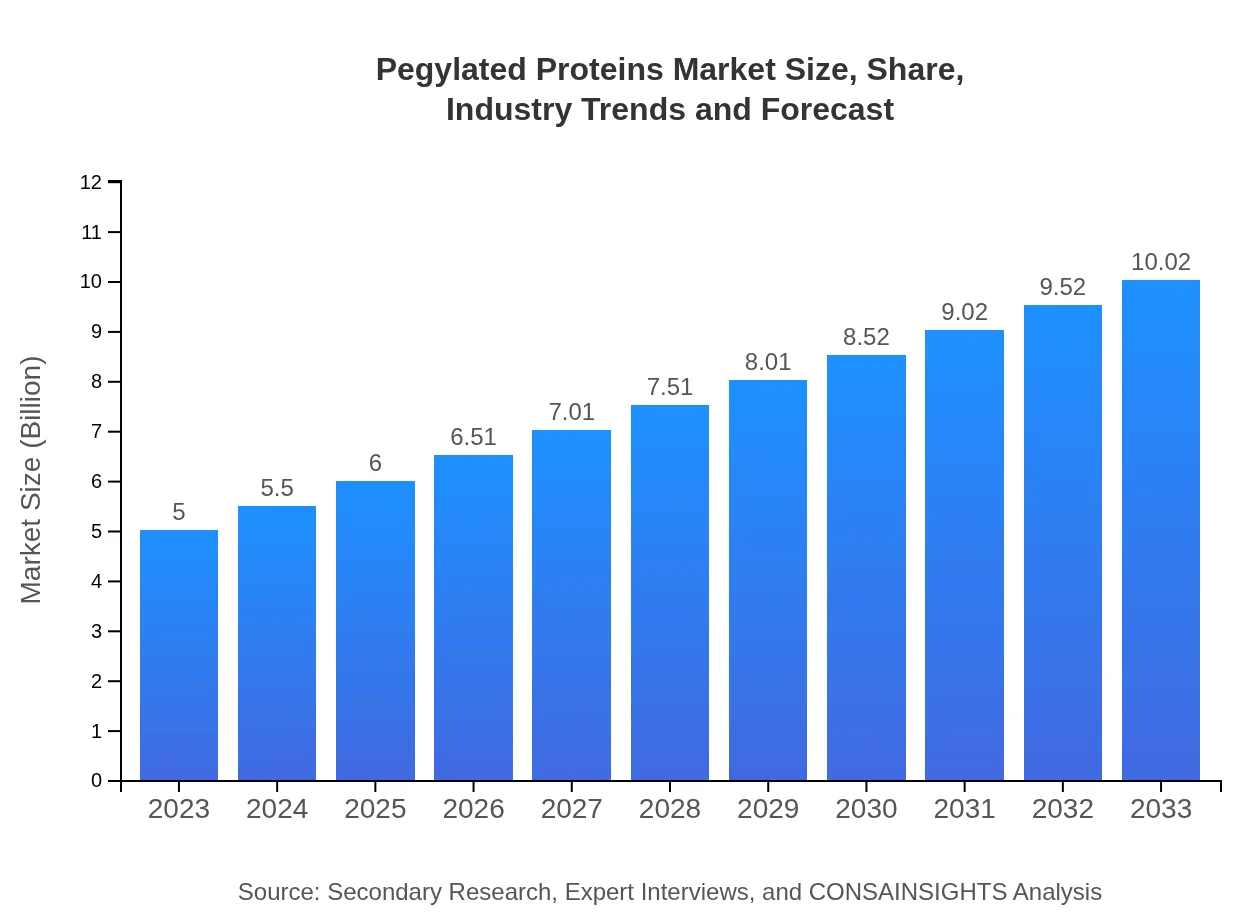
Pegylated Proteins Market — USD 5 billion in 2023, Growing to USD 10.02B by 2033 at 7% CAGR
This market report provides a comprehensive analysis of the Pegylated Proteins market from 2023 to 2033, focusing on market size, trends, regional insights, and competitive landscape. It offers data-driven insights to support strategic planning and decision-making.
Key Takeaways
- Global market value rises from $5.00 Billion in 2023 to $10.02 Billion in 2033 at a 7% CAGR.
- North America is largest regional market, while no single fastest-growing region is stated because regional CAGR differences remain within 0.15 percentage points.
- North America leads regionally, expanding from $1.76 Billion in 2023 to $3.54 Billion in 2033.
- Europe moves from $1.46 Billion to $2.92 Billion over the forecast, reflecting sustained adoption.
- Asia Pacific grows from $1.00 Billion to $2.01 Billion, supported by biotechnology investments and clinical research.
- Top firms include Amgen Inc., Roche Holding AG, Merck & Co., Inc., and Genentech, Inc.
Pegylated Proteins Market Report — Executive Summary
North America remains largest market by forecast-period value, while no single fastest-growing region is stated because top regional growth rates are separated by less than 0.15 percentage points. This report examines the pegylated proteins market dynamics, quantifying expansion from $5.00 Billion in 2023 to $10.02 Billion in 2033 at a 7% CAGR. Growth is fueled by rising use of biologics, greater prevalence of chronic conditions, and increased investment in pegylation technologies. The analysis covers product types such as pegylated enzymes, antibodies and vaccines; applications spanning therapeutics, diagnostics and research; and administration routes including intravenous, subcutaneous and intramuscular. Regional revenue trajectories are provided for North America, Europe, Asia Pacific, Latin America, and Middle East and Africa. Competitive positioning highlights major participants including Amgen Inc., Roche Holding AG, Merck & Co., Inc., and Genentech, Inc. The study also identifies regulatory and manufacturing considerations that influence commercialization timelines and adoption across end users such as pharmaceutical companies, biotechnology firms and academic institutions.
Key Growth Drivers
- Rising demand for biologic therapies that benefit from increased stability and circulation time through PEG modification.
- Growth in chronic disease prevalence increasing long-term therapeutic use and market uptake.
- Expanded R&D and clinical development investment by pharmaceutical and biotechnology firms accelerating product pipelines.
- Regulatory frameworks evolving to support biologics approvals, facilitating faster market entry for pegylated products.
- Collaborations between industry and academic institutions boosting translational research and commercialization.
| Metric | Value |
|---|---|
| Study Period | 2023 - 2033 |
| 2023 Market Size | $5.00 Billion |
| CAGR (2023-2033) | 7% |
| 2033 Market Size | $10.02 Billion |
| Top Companies | Amgen Inc., Roche Holding AG, Merck & Co., Inc., Genentech, Inc. |
| Published Date | 12 October 2024 |
| Last Modified Date | 25 May 2026 |
Pegylated Proteins Market Overview
Customize Pegylated Proteins Market Report market research report
- ✔ Get in-depth analysis of Pegylated Proteins market size, growth, and forecasts.
- ✔ Understand Pegylated Proteins's regional dynamics and industry-specific trends.
- ✔ Identify potential applications, end-user demand, and growth segments in Pegylated Proteins
What is the Market Size & CAGR of Pegylated Proteins Market Report market in 2023?
Pegylated Proteins Industry Analysis
Pegylated Proteins Market Segmentation and Scope
Tell us your focus area and get a customized research report.
Pegylated Proteins Market Report Market Analysis Report by Region
Europe Pegylated Proteins Market Report:
Europe grows from $1.46 Billion in 2023 to $2.92 Billion in 2033. 46 Billion in 2023 to $2.92 Billion in 2033, supported by robust clinical research activity, established manufacturing capacity, and collaborations between industry and academic centers driving product development.Asia Pacific Pegylated Proteins Market Report:
Asia Pacific grows from $1 Billion in 2023 to $2.01 Billion in 2033. Expansion is driven by rising biotechnology investment, expanding clinical trial activity, and growing participation of domestic pharmaceutical companies in biologics development.North America Pegylated Proteins Market Report:
North America is largest regional market, rising from $1.76 Billion in 2023 to $3.54 Billion in 2033. Growth reflects strong biopharmaceutical infrastructure, high R&D spending, and extensive adoption of biologics by pharmaceutical and biotechnology companies.South America Pegylated Proteins Market Report:
Latin America grows from $0.44 Billion in 2023 to $0.88 Billion in 2033. 44 Billion in 2023 to $0.88 Billion in 2033, aided by growing healthcare access, targeted investments in specialty biopharma and increasing interest from multinational firms in regional partnerships.Middle East & Africa Pegylated Proteins Market Report:
Middle East and Africa grows from $0.34 Billion in 2023 to $0.68 Billion in 2033. 34 Billion in 2023 to $0.68 Billion in 2033, with progress tied to developing healthcare systems, selective biotech initiatives and gradual increases in clinical research and manufacturing capabilities.Tell us your focus area and get a customized research report.
Research Methodology
Pegylated Proteins Market Analysis By Product
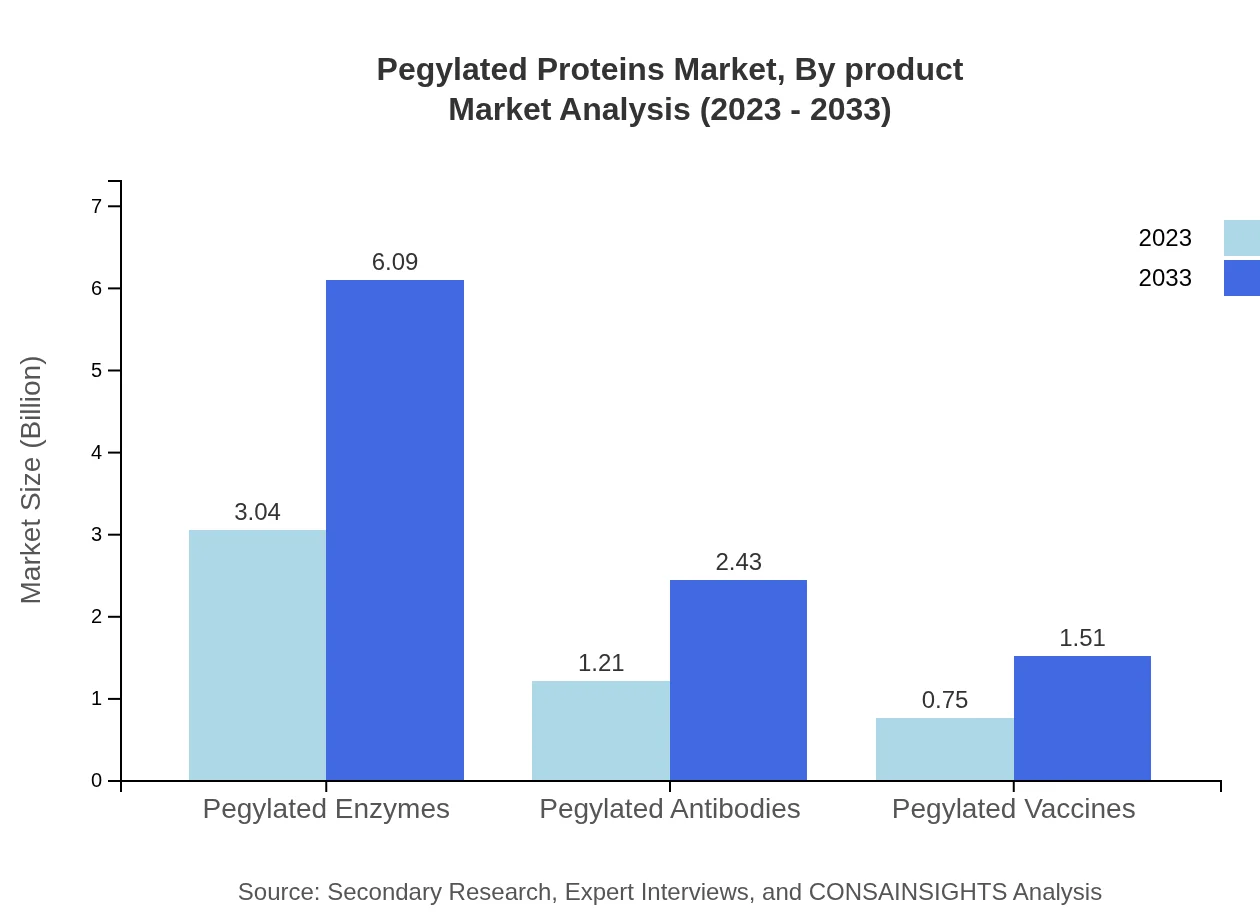
In 2023, Pegylated Enzymes hold a significant market size of $3.04 billion and are expected to reach $6.09 billion by 2033. Pegylated Antibodies account for $1.21 billion, projected to grow to $2.43 billion. Pegylated Vaccines currently at $0.75 billion, are set to reach $1.51 billion by 2033, demonstrating the expanding role of pegylated products in healthcare.
Pegylated Proteins Market Analysis By Technology
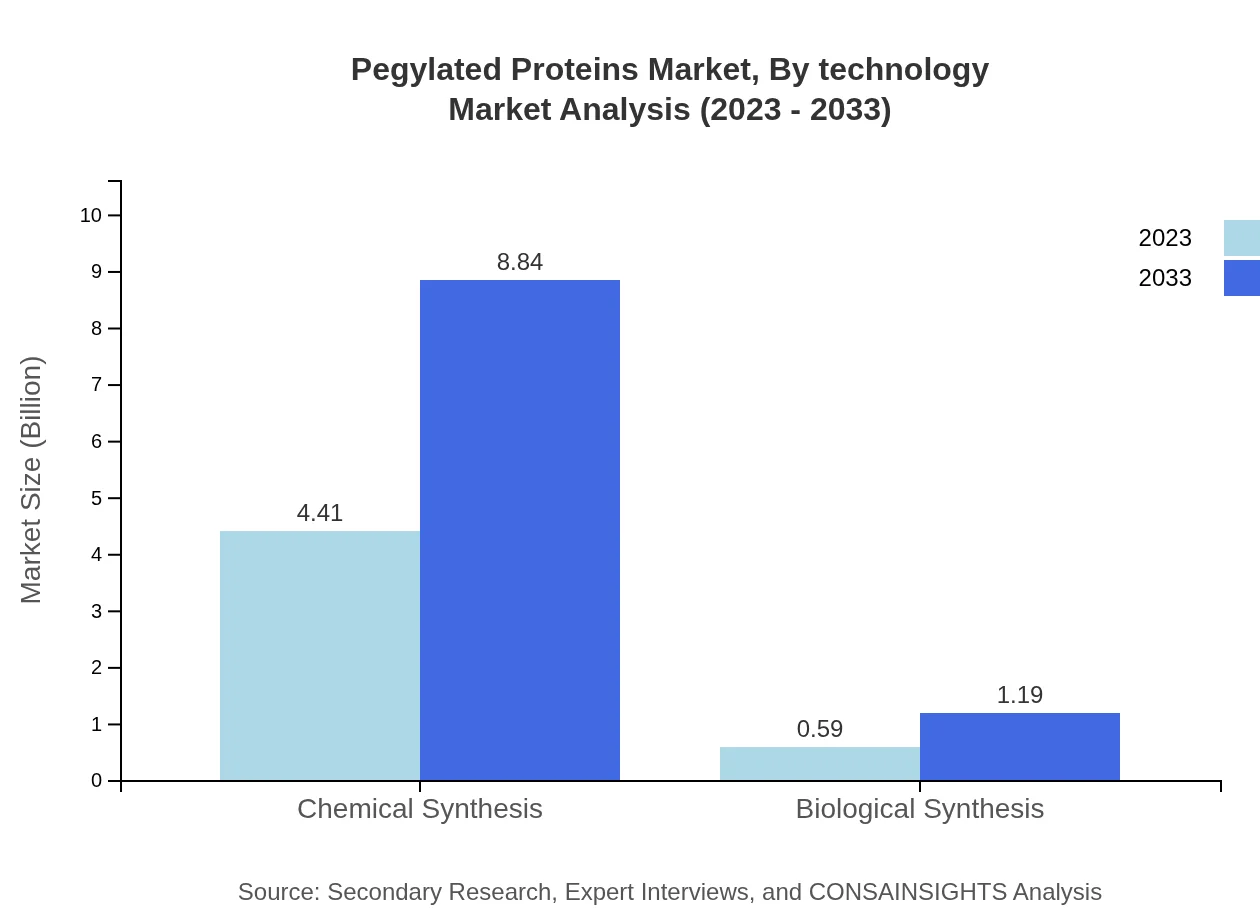
The market is also segmented based on technology, primarily focusing on Chemical Synthesis and Biological Synthesis, which currently dominate the industry. Chemical Synthesis accounted for $4.41 billion in 2023 and is projected to reach $8.84 billion in 2033, holding an 88.16% market share, while Biological Synthesis is expected to rise from $0.59 billion to $1.19 billion.
Pegylated Proteins Market Analysis By Application
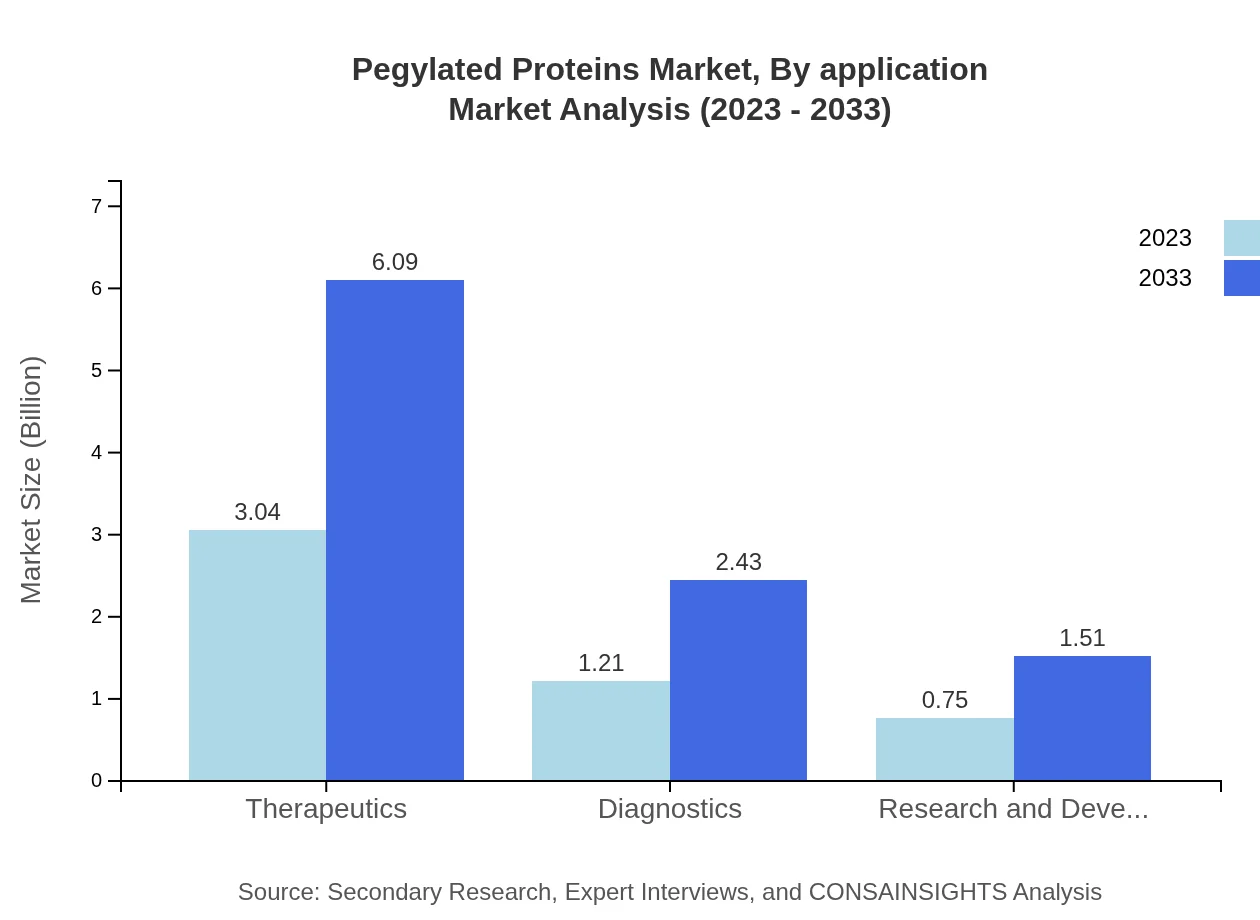
Applications categorized under Therapeutics, Diagnostics, and Research and Development indicate significant potential. Therapeutics hold the largest share, with $3.04 billion in 2023 and projected growth to $6.09 billion by 2033, complemented by diagnostic applications growing from $1.21 billion to $2.43 billion.
Pegylated Proteins Market Analysis By End User
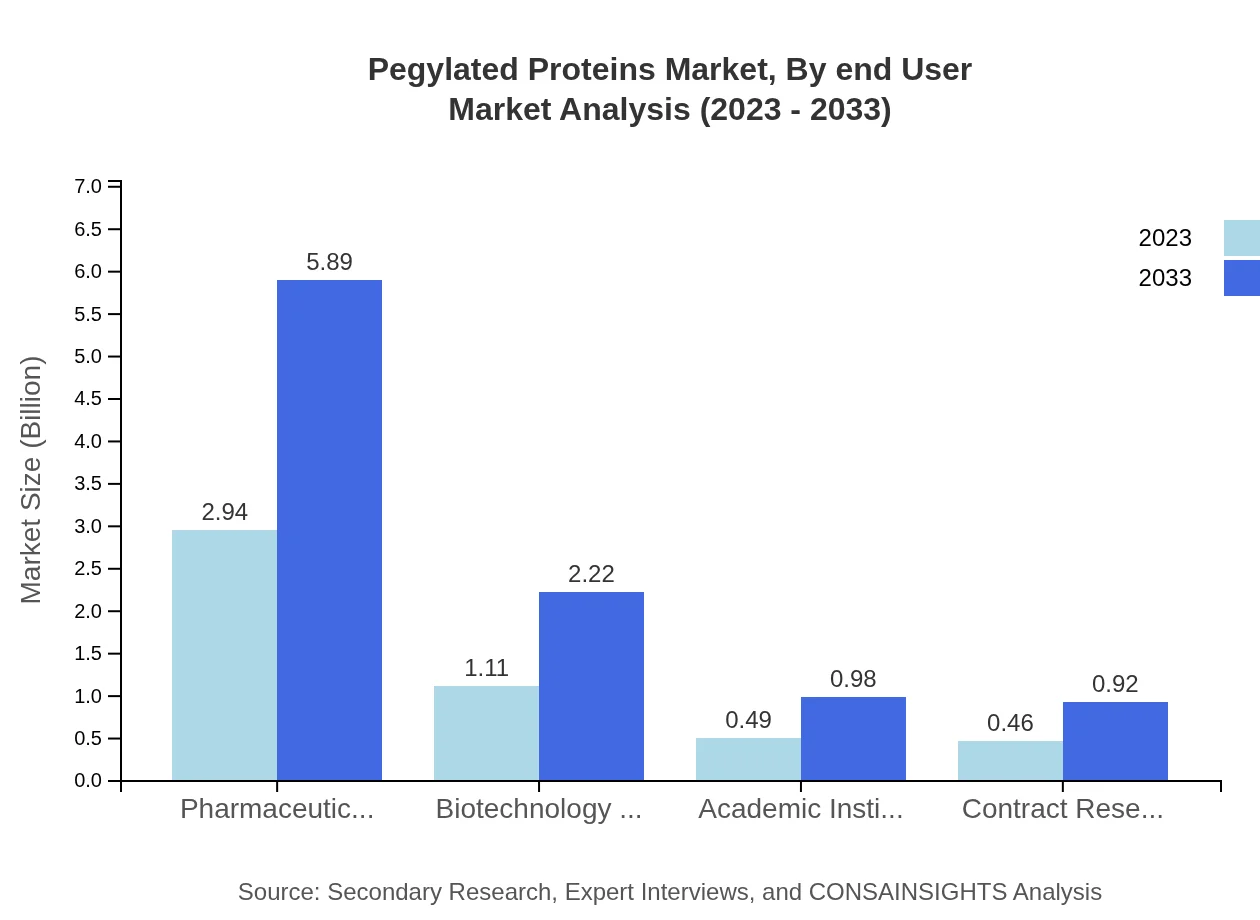
End-users in the Pegylated Proteins market include Pharmaceutical Companies ($2.94 billion in 2023), Biotechnology Firms ($1.11 billion), Academic Institutions ($0.49 billion), and Contract Research Organizations ($0.46 billion). The demand from pharmaceutical companies is predicted to maintain dominance over the forecast period.
Pegylated Proteins Market Analysis By Route Of Administration
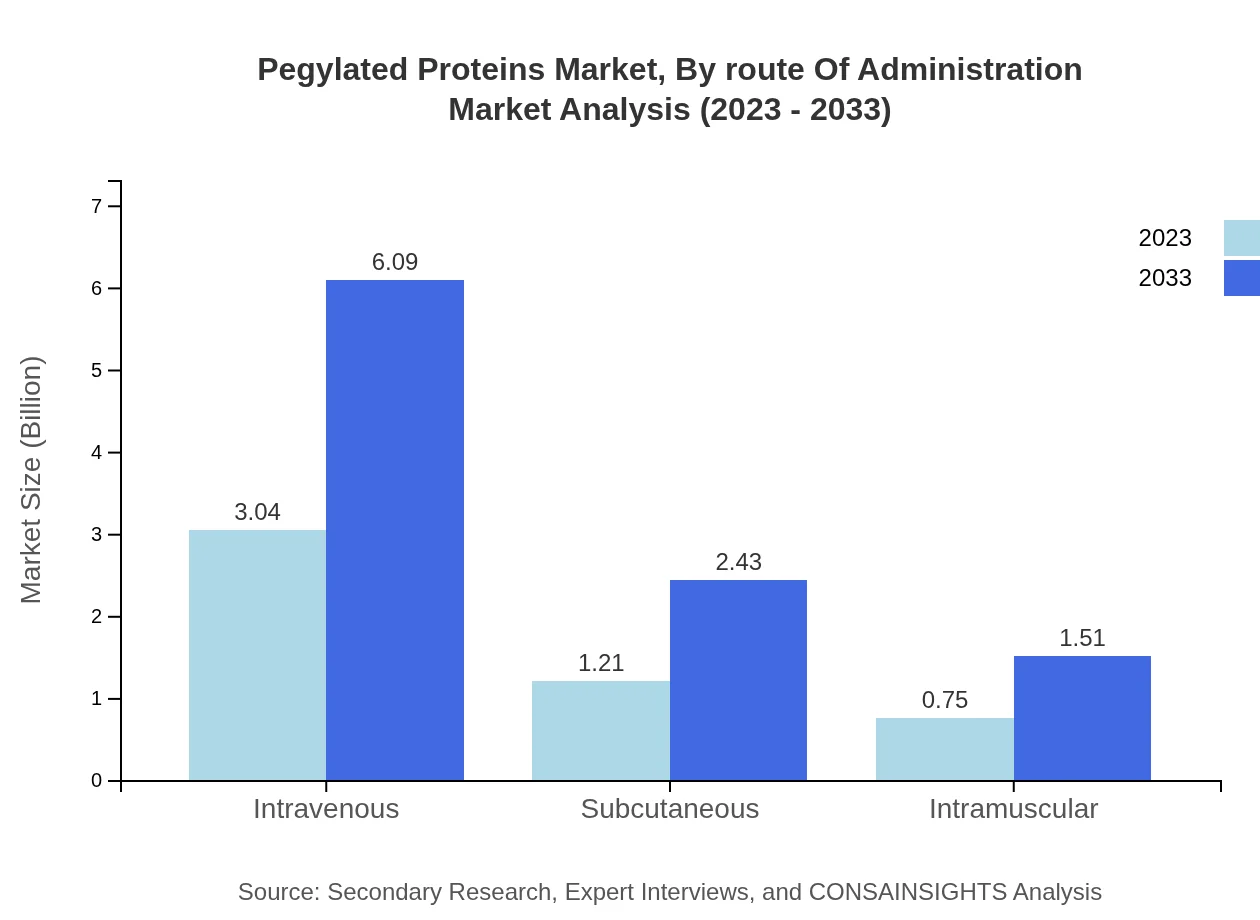
The route of administration is also pivotal, with Intravenous methods leading in market size ($3.04 billion in 2023) and expected to reach $6.09 billion by 2033. Subcutaneous and Intramuscular routes follow with considerable market shares.
Pegylated Proteins Market Trends and Future Forecast
Tell us your focus area and get a customized research report.
Global Market Leaders and Top Companies in Pegylated Proteins Industry
Amgen Inc.:
Amgen is one of the leading biotechnology companies focusing on developing innovative human therapeutics. They have a strong portfolio of pegylated drugs that enhance the efficacy and reduce the side effects of existing therapies.Roche Holding AG:
Roche is renowned for its significant contributions to diagnostics and therapeutics, including pegylated proteins that address major health issues like cancer.Merck & Co., Inc.:
Merck focuses on a range of therapeutic sectors, including the development of pegylated formulations that improve drug performance and adhere to regulatory standards.Genentech, Inc.:
A member of the Roche Group, Genentech is prominent for its pioneering work in biotechnology, translating research innovations into pegylated drugs that enhance treatment protocols.We're grateful to work with incredible clients.








FAQs
What is the market size of pegylated proteins in 2023?
The market size in 2023 is $5.00 Billion, reflecting current commercial activity across therapeutics, diagnostics and research-focused pegylated products.
How big will the market be in 2033?
By 2033 the market is projected to reach $10.02 Billion, based on the forecasted expansion in biologics adoption and related therapeutic applications.
What is CAGR for the forecast period?
The compounded annual growth rate for 2023 to 2033 is 7%, indicating steady expansion driven by R&D and increased use of pegylated therapeutics.
Is there a single fastest Growing region in the Pegylated Proteins Market Report market?
No single fastest-growing region is stated for the Pegylated Proteins Market Report market because the top regional implied CAGR values are within 0.15 percentage points of each other, making the ranking too close to call reliably.
Which product segments are detailed in the report?
The report outlines pegylated enzymes, pegylated antibodies and pegylated vaccines, covering their roles in treatment, diagnostics and development.
Who are the leading companies featured?
Key companies included are Amgen Inc., Roche Holding AG, Merck & Co., Inc., and Genentech, Inc., representing major industry presence and R&D activity.
What end users drive demand for pegylated proteins?
Primary end users are pharmaceutical companies, biotechnology firms, academic institutions and contract research organizations engaged in development and commercialization.
How does route of administration feature in the analysis?
The study examines intravenous, subcutaneous and intramuscular administration routes to assess formulation needs and clinical adoption patterns.
What research methods supported the report?
Findings are based on primary interviews with industry experts and secondary research from company reports, with data triangulation and internal validation.
Why is pegylation important for therapeutics?
Pegylation enhances protein stability, solubility and circulation time, which can improve therapeutic profiles and dosing convenience in certain treatments.