

Phytonutrients Market Report
First published: 15 October 2024 | Last updated: 25 May 2026 | Report Code: phytonutrients
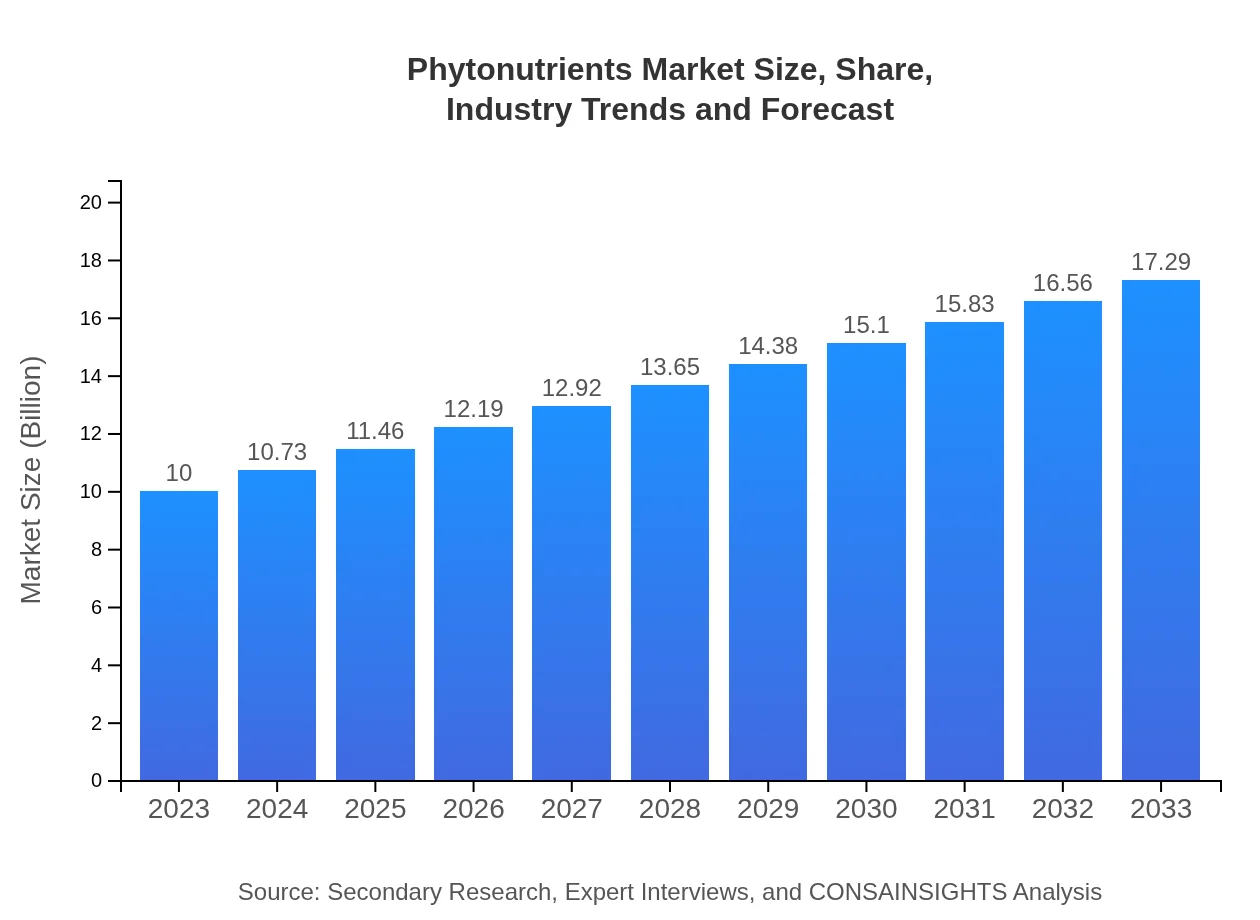
Phytonutrients Market — USD 10 billion in 2023, Growing to USD 17.29B by 2033 at 5.5% CAGR
This report provides an in-depth analysis of the phytonutrients market from 2023 to 2033, including market trends, size, segmentation, regional insights, and key players. It aims to equip stakeholders with comprehensive data to make informed decisions.
Key Takeaways
- Global market projected from $10.00 Billion in 2023 to $17.29 Billion in 2033 with a 5.5% CAGR over 2023 to 2033.
- Europe is largest regional market, while no single fastest-growing region is stated because regional CAGR differences remain within 0.15 percentage points.
- North America grows from $3.24 Billion in 2023 to $5.61 Billion in 2033, reflecting strong demand in functional foods and supplements.
- Asia Pacific advances from $1.77 Billion in 2023 to $3.06 Billion in 2033 amid rising plant-based and natural ingredient adoption.
- Formulations such as capsules, powders and liquids remain key product formats for manufacturers and end users like food manufacturers and pharmaceutical companies.
Phytonutrients Market Report — Executive Summary
Europe remains largest market by forecast-period value, while no single fastest-growing region is stated because top regional growth rates are separated by less than 0.15 percentage points. This report presents a concise examination of the phytonutrients market, highlighting fundamental demand drivers and market structure. Rising consumer preference for natural ingredients is fueling inclusion of phytonutrients across food and beverages, cosmetics, and pharmaceutical formulations. Improved extraction and formulation technologies support broader application and efficacy of flavonoids, carotenoids and glucosinolates across capsules, powders and liquids. The market totaled $10.00 Billion in 2023 and is forecast to reach $17.29 Billion by 2033 at a 5.5% CAGR, shaped by product innovation, regulatory emphasis on quality, and strategic moves by established suppliers such as Nutraceutical International Corporation, Kemin Industries, Inc., Döhler Group and Sabinsa Corporation. Segmentation by source, type, formulation, application and end-user enables stakeholders to pinpoint growth opportunities and prioritize investments while navigating sourcing and compliance challenges.
Key Growth Drivers
- Rising consumer demand for plant-derived ingredients in food, beverages and supplements boosts phytonutrient uptake.
- Expansion of functional food and nutraceutical launches incorporating flavonoids and carotenoids supports market expansion.
- Advances in extraction and formulation methods improve stability and potency of phytonutrient products, widening applications.
- Stringent quality and safety standards prompt manufacturers to invest in validated sourcing and R&D, strengthening product portfolios.
| Metric | Value |
|---|---|
| Study Period | 2023 - 2033 |
| 2023 Market Size | $10.00 Billion |
| CAGR (2023-2033) | 5.5% |
| 2033 Market Size | $17.29 Billion |
| Top Companies | Nutraceutical International Corporation, Kemin Industries, Inc., Döhler Group, Sabinsa Corporation |
| Published Date | 15 October 2024 |
| Last Modified Date | 25 May 2026 |
Phytonutrients Market Overview
Customize Phytonutrients Market Report market research report
- ✔ Get in-depth analysis of Phytonutrients market size, growth, and forecasts.
- ✔ Understand Phytonutrients's regional dynamics and industry-specific trends.
- ✔ Identify potential applications, end-user demand, and growth segments in Phytonutrients
What is the Market Size & CAGR of Phytonutrients Market Report market in 2023?
Phytonutrients Industry Analysis
Phytonutrients Market Segmentation and Scope
Tell us your focus area and get a customized research report.
Phytonutrients Market Report Market Analysis Report by Region
Europe Phytonutrients Market Report:
Europe is largest regional market, rising from $3.63 Billion in 2023 to $6.28 Billion in 2033. 63 Billion in 2023 to $6.28 Billion in 2033 and is identified as the largest regional market. Growth reflects high consumer preference for natural formulations, regulatory focus on ingredient quality, and uptake in food, cosmetics and pharmaceutical applications.Asia Pacific Phytonutrients Market Report:
Asia Pacific grows from $1.77 Billion in 2023 to $3.06 Billion in 2033. 77 Billion in 2023 to $3.06 Billion in 2033 as manufacturers respond to increasing demand for plant-based and natural ingredients, urbanization-driven dietary shifts, and expanding retail penetration.North America Phytonutrients Market Report:
North America grows from $3.24 Billion in 2023 to $5.61 Billion in 2033. Regional expansion is supported by strong presence of functional food and supplement manufacturers, consumer interest in preventive health, and formulation innovation.South America Phytonutrients Market Report:
Latin America grows from $0.18 Billion in 2023 to $0.31 Billion in 2033. Regional momentum is influenced by growing awareness of health and nutrition, increased use of phytonutrients in local food products, and interest in natural cosmetics.Middle East & Africa Phytonutrients Market Report:
Middle East and Africa grows from $1.18 Billion in 2023 to $2.04 Billion in 2033. Drivers include rising consumer interest in preventive health, adoption of natural ingredients in personal care and food products, and expanding distribution channels.Tell us your focus area and get a customized research report.
Research Methodology
Phytonutrients Market Analysis By Source
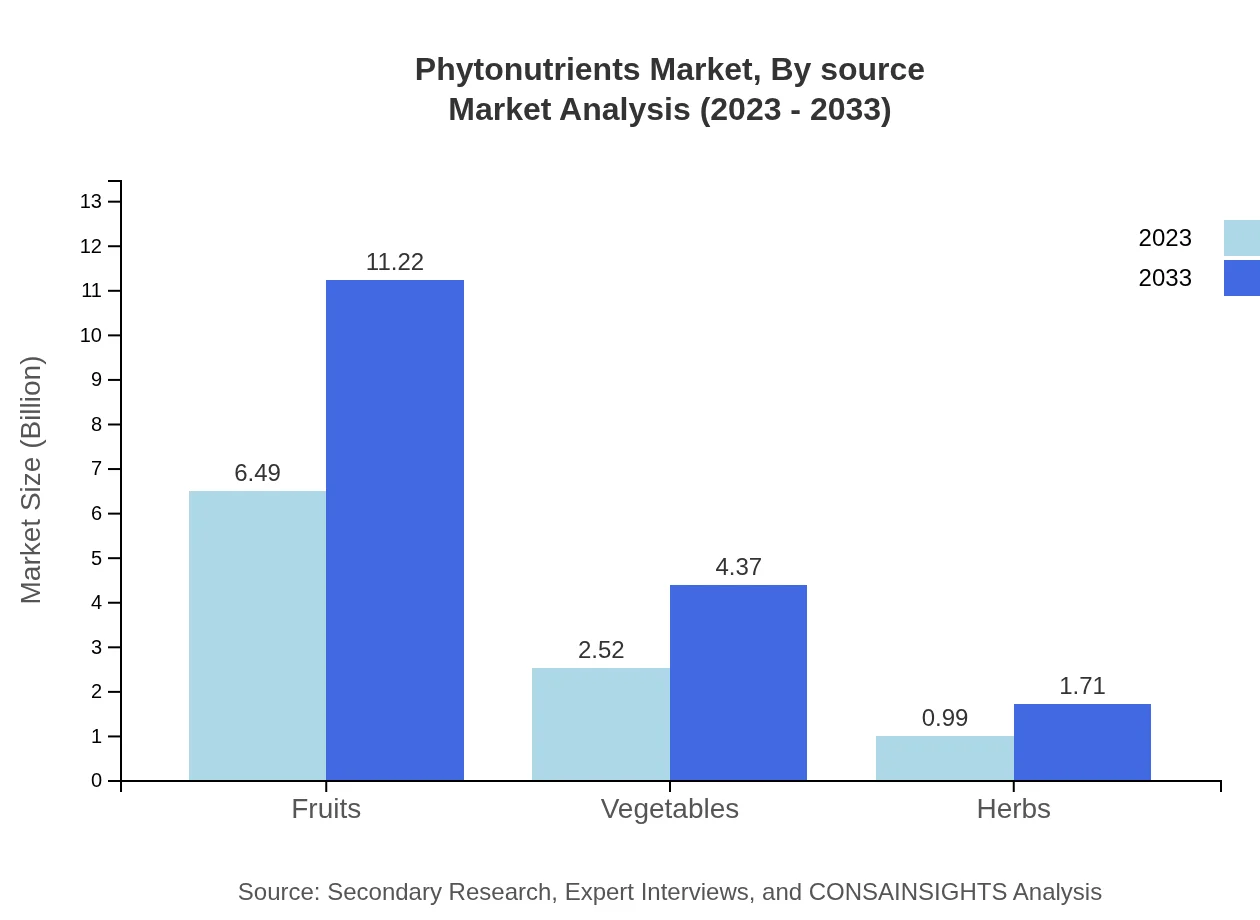
Phytonutrients derived from fruits, vegetables, and herbs dominate the market. In 2023, fruits accounted for a market size of $6.49 billion, projected to grow significantly to $11.22 billion by 2033. Vegetables follow with a size of $2.52 billion, anticipated to reach $4.37 billion in the same period. Herbs have a smaller market share, valued at $0.99 billion in 2023 and expected to grow to $1.71 billion by 2033.
Phytonutrients Market Analysis By Type
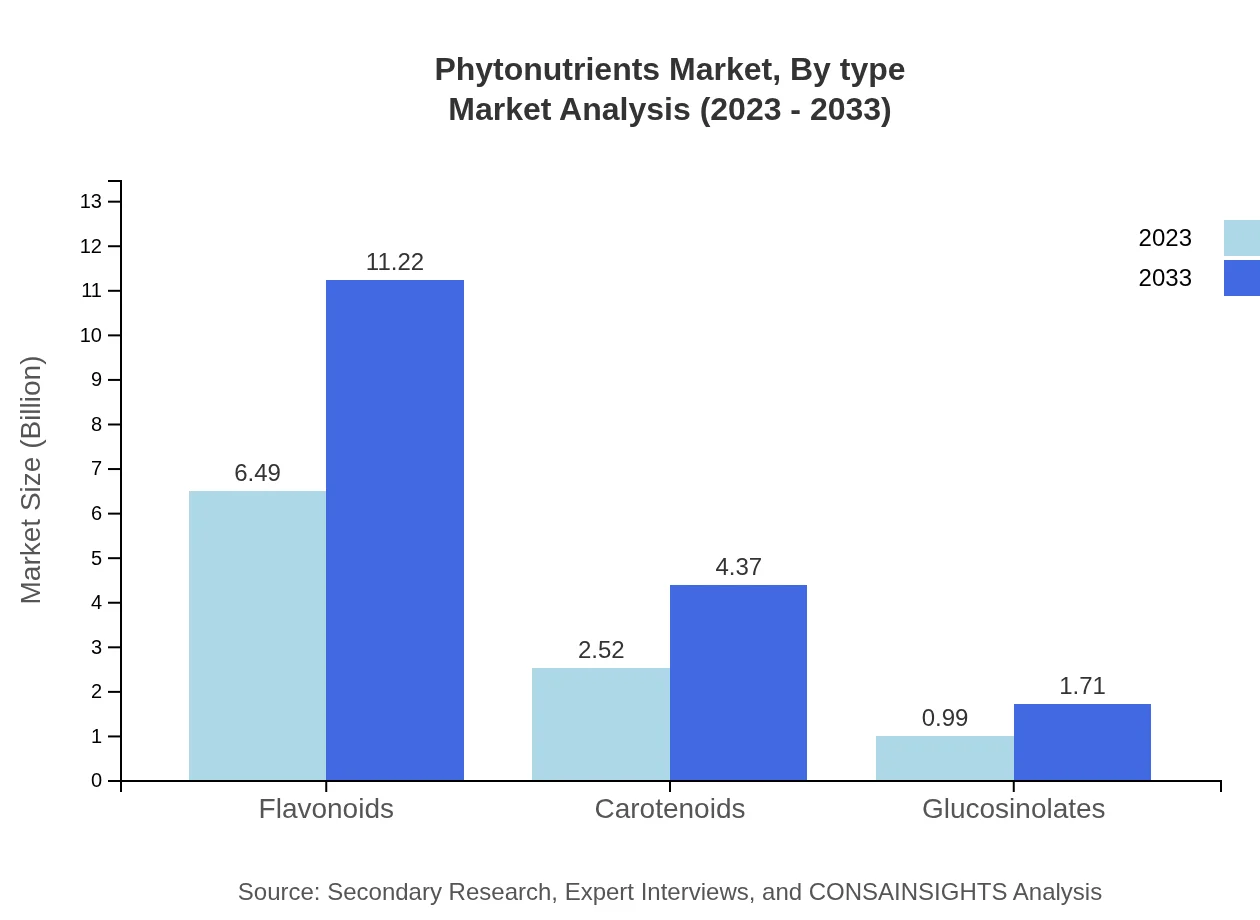
Flavonoids are a major category within phytonutrients, comprising a market of $6.49 billion in 2023, expected to rise to $11.22 billion by 2033. Carotenoids and glucosinolates contribute significantly as well, with market sizes of $2.52 billion and $0.99 billion respectively in 2023, projected to continue growing as health trends evolve.
Phytonutrients Market Analysis By Formulation
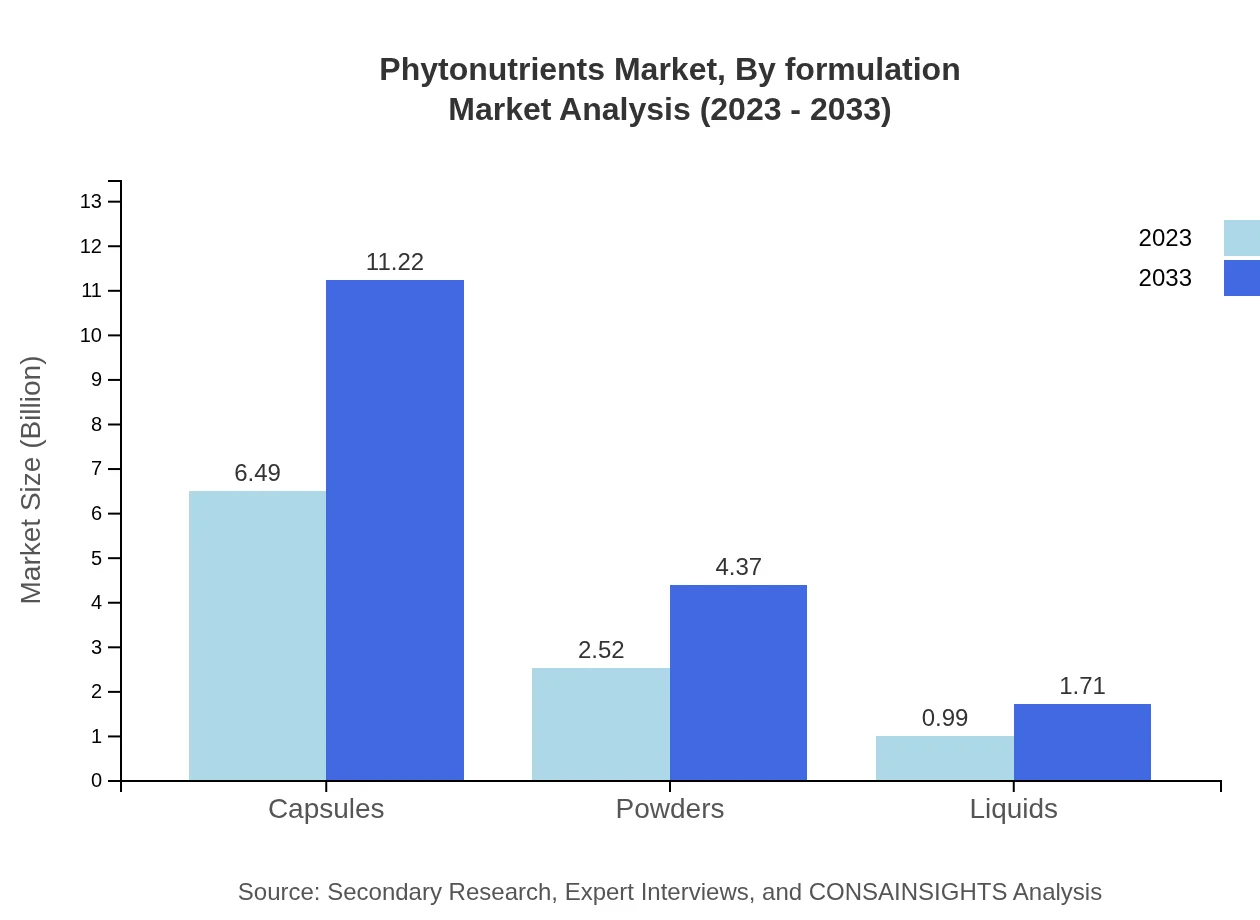
The formulation segment includes capsules, powders, and liquids. Capsules dominate this segment, valued at $6.49 billion in 2023 and expected to reach $11.22 billion by 2033. Powders are also popular among consumers, currently valued at $2.52 billion and anticipated to grow to $4.37 billion. Liquids hold a smaller share with a market size of $0.99 billion in 2023, predicted to increase to $1.71 billion.
Phytonutrients Market Analysis By Application
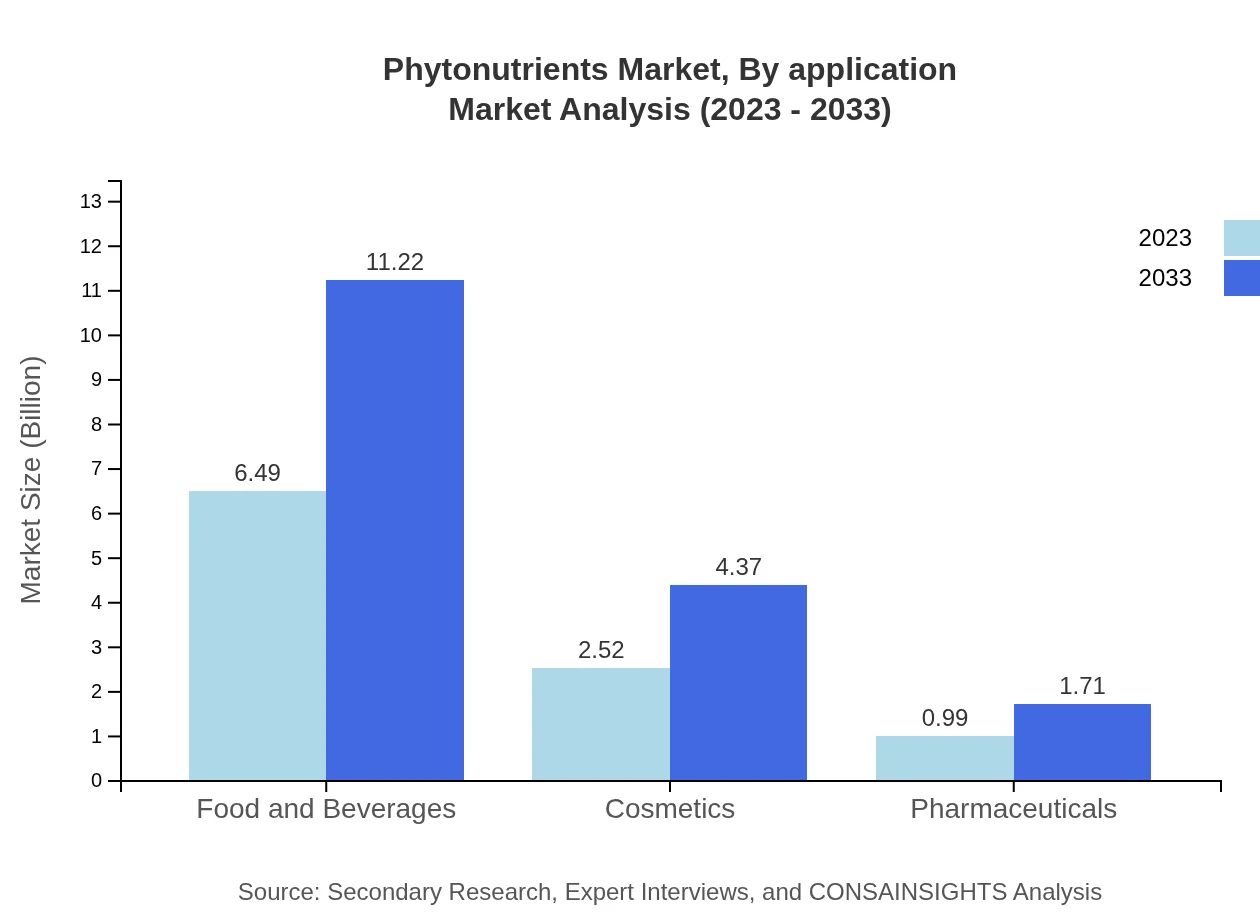
The applications of phytonutrients are extensive, ranging from food and beverages to pharmaceuticals and cosmetics. Food and beverages represent the largest segment, valued at $6.49 billion in 2023 and projected to grow to $11.22 billion by 2033, while the pharmaceutical application contributes significantly, with growth expected as manufacturers focus on integrating more natural ingredients into healthcare.
Phytonutrients Market Analysis By End User
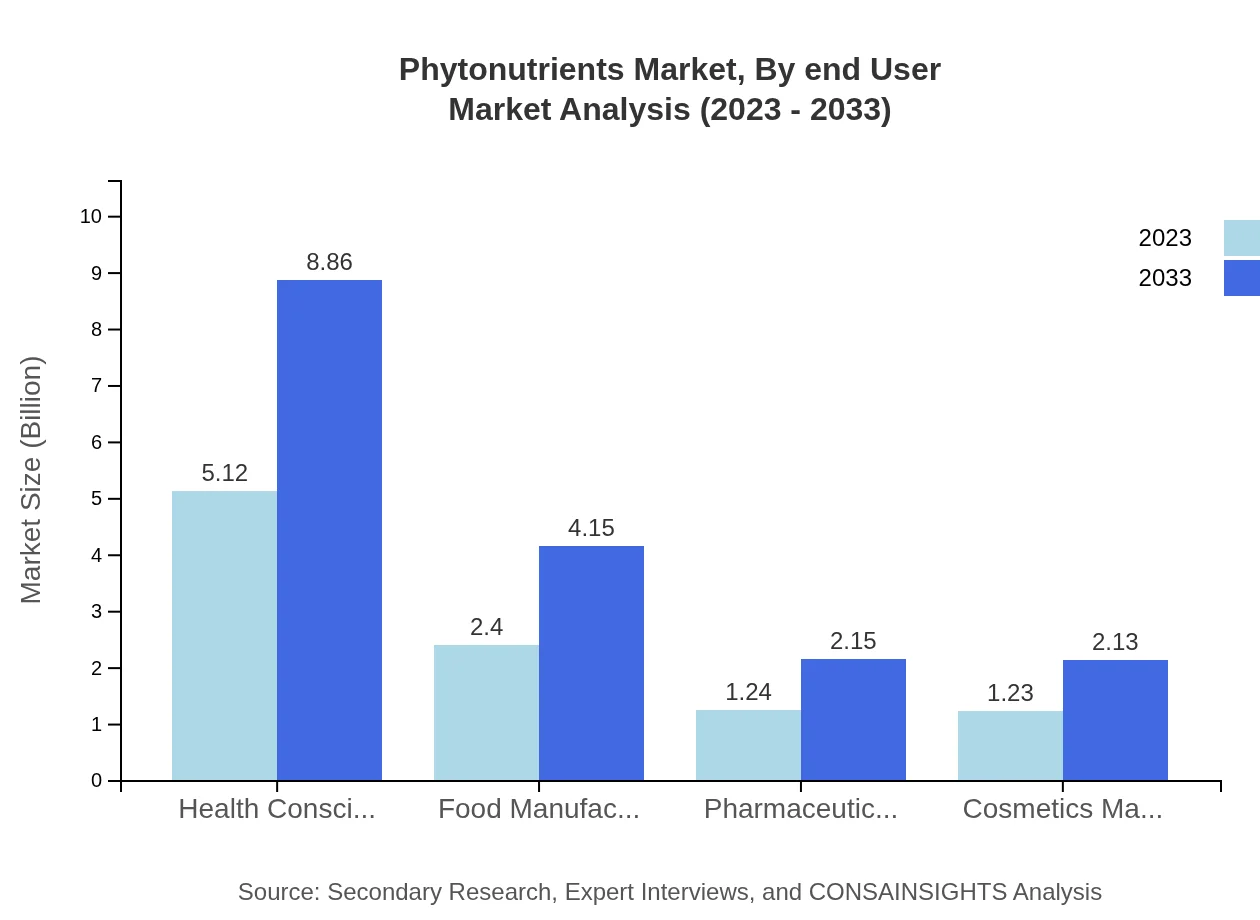
Health-conscious consumers make up the primary end-user segment, with market values of $5.12 billion in 2023, anticipated to reach $8.86 billion by 2033. The food manufacturers and pharmaceutical companies also play crucial roles, currently valued at $2.40 billion and $1.24 billion respectively, highlighting the industry's diverse range of end-users.
Phytonutrients Market Trends and Future Forecast
Tell us your focus area and get a customized research report.
Global Market Leaders and Top Companies in the Phytonutrients Industry
Nutraceutical International Corporation:
A leader in the production of dietary supplements, Nutraceutical focuses on integrating phytonutrients into its diverse product offerings to enhance health benefits.Kemin Industries, Inc.:
Kemin is known for its innovative solutions in the nutritional and food ingredients market, specializing in high-quality phytonutrients derived from plants.Döhler Group:
Döhler is a global producer of natural ingredients, focusing on plant-based solutions that incorporate phytonutrients to meet the rising demand for healthy food options.Sabinsa Corporation:
Sabinsa specializes in marketing standardized herbal extracts and phytonutrients for dietary supplements and the food industry, emphasizing innovation and sustainability.We're grateful to work with incredible clients.









FAQs
What is the market size of the phytonutrients market in 2023?
The market size in 2023 is $10.00 Billion, as stated in the report, representing the baseline for the 2023 to 2033 forecast period.
How big will the market be in 2033?
The market is projected to reach $17.29 Billion in 2033 according to the forecast data provided for the 2023 to 2033 period.
What is CAGR for the forecast period?
The compound annual growth rate for 2023 to 2033 is 5.5%, reflecting the annualized growth expected across the decade.
Is there a single fastest Growing region in the Phytonutrients Market Report market?
No single fastest-growing region is stated for the Phytonutrients Market Report market because the top regional implied CAGR values are within 0.15 percentage points of each other, making the ranking too close to call reliably.
Which companies are leading the market?
Top companies listed include Nutraceutical International Corporation, Kemin Industries, Inc., Döhler Group and Sabinsa Corporation as notable industry participants.
What are the primary product types covered?
Key product types include flavonoids, carotenoids and glucosinolates, which are reported as important phytonutrient categories in the market segmentation.
Who are the main end Users of phytonutrients?
End-users comprise health conscious consumers, food manufacturers, pharmaceutical companies and cosmetics manufacturers, reflecting cross-sector application.
How are formulations categorized in the report?
Formulations are categorized into capsules, powders and liquids, representing the main delivery formats discussed in the market analysis.
What are common applications for phytonutrients?
Primary applications include food and beverages, cosmetics and pharmaceuticals, where phytonutrients are used for their functional and health-promoting properties.
Why is sourcing and regulation important?
Sourcing and regulation matter because quality standards and compliance drive manufacturer investment in validated supply chains and R&D to ensure product safety and efficacy.