
Reports >
Life Sciences
>
Pulmonary Devices Market Report

Pulmonary Devices Market Report
First published: 08 October 2024 | Last updated: 25 May 2026 | Report Code: pulmonary-devices
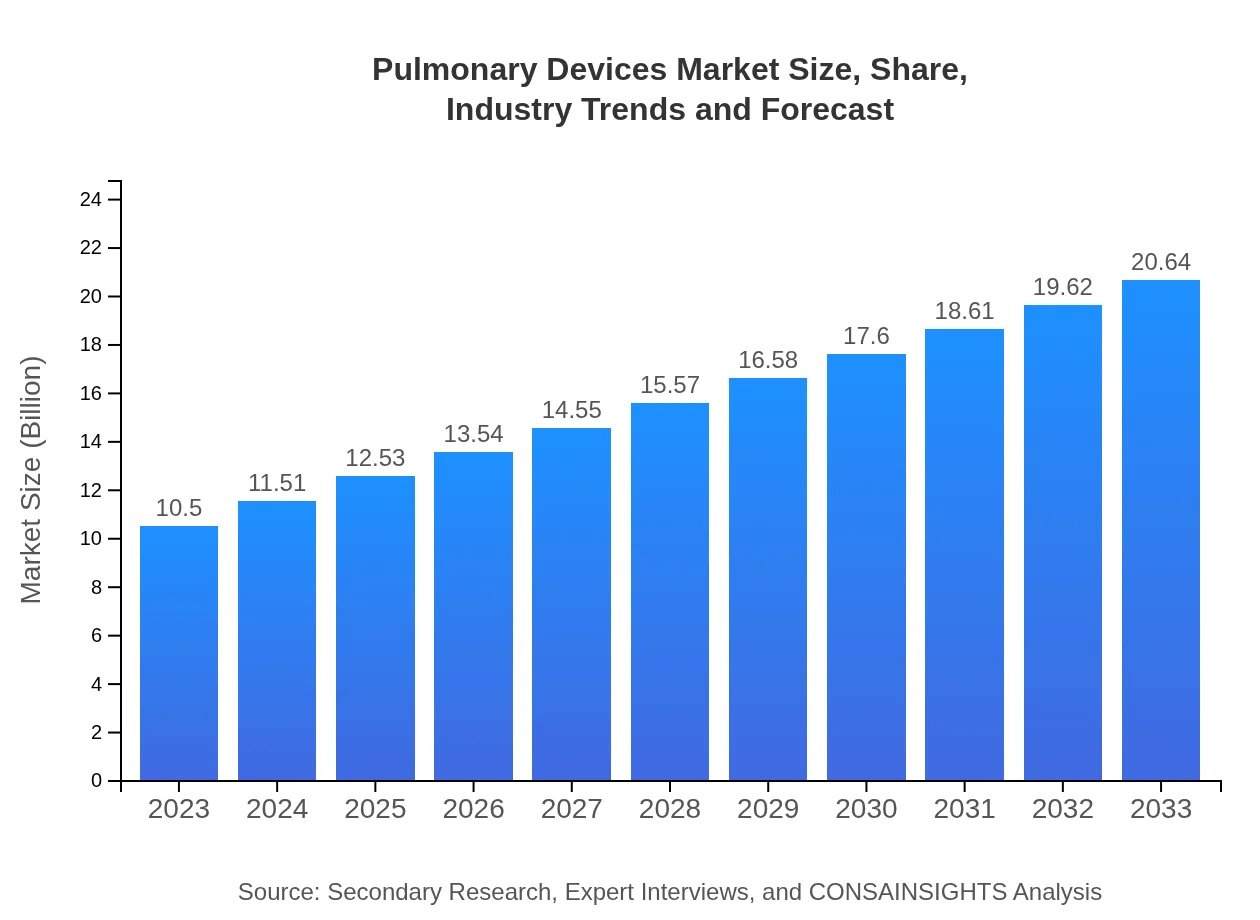
Pulmonary Devices Market — USD 10.5 billion in 2023, Growing to USD 20.64B by 2033 at 6.8% CAGR
This report provides a comprehensive analysis of the Pulmonary Devices market, examining various segments and geographic regions with data forecasts from 2023 to 2033. It delves into market trends, growth rates, industry dynamics, and future opportunities in the sector.
Key Takeaways
- Global market expands from $10.50 Billion in 2023 to $20.64 Billion in 2033, with a 6.8% CAGR across 2023 to 2033.
- North America is largest regional market, while no single fastest-growing region is stated because regional CAGR differences remain within 0.15 percentage points.
- Europe grows from $3 Billion in 2023 to $5.9 Billion in 2033, reflecting strong regional demand.
- Asia Pacific increases from $2 Billion in 2023 to $3.94 Billion in 2033, driven by rising care access.
- Top industry participants include Philips Healthcare, ResMed, AstraZeneca, and Boehringer Ingelheim.
Pulmonary Devices Market Report — Executive Summary
North America remains largest market by forecast-period value, while no single fastest-growing region is stated because top regional growth rates are separated by less than 0.15 percentage points. The report examines the Pulmonary Devices sector, reporting a market size of $10.50 Billion in 2023 and a projected increase to $20.64 Billion by 2033 at a 6.8% CAGR for 2023 to 2033. Growth is supported by rising respiratory disease prevalence, aging populations, and wider adoption of home-care solutions and telehealth. Technological advances, such as connected devices and portable therapies, are influencing product development and patient adherence. Regional patterns show North America as the largest market by end value. The analysis covers product types, applications, end users, and deployment settings, and highlights major competitors including Philips Healthcare, ResMed, AstraZeneca, and Boehringer Ingelheim. Methodology combines expert interviews, company reports, and triangulated data to support findings and trend interpretation.
Key Growth Drivers
- Rising incidence of respiratory illnesses increases demand for diagnostic and therapeutic devices.
- Expansion of home-care services fuels need for portable and user-friendly pulmonary equipment.
- Technological progress and device connectivity enhance monitoring and treatment adherence.
- Greater health awareness and preventive care investments support market uptake.
- Regulatory support and telehealth adoption improve access to pulmonary care solutions.
| Metric | Value |
|---|---|
| Study Period | 2023 - 2033 |
| 2023 Market Size | $10.50 Billion |
| CAGR (2023-2033) | 6.8% |
| 2033 Market Size | $20.64 Billion |
| Top Companies | Philips Healthcare, ResMed, AstraZeneca, Boehringer Ingelheim |
| Published Date | 08 October 2024 |
| Last Modified Date | 25 May 2026 |
Pulmonary Devices Market Overview
Customize Pulmonary Devices Market Report market research report
- ✔ Get in-depth analysis of Pulmonary Devices market size, growth, and forecasts.
- ✔ Understand Pulmonary Devices's regional dynamics and industry-specific trends.
- ✔ Identify potential applications, end-user demand, and growth segments in Pulmonary Devices
What is the Market Size & CAGR of Pulmonary Devices Market Report market in 2023?
Pulmonary Devices Industry Analysis
Pulmonary Devices Market Segmentation and Scope
Tell us your focus area and get a customized research report.
Pulmonary Devices Market Report Market Analysis Report by Region
Europe Pulmonary Devices Market Report:
Europe grows from $3 Billion in 2023 to $5.9 Billion in 2033. Demand in the region is supported by aging populations, increasing focus on chronic respiratory disease management, and adoption of telehealth-enabled pulmonary care.Asia Pacific Pulmonary Devices Market Report:
Asia Pacific grows from $2 Billion in 2023 to $3.94 Billion in 2033. Growth is supported by improving healthcare access, rising awareness of preventive respiratory care, and greater availability of portable therapeutic devices.North America Pulmonary Devices Market Report:
North America is largest regional market, rising from $3.5 Billion in 2023 to $6.88 Billion in 2033. Regional expansion is driven by established healthcare infrastructure, higher adoption of home-care solutions, and investment in connected pulmonary technologies.South America Pulmonary Devices Market Report:
Latin America grows from $0.93 Billion in 2023 to $1.82 Billion in 2033. Regional drivers include growing healthcare spending, broader adoption of home-care models, and enhanced access to respiratory therapies.Middle East & Africa Pulmonary Devices Market Report:
Middle East and Africa grows from $1.07 Billion in 2023 to $2.1 Billion in 2033. Expansion reflects rising healthcare investment, increased diagnosis and treatment of respiratory diseases, and interest in remote care solutions.Tell us your focus area and get a customized research report.
Research Methodology
Pulmonary Devices Market Analysis By Device Type
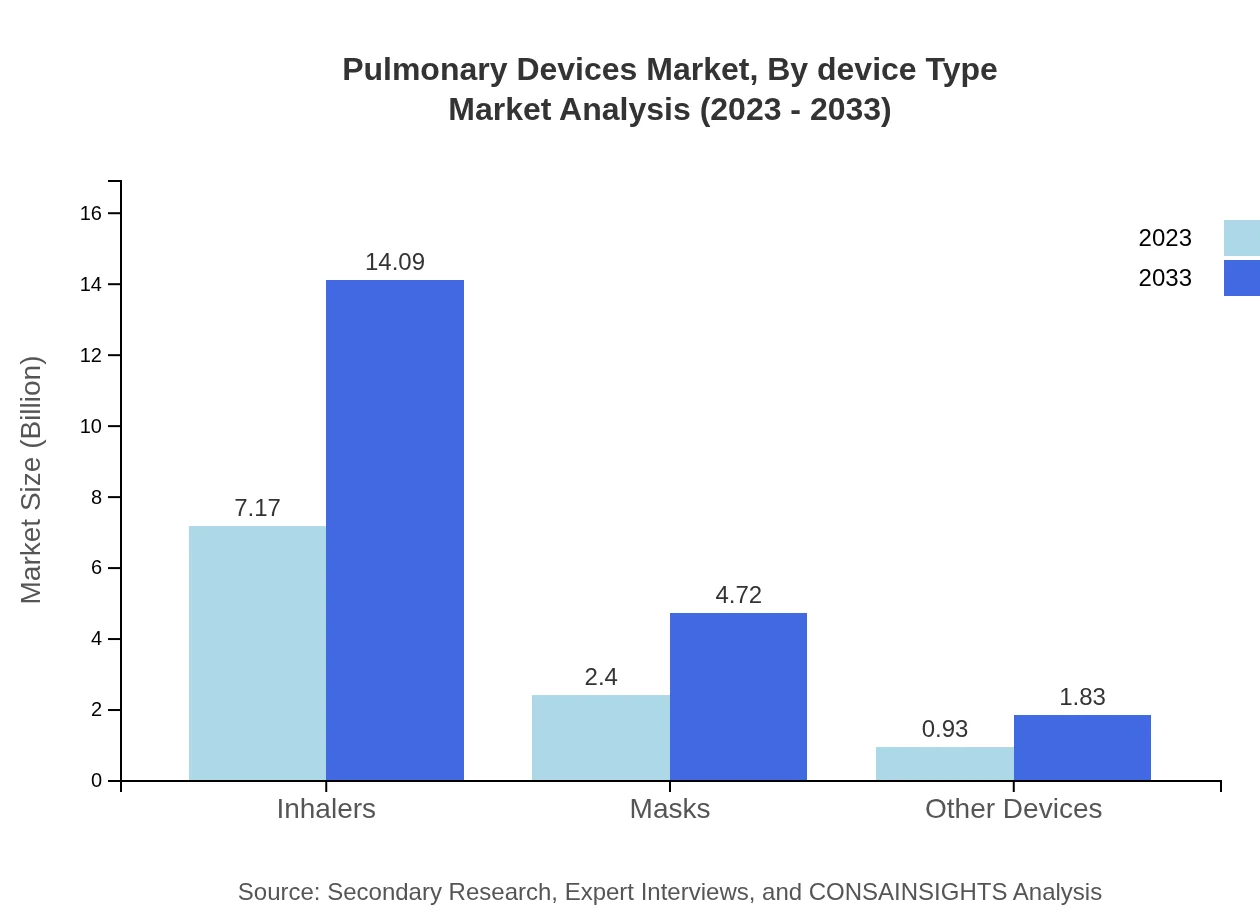
The device type segments demonstrate significant variation in growth. Inhalers, which hold a market size of $7.17 billion in 2023 and are projected to reach $14.09 billion by 2033, dominate the market. Nebulizers and oxygen concentrators also show strong growth trends driven by increasing demand for at-home respiratory therapies. The significant share of inhalers (68.26% in 2023) showcases their essential role in asthma management.
Pulmonary Devices Market Analysis By Application
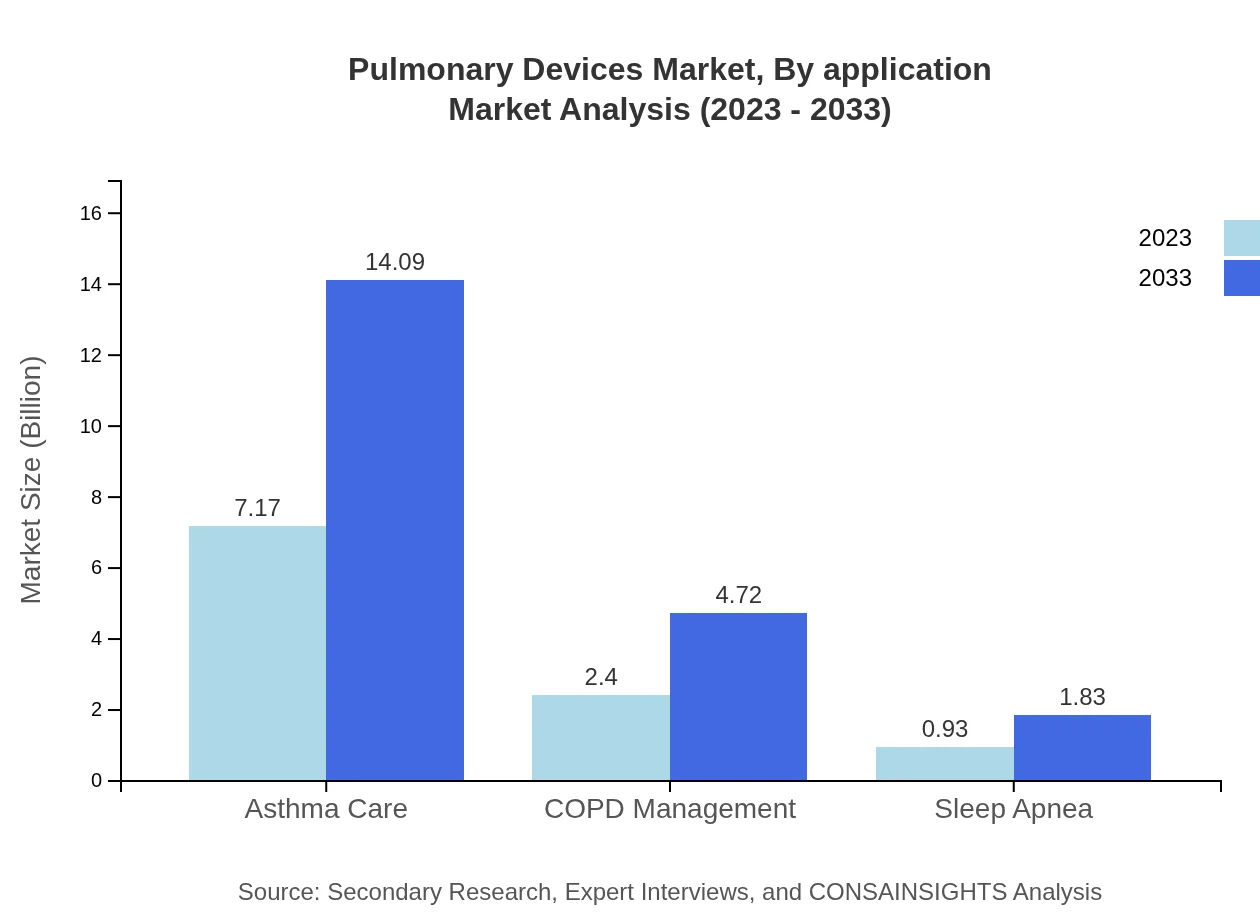
By application, asthma care leads the market with a size of $7.17 billion in 2023. COPD management follows with $2.40 billion, reflecting the growing necessity for targeted treatments. Inhaled medications are increasingly being recognized for their benefits across diverse respiratory conditions. The segments illustrate a well-defined scope for growth, especially with the aging global population.
Pulmonary Devices Market Analysis By Usage
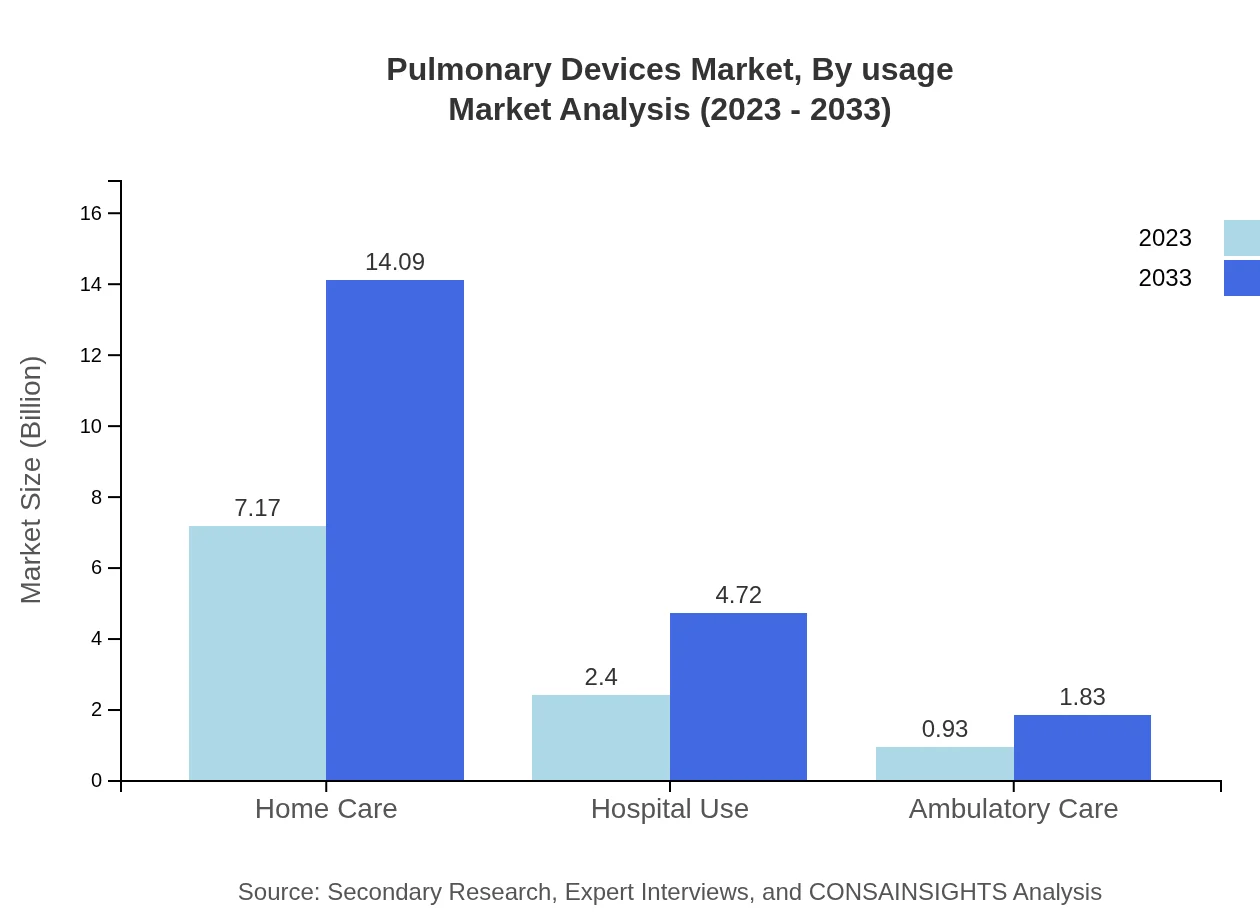
Home care usage dominates the market, valued at $7.17 billion in 2023 and expected to maintain a share of 68.26% through 2033. This is followed by hospital use at $2.40 billion. The shift towards home care solutions is a notable trend, especially post-COVID-19, as patients prefer to manage their health conditions in more comfortable settings.
Pulmonary Devices Market Analysis By End User
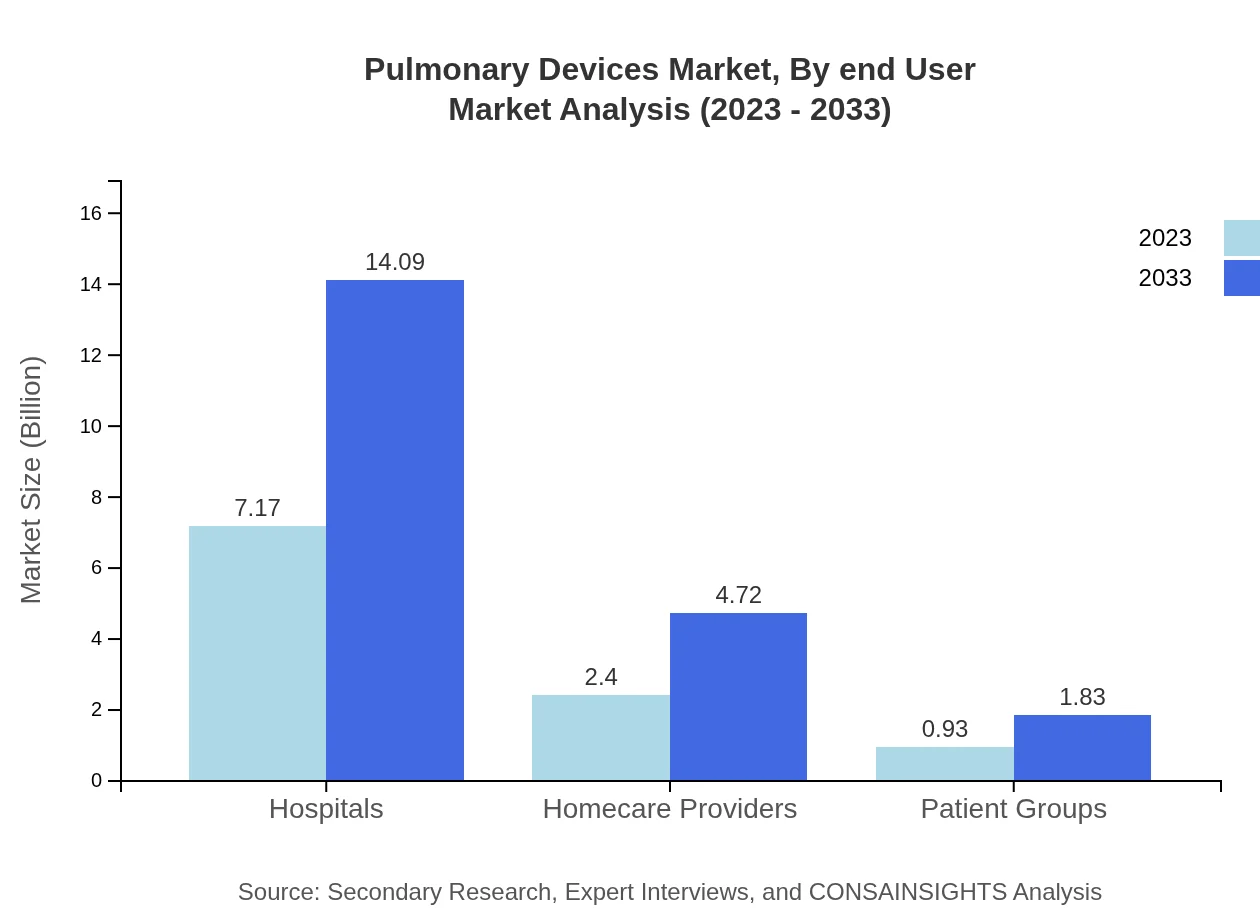
End-user segmentation shows significant reliance on hospitals and homecare providers, with hospitals representing a substantial value of $7.17 billion in 2023. Homecare solutions have garnered attention for their effectiveness and convenience, indicating a shift in how pulmonary care is administered across the globe. This segment is expected to grow rapidly, forecasted to continue holding a significant share of the market.
Pulmonary Devices Market Trends and Future Forecast
Tell us your focus area and get a customized research report.
Global Market Leaders and Top Companies in Pulmonary Devices Industry
Philips Healthcare:
Philips is a leading player in the pulmonary devices market known for its innovative breathing solutions, particularly focusing on apnea care and respiratory therapy equipment.ResMed:
ResMed specializes in cloud-connected devices for people with obstructive sleep apnea or chronic obstructive pulmonary disease (COPD), providing comprehensive management systems.AstraZeneca:
AstraZeneca, while primarily a pharmaceutical company, plays a vital role in the pulmonary sector through its portfolio of respiratory medications and inhaler technologies.Boehringer Ingelheim:
Boehringer Ingelheim is engaged in the development of medications and devices for COPD management, contributing significantly through their innovative delivery systems.We're grateful to work with incredible clients.









FAQs
What is the current market size of the Pulmonary Devices market?
The market size is $10.50 Billion in 2023 as reported in the study. This figure serves as the baseline for the 2023 to 2033 forecast period.
How big will the market be in 2033?
The market is projected to reach $20.64 Billion by 2033, reflecting the cumulative growth captured in the 2023 to 2033 forecast window.
What is CAGR of the market for 2023 to 2033?
The reported compound annual growth rate for the 2023 to 2033 forecast period is 6.8%, applied to the market progression from 2023 to 2033.
Is there a single fastest Growing region in the Pulmonary Devices Market Report market?
No single fastest-growing region is stated for the Pulmonary Devices Market Report market because the top regional implied CAGR values are within 0.15 percentage points of each other, making the ranking too close to call reliably.
Which companies are named as major players?
Top companies listed include Philips Healthcare, ResMed, AstraZeneca, and Boehringer Ingelheim as key participants in product development and market activity.
What are primary trends affecting the Pulmonary Devices market?
Key trends include increased adoption of home-care solutions, telehealth integration, device connectivity, and innovation focused on improved patient outcomes and usability.
How was the market research conducted?
Research incorporated primary interviews with industry experts, secondary company reports and publications, data triangulation, and internal validation to ensure accuracy.
What applications drive demand for devices?
Applications such as asthma care, COPD management, and sleep apnea treatment are central to device demand across clinical and home-care settings.