

Pulmonary Drug Delivery Systems Market Report
First published: 07 October 2024 | Last updated: 25 May 2026 | Report Code: pulmonary-drug-delivery-systems
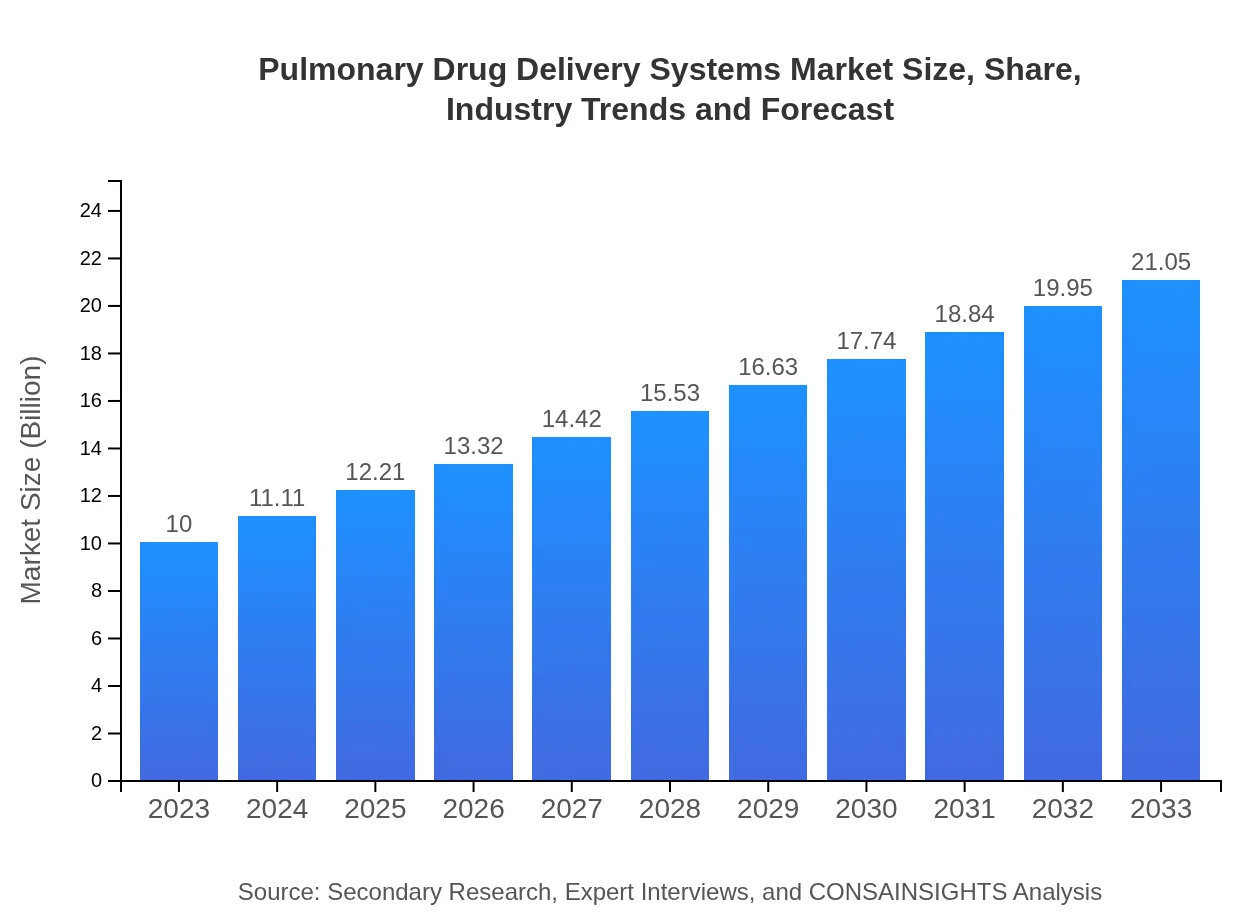
Pulmonary Drug Delivery Systems Market — USD 10 billion in 2023, Growing to USD 21.05B by 2033 at 7.5% CAGR
This report provides an in-depth analysis of the Pulmonary Drug Delivery Systems market, highlighting key market trends, regional insights, and growth forecasts from 2023 to 2033, offering valuable insights for stakeholders and industry players.
Key Takeaways
- Global market grows from $10.00 Billion in 2023 to $21.05 Billion in 2033 at a 7.5% CAGR over 2023 to 2033.
- North America is largest regional market, while no single fastest-growing region is stated because regional CAGR differences remain within 0.15 percentage points.
- Europe expands from $2.86 Billion in 2023 to $6.02 Billion in 2033, reflecting strong demand for advanced delivery solutions.
- Asia Pacific rises from $2.06 Billion to $4.34 Billion over the forecast period, with rising healthcare investment supporting adoption.
- Top industry participants include AstraZeneca, GlaxoSmithKline, Novartis, Boehringer Ingelheim, and Teva Pharmaceuticals.
- Key device segments include inhalers, nebulizers, and vaporizers; formulation categories span solid, liquid, and gas.
Pulmonary Drug Delivery Systems Market Report — Executive Summary
North America remains largest market by forecast-period value, while no single fastest-growing region is stated because top regional growth rates are separated by less than 0.15 percentage points. The Pulmonary Drug Delivery Systems market is advancing through sustained investment in delivery technologies and growing management needs for respiratory conditions. Market size is expected to rise from $10.00 Billion in 2023 to $21.05 Billion by 2033 at a 7.5% CAGR for 2023 to 2033. Drivers include increasing prevalence of asthma and COPD, innovation in inhalers and nebulization, and expanded home-care uptake. Regional performance varies: North America leads in absolute value, while Europe and Asia Pacific show notable expansion in absolute terms. Manufacturers such as AstraZeneca, GlaxoSmithKline, Novartis, Boehringer Ingelheim, and Teva Pharmaceuticals are active in product development and commercialization. The report covers segmentation by device type, technology, formulation, therapy area, and end-user, and examines regulatory and adoption dynamics shaping market trajectories.
Key Growth Drivers
- Rising prevalence of respiratory diseases increases demand for efficient pulmonary therapies and delivery systems.
- Technological improvements in inhalers, nebulizers, and monitoring devices boost treatment effectiveness and patient adherence.
- Expansion of home care and outpatient management supports broader adoption of portable pulmonary delivery devices.
- Ongoing R&D and product pipelines from major firms drive new formulations and device-platform integration.
- Regulatory focus on respiratory treatment efficacy encourages investment in device validation and clinical support.
| Metric | Value |
|---|---|
| Study Period | 2023 - 2033 |
| 2023 Market Size | $10.00 Billion |
| CAGR (2023-2033) | 7.5% |
| 2033 Market Size | $21.05 Billion |
| Top Companies | AstraZeneca, GlaxoSmithKline, Novartis, Boehringer Ingelheim, Teva Pharmaceuticals |
| Published Date | 07 October 2024 |
| Last Modified Date | 25 May 2026 |
Pulmonary Drug Delivery Systems Market Overview
Customize Pulmonary Drug Delivery Systems Market Report market research report
- ✔ Get in-depth analysis of Pulmonary Drug Delivery Systems market size, growth, and forecasts.
- ✔ Understand Pulmonary Drug Delivery Systems's regional dynamics and industry-specific trends.
- ✔ Identify potential applications, end-user demand, and growth segments in Pulmonary Drug Delivery Systems
What is the Market Size & CAGR of Pulmonary Drug Delivery Systems Market Report market in 2023?
Pulmonary Drug Delivery Systems Industry Analysis
Pulmonary Drug Delivery Systems Market Segmentation and Scope
Tell us your focus area and get a customized research report.
Pulmonary Drug Delivery Systems Market Report Market Analysis Report by Region
Europe Pulmonary Drug Delivery Systems Market Report:
Europe grows from $2.86 Billion in 2023 to $6.02 Billion in 2033. Expansion reflects investment in advanced delivery platforms, regulatory emphasis on respiratory care, and increasing outpatient and home-based therapy utilization.Asia Pacific Pulmonary Drug Delivery Systems Market Report:
Asia Pacific grows from $2.06 Billion in 2023 to $4.34 Billion in 2033. Growth is linked to rising healthcare expenditure, expanding access to respiratory treatments, and growing adoption of portable pulmonary devices.North America Pulmonary Drug Delivery Systems Market Report:
North America is largest regional market, rising from $3.27 Billion in 2023 to $6.87 Billion in 2033. Regional demand is supported by established healthcare infrastructure, high device adoption rates, and significant activity from leading industry players.South America Pulmonary Drug Delivery Systems Market Report:
Latin America grows from $0.89 Billion in 2023 to $1.87 Billion in 2033. Regional progression is influenced by improving healthcare access, growing awareness of respiratory disease management, and gradual uptake of modern delivery systems.Middle East & Africa Pulmonary Drug Delivery Systems Market Report:
Middle East and Africa grows from $0.93 Billion in 2023 to $1.95 Billion in 2033. Market movement is supported by increasing healthcare investment, focus on respiratory disease programs, and adoption of both hospital and home-based therapies.Tell us your focus area and get a customized research report.
Research Methodology
Pulmonary Drug Delivery Systems Market Analysis By Device Type
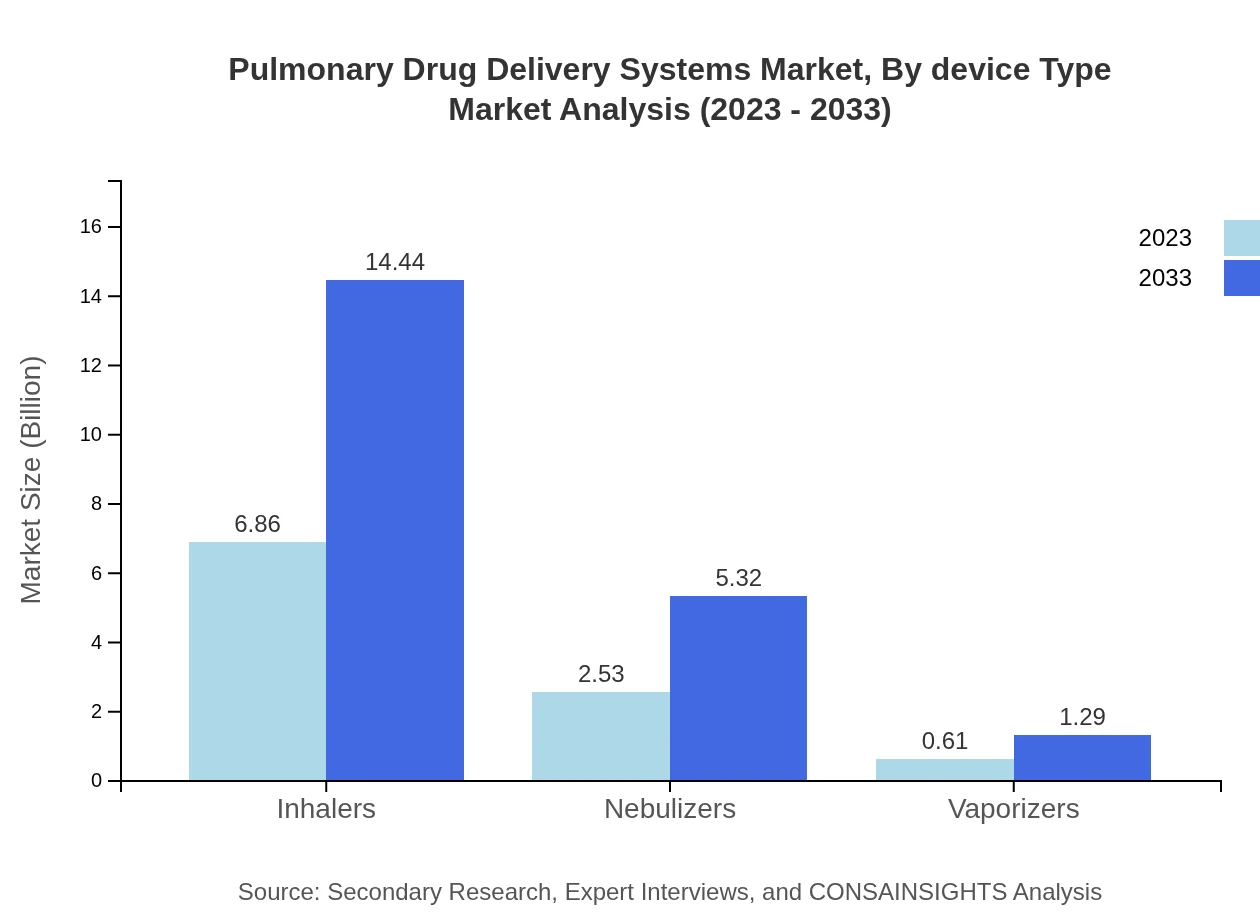
Inhalers dominate the market with an estimated size of $6.86 billion in 2023, projected to grow to $14.44 billion by 2033, capturing 68.6% of the market share. Nebulizers follow at $2.53 billion, with future growth anticipated to reach $5.32 billion by 2033, making up 25.29%. Vaporizers hold a smaller segment but are also expected to grow from $0.61 billion to $1.29 billion over the same period.
Pulmonary Drug Delivery Systems Market Analysis By Therapy Area
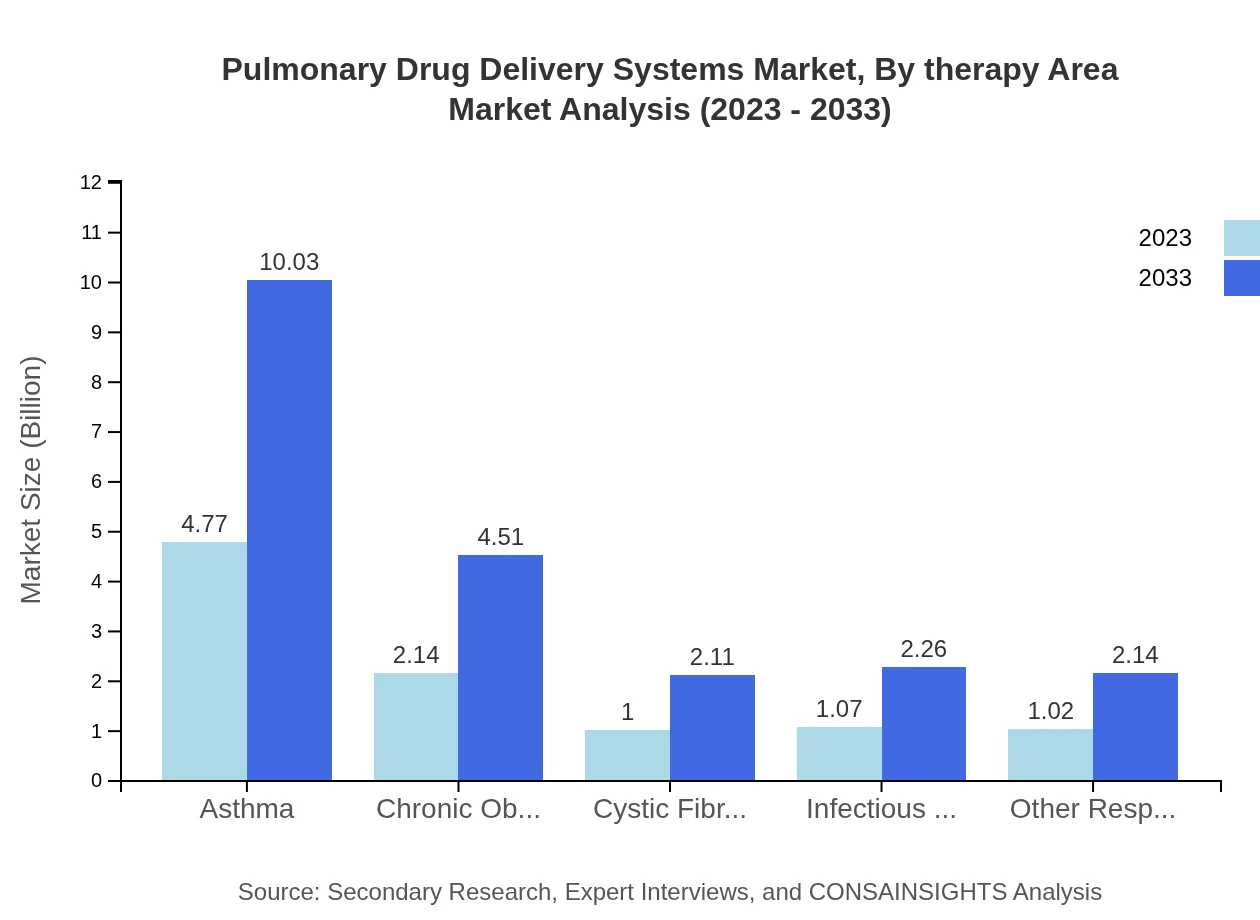
The asthma segment is the largest contributor, valued at $4.77 billion in 2023 and expected to reach $10.03 billion by 2033, representing a 47.66% market share. COPD accounts for $2.14 billion with growth to $4.51 billion, while infectious diseases and other respiratory conditions are also vital segments contributing to overall market growth.
Pulmonary Drug Delivery Systems Market Analysis By End User
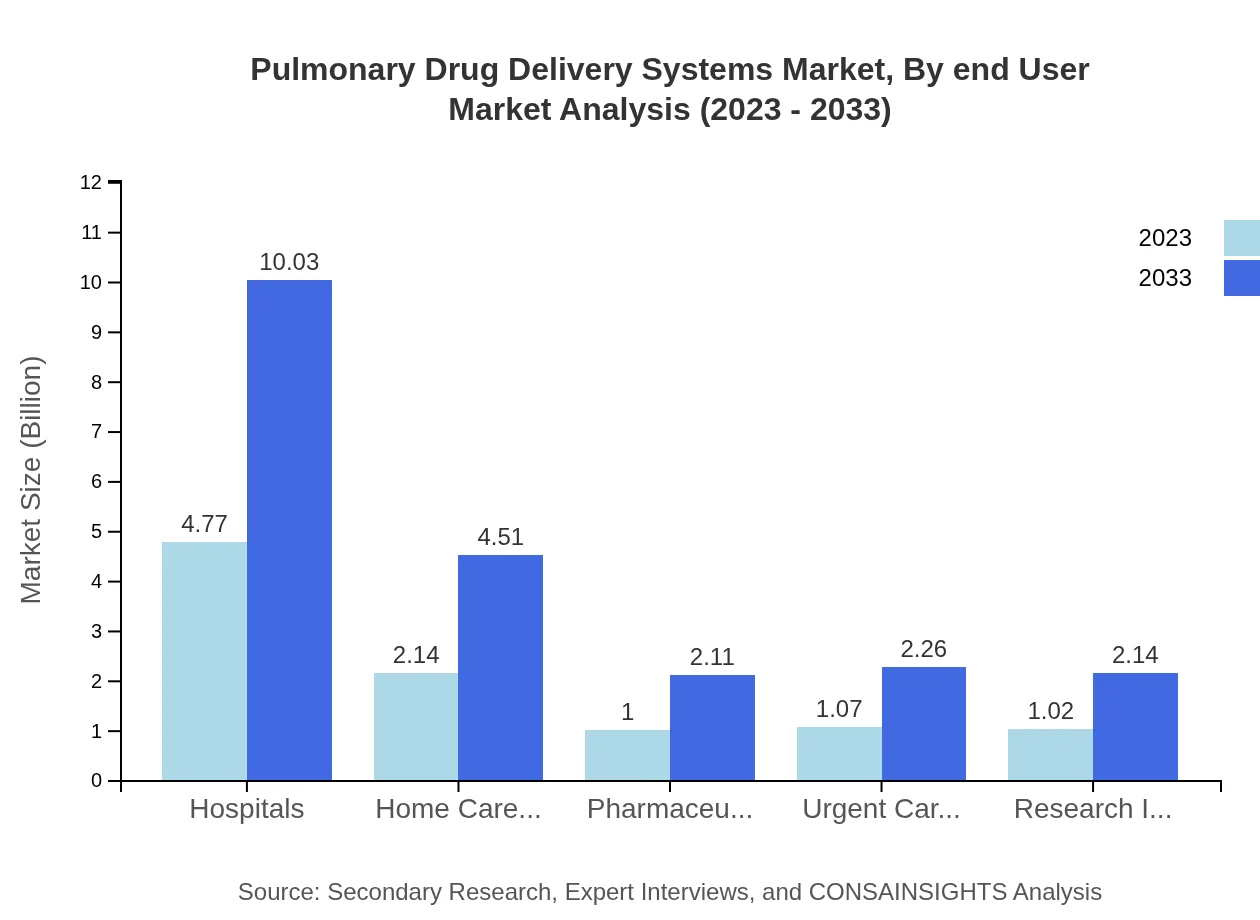
Hospitals lead the segment with a market size forecasted to grow from $4.77 billion in 2023 to $10.03 billion by 2033, maintaining a 47.66% share. Home care settings are growing at a similar pace, from $2.14 billion to $4.51 billion, showing a significant trend towards at-home treatment options.
Pulmonary Drug Delivery Systems Market Analysis By Formulation
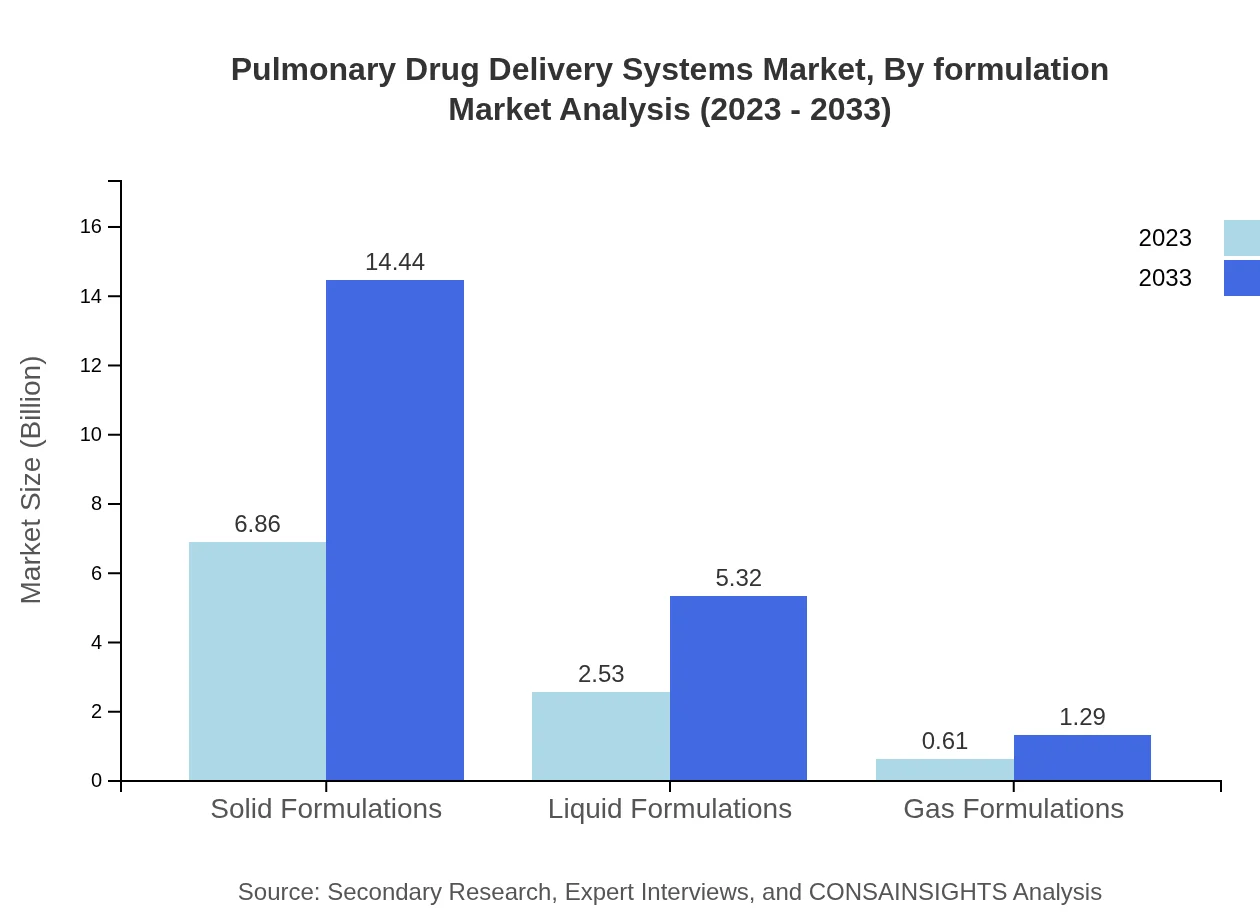
Solid formulations dominate the market space, expected to grow from $6.86 billion to $14.44 billion, representing 68.6% of the share. Liquid formulations and gas formulations also contribute significantly, albeit at a smaller scale with projections this segment's size reaching $5.32 billion and $1.29 billion, respectively.
Pulmonary Drug Delivery Systems Market Analysis By Technology
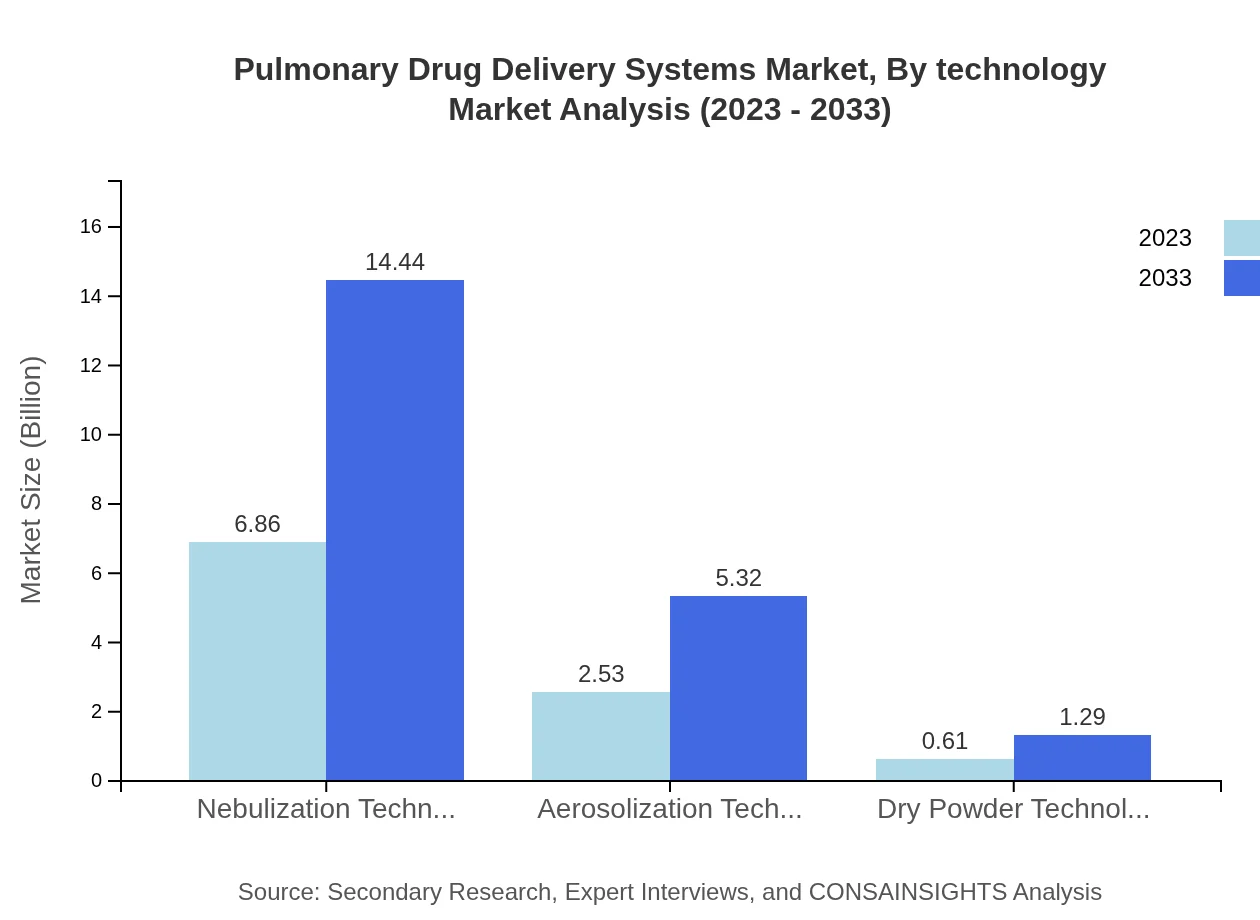
The nebulization technology segment holds the largest share, estimated at $6.86 billion, and expected to grow to $14.44 billion by 2033. Simultaneously, aerosolization and dry powder technologies are experiencing growth, reflecting advancements in pulmonary drug delivery systems making use of varied modes of administration.
Pulmonary Drug Delivery Systems Market Trends and Future Forecast
Tell us your focus area and get a customized research report.
Global Market Leaders and Top Companies in Pulmonary Drug Delivery Systems Industry
AstraZeneca:
AstraZeneca is a leading biopharmaceutical company that focuses on the development of treatments for respiratory diseases, contributing significantly to the Pulmonary Drug Delivery Systems market with innovative inhaled therapies.GlaxoSmithKline:
GlaxoSmithKline is renowned for its extensive range of inhalers and aerosol medications, playing a pivotal role in developing advanced therapies for asthma and COPD management.Novartis:
Novartis is a key player in the field focusing on innovative respiratory care solutions, including cutting-edge inhalation technologies that enhance treatment efficacy.Boehringer Ingelheim:
Boehringer Ingelheim specializes in developing inhalable therapies specifically targeting respiratory conditions, contributing significantly to improvements in patient health outcomes.Teva Pharmaceuticals:
Teva Pharmaceuticals is recognized for its commitment to developing generic and innovative pulmonary therapies, thereby expanding access to necessary treatment options.We're grateful to work with incredible clients.









FAQs
What is the market size of the Pulmonary Drug Delivery Systems market?
The market size was $10.00 Billion in 2023 and is projected to reach $21.05 Billion in 2033, according to the reported forecast covering 2023 to 2033 at a 7.5% CAGR.
How big is the market expected to grow by 2033?
By 2033 the market is expected to reach $21.05 Billion, up from $10.00 Billion in 2023, as stated for the 2023 to 2033 forecast period at a 7.5% CAGR.
What is CAGR for the forecast period?
The compound annual growth rate for the market over the 2023 to 2033 forecast period is 7.5%, based on the provided market projections and time span.
Is there a single fastest Growing region in the Pulmonary Drug Delivery Systems Market Report market?
No single fastest-growing region is stated for the Pulmonary Drug Delivery Systems Market Report market because the top regional implied CAGR values are within 0.15 percentage points of each other, making the ranking too close to call reliably.
Which companies are leading the market?
Top companies cited include AstraZeneca, GlaxoSmithKline, Novartis, Boehringer Ingelheim, and Teva Pharmaceuticals, all active in pulmonary therapeutic and delivery innovations.
What are the primary device types covered?
Key device categories include inhalers, nebulizers, and vaporizers, representing major delivery platforms referenced in the market segmentation.
How are formulations categorized in the report?
Formulation categories listed are solid formulations, liquid formulations, and gas formulations, covering the main preparation types used in pulmonary delivery.
What end User segments are examined?
End-user groupings include hospitals, home care settings, pharmaceutical companies, urgent care centers, and research institutes as specified in the segmentation list.