
Reports >
Life Sciences
>
Pulmonary Drugs Market Report

Pulmonary Drugs Market Report
First published: 12 October 2024 | Last updated: 25 May 2026 | Report Code: pulmonary-drugs
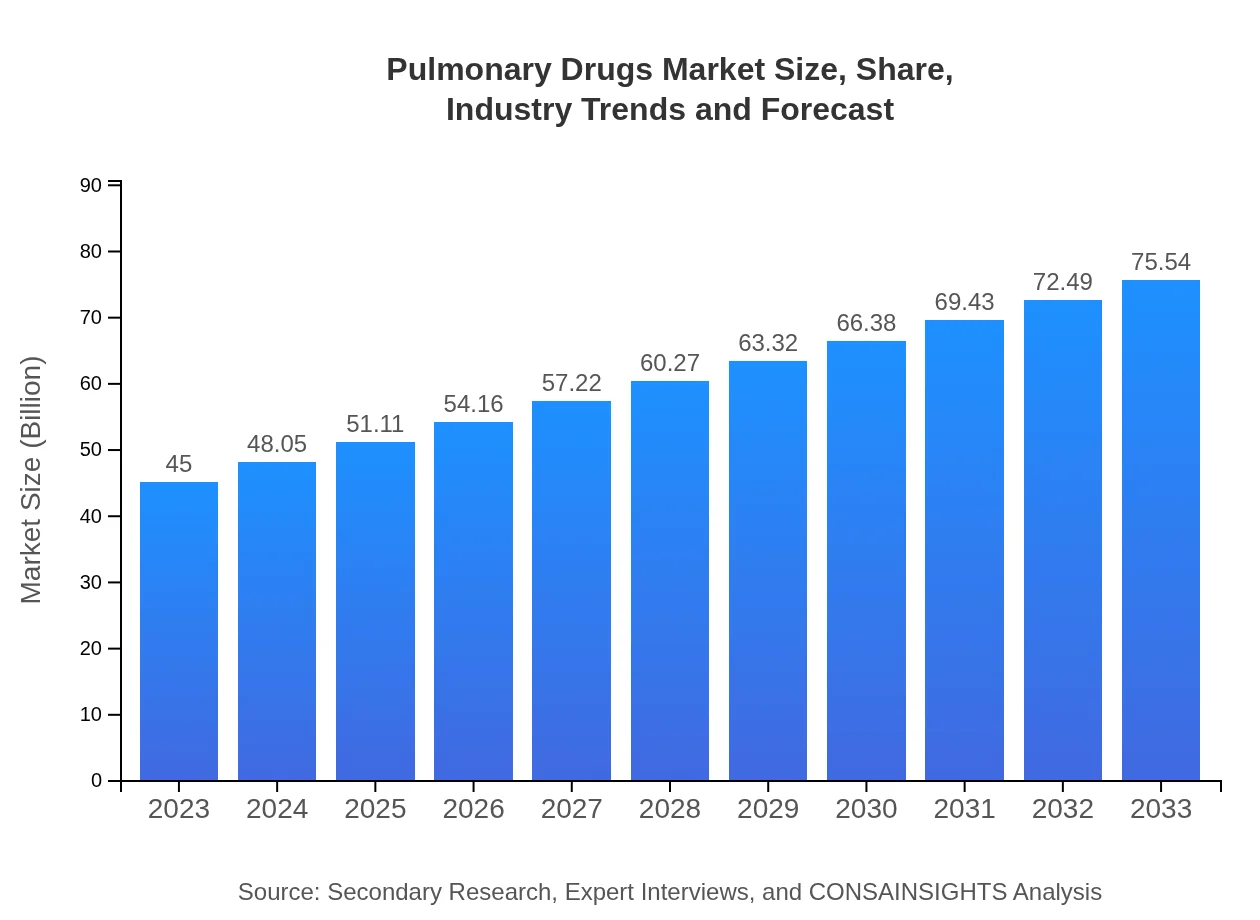
Pulmonary Drugs Market — USD 45 billion in 2023, Growing to USD 75.54B by 2033 at 5.2% CAGR
This report provides an in-depth analysis of the Pulmonary Drugs market, covering key insights, regional dynamics, technology trends, and a forecast period extending from 2023 to 2033. The report aims to equip stakeholders with essential market data and growth opportunities for informed decision-making.
Key Takeaways
- Global market expands from $45.00 Billion in 2023 to $75.54 Billion in 2033 at a 5.2% CAGR through 2023 to 2033.
- North America is largest regional market, while no single fastest-growing region is stated because regional CAGR differences remain within 0.15 percentage points.
- Major product classes include bronchodilators, corticosteroids, mucolytics and combination therapies, with inhalers and nebulizers as prominent formulations.
- Top companies shaping the sector include GSK (GlaxoSmithKline), Boehringer Ingelheim, Novartis, AstraZeneca and Teva Pharmaceutical Industries.
- Demand drivers include rising respiratory disease prevalence, advancements in inhalation technologies and increasing focus on personalized treatments.
Pulmonary Drugs Market Report — Executive Summary
North America remains largest market by forecast-period value, while no single fastest-growing region is stated because top regional growth rates are separated by less than 0.15 percentage points. This report examines the pulmonary drugs market through 2023 to 2033, profiling market size, segmentation and regional performance. Growth is supported by rising incidence of respiratory conditions, innovation in delivery systems and investment in therapeutic development. The market structure covers drug types such as bronchodilators, corticosteroids, mucolytics and combination therapies, delivered via inhalers, nebulizers, tablets and injectables. Distribution channels include hospital, retail and online pharmacies. North America remains largest market by forecast-period value, while no single fastest-growing region is stated because top regional growth rates are separated by less than 0.15 percentage points. Leading companies such as GSK (GlaxoSmithKline), Boehringer Ingelheim, Novartis, AstraZeneca and Teva Pharmaceutical Industries are discussed. Findings draw on expert interviews, company documentation and triangulated data to inform stakeholders on strategic opportunities and potential headwinds through 2033.
Key Growth Drivers
- Rising prevalence of respiratory disorders increasing demand for established and novel pulmonary therapies.
- Continuous improvements in inhalation and delivery technologies enhancing treatment adherence and efficacy.
- Expanded R&D investment and focus on personalized therapeutic approaches for complex pulmonary conditions.
- Broader access via hospital, retail and online pharmacy channels facilitating patient uptake and distribution reach.
- Ongoing product innovation from major pharmaceutical firms supporting portfolio expansion and lifecycle management.
| Metric | Value |
|---|---|
| Study Period | 2023 - 2033 |
| 2023 Market Size | $45.00 Billion |
| CAGR (2023-2033) | 5.2% |
| 2033 Market Size | $75.54 Billion |
| Top Companies | GSK (GlaxoSmithKline), Boehringer Ingelheim, Novartis, AstraZeneca, Teva Pharmaceutical Industries |
| Published Date | 12 October 2024 |
| Last Modified Date | 25 May 2026 |
Pulmonary Drugs Market Overview
Customize Pulmonary Drugs Market Report market research report
- ✔ Get in-depth analysis of Pulmonary Drugs market size, growth, and forecasts.
- ✔ Understand Pulmonary Drugs's regional dynamics and industry-specific trends.
- ✔ Identify potential applications, end-user demand, and growth segments in Pulmonary Drugs
What is the Market Size & CAGR of Pulmonary Drugs Market Report market in 2023?
Pulmonary Drugs Industry Analysis
Pulmonary Drugs Market Segmentation and Scope
Tell us your focus area and get a customized research report.
Pulmonary Drugs Market Report Market Analysis Report by Region
Europe Pulmonary Drugs Market Report:
Europe grows from $12.58 Billion in 2023 to $21.12 Billion in 2033. Market momentum is underpinned by aging populations, regulatory frameworks favoring access and ongoing innovation in inhalation therapies.Asia Pacific Pulmonary Drugs Market Report:
Asia Pacific grows from $8.69 Billion in 2023 to $14.59 Billion in 2033. Rising respiratory disease incidence, improving healthcare access and growing pharmaceutical investment support regional expansion.North America Pulmonary Drugs Market Report:
North America is largest regional market, rising from $15.67 Billion in 2023 to $26.31 Billion in 2033. Local demand is supported by established healthcare infrastructure, high treatment adoption and strong presence of leading pharmaceutical companies.South America Pulmonary Drugs Market Report:
Latin America grows from $4.06 Billion in 2023 to $6.82 Billion in 2033. Growth drivers include increasing awareness of respiratory conditions, expanding healthcare services and wider distribution through retail and hospital pharmacies.Middle East & Africa Pulmonary Drugs Market Report:
Middle East and Africa grows from $3.99 Billion in 2023 to $6.7 Billion in 2033. Regional growth is influenced by rising disease burden, gradual expansion of healthcare infrastructure and adoption of standardized treatment protocols.Tell us your focus area and get a customized research report.
Research Methodology
Pulmonary Drugs Market Analysis By Drug Type
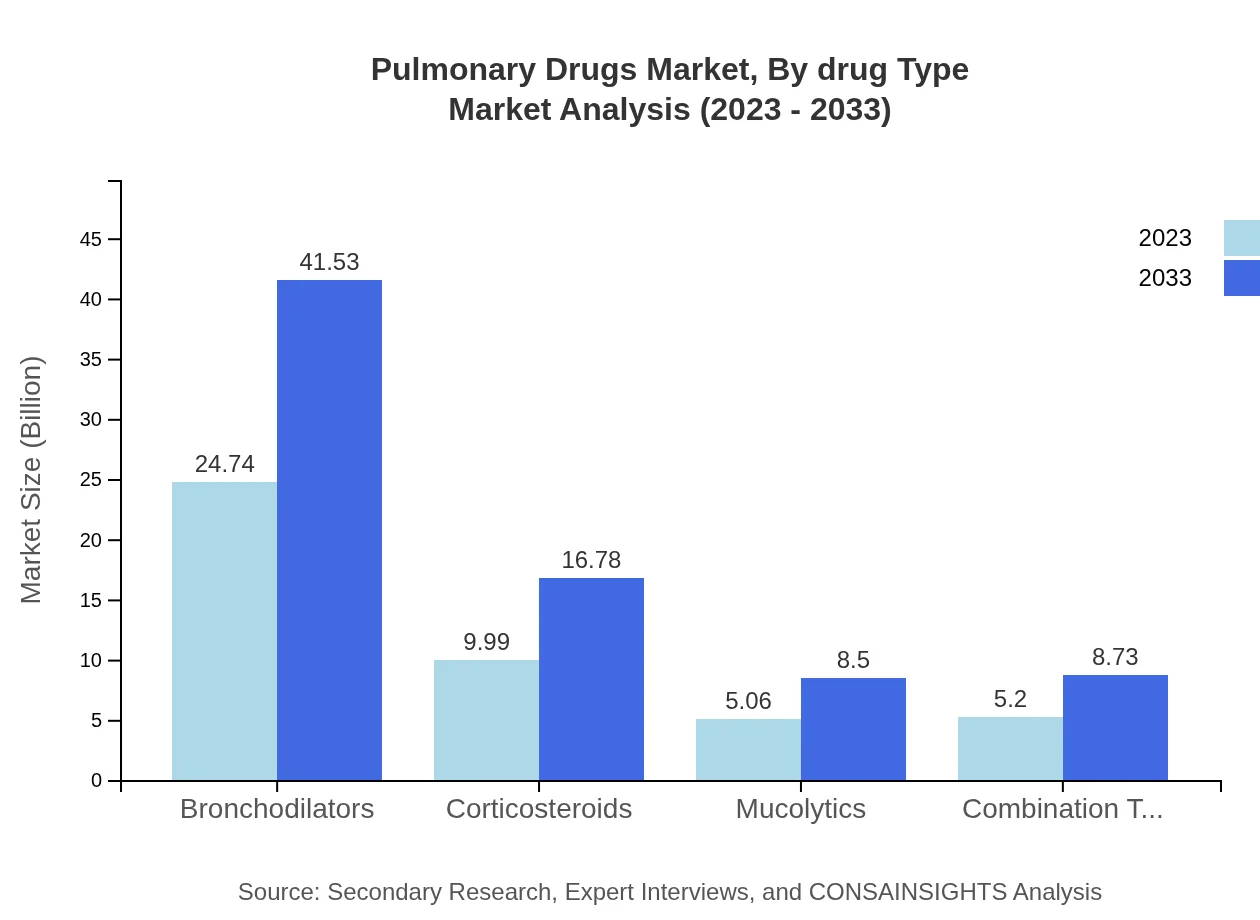
The pulmonary drugs market by drug type showcases the dominance of bronchodilators, which commanded a market size of USD 24.74 billion in 2023 and is expected to rise to USD 41.53 billion by 2033, holding a market share of 54.98%. Corticosteroids follow, with a market size of USD 9.99 billion in 2023, projected to grow to USD 16.78 billion by 2033 (22.21% share). Additionally, mucolytics, combination therapies, and products for other indications also contribute to the market's diversity and overall growth. These segments highlight the pivotal role of targeted treatments in managing various pulmonary conditions.
Pulmonary Drugs Market Analysis By Indication
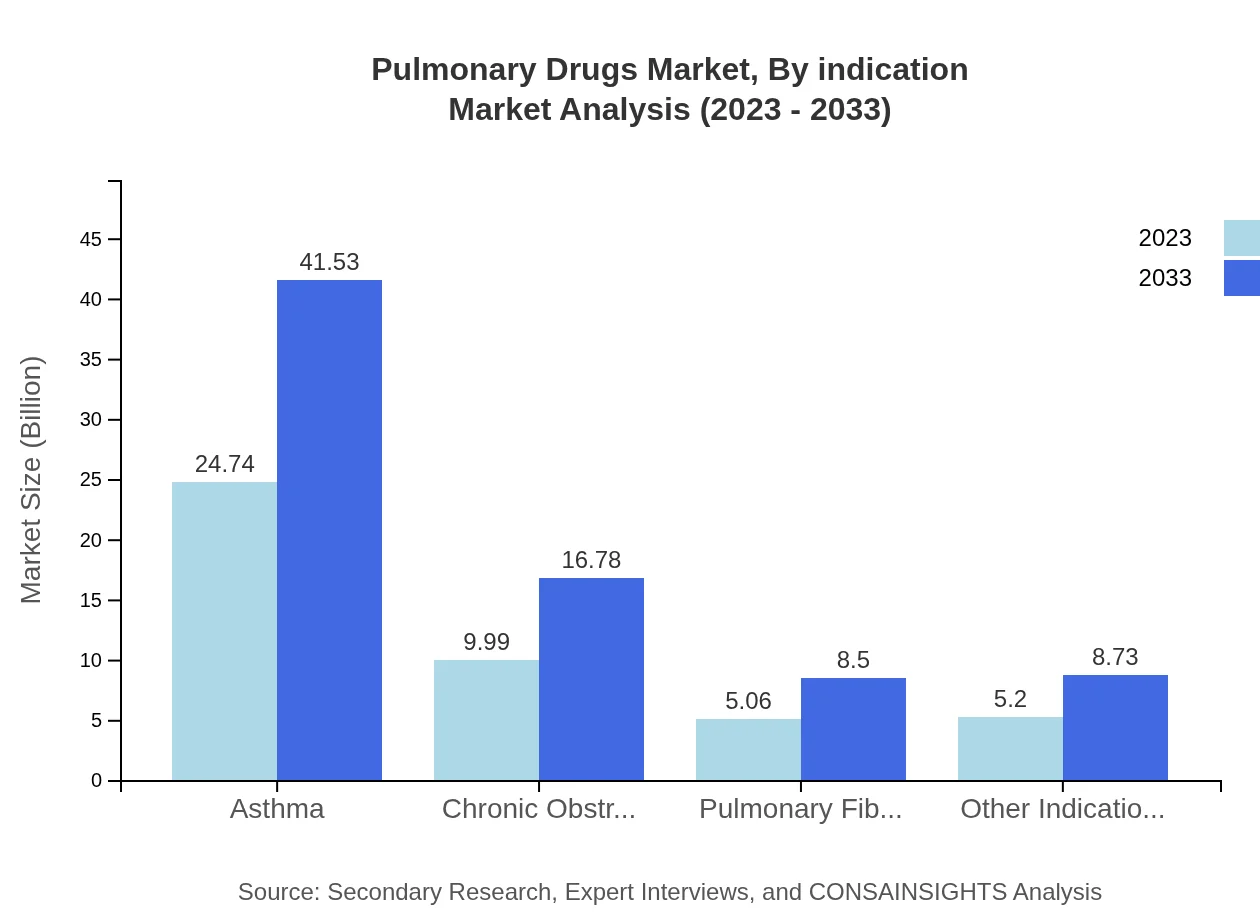
Market analysis by indication reveals significant growth in both asthma and COPD segments. Asthma treatments represent a substantial market size of USD 24.74 billion, with projections to reach USD 41.53 billion by 2033, capturing a share of 54.98%. Similarly, COPD products show growth potential, starting at USD 9.99 billion in 2023 and aiming for USD 16.78 billion by 2033. Other indications like pulmonary fibrosis have witnessed increasing drug development efforts, contributing to market diversity.
Pulmonary Drugs Market Analysis By Formulation
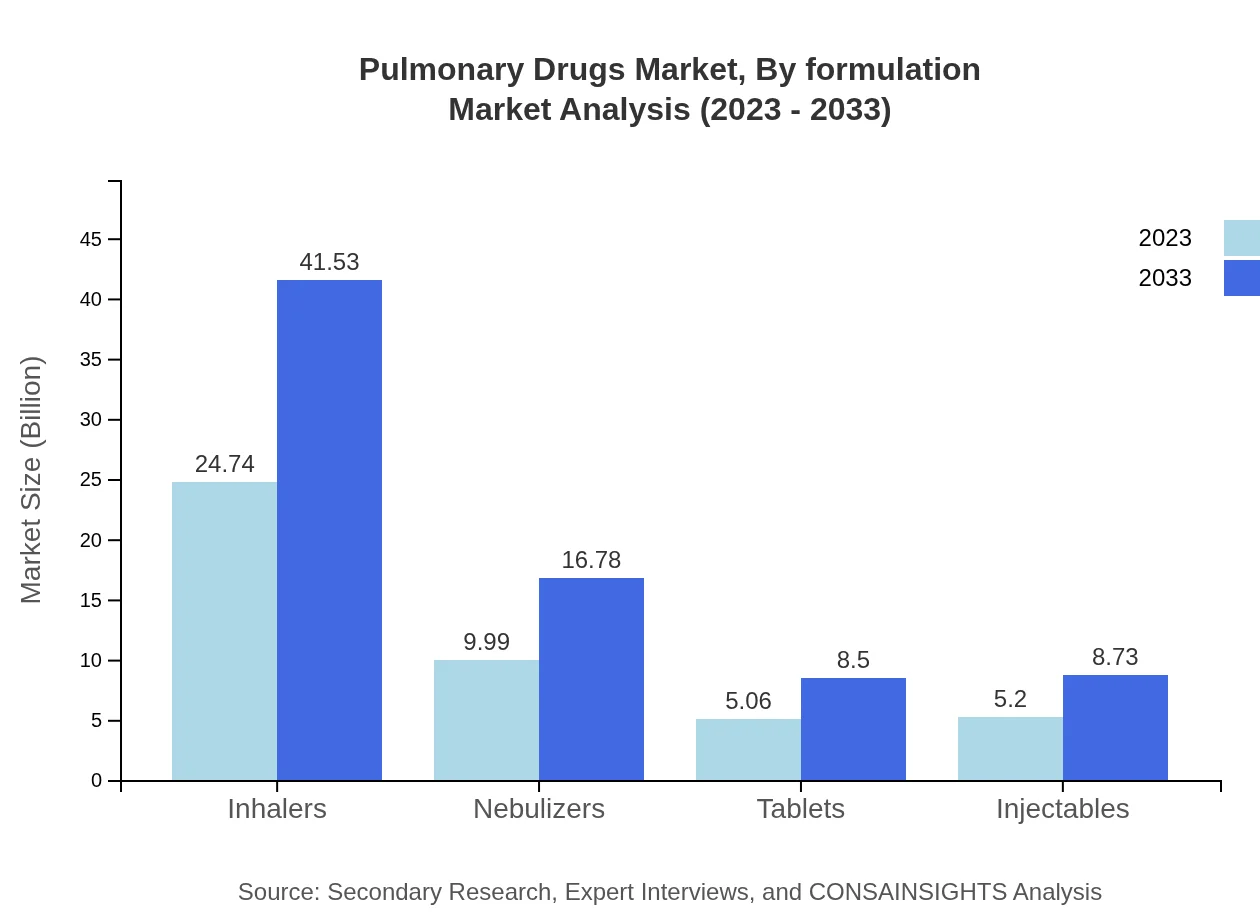
The market by formulation indicates a substantial share for inhalers, which generated a size of USD 24.74 billion in 2023, projected to rise to USD 41.53 billion by 2033, with a commanding market share of 54.98%. Nebulizers and tablets also play important roles, with respective market sizes of USD 9.99 billion and USD 5.06 billion in 2023, expected to grow significantly by 2033. The trend towards patient-friendly administration forms highlights the market's shift toward more effective treatment regimens.
Pulmonary Drugs Market Analysis By Distribution Channel
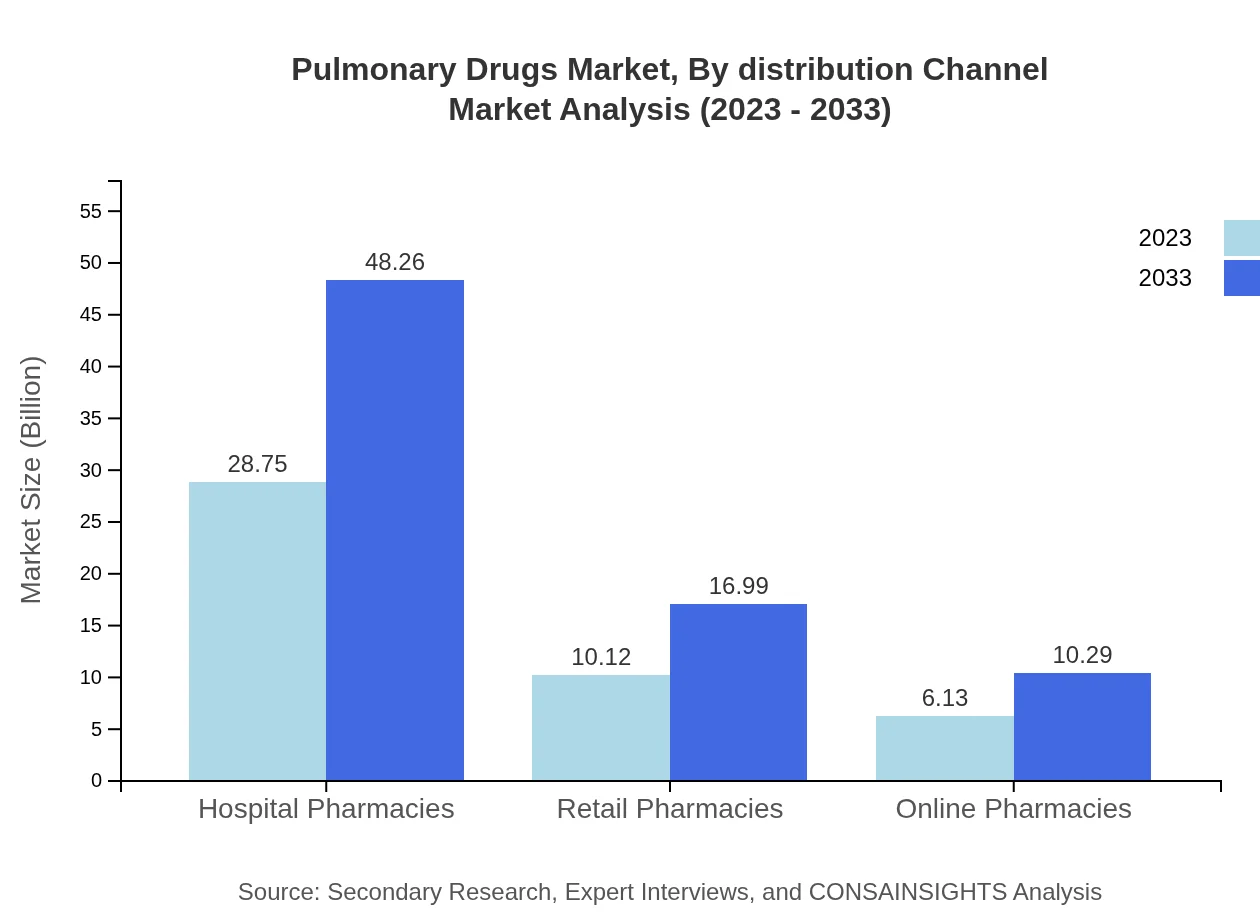
Analyzing distribution channels, hospital pharmacies emerged as the largest segment, achieving a market size of USD 28.75 billion in 2023, projected to increase to USD 48.26 billion by 2033. Retail pharmacies and online pharmacies also contribute, with market sizes estimated at USD 10.12 billion and USD 6.13 billion, respectively. Growth in online pharmacy sales reflects changing consumer preferences for accessibility and convenience in medication purchasing.
Pulmonary Drugs Market Trends and Future Forecast
Tell us your focus area and get a customized research report.
Global Market Leaders and Top Companies in Pulmonary Drugs Industry
GSK (GlaxoSmithKline):
GSK is a leading player in the pulmonary drugs market, renowned for its extensive respiratory product portfolio and innovative therapies targeting asthma and COPD.Boehringer Ingelheim:
Boehringer Ingelheim is recognized for its significant contributions to respiratory health, particularly through its development of novel biologics for chronic respiratory diseases.Novartis:
Novartis actively develops and markets innovative treatments for asthma and COPD, solidifying its position as a major competitor in the pulmonary drugs market.AstraZeneca:
AstraZeneca has a robust pipeline of respiratory drugs and consistently invests in research to enhance treatment options for respiratory diseases.Teva Pharmaceutical Industries:
Teva is a prominent player specializing in generic and specialty pharmaceuticals, offering a range of respiratory products addressing various pulmonary disorders.We're grateful to work with incredible clients.








FAQs
What is the market size of the pulmonary drugs market in 2023?
The market size in 2023 is $45.00 Billion, as stated for the global pulmonary drugs market for the start of the forecast period.
How big will the market be in 2033?
By 2033 the market is projected to reach $75.54 Billion according to the provided forecast data for the 2023 to 2033 period.
What is CAGR for the forecast period?
The compound annual growth rate for the 2023 to 2033 forecast period is 5.2% as specified in the report data.
Is there a single fastest Growing region in the Pulmonary Drugs Market Report market?
No single fastest-growing region is stated for the Pulmonary Drugs Market Report market because the top regional implied CAGR values are within 0.15 percentage points of each other, making the ranking too close to call reliably.
Which drug types are covered in the segmentation?
Segment coverage includes bronchodilators, corticosteroids, mucolytics and combination therapies as listed under by-drug-type sub segments.
Who are the leading companies in the pulmonary drugs market?
Top companies named in the input are GSK (GlaxoSmithKline), Boehringer Ingelheim, Novartis, AstraZeneca and Teva Pharmaceutical Industries.
What distribution channels are analyzed?
Distribution channels included in the data are hospital pharmacies, retail pharmacies and online pharmacies for delivering pulmonary drug products.
How is formulation segmentation represented?
Formulation sub segments specified are inhalers, nebulizers, tablets and injectables, reflecting common administration routes for pulmonary therapies.