
Reports >
Technology And Media
>
Regenerative Urban Architecture

Regenerative Urban Architecture
First published: 07 November 2025 | Last updated: 31 January 2026 | Report Code: regenerative-urban-architecture
Regenerative Urban Architecture Market — USD $8 Billion in 2024, Growing to USD 14.96 by 2033 at 7.0% CAGR
This report provides a comprehensive analysis of the Regenerative Urban Architecture market. It outlines key market trends, technological advancements, and segmentation details, offering precise insights and forecasting data for the period 2024 to 2033. Readers will benefit from detailed regional breakdowns, industry analyses, and forward-looking perspectives informing strategic decisions.
| Metric | Value |
|---|---|
| Study Period | 2024 - 2033 |
| 2024 Market Size | $8.00 Billion |
| CAGR (2024-2033) | 7.0% |
| 2033 Market Size | $14.96 Billion |
| Top Companies | EcoBuild Solutions, GreenUrban Innovations |
| Published Date | 07 November 2025 |
| Last Modified Date | 31 January 2026 |
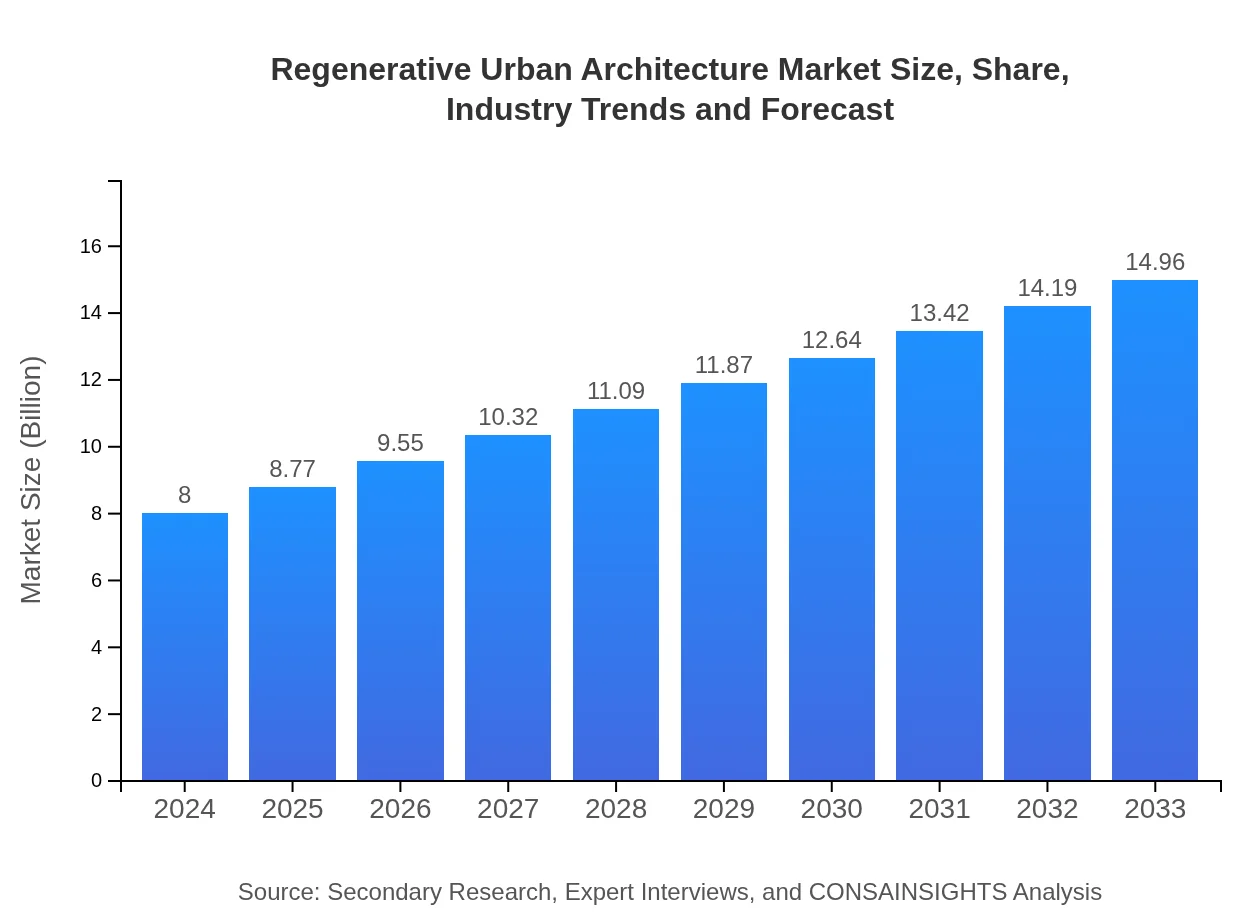
Regenerative Urban Architecture Market Overview
Customize Regenerative Urban Architecture market research report
- ✔ Get in-depth analysis of Regenerative Urban Architecture market size, growth, and forecasts.
- ✔ Understand Regenerative Urban Architecture's regional dynamics and industry-specific trends.
- ✔ Identify potential applications, end-user demand, and growth segments in Regenerative Urban Architecture
What is the Market Size & CAGR of Regenerative Urban Architecture market in 2024?
Regenerative Urban Architecture Industry Analysis
Regenerative Urban Architecture Market Segmentation and Scope
Tell us your focus area and get a customized research report.
Regenerative Urban Architecture Market Analysis Report by Region
Europe Regenerative Urban Architecture:
Europe remains one of the most dynamic markets for regenerative urban architecture, with market estimates increasing from 2.40 units in 2024 to 4.50 units by 2033. The European market benefits from strong regulatory frameworks, incentives for green construction, and a tradition of architectural excellence. The integration of sustainable design templates, renewable energy systems, and innovative urban planning methodologies ensures that European cities continue to evolve into sustainable, livable urban centers with a focus on restoring natural landscapes.Asia Pacific Regenerative Urban Architecture:
In Asia Pacific, rapid urbanization combined with significant government initiatives toward sustainable development has positioned the region as a key market for regenerative urban architecture. The market here has grown from a modest 1.38 units in 2024 to an expected 2.58 units by 2033. Investments in smart city projects, paired with an increasing awareness of environmental stewardship, are accelerating project approvals and implementation of innovative green technologies, making the Asia Pacific region a hotbed for transformative urban projects.North America Regenerative Urban Architecture:
North America has long been at the forefront of adopting advanced urban planning strategies. The region’s regenerative architecture market is projected to grow from 3.08 units in 2024 to 5.75 units by 2033. Innovations in digital construction techniques, combined with progressive environmental policies and consumer demand for energy-efficient designs, have spurred investments. North America continues to lead in pioneering projects that merge technology with sustainability, setting global benchmarks in regenerative urban development.South America Regenerative Urban Architecture:
South America, reflecting the trends seen in Latin America, is witnessing a progressive shift towards regenerative architectural practices. With market sizes forecasted to grow from 0.47 units in 2024 to 0.88 units by 2033, emerging economies are integrating sustainable urban planning to address rapid urban sprawl. Emphasis on renewable energy integration and green building certifications is fostering an environment conducive to sustainable urban renewal, despite regional fiscal and infrastructural challenges.Middle East & Africa Regenerative Urban Architecture:
The Middle East and Africa region, though smaller in market size relative to other regions, is emerging as a promising area for regenerative urban architecture. Expected market expansion from 0.67 units in 2024 to 1.25 units by 2033 underscores growing interest in sustainable infrastructure to counter climate challenges. Strategic investments in renewable energy projects and the adoption of modern urban planning practices are gradually transforming traditional urban settings into areas that balance economic growth with environmental responsibility.Tell us your focus area and get a customized research report.
Regenerative Urban Architecture Market Analysis By Design Principles
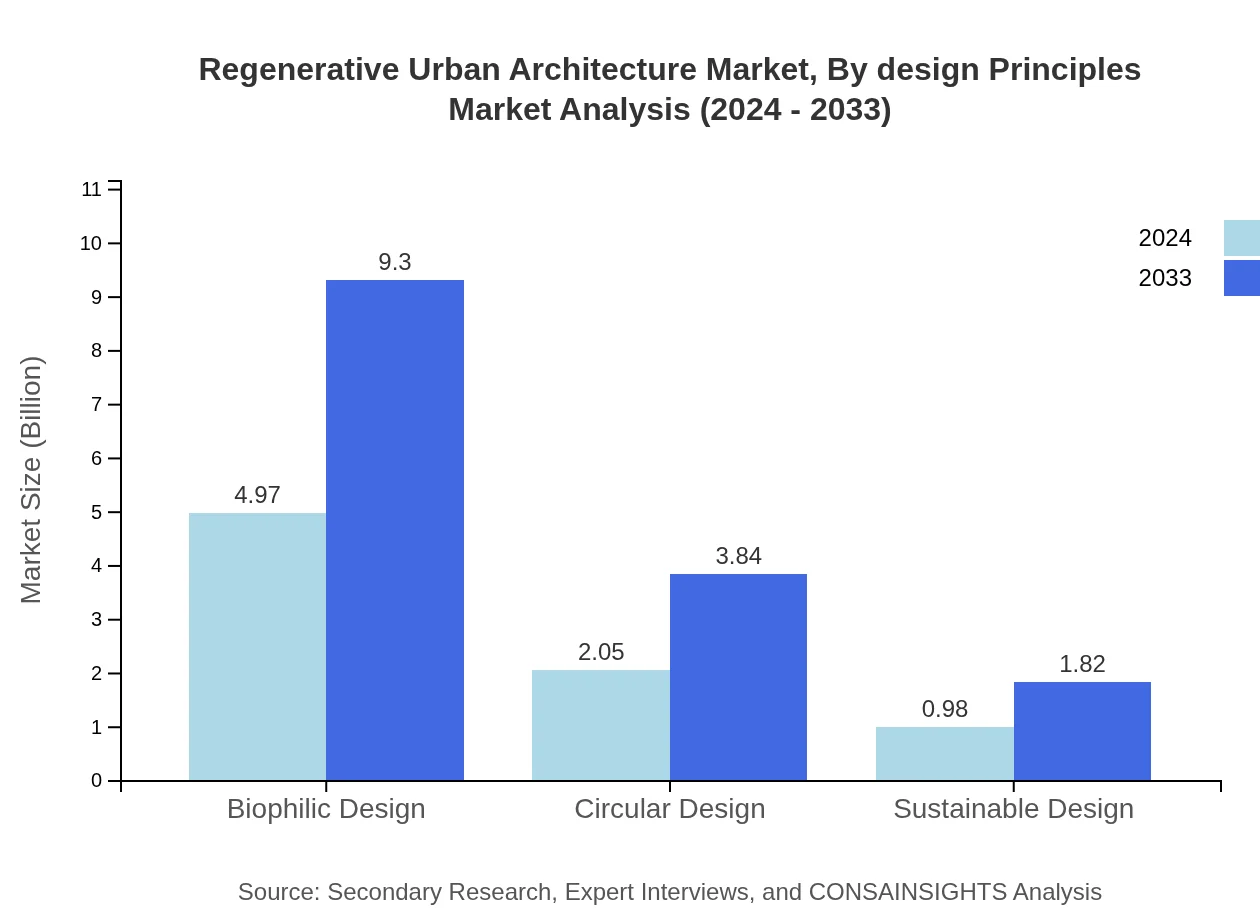
The design principles segment in Regenerative Urban Architecture focuses on incorporating methodologies that nurture the environment while enhancing urban spaces. This segment includes paradigms such as biophilic design, circular design, and sustainable design, all aimed at creating a built environment that coexists harmoniously with nature. It also blends components of green infrastructure by integrating vegetation, natural light, and water recycling systems into traditional construction. With design principles receiving increasing emphasis in modern developments, technical innovations combined with policy frameworks are driving transformations that yield energy-efficient buildings and healthier urban ecosystems. Project case studies exemplify how these principles not only reduce long-term maintenance costs but also elevate the quality of life for occupants, thereby contributing to broader economic and environmental benefits.
Regenerative Urban Architecture Market Analysis By Application
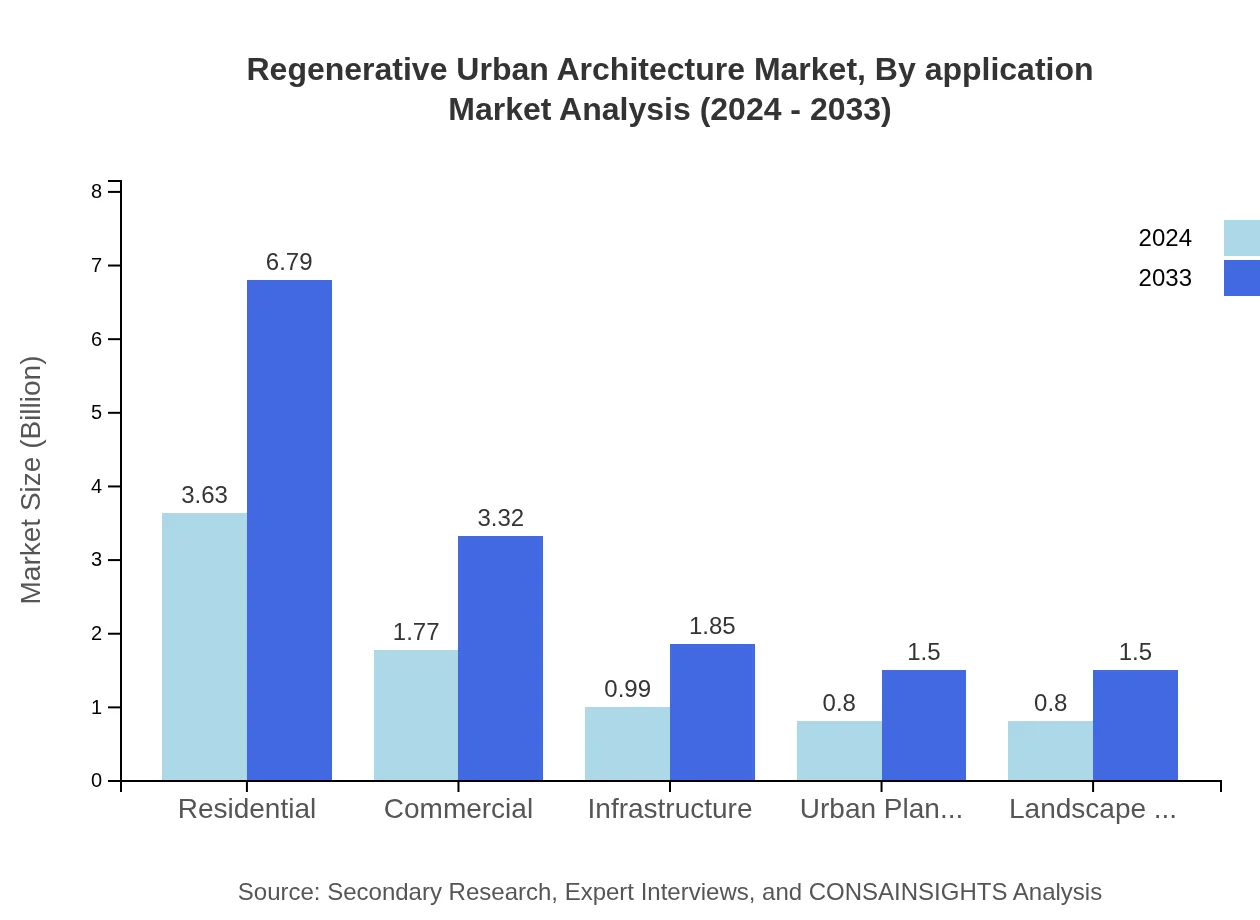
The application segment of the Regenerative Urban Architecture market explores how regenerative solutions are implemented across various real-world settings. This segment is subdivided into residential, commercial, infrastructure, urban planning, and landscape architecture applications. Residential projects emphasize energy-efficient home designs that integrate smart technology and sustainable materials, addressing the needs of modern homeowners. In contrast, commercial applications focus on creating green office spaces and retail environments that maximize natural resource usage while minimizing waste. Infrastructure developments combine robust engineering with eco-friendly innovations, and urban planning efforts are increasingly incorporating principles that foster inclusivity and climate resilience. Landscape architecture, as part of this segment, brings nature into urban spaces through the development of parks, green roofs, and community gardens, ensuring that urban development supports both human and ecological health.
Regenerative Urban Architecture Market Analysis By Materials Used
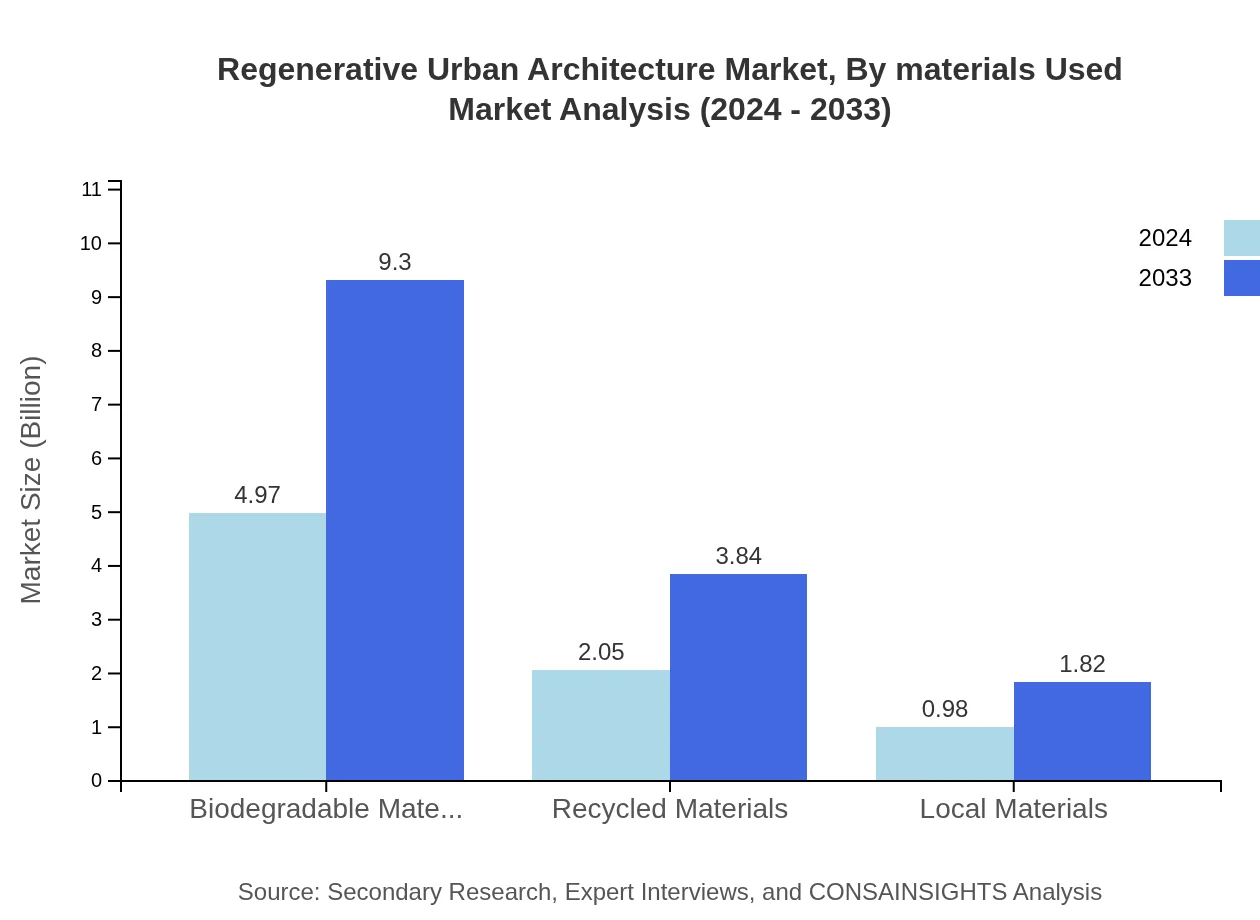
The materials used segment is a cornerstone of regenerative urban architecture. It involves the adoption of eco-friendly materials such as biodegradable, recycled, and locally sourced components to reduce overall environmental impact. Biodegradable materials are highlighted for their ability to decompose naturally, thereby diminishing waste accumulation. Recycled materials emphasize the repurposing of industrial by-products, which minimizes the depletion of natural resources and lowers construction costs. Local materials encourage regional economic stability by sourcing resources locally, thereby reducing transportation emissions and fostering community involvement. These materials not only support the regenerative ethos but also enhance structural integrity and aesthetic value. As consumer and regulatory demand for sustainable construction grows, robust supply chains and innovative processing techniques are continuously being developed to meet market needs consistently and efficiently.
Regenerative Urban Architecture Market Analysis By Technology
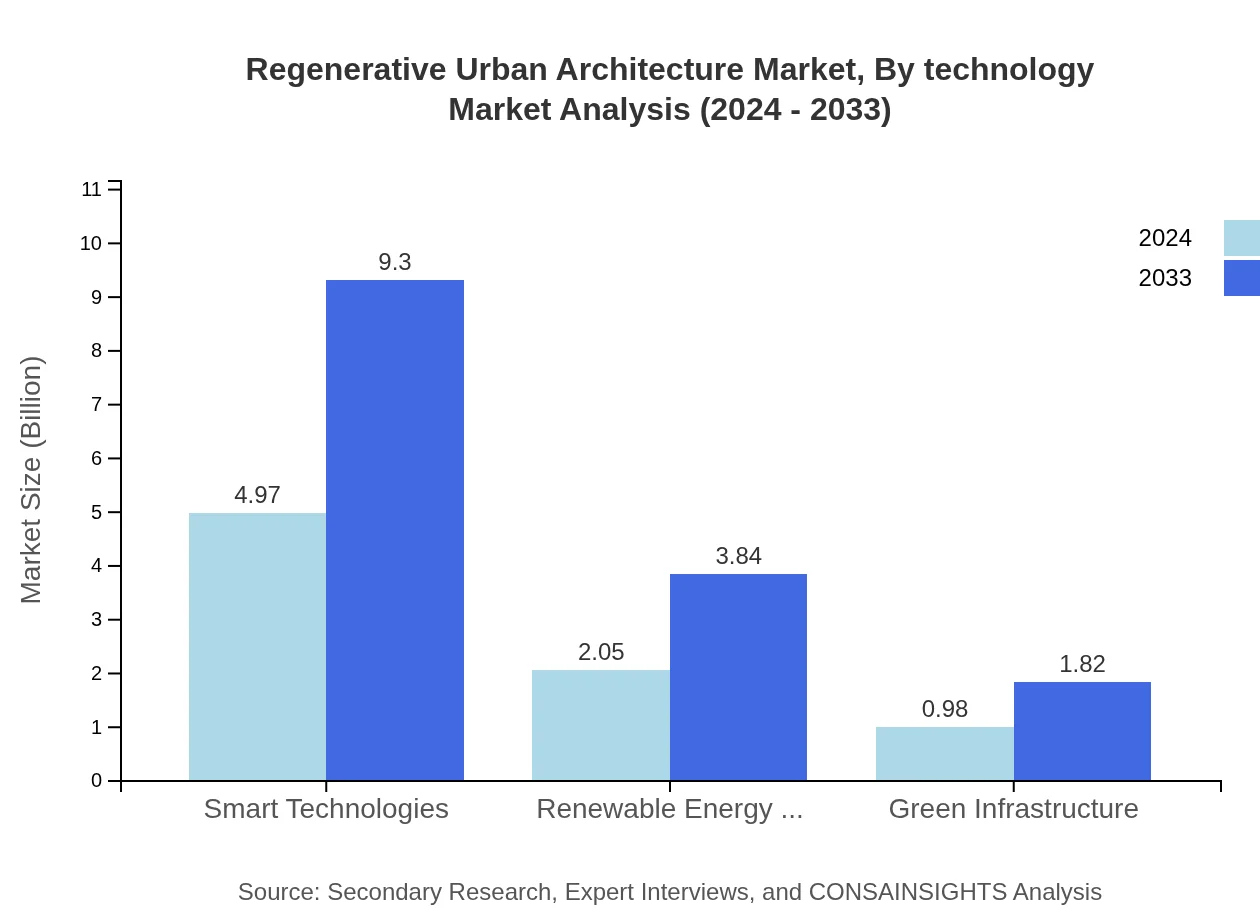
Technological advancements play a pivotal role in the evolution of Regenerative Urban Architecture. This segment focuses on how smart technologies and renewable energy systems are revolutionizing building design and urban planning. Smart technologies integrate data analytics, IoT devices, and digital modeling to optimize energy consumption and building performance in real time. Renewable energy systems, including solar panels and wind turbines, are increasingly incorporated into building designs to generate clean energy locally. The synergy of these technologies enables predictive maintenance, improved efficiency, and a reduction in the carbon footprint of urban developments. The continuous convergence of digital innovation with sustainable practices ensures that urban centers are not only built to be eco-friendly but are also resilient, adaptable, and capable of meeting the dynamic needs of modern societies.
Regenerative Urban Architecture Market Trends and Future Forecast
Tell us your focus area and get a customized research report.
Global Market Leaders and Top Companies in Regenerative Urban Architecture Industry
EcoBuild Solutions:
EcoBuild Solutions is recognized for its cutting-edge strategies in sustainable construction, integrating advanced renewable energy systems and green materials. The company leads numerous regenerative urban projects that prioritize environmental restoration, energy efficiency, and innovative design.GreenUrban Innovations:
GreenUrban Innovations has emerged as a trailblazer in the regenerative architecture space, delivering scalable and technologically advanced urban solutions. Their focus on smart infrastructure and eco-friendly design has set new benchmarks in modern urban development, positioning them as industry influencers.We're grateful to work with incredible clients.






FAQs
How can the Regenerative Urban Architecture report help align our marketing strategy with customer adoption trends?
The Regenerative Urban Architecture report provides insights into emerging customer preferences and sustainable practices, allowing companies to tailor their marketing strategies. With a market size of $8 billion and a CAGR of 7.0%, businesses can identify trends that resonate with eco-conscious consumers.
What product features are in highest demand according to the Regenerative Urban Architecture trends?
According to the report, features like smart technologies, which hold a market share of 62.17%, and renewable energy systems (25.64% share) are highly demanded. By focusing on these product features, businesses can align with customer preferences and trends in sustainable architecture.
Which regions offer the best market entry and expansion opportunities in the Regenerative Urban Architecture industry?
North America shows robust growth from $3.08 billion in 2024 to $5.75 billion in 2033. Europe also offers opportunities, increasing from $2.40 billion to $4.50 billion. Asia Pacific's growth from $1.38 billion to $2.58 billion indicates expanding markets.
What emerging technologies and innovations are shaping the Regenerative Urban Architecture market?
Innovations like smart technologies, which dominate with a market size of $4.97 billion in 2024, and biophilic design are essential to future developments. These technologies enhance sustainability, making green architecture more appealing to customers focused on eco-friendliness.
Does the Regenerative Urban Architecture report include competitive landscape and market share analysis?
Yes, the report extensively covers the competitive landscape, detailing market shares of different segments, such as smart technologies and renewable energy systems, which inform stakeholders about the positioning and strategies of major players in the industry.
How can executives use the Regenerative Urban Architecture report to evaluate investment risks and ROI?
Executives can use the market data, including an $8 billion market size and insights on regional growth, to assess investment risks. The CAGR of 7.0% over the upcoming years provides a framework for evaluating potential ROI in sustainable architecture ventures.
What is the market size of regenerative urban architecture?
The regenerative urban architecture market is valued at $8 billion with a projected CAGR of 7.0%. This growth indicates significant opportunities for stakeholders and highlights the increasing demand for sustainable buildings and infrastructures.
What segment data can provide insights into specific market demands?
Segment data shows that smart technologies will rise to $9.30 billion by 2033, while biodegradable materials also command a market size of $4.97 billion. These insights can help target specific features aligned with customer needs and preferences.