

Sample Collection Tube Market Report
First published: 10 October 2024 | Last updated: 25 May 2026 | Report Code: sample-collection-tube
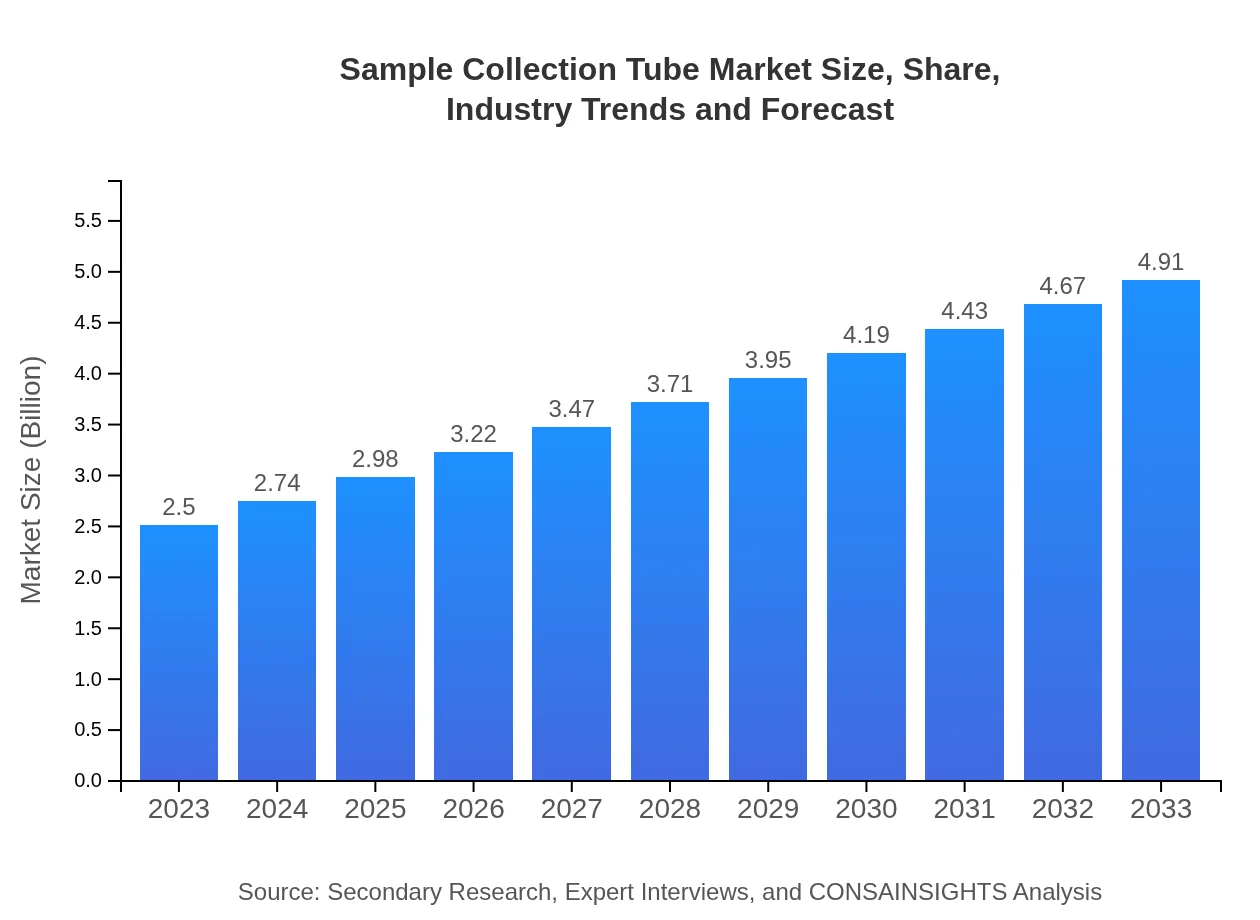
Sample Collection Tube Market — USD 2.5 billion in 2023, Growing to USD 4.91B by 2033 at 6.8% CAGR
This report provides a comprehensive analysis of the Sample Collection Tube market, covering market trends, size projections, regional insights, and innovations from 2023 to 2033.
Key Takeaways
- Global market projected to increase from $2.50 Billion (2023) to $4.91 Billion (2033) at a 6.8% CAGR.
- North America is largest regional market, while no single fastest-growing region is stated because regional CAGR differences remain within 0.15 percentage points.
- North America is the largest region, rising from $0.92 Billion in 2023 to $1.8 Billion in 2033.
- Europe expands from $0.62 Billion to $1.21 Billion between 2023 and 2033, reflecting steady demand.
- Asia Pacific grows from $0.54 Billion to $1.07 Billion over the forecast period, driven by healthcare investments.
- Manufacturers such as Becton, Dickinson and Company, Thermo Fisher Scientific, Greiner Bio-One, and SARSTEDT AG & Co. are central to market innovation.
Sample Collection Tube Market Report — Executive Summary
North America remains largest market by forecast-period value, while no single fastest-growing region is stated because top regional growth rates are separated by less than 0.15 percentage points. The report examines the sample collection tube market, which reached $2.50 Billion in 2023 and is expected to attain $4.91 Billion by 2033 at a 6.8% CAGR. Growth is propelled by increasing diagnostic testing needs, higher healthcare expenditure, and adoption of advanced materials and automation. Product segmentation covers plastic and glass tubes, multiple materials, and end users including hospitals, diagnostic laboratories, and academic research institutes. North America remains largest market by forecast-period value, while no single fastest-growing region is stated because top regional growth rates are separated by less than 0.15 percentage points. Key firms—Becton, Dickinson and Company; Thermo Fisher Scientific; Greiner Bio-One; SARSTEDT AG & Co.—are active in product development and distribution. The assessment addresses regulatory considerations, material innovation, and opportunities for tailored solutions in clinical diagnostics, biobanking, and research applications.
Key Growth Drivers
- Rising volumes of diagnostic testing and clinical procedures increase demand for reliable sample collection tubes.
- Healthcare spending growth supports procurement of advanced tube types in hospitals and laboratories.
- Material innovations—improved polymers and glass formulations—enhance sample integrity and broaden application use.
- Automation and process integration in laboratories raise requirements for standardized, compatible tube formats.
- Expansion of biobanking and research initiatives creates sustained need for specialized storage and transport tubes.
| Metric | Value |
|---|---|
| Study Period | 2023 - 2033 |
| 2023 Market Size | $2.50 Billion |
| CAGR (2023-2033) | 6.8% |
| 2033 Market Size | $4.91 Billion |
| Top Companies | Becton, Dickinson and Company, Thermo Fisher Scientific, Greiner Bio-One, SARSTEDT AG & Co. |
| Published Date | 10 October 2024 |
| Last Modified Date | 25 May 2026 |
Sample Collection Tube Market Overview
Customize Sample Collection Tube Market Report market research report
- ✔ Get in-depth analysis of Sample Collection Tube market size, growth, and forecasts.
- ✔ Understand Sample Collection Tube's regional dynamics and industry-specific trends.
- ✔ Identify potential applications, end-user demand, and growth segments in Sample Collection Tube
What is the Market Size & CAGR of Sample Collection Tube Market Report market in 2023?
Sample Collection Tube Industry Analysis
Sample Collection Tube Market Segmentation and Scope
Tell us your focus area and get a customized research report.
Sample Collection Tube Market Report Market Analysis Report by Region
Europe Sample Collection Tube Market Report:
Europe grows from $0.62 Billion in 2023 to $1.21 Billion in 2033. Regional demand is sustained by established clinical diagnostics networks, regulatory standards that emphasize sample integrity, and investments in laboratory modernization.Asia Pacific Sample Collection Tube Market Report:
Asia Pacific grows from $0.54 Billion in 2023 to $1.07 Billion in 2033. Expansion is driven by rising healthcare access, increased diagnostic capacity, and growing research activities that require standardized collection and storage solutions.North America Sample Collection Tube Market Report:
North America is largest regional market, rising from $0.92 Billion in 2023 to $1.8 Billion in 2033. Growth is supported by extensive diagnostic infrastructure, high testing throughput in hospitals and laboratories, and active presence of major manufacturers and distributors.South America Sample Collection Tube Market Report:
Latin America grows from $0.12 Billion in 2023 to $0.24 Billion in 2033. Market activity reflects strengthening clinical testing services, incremental laboratory upgrades, and increasing focus on biobanking and research specimen handling.Middle East & Africa Sample Collection Tube Market Report:
Middle East and Africa grows from $0.3 Billion in 2023 to $0.59 Billion in 2033. The region’s growth is influenced by expanding healthcare infrastructure, rising diagnostic service availability, and demand for reliable sample transport and storage options.Tell us your focus area and get a customized research report.
Research Methodology
Sample Collection Tube Market Analysis By Type
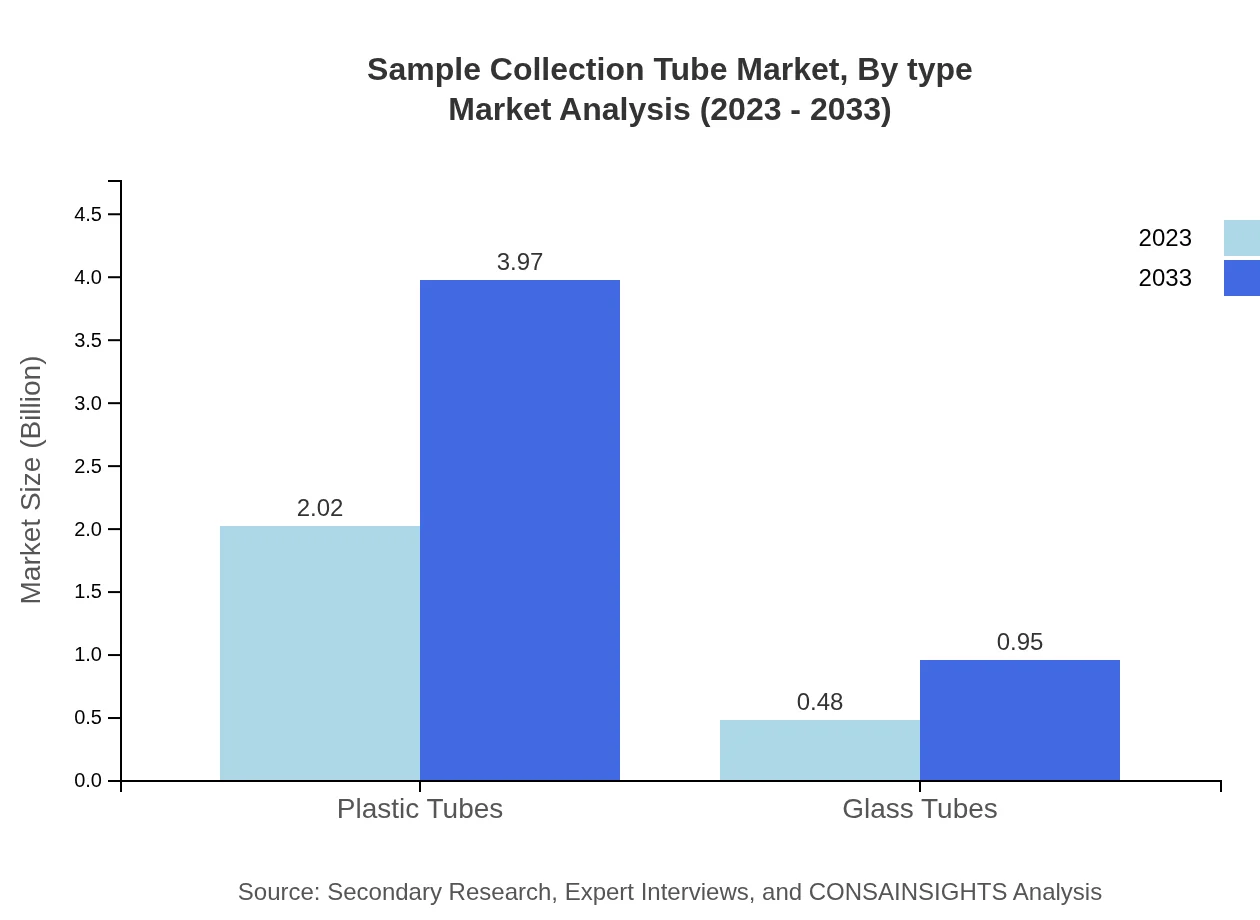
The market for Sample Collection Tubes is categorized primarily into plastic and glass types. Plastic tubes represent the largest segment, with a market share of 80.7% in 2023, expected to remain stable until 2033, growing from USD 2.02 billion to USD 3.97 billion. Glass tubes, while holding a smaller market share of 19.3%, are witnessing increased demand due to their inert qualities and compatibility with various biological samples.
Sample Collection Tube Market Analysis By Application
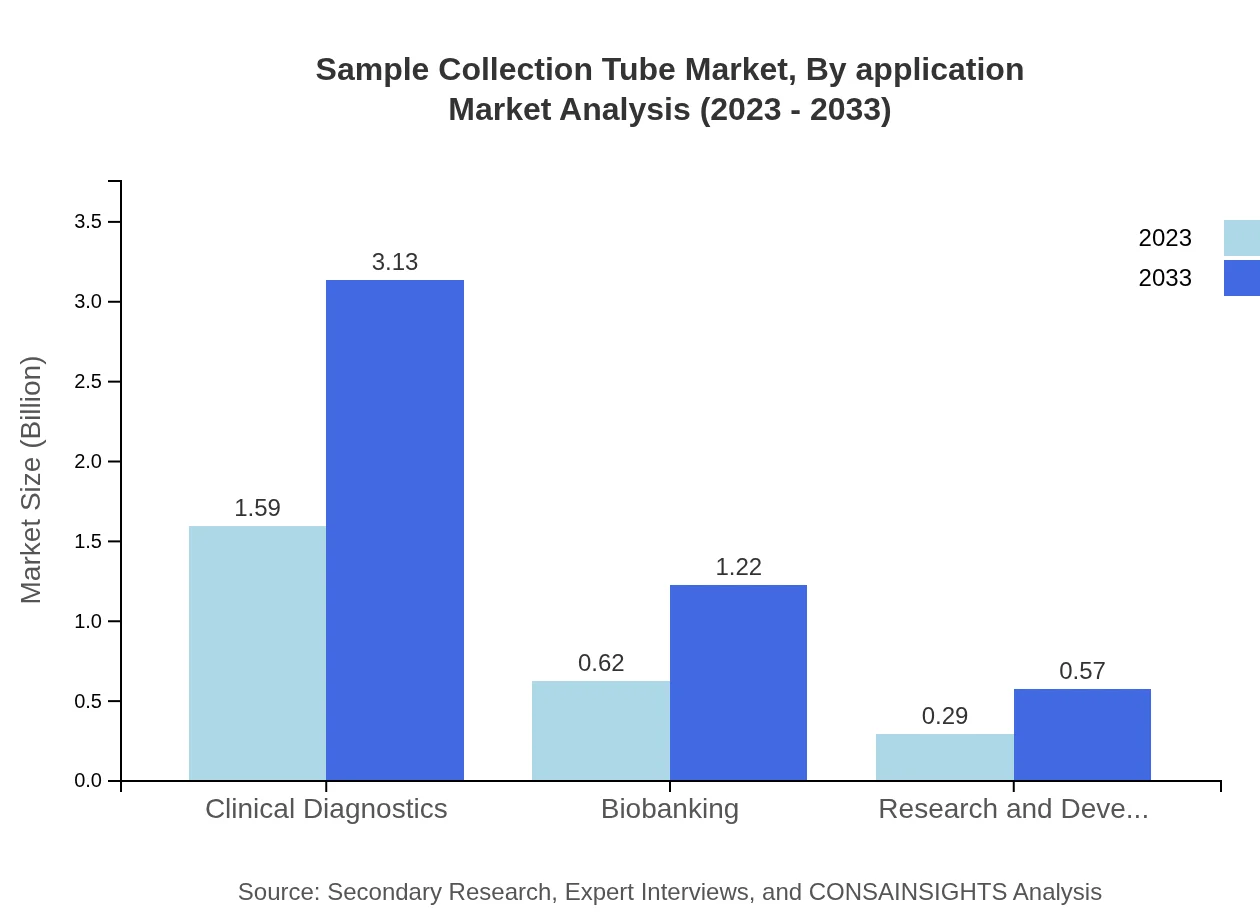
Applications for Sample Collection Tubes include clinical diagnostics, biobanking, and research and development. Clinical diagnostics currently dominates this segment, accounting for 63.66% of the market and growing from USD 1.59 billion in 2023 to USD 3.13 billion by 2033. The rising need for accurate diagnostic testing is a significant driving force in this sub-market.
Sample Collection Tube Market Analysis By End User
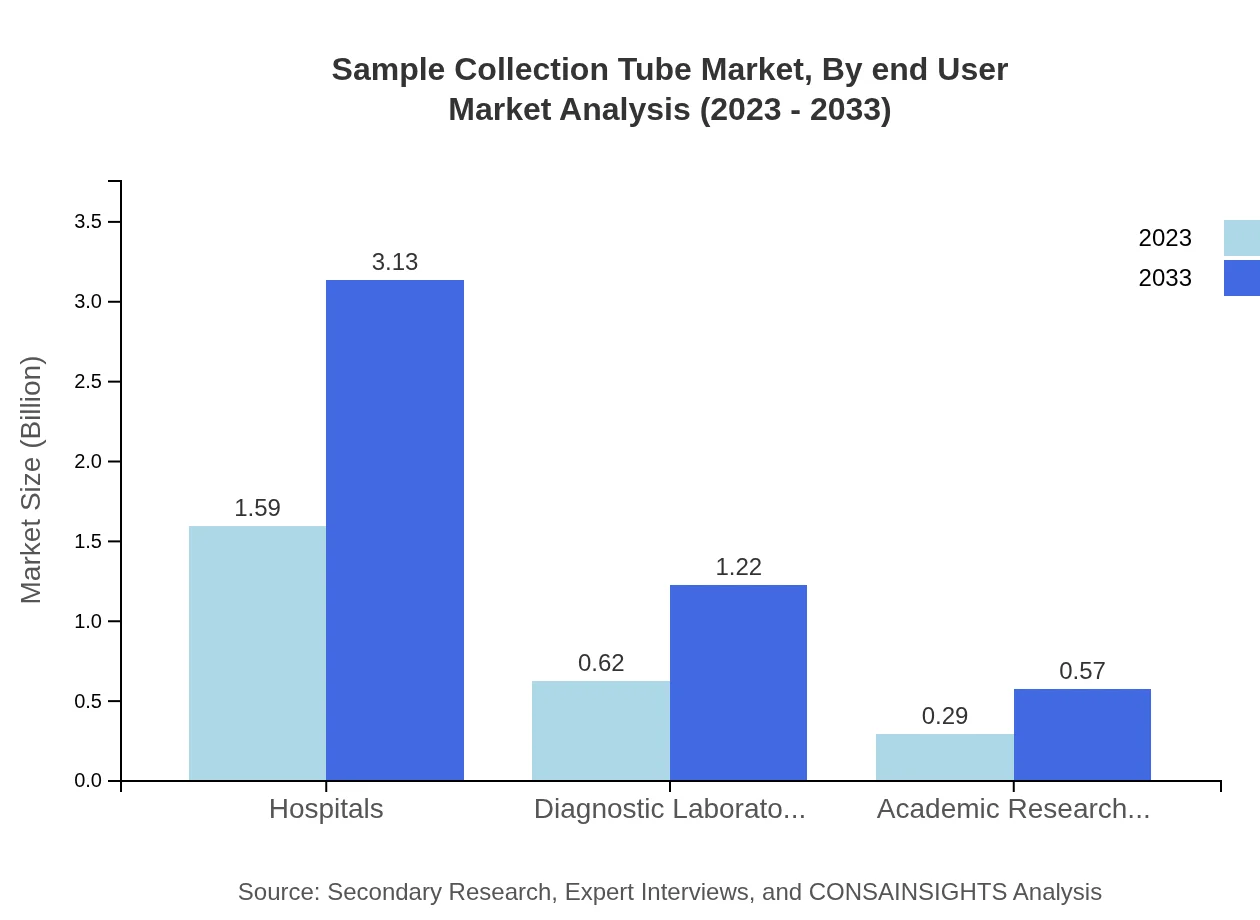
The end-user segments consist primarily of hospitals, diagnostic laboratories, and academic research institutes. Hospitals are the leading end-user, holding a significant market share of 63.66% in 2023, expected to grow due to increased healthcare spending and advancements in medical technologies.
Sample Collection Tube Market Analysis By Material
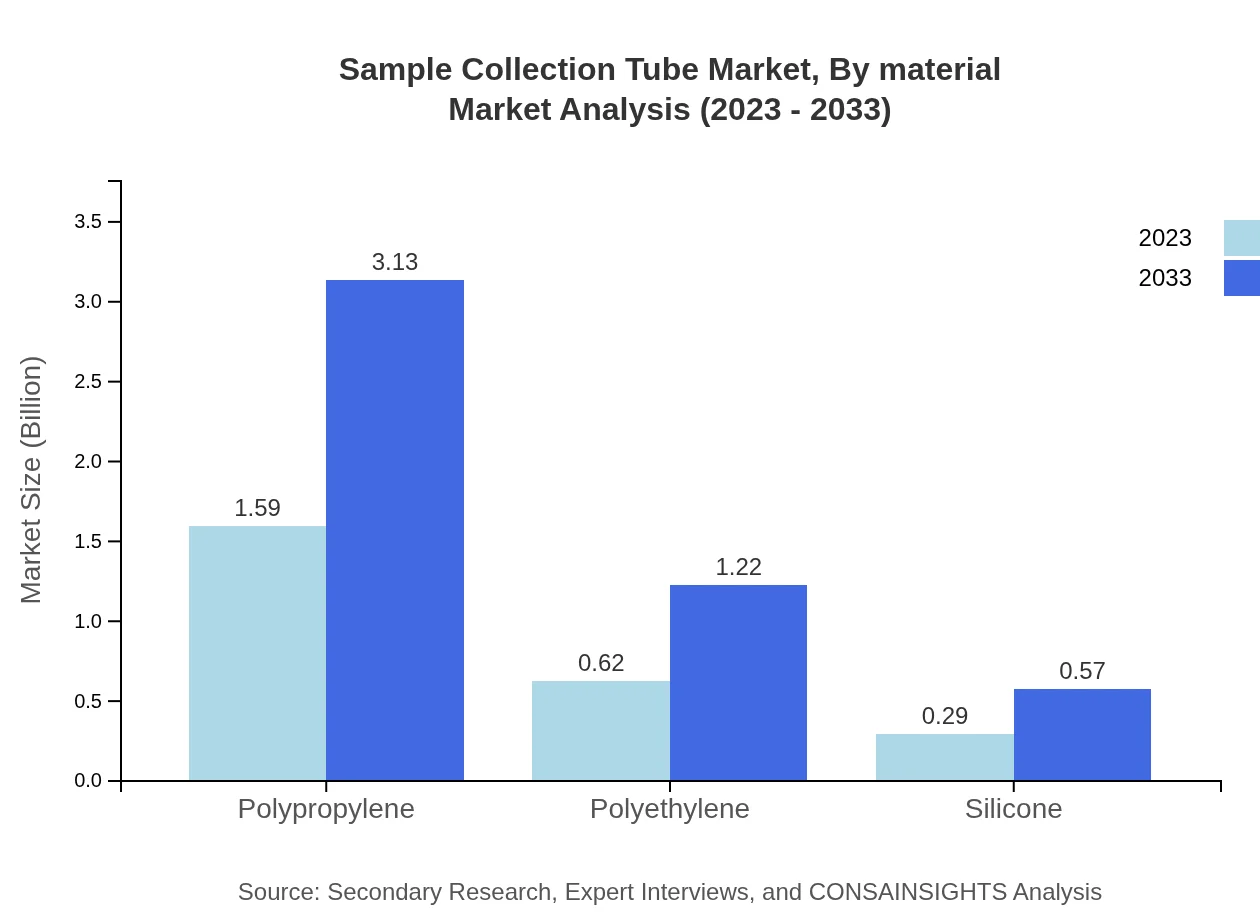
Material-wise, the market is heavily dominated by polypropylene tubes, which accounted for 63.66% of the market in 2023 while projected to maintain this share through 2033. Polyethylene and silicone variants also play important roles, accounting for 24.8% and 11.54% of the market respectively, with applications tailored to specific specimen requirements.
Sample Collection Tube Market Analysis By Region
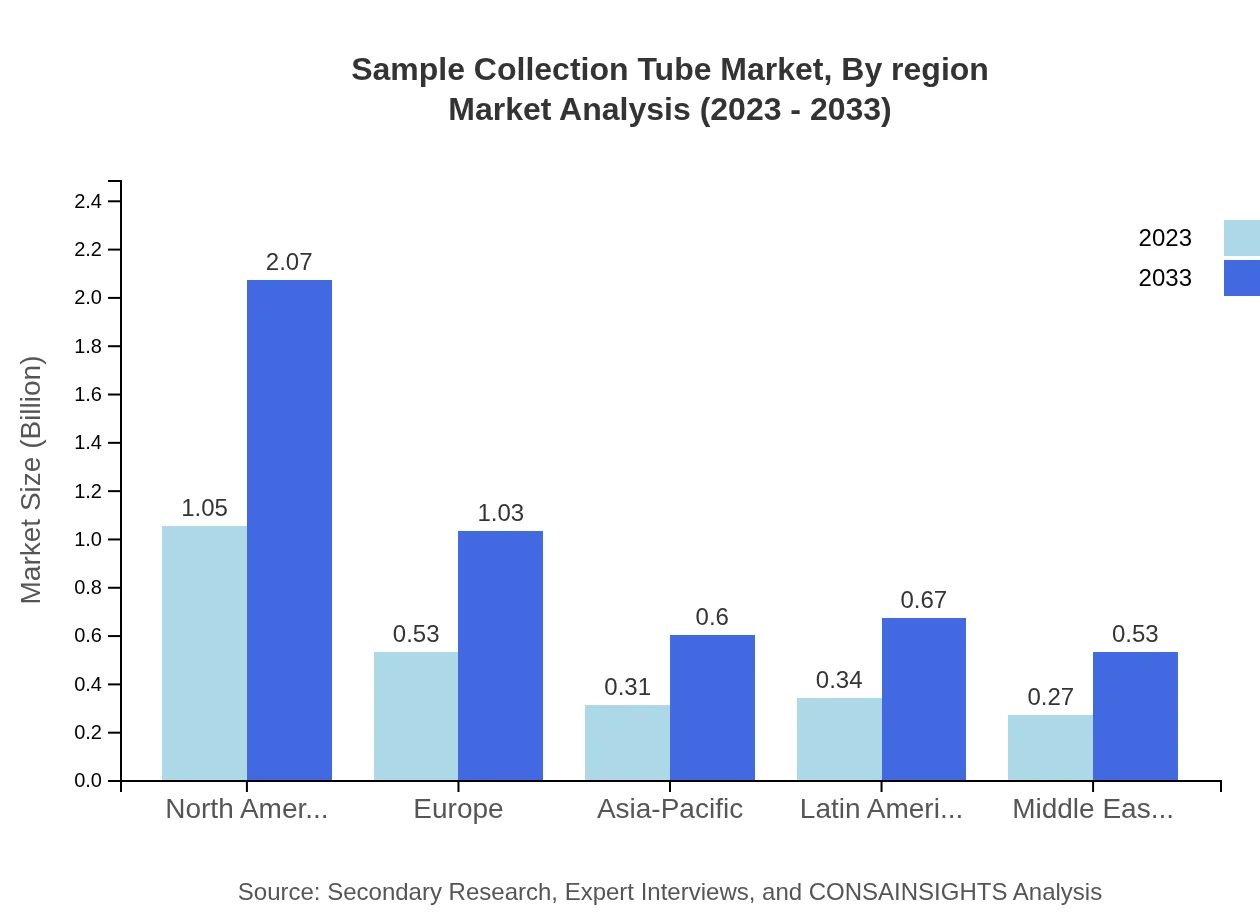
By region, North America is expected to hold the largest share of 42.11% in 2023, reflecting a mature market with a steady growth path. Europe will follow closely with a 21.04% share, and the Asia Pacific region is anticipated to witness significant growth, moving from a share of 12.26% in 2023 to higher proportions as healthcare facilities improve across the region.
Sample Collection Tube Market Trends and Future Forecast
Tell us your focus area and get a customized research report.
Global Market Leaders and Top Companies in Sample Collection Tube Industry
Becton, Dickinson and Company:
BD is a globally recognized leader in the medical technology space, producing a wide range of medical devices, including sample collection tubes known for their precision and ergonomics.Thermo Fisher Scientific:
Thermo Fisher is known for its innovative laboratory products and services, including high-quality sample collection tubes that cater to clinical and research applications.Greiner Bio-One:
As a prominent name in laboratory products, Greiner Bio-One develops a variety of sample collection tubes with a focus on safety and effectiveness in sample handling.SARSTEDT AG & Co.:
SARSTEDT manufactures a diverse line of sample collection tubes that meet stringent quality standards and cater to the healthcare industry's needs worldwide.We're grateful to work with incredible clients.









FAQs
What is the market size of the Sample Collection Tube Market Report in 2023?
The market size in 2023 is $2.50 Billion, based on reported market valuations for the sample collection tube industry during the base year.
How big will the market be in 2033?
The market is projected to reach $4.91 Billion by 2033, reflecting the forecasted expansion across product types, end users, and regional markets over the period.
What is CAGR for the forecast period?
The Compound Annual Growth Rate for the forecast period 2023 to 2033 is 6.8%, representing the average annual growth rate used in the projection.
Is there a single fastest Growing region in the Sample Collection Tube Market Report market?
No single fastest-growing region is stated for the Sample Collection Tube Market Report market because the top regional implied CAGR values are within 0.15 percentage points of each other, making the ranking too close to call reliably.
Which companies are named as top players?
Top companies listed include Becton, Dickinson and Company; Thermo Fisher Scientific; Greiner Bio-One; and SARSTEDT AG & Co., noted for product development and market presence.
What are common end users for sample collection tubes?
Primary end users include hospitals, diagnostic laboratories, and academic research institutes, each requiring tubes for clinical testing, research workflows, and biobanking applications.
What is driving material innovation in tubes?
Material innovation is driven by needs for contamination control, durability, compatibility with automated systems, and improved storage characteristics for diagnostics and research samples.
How is segmentation organized in the report?
Segmentation covers type, material, application, end user, and region, with specific subsegments for plastic and glass tubes, materials like polypropylene and polyethylene, and applications such as clinical diagnostics.