

Security Automation
First published: 12 March 2026 | Last updated: 14 March 2026 | Report Code: security-automation
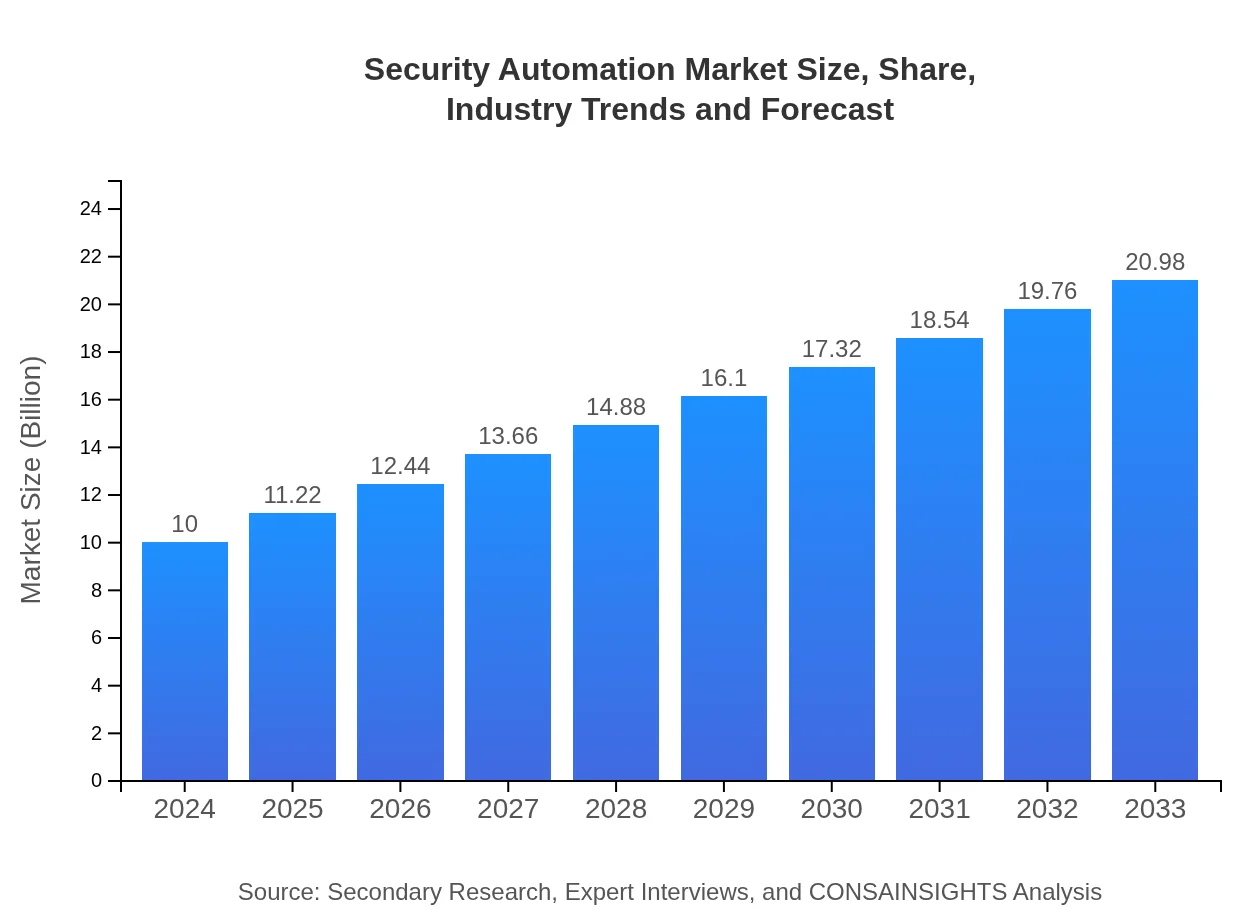
Security Automation Market — USD $10 Billion in 2024, Growing to USD 20.98 by 2033 at 8.3% CAGR
This comprehensive report on the Security Automation market provides an in‐depth look at current market conditions, future growth drivers, and challenges over the forecast period from 2024 to 2033. It offers detailed insights into market sizing, regional trends, segmentation analysis, key technologies and product trends, as well as profiles of major global market leaders.
| Metric | Value |
|---|---|
| Study Period | 2024 - 2033 |
| 2024 Market Size | $10.00 Billion |
| CAGR (2024-2033) | 8.3% |
| 2033 Market Size | $20.98 Billion |
| Top Companies | CyberSec Solutions, SecureTech Innovations |
| Published Date | 12 March 2026 |
| Last Modified Date | 14 March 2026 |
Security Automation Market Overview
Customize Security Automation market research report
- ✔ Get in-depth analysis of Security Automation market size, growth, and forecasts.
- ✔ Understand Security Automation's regional dynamics and industry-specific trends.
- ✔ Identify potential applications, end-user demand, and growth segments in Security Automation
What is the Market Size & CAGR of Security Automation market in 2024?
Security Automation Industry Analysis
Security Automation Market Segmentation and Scope
Tell us your focus area and get a customized research report.
Security Automation Market Analysis Report by Region
Europe Security Automation:
Europe's Security Automation market is experiencing substantive growth, as evidenced by an increase in market size from approximately 2.42 in 2024 to an anticipated 5.07 by 2033. The region benefits from stringent data protection laws, heightened focus on privacy, and progressive adoption of integrated security frameworks. European enterprises are increasingly investing in automation to mitigate risks associated with digital transformation. Additionally, the demand for cloud security and endpoint solutions is rising, underscoring the region’s commitment to safeguarding sensitive data without compromising operational efficiency.Asia Pacific Security Automation:
In the Asia Pacific region, the Security Automation market is set for significant growth during the forecast period. Starting with a market size of approximately 2.03 in 2024, the region is poised to expand to around 4.25 by 2033. Factors such as rapid digitalization, expansive adoption of smart technologies, and increased focus on cybersecurity by both government and private sectors are driving this growth. The region is capitalizing on technological innovations and infrastructure development, ensuring that security solutions become integral to overall business strategies.North America Security Automation:
North America remains a frontrunner in the Security Automation market, supported by strong investments in cybersecurity, advanced technological infrastructure, and a mature ecosystem of vendors and service providers. The region’s market size, recorded at approximately 3.52 in 2024, is projected to reach around 7.39 by 2033. These robust numbers are reflective of an environment where continuous innovation, regulatory adherence, and high cybersecurity awareness drive relentless demand for automated security solutions.South America Security Automation:
South America represents an emerging market in the realm of Security Automation, where organizations are increasingly recognizing the need for robust security frameworks. With a market size of approximately 0.75 in 2024 and an expected growth to around 1.57 by 2033, the region’s growth is stimulated by improved digital infrastructure, rising cybercrime cases, and a growing implementation of regulatory measures. The market is evolving as businesses seek cost-effective and scalable security solutions tailored to dynamic threat landscapes.Middle East & Africa Security Automation:
The Middle East and Africa region is gradually emerging as a critical market for Security Automation due to rapid infrastructure development and a growing awareness of cyber threats. With the current market size being around 1.29 in 2024 and an expected increase to approximately 2.70 by 2033, the region is witnessing a surge in cybersecurity investments. Governments and private sector organizations are collaborating to enhance digital infrastructures and improve threat detection capabilities. The region faces unique challenges such as adapting to diverse regulatory environments, but the overall outlook remains optimistic as technological adoption accelerates.Tell us your focus area and get a customized research report.
Security Automation Market Analysis By Product
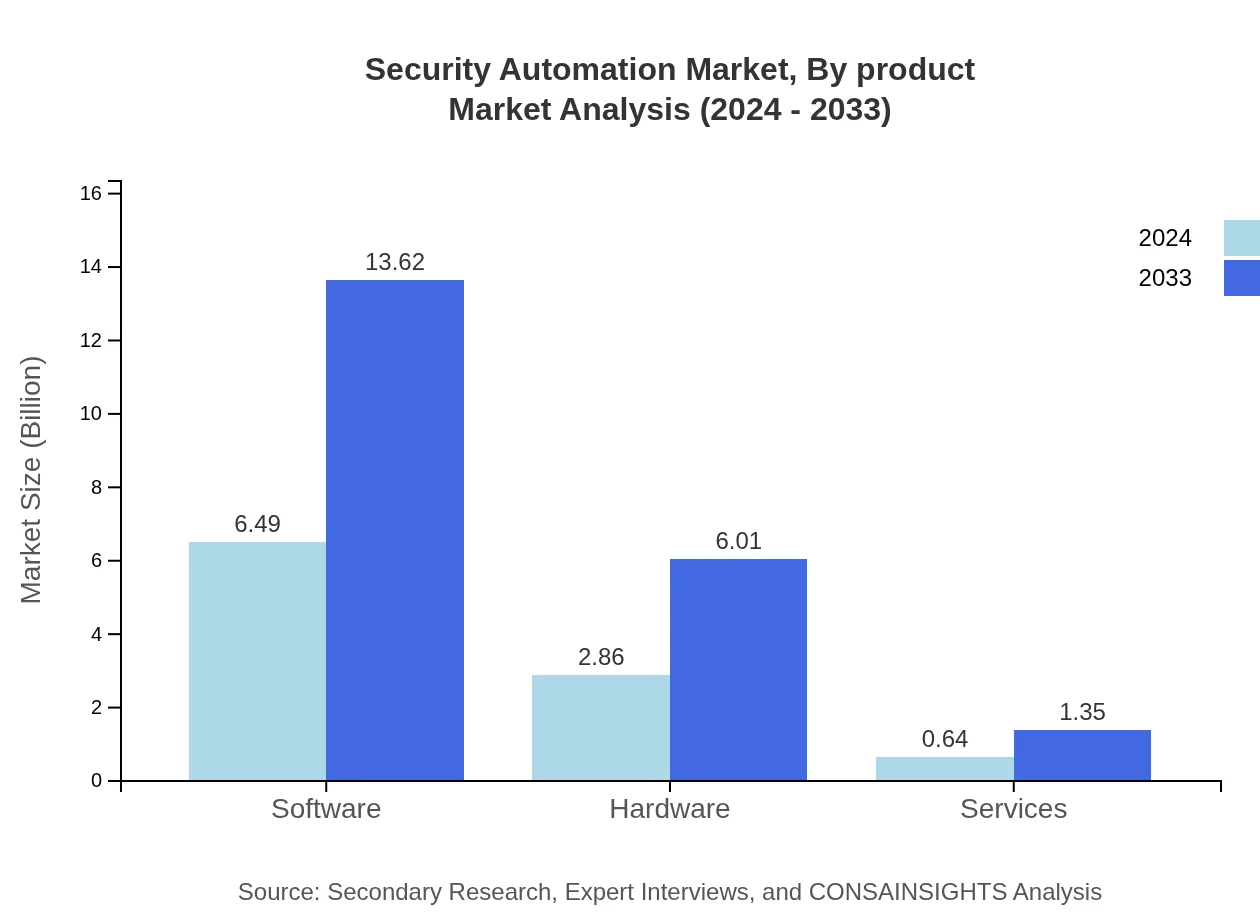
The by-product segmentation of the Security Automation market is primarily divided into software, hardware, and services. Among these, the software segment exhibits a dominant market share, reflecting its extensive application in automating threat detection and response functions. With software capturing 64.93% of the market share and demonstrating consistent growth, it allows for rapid deployment of updates and seamless integration with existing IT infrastructures. Hardware components, though representing a lower share, are critical in ensuring that automation systems have the necessary physical interfaces and processing capabilities. Meanwhile, services such as managed security and consulting continue to play a vital role in supporting organizations to implement and optimize these technologies. Overall, the by-product segmentation underlines the complementary relationship between product categories, with each category contributing strategically to enhance overall security efficiency.
Security Automation Market Analysis By Application
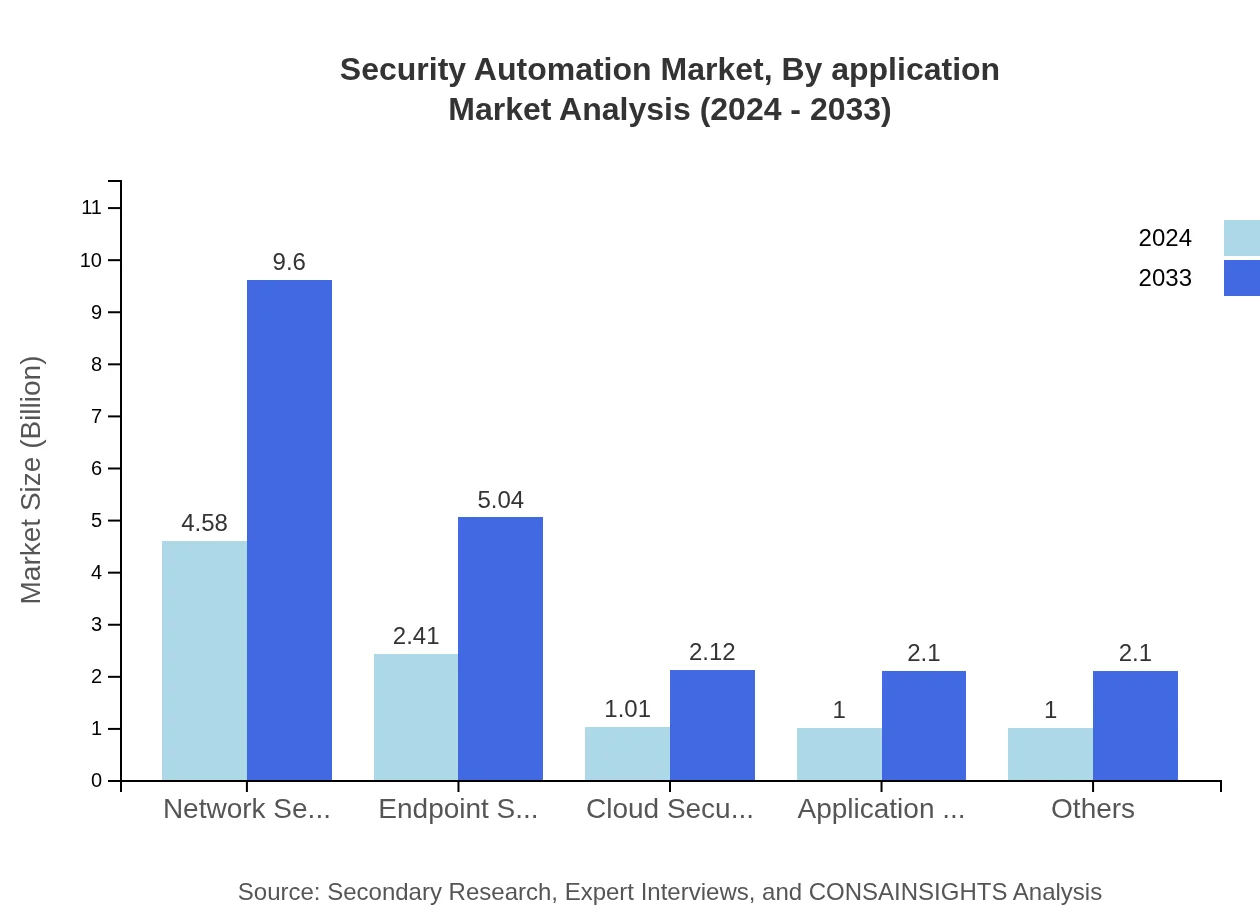
The by-application segmentation of the market is governed by industry-specific needs and the adoption of tailored security automation protocols. Key application segments include IT and telecommunications, BFSI, healthcare, retail, and government. Among these, the IT and telecom sector holds a substantial share, driven by the complexity and volume of digital transactions and communications. The BFSI sector is particularly focused on protecting sensitive financial data, while the healthcare industry emphasizes the importance of safeguarding confidential patient information. Retail and government sectors are also investing in automated security by integrating modern technologies to combat evolving cyber threats. This segmentation highlights how industry-specific challenges and regulatory requirements shape the demand for specialized security solutions and contribute to overall market growth.
Security Automation Market Analysis By Deployment Mode
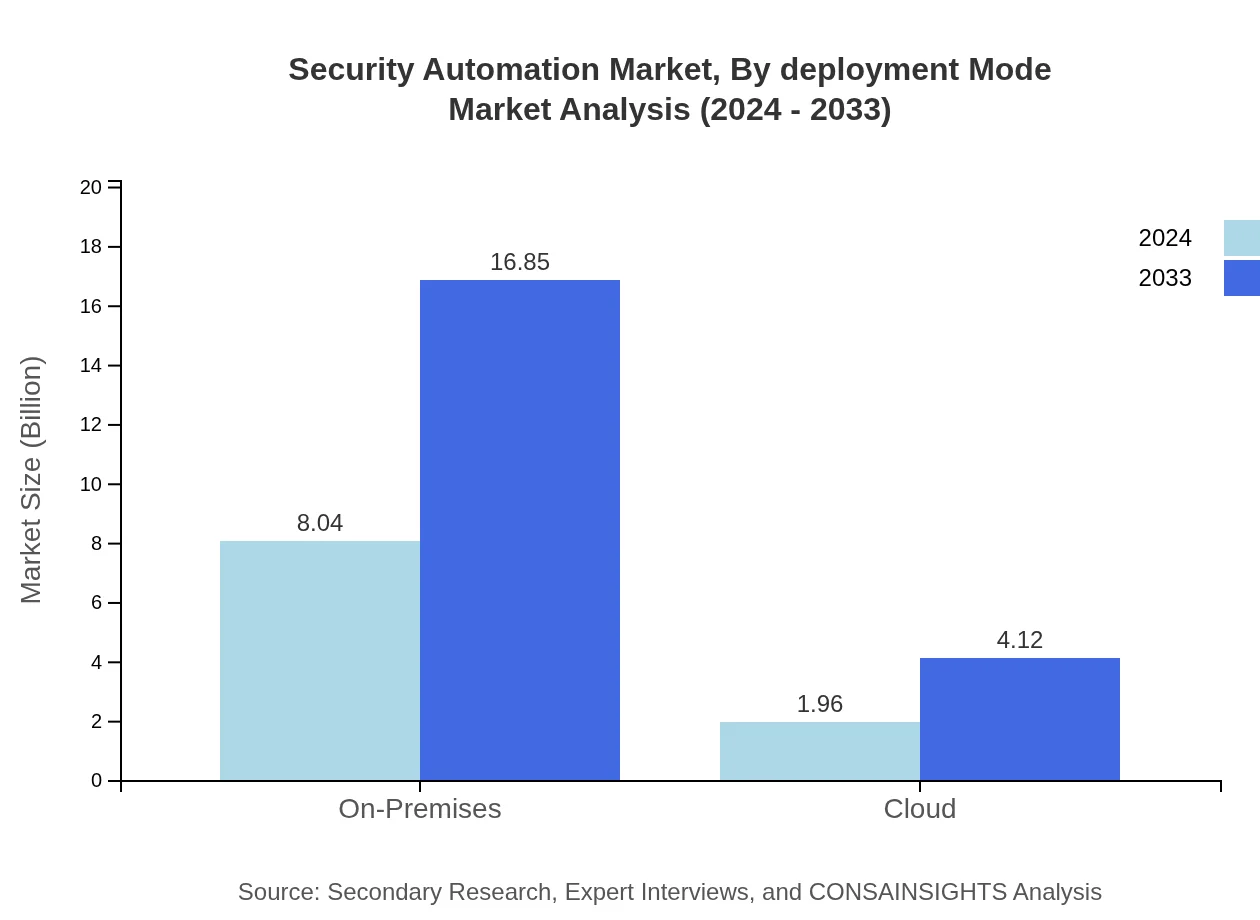
Deployment mode segmentation in the Security Automation market is split mainly between on-premises and cloud-based solutions. The on-premises segment accounts for a significant majority with about 80.35% market share, reflecting the traditional preference of many organizations for keeping critical security operations within controlled environments. On-premises solutions offer heightened control, immediate compliance, and robust performance metrics, which are essential for high-stakes industries. Conversely, cloud deployment continues to gain momentum, heralded for its scalability, lower maintenance overhead, and ability to integrate with distributed operations. Despite its smaller share of 19.65%, the cloud segment is growing steadily as organizations strive for flexibility and reduced total cost of ownership while still maintaining stringent security measures.
Security Automation Market Analysis By End User
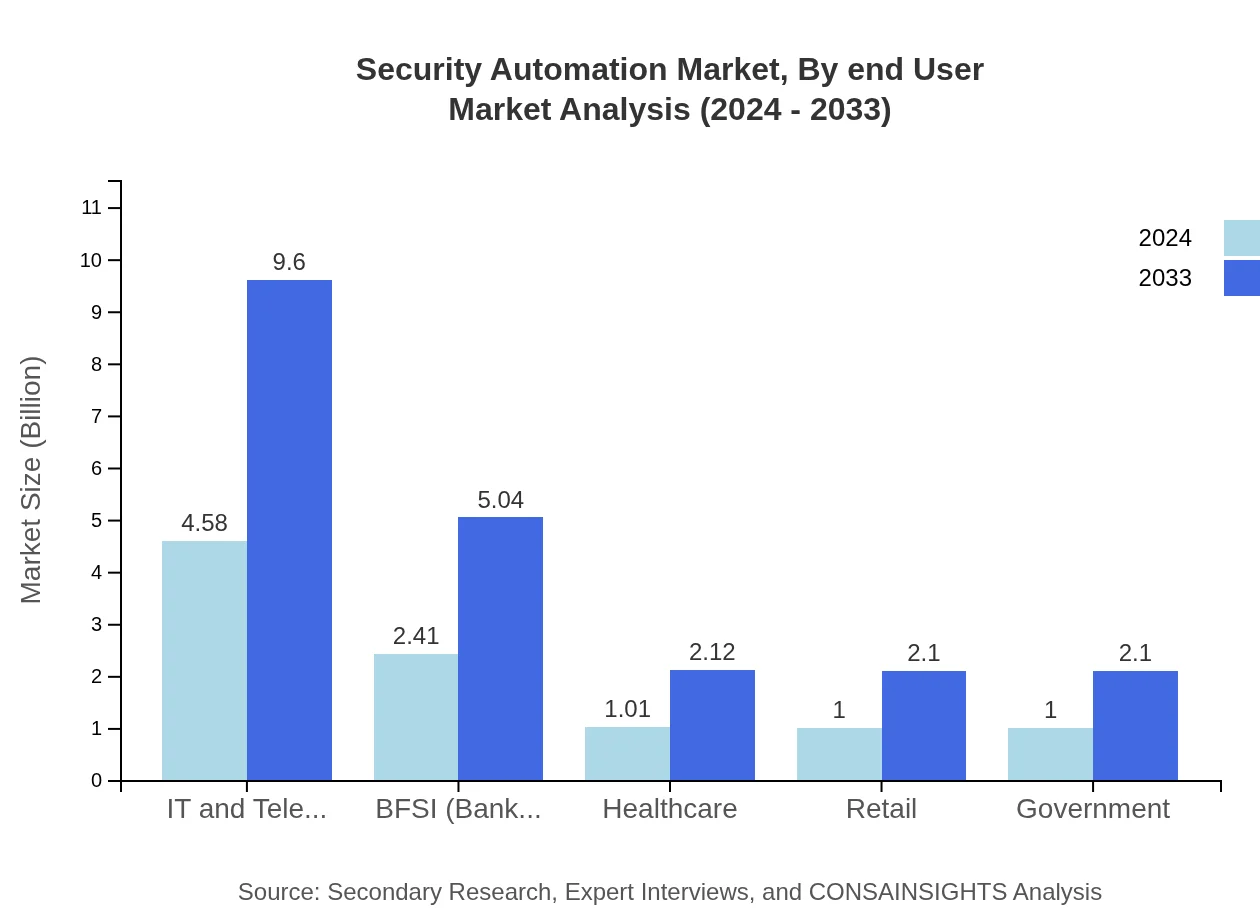
The by-end-user segmentation underscores how various industries are embracing Security Automation to address unique concerns. End-user industries such as IT and telecommunications, BFSI, healthcare, retail, and government are investing in automated systems to enhance operational efficiency and improve risk management. IT and telecommunications continue to leverage these solutions to manage high data volumes and complex network infrastructures. The BFSI sector is driven by compliance requirements and the need to protect highly sensitive financial information. Healthcare organizations have increasingly focused on patient data security, and both retail and government sectors are upgrading their systems to deal with evolving cyber challenges. These tailored deployments reflect a strategic approach that meets the specific security needs of each industry.
Security Automation Market Analysis By Technology
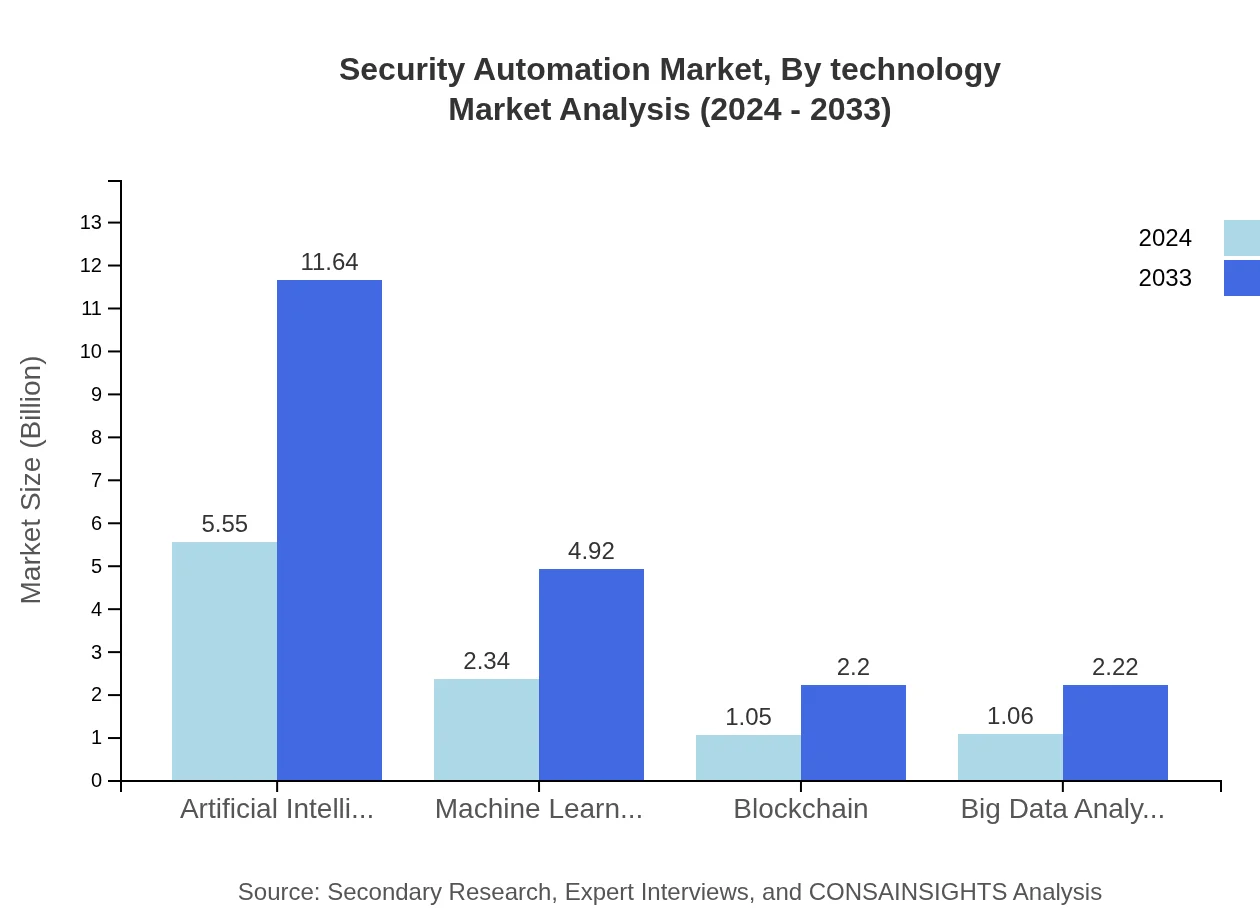
The by-technology segmentation brings focus to the core innovations driving the Security Automation market. Technologies such as artificial intelligence, machine learning, blockchain, big data analytics, network security, endpoint security, cloud security, and application security collectively underpin the modern security framework. Artificial intelligence, with a dominant market share of 55.48%, is instrumental in automating threat detection and predictive analysis. Machine learning contributes significantly by refining system accuracy over time, while blockchain is finding application in ensuring data integrity. Big data analytics plays a crucial role in processing vast amounts of security-related data, supporting faster decision-making. Each of these technological segments is not only advancing individually but also contributing to the development of integrated solutions that offer robust, scalable, and adaptive security measures for organizations globally.
Security Automation Market Trends and Future Forecast
Tell us your focus area and get a customized research report.
Global Market Leaders and Top Companies in Security Automation Industry
CyberSec Solutions:
CyberSec Solutions is a prominent leader in the Security Automation space, offering advanced automated threat detection and response systems. Their innovative products integrate artificial intelligence and machine learning to provide real-time monitoring and risk management solutions, catering to a diverse clientele across industries.SecureTech Innovations:
SecureTech Innovations stands at the forefront of cybersecurity automation, known for its comprehensive portfolio that spans software, hardware, and service-based solutions. Driven by continuous research and strategic global partnerships, the company excels in delivering scalable, efficient, and proactive security systems.We're grateful to work with incredible clients.








FAQs
How can the security Automation report help align our marketing strategy with customer adoption trends?
The Security Automation Market, valued at $10 billion with a CAGR of 8.3%, provides insights into customer preferences and adoption. This data helps refine marketing strategies, targeting specific sectors, enhancing ROI by aligning offerings with market demands.
What product features are in highest demand according to the security Automation trends?
Key demand in security automation includes software solutions which will grow to $13.62 billion by 2033 and account for a 64.93% market share. Enhancements in AI and machine learning integrations are crucial for competitive differentiation.
Which regions offer the best market entry and expansion opportunities in the security Automation industry?
North America and Europe are prime regions for expansion. North America's market will grow from $3.52 billion in 2024 to $7.39 billion by 2033, while Europe's market will increase from $2.42 billion to $5.07 billion.
What emerging technologies and innovations are shaping the security Automation market?
Emerging technologies like Artificial Intelligence, which is set to reach $11.64 billion by 2033, along with Machine Learning and Blockchain, are crucial. Their integration enhances security measures, making them vital for future growth.
Does the security Automation report include competitive landscape and market share analysis?
Yes, the report provides comprehensive competitive landscape analysis. It includes market share details of software, hardware, and service segments, helping businesses understand competitor positioning and opportunities for differentiation.
How can executives use the security Automation report to evaluate investment risks and ROI?
Executives can analyze detailed segmented data and regional growth forecasts to assess investment risks. Understanding market trajectories enables them to make informed decisions about resource allocation and future ROI.
What is the market size of security Automation?
The Security Automation Market is projected to grow from $10 billion currently to significant heights by 2033, driven by an 8.3% CAGR, indicating a robust demand for enhanced security solutions across various industries.