

Self Healing Networks
First published: 12 March 2026 | Last updated: 14 March 2026 | Report Code: self-healing-networks
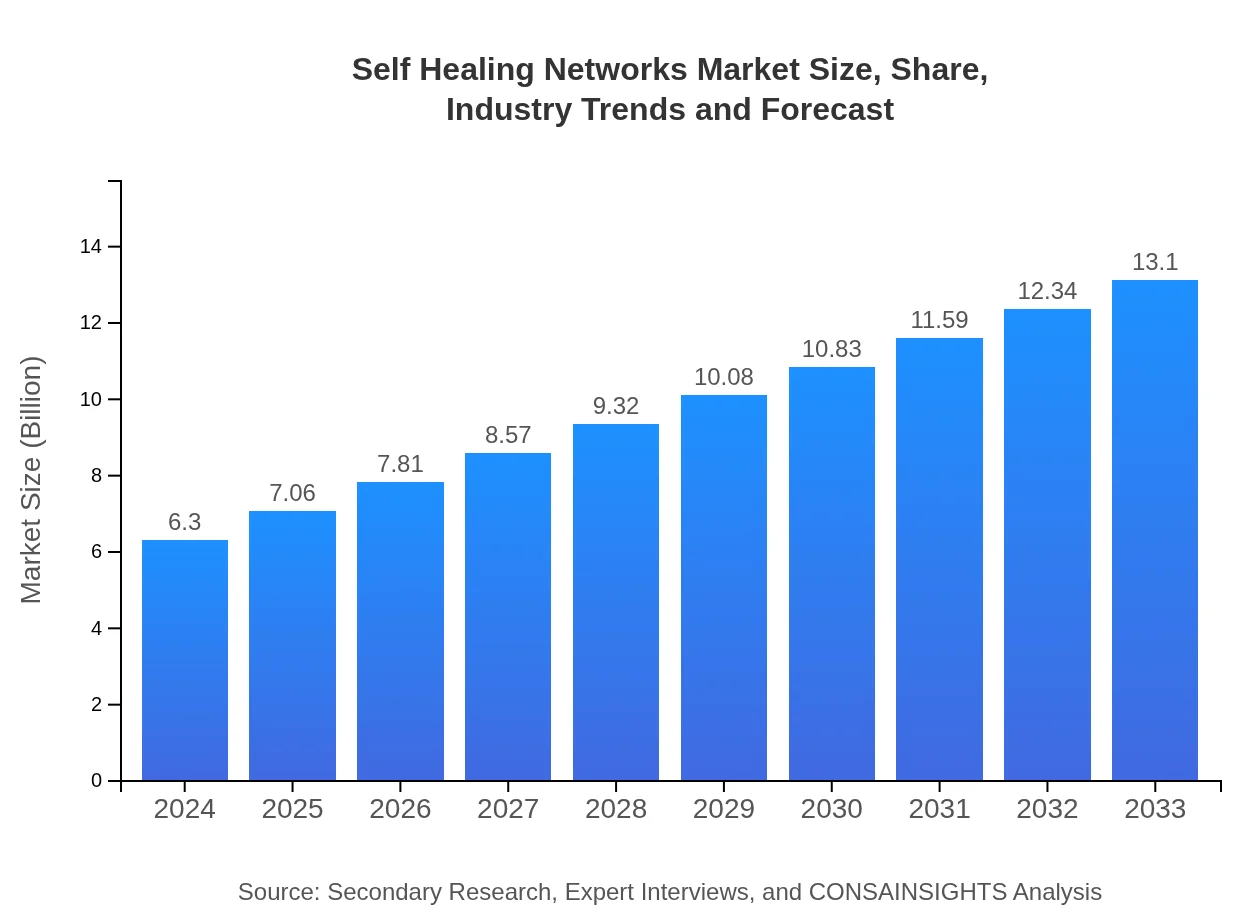
Self Healing Networks Market — USD $6.3 Billion in 2024, Growing to USD 13.10 by 2033 at 8.2% CAGR
This comprehensive report on Self Healing Networks offers a deep dive into market fundamentals, technological trends, regional differences, segmentation analysis, and forecasts over the period 2024 to 2033. The report provides data-driven insights, market size estimations, CAGR details, and trends that are essential for strategic decision-making and investment planning.
| Metric | Value |
|---|---|
| Study Period | 2024 - 2033 |
| 2024 Market Size | $6.30 Billion |
| CAGR (2024-2033) | 8.2% |
| 2033 Market Size | $13.10 Billion |
| Top Companies | TechNova Communications, NetGuard Systems |
| Published Date | 12 March 2026 |
| Last Modified Date | 14 March 2026 |
Self Healing Networks Market Overview
Customize Self Healing Networks market research report
- ✔ Get in-depth analysis of Self Healing Networks market size, growth, and forecasts.
- ✔ Understand Self Healing Networks's regional dynamics and industry-specific trends.
- ✔ Identify potential applications, end-user demand, and growth segments in Self Healing Networks
What is the Market Size & CAGR of Self Healing Networks market in 2024?
Self Healing Networks Industry Analysis
Self Healing Networks Market Segmentation and Scope
Tell us your focus area and get a customized research report.
Self Healing Networks Market Analysis Report by Region
Europe Self Healing Networks:
Europe’s market is also on an upward trajectory, marked by regulatory support and a focus on enhancing digital security and reliability. The region’s market size of 2.14 billion in 2024 is projected to climb to 4.45 billion by 2033, driven by widespread digital transformation initiatives.Asia Pacific Self Healing Networks:
In Asia Pacific, the Self Healing Networks market is experiencing a rapid uptake, supported by significant investments in telecommunications and emerging smart city projects. The market stood at 1.12 billion in 2024 and is forecast to reach 2.33 billion by 2033, driven by increasing digitization and an expanding digital infrastructure.North America Self Healing Networks:
North America remains a strong player, bolstered by early adoption of cutting-edge technologies. With a market size of 2.11 billion in 2024, expected to rise to 4.38 billion by 2033, the region benefits from significant investments in R&D, robust industry collaborations, and a mature technological ecosystem.South America Self Healing Networks:
South America, represented primarily by Latin America, is witnessing gradual adoption due to economic constraints but is rapidly modernizing. The region recorded a market value of 0.19 billion in 2024 with projections to grow to 0.40 billion by 2033, reflecting steady but modest expansion driven by improving digital policies.Middle East & Africa Self Healing Networks:
In the Middle East and Africa, the market is emerging gradually with infrastructural advancements and government initiatives aimed at expanding digital networks. The current market size is around 0.74 billion in 2024, with forecasts predicting growth to 1.53 billion by 2033 as new investments and modernization efforts accelerate adoption.Tell us your focus area and get a customized research report.
Self Healing Networks Market Analysis By Architecture
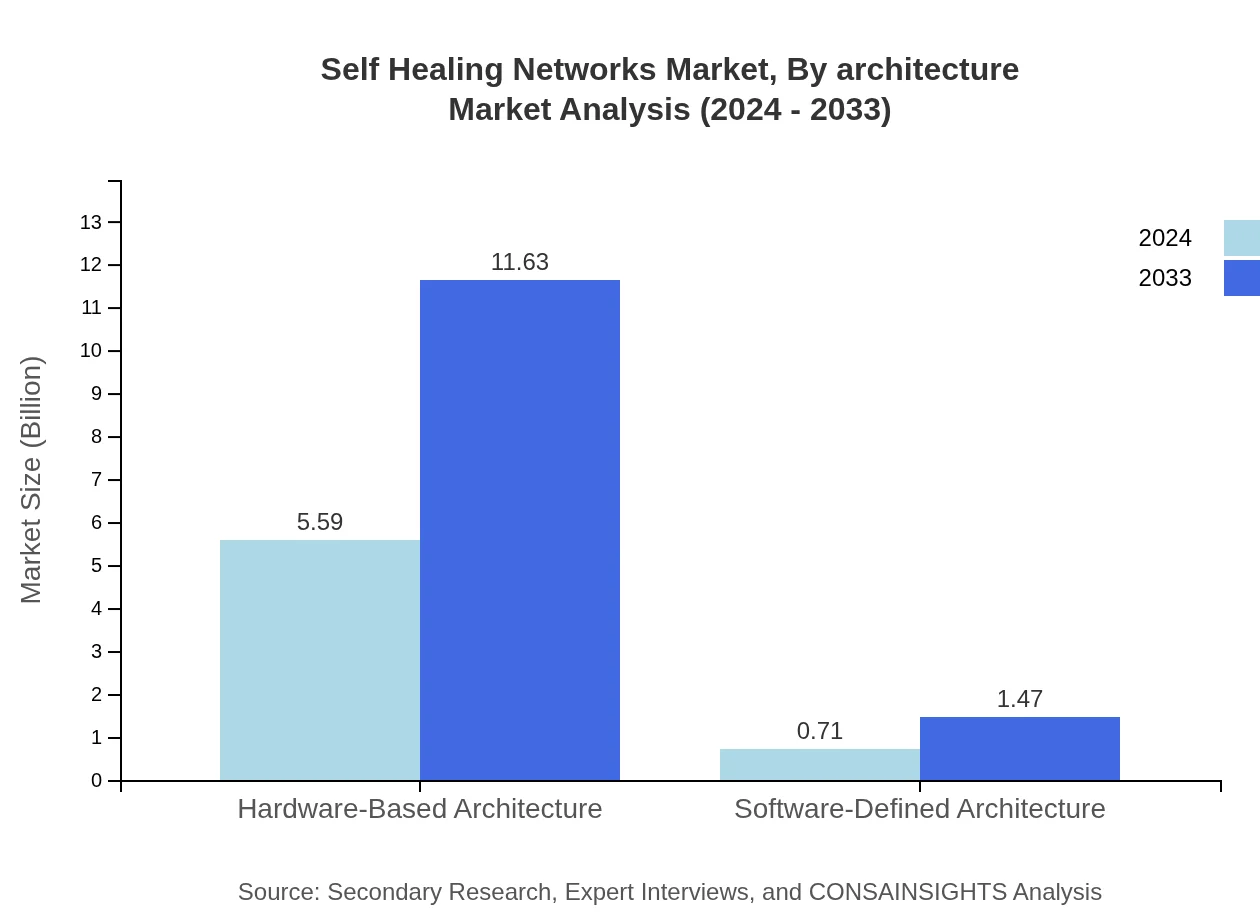
The architectural segmentation highlights the fundamental differences in designing responsive networks. Hardware-Based Architecture remains predominant with a market size rising from 5.59 billion in 2024 to 11.63 billion by 2033, accounting for approximately 88.77% market share. In contrast, Software-Defined Architecture, though smaller, is rapidly gaining traction, with market estimates growing from 0.71 billion to 1.47 billion and a steady market share near 11.23%. This clear dichotomy illustrates the shift towards solutions that blend robust physical systems with flexible, software-controlled networks, offering scalability and enhanced fault tolerance.
Self Healing Networks Market Analysis By Technology
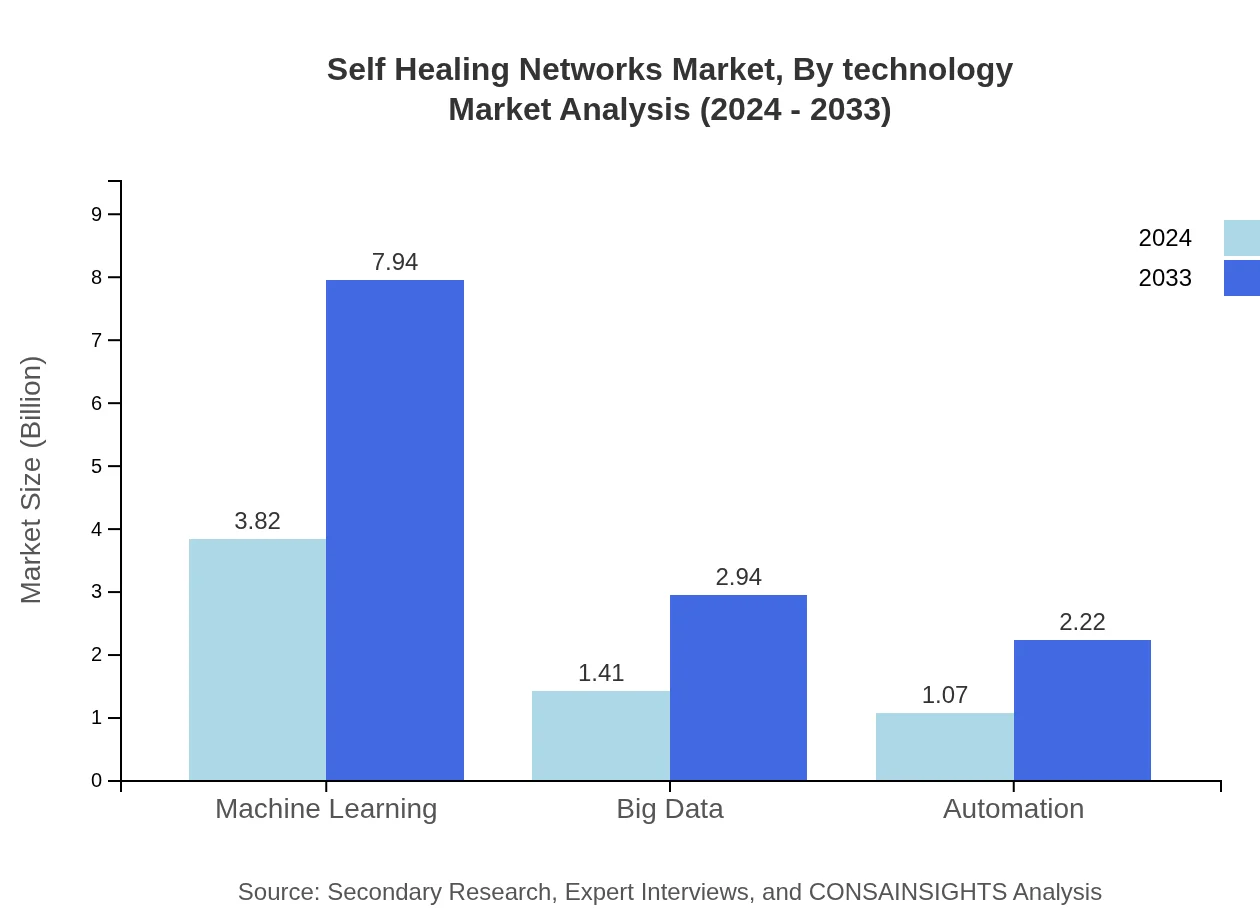
Within the technology segment, Monitoring Solutions dominate the landscape. The market size for these solutions is projected to grow significantly from 3.82 billion in 2024 to 7.94 billion by 2033, maintaining a consistent share of 60.62%. Complementary solutions such as Management Solutions and Analysis Solutions are also critical, with respective market sizes expected to increase steadily, ensuring that network performance and analytical capabilities are continually enhanced. Additional technological advancements like Machine Learning, Big Data, and Automation are being integrated into these solutions, driving further innovation through real-time data analysis and rapid response systems that minimize network disruptions and improve overall operational efficiency.
Self Healing Networks Market Analysis By Deployment Model
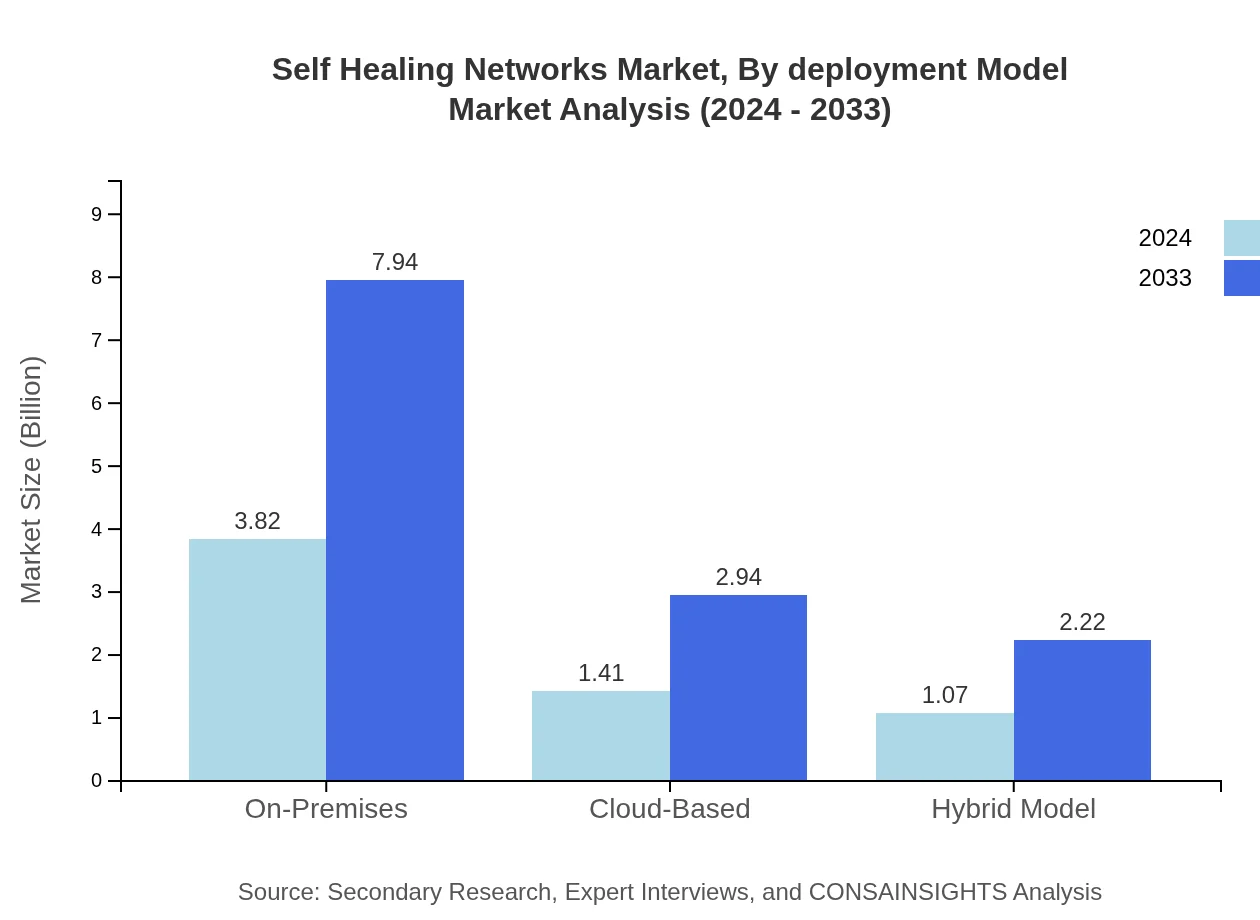
The deployment model segmentation distinguishes between on-premises, cloud-based, and hybrid approaches. On-Premises solutions, with a market size growing from 3.82 billion to 7.94 billion, continue to be favored by large enterprises requiring tight security and control. Cloud-Based models, rising from 1.41 billion to 2.94 billion, provide scalability and reduced capital expenditure, while Hybrid Models offer a balanced solution by combining the benefits of both environments. This segmentation allows organizations to choose a deployment strategy that aligns with their operational requirements and risk management preferences, ensuring flexibility and optimal resource allocation.
Self Healing Networks Market Analysis By End User Industry
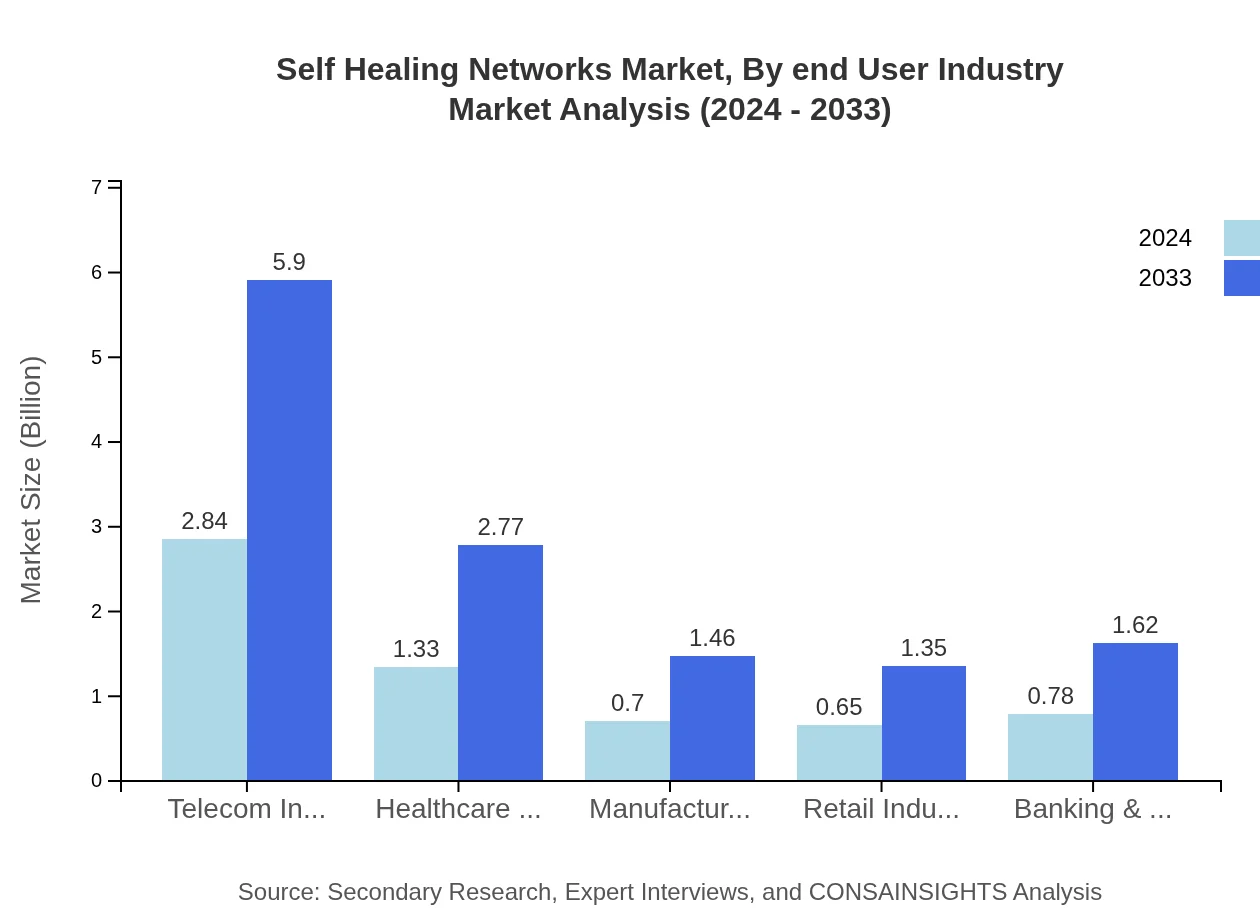
The end-user industry segmentation reflects the diverse application of Self Healing Networks across various sectors. The Telecom Industry leads with a market size projected to rise from 2.84 billion in 2024 to 5.90 billion in 2033, capturing approximately 45.02% market share. Healthcare, Manufacturing, Retail, and Banking & Financial Services also emerge as key segments, with each industry demonstrating unique adoption patterns. Industries such as healthcare benefit from the reliability and rapid fault correction of self-healing systems, while manufacturing and retail leverage these networks for minimal downtime and enhanced operational performance. This diversified industry spread underpins the market’s resilience and broadens the scope of future innovations.
Self Healing Networks Market Analysis By Solution
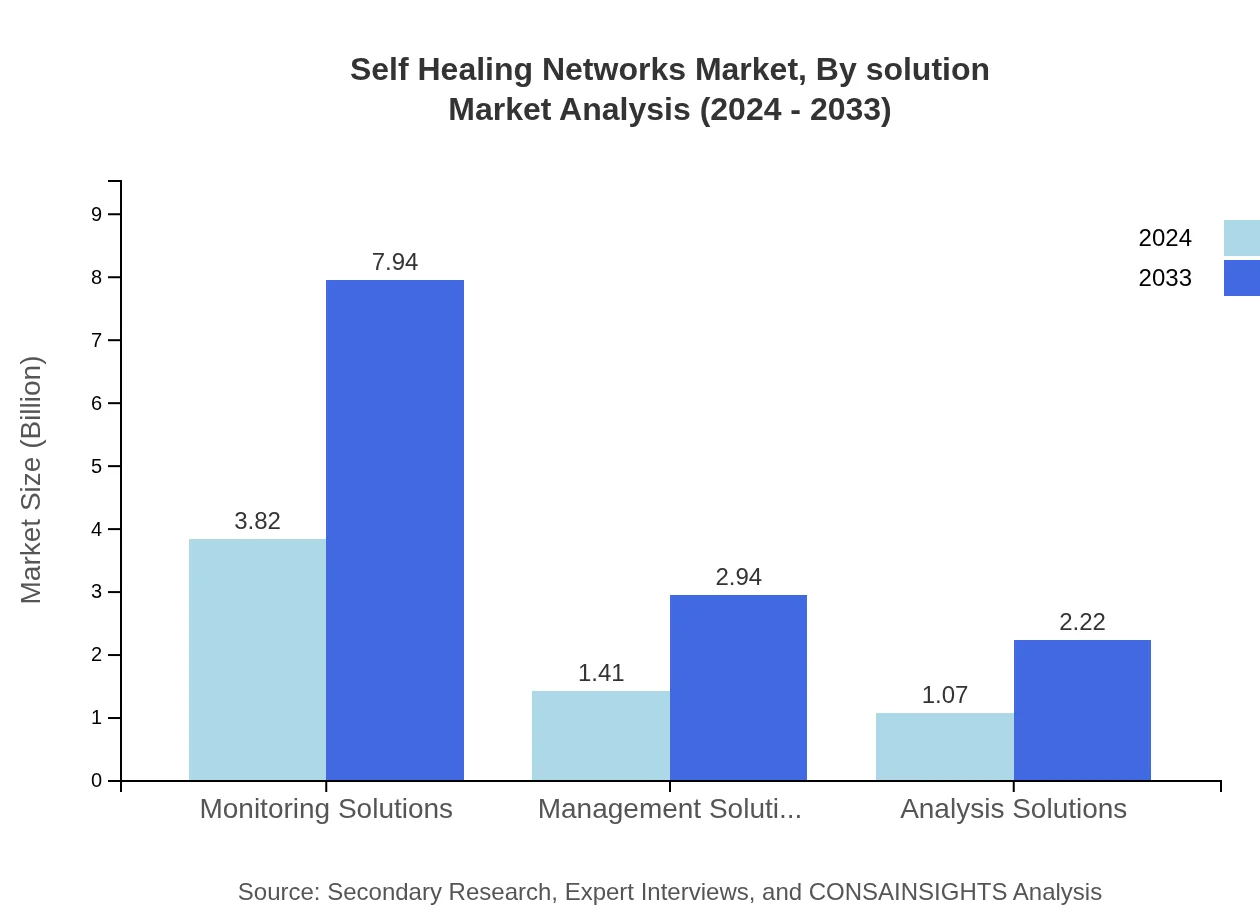
The solution-based segmentation delves into the specific offerings that drive market growth. Monitoring, Management, and Analysis Solutions form the backbone of industry strategies, each contributing distinct functionalities such as real-time surveillance, automated control, and comprehensive diagnostics. These solutions are augmented by emerging technologies like Machine Learning and Big Data, which enhance analytical capabilities and predictive maintenance. The integration of these solutions ensures that self-healing networks not only detect issues promptly but also deploy corrective measures efficiently, thus assuring seamless service continuity and bolstering the overall reliability of network operations. This focus on tailored solutions has made self-healing technologies indispensable in high-stakes industries.
Self Healing Networks Market Trends and Future Forecast
Tell us your focus area and get a customized research report.
Global Market Leaders and Top Companies in Self Healing Networks Industry
TechNova Communications:
TechNova Communications is at the forefront of network innovation, delivering advanced self-healing and automated network management solutions globally. Their robust R&D and strategic acquisitions have positioned them as industry pioneers.NetGuard Systems:
NetGuard Systems specializes in secure, scalable, and intelligent network infrastructures. Their focus on integrating AI and machine learning into network monitoring has significantly influenced market standards and operational efficiencies.We're grateful to work with incredible clients.









FAQs
How can the self Healing networks report help align our marketing strategy with customer adoption trends?
The self-healing networks market, expected to reach $6.3 billion by 2033 with a CAGR of 8.2%, highlights growing customer demand for autonomous technologies, guiding marketing strategies to focus on automation and reliability, ultimately aligning with customer preferences.
What product features are in highest demand according to the self Healing networks trends?
Monitoring solutions lead demand in self-healing networks, with market projections of $3.82 billion in 2024. The high share (60.62%) emphasizes customer interest in effective monitoring capabilities for enhancing network performance and reliability.
Which regions offer the best market entry and expansion opportunities in the self Healing networks industry?
Regions with significant growth potential include Europe and North America. Europe's market could grow from $2.14 billion in 2024 to $4.45 billion by 2033, while North America is expected to rise from $2.11 billion to $4.38 billion.
What emerging technologies and innovations are shaping the self Healing networks market?
Key innovations include machine learning and automation, which are anticipated to dominate, with machine learning projected to capture 60.62% market share and show growth from $3.82 billion in 2024, significantly impacting operational efficiencies.
Does the self Healing networks report include competitive landscape and market share analysis?
Yes, the report provides detailed insights into the competitive landscape, highlighting segment shares. For instance, hardware-based architecture dominates with 88.77% share, indicating the critical role of physical infrastructure in this market.
How can executives use the self Healing networks report to evaluate investment risks and ROI?
Executives can leverage the report’s insights, including market growth trajectories (CAGR of 8.2%) and regional insights, to identify high-potential investment areas, helping to mitigate risks associated with emerging technology sectors.
What is the market size of self Healing networks?
The self-healing networks market is currently valued at $6.3 billion and is projected to grow at a CAGR of 8.2% through 2033, reflecting a robust demand for network resilience and automation in various sectors.