
Reports >
Life Sciences
>
Sheep Placenta Extract Market Report

Sheep Placenta Extract Market Report
First published: 20 October 2024 | Last updated: 28 May 2026 | Report Code: sheep-placenta-extract
Sheep Placenta Extract Market — USD 450 million in 2023, Growing to USD 801.52M by 2033 at 5.8% CAGR
This report provides a comprehensive analysis of the Sheep Placenta Extract market from 2023 to 2033, including insights into market size, growth expectations, regional trends, segmentation, and the competitive landscape to inform stakeholders.
Key Takeaways
- Global market expands from $450.00 Billion in 2023 to $801.52 Billion by 2033 at a 5.8% CAGR.
- North America is largest regional market, while no single fastest-growing region is stated because regional CAGR differences remain within 0.15 percentage points.
- Europe and Asia Pacific show substantial absolute growth, with Europe moving from $130.99 Billion to $233.32 Billion and Asia Pacific from $96.66 Billion to $172.17 Billion.
- Product formats span liquid and powdered extracts plus capsules, supplying cosmetics, pharmaceuticals and nutraceuticals.
- Top companies include New Zealand Sheep Placenta Co. Ltd., Sederma S.A., and Austrian Bio-Garantie, reflecting manufacturing and formulation focus.
Sheep Placenta Extract Market Report — Executive Summary
North America remains largest market by forecast-period value, while no single fastest-growing region is stated because top regional growth rates are separated by less than 0.15 percentage points. This report outlines market forces shaping the Sheep Placenta Extract sector, driven by consumer preference for natural ingredients, rising anti-aging skincare demand, and improvements in extraction and formulation technologies. Market size grows from $450.00 Billion in 2023 to $801.52 Billion in 2033 at a 5.8% CAGR. The analysis covers product formats—liquid, powdered and capsules—and application areas including cosmetics, pharmaceuticals and nutraceuticals. Regional chapters present value movements across North America, Europe, Asia Pacific, Latin America, and Middle East & Africa, while company profiles highlight established suppliers such as New Zealand Sheep Placenta Co. Ltd., Sederma S.A., and Austrian Bio-Garantie. The report combines primary interviews, secondary literature, and data triangulation to validate trends and competitive positioning for strategic planning.
Key Growth Drivers
- Rising consumer interest in natural and organic ingredients fuels demand across cosmetics and nutraceuticals.
- Growing anti-aging skincare market increases incorporation of placenta-based formulations.
- Advances in extraction and formulation improve bioavailability, encouraging broader product applications.
- Expansion of online and offline distribution channels enhances consumer access and product reach.
- Industry focus on sustainable sourcing and ethical practices supports brand differentiation and adoption.
| Metric | Value |
|---|---|
| Study Period | 2023 - 2033 |
| 2023 Market Size | $450.00 Million |
| CAGR (2023-2033) | 5.8% |
| 2033 Market Size | $801.52 Million |
| Top Companies | New Zealand Sheep Placenta Co. Ltd., Sederma S.A., Austrian Bio-Garantie |
| Published Date | 20 October 2024 |
| Last Modified Date | 28 May 2026 |
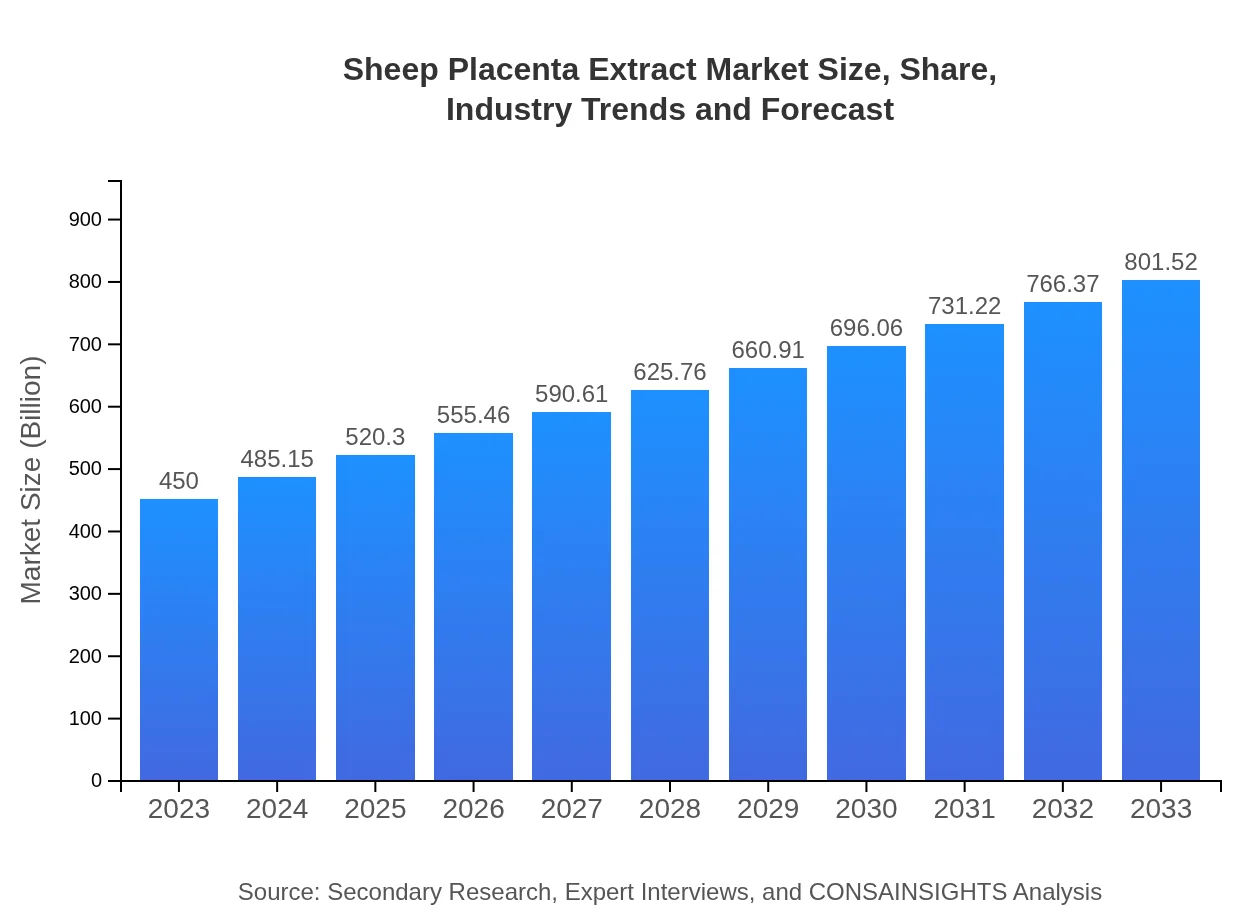
Sheep Placenta Extract Market Overview
Customize Sheep Placenta Extract Market Report market research report
- ✔ Get in-depth analysis of Sheep Placenta Extract market size, growth, and forecasts.
- ✔ Understand Sheep Placenta Extract's regional dynamics and industry-specific trends.
- ✔ Identify potential applications, end-user demand, and growth segments in Sheep Placenta Extract
What is the Market Size & CAGR of Sheep Placenta Extract Market Report market in 2023?
Sheep Placenta Extract Industry Analysis
Sheep Placenta Extract Market Segmentation and Scope
Tell us your focus area and get a customized research report.
Sheep Placenta Extract Market Report Market Analysis Report by Region
Europe Sheep Placenta Extract Market Report:
Europe grows from $130.99 Billion in 2023 to $233.32 Billion in 2033. Market movement reflects consumer preference for natural formulations, regulatory standards shaping product safety, and manufacturers investing in advanced extraction methods for improved efficacy.Asia Pacific Sheep Placenta Extract Market Report:
Asia Pacific grows from $96.66 Billion in 2023 to $172.17 Billion in 2033. Growth is supported by rising interest in skincare and wellness products, expanding retail and e-commerce channels, and formulation innovation targeting regional beauty and health needs.North America Sheep Placenta Extract Market Report:
North America is largest regional market, rising from $145.62 Billion in 2023 to $259.37 Billion in 2033. Local uptake is driven by high consumer awareness of natural and anti-aging ingredients, established distribution networks, and adoption across cosmetics, pharmaceuticals and nutraceutical channels.South America Sheep Placenta Extract Market Report:
Latin America grows from $21.24 Billion in 2023 to $37.83 Billion in 2033. The regional rise is influenced by growing demand for natural cosmetic and nutraceutical solutions, alongside broader availability through online and traditional retail outlets.Middle East & Africa Sheep Placenta Extract Market Report:
Middle East and Africa grows from $55.49 Billion in 2023 to $98.83 Billion in 2033. Adoption is aided by increasing consumer interest in natural ingredients, rising beauty and health awareness, and gradual improvements in product sourcing and distribution infrastructure.Tell us your focus area and get a customized research report.
Research Methodology
Sheep Placenta Extract Market Analysis By Product
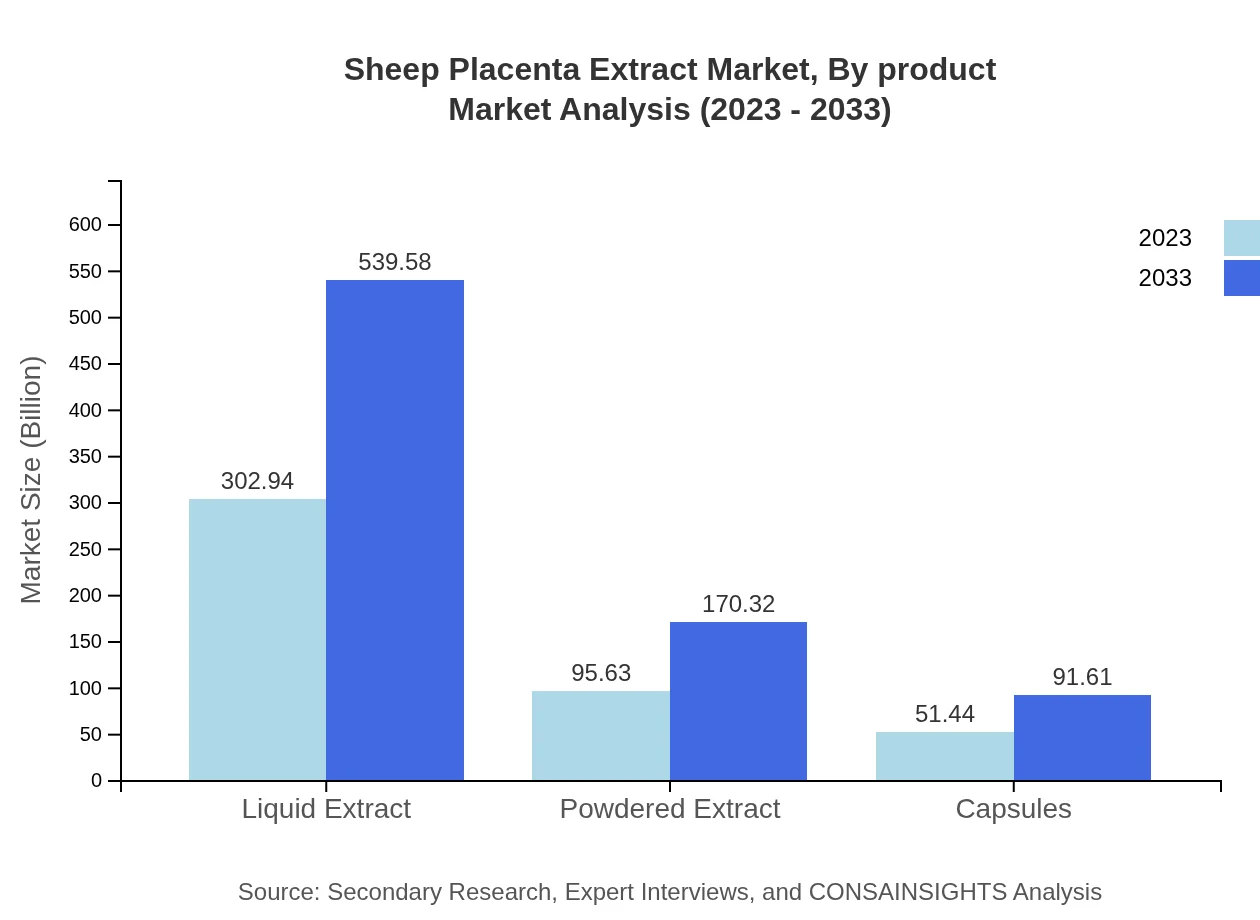
Product segmentation plays a pivotal role in market dynamics. The key product forms include: Liquid Extract: Expected growth from USD 302.94 million in 2023 to USD 539.58 million by 2033. This product form holds a significant market share of approximately 67.32% in 2023. Powdered Extract: Projected growth from USD 95.63 million in 2023 to USD 170.32 million by 2033, contributing a market share of 21.25% in 2023. Capsules: Estimated to grow from USD 51.44 million in 2023 to USD 91.61 million by 2033, capturing an 11.43% market share.
Sheep Placenta Extract Market Analysis By Application
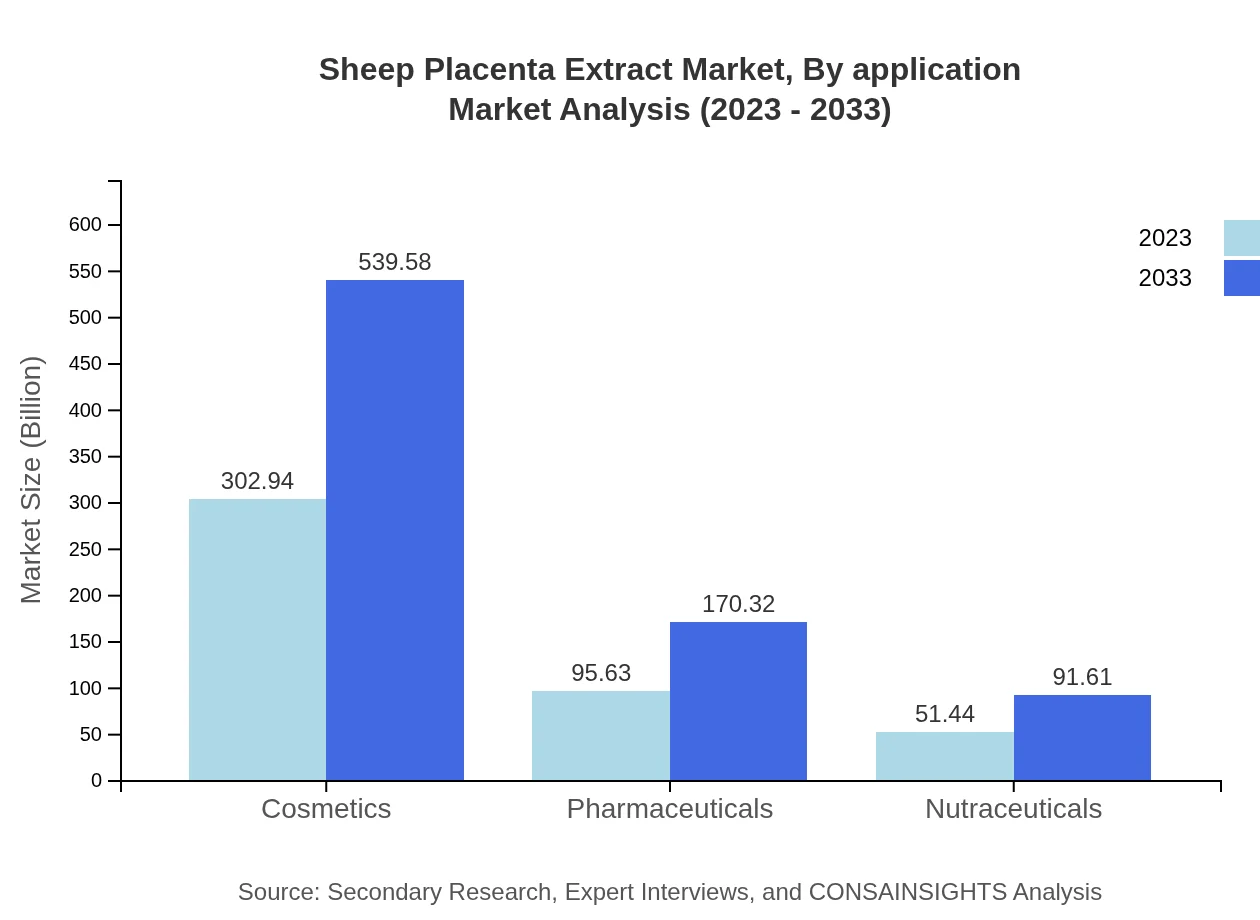
The application segments encompass: Cosmetics: The largest segment, forecasted to grow from USD 302.94 million in 2023 to USD 539.58 million by 2033, holding a market share of 67.32% due to demand for anti-aging solutions. Pharmaceuticals: Expected growth from USD 95.63 million in 2023 to USD 170.32 million by 2033, representing 21.25% of the market share, driven by health supplement applications. Nutraceuticals: Anticipated to rise from USD 51.44 million to USD 91.61 million over the forecast period.
Sheep Placenta Extract Market Analysis By End User
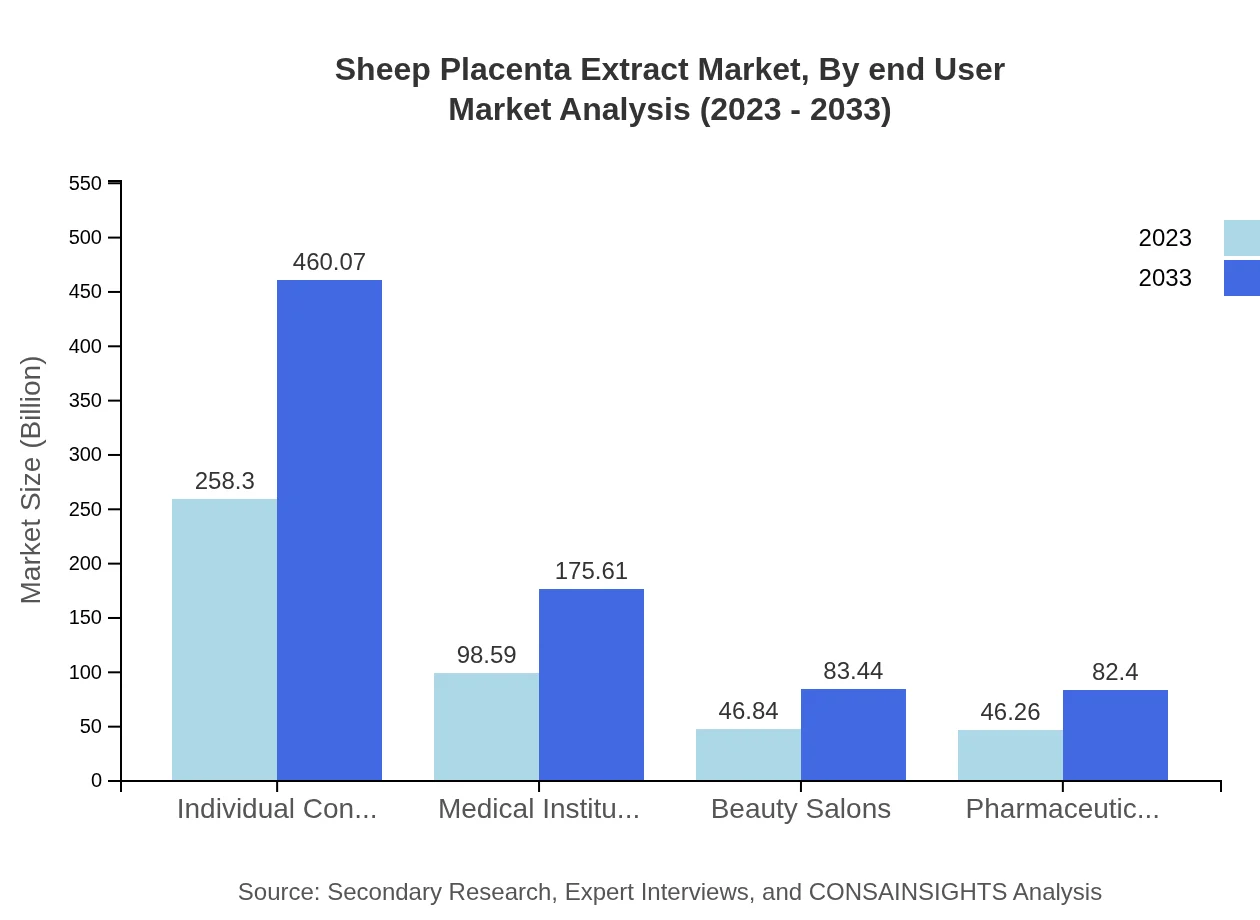
Key end-users in the Sheep Placenta Extract market include: Individual Consumers: Market size projected to expand from USD 258.30 million in 2023 to USD 460.07 million by 2033, reflecting a growing preference for self-care products. Medical Institutions: Expected to grow from USD 98.59 million in 2023 to USD 175.61 million by 2033, driven by increased adoption in therapeutic applications. Beauty Salons: Market growth anticipated from USD 46.84 million to USD 83.44 million in the same period.
Sheep Placenta Extract Market Analysis By Distribution Channel
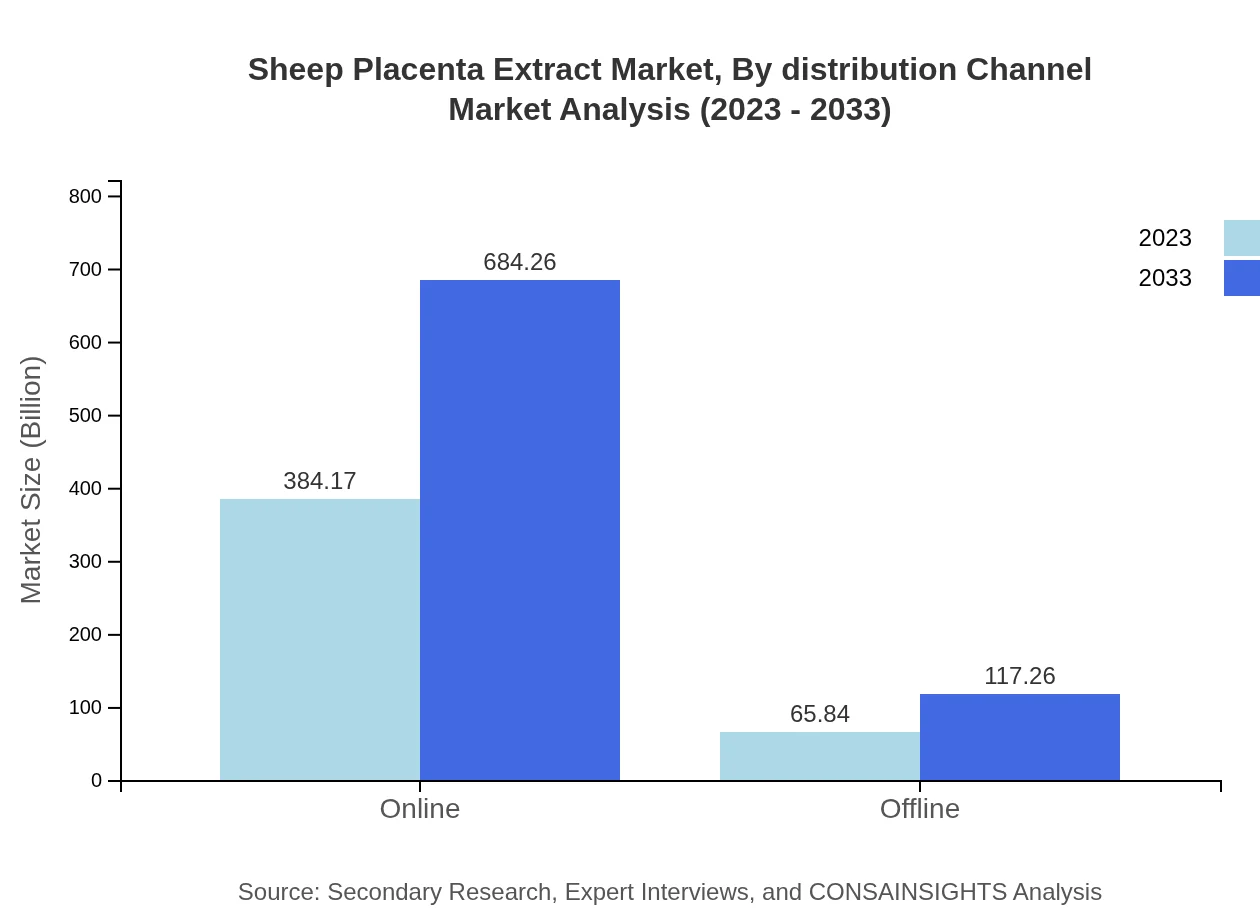
The Sheep Placenta Extract market distribution channels include: Online: Expected to rise from USD 384.17 million in 2023 to USD 684.26 million by 2033, with a market share of 85.37% as consumers increasingly prefer shopping online. Offline: Anticipated growth from USD 65.84 million in 2023 to USD 117.26 million by 2033, capturing a 14.63% market share.
Sheep Placenta Extract Market Analysis By Formulation
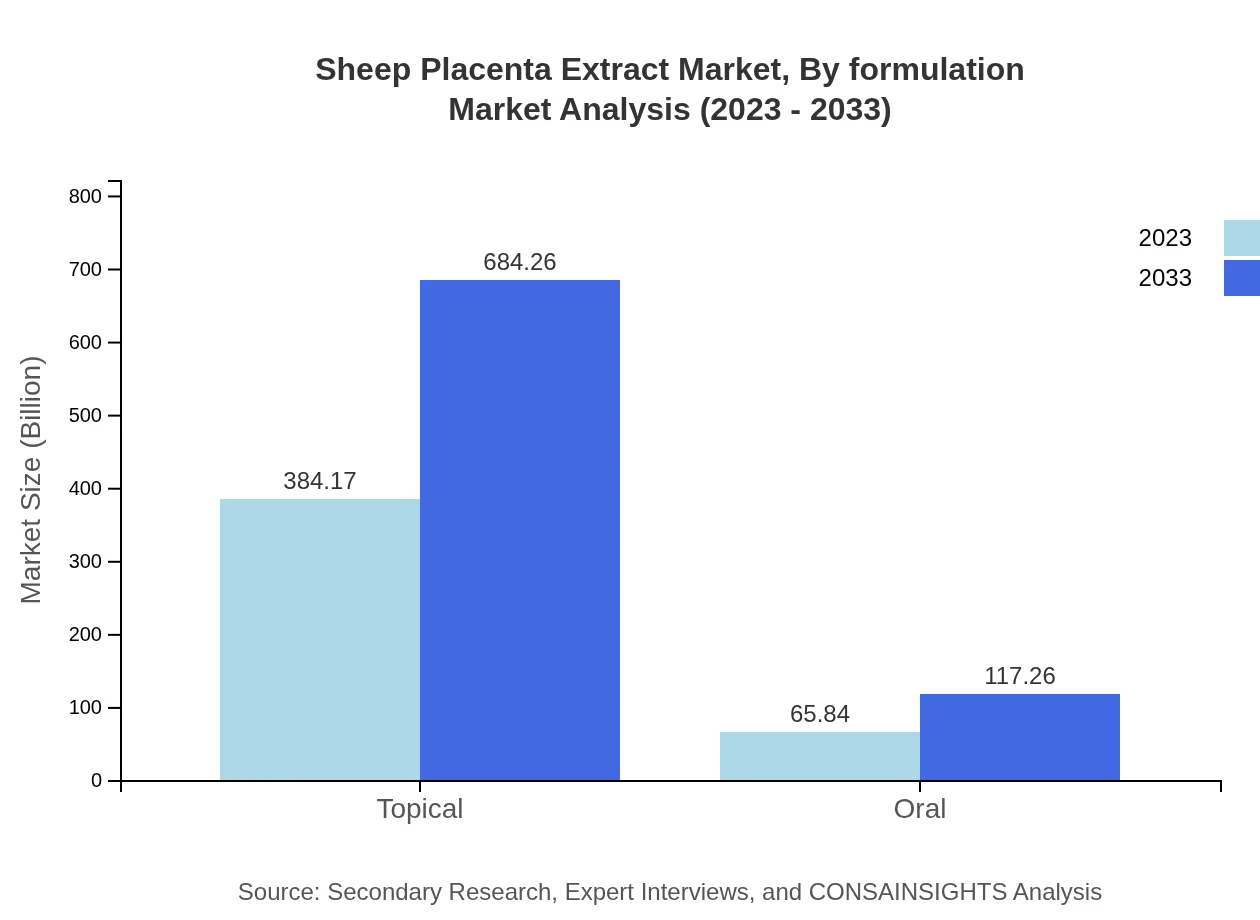
Different formulations of Sheep Placenta Extract are crucial in the market. The key formulations include: Topical: Projected growth from USD 384.17 million in 2023 to USD 684.26 million by 2033, constituting a major part of the market. Oral: Expected to grow from USD 65.84 million to USD 117.26 million by 2033, indicating a growing interest in dietary supplements.
Sheep Placenta Extract Market Trends and Future Forecast
Tell us your focus area and get a customized research report.
Global Market Leaders and Top Companies in Sheep Placenta Extract Industry
New Zealand Sheep Placenta Co. Ltd.:
A leading provider of sheep placenta extracts, focusing on purity and sustainability, with a range of natural health products that harness the power of sheep placenta.Sederma S.A.:
An established global manufacturer of cosmetic ingredients, Sederma produces high-quality sheep placenta extracts known for their anti-aging properties used in premium skincare.Austrian Bio-Garantie:
A reputable player in natural extracts, they specialize in developing innovative sheep placenta extract formulations for both health and beauty applications.We're grateful to work with incredible clients.








FAQs
What is the market size of the Sheep Placenta Extract Market Report in 2023?
The market size in 2023 is $450.00 Billion, as reported for the Sheep Placenta Extract Market Report.
How big will the market be by 2033?
The market is projected to reach $801.52 Billion in 2033 according to the provided forecast for the sector.
What is CAGR for the forecast period?
The reported compound annual growth rate for 2023 to 2033 is 5.8% for this market.
Is there a single fastest Growing region in the Sheep Placenta Extract Market Report market?
No single fastest-growing region is stated for the Sheep Placenta Extract Market Report market because the top regional implied CAGR values are within 0.15 percentage points of each other, making the ranking too close to call reliably.
Which product formats are covered in the market segmentation?
The report lists liquid extract, powdered extract, and capsules as primary product formats across applications and channels.
Who are key companies operating in this market?
Top companies named include New Zealand Sheep Placenta Co. Ltd., Sederma S.A., and Austrian Bio-Garantie in the competitive landscape.
What applications drive demand for sheep placenta extract?
Primary applications cited are cosmetics, pharmaceuticals, and nutraceuticals, reflecting diverse end-user needs and formulation opportunities.
How is the research methodology described?
Methodology includes primary interviews with industry experts, secondary research via company reports and publications, and data triangulation with internal validation.