

Sleep Disorder Treatment Drugs Market Report
First published: 14 October 2024 | Last updated: 28 May 2026 | Report Code: sleep-disorder-treatment-drugs
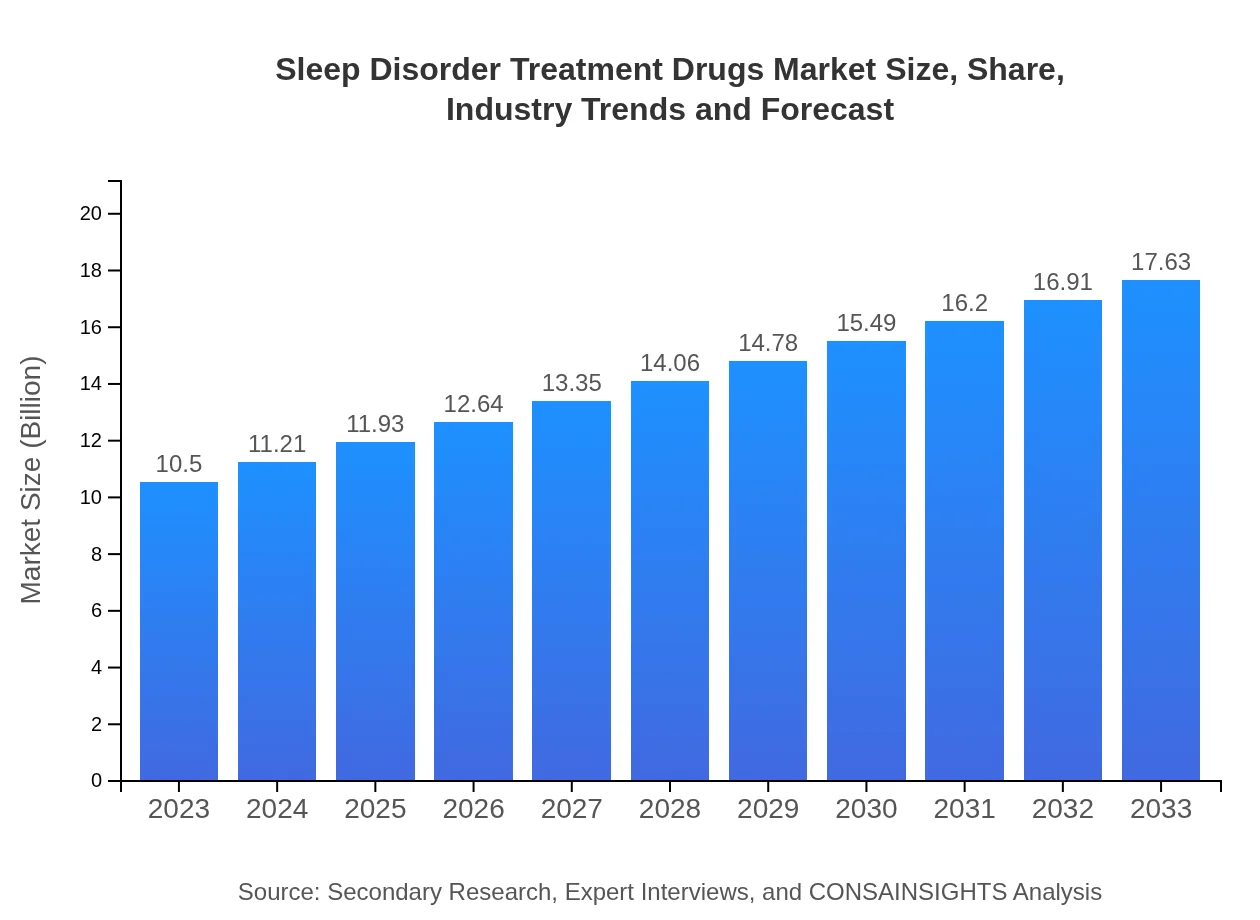
Sleep Disorder Treatment Drugs Market — USD 10.5 billion in 2023, Growing to USD 17.63B by 2033 at 5.2% CAGR
This report provides an in-depth analysis of the Sleep Disorder Treatment Drugs market, covering market dynamics, size, growth trends, and forecasts for the period 2023 to 2033. It includes insights into market segmentation, regional performance, technological advancements, and leading companies in the industry.
Key Takeaways
- Global market value rises from $10.50 Billion in 2023 to $17.63 Billion in 2033 at a 5.2% CAGR.
- North America is largest regional market, while no single fastest-growing region is stated because regional CAGR differences remain within 0.15 percentage points.
- North America leads regional value, increasing from $4.09 Billion in 2023 to $6.86 Billion in 2033.
- Europe and Asia Pacific show notable expansions: Europe from $2.75 Billion to $4.61 Billion; Asia Pacific from $2.07 Billion to $3.47 Billion.
- Market segmentation spans drug type, indication, route, distribution channel, and end user, with hospitals and clinics prominent end-user categories.
- Leading companies include Pfizer Inc., Eli Lilly and Company, Merck & Co., Inc., and Sanofi.
Sleep Disorder Treatment Drugs Market Report — Executive Summary
North America remains largest market by forecast-period value, while no single fastest-growing region is stated because top regional growth rates are separated by less than 0.15 percentage points. The Sleep Disorder Treatment Drugs Market Report analyzes market dynamics supporting steady expansion through 2033. Key drivers include rising prevalence of sleep disorders, demographic aging, greater mental health awareness, and pharmaceutical innovation improving therapy options. The market structure is segmented by drug type (benzodiazepines, non-benzodiazepines, melatonin agonists, antidepressants, others), indication (insomnia, sleep apnea, circadian rhythm disorders, narcolepsy), route of administration, distribution channel, and end user. Regional performance varies: North America records the largest regional value. Stakeholders such as pharmaceutical manufacturers, healthcare providers, and payers are focusing on safer alternatives and expanded access via pharmacies and online channels. Competitive activity centers on R&D and portfolio diversification, with Pfizer Inc., Eli Lilly and Company, Merck & Co., Inc., and Sanofi highlighted. Research combines primary interviews and secondary documentation to validate trends and quantify segment trajectories.
Key Growth Drivers
- Increasing diagnosed prevalence of insomnia, sleep apnea, and related disorders raising treatment demand.
- Advances in pharmaceutical formulations and targeted therapies expanding therapeutic options for different indications.
- Aging populations in multiple regions increasing chronic sleep disorder incidence and treatment uptake.
- Greater public and clinical awareness of sleep health driving earlier diagnosis and pharmacologic intervention.
- Growth of distribution channels including online pharmacies and strengthened hospital pharmacy networks improving access.
| Metric | Value |
|---|---|
| Study Period | 2023 - 2033 |
| 2023 Market Size | $10.50 Billion |
| CAGR (2023-2033) | 5.2% |
| 2033 Market Size | $17.63 Billion |
| Top Companies | Pfizer Inc., Eli Lilly and Company, Merck & Co., Inc., Sanofi |
| Published Date | 14 October 2024 |
| Last Modified Date | 28 May 2026 |
Sleep Disorder Treatment Drugs Market Overview
Customize Sleep Disorder Treatment Drugs Market Report market research report
- ✔ Get in-depth analysis of Sleep Disorder Treatment Drugs market size, growth, and forecasts.
- ✔ Understand Sleep Disorder Treatment Drugs's regional dynamics and industry-specific trends.
- ✔ Identify potential applications, end-user demand, and growth segments in Sleep Disorder Treatment Drugs
What is the Market Size & CAGR of Sleep Disorder Treatment Drugs Market Report market in 2023?
Sleep Disorder Treatment Drugs Industry Analysis
Sleep Disorder Treatment Drugs Market Segmentation and Scope
Tell us your focus area and get a customized research report.
Sleep Disorder Treatment Drugs Market Report Market Analysis Report by Region
Europe Sleep Disorder Treatment Drugs Market Report:
Europe grows from $2.75 Billion in 2023 to $4.61 Billion in 2033. Increased clinical awareness of sleep disorders, aging demographics, and regulatory frameworks emphasizing safety and efficacy are contributing to expanded treatment utilization across European healthcare systems.Asia Pacific Sleep Disorder Treatment Drugs Market Report:
Asia Pacific grows from $2.07 Billion in 2023 to $3.47 Billion in 2033. Market growth is influenced by larger patient populations, improving access to healthcare services, rising diagnosis rates, and growing investments in pharmaceutical availability and distribution channels.North America Sleep Disorder Treatment Drugs Market Report:
North America is largest regional market, rising from $4.09 Billion in 2023 to $6.86 Billion in 2033. Regional expansion reflects high healthcare spending, established prescription channels, and concentrated R&D by major pharmaceutical firms supporting new therapy adoption.South America Sleep Disorder Treatment Drugs Market Report:
Latin America grows from $0.6 Billion in 2023 to $1.01 Billion in 2033. Uptake is supported by improving healthcare access, rising awareness of sleep-related conditions, and gradual strengthening of pharmaceutical distribution networks in regional markets.Middle East & Africa Sleep Disorder Treatment Drugs Market Report:
Middle East and Africa grows from $1 Billion in 2023 to $1.67 Billion in 2033. Growth drivers include expanding healthcare infrastructure, heightened recognition of sleep disorders, and enhanced availability of treatment through pharmacies and hospital services.Tell us your focus area and get a customized research report.
Research Methodology
Sleep Disorder Treatment Drugs Market Analysis By Drug Type
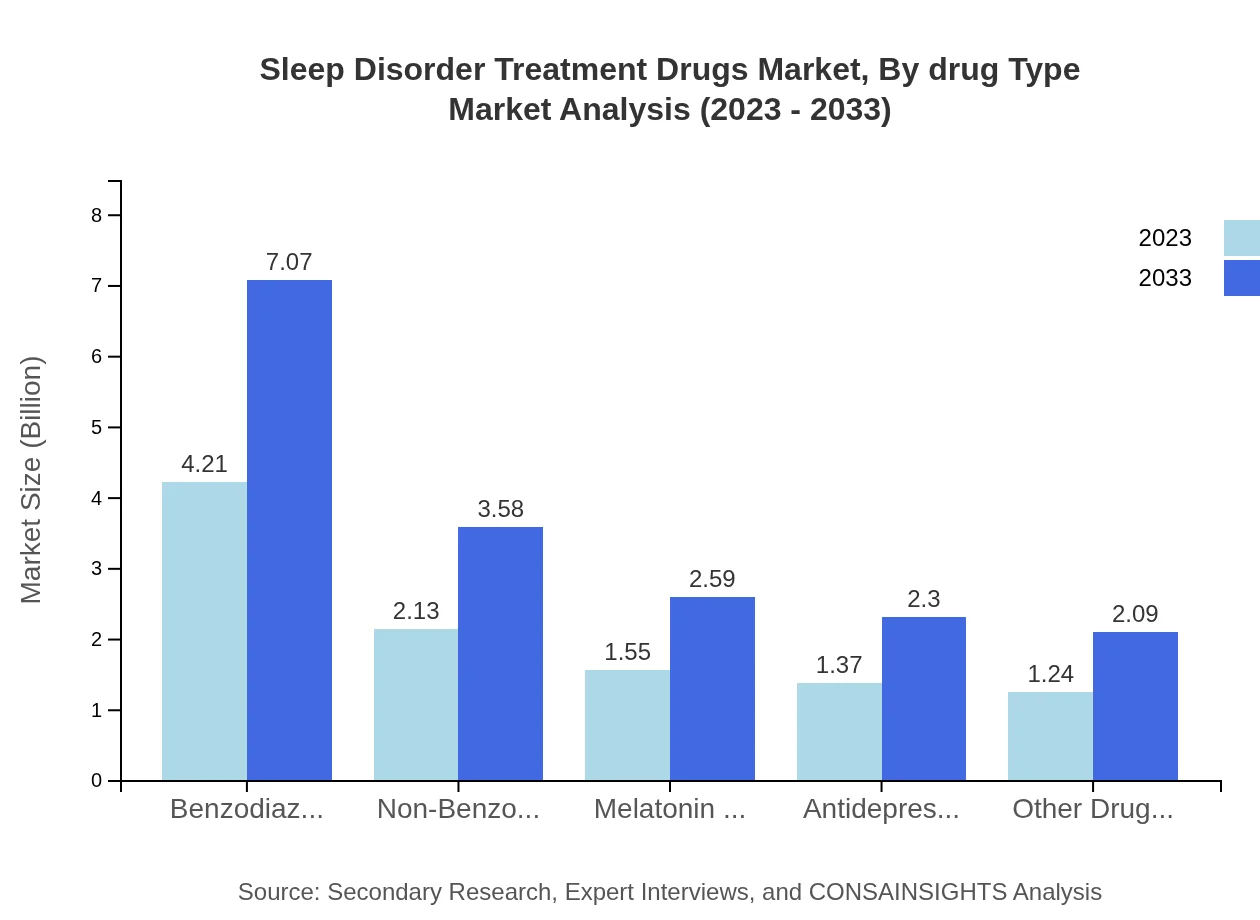
The Sleep Disorder Treatment Drugs market by drug type includes benzodiazepines, non-benzodiazepines, melatonin agonists, antidepressants, and other drug types. Benzodiazepines represent the largest revenue share at 40.11% in 2023 while non-benzodiazepines and melatonin agonists are gaining ground due to their favorable side-effect profiles.
Sleep Disorder Treatment Drugs Market Analysis By Indication
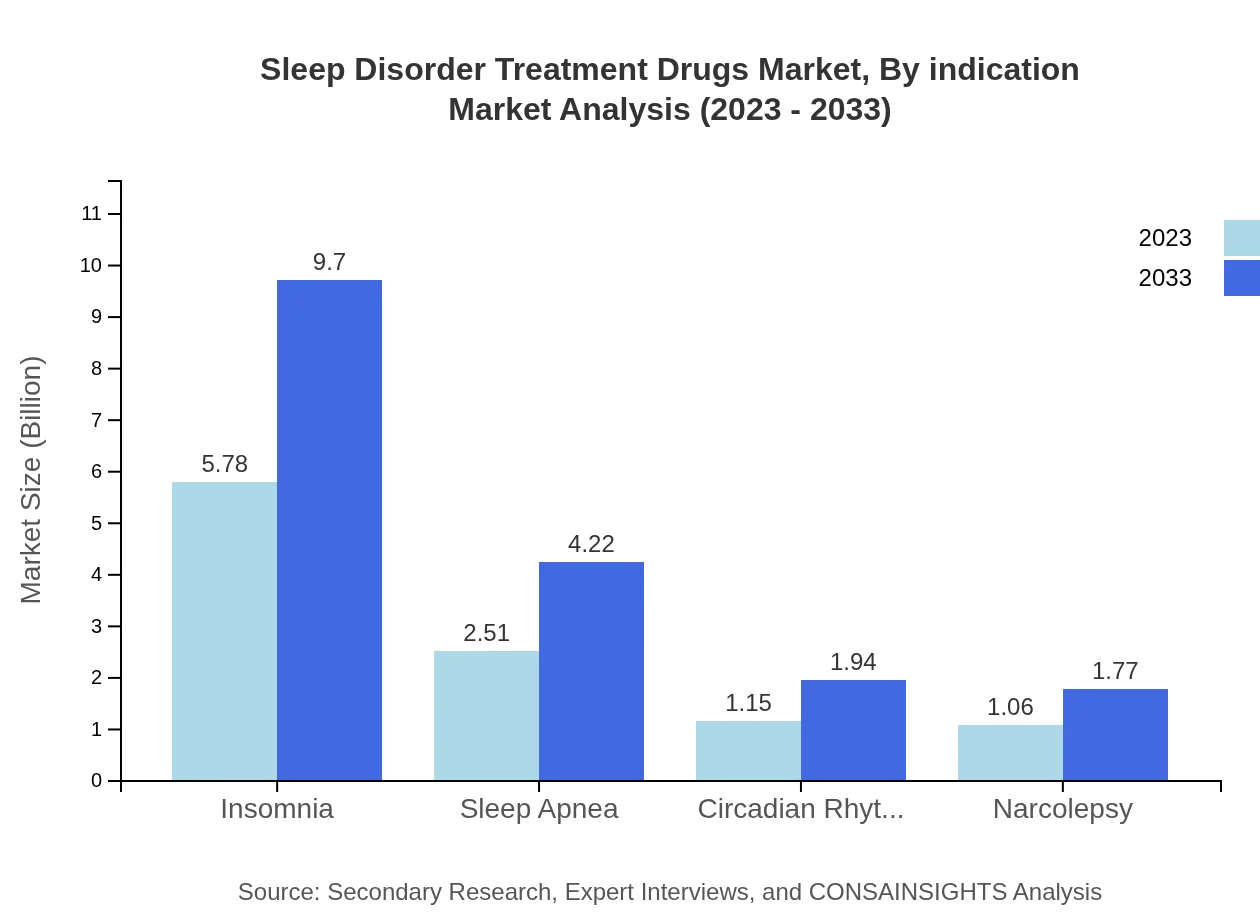
The market is segmented by indication into insomnia, sleep apnea, circadian rhythm disorders, and narcolepsy. Insomnia accounts for the largest share, projected at 55.03% in 2023. Sleep apnea's market share is also significant due to its high prevalence.
Sleep Disorder Treatment Drugs Market Analysis By Route Of Administration
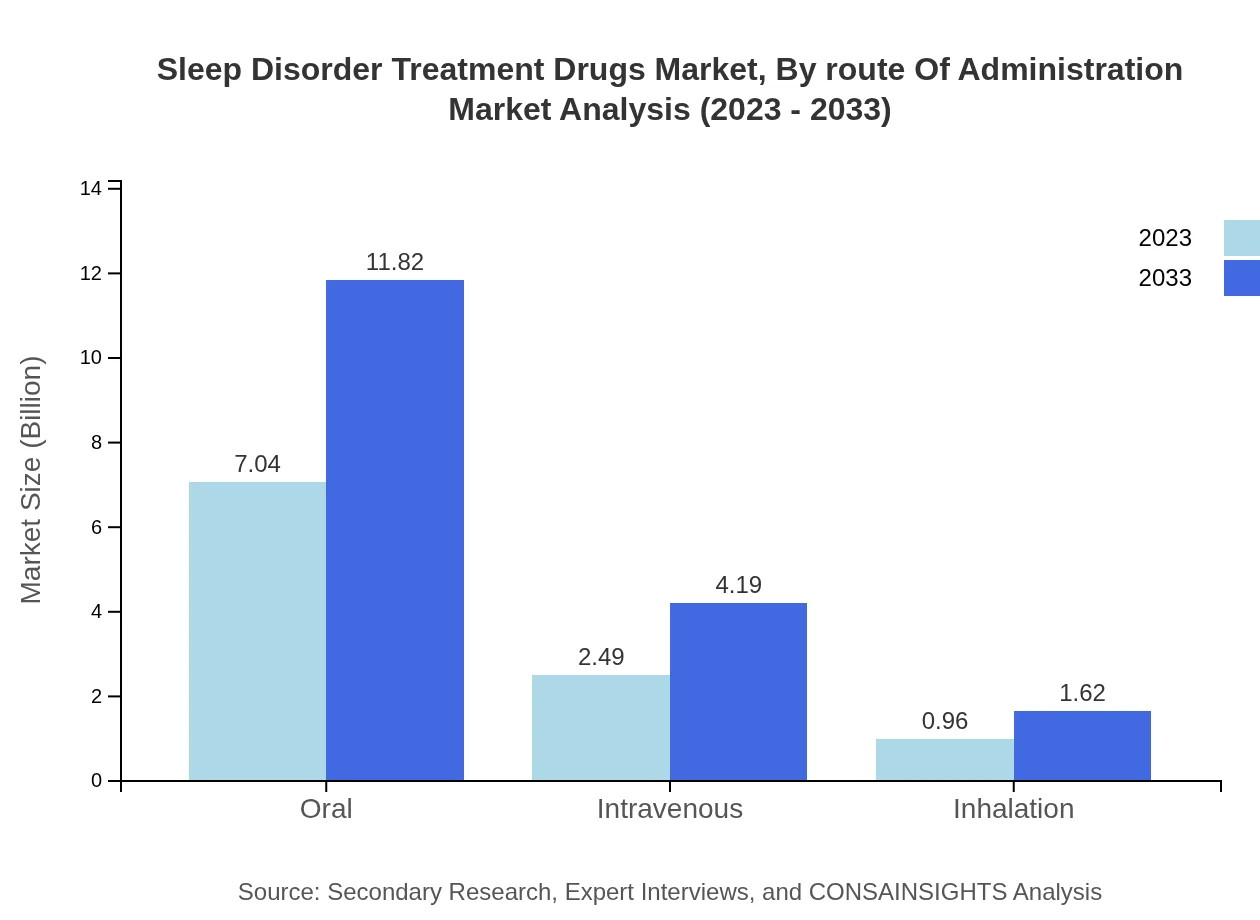
The routes of administration include oral, intravenous, and inhalation routes, with oral administration dominating the market at 67.07% in 2023. The preference for oral medications due to ease of use drives this trend, while intravenous and inhalation methods cater to specific clinical settings.
Sleep Disorder Treatment Drugs Market Analysis By End User
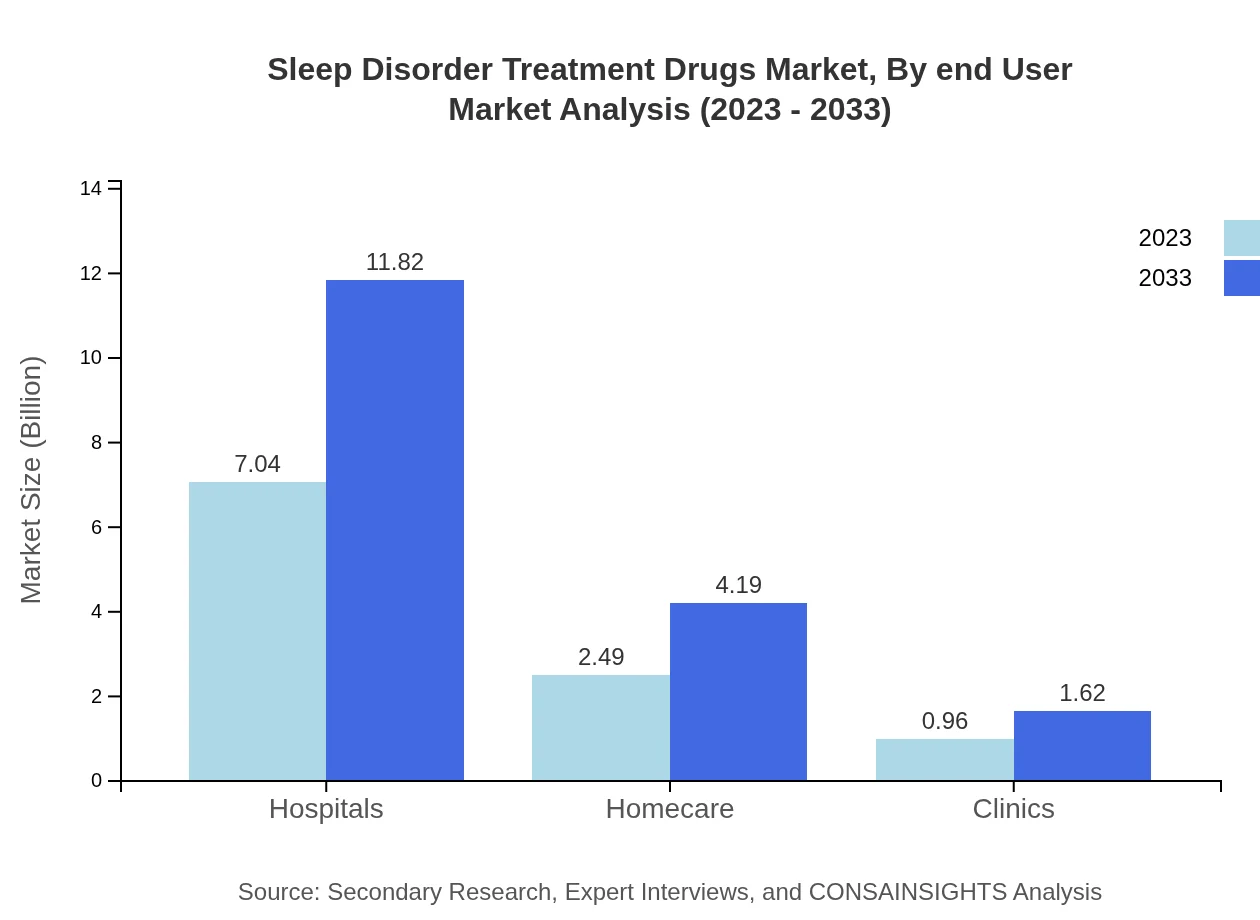
End-users in the Sleep Disorder Treatment Drugs market include hospitals, homecare settings, and clinics. Hospitals command the largest market share at 67.07% in 2023, largely due to acute care needs, while homecare settings show growing demand driven by the preference for at-home treatment.
Sleep Disorder Treatment Drugs Market Analysis By Distribution Channel
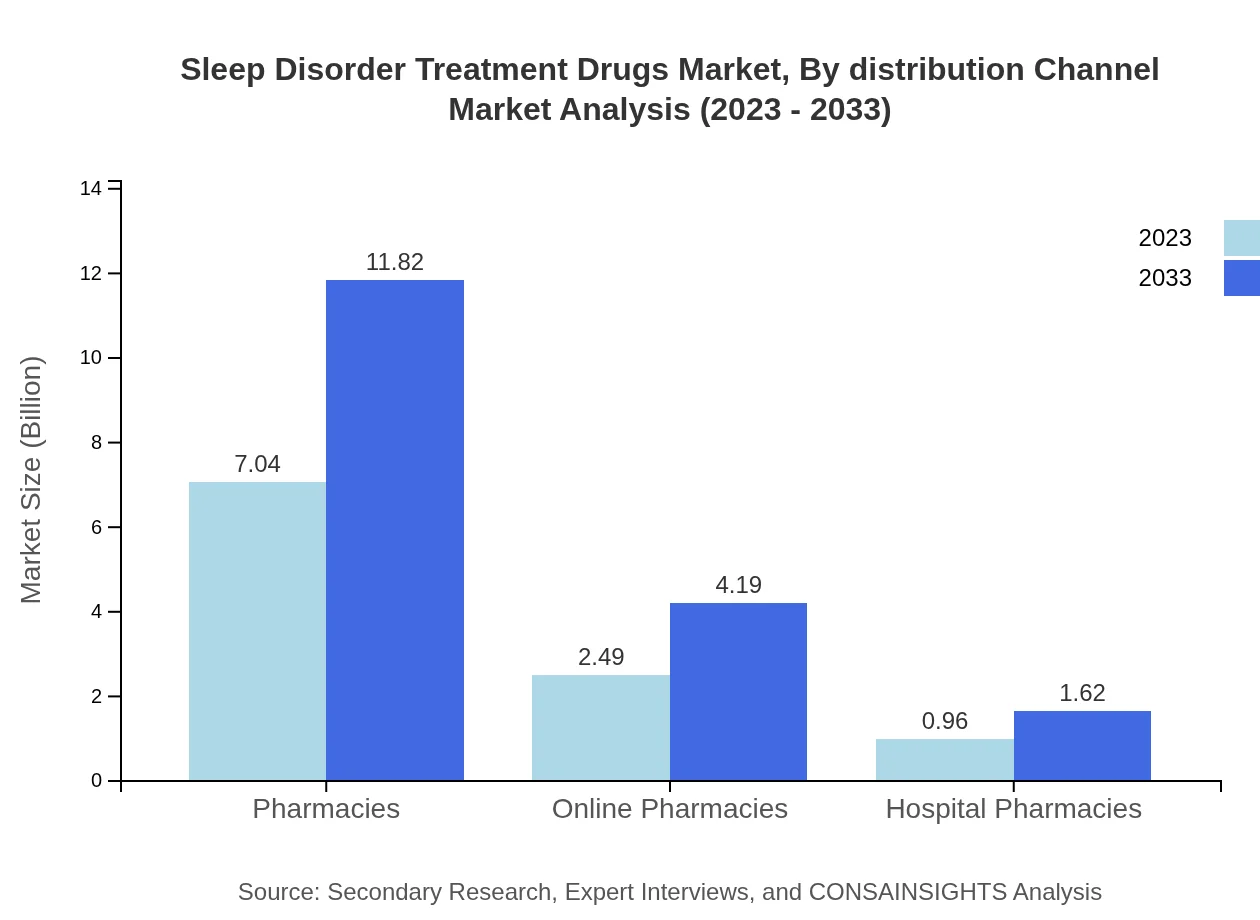
Distribution channels for these drugs primarily include pharmacies, online pharmacies, and hospital pharmacies. Traditional pharmacies hold a significant share at 67.07%, but the rise of online pharmacies is changing the landscape, making medications more accessible.
Sleep Disorder Treatment Drugs Market Trends and Future Forecast
Tell us your focus area and get a customized research report.
Global Market Leaders and Top Companies in Sleep Disorder Treatment Drugs Industry
Pfizer Inc.:
A leading pharmaceutical company known for its extensive range of medications, including treatments for sleep disorders. Pfizer invests heavily in research and development to innovate potent therapeutics.Eli Lilly and Company:
With a strong portfolio in mental health and sleep therapeutics, Eli Lilly is recognized for its effective sleep disorder interventions that address various patient needs.Merck & Co., Inc.:
Merck develops a variety of healthcare solutions, including sleep disorder treatments, and is known for its commitment to improving patient outcomes through extensive research.Sanofi:
Sanofi is notable for its development of effective medications for sleep disorders, focusing on both safety and efficacy in its product offerings.We're grateful to work with incredible clients.








FAQs
What is the market size of the Sleep Disorder Treatment Drugs Market Report in 2023?
The market size for 2023 is $10.50 Billion, as reported for the Sleep Disorder Treatment Drugs market, reflecting current therapy demand and pharmaceutical activity.
How big will the market be in 2033?
The market is projected to reach $17.63 Billion by 2033, based on the forecast period of 2023 to 2033 and the reported growth trajectory.
What is CAGR for the forecast period?
The compound annual growth rate is 5.2% for the 2023 to 2033 forecast period, representing steady expansion in treatment drug revenues over that decade.
Is there a single fastest Growing region in the Sleep Disorder Treatment Drugs Market Report market?
No single fastest-growing region is stated for the Sleep Disorder Treatment Drugs Market Report market because the top regional implied CAGR values are within 0.15 percentage points of each other, making the ranking too close to call reliably.
Which drug types are included in the market segmentation?
Drug-type segmentation includes benzodiazepines, non-benzodiazepines, melatonin agonists, antidepressants, and other drug types across multiple treatment settings.
Who are some top companies in the market?
Prominent companies listed include Pfizer Inc., Eli Lilly and Company, Merck & Co., Inc., and Sanofi, active in product development and market presence.
What end User segments are covered?
End-user subsegments cover hospitals, homecare, and clinics, reflecting varied care settings where sleep disorder therapies are administered and managed.
How are distribution channels represented?
Distribution channels encompass pharmacies, online pharmacies, and hospital pharmacies, indicating multiple routes for patient access to medications.