

Small Language Model Slm
First published: 12 March 2026 | Last updated: 14 March 2026 | Report Code: small-language-model-slm
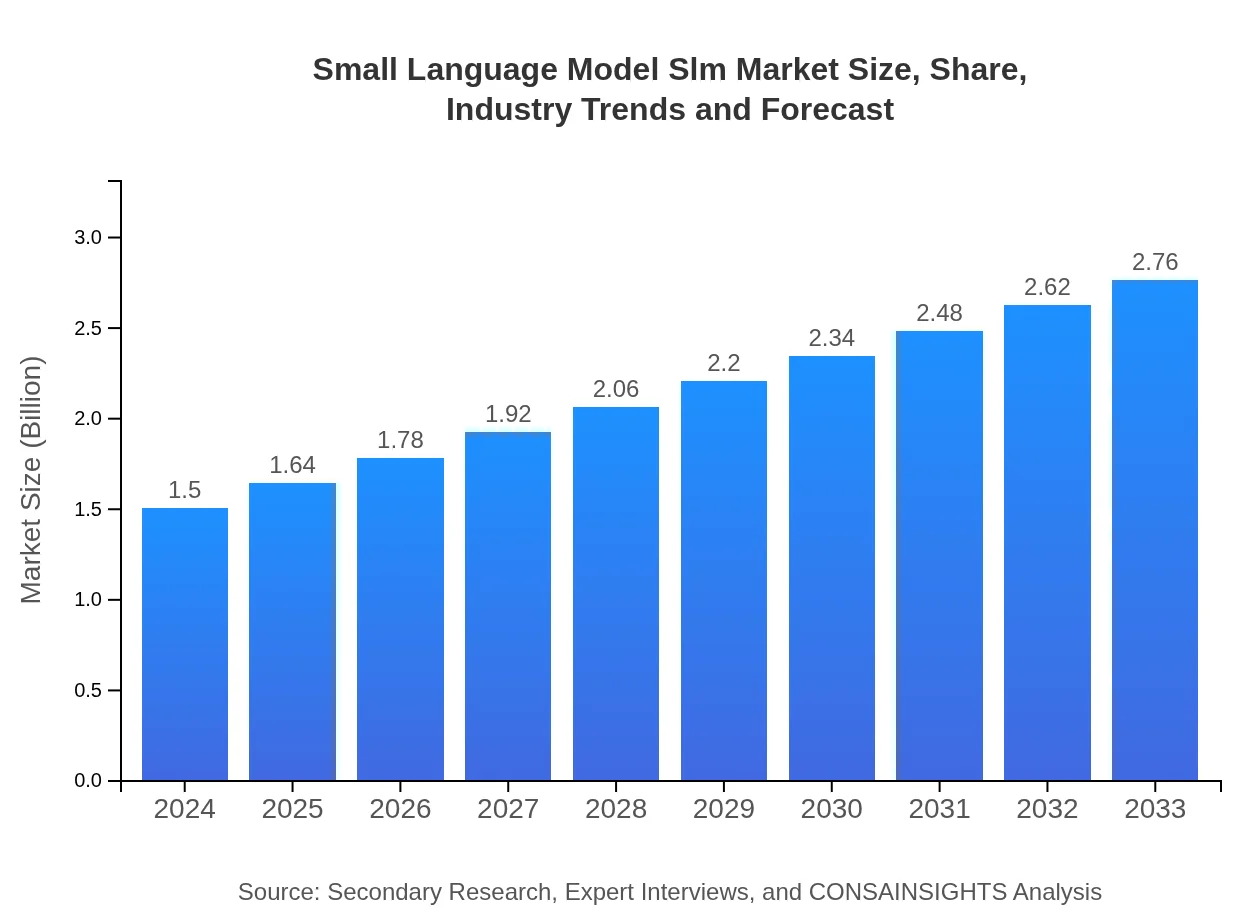
Small Language Model Slm Market — USD $1.5 Billion in 2024, Growing to USD 2.76 by 2033 at 6.8% CAGR
This comprehensive report on the Small Language Model Slm market offers a detailed exploration of current trends, technological advances, and market dynamics from 2024 to 2033. The analysis encompasses market size, industry growth, segmentation, and regional performance while providing actionable insights and forecasts to guide strategic decisions.
| Metric | Value |
|---|---|
| Study Period | 2024 - 2033 |
| 2024 Market Size | $1.50 Billion |
| CAGR (2024-2033) | 6.8% |
| 2033 Market Size | $2.76 Billion |
| Top Companies | TechInnovate Solutions, NextGen AI Labs |
| Published Date | 12 March 2026 |
| Last Modified Date | 14 March 2026 |
Small Language Model Slm Market Overview
Customize Small Language Model Slm market research report
- ✔ Get in-depth analysis of Small Language Model Slm market size, growth, and forecasts.
- ✔ Understand Small Language Model Slm's regional dynamics and industry-specific trends.
- ✔ Identify potential applications, end-user demand, and growth segments in Small Language Model Slm
What is the Market Size & CAGR of Small Language Model Slm market in 2024?
Small Language Model Slm Industry Analysis
Small Language Model Slm Market Segmentation and Scope
Tell us your focus area and get a customized research report.
Small Language Model Slm Market Analysis Report by Region
Europe Small Language Model Slm:
Europe is witnessing a steady growth trajectory in the Small Language Model Slm sector, with increasing integration of AI technologies in both private and public sectors. The market is projected to grow from 0.50 in 2024 to 0.92 in 2033. European countries are actively investing in AI research and fostering innovation through supportive policies and funding initiatives. This dynamic environment facilitates the development of local solutions while also attracting global players seeking collaboration opportunities. The region places a strong emphasis on ethical AI use and data protection, which further drives sustainable market development.Asia Pacific Small Language Model Slm:
In Asia Pacific, market growth is driven by increasing investments in technology infrastructure and widespread digital transformation initiatives in countries like China, India, and Japan. The region benefits from a large pool of technical expertise and a high rate of technology adoption among enterprises. The market has seen substantial progress in integrating AI technologies within various sectors, resulting in a steady increase in market size from 0.28 in 2024 to 0.52 in 2033. Modern local startups and global corporations are aggressively exploring partnership opportunities. Policy reforms encouraging innovation and targeted government funding further support this expansion, establishing the region as a key contributor to overall market growth.North America Small Language Model Slm:
North America continues to be a dominant force in the market, powered by robust R&D investments and a mature tech ecosystem. With market size expanding from 0.49 in 2024 to 0.90 in 2033, the region is at the forefront of deploying advanced Small Language Model Slm solutions. Leading technology companies are constantly refining their models to meet the demands of diverse applications, ranging from commercial to government use. Increased regulatory oversight and a focus on data security also shape the market dynamics here, ensuring that innovations are both cutting-edge and compliant with industry standards.South America Small Language Model Slm:
South America is gradually emerging as a significant player in the Small Language Model Slm market, with improvements in digital infrastructure and growing investor confidence in technology projects. Countries in the region are increasingly adopting AI applications in education, finance, and media sectors. The market size is set to rise modestly from 0.11 in 2024 to 0.19 in 2033, as businesses and public institutions prioritize digital transformation. The region's emphasis on cost-effective solutions and scalable technology further bolsters market development, fostering sustainable growth over the forecast period.Middle East & Africa Small Language Model Slm:
In the Middle East and Africa, the market is starting from a smaller base, with a size of 0.12 in 2024 and expected to grow to 0.22 by 2033. Despite infrastructural challenges, the region is rapidly embracing digital transformation, supported by government initiatives and international investments. The increasing adoption of AI-powered applications in industries such as finance, education, and customer service is paving the way for steady market expansion. Furthermore, rising awareness about the benefits of advanced language models is contributing to gradual but significant growth, making this region an emerging frontier for future investments.Tell us your focus area and get a customized research report.
Small Language Model Slm Market Analysis By Use Case
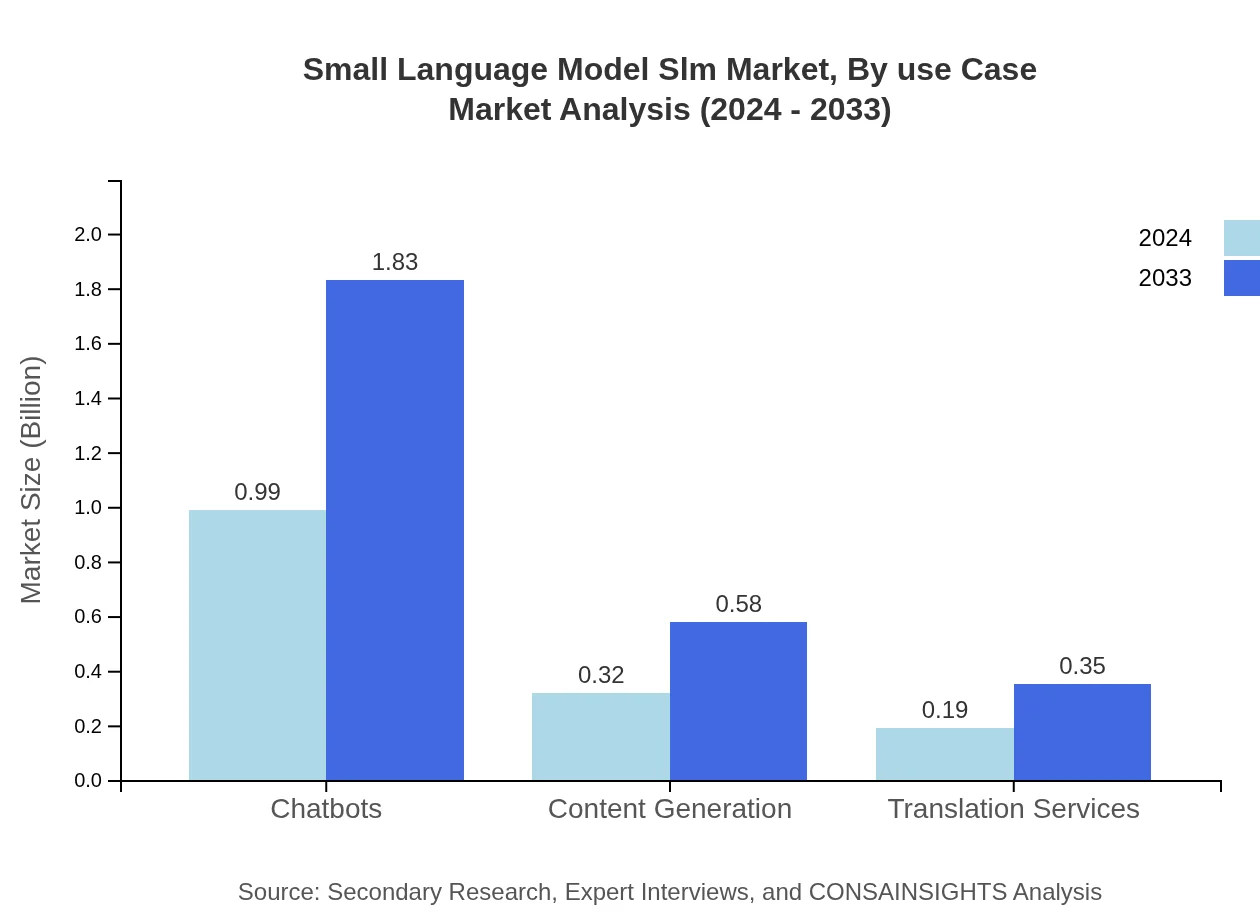
The by-use-case segment is primarily focused on applications such as education, media and entertainment, finance, and chatbots. Notably, the education segment has shown remarkable promise, growing steadily with market sizes moving from 0.99 in 2024 to 1.83 in 2033, while maintaining a dominant share of 66.29% across the forecast period. This segment has become the cornerstone of market expansion due to the increasing integration of AI tools in educational platforms, personalized learning modules, and content generation. Similarly, media and entertainment have experienced robust growth, highlighting the expanding opportunities for creative and automated content solutions. Overall, detailed analysis underscores that diverse use cases are driving market innovation and encouraging higher investment levels.
Small Language Model Slm Market Analysis By Architecture
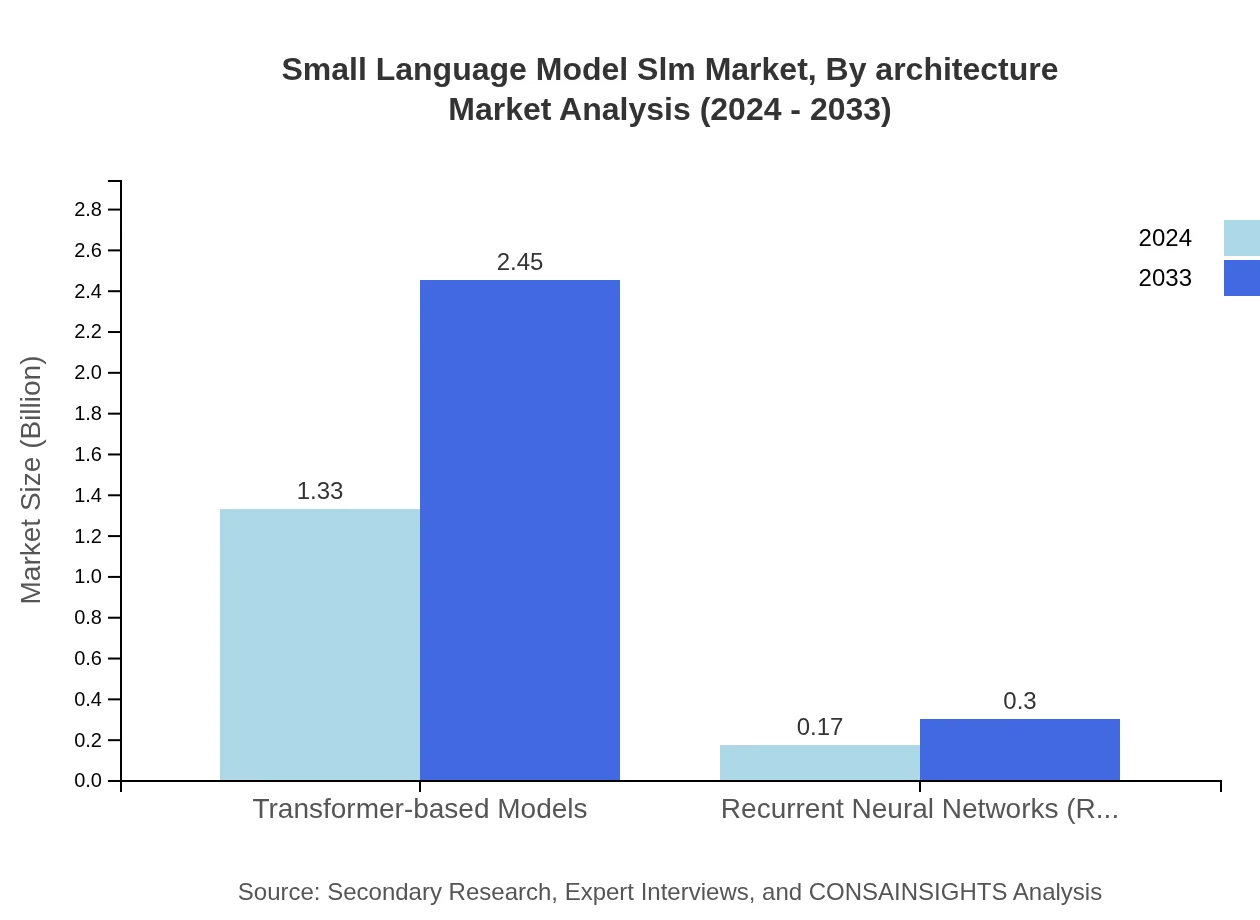
Within the architecture segment, two primary technologies dominate: transformer-based models and recurrent neural networks. Transformer-based models lead the market with a size growing from 1.33 in 2024 to 2.45 in 2033 and commanding an impressive share of 88.97%, due to their superior performance and adaptability in handling complex language tasks. In contrast, recurrent neural networks, although contributing a smaller market portion, maintain a steady presence with sizes increasing from 0.17 to 0.30 and a corresponding share of 11.03%. This segment analysis highlights the technological shift and evolving preferences towards more efficient and scalable architectures, as businesses seek to harness advanced AI capabilities for a wide array of applications.
Small Language Model Slm Market Analysis By Industry
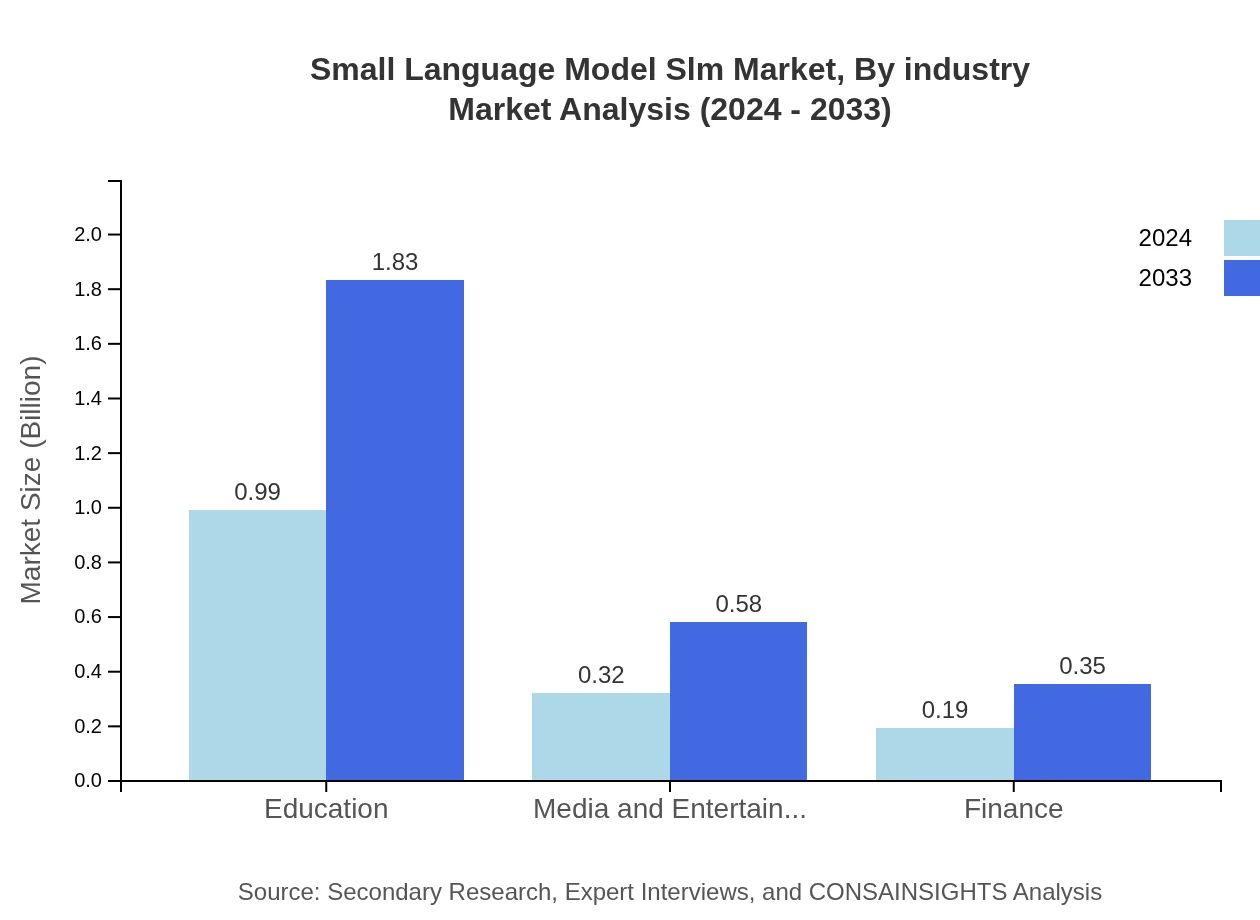
The industry-based segmentation provides insights into how various sectors such as education, media and entertainment, and finance are leveraging small language models. In education, these models have revolutionized curriculum delivery and content personalization, reflected by the consistent market share of 66.29%. Media and entertainment are rapidly adopting automated content generation tools, with market sizes moving from 0.32 to 0.58 and their share stabilizing at 21.08%. Financial institutions, driven by the need for enhanced data analytics and customer service solutions, have also embraced these models, with market sizes expanding from 0.19 to 0.35, capturing a significant 12.63% share. Collectively, these industry verticals highlight the transformative impact of advanced language technologies across diverse business functions.
Small Language Model Slm Market Analysis By Delivery Model
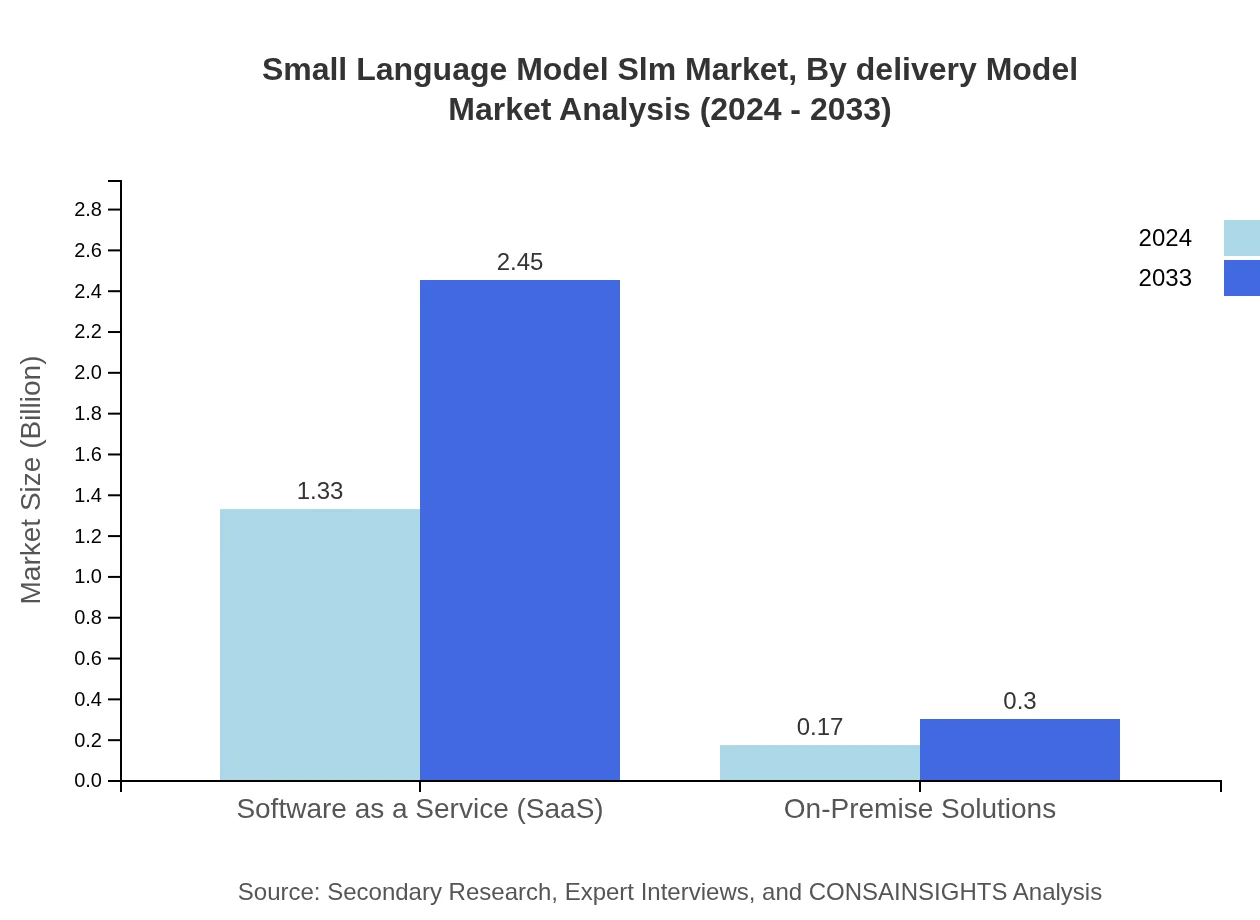
The delivery model analysis dissects the market into cloud-based Software as a Service (SaaS) solutions and On-Premise Solutions. SaaS dominates the delivery model landscape with a market size that parallels the trends seen in transformer-based models, growing from 1.33 in 2024 to 2.45 in 2033 and boasting a noteworthy 88.97% market share. This approach offers scalability, regular updates, and reduced upfront costs, making it an attractive proposition for most enterprises. On-Premise Solutions, though contributing a smaller portion of the market with sizes progressing from 0.17 to 0.30 and a share of 11.03%, remain essential for organizations requiring greater data security and control. This segmentation underscores how varying delivery models cater to diverse business needs and technical infrastructures.
Small Language Model Slm Market Trends and Future Forecast
Tell us your focus area and get a customized research report.
Global Market Leaders and Top Companies in Small Language Model Slm Industry
TechInnovate Solutions:
TechInnovate Solutions is a leading player known for its cutting-edge research in AI and machine learning. The company has successfully integrated small language model technologies into numerous applications across education, finance, and customer service, setting industry benchmarks for performance and scalability.NextGen AI Labs:
NextGen AI Labs has positioned itself at the forefront of innovation by focusing on refined transformer-based architectures. Their robust product portfolio and strategic partnerships have enabled the deployment of high-efficiency language models across global markets, driving significant growth in both revenue and market penetration.We're grateful to work with incredible clients.









FAQs
How can the Small Language Model (SLM) report help align our marketing strategy with customer adoption trends?
The SLM report highlights key trends and dynamics driving customer adoption, enabling marketers to tailor their strategies. With the market size projected at $1.5 billion and a CAGR of 6.8%, understanding customer behavior can lead to better-targeted campaigns.
What product features are in highest demand according to the Small Language Model (SLM) trends?
Current trends indicate high demand for features such as Transformer-based models, which will represent 88.97% of the market by 2033. Chatbots and SaaS innovations also hold significant potential, engaging users effectively across various applications.
Which regions offer the best market entry and expansion opportunities in the Small Language Model (SLM) industry?
North America leads with a market size of $0.49 billion in 2024, growing to $0.90 billion by 2033. Europe follows closely, expected to grow from $0.50 billion to $0.92 billion, offering substantial opportunities for market entrants.
What emerging technologies and innovations are shaping the Small Language Model (SLM) market?
Innovations like Transformer-based architectures and advancements in machine learning are pivotal in the SLM market. These technologies enhance performance, leading to wider application across sectors such as education, finance, and media.
Does the Small Language Model (SLM) report include competitive landscape and market share analysis?
Yes, the report provides comprehensive insights into the competitive landscape, detailing market shares of key segments. For instance, the education sector accounts for 66.29% of the market, indicating critical areas for competition and collaboration.
How can executives use the Small Language Model (SLM) report to evaluate investment risks and ROI?
Executives can utilize insights from the SLM report to assess market dynamics and identify potential risks. Understanding segment performance, like the growth of content generation (expected to increase from $0.32 billion in 2024 to $0.58 billion in 2033), assists in making informed investment decisions.
What is the market size of Small Language Model (SLM)?
The Small Language Model market is currently valued at $1.5 billion, with a projected CAGR of 6.8%. This growth reflects increasing reliance on advanced textual analysis technologies across sectors, enhancing their operational efficiencies.
What are the segment data trends for Small Language Model (SLM) markets?
Key segments include Education, anticipated to grow from $0.99 billion in 2024 to $1.83 billion in 2033, and Chatbots, with consistent market share projected at 66.29%. These segments reveal major investment opportunities and customer engagement pathways.