

Smart Warehousing
First published: 12 March 2026 | Last updated: 14 March 2026 | Report Code: smart-warehousing
Smart Warehousing Market — USD $18 Billion in 2024, Growing to USD 44.59 by 2033 at 10.2% CAGR
This comprehensive report on Smart Warehousing offers an in‐depth review focused on market dynamics, key technological innovations, regional growth patterns, and competitive landscapes between 2024 and 2033. It presents detailed insights on market size, growth drivers, segmentation strategies, and a forward-looking forecast to guide stakeholders in strategic decision-making.
| Metric | Value |
|---|---|
| Study Period | 2024 - 2033 |
| 2024 Market Size | $18.00 Billion |
| CAGR (2024-2033) | 10.2% |
| 2033 Market Size | $44.59 Billion |
| Top Companies | XYZ Innovations, ABC Solutions, TechWare Systems, InnovateLogix |
| Published Date | 12 March 2026 |
| Last Modified Date | 14 March 2026 |
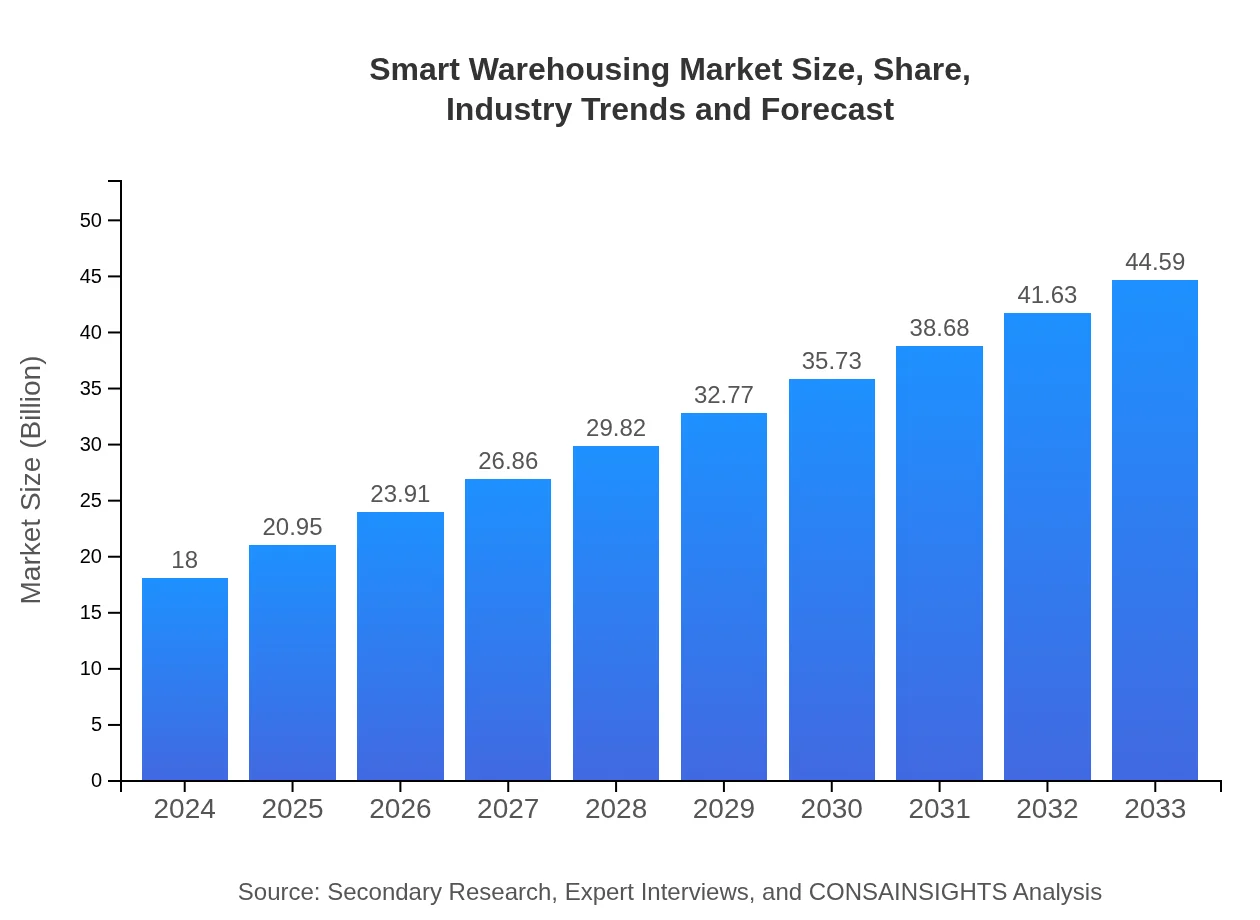
Smart Warehousing Market Overview
Customize Smart Warehousing market research report
- ✔ Get in-depth analysis of Smart Warehousing market size, growth, and forecasts.
- ✔ Understand Smart Warehousing's regional dynamics and industry-specific trends.
- ✔ Identify potential applications, end-user demand, and growth segments in Smart Warehousing
What is the Market Size & CAGR of Smart Warehousing market in 2024?
Smart Warehousing Industry Analysis
Smart Warehousing Market Segmentation and Scope
Tell us your focus area and get a customized research report.
Smart Warehousing Market Analysis Report by Region
Europe Smart Warehousing:
Europe’s smart warehousing market, currently valued at 4.96 in 2024 and estimated to reach 12.29 by 2033, is characterized by rigorous regulatory standards and a strong focus on sustainability. The region is rapidly modernizing its warehousing infrastructure to comply with environmental mandates while enhancing operational efficiency through the adoption of smart technologies. Investments in R&D and robust government support further contribute to the positive market outlook.Asia Pacific Smart Warehousing:
In the Asia Pacific region, the market is witnessing rapid expansion with a 2024 market size of 3.86 and an anticipated growth to 9.56 by 2033. This robust growth is driven by increasing urbanization, industrial automation, and significant investments in infrastructure. Local players are adopting smart technologies quickly, which has led to improvements in supply chain management and operational efficiencies across manufacturing hubs.North America Smart Warehousing:
North America continues to be a mature market with a 2024 size of 6.02 that is projected to surge to 14.90 by 2033. Rapid adoption of innovative technologies, streamlined logistics networks, and a competitive market environment characterized by early technology uptake are key drivers in this region. Strategic investments in automation and efficient supply chain management are expected to further accelerate growth.South America Smart Warehousing:
South America presents a growing market with unique challenges and opportunities. With a 2024 market size of 1.24 expected to expand to 3.08 by 2033, the region is gradually embracing smart warehousing solutions. Improvements in connectivity, government incentives to adopt new technologies, and rising consumer demand are fostering an environment conducive to increased investment in advanced warehousing systems.Middle East & Africa Smart Warehousing:
The Middle East and Africa region is emerging as a significant market with a 2024 market size of 1.92, expected to grow to 4.77 by 2033. Despite infrastructural challenges, increased foreign investment, modernization of logistical frameworks and a drive to diversify economies create a fertile ground for adopting smart warehousing solutions. Regional partnerships and technology transfer initiatives are also expected to boost market penetration and growth.Tell us your focus area and get a customized research report.
Smart Warehousing Market Analysis By Technology
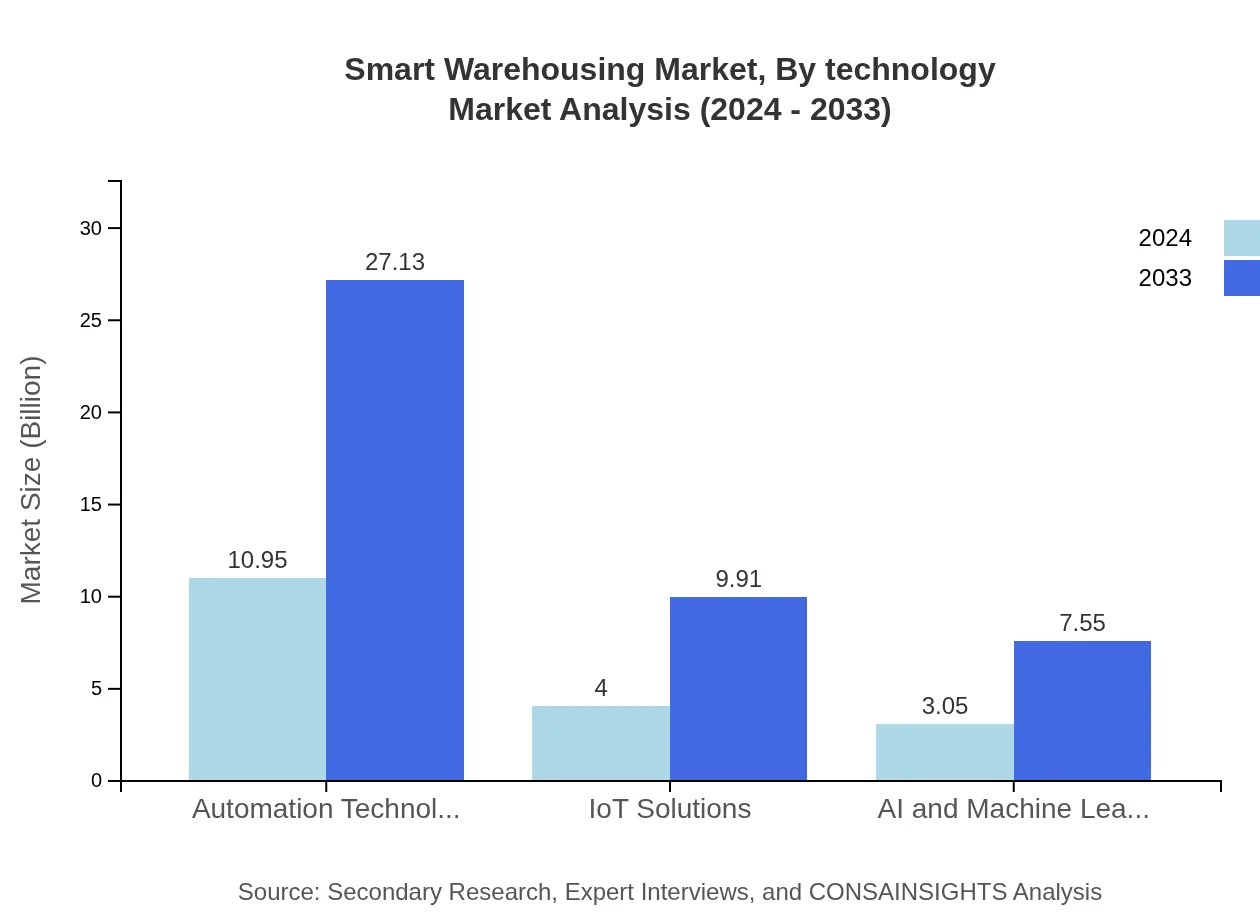
The technology segment in the smart warehousing market focuses on the integration of advanced automation systems such as robotics, IoT platforms, and AI-based software. Leading advancements in sensor technology and real-time data analytics have transformed operational processes. Market trends indicate a substantial investment in automation technologies and IoT solutions that not only reduce operational inefficiencies but also provide predictive insights for inventory and maintenance activities. This segment is critical for ensuring higher accuracy, increased productivity and enhanced safety protocols within warehousing operations.
Smart Warehousing Market Analysis By Application
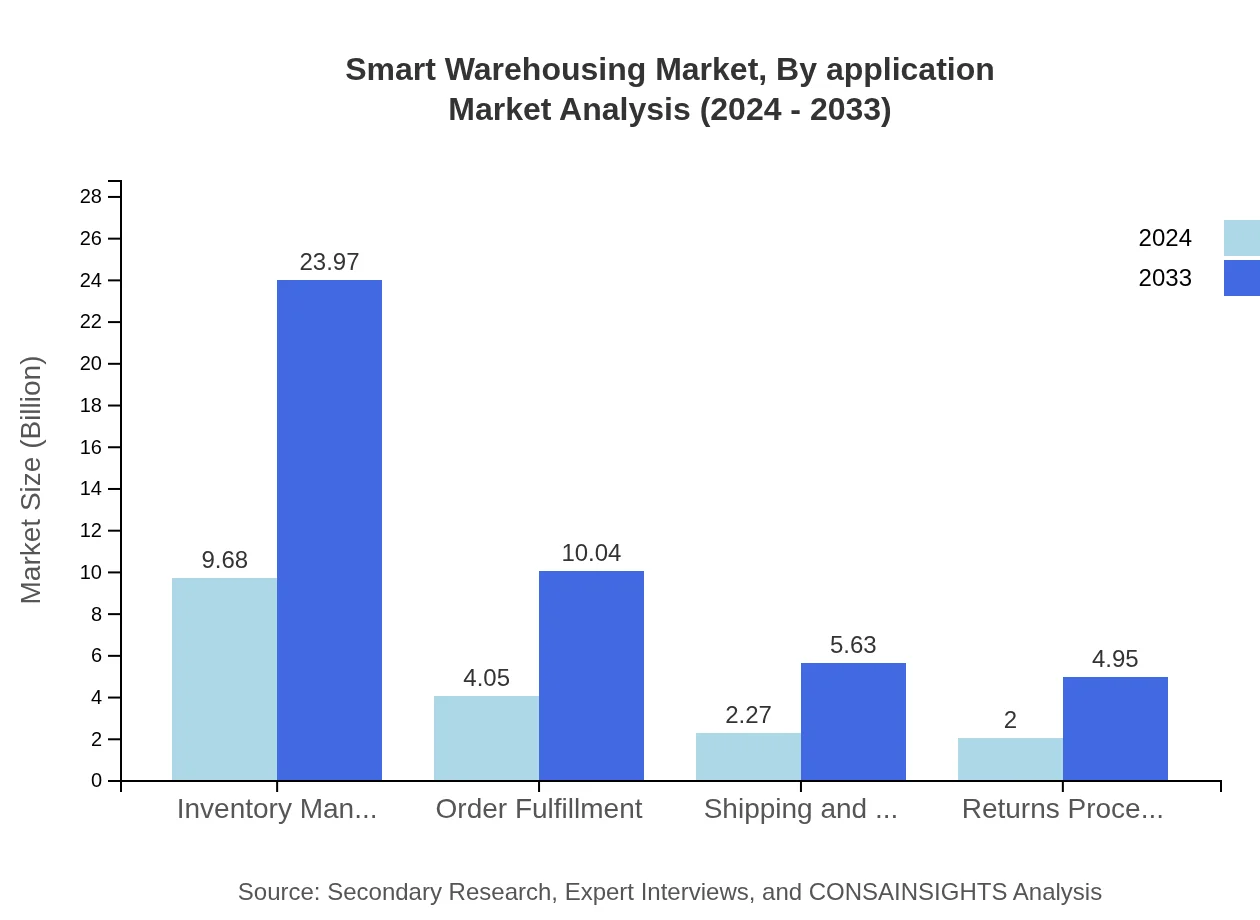
Applications in smart warehousing span various operational activities, including inventory management, order fulfillment, shipping and receiving, and returns processing. Enhanced application-specific solutions facilitate faster turnaround times, reduced error rates and improved overall supply chain efficiency. The integration of real-time monitoring systems and automated workflows helps businesses meet dynamic market demands. Moreover, data-driven decision making in applications allows companies to optimize labor deployment and minimize downtime, thereby offering a competitive edge in an increasingly complex logistics landscape.
Smart Warehousing Market Analysis By End User
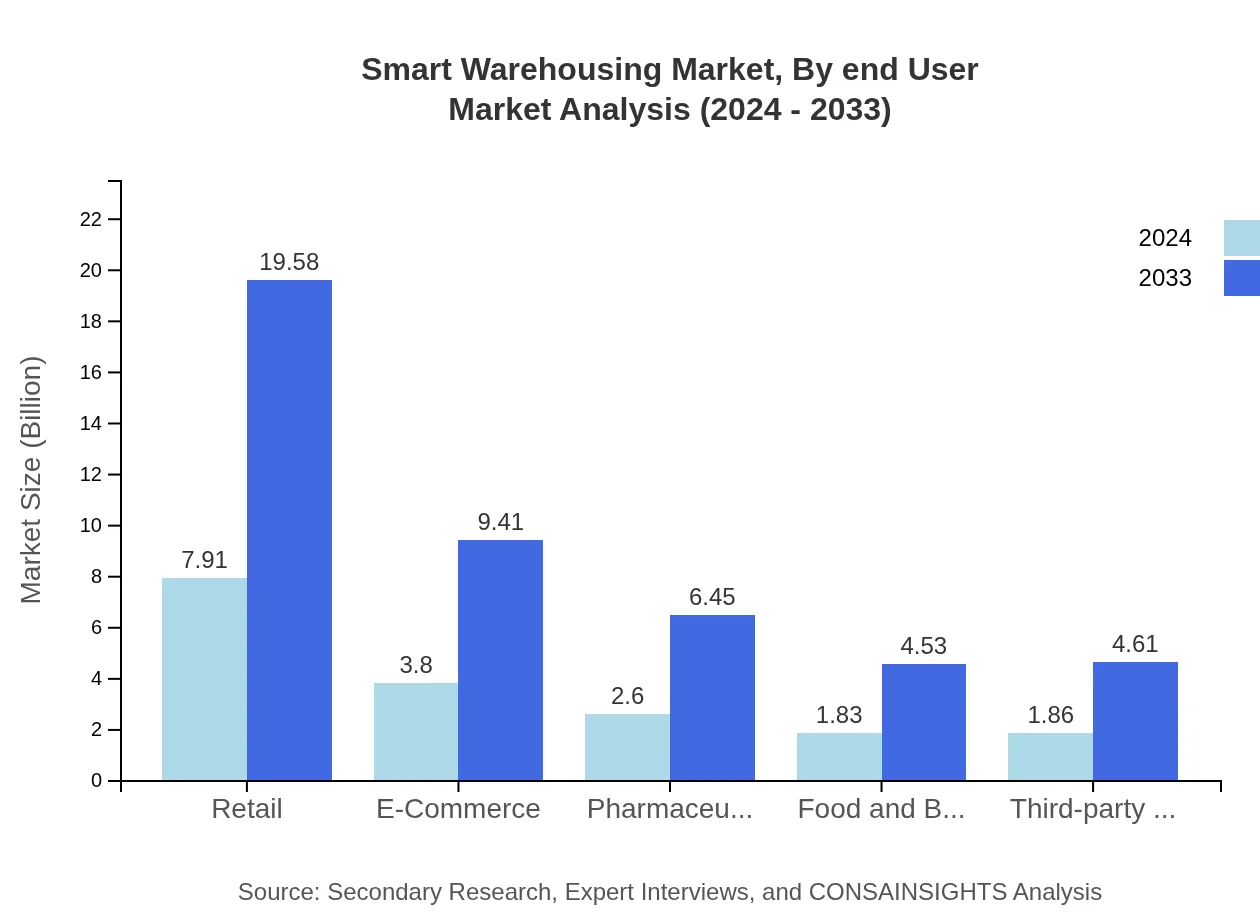
This segment is analyzed based on the unique requirements of various end-user industries such as retail, e-commerce, pharmaceutical, food and beverage, and third-party logistics. Each industry leverages smart warehousing solutions differently based on operational scale and product sensitivity. For instance, e-commerce entities benefit from rapid order processing while pharmaceutical companies prioritize precision and compliance. The adaptation of tailored solutions for each industry segment is driving bespoke innovation, fostering growth in niche markets and ensuring that solutions remain relevant to specific supply chain challenges.
Smart Warehousing Market Analysis By Component
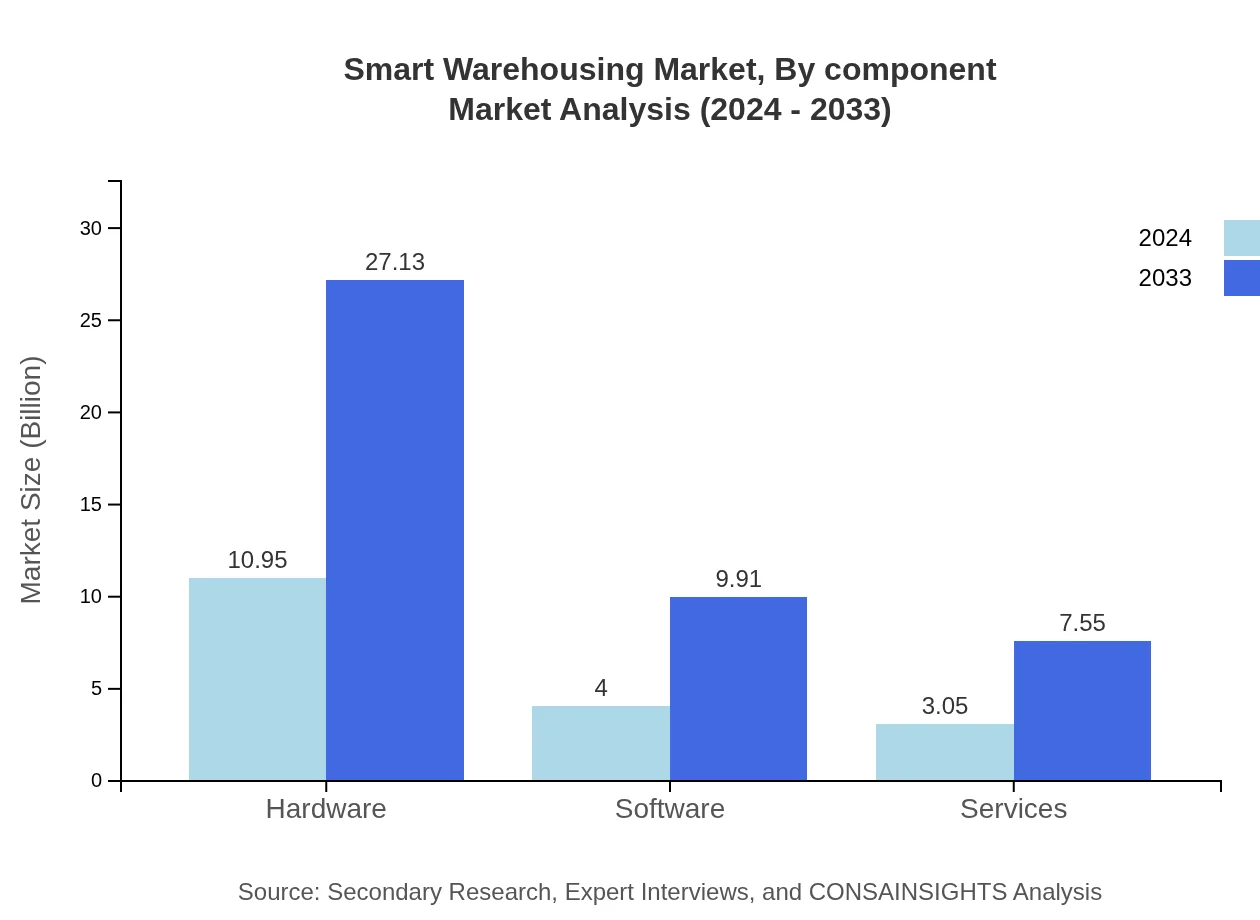
The component segmentation of the smart warehousing market divides the industry into hardware, software and services. Hardware elements include robotics, sensors and automated systems that form the backbone of modern warehouses. Software components focus on advanced warehouse management systems that integrate data analytics, cloud services and real-time monitoring. Meanwhile, the service segment includes installation, maintenance, and technical support that ensure continuous operational efficiency. This breakdown is essential for understanding how individual components interact to create a synergistic effect that optimizes overall warehousing performance.
Smart Warehousing Market Trends and Future Forecast
Tell us your focus area and get a customized research report.
Global Market Leaders and Top Companies in Smart Warehousing Industry
XYZ Innovations:
XYZ Innovations is a pioneer in smart warehousing solutions, offering state-of-the-art automation and IoT integration to streamline supply chain operations. Their cutting-edge technology and strategic global partnerships have positioned them as a leader in transforming traditional warehousing functions.ABC Solutions:
ABC Solutions specializes in comprehensive warehouse management systems that combine hardware excellence with advanced software analytics. Their innovative approach ensures operational excellence across multiple industries, making them a trusted name in the Smart Warehousing market.TechWare Systems:
TechWare Systems is renowned for integrating robotics and artificial intelligence in warehouse operations. Their customizable solutions and continuous focus on R&D have driven significant improvements in efficiency and cost reduction for their clients worldwide.InnovateLogix:
InnovateLogix offers a range of smart warehousing solutions designed to optimize inventory management and streamline logistics. Their expertise in automation technologies and seamless software integration has positioned them as a key player in the smart warehousing arena.We're grateful to work with incredible clients.








FAQs
How can the Smart Warehousing Report help align our marketing strategy with customer adoption trends?
The Smart Warehousing Market is projected to grow from $18 billion in 2024 to a CAGR of 10.2% by 2033. Understanding adoption trends helps tailor marketing strategies to meet customer preferences and optimize service offerings.
What product features are in highest demand according to the Smart Warehousing trends?
Current demands focus on Automation Technologies, which will have significant growth from $10.95 billion in 2024 to $27.13 billion by 2033, suggesting a need for more advanced automation and IoT solutions in warehousing.
Which regions offer the best market entry and expansion opportunities in the Smart Warehousing industry?
North America leads with a market size growth from $6.02 billion in 2024 to $14.90 billion by 2033, followed by Europe, increasing to $12.29 billion, representing tremendous growth potential.
What emerging technologies and innovations are shaping the Smart Warehousing market?
Key innovations include AI and Machine Learning, increasingly vital for inventory management growth, reaching $3.05 billion by 2024. These technologies enhance operational efficiency in warehousing practices.
Does the Smart Warehousing Report include competitive landscape and market share analysis?
Yes, the report provides insights into market shares across segments like Retail and E-Commerce, indicating that Retail holds a 43.92% share, which is crucial for competitive positioning strategies.
How can executives use the Smart Warehousing Report to evaluate investment risks and ROI?
Executives can assess the market growth of $18 billion and a 10.2% CAGR to identify profitability. This enables informed decisions on resource allocation and risk management in innovative warehousing solutions.
What is the market size of Smart Warehousing?
The Smart Warehousing market is projected to be valued at $18 billion in 2024, with an expected annual growth rate of 10.2%, indicating robust potential for investment and development opportunities.
What are the segment insights for smart warehousing?
Retail segments dominate with a market size of $7.91 billion by 2024, and Pharmaceutical solutions are also significant, with a size of $2.60 billion, underlining diverse growth opportunities in various sectors.