

Structural Heart Devices Market Report
First published: 22 October 2024 | Last updated: 28 May 2026 | Report Code: structural-heart-devices
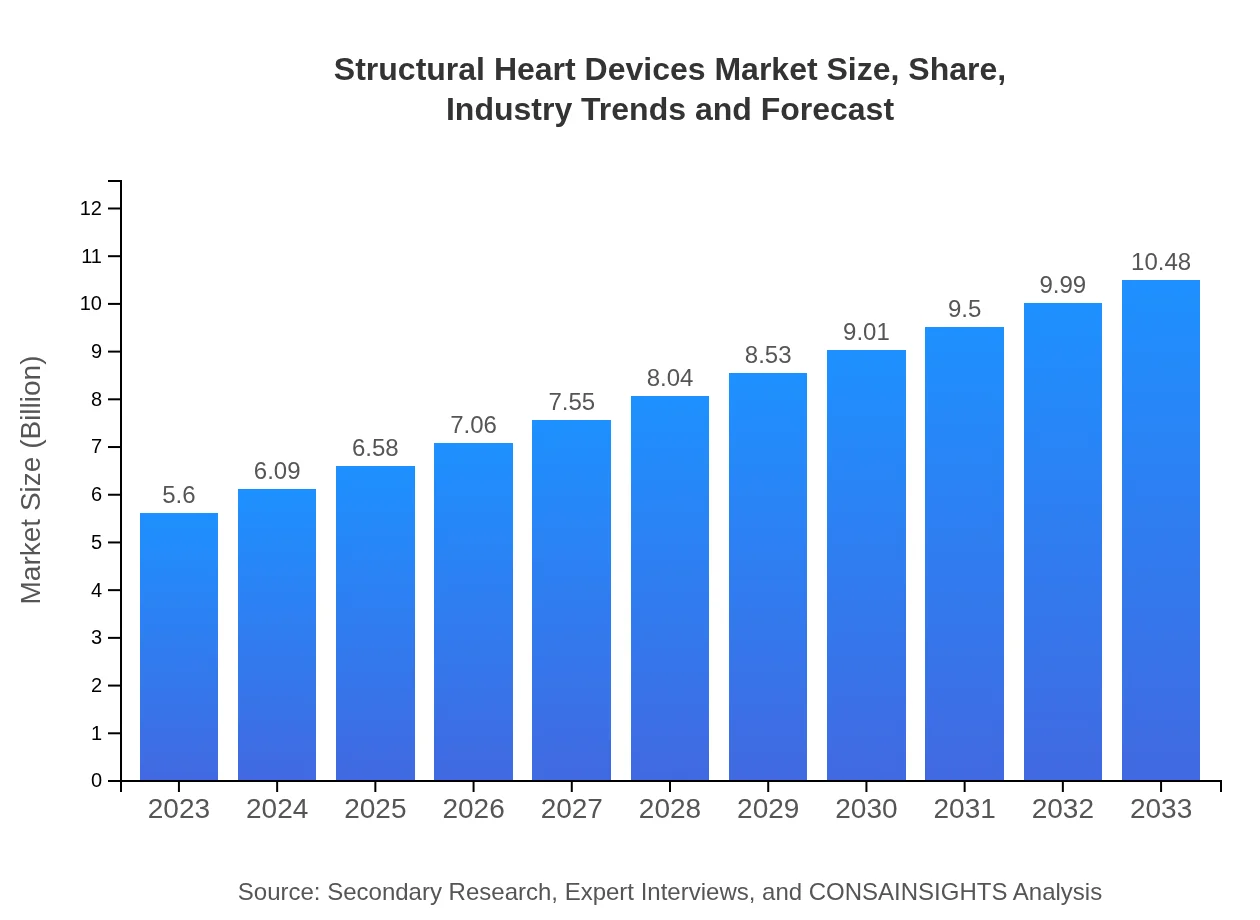
Structural Heart Devices Market — USD 5.6 billion in 2023, Growing to USD 10.48B by 2033 at 6.3% CAGR
This report provides a comprehensive analysis of the Structural Heart Devices market, including insights into market trends, size, segmentation, and forecasts from 2023 to 2033. It aims to equip stakeholders with data-driven insights to make informed decisions.
Key Takeaways
- Global market reaches $5.60 Billion in 2023 and is projected to hit $10.48 Billion by 2033 at a 6.3% CAGR.
- North America is largest regional market, while no single fastest-growing region is stated because regional CAGR differences remain within 0.15 percentage points.
- Europe rises from $1.67 Billion to $3.13 Billion between 2023 and 2033, reflecting steady adoption of advanced therapies.
- Minimally invasive procedures and new valve technologies are key trends influencing demand and clinical adoption.
- Leading companies include Medtronic, Edwards Lifesciences, Abbott Laboratories, Boston Scientific, and Johnson & Johnson.
Structural Heart Devices Market Report — Executive Summary
North America remains largest market by forecast-period value, while no single fastest-growing region is stated because top regional growth rates are separated by less than 0.15 percentage points. The Structural Heart Devices market is forecast to expand from $5.60 Billion in 2023 to $10.48 Billion by 2033, reflecting a 6.3% CAGR across the 2023 to 2033 period. Growth is driven by demographic shifts, rising cardiovascular disease prevalence, and the shift toward less invasive interventions. Product innovation—particularly in valve replacement and closure devices—and increased procedural volumes in hospital and ambulatory surgical settings underpin demand. North America stands as the largest regional market with notable absolute growth. Regulatory and reimbursement environments remain significant considerations for market participants. Major vendors such as Medtronic, Edwards Lifesciences, Abbott Laboratories, Boston Scientific, and Johnson & Johnson are central to competitive dynamics due to broad device portfolios, clinical evidence generation, and strategic partnerships. The market structure includes segmentation by device type, procedure, end user, and region, each influenced by clinical adoption rates and technology advancements. Overall, the sector is positioned for sustained expansion as procedural shifts and product improvements continue to alter treatment pathways.
Key Growth Drivers
- Rising prevalence of valvular and structural heart conditions increasing demand for device-based interventions.
- Adoption of minimally invasive procedures encouraging higher procedural volumes and broader patient eligibility.
- Ongoing product innovation in valve technologies and closure systems improving clinical outcomes.
- Growing healthcare expenditure and investment in cardiovascular care infrastructure supporting market uptake.
- Expansion of hospital and ambulatory surgical center capacities enabling greater access to structural heart therapies.
| Metric | Value |
|---|---|
| Study Period | 2023 - 2033 |
| 2023 Market Size | $5.60 Billion |
| CAGR (2023-2033) | 6.3% |
| 2033 Market Size | $10.48 Billion |
| Top Companies | Medtronic , Edwards Lifesciences, Abbott Laboratories, Boston Scientific, Johnson & Johnson |
| Published Date | 22 October 2024 |
| Last Modified Date | 28 May 2026 |
Structural Heart Devices Market Overview
Customize Structural Heart Devices Market Report market research report
- ✔ Get in-depth analysis of Structural Heart Devices market size, growth, and forecasts.
- ✔ Understand Structural Heart Devices's regional dynamics and industry-specific trends.
- ✔ Identify potential applications, end-user demand, and growth segments in Structural Heart Devices
What is the Market Size & CAGR of Structural Heart Devices Market Report market in 2023?
Structural Heart Devices Industry Analysis
Structural Heart Devices Market Segmentation and Scope
Tell us your focus area and get a customized research report.
Structural Heart Devices Market Report Market Analysis Report by Region
Europe Structural Heart Devices Market Report:
Europe grows from $1.67 Billion in 2023 to $3.13 Billion in 2033. Expansion reflects adoption of advanced valve solutions, supportive hospital networks, and investment in cardiovascular care across multiple countries.Asia Pacific Structural Heart Devices Market Report:
Asia Pacific grows from $1.06 Billion in 2023 to $1.99 Billion in 2033. Market expansion is linked to rising healthcare spending, broader access to interventional cardiology, and growing demand for less invasive treatment options.North America Structural Heart Devices Market Report:
North America is largest regional market, rising from $2.02 Billion in 2023 to $3.79 Billion in 2033. This region benefits from established clinical infrastructure, high procedural volumes, and rapid adoption of minimally invasive device therapies.South America Structural Heart Devices Market Report:
Latin America grows from $0.52 Billion in 2023 to $0.98 Billion in 2033. Growth is influenced by gradual improvements in cardiac care infrastructure and increasing availability of device-based therapies.Middle East & Africa Structural Heart Devices Market Report:
Middle East and Africa grows from $0.32 Billion in 2023 to $0.59 Billion in 2033. Uptake is supported by targeted investments in specialized cardiac centers and expanding procedural capabilities in key markets.Tell us your focus area and get a customized research report.
Research Methodology
Structural Heart Devices Market Analysis By Device Type
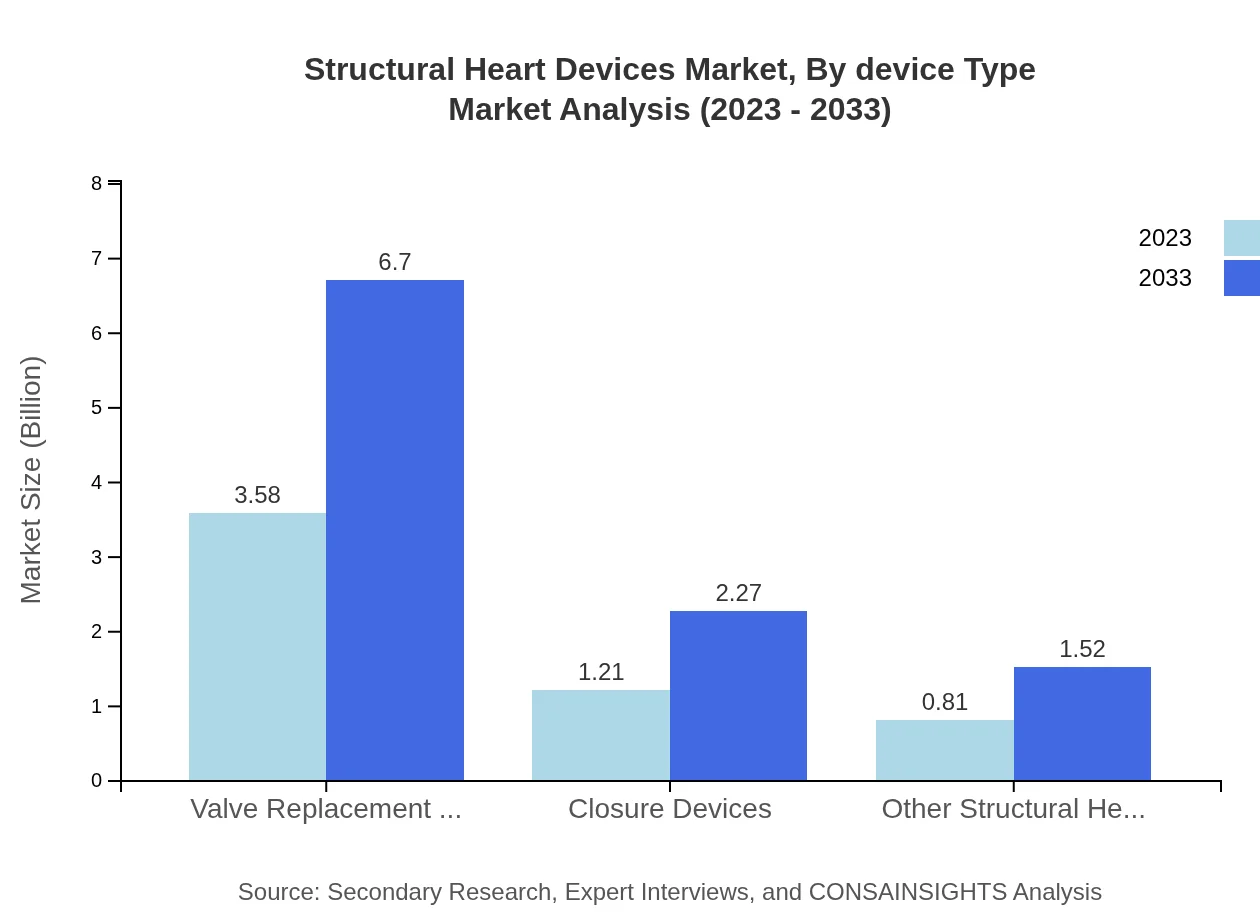
The Structural Heart Devices market is dominated by valve replacement devices, projected to grow from $3.58 billion in 2023 to $6.70 billion by 2033. Closure devices follow with a size of $1.21 billion, expected to reach $2.27 billion, while other devices will expand from $0.81 billion to $1.52 billion during the forecast period.
Structural Heart Devices Market Analysis By Procedure
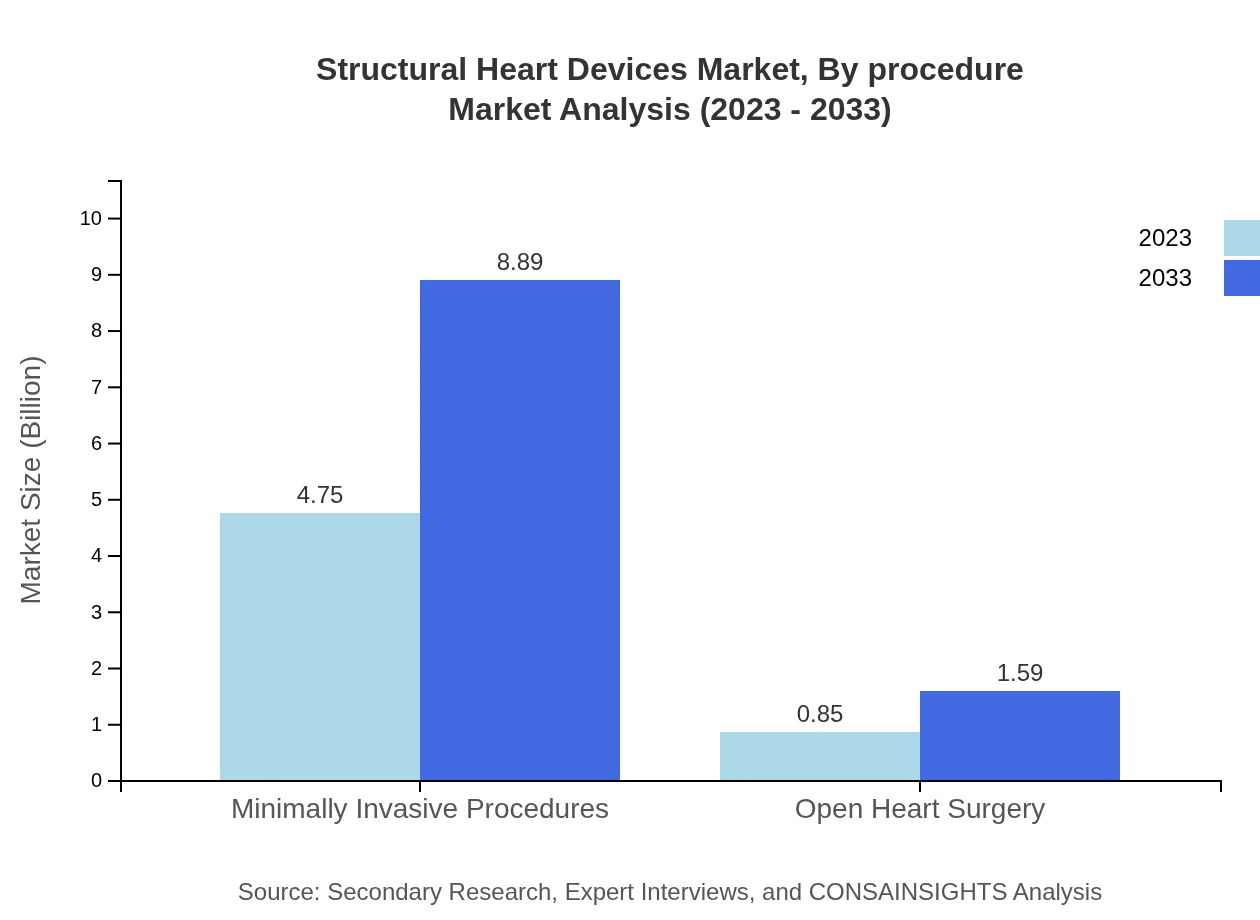
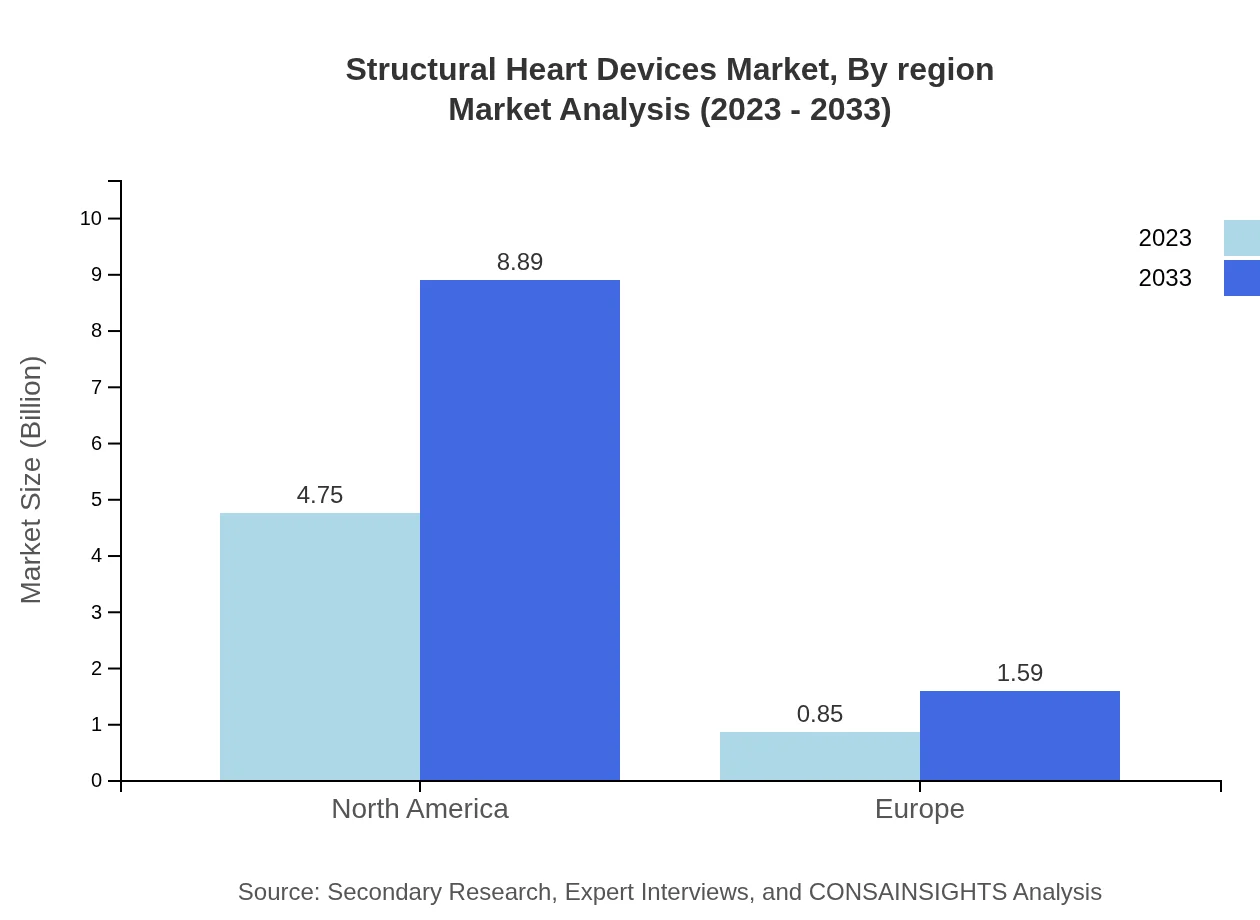
Minimally invasive procedures represent a significant share, with market valuations of $4.75 billion in 2023 and $8.89 billion in 2033. Open heart surgery, while traditional, is projected to grow modestly from $0.85 billion to $1.59 billion over the same period.
Structural Heart Devices Market Analysis By End User
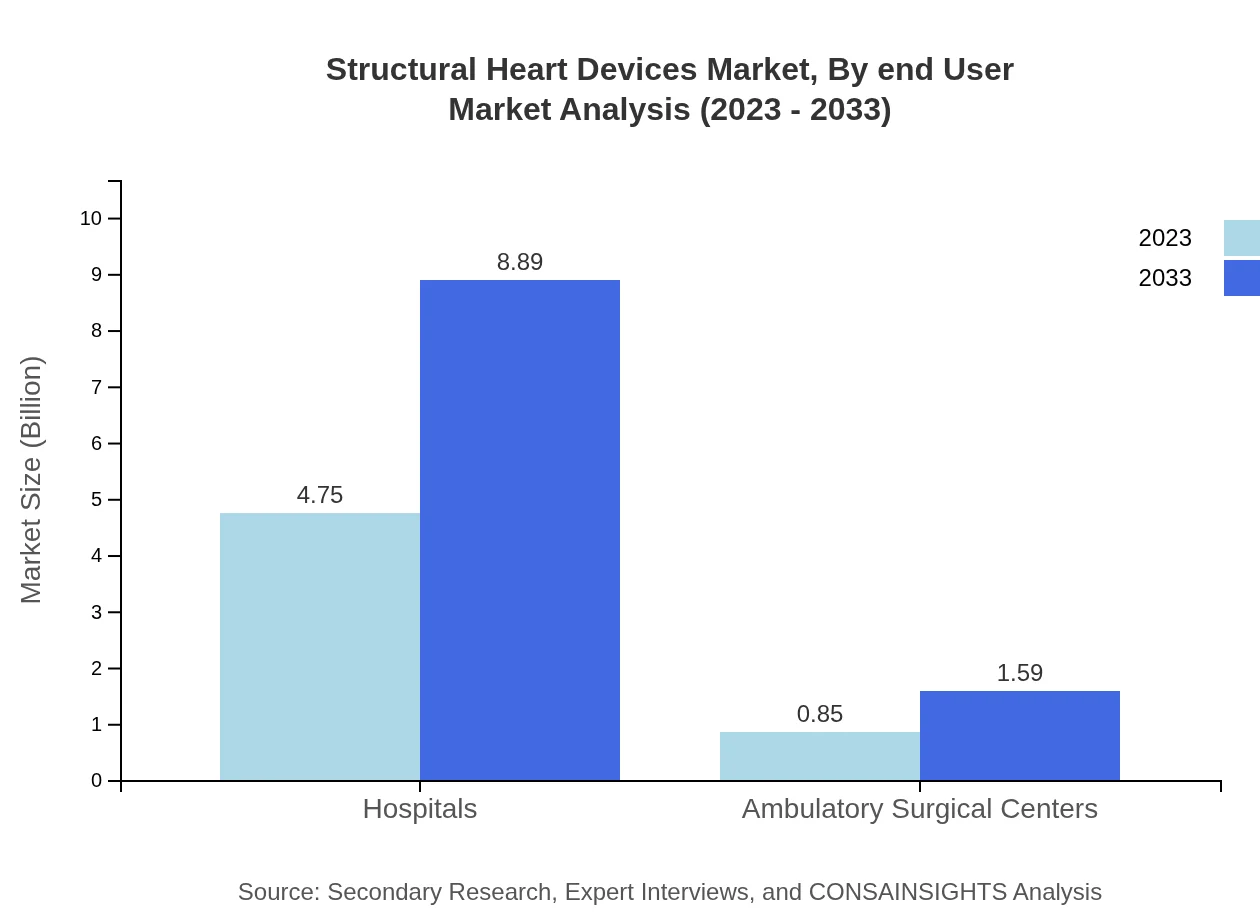
Hospitals dominate the Structural Heart Devices market, expected to maintain a size from $4.75 billion in 2023 to $8.89 billion by 2033. Ambulatory surgical centers are also growing, with projections of $0.85 billion to $1.59 billion.
Structural Heart Devices Market Trends and Future Forecast
Tell us your focus area and get a customized research report.
Global Market Leaders and Top Companies in Structural Heart Devices Industry
Medtronic :
A global leader in medical technology, Medtronic is renowned for its innovative valve replacement devices, helping to advance cardiac care worldwide.Edwards Lifesciences:
Specializing in heart valve technologies, Edwards Lifesciences offers a range of solutions that enhance patient outcomes in structural heart treatments.Abbott Laboratories:
Abbott's diverse portfolio includes cutting-edge devices for structural heart interventions, contributing to the growing acceptance of minimally invasive procedures.Boston Scientific:
Known for its versatility and innovation, Boston Scientific provides a comprehensive range of structural heart devices, targeting various cardiac conditions effectively.Johnson & Johnson:
With a strong presence in the cardiovascular market, Johnson & Johnson is committed to developing innovative solutions in the structural heart devices sector.We're grateful to work with incredible clients.









FAQs
What is the market size of the Structural Heart Devices Market Report in 2023?
The market size in 2023 is $5.60 Billion, as stated in the report data, reflecting baseline demand for structural heart interventions and related devices.
How big will the Structural Heart Devices Market Report be in 2033?
By 2033 the market is projected to reach $10.48 Billion, based on the provided forecast covering developments across devices, procedures, and regional markets.
What is CAGR for the Structural Heart Devices Market Report?
The reported compound annual growth rate (CAGR) for the 2023 to 2033 forecast period is 6.3%, reflecting steady expansion over the decade.
Is there a single fastest Growing region in the Structural Heart Devices Market Report market?
No single fastest-growing region is stated for the Structural Heart Devices Market Report market because the top regional implied CAGR values are within 0.15 percentage points of each other, making the ranking too close to call reliably.
Which companies lead the Structural Heart Devices market?
Top companies listed include Medtronic, Edwards Lifesciences, Abbott Laboratories, Boston Scientific, and Johnson & Johnson, noted for broad device portfolios and clinical programs.
What are the primary trends shaping the market?
Key trends include a shift toward minimally invasive procedures, advances in valve technologies, and integration of device therapies across care settings.
Who are the end users for structural heart devices?
End users include hospitals and ambulatory surgical centers, which perform the majority of implantations and procedural interventions for these devices.
How are regional markets expected to evolve?
Regional markets show growth in absolute terms from 2023 to 2033 across North America, Europe, Asia Pacific, Latin America, and Middle East and Africa, reflecting broader clinical adoption.
What drives adoption of minimally invasive procedures?
Lower procedural risk, faster recovery, and expanding clinical indications are primary drivers supporting greater uptake of minimally invasive structural heart interventions.
Why are regulatory and reimbursement factors important?
Regulatory approvals and reimbursement policies shape market access and adoption rates, influencing launch timelines and commercial viability of new device technologies.