

Sulfonylureas Market Report
First published: 07 October 2024 | Last updated: 28 May 2026 | Report Code: sulfonylureas
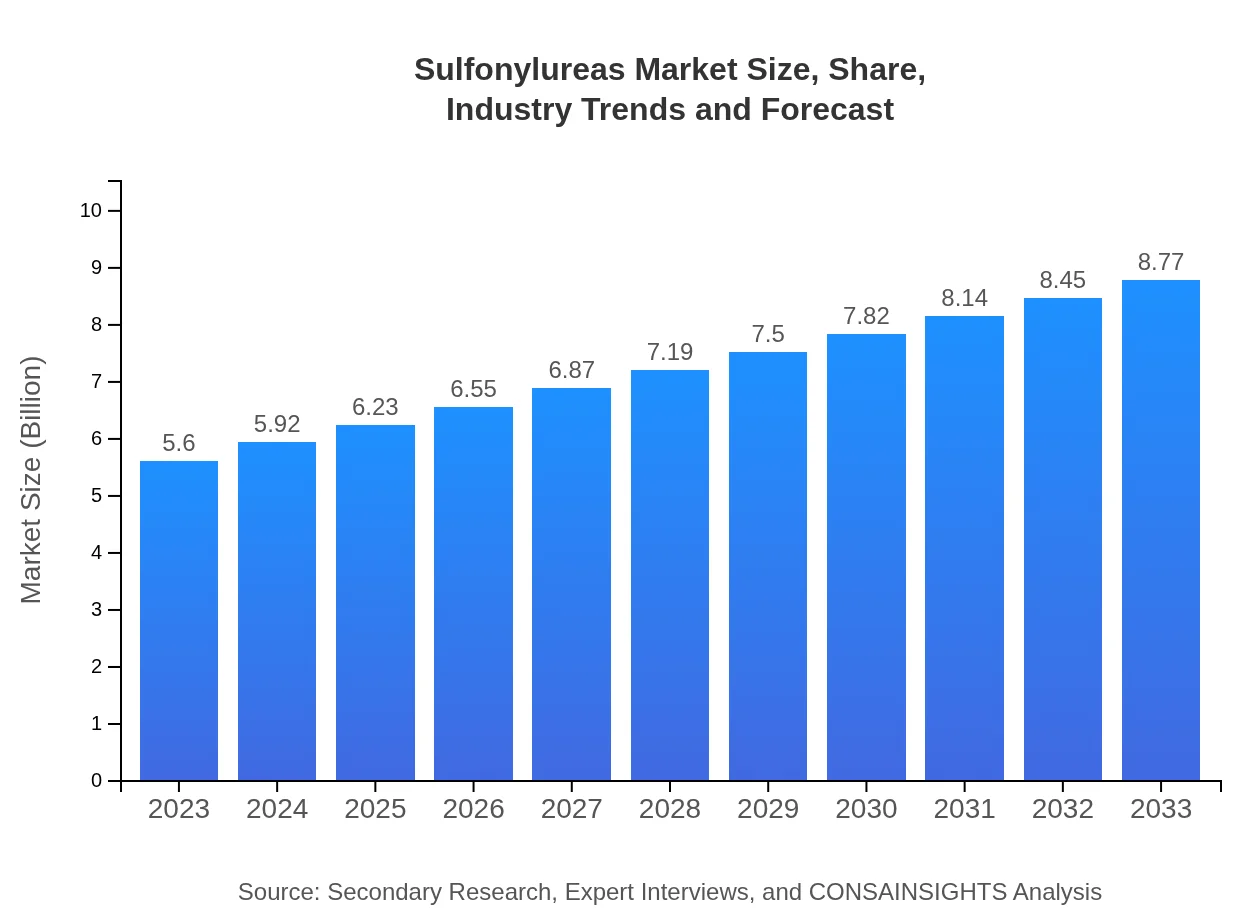
Sulfonylureas Market — USD 5.6 billion in 2023, Growing to USD 8.77B by 2033 at 4.5% CAGR
This report provides an in-depth analysis of the Sulfonylureas market, exploring market size, growth forecasts, and trends from 2023 to 2033. It includes regional breakdowns, segmentation insights, and profiles of key players influencing the market landscape.
Key Takeaways
- Global market poised to grow from $5.60 Billion in 2023 to $8.77 Billion in 2033 at a 4.5% CAGR.
- North America holds the largest regional value, rising from $1.99 Billion in 2023 to $3.12 Billion in 2033.
- North America is largest regional market; Middle East and Africa is regional market region based on implied CAGR across 2023 to 2033.
- Europe and Asia Pacific show notable increases: Europe from $1.88 Billion to $2.95 Billion; Asia Pacific from $1.03 Billion to $1.61 Billion.
- Core industry participants include Boehringer Ingelheim, Sanofi, Bristol-Myers Squibb, and Pfizer.
- Market segmentation spans drug class, application, end-user, formulation, and distribution channels.
Sulfonylureas Market Report — Executive Summary
Regional analysis shows North America as largest market and Middle East and Africa as fastest-growing region by implied CAGR. The report outlines market expansion driven by rising demand for effective diabetes therapeutics, increased healthcare spending, and innovation in drug delivery. The market grows from $5.60 Billion in 2023 to $8.77 Billion in 2033 at a 4.5% CAGR across the 2023 to 2033 forecast period. Regional patterns vary: North America records the largest market value, while Middle East and Africa posts the highest implied growth rate. Analysis covers segmentation by drug class (including first-, second-, and third-generation sulfonylureas), application, end-user, formulation, and distribution channels. Leading companies such as Boehringer Ingelheim, Sanofi, Bristol-Myers Squibb, and Pfizer are profiled to reflect competitive activities and product developments. The research highlights trends like formulation advances, patient adherence initiatives, and collaborations between manufacturers and care providers. The report aims to support strategic planning by providing data-driven insights into growth drivers, regional performance, and market structure.
Key Growth Drivers
- Rising prevalence of type 2 diabetes increases demand for oral hypoglycemic therapies and supports volume growth.
- Advances in formulation and delivery improve patient adherence, encouraging adoption of newer sulfonylurea preparations.
- Growing healthcare expenditure and improved access in certain regions expand treatment availability and market reach.
- Ongoing research and development by pharmaceutical companies lead to differentiated products and support competitive expansion.
- Expanded distribution channels, including retail and online pharmacies, enhance product accessibility for end users.
| Metric | Value |
|---|---|
| Study Period | 2023 - 2033 |
| 2023 Market Size | $5.60 Billion |
| CAGR (2023-2033) | 4.5% |
| 2033 Market Size | $8.77 Billion |
| Top Companies | Boehringer Ingelheim, Sanofi, Bristol-Myers Squibb, Pfizer |
| Published Date | 07 October 2024 |
| Last Modified Date | 28 May 2026 |
Sulfonylureas Market Overview
Customize Sulfonylureas Market Report market research report
- ✔ Get in-depth analysis of Sulfonylureas market size, growth, and forecasts.
- ✔ Understand Sulfonylureas's regional dynamics and industry-specific trends.
- ✔ Identify potential applications, end-user demand, and growth segments in Sulfonylureas
What is the Market Size & CAGR of Sulfonylureas Market Report market in 2023?
Sulfonylureas Industry Analysis
Sulfonylureas Market Segmentation and Scope
Tell us your focus area and get a customized research report.
Sulfonylureas Market Report Market Analysis Report by Region
Europe Sulfonylureas Market Report:
Europe grows from $1.88 Billion in 2023 to $2.95 Billion in 2033. Regional growth is influenced by healthcare spending, prevalence of diabetes-related care programs, and adoption of improved formulations and adherence initiatives.Asia Pacific Sulfonylureas Market Report:
Asia Pacific grows from $1.03 Billion in 2023 to $1.61 Billion in 2033. Expansion is underpinned by growing patient populations requiring diabetes management, broader access to medications, and heightened healthcare investment in several markets.North America Sulfonylureas Market Report:
North America is largest regional market, rising from $1.99 Billion in 2023 to $3.12 Billion in 2033. The region’s performance reflects established healthcare infrastructure, higher treatment penetration, and significant investment in therapeutic innovation supporting market value expansion.South America Sulfonylureas Market Report:
Latin America grows from $0.5 Billion in 2023 to $0.78 Billion in 2033. Market growth stems from increasing awareness of diabetic treatments, improving healthcare infrastructure, and broader availability through multiple distribution channels.Middle East & Africa Sulfonylureas Market Report:
Middle East and Africa is fastest-growing region by implied CAGR, increasing from $0.19 Billion in 2023 to $0.31 Billion in 2033. 19 Billion in 2023 to $0.31 Billion in 2033 and is identified as the regional growth market at an implied 5.02% CAGR. Growth drivers include improving access to care, rising healthcare expenditure, and expanding treatment adoption in emerging healthcare systems.Tell us your focus area and get a customized research report.
Research Methodology
Sulfonylureas Market Analysis By Drug Class
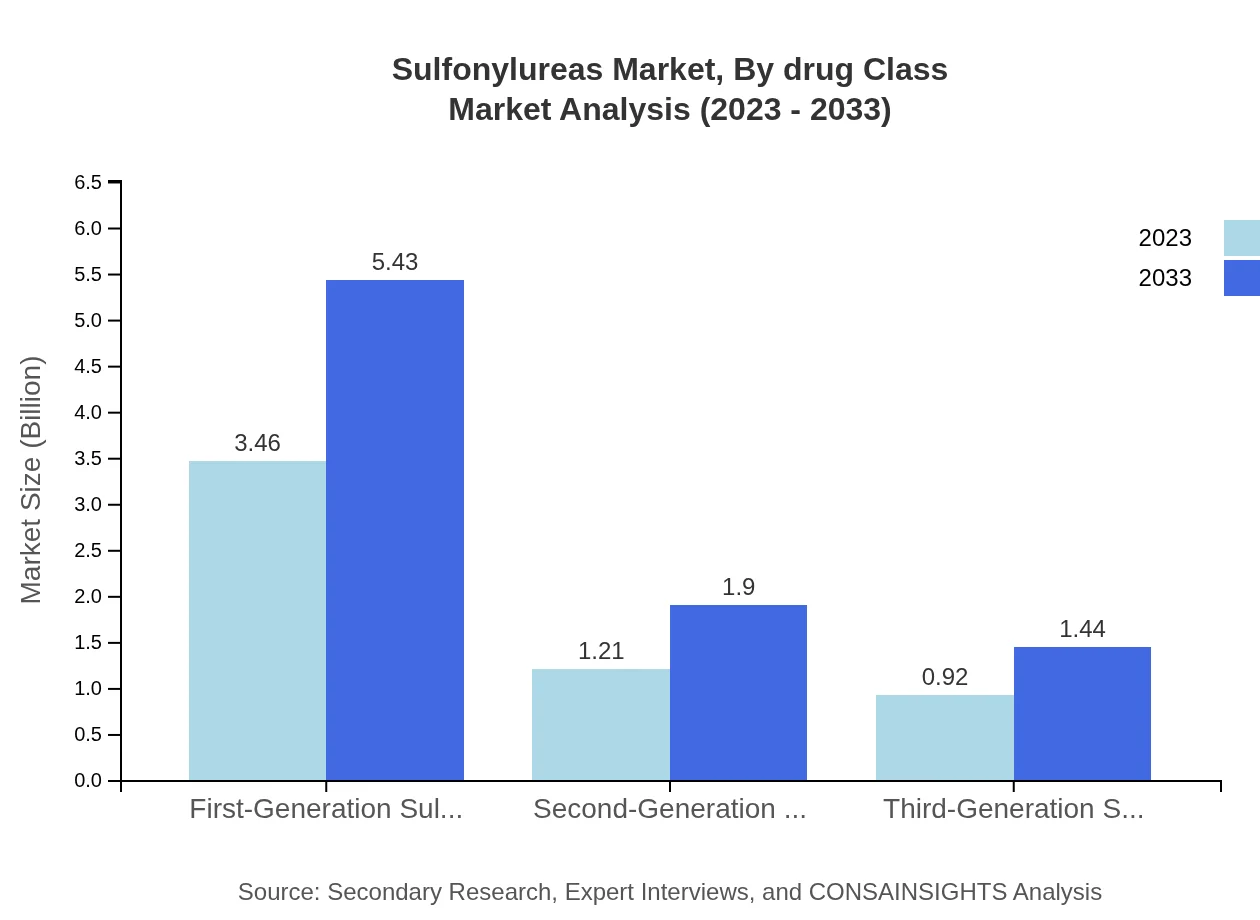
The Sulfonylureas market is segmented into first, second, and third-generation drugs. The first-generation agents hold a significant market share of approximately 61.86% in 2023, with expectations to maintain their position through 2033 while newer generations are progressively capturing market segments due to fewer side effects.
Sulfonylureas Market Analysis By Application
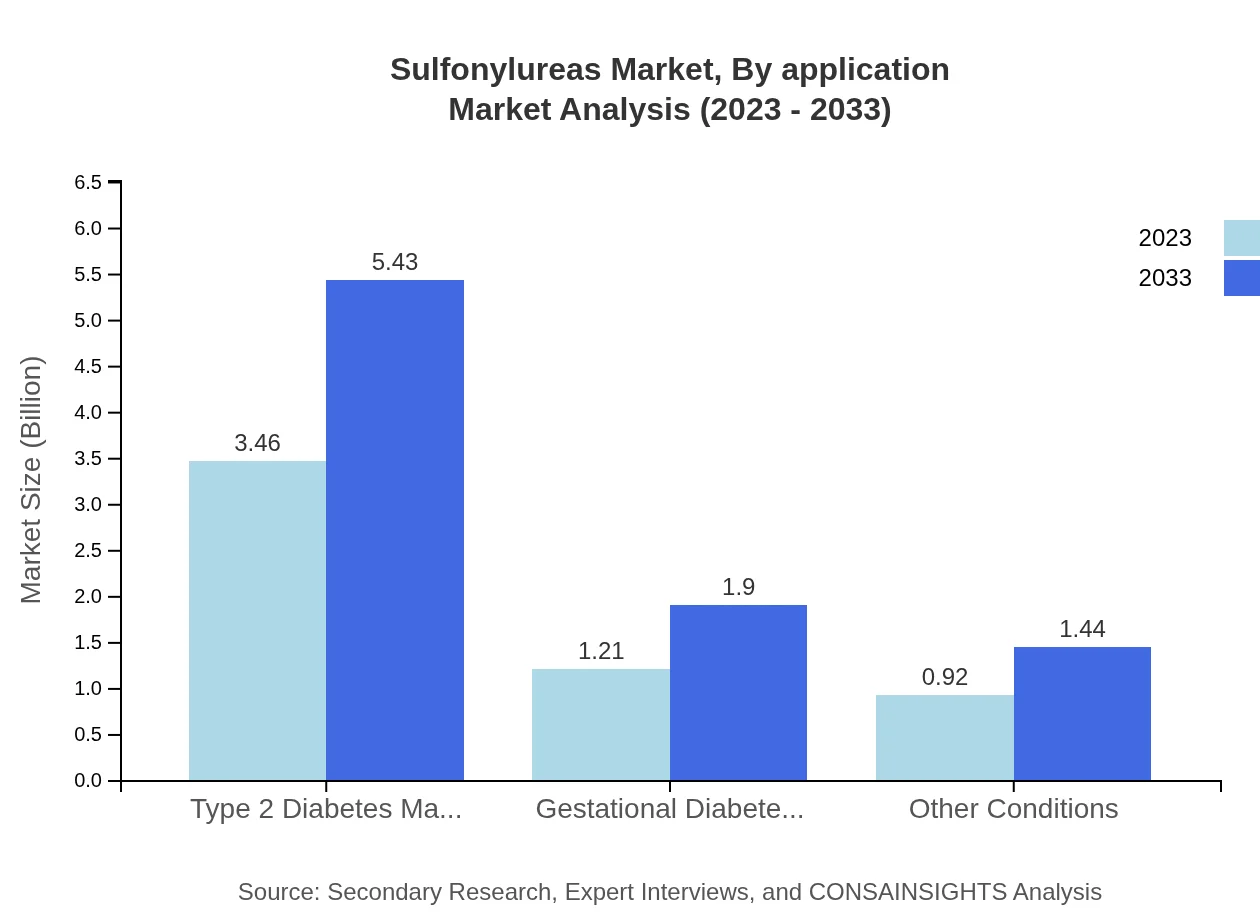
In terms of application, the market is primarily driven by type 2 diabetes management, contributing about 61.86% to the overall market in 2023. Other applications include gestational diabetes and other conditions, which are projected to grow due to increasing awareness and diagnosis rates.
Sulfonylureas Market Analysis By End User
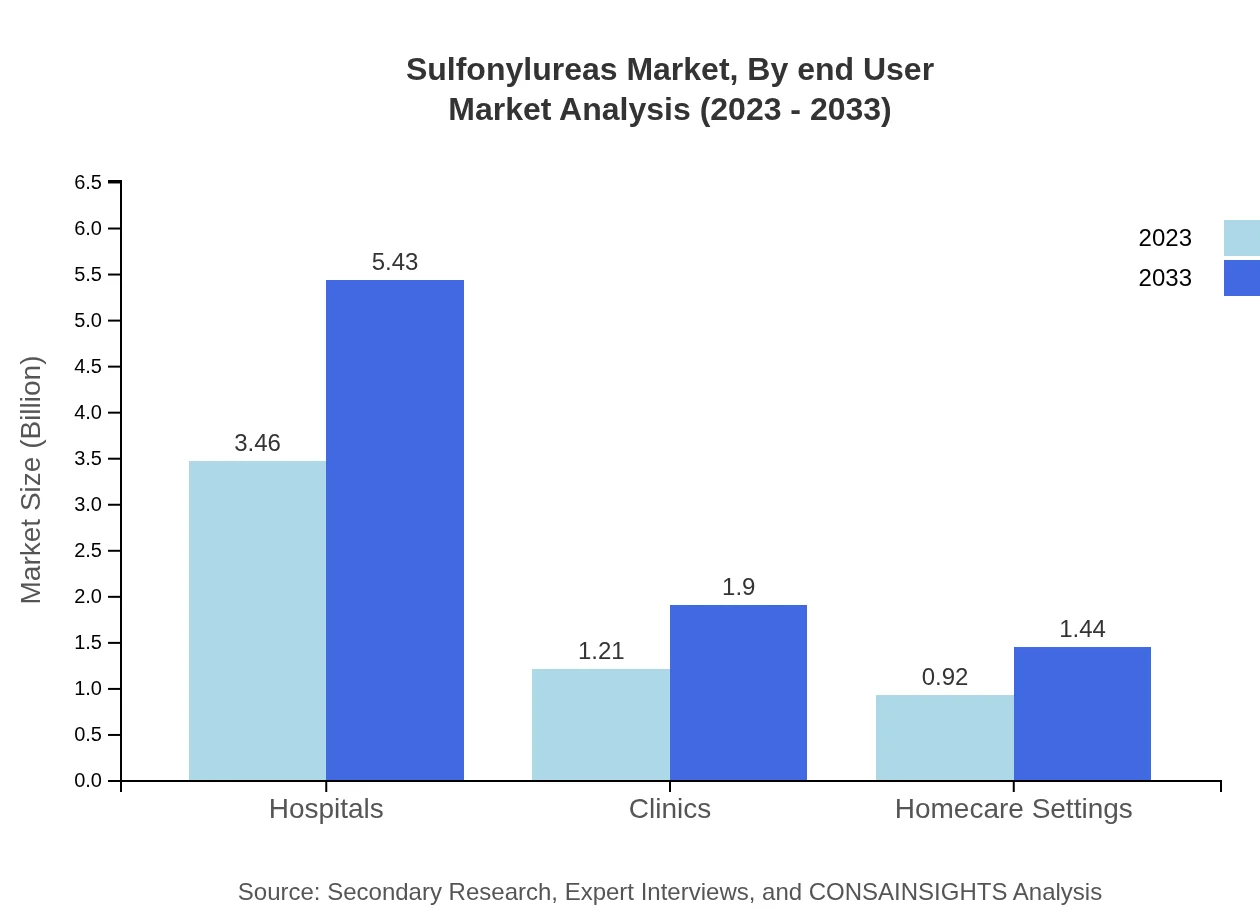
The major end-users of Sulfonylureas include hospitals, clinics, and homecare settings. Hospitals lead the market with a share of 61.86% in 2023, reflecting the high number of diabetic consultations and treatments taking place in such facilities.
Sulfonylureas Market Analysis By Formulation
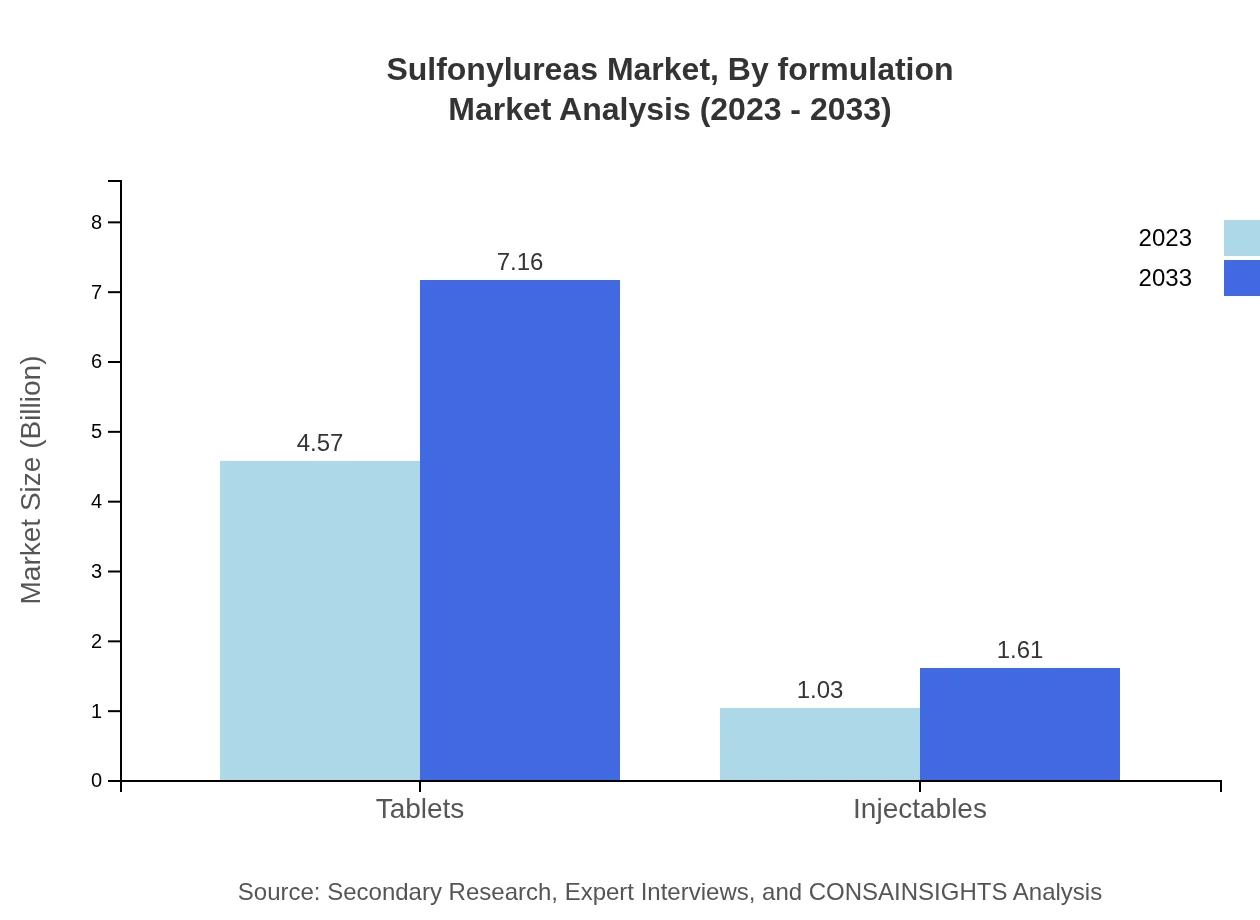
Sulfonylureas are predominantly available in tablet form, comprising 81.68% of the market share in 2023. Although injectables are gaining traction, tablets remain the first-line formulation due to their ease of use.
Sulfonylureas Market Analysis By Distribution Channel
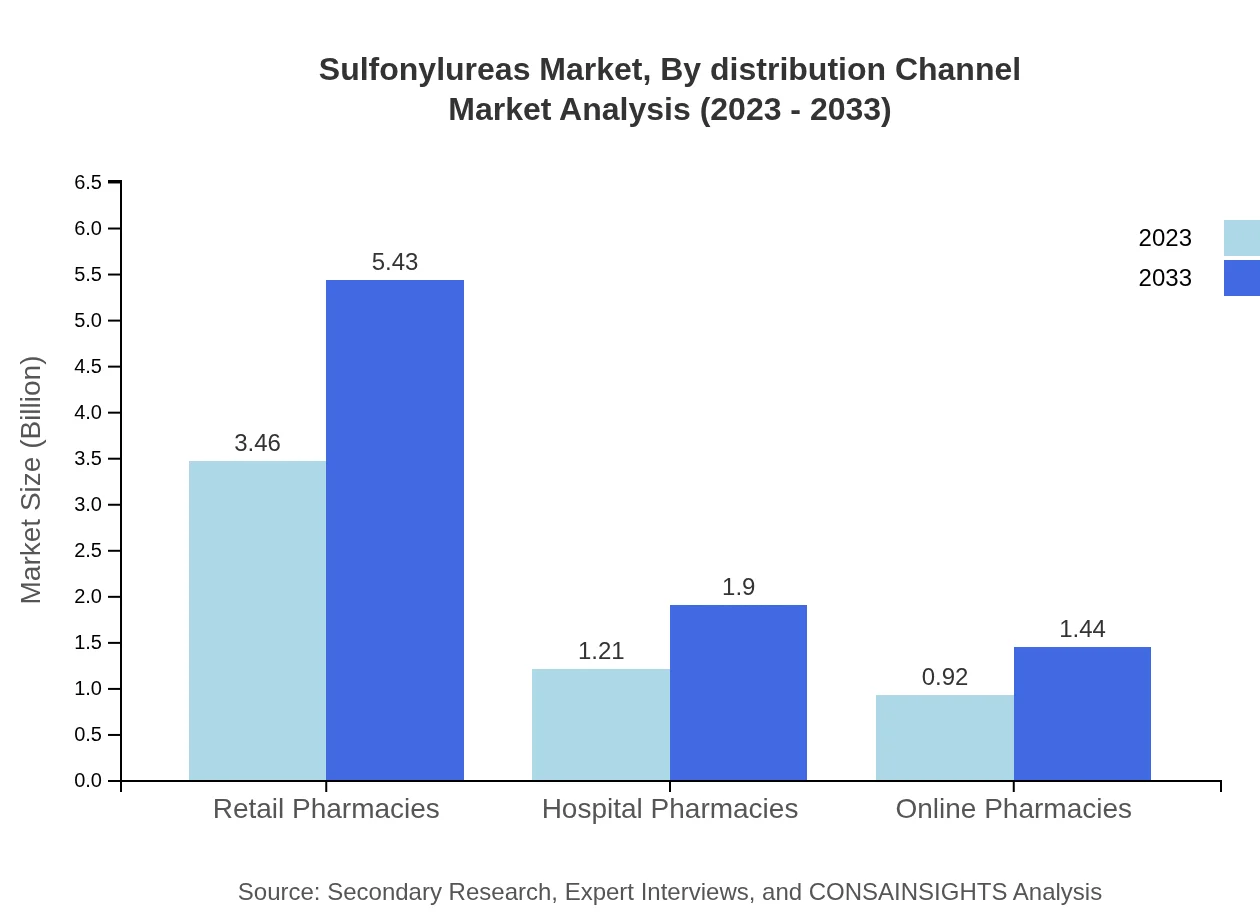
The distribution channels for Sulfonylureas include retail pharmacies, hospital pharmacies, and online pharmacies. Retail pharmacies lead with a market share of 61.86% in 2023, indicating a strong consumer tendency towards purchasing medication from accessible outlets.
Sulfonylureas Market Trends and Future Forecast
Tell us your focus area and get a customized research report.
Global Market Leaders and Top Companies in Sulfonylureas Industry
Boehringer Ingelheim:
A leading player in diabetes care, Boehringer Ingelheim focuses on innovative formulations of Sulfonylureas to enhance treatment efficacy and patient adherence.Sanofi:
Sanofi is prominently involved in the development of diabetes therapies, including Sulfonylureas, and continues to invest in research aimed at improving patient outcomes.Bristol-Myers Squibb:
With a long-standing presence in the diabetes care sector, Bristol-Myers Squibb is known for its focus on maximizing the therapeutic potential of Sulfonylureas.Pfizer :
Pfizer is committed to developing advanced Sulfonylureas aimed at minimizing side effects while improving blood glucose control.We're grateful to work with incredible clients.









FAQs
What is the market size of the Sulfonylureas Market Report in 2023?
The market size for 2023 is $5.60 Billion as reported for the Sulfonylureas Market Report, representing the baseline for the 2023 to 2033 forecast period.
How big will the Sulfonylureas market be in 2033?
By 2033 the market is projected to reach $8.77 Billion according to the report’s forecast covering 2023 to 2033, reflecting anticipated growth over the decade.
What is CAGR of the Sulfonylureas market for 2023 to 2033?
The compound annual growth rate (CAGR) for the forecast period 2023 to 2033 is 4.5% as specified in the report’s summary.
Which region is the fastest Growing in the Sulfonylureas Market Report market?
Middle East and Africa is the fastest-growing region, projected to expand from $0.19 Billion in 2023 to $0.31 Billion in 2033, reflecting an implied 5.02% CAGR over the forecast period.
Which region is fastest Growing in the forecast period?
Middle East and Africa is listed as the regional market region, expanding from $0.19 Billion in 2023 to $0.31 Billion in 2033 with an implied 5.02% CAGR.
Who are the top companies operating in the Sulfonylureas market?
Top companies cited in the report include Boehringer Ingelheim, Sanofi, Bristol-Myers Squibb, and Pfizer, reflecting major industry participants.
What are the main segmentation categories covered?
The market is segmented by drug class, application, end-user, formulation type, and distribution channel, with detailed subsegments provided for each category.
Why is regional analysis important in this report?
Regional analysis reveals differing growth trajectories and market sizes—such as North America’s larger value and Middle East and Africa’s faster expansion—informing localized strategies.
What role do distribution channels play in market development?
Distribution channels, including retail pharmacies, hospital pharmacies, and online pharmacies, influence product reach and patient access, impacting overall market uptake.
What is driving formulation innovation in this market?
Formulation innovation is driven by the need to improve patient adherence, reduce side effects, and differentiate products, supporting competitive positioning among manufacturers.