
Reports >
Life Sciences
>
Swine Feed Market Report

Swine Feed Market Report
First published: 21 October 2024 | Last updated: 28 May 2026 | Report Code: swine-feed
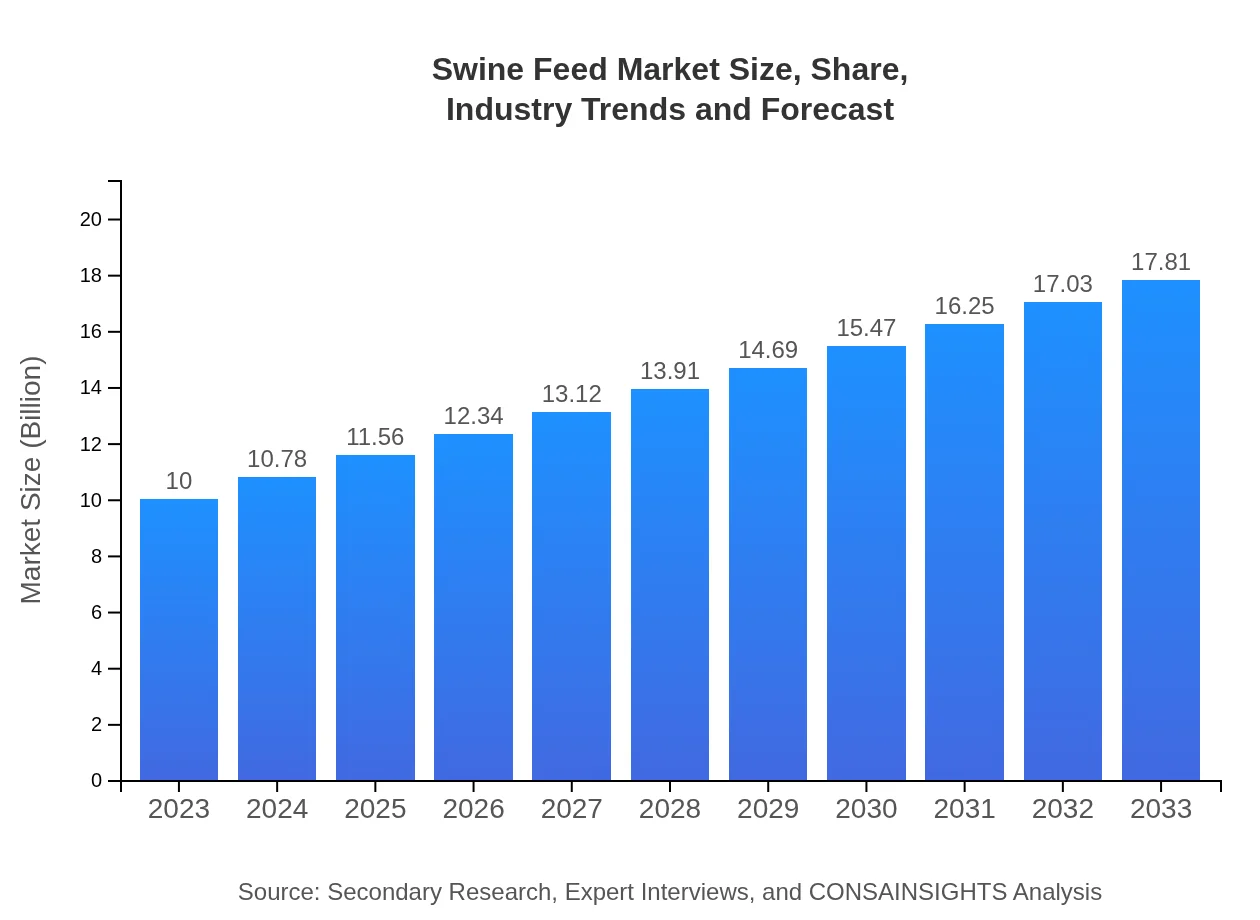
Swine Feed Market — USD 10 billion in 2023, Growing to USD 17.81B by 2033 at 5.8% CAGR
This report provides an in-depth analysis of the Swine Feed market from 2023 to 2033, including market size, growth forecasts, regional insights, industry trends, and key players influencing the industry landscape.
Key Takeaways
- Global market expands from $10.00 Billion in 2023 to $17.81 Billion in 2033 at a 5.8% CAGR.
- North America is largest regional market, while no single fastest-growing region is stated because regional CAGR differences remain within 0.15 percentage points.
- Regional markets such as Europe and Asia Pacific show substantial increases in the forecast decade.
- Product segmentation highlights starter, grower-finisher and breeder feeds alongside additives like antibiotics, probiotics and enzymes.
- Major participants include Cargill, Inc., Archer Daniels Midland Company (ADM), Nutreco N.V., Alltech, Inc., and De Heus Animal Nutrition.
Swine Feed Market Report — Executive Summary
North America remains largest market by forecast-period value, while no single fastest-growing region is stated because top regional growth rates are separated by less than 0.15 percentage points. The Swine Feed Market Report outlines market expansion driven by rising pork demand, formulation advances and increasing emphasis on nutrition and animal welfare. The market value is expected to increase from $10.00 Billion in 2023 to $17.81 Billion in 2033 at a 5.8% CAGR for 2023 to 2033. Growth is supported by innovation in additives and tailored feeds for developmental stages, alongside rising interest in organic and specialty formulations. Market structure is analyzed by formulation, feed type, additives, distribution channel, and end user. Key players such as Cargill, Inc., Archer Daniels Midland Company (ADM), Nutreco N.V., Alltech, Inc., and De Heus Animal Nutrition shape competitive dynamics. Regulatory pressures around additives and antibiotic use, plus cost and supply challenges for raw materials, affect strategic choices. The report synthesizes primary interviews and secondary sources to map opportunities and risks for producers, feed formulators, and investors.
Key Growth Drivers
- Rising global demand for pork increases requirement for nutritionally optimized swine feeds.
- Technological improvements in feed formulations and additives enhance feed efficiency and animal health.
- Growing awareness of animal welfare and sustainability fuels demand for organic and specialty feeds.
- Regulatory focus on additive usage drives reformulation and innovation among suppliers.
- Expansion of commercial farming operations supports higher volumes and diversified feed products.
| Metric | Value |
|---|---|
| Study Period | 2023 - 2033 |
| 2023 Market Size | $10.00 Billion |
| CAGR (2023-2033) | 5.8% |
| 2033 Market Size | $17.81 Billion |
| Top Companies | Cargill, Inc., Archer Daniels Midland Company (ADM), Nutreco N.V., Alltech, Inc., De Heus Animal Nutrition |
| Published Date | 21 October 2024 |
| Last Modified Date | 28 May 2026 |
Swine Feed Market Overview
Customize Swine Feed Market Report market research report
- ✔ Get in-depth analysis of Swine Feed market size, growth, and forecasts.
- ✔ Understand Swine Feed's regional dynamics and industry-specific trends.
- ✔ Identify potential applications, end-user demand, and growth segments in Swine Feed
What is the Market Size & CAGR of Swine Feed Market Report market in 2023?
Swine Feed Industry Analysis
Swine Feed Market Segmentation and Scope
Tell us your focus area and get a customized research report.
Swine Feed Market Report Market Analysis Report by Region
Europe Swine Feed Market Report:
Europe grows from $2.56 Billion in 2023 to $4.57 Billion in 2033. Regional expansion is shaped by regulatory emphasis on additive use, rising interest in organic and specialty feeds, and initiatives focused on sustainability and animal welfare.Asia Pacific Swine Feed Market Report:
Asia Pacific grows from $2.12 Billion in 2023 to $3.77 Billion in 2033. Growth is supported by rising pork consumption, increasing commercial farming, and demand for tailored nutritional solutions to improve productivity and feed conversion.North America Swine Feed Market Report:
North America is largest regional market, rising from $3.75 Billion in 2023 to $6.67 Billion in 2033. Local demand drivers include established commercial production systems, investment in feed technology, and adoption of specialized formulations that support efficiency and scale.South America Swine Feed Market Report:
Latin America grows from $0.43 Billion in 2023 to $0.77 Billion in 2033. Market gains reflect expanding production, growing commercial operations, and adoption of feed additives and improved formulations to enhance herd performance.Middle East & Africa Swine Feed Market Report:
Middle East and Africa grows from $1.14 Billion in 2023 to $2.03 Billion in 2033. Regional growth is driven by developing protein demand, investment in livestock systems, and increased focus on feed quality and supply chain traceability.Tell us your focus area and get a customized research report.
Research Methodology
Swine Feed Market Analysis By Feed Type
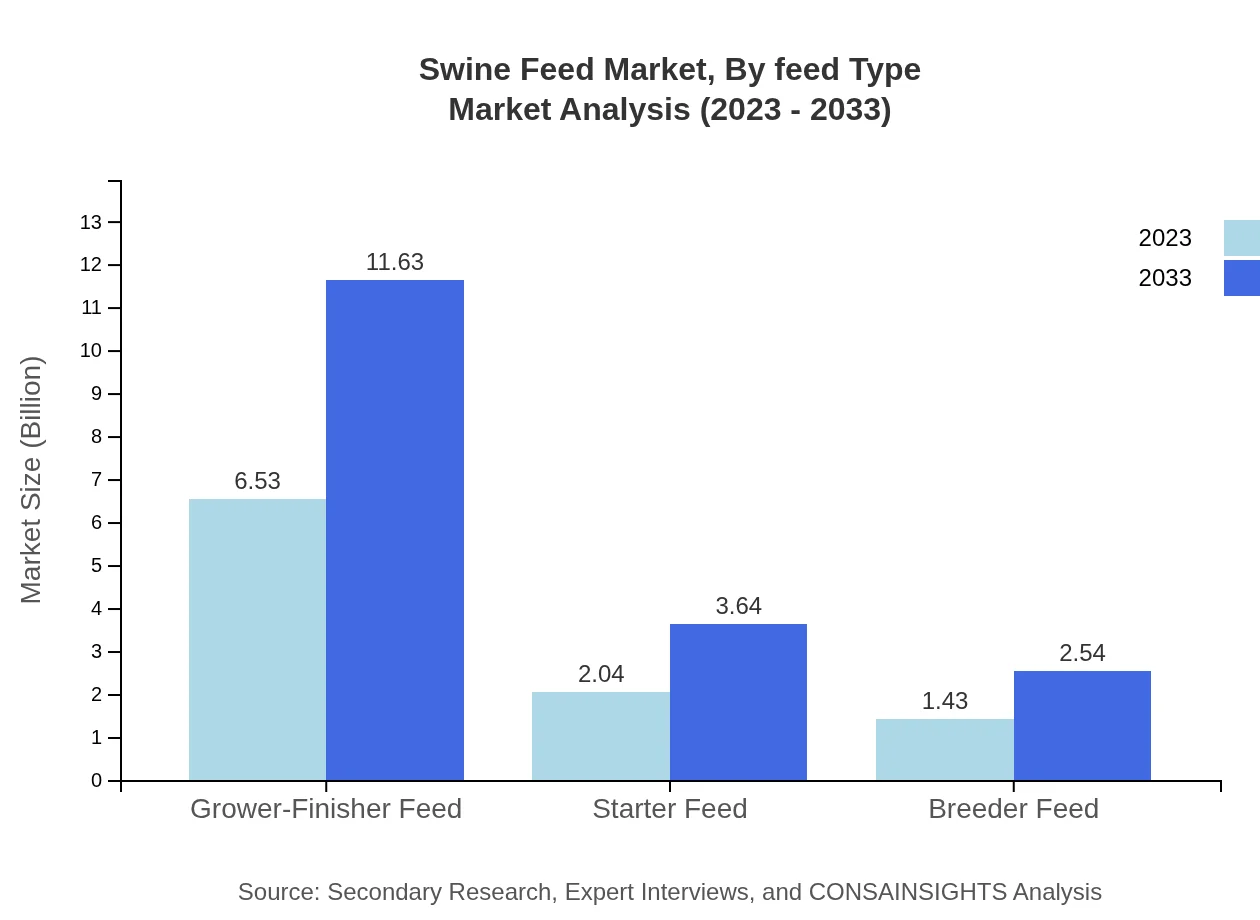
In the Feed Type segment, Commercial Farms are the largest contributors, with a market size of USD 8.78 billion in 2023 and expected to rise to USD 15.63 billion by 2033, holding an 87.77% market share throughout this period. Small Holder Farms have a smaller market size of USD 1.22 billion, growing to USD 2.18 billion, representing 12.23% of the market share.
Swine Feed Market Analysis By Formulation
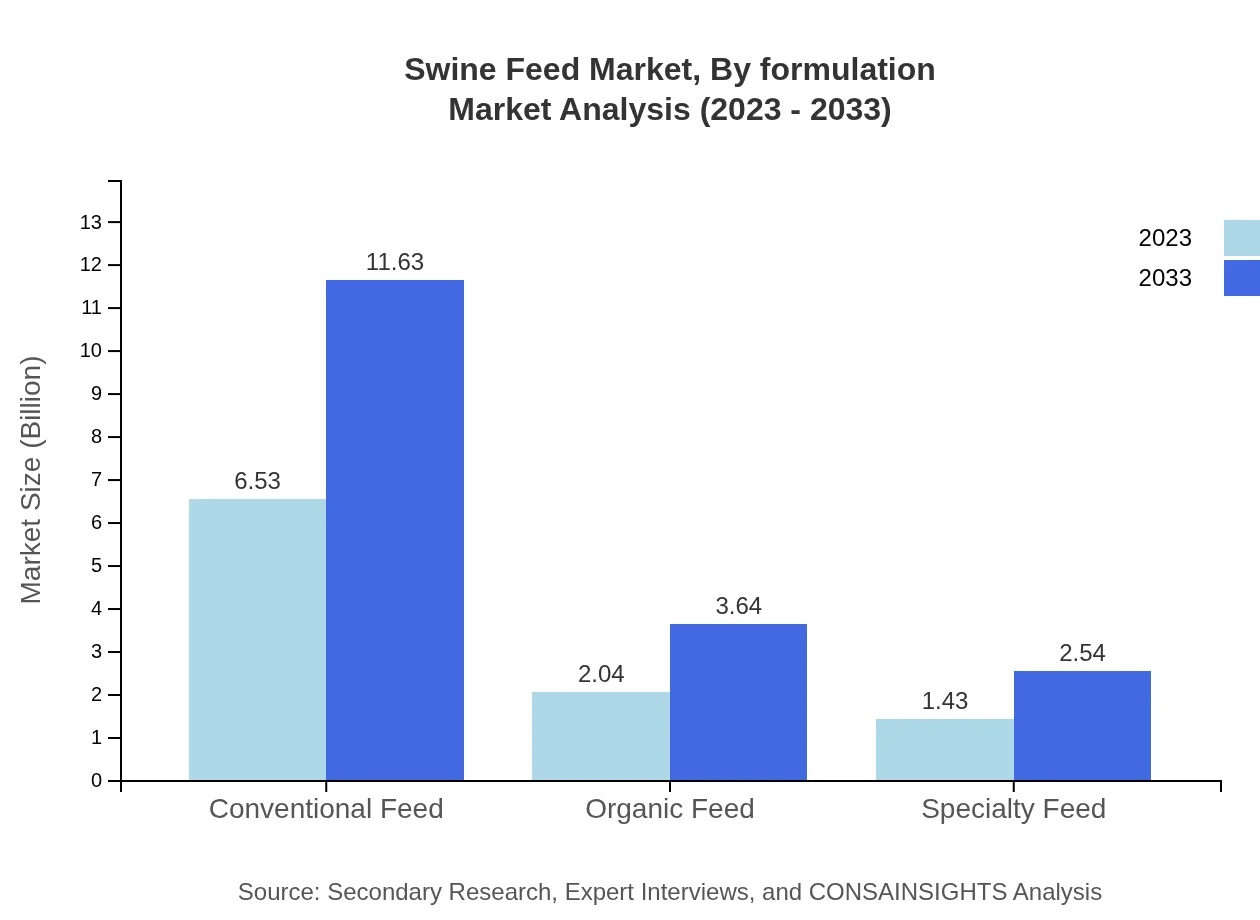
The formulation segment is led by Conventional Feed, which is valued at USD 6.53 billion in 2023 and projected to reach USD 11.63 billion by 2033, occupying 65.28% of the market share. This is followed by Probiotics, worth USD 2.04 billion in 2023, and anticipated to grow to USD 3.64 billion, marking a 20.44% share in the market.
Swine Feed Market Analysis By Distribution Channel
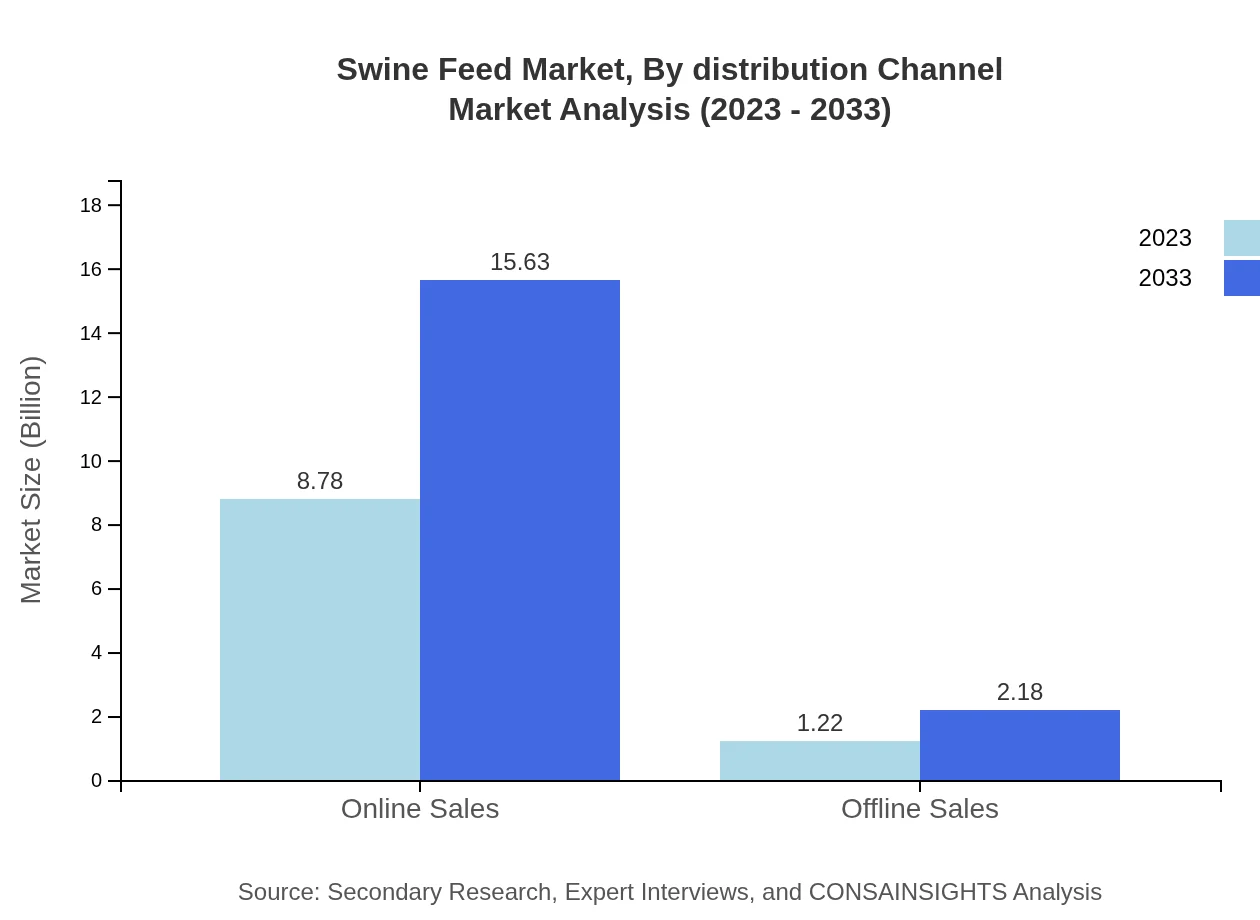
Online Sales dominate the distribution channel, accounting for USD 8.78 billion in 2023 and expected to grow to USD 15.63 billion by 2033, maintaining an 87.77% share. Conversely, Offline Sales hold a smaller segment of USD 1.22 billion initially, expanding to USD 2.18 billion with a 12.23% share.
Swine Feed Market Analysis By Additives
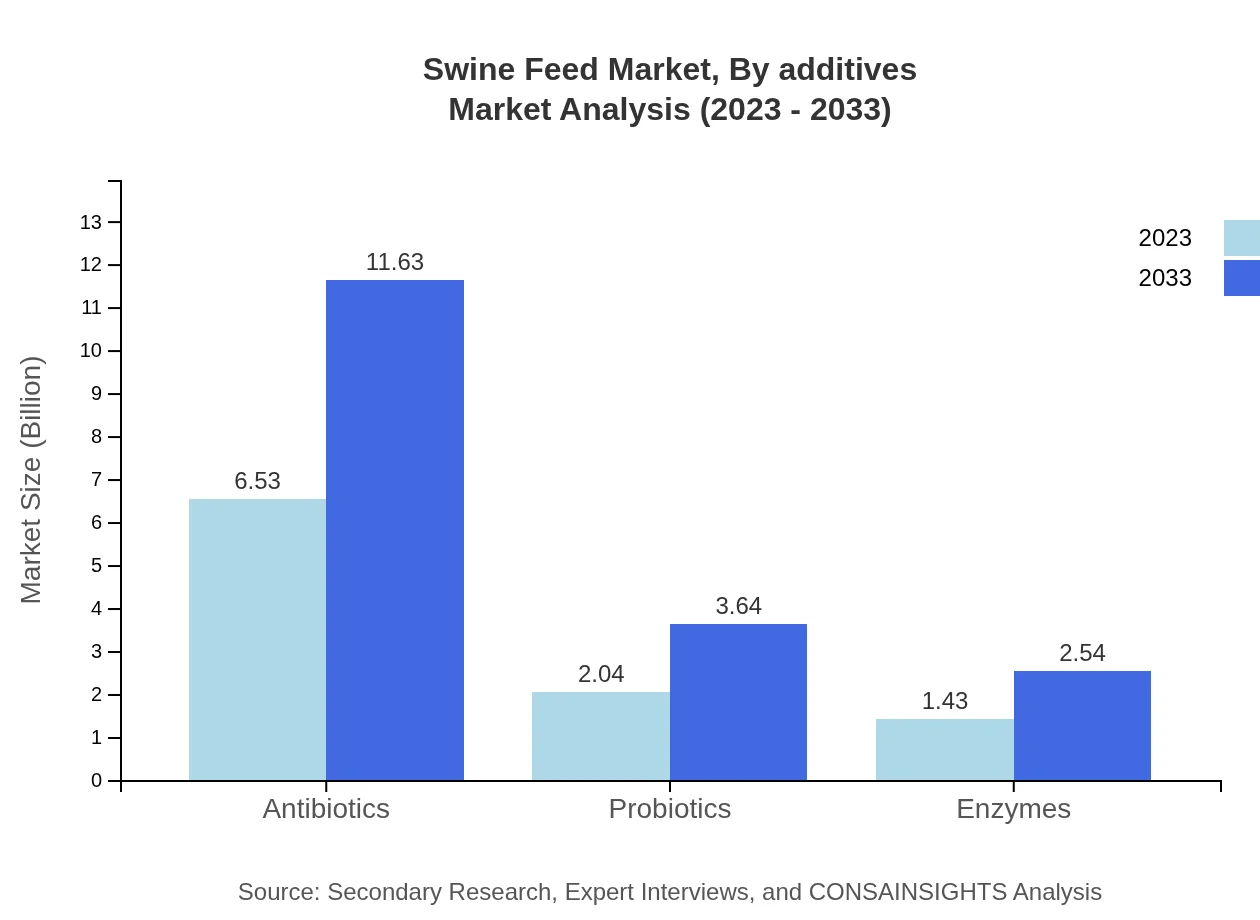
In the additives segment, Antibiotics represent substantial usage with a market size of USD 6.53 billion in 2023, growing to USD 11.63 billion by 2033, with a 65.28% market share. Probiotics and enzymes are also notable, with values of USD 2.04 billion and USD 1.43 billion respectively in 2023.
Swine Feed Market Analysis By End User
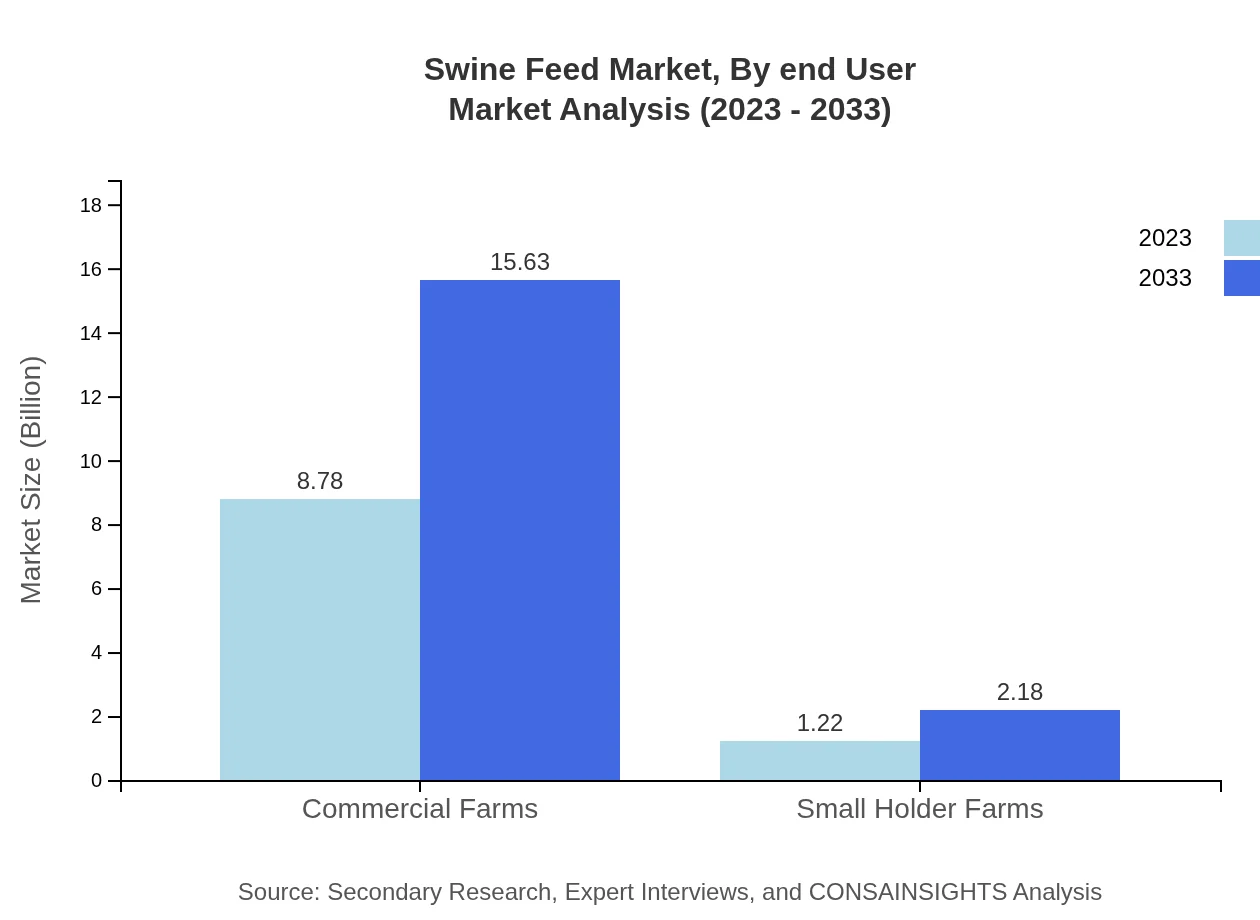
The end-user landscape is characterized primarily by substantial contributions from large commercial farms, alongside a growing footprint from small holder farms which are expected to increase their role in total market size by 2033. Significant market drivers include the need for improved feed efficiency and swine health management.
Swine Feed Market Trends and Future Forecast
Tell us your focus area and get a customized research report.
Global Market Leaders and Top Companies in Swine Feed Industry
Cargill, Inc.:
A leading global player in the feed industry, Cargill produces a range of swine feed products focusing on innovative and sustainable agricultural practices.Archer Daniels Midland Company (ADM):
ADM offers high-quality swine feed solutions backed by scientific research, advocating for animal welfare and health.Nutreco N.V.:
A global leader in animal nutrition, Nutreco focuses on providing innovative feed solutions that promote growth and performance in swine.Alltech, Inc.:
Alltech is renowned for its expertise in animal health and nutrition, providing high-quality feed additives and solutions for swine farmers.De Heus Animal Nutrition:
De Heus specializes in the production of a diverse range of animal feed, emphasizing sustainable practices and tailored nutritional solutions.We're grateful to work with incredible clients.








FAQs
What is the total market size of the swine feed market in 2023?
The market size for 2023 is $10.00 Billion as reported for the swine feed market in the input dataset.
How big will the market be by 2033?
By 2033 the market is reported to reach $17.81 Billion based on the provided forecast figures.
What is CAGR of the market for the forecast period?
The compound annual growth rate for the forecast period 2023 to 2033 is 5.8% as specified in the input.
Is there a single fastest Growing region in the Swine Feed Market Report market?
No single fastest-growing region is stated for the Swine Feed Market Report market because the top regional implied CAGR values are within 0.15 percentage points of each other, making the ranking too close to call reliably.
Which major companies operate in the swine feed sector?
Top listed companies include Cargill, Inc., Archer Daniels Midland Company (ADM), Nutreco N.V., Alltech, Inc., and De Heus Animal Nutrition.
What primary product segments are covered in the market?
Segments include formulation types (starter, grower-finisher, breeder), feed types, additives (antibiotics, probiotics, enzymes), and distribution channels.
How do regulations influence the swine feed market?
Regulatory oversight on additives and antibiotic use prompts reformulation, greater compliance costs, and a shift toward alternative additives and traceability.
What is the forecast period used in this report?
The forecast period covered is 2023 to 2033 as specified in the input data.