
Reports >
Life Sciences
>
Telehealth Market Report

Telehealth Market Report
First published: 08 October 2024 | Last updated: 28 May 2026 | Report Code: telehealth
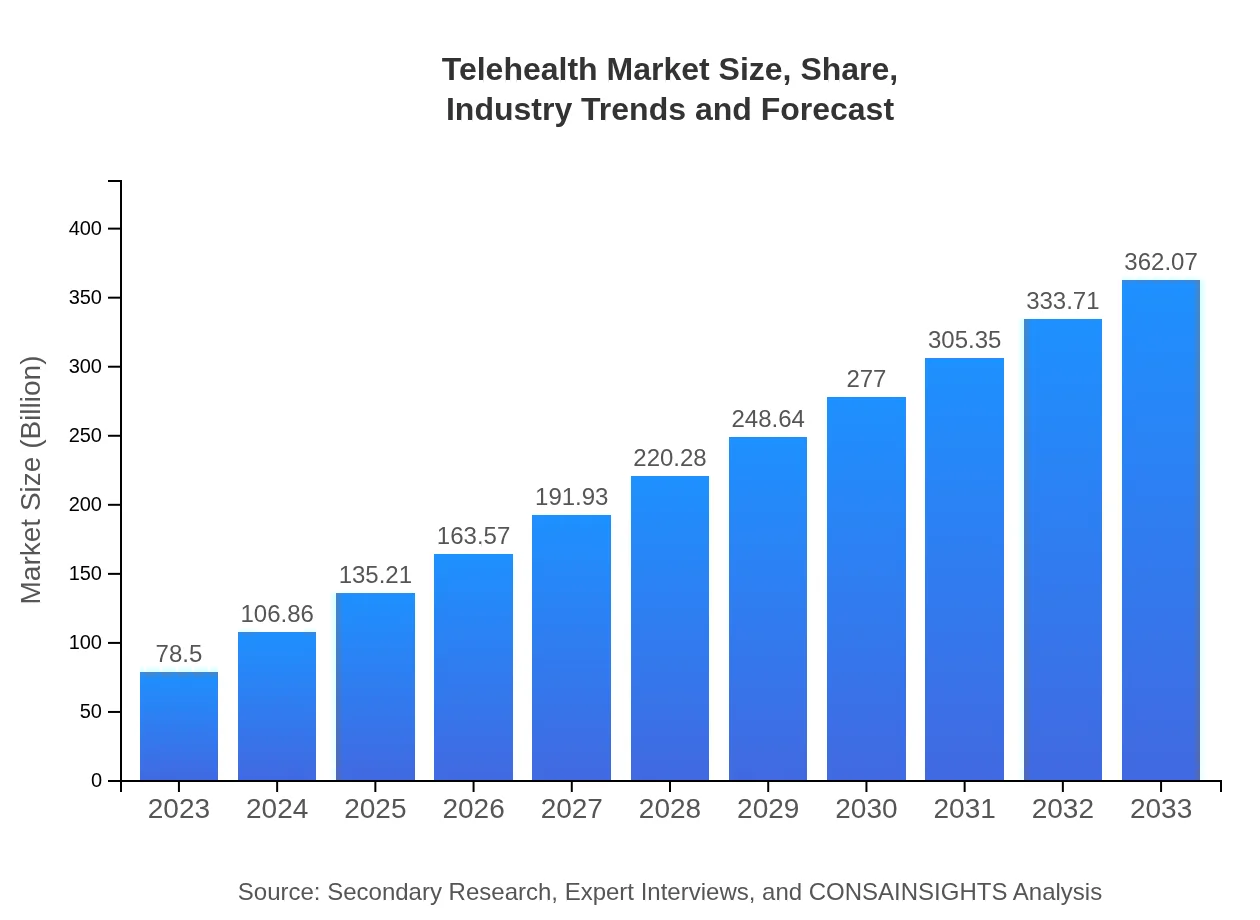
Telehealth Market — USD 78.5 billion in 2023, Growing to USD 362.07B by 2033 at 15.7% CAGR
This report provides an in-depth analysis of the Telehealth market, covering key insights, growth forecasts, market dynamics, and segment performance. It spans the forecast period from 2023 to 2033, offering a comprehensive understanding of industry trends and regional developments.
Key Takeaways
- Global market expands from $78.50 Billion in 2023 to $362.07 Billion in 2033 at a 15.7% CAGR.
- North America is largest regional market, while no single fastest-growing region is stated because regional CAGR differences remain within 0.15 percentage points.
- Europe grows from $21.51 Billion in 2023 to $99.21 Billion in 2033 while Asia Pacific advances from $17.04 Billion to $78.6 Billion.
- Primary drivers include digital health technologies, cost pressures in healthcare, and increasing remote care demand.
- Key vendors identified include Teladoc Health, Inc., Amwell, MDLIVE, Doxy.me, and HealthTap.
Telehealth Market Report — Executive Summary
North America remains largest market by forecast-period value, while no single fastest-growing region is stated because top regional growth rates are separated by less than 0.15 percentage points. This report examines the telehealth sector’s projected expansion from $78.50 Billion in 2023 to $362.07 Billion by 2033, reflecting a 15.7% CAGR over 2023 to 2033. Growth is supported by accelerating adoption of video conferencing, remote patient monitoring, mobile health applications, and AI-enabled tools across care settings. Regulatory adaptation, rising healthcare costs, and demand for remote consultations and monitoring are central drivers. Coverage includes segmentation by technology, end-user, patient type, and service type, and regional breakdowns that highlight North America as the largest market. Competitive profiling lists major suppliers such as Teladoc Health, Inc., Amwell, MDLIVE, Doxy.me, and HealthTap. The analysis aims to inform stakeholders on market dynamics, investment opportunities, and operational priorities for providers, payers, and technology developers.
Key Growth Drivers
- Wider acceptance of virtual consultations reducing the need for in-person visits and expanding care access.
- Integration of AI and analytics into telehealth platforms improving diagnosis, triage, and patient engagement.
- Escalating healthcare costs prompting payers and providers to pursue remote care as a cost-management strategy.
- Improved telecommunications infrastructure enabling higher-quality video conferencing and remote monitoring.
- Regulatory changes and reimbursement adjustments supporting broader telehealth use across care settings.
| Metric | Value |
|---|---|
| Study Period | 2023 - 2033 |
| 2023 Market Size | $78.50 Billion |
| CAGR (2023-2033) | 15.7% |
| 2033 Market Size | $362.07 Billion |
| Top Companies | Teladoc Health, Inc., Amwell, MDLIVE, Doxy.me, HealthTap |
| Published Date | 08 October 2024 |
| Last Modified Date | 28 May 2026 |
Telehealth Market Overview
Customize Telehealth Market Report market research report
- ✔ Get in-depth analysis of Telehealth market size, growth, and forecasts.
- ✔ Understand Telehealth's regional dynamics and industry-specific trends.
- ✔ Identify potential applications, end-user demand, and growth segments in Telehealth
What is the Market Size & CAGR of Telehealth Market Report market in 2023?
Telehealth Industry Analysis
Telehealth Market Segmentation and Scope
Tell us your focus area and get a customized research report.
Telehealth Market Report Market Analysis Report by Region
Europe Telehealth Market Report:
Europe grows from $21.51 Billion in 2023 to $99.21 Billion in 2033. Expansion is supported by increasing integration of health information systems, broader reimbursement policies, and uptake of mobile health solutions across public and private providers.Asia Pacific Telehealth Market Report:
Asia Pacific grows from $17.04 Billion in 2023 to $78.6 Billion in 2033. Growth is linked to improving digital infrastructure, rising healthcare demand, and deployment of remote monitoring and consultation services in urban and underserved areas.North America Telehealth Market Report:
North America is largest regional market, rising from $26.62 Billion in 2023 to $122.78 Billion in 2033. This region is identified as the largest market, reflecting strong provider adoption of video conferencing, remote monitoring, and substantial investment in telehealth platforms and infrastructure.South America Telehealth Market Report:
Latin America grows from $6.55 Billion in 2023 to $30.2 Billion in 2033. Market growth is supported by greater adoption of mobile health applications and teleconsultation platforms as healthcare access and technology penetration increase.Middle East & Africa Telehealth Market Report:
Middle East and Africa grows from $6.78 Billion in 2023 to $31.28 Billion in 2033. Drivers include investments in telehealth platforms, improved connectivity, and increased use of remote patient monitoring to extend care reach.Tell us your focus area and get a customized research report.
Research Methodology
Telehealth Market Analysis By Service Type
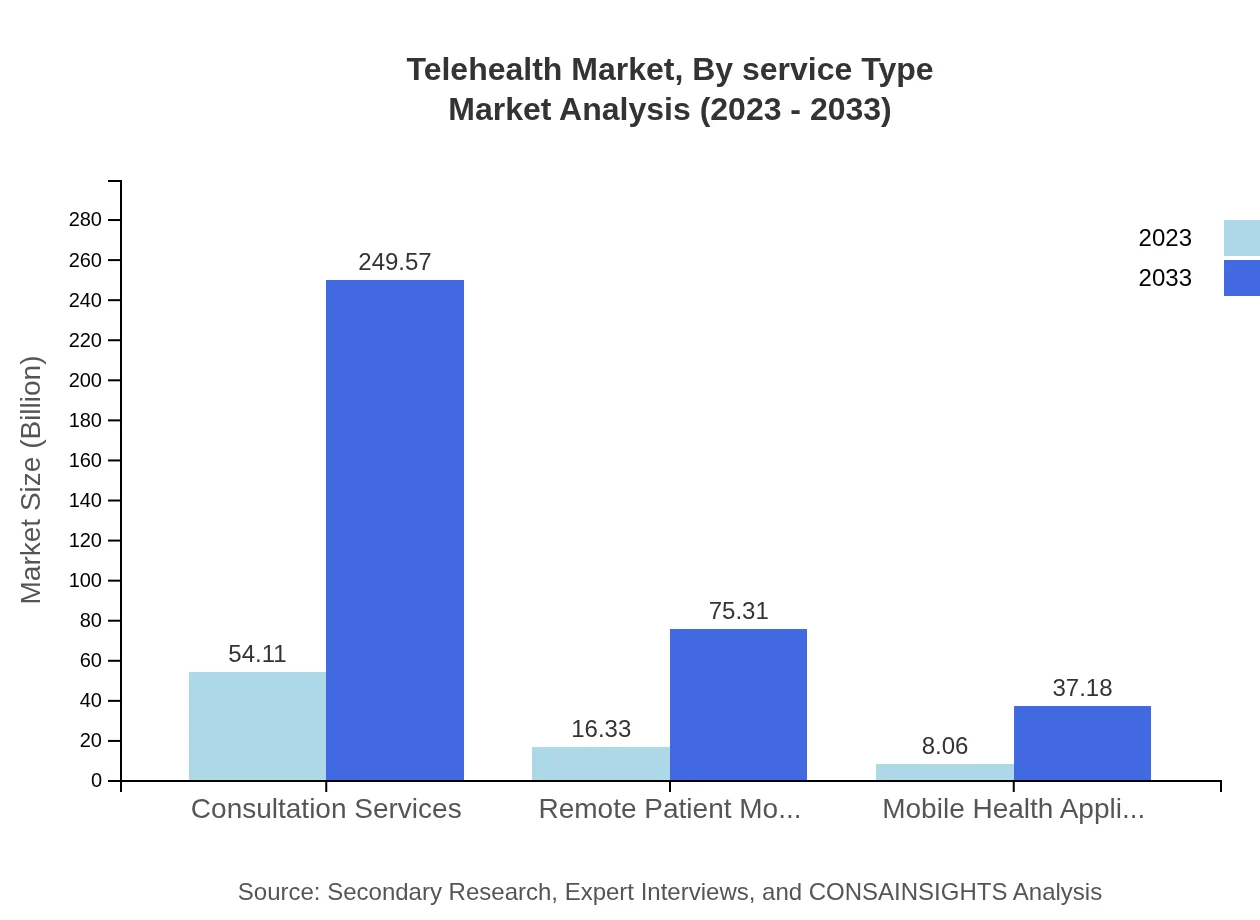
In 2023, the 'Hospitals' segment is the leading service type with a market size of $54.11 billion, expected to reach $249.57 billion by 2033. The Clinics segment was valued at $16.33 billion in 2023 with forecasts of $75.31 billion. Homecare Providers, Video Conferencing, and Health Information Systems are significant contributors as well. The growth reflects increased reliance on hospitals for comprehensive care, with telehealth becoming integral to hospital operations.
Telehealth Market Analysis By Technology
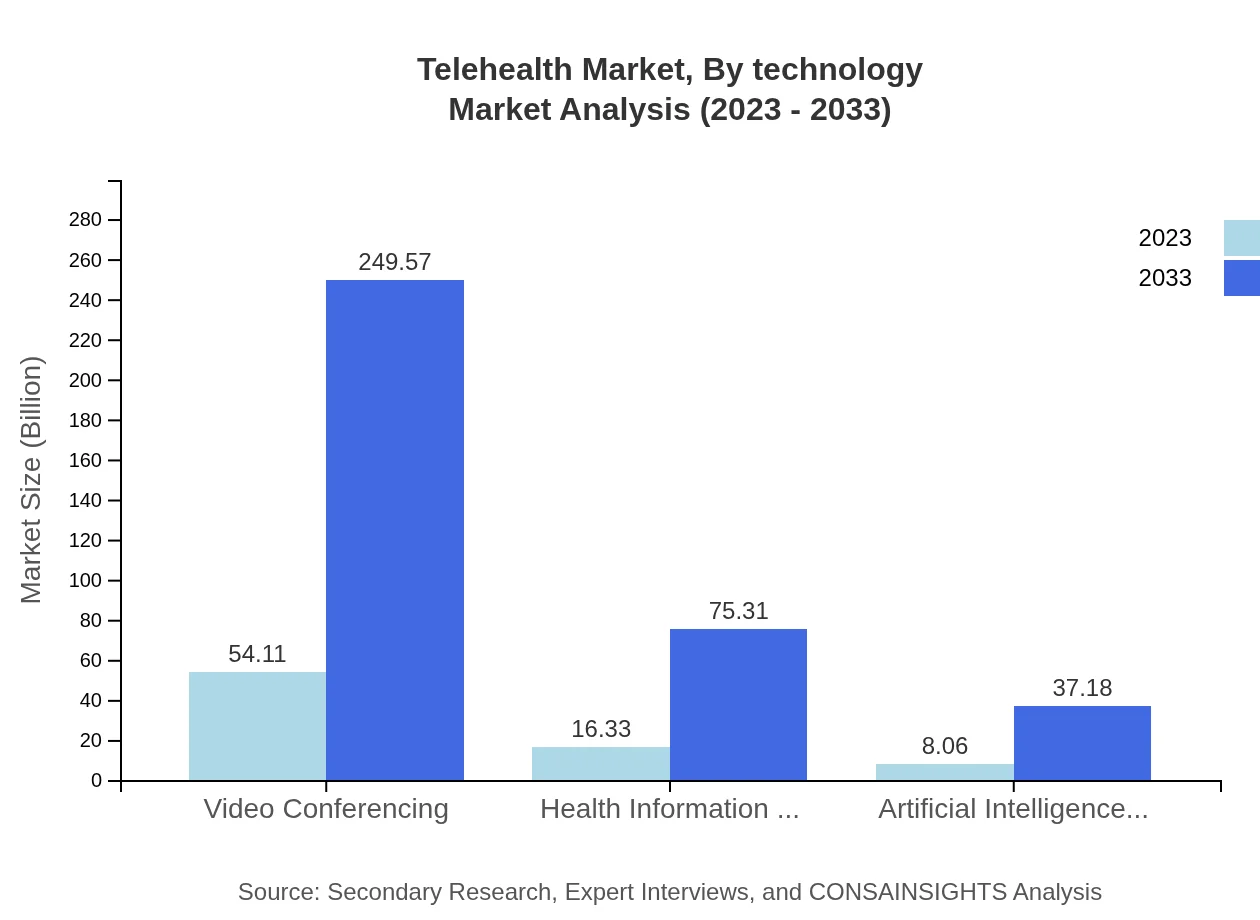
The segment includes advancements such as Artificial Intelligence (AI) in Telehealth, which is projected to grow from $8.06 billion in 2023 to $37.18 billion by 2033. Telehealth consultation services drive the majority of market activity, representing $54.11 billion in 2023 and projected to reach $249.57 billion. Remote patient monitoring and mobile health applications also show high potential for growth, emphasizing technology’s role in enhancing patient care efficiency.
Telehealth Market Analysis By End User
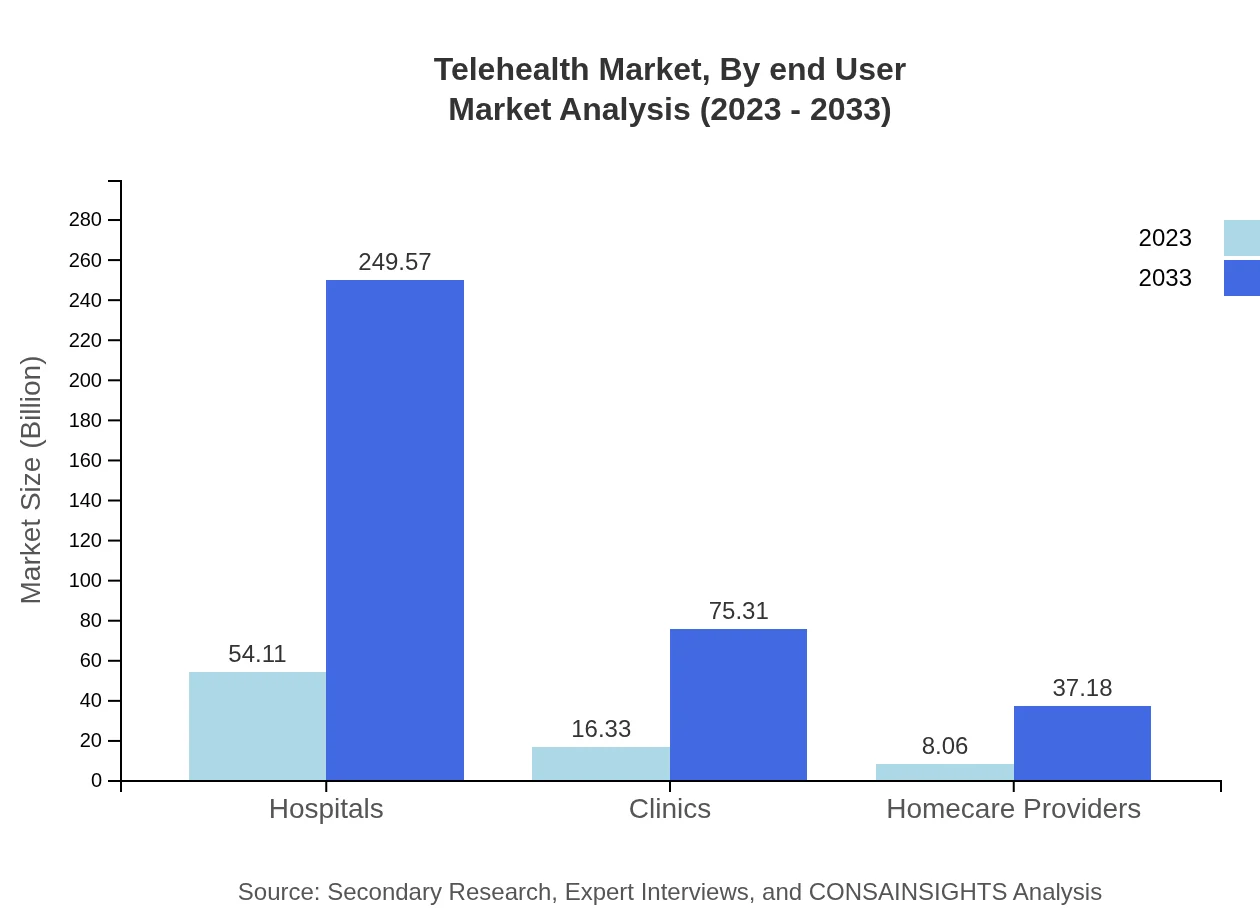
End-users largely include hospitals, clinics, and homecare providers. Hospitals represent a significant market share, with key services being provided through telemedicine platforms. In 2023, hospitals accounted for 68.93% of the market. With increasing patient-centric approaches, clinics are expanding their offerings, contributing significantly to the market dynamics, fueled by patient demands for more accessible care.
Telehealth Market Analysis By Patient Type
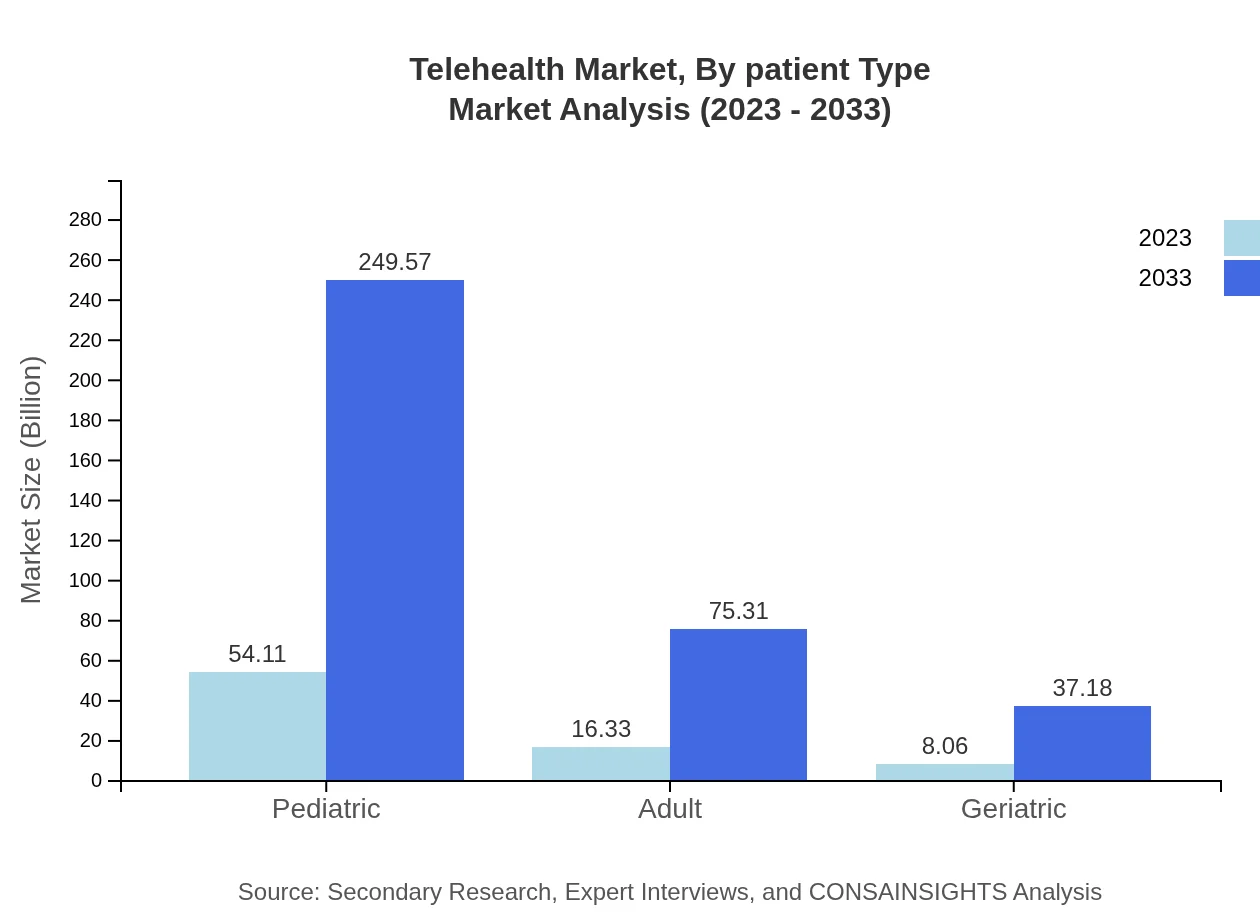
The patient type segmentation shows a distinction among pediatric, adult, and geriatric of care. The pediatric segment led with a market size of $54.11 billion in 2023, expected to grow to $249.57 billion by 2033. Adult and geriatric segments also present promising growth, driven by an aging population and increased emphasis on chronic disease management, further validating the need for expanded telehealth solutions.
Telehealth Market Trends and Future Forecast
Tell us your focus area and get a customized research report.
Global Market Leaders and Top Companies in the Telehealth Industry
Teladoc Health, Inc.:
One of the largest telehealth providers globally, delivering virtual healthcare services through a convenient platform, Teladoc offers various services from episodic care to complex chronic condition management.Amwell:
Amwell provides telemedicine solutions to health plans, employers, and providers. Its platform connects patients with healthcare professionals for various services including urgent and routine care.MDLIVE:
MDLIVE focuses on virtual healthcare services, specializing in behavioral health and general medical consultations, establishing a solid presence in outpatient settings.Doxy.me:
A simple and secure telemedicine platform aimed primarily at healthcare providers for offering HIPAA-compliant video visits, facilitating access to care without the requirement for patient downloads.HealthTap:
HealthTap combines AI and telemedicine, offering personalized health information and virtual consultations to improve health outcomes.We're grateful to work with incredible clients.









FAQs
What is the market size of the telehealth sector in 2023?
The market size for telehealth in 2023 is $78.50 Billion, as reported for the specified base year in the study.
How big will the telehealth market be in 2033?
The telehealth market is projected to reach $362.07 Billion by 2033 according to the forecast provided in the report.
What is CAGR for the telehealth market from 2023 to 2033?
The compound annual growth rate (CAGR) over the 2023 to 2033 forecast period is 15.7% as stated in the input data.
Is there a single fastest Growing region in the Telehealth Market Report market?
No single fastest-growing region is stated for the Telehealth Market Report market because the top regional implied CAGR values are within 0.15 percentage points of each other, making the ranking too close to call reliably.
Which companies are listed as top players?
Top companies named in the report include Teladoc Health, Inc., Amwell, MDLIVE, Doxy.me, and HealthTap.
What are the main service types in telehealth segmentation?
Primary service segments include consultation services, remote patient monitoring, and mobile health applications as specified in the segmentation facts.
How big is the Europe telehealth market in 2023?
Europe’s telehealth market is $21.51 Billion in 2023 and is projected to grow to $99.21 Billion by 2033 per the regional data.
What drives adoption of telehealth technologies?
Adoption is driven by technology advances such as video conferencing, health information systems, AI integration, and increasing demand for remote care.
Who were research sources used for the study?
Research relied on primary interviews with industry experts and secondary data from company reports and publications, with triangulation and internal validation.
Which patient types are covered in the segmentation?
Patient-type segmentation includes pediatric, adult, and geriatric categories as listed in the input segment facts.