

Dysmenorrhea Treatment Market Report
First published: 08 October 2024 | Last updated: 25 May 2026 | Report Code: dysmenorrhea-treatment
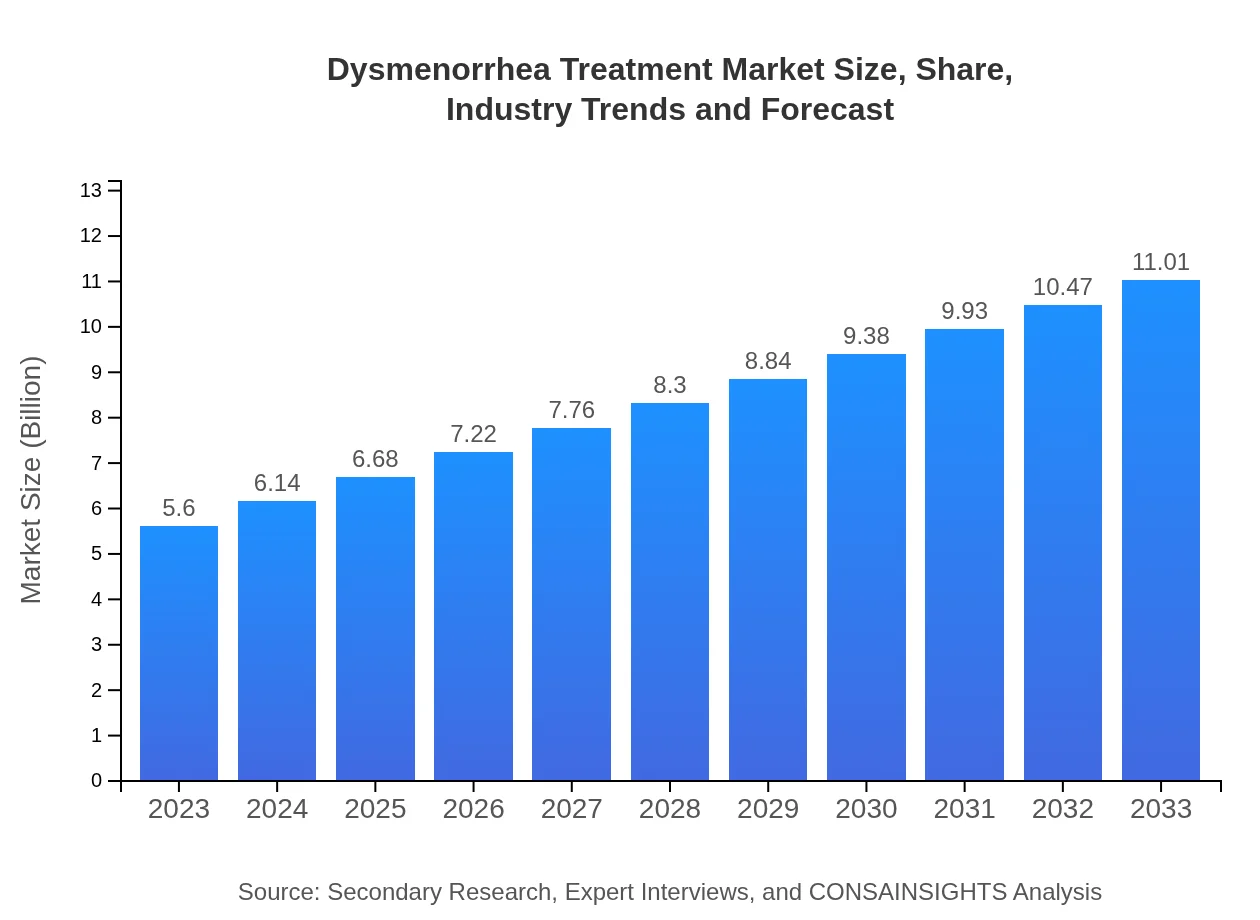
Dysmenorrhea Treatment Market — USD 5.6 billion in 2023, Growing to USD 11.01B by 2033 at 6.8% CAGR
This report provides comprehensive insights into the Dysmenorrhea Treatment market, including market size, segmentation, trends, and forecasts for the period from 2023 to 2033. It aims to offer a detailed analysis of the current and future landscape of this growing sector.
Key Takeaways
- Global market value rises from $5.60 Billion in 2023 to $11.01 Billion by 2033 at a 6.8% CAGR.
- North America is largest regional market, while no single fastest-growing region is stated because regional CAGR differences remain within 0.15 percentage points.
- Europe expands from $1.50 Billion in 2023 to $2.95 Billion in 2033, reflecting sustained demand for therapies and pharmaceuticals.
- Asia Pacific climbs from $1.08 Billion in 2023 to $2.12 Billion in 2033, driven by greater access to treatments and rising awareness.
- Key companies profiled include Pfizer Inc., Bayer AG, Johnson & Johnson, and Novartis AG, highlighting established industry participation.
Dysmenorrhea Treatment Market Report — Executive Summary
North America remains largest market by forecast-period value, while no single fastest-growing region is stated because top regional growth rates are separated by less than 0.15 percentage points. This report examines the Dysmenorrhea Treatment market from 2023 to 2033, documenting expansion from $5.60 Billion to $11.01 Billion at a 6.8% CAGR. Growth is supported by heightened focus on women's health, broader adoption of pharmaceuticals and alternative therapies, and expanding distribution channels including online pharmacies. Regional patterns show North America as the largest market, with Europe, Asia Pacific, Latin America, and Middle East & Africa also contributing to overall growth. The market structure is organized across product types (pharmaceuticals, therapies, devices), treatment categories (primary and secondary dysmenorrhea), end users (women of reproductive age, teenagers), and distribution channels (hospital, retail, online pharmacies). Competitive activity includes research investments and product development by established players such as Pfizer Inc., Bayer AG, Johnson & Johnson, and Novartis AG. The analysis highlights regulatory considerations and distribution shifts as important factors for stakeholders planning market entry or expansion.
Key Growth Drivers
- Increasing awareness of women’s health leading to greater diagnosis and treatment uptake.
- Wider availability of pharmaceuticals and alternative therapies across clinical and consumer channels.
- Expansion of online pharmacies and telehealth improving access to consultations and medications.
- Ongoing R&D and product launches by major firms such as Pfizer Inc., Bayer AG, Johnson & Johnson, and Novartis AG.
- Rising healthcare spending and improved reimbursement frameworks in several regions enhancing treatment affordability.
| Metric | Value |
|---|---|
| Study Period | 2023 - 2033 |
| 2023 Market Size | $5.60 Billion |
| CAGR (2023-2033) | 6.8% |
| 2033 Market Size | $11.01 Billion |
| Top Companies | Pfizer Inc., Bayer AG, Johnson & Johnson, Novartis AG |
| Published Date | 08 October 2024 |
| Last Modified Date | 25 May 2026 |
Dysmenorrhea Treatment Market Overview
Customize Dysmenorrhea Treatment Market Report market research report
- ✔ Get in-depth analysis of Dysmenorrhea Treatment market size, growth, and forecasts.
- ✔ Understand Dysmenorrhea Treatment's regional dynamics and industry-specific trends.
- ✔ Identify potential applications, end-user demand, and growth segments in Dysmenorrhea Treatment
What is the Market Size & CAGR of Dysmenorrhea Treatment Market Report market in 2023?
Dysmenorrhea Treatment Industry Analysis
Dysmenorrhea Treatment Market Segmentation and Scope
Tell us your focus area and get a customized research report.
Dysmenorrhea Treatment Market Report Market Analysis Report by Region
Europe Dysmenorrhea Treatment Market Report:
Europe grows from $1.5 Billion in 2023 to $2.95 Billion in 2033. Demand is shaped by growing clinical awareness, increasing healthcare expenditure, and wider adoption of pharmaceuticals and therapeutic options across clinical settings.Asia Pacific Dysmenorrhea Treatment Market Report:
Asia Pacific grows from $1.08 Billion in 2023 to $2.12 Billion in 2033. Growth reflects improving access to care, rising awareness of menstrual health, and greater penetration of both conventional and alternative treatment channels.North America Dysmenorrhea Treatment Market Report:
North America is largest regional market, rising from $2.06 Billion in 2023 to $4.06 Billion in 2033. Regional expansion is supported by concentrated healthcare infrastructure, high treatment adoption, and active participation from major firms driving R&D and product availability.South America Dysmenorrhea Treatment Market Report:
Latin America grows from $0.21 Billion in 2023 to $0.41 Billion in 2033. Market gains are influenced by expanding healthcare access, increased diagnosis rates, and gradual uptake of pharmaceuticals and therapies.Middle East & Africa Dysmenorrhea Treatment Market Report:
Middle East and Africa grows from $0.75 Billion in 2023 to $1.48 Billion in 2033. Regional growth is driven by rising healthcare investment, improved service provision, and expanding availability of treatment options.Tell us your focus area and get a customized research report.
Research Methodology
Dysmenorrhea Treatment Market Analysis By Product
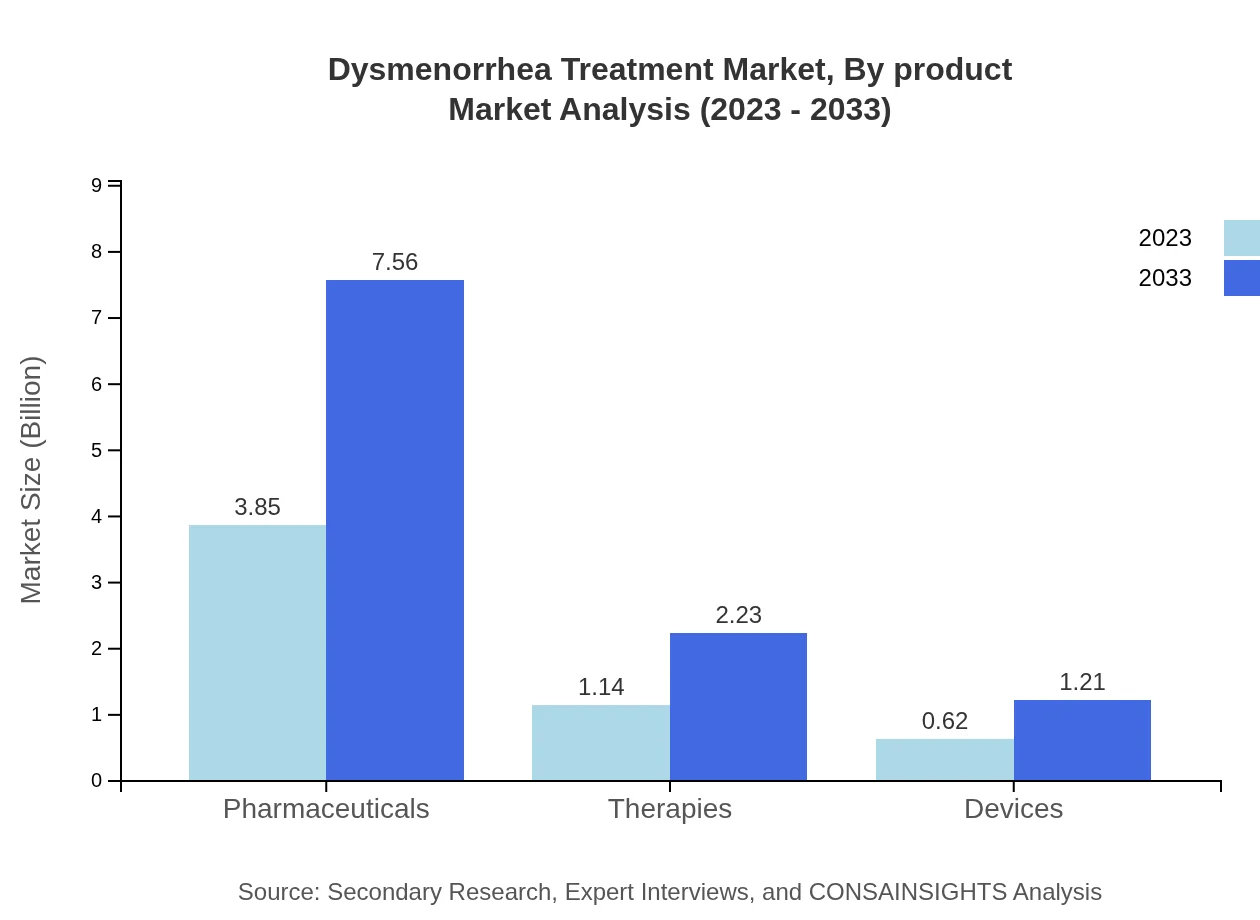
Pharmaceuticals dominate the Dysmenorrhea Treatment market with a size of $3.85 billion in 2023 and expected growth to $7.56 billion by 2033. The segment represents a 68.72% market share in 2023. Other treatment types such as therapies and devices are also emerging, indicating a trend towards multi-modal treatment approaches.
Dysmenorrhea Treatment Market Analysis By Treatment Type
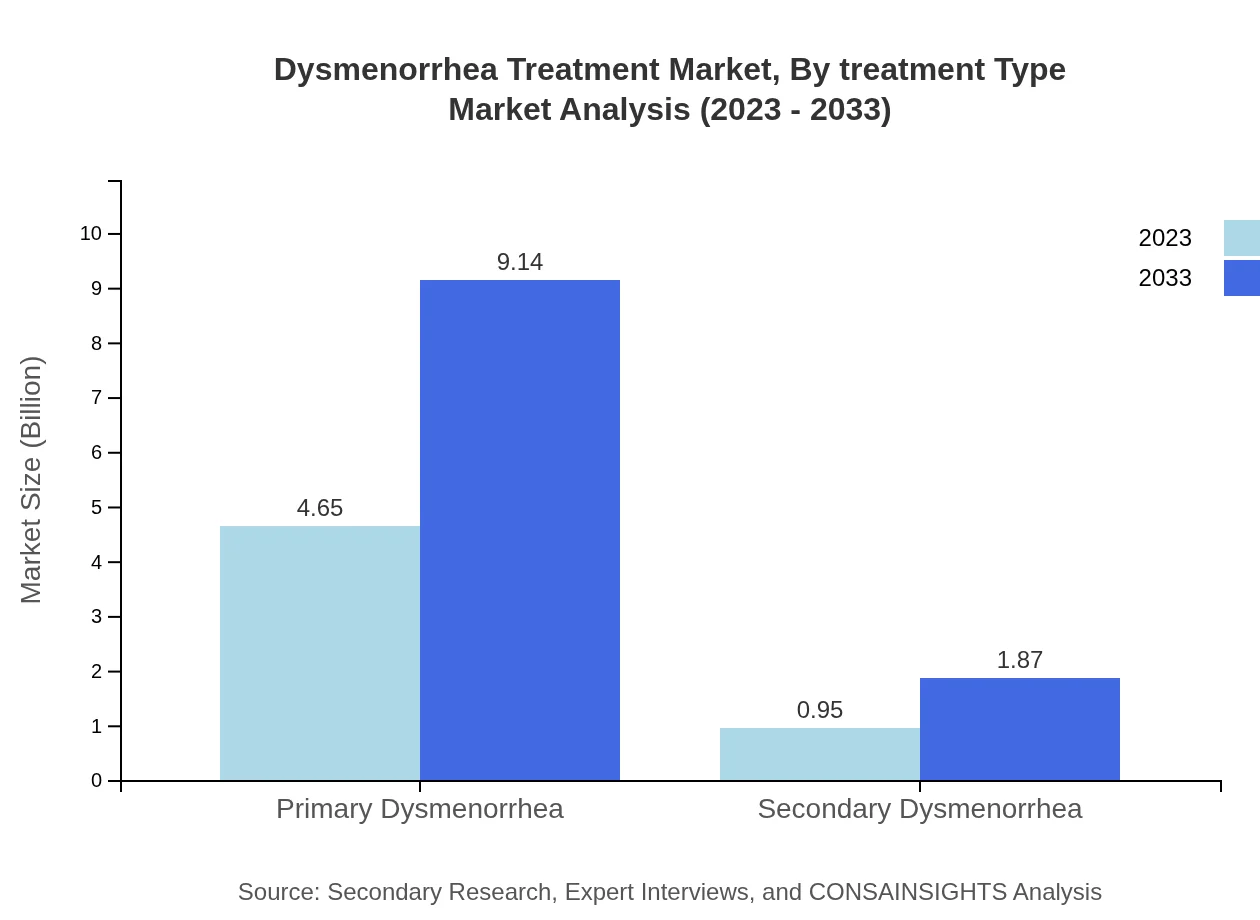
The market is largely classified into primary and secondary dysmenorrhea treatments. Primary dysmenorrhea treatments account for $4.65 billion in 2023 and are expected to match $9.14 billion by 2033, representing 83.03% of the market share, while secondary dysmenorrhea accounts for the remaining share with growing recognition.
Dysmenorrhea Treatment Market Analysis By Route Of Administration
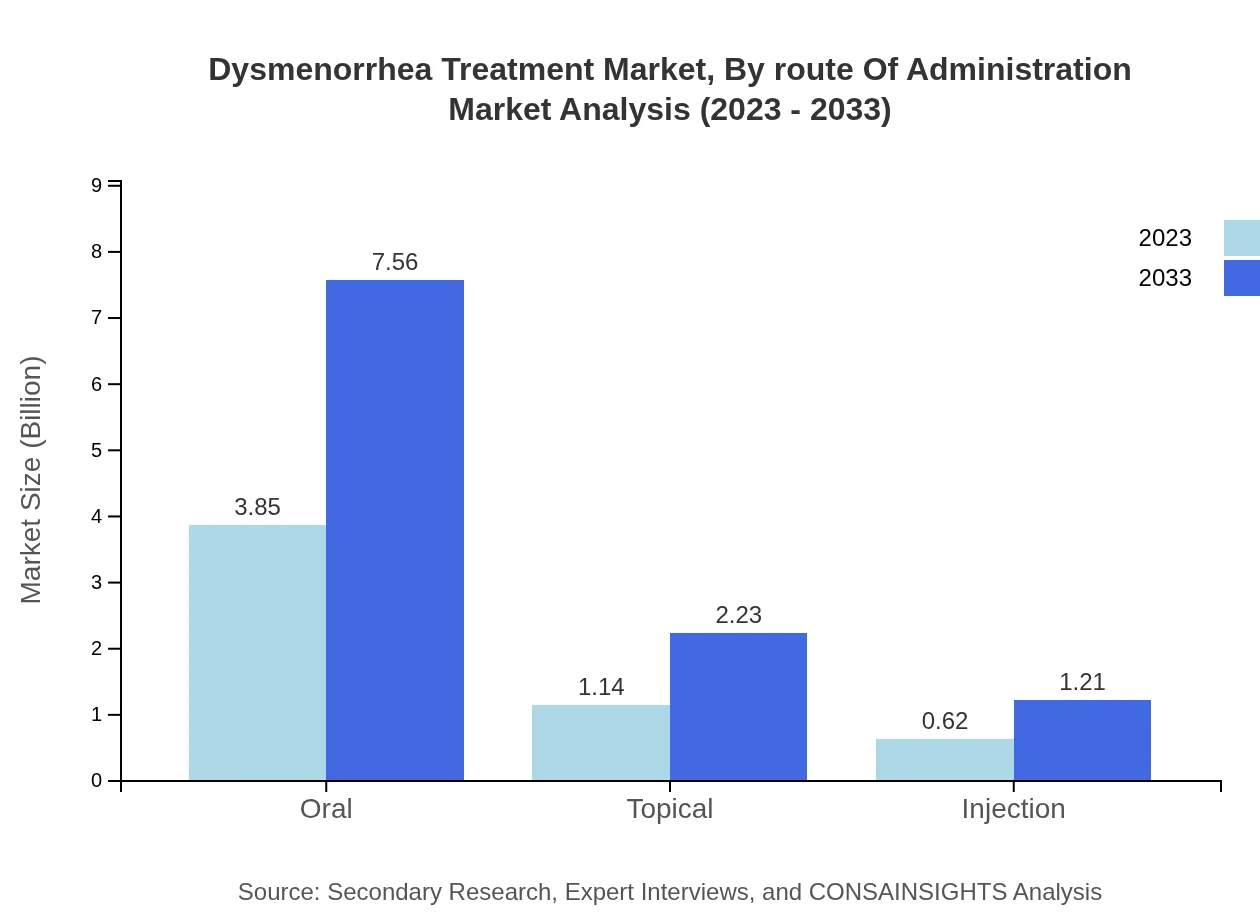
Oral administration dominates the treatment route with a market of $3.85 billion in 2023 projected to reach $7.56 billion by 2033. Topical and injection routes present growing alternatives, indicating diverse patient preferences and market adaptability.
Dysmenorrhea Treatment Market Analysis By Distribution Channel
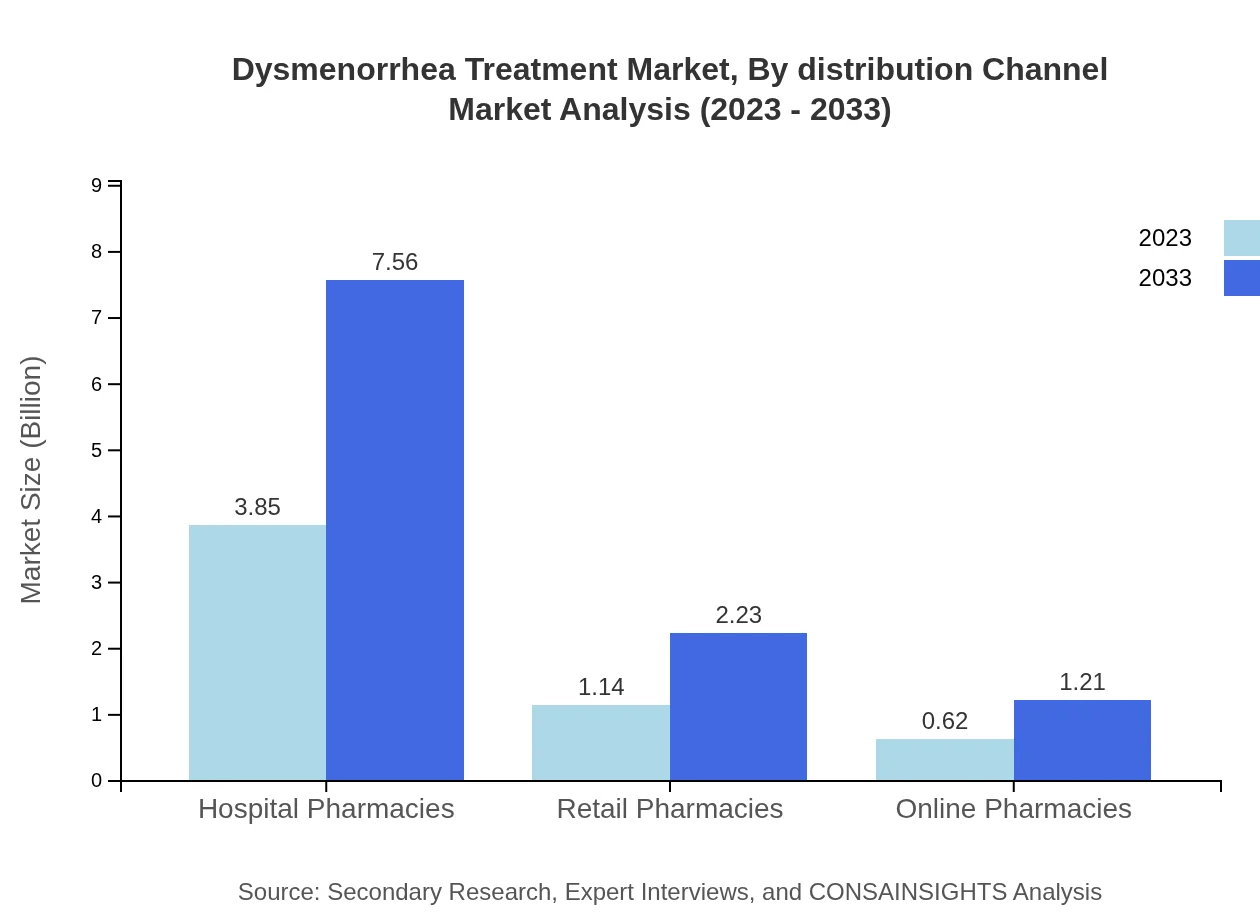
Hospital pharmacies lead the market with a 68.72% share, reached through $3.85 billion in 2023 and an estimated $7.56 billion in 2033. Retail pharmacies and online pharmacies serve as important supplementary channels, catering to consumer needs for convenience and access.
Dysmenorrhea Treatment Market Analysis By End User
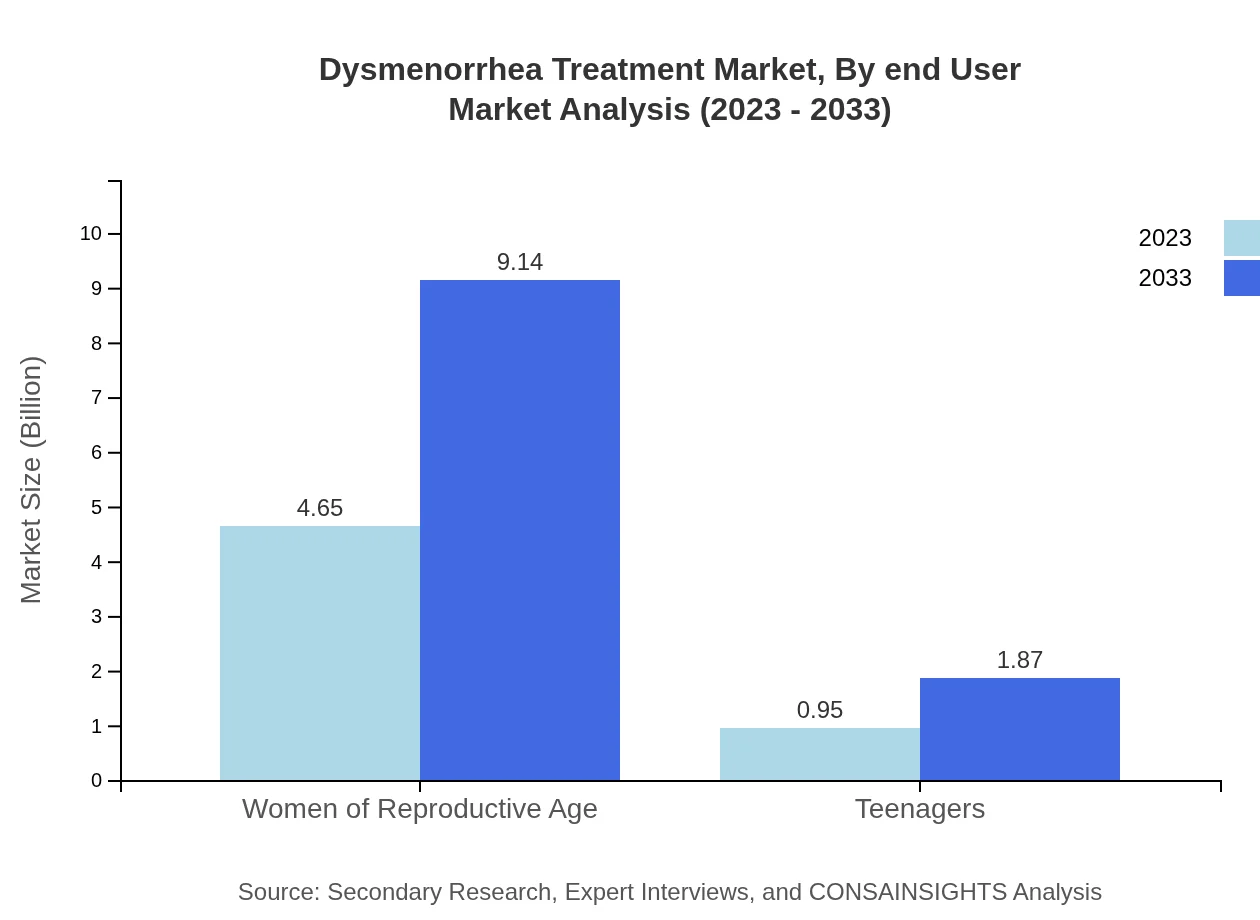
The primary end-users of dysmenorrhea treatments are women of reproductive age, representing a significant share of 83.03% and a size of $4.65 billion in 2023, expected to reach $9.14 billion by 2033. Attention to the needs of teenagers also plays a role in market dynamics.
Dysmenorrhea Treatment Market Trends and Future Forecast
Tell us your focus area and get a customized research report.
Global Market Leaders and Top Companies in Dysmenorrhea Treatment Industry
Pfizer Inc.:
Pfizer is a leading global pharmaceutical company known for its extensive product portfolio, including pain management medications specifically targeted for dysmenorrhea relief.Bayer AG:
Bayer is a major player in the healthcare section, offering innovative solutions and medications aimed at treating various conditions, including dysmenorrhea.Johnson & Johnson:
This multinational company specializes in consumer health products, including over-the-counter medications for menstrual discomfort.Novartis AG:
Novartis focuses on patient-centric approaches and extensive research in gynecology, making contributions towards enhancing dysmenorrhea treatments.We're grateful to work with incredible clients.









FAQs
What is the market size of the Dysmenorrhea Treatment Market Report in 2023?
The market size in 2023 is $5.60 Billion according to the reported data for the Dysmenorrhea Treatment Market Report.
What will be the market size of the Dysmenorrhea Treatment Market Report in 2033?
Projected market size for 2033 is $11.01 Billion as provided in the report overview and forecast data.
What is CAGR of the Dysmenorrhea Treatment Market Report for 2023 to 2033?
The reported compound annual growth rate (CAGR) for the forecast period 2023 to 2033 is 6.8%.
Is there a single fastest Growing region in the Dysmenorrhea Treatment Market Report market?
No single fastest-growing region is stated for the Dysmenorrhea Treatment Market Report market because the top regional implied CAGR values are within 0.15 percentage points of each other, making the ranking too close to call reliably.
How big is the Europe market for dysmenorrhea treatment by 2033?
Europe is projected to reach $2.95 Billion by 2033 according to the regional data provided.
Who are the top companies operating in the dysmenorrhea treatment market?
Top companies listed include Pfizer Inc., Bayer AG, Johnson & Johnson, and Novartis AG as key market participants.
Which end users are considered in the market segmentation?
Reported end-user segments include Women of Reproductive Age and Teenagers as specified in the segmentation facts.
Why is online pharmacy distribution significant in this market?
Online pharmacies are noted as a distribution channel that expands access and convenience, influencing treatment uptake and distribution dynamics.
What are the main product categories in the dysmenorrhea treatment market?
Product categories detailed include Pharmaceuticals, Therapies, and Devices as the primary by-product subsegments.
How big is the Asia Pacific market for dysmenorrhea treatment in 2023?
Asia Pacific had a market value of $1.08 Billion in 2023 according to the regional figures provided.