

B Cell Chronic Lymphocytic Leukemia Market Report
First published: 08 October 2024 | Last updated: 25 May 2026 | Report Code: b-cell-chronic-lymphocytic-leukemia
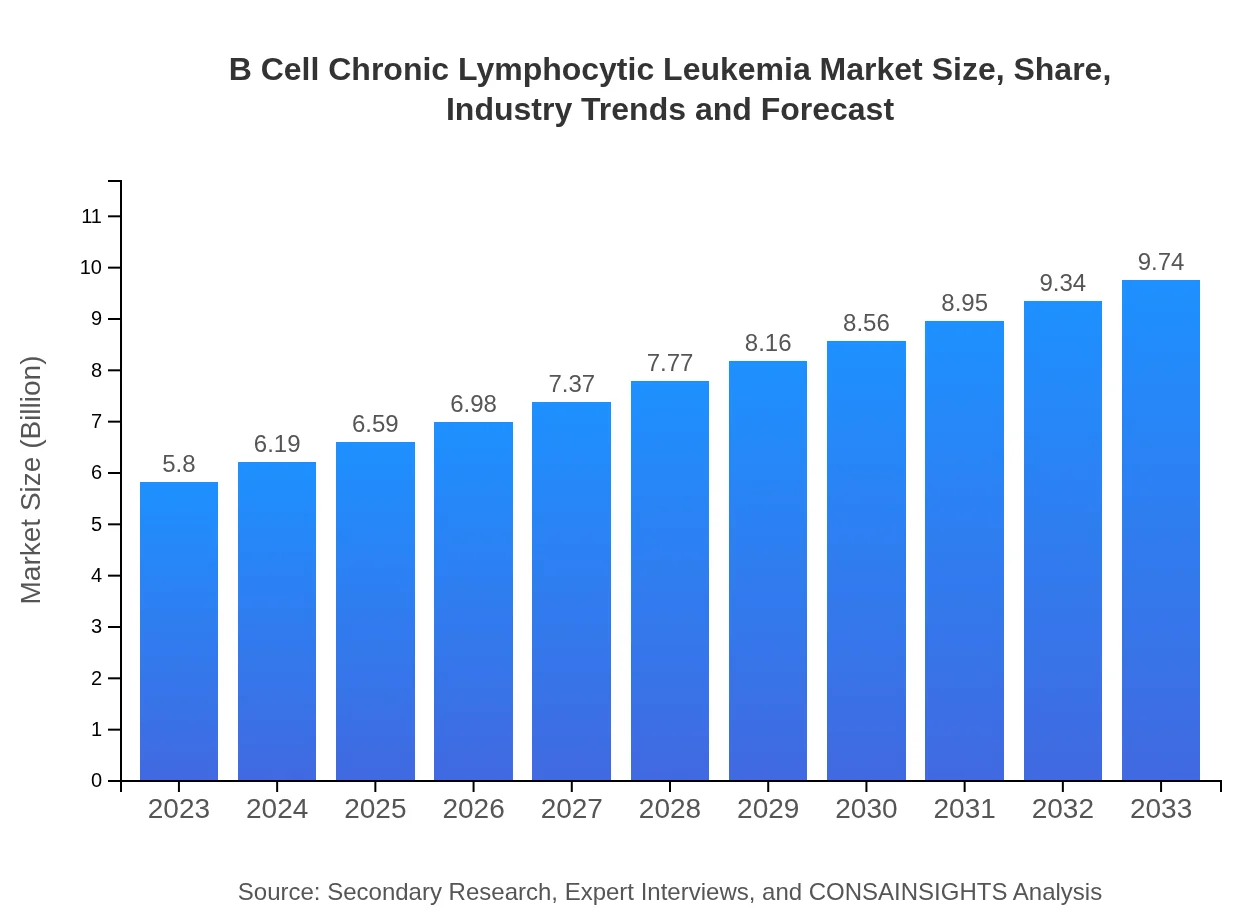
B Cell Chronic Lymphocytic Leukemia Market — USD 5.8 billion in 2023, Growing to USD 9.74B by 2033 at 5.2% CAGR
This report provides a comprehensive analysis of the B Cell Chronic Lymphocytic Leukemia market, focusing on market trends, size, and forecasts from 2023 to 2033. It includes insights on regional dynamics, industry analysis, and key players in the market.
Key Takeaways
- Global market expands from $5.80 Billion (2023) to $9.74 Billion (2033) at a 5.2% CAGR.
- North America is largest regional market, while no single fastest-growing region is stated because regional CAGR differences remain within 0.15 percentage points.
- Therapeutic advances, including targeted therapies and monoclonal antibodies, underpin demand.
- Leading companies shaping the space include Roche, AbbVie, Novartis and Gilead Sciences.
B Cell Chronic Lymphocytic Leukemia Market Report — Executive Summary
North America remains largest market by forecast-period value, while no single fastest-growing region is stated because top regional growth rates are separated by less than 0.15 percentage points. This report profiles the trajectory of the B Cell Chronic Lymphocytic Leukemia market through 2033, driven by therapeutic innovation and improvements in diagnostics. The market value rises from $5.80 Billion in 2023 to $9.74 Billion in 2033, reflecting a 5.2% CAGR for 2023 to 2033. Expansion is supported by advancements in monoclonal antibodies, targeted agents and biologics, and by increased investment in personalized treatment approaches. Regional performance highlights North America as the largest market, with notable growth across Europe and Asia Pacific. Competitive activity is concentrated among Roche, AbbVie, Novartis and Gilead Sciences, which continue to invest in clinical trials and strategic collaborations. The report covers segmentation by drug class, therapy stage, treatment type and patient demographics, offering a structured view of market opportunities and barriers to adoption.
Key Growth Drivers
- Continued development and approval of targeted therapies and monoclonal antibodies increasing treatment options.
- Rising diagnostic capabilities and personalized medicine approaches enabling tailored therapies.
- Sustained investment in clinical research and trials by leading biopharma firms expanding pipelines.
- Growing healthcare spending in multiple regions supporting access to advanced therapies.
| Metric | Value |
|---|---|
| Study Period | 2023 - 2033 |
| 2023 Market Size | $5.80 Billion |
| CAGR (2023-2033) | 5.2% |
| 2033 Market Size | $9.74 Billion |
| Top Companies | Roche, AbbVie, Novartis, Gilead Sciences |
| Published Date | 08 October 2024 |
| Last Modified Date | 25 May 2026 |
B Cell Chronic Lymphocytic Leukemia Market Overview
Customize B Cell Chronic Lymphocytic Leukemia Market Report market research report
- ✔ Get in-depth analysis of B Cell Chronic Lymphocytic Leukemia market size, growth, and forecasts.
- ✔ Understand B Cell Chronic Lymphocytic Leukemia's regional dynamics and industry-specific trends.
- ✔ Identify potential applications, end-user demand, and growth segments in B Cell Chronic Lymphocytic Leukemia
What is the Market Size & CAGR of B Cell Chronic Lymphocytic Leukemia Market Report market in 2023?
B Cell Chronic Lymphocytic Leukemia Industry Analysis
B Cell Chronic Lymphocytic Leukemia Market Segmentation and Scope
Tell us your focus area and get a customized research report.
B Cell Chronic Lymphocytic Leukemia Market Report Market Analysis Report by Region
Europe B Cell Chronic Lymphocytic Leukemia Market Report:
Europe grows from $1.66 Billion in 2023 to $2.79 Billion in 2033. Market advancement reflects regulatory approvals, enhanced diagnostic capabilities and investment in targeted treatments and personalized care approaches.Asia Pacific B Cell Chronic Lymphocytic Leukemia Market Report:
Asia Pacific grows from $1.2 Billion in 2023 to $2.02 Billion in 2033. Growth is supported by rising healthcare investment, increased access to new therapies and expanding clinical research networks in the region.North America B Cell Chronic Lymphocytic Leukemia Market Report:
North America is largest regional market, rising from $2.05 Billion in 2023 to $3.44 Billion in 2033. Expansion is driven by robust clinical research activity, adoption of novel therapeutics and established healthcare infrastructure supporting access to advanced treatments.South America B Cell Chronic Lymphocytic Leukemia Market Report:
Latin America grows from $0.5 Billion in 2023 to $0.84 Billion in 2033. Market development is influenced by improving healthcare funding, greater availability of advanced therapies and growing awareness of disease management.Middle East & Africa B Cell Chronic Lymphocytic Leukemia Market Report:
Middle East and Africa grows from $0.39 Billion in 2023 to $0.65 Billion in 2033. Progress is driven by gradual enhancements in healthcare infrastructure, adoption of newer treatment modalities and expanded diagnostic services.Tell us your focus area and get a customized research report.
Research Methodology
B Cell Chronic Lymphocytic Leukemia Market Analysis By Treatment Type
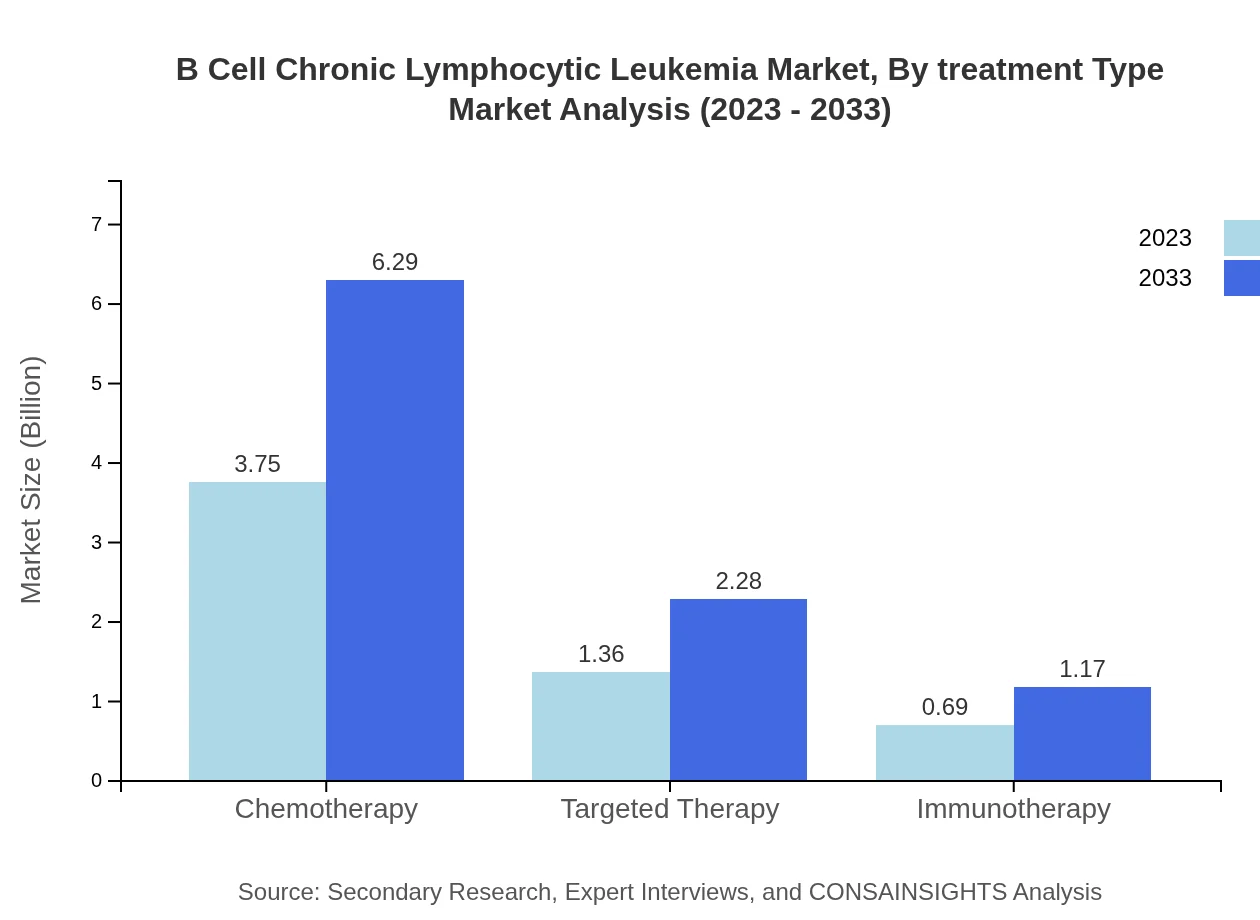
The B Cell CLL market by treatment type includes monoclonal antibodies, small molecule inhibitors, and biologics, with monoclonal antibodies commanding a significant share. In 2023, the monoclonal antibodies segment was valued at $3.75 billion, expected to rise to $6.29 billion by 2033. Small molecule inhibitors supported by targeted therapy represent the second-largest segment, growing from $1.36 billion in 2023 to $2.28 billion by 2033.
B Cell Chronic Lymphocytic Leukemia Market Analysis By Drug Class
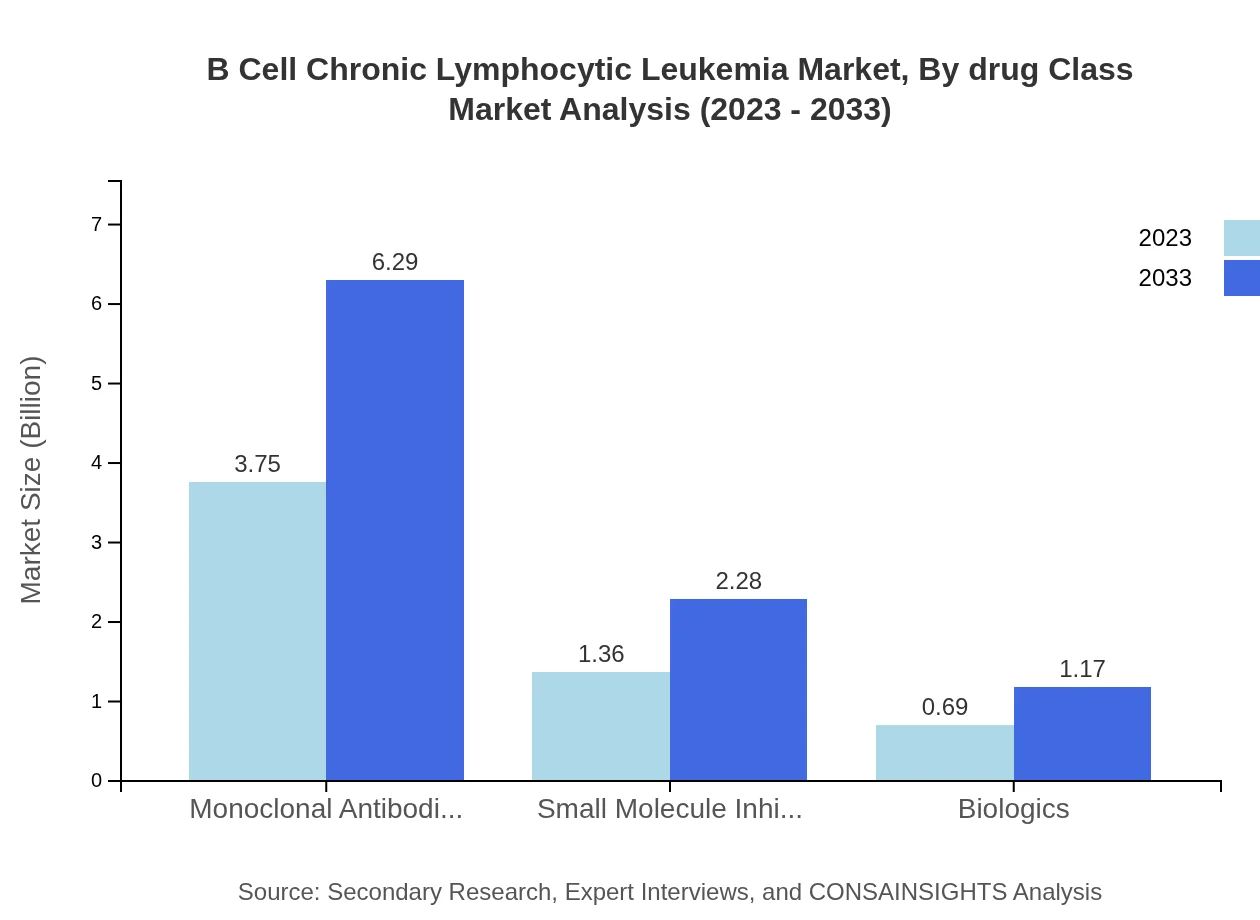
Within the market by drug class, the most critical segment includes targeted therapies, primarily focusing on the treatment pathways specific to genetic subtypes of CLL. Notably, first-line therapies dominate the market, with a projected increase in both market size and share through to 2033.
B Cell Chronic Lymphocytic Leukemia Market Analysis By Therapy Stage
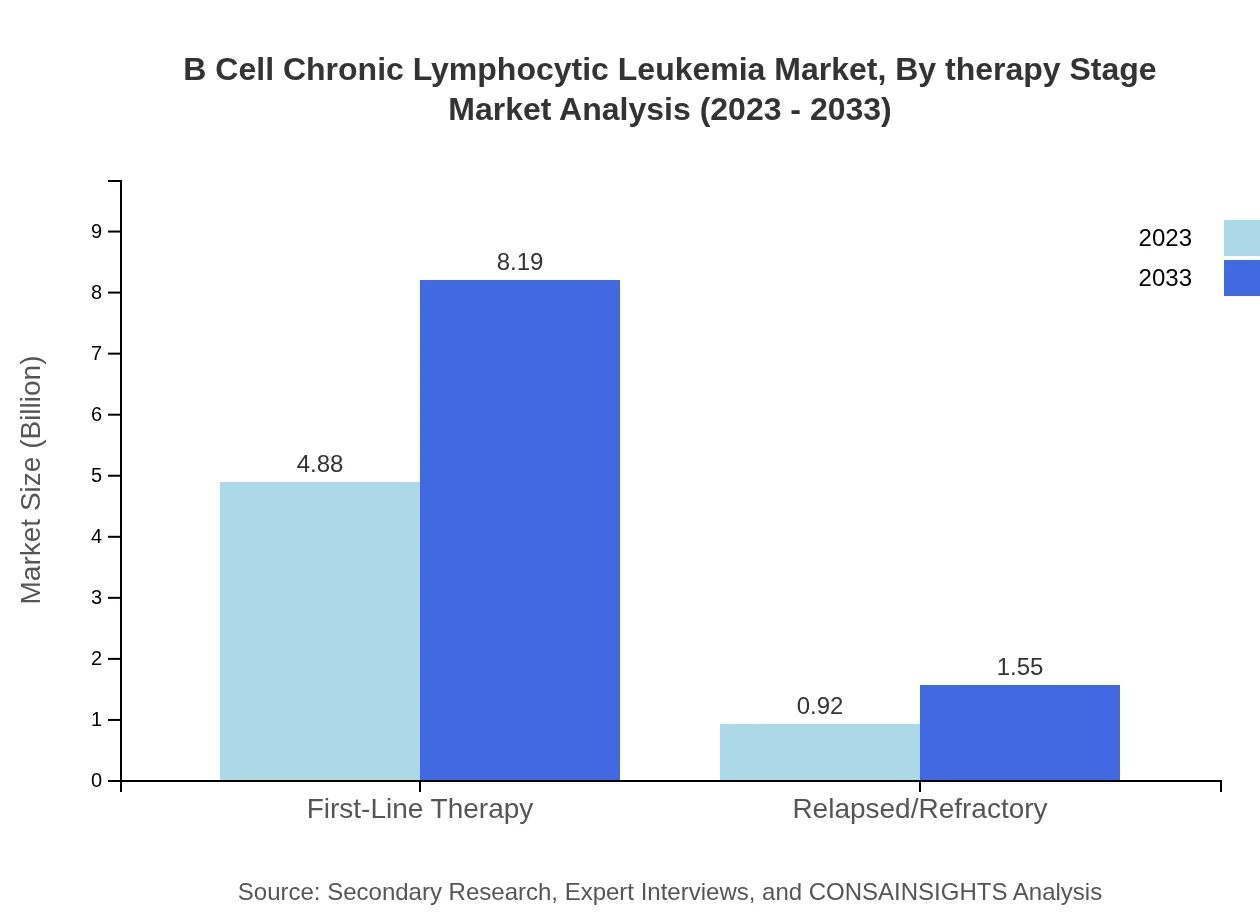
The market segmentation based on therapy stage shows that first-line therapies hold a substantial market share at 84.09% in 2023, with expectations to remain dominant as treatment protocols evolve to favor more effective solutions for patients diagnosed early.
B Cell Chronic Lymphocytic Leukemia Market Analysis By Patient Demographics
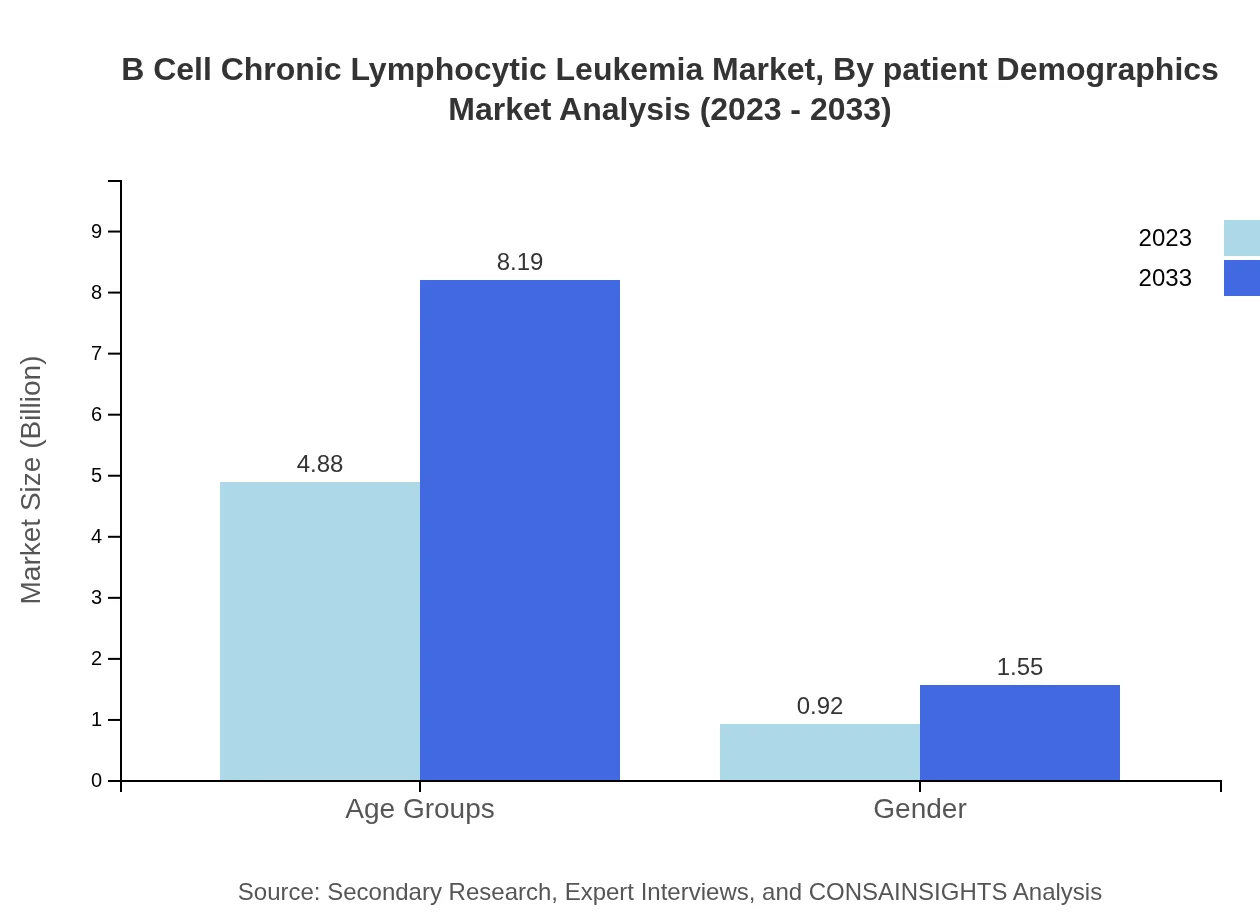
Analyzing the market by patient demographics indicates a near-constant engagement with age groups where patients above 60 years are more susceptible to CLL. This segment's market share is expected to grow consistently as the global population ages.
B Cell Chronic Lymphocytic Leukemia Market Trends and Future Forecast
Tell us your focus area and get a customized research report.
Global Market Leaders and Top Companies in B Cell Chronic Lymphocytic Leukemia Industry
Roche:
A front-runner in the oncology market, Roche has made significant advancements in monoclonal antibodies for CLL treatments like Rituxan (Rituximab) and Gazyva (Obinutuzumab).AbbVie:
Known for its strong portfolio in hematology, AbbVie has developed ibrutinib (Imbruvica) for CLL, demonstrating substantial revenue growth and clinical success.Novartis:
With a focus on innovative therapies, Novartis has significantly contributed to the market through its kinase inhibitors and continually expands its CLL treatment offerings.Gilead Sciences:
Gilead is pivotal with new agents and drug combinations that are enhancing treatment outcomes for refractory CLL patients around the globe.We're grateful to work with incredible clients.








FAQs
What is the market size in 2023?
The market size in 2023 is $5.80 Billion, as reported for the global B Cell CLL market within the provided forecast baseline.
How big will the market be in 2033?
By 2033 the market is projected to reach $9.74 Billion according to the supplied forecast figures covering the 2023 to 2033 period.
What is CAGR for the forecast period?
The compound annual growth rate for 2023 to 2033 is 5.2%, as specified for the market trajectory over the forecast window.
Is there a single fastest Growing region in the B Cell Chronic Lymphocytic Leukemia Market Report market?
No single fastest-growing region is stated for the B Cell Chronic Lymphocytic Leukemia Market Report market because the top regional implied CAGR values are within 0.15 percentage points of each other, making the ranking too close to call reliably.
Who are the top companies in the market?
Top companies listed in the report include Roche, AbbVie, Novartis and Gilead Sciences, noted for clinical development and therapeutic portfolios.
Why is personalized medicine important?
Personalized medicine enables treatments tailored to genetic markers, improving outcomes and driving adoption of targeted therapies within the B Cell CLL landscape.
What drives regional growth?
Regional expansion is driven by enhanced diagnostics, increased healthcare investment and the introduction of new therapies in local markets.
How are therapy types categorized?
Treatment segmentation in the report covers categories such as chemotherapy, targeted therapy and immunotherapy to reflect diverse clinical approaches.