

Tinea Pedis Treatment Market Report
First published: 07 October 2024 | Last updated: 28 May 2026 | Report Code: tinea-pedis-treatment
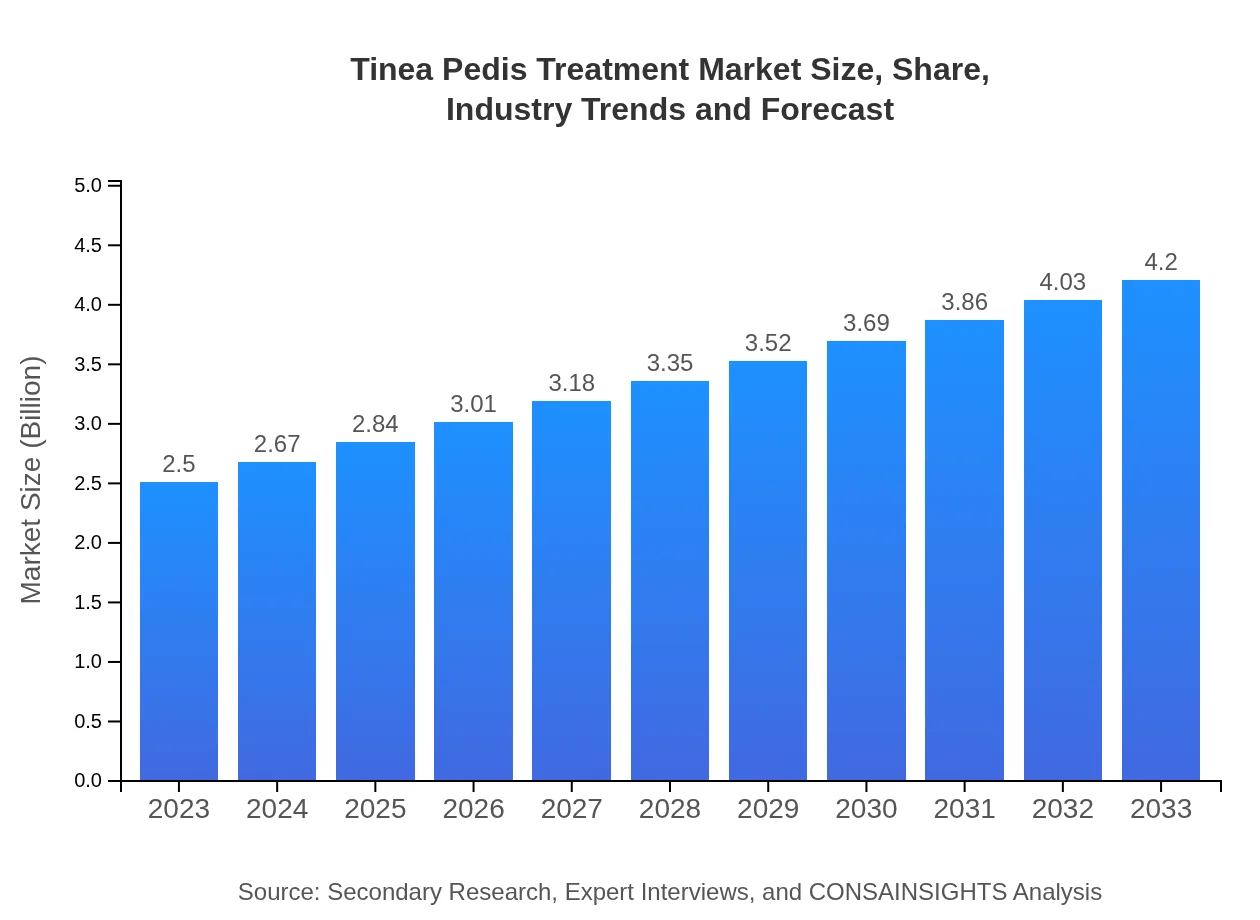
Tinea Pedis Treatment Market — USD 2.5 billion in 2023, Growing to USD 4.20B by 2033 at 5.2% CAGR
This report provides a comprehensive analysis of the Tinea Pedis Treatment market, covering insights on market size, growth trends, regional breakdowns, and industry dynamics from 2023 to 2033.
Key Takeaways
- Global market expands from $2.50 Billion in 2023 to $4.20 Billion in 2033 at a CAGR of 5.2%.
- North America is largest regional market, while no single fastest-growing region is stated because regional CAGR differences remain within 0.15 percentage points.
- Top product categories include topical and oral antifungals, alongside alternative therapies and OTC offerings.
- Distribution is split across hospital, retail, and online pharmacies, supporting wider patient access.
- Major firms active in the space include Johnson & Johnson, Bayer AG, GSK, Pfizer Inc., and Novartis AG.
Tinea Pedis Treatment Market Report — Executive Summary
North America remains largest market by forecast-period value, while no single fastest-growing region is stated because top regional growth rates are separated by less than 0.15 percentage points. The market for tinea pedis treatments is projected to grow from $2.50 Billion in 2023 to $4.20 Billion by 2033, driven by rising awareness, expanded OTC availability, and innovations in antifungal formulations. Demand patterns reflect a broadening product mix that includes topical antifungals, oral therapies, and alternative approaches. Distribution channels such as hospital pharmacies, retail outlets, and online pharmacies are expanding patient access and convenience. North America stands out as the largest regional market, rising from $0.85 Billion in 2023 to $1.43 Billion in 2033. Competitive activity involves established life-sciences companies—Johnson & Johnson, Bayer AG, GSK, Pfizer Inc., and Novartis AG—pursuing formulation improvements and market reach. Key challenges include treatment resistance and cost pressures, while opportunities arise from preventative care trends and digital pharmacy growth. The report segments the market by region, end user, drug type, therapy type, and distribution channel to guide strategic decisions and prioritize investment areas.
Key Growth Drivers
- Increasing public health awareness and preventative care practices boosting demand for OTC and prescription treatments.
- Broader availability through retail and online pharmacies increasing patient access and purchase convenience.
- Ongoing R&D into improved antifungal formulations and multi-action therapies enhancing treatment efficacy.
- Rising participation in sports and communal activities contributing to higher incidence and treatment rates.
- Established pharmaceutical firms expanding product portfolios and distribution partnerships to capture market share.
| Metric | Value |
|---|---|
| Study Period | 2023 - 2033 |
| 2023 Market Size | $2.50 Billion |
| CAGR (2023-2033) | 5.2% |
| 2033 Market Size | $4.20 Billion |
| Top Companies | Johnson & Johnson, Bayer AG, GSK, Pfizer Inc., Novartis AG |
| Published Date | 07 October 2024 |
| Last Modified Date | 28 May 2026 |
Tinea Pedis Treatment Market Overview
Customize Tinea Pedis Treatment Market Report market research report
- ✔ Get in-depth analysis of Tinea Pedis Treatment market size, growth, and forecasts.
- ✔ Understand Tinea Pedis Treatment's regional dynamics and industry-specific trends.
- ✔ Identify potential applications, end-user demand, and growth segments in Tinea Pedis Treatment
What is the Market Size & CAGR of Tinea Pedis Treatment Market Report market in 2023?
Tinea Pedis Treatment Industry Analysis
Tinea Pedis Treatment Market Segmentation and Scope
Tell us your focus area and get a customized research report.
Tinea Pedis Treatment Market Report Market Analysis Report by Region
Europe Tinea Pedis Treatment Market Report:
Europe grows from $0.7 Billion in 2023 to $1.17 Billion in 2033. Growth drivers include increased OTC access, growing public health awareness, and ongoing product innovation across topical and oral antifungal offerings.Asia Pacific Tinea Pedis Treatment Market Report:
Asia Pacific grows from $0.54 Billion in 2023 to $0.91 Billion in 2033. The region’s growth is fueled by rising awareness, expanding retail and online pharmacy channels, and a growing population engaging in communal and sporting activities.North America Tinea Pedis Treatment Market Report:
North America is largest regional market, rising from $0.85 Billion in 2023 to $1.43 Billion in 2033. Regional expansion is supported by well-established healthcare infrastructure, broad pharmacy networks, and active participation by major pharmaceutical firms.South America Tinea Pedis Treatment Market Report:
Latin America grows from $0.24 Billion in 2023 to $0.4 Billion in 2033. Market expansion is supported by improved availability of treatments, growing consumer awareness, and increased uptake of both OTC and prescription antifungal products.Middle East & Africa Tinea Pedis Treatment Market Report:
Middle East and Africa grows from $0.17 Billion in 2023 to $0.28 Billion in 2033. Drivers include broader access to pharmacies, rising health education, and gradual adoption of diverse treatment options across urban centers.Tell us your focus area and get a customized research report.
Research Methodology
Tinea Pedis Treatment Market Analysis By Drug Type
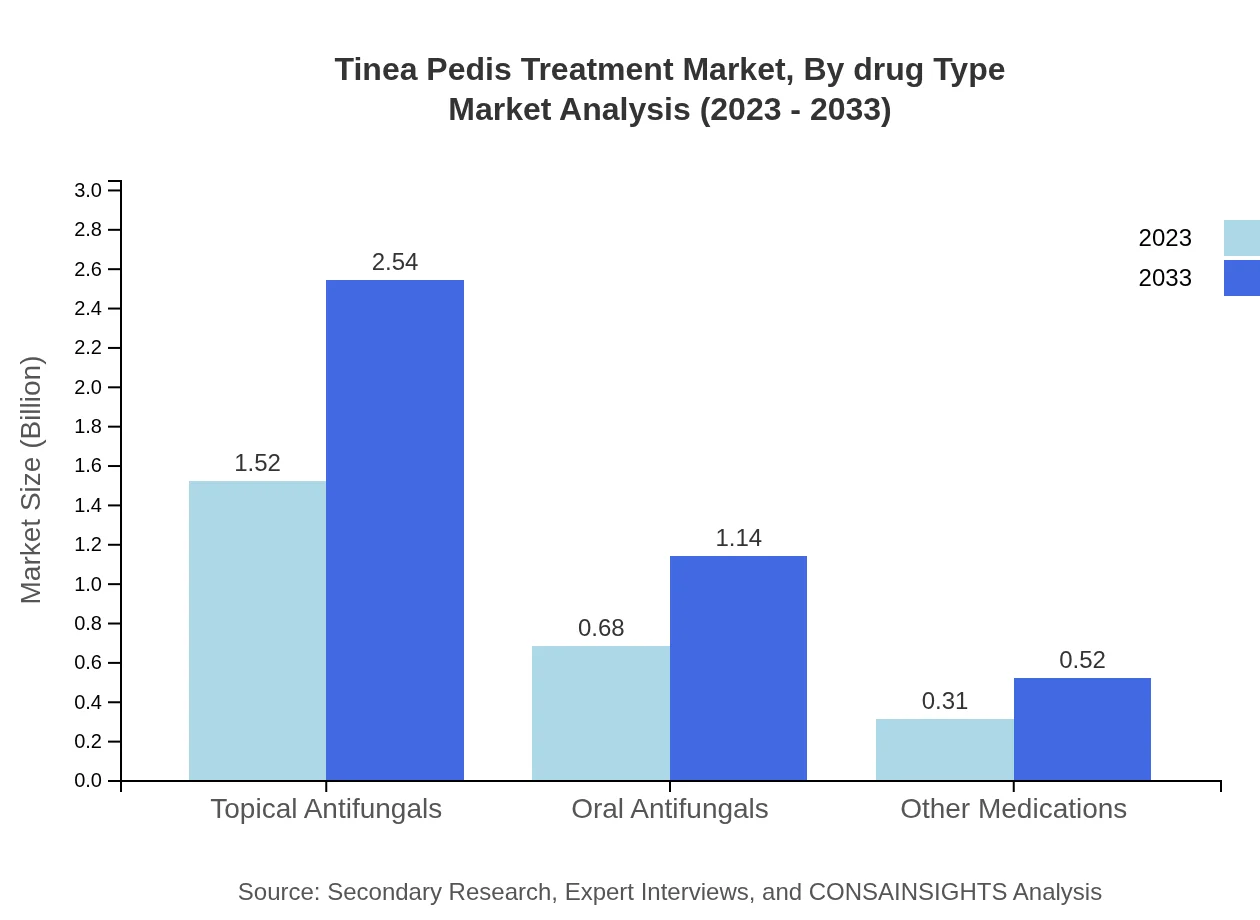
The market for Tinea Pedis Treatment is primarily dominated by topical antifungals, which accounted for $1.52 billion in 2023 (60.64% market share) and are expected to reach $2.54 billion by 2033. Oral antifungals represent the next largest segment, starting at $0.68 billion (27.05% market share) and forecasted to grow to $1.14 billion. Other medications constitute a smaller segment but add diversity to treatment options available.
Tinea Pedis Treatment Market Analysis By Therapy Type
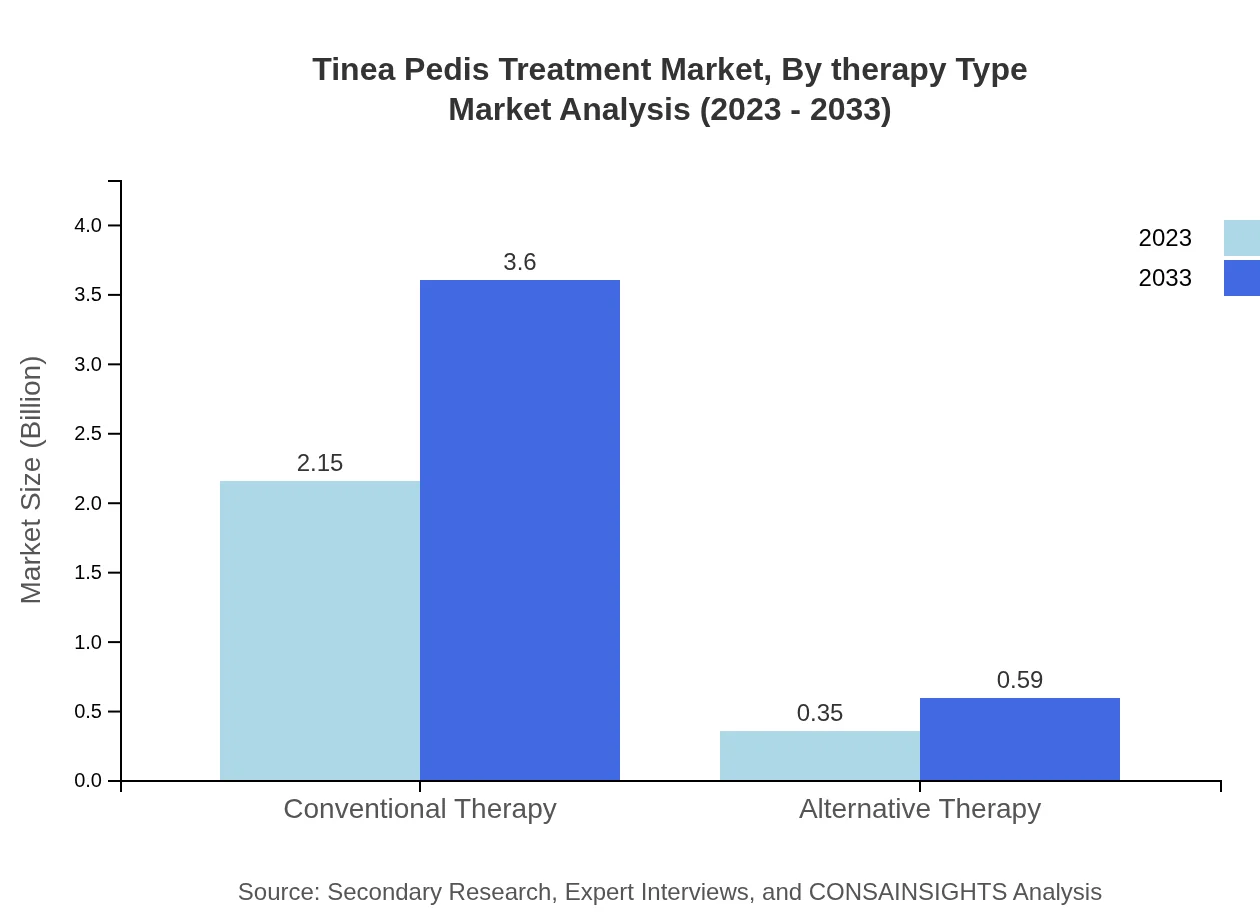
The conventional therapy market for Tinea Pedis Treatment leads significantly with an estimated size of $2.15 billion in 2023, examining a broad array of established antifungal treatments. Alternative therapy, while growing, only represents a market size of $0.35 billion, showcasing the dominant preference for conventional approaches in clinical settings.
Tinea Pedis Treatment Market Analysis By Distribution Channel
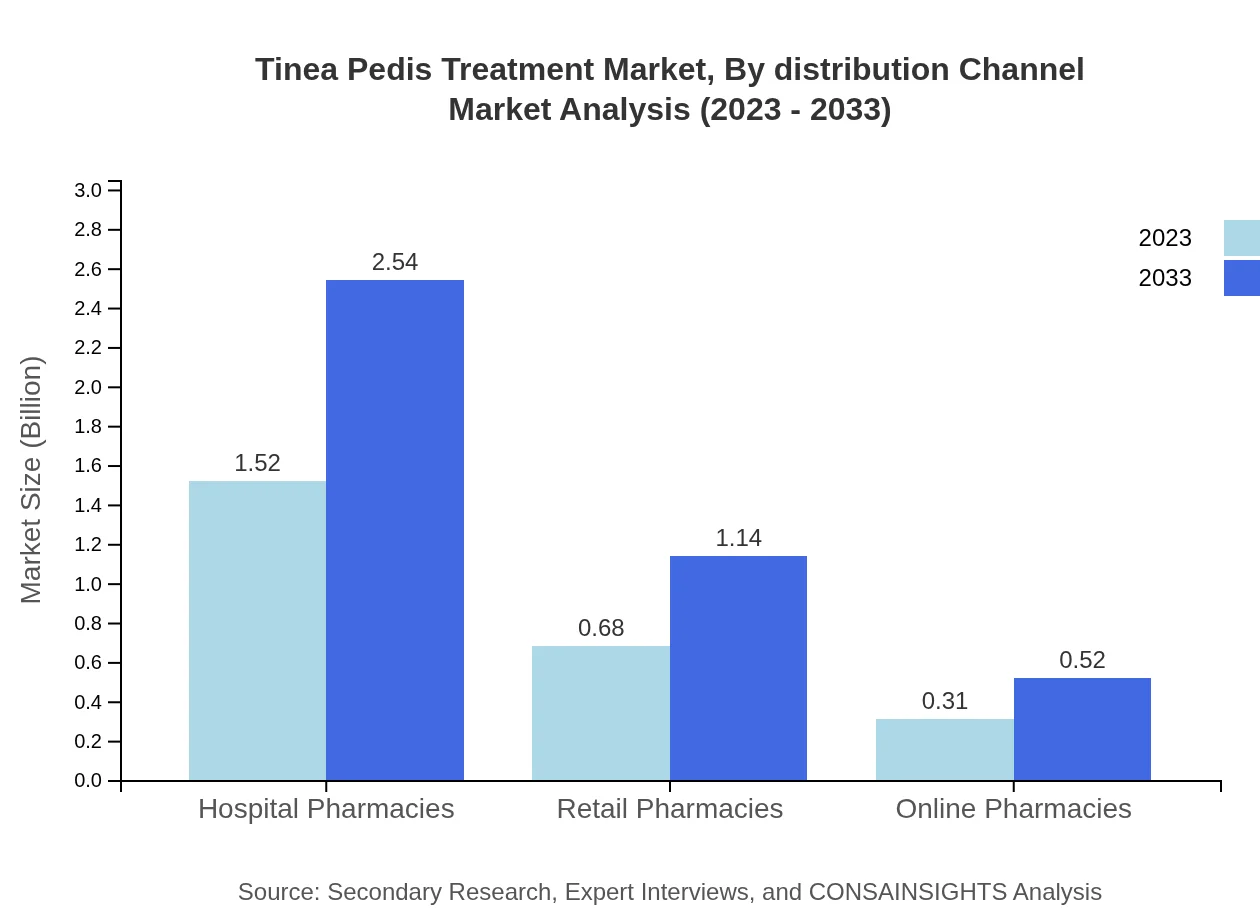
Both hospital and retail pharmacies are pivotal distribution channels for Tinea Pedis treatment. In 2023, hospital pharmacies held a major share of the market at $1.52 billion (60.64%), while retail pharmacies accounted for $0.68 billion (27.05%), with an increasing trend towards online pharmacies also noted as they expand their market presence.
Tinea Pedis Treatment Market Analysis By End User
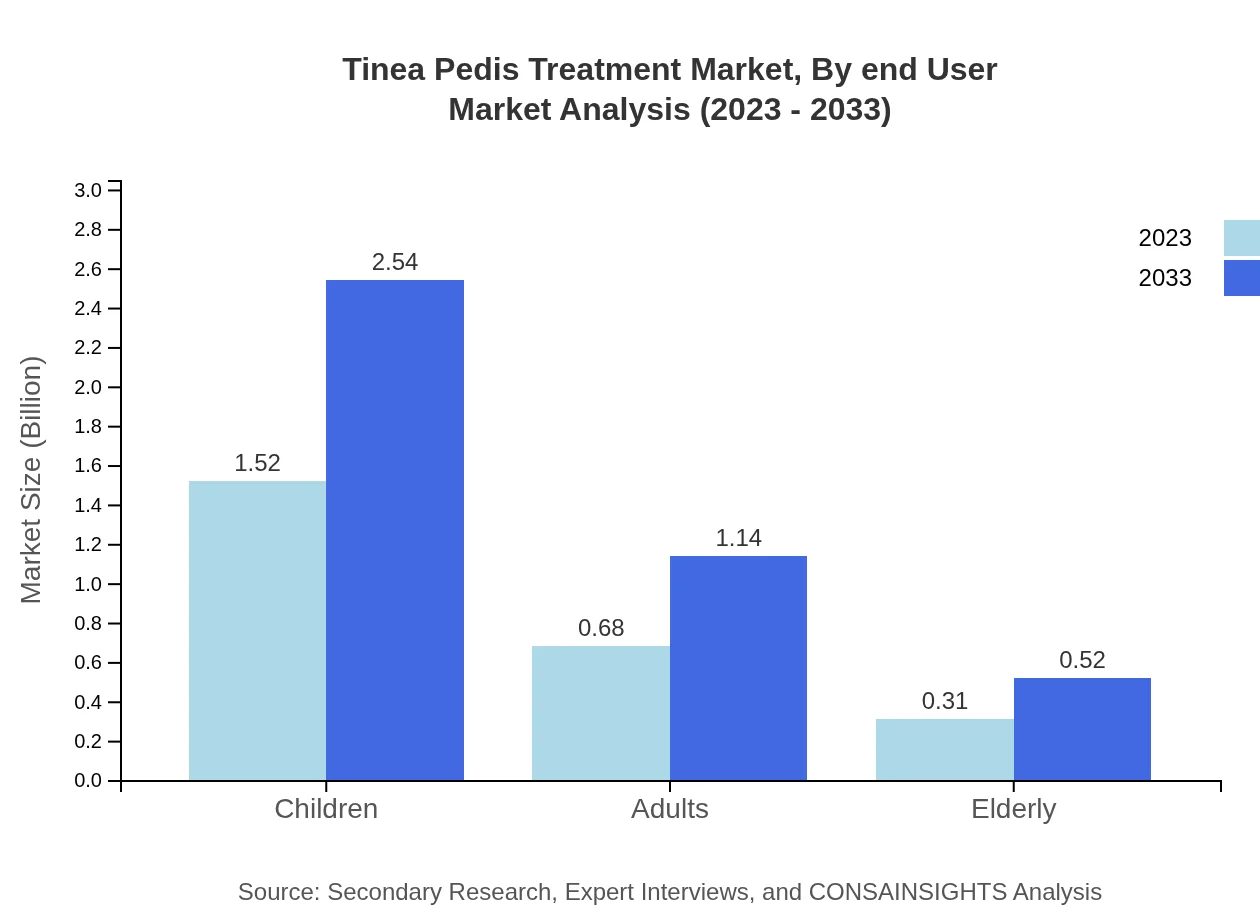
Children constitute the largest segment of end-users within the Tinea Pedis treatment market at $1.52 billion (60.64% market share), attributed to higher susceptibility to infections in younger populations. Adults and the elderly constitute $0.68 billion (27.05%) and $0.31 billion (12.31%) respectively, indicating tailored marketing strategies for different demographics.
Tinea Pedis Treatment Market Analysis By Region
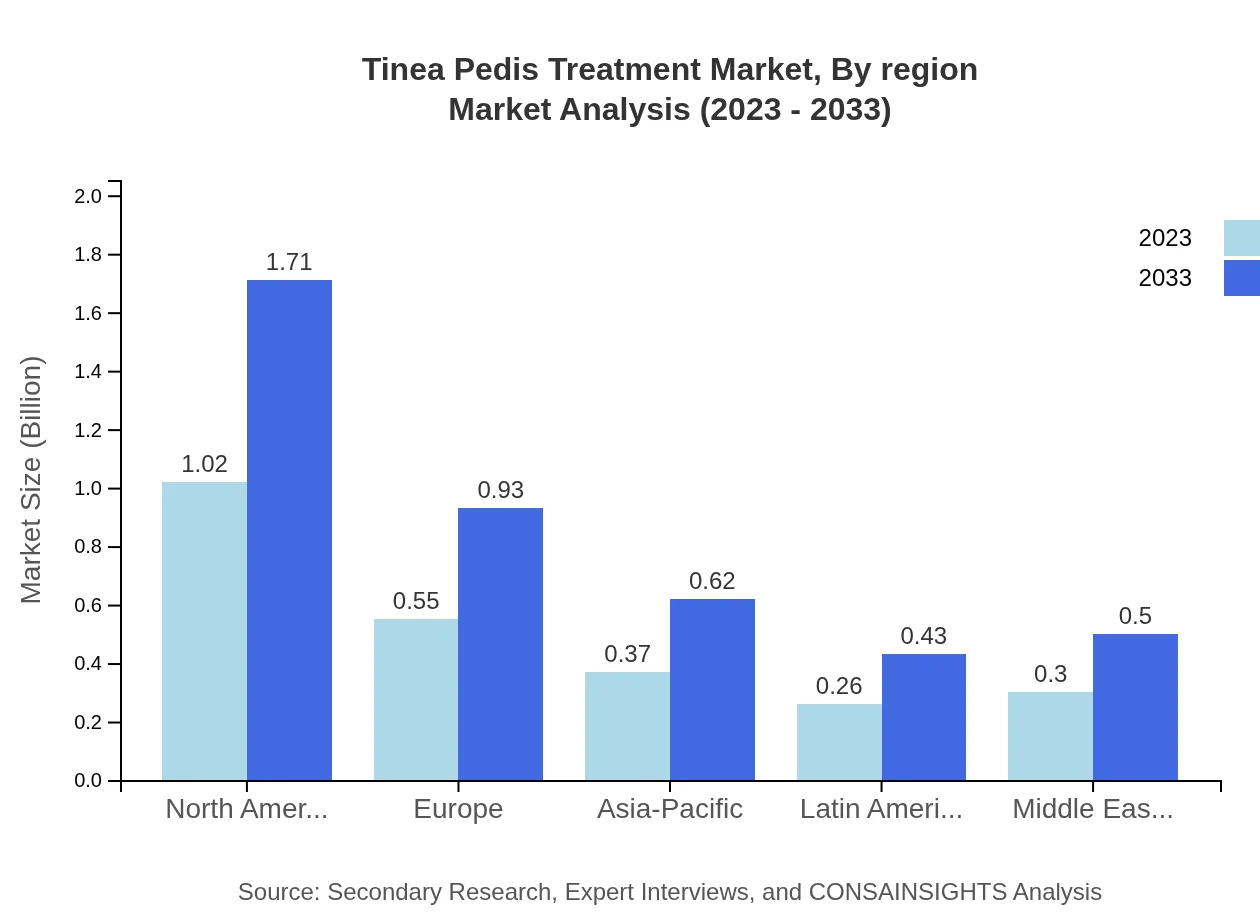
Regionally, North America holds the largest share of the Tinea Pedis Treatment market due to a prevalence of consumer awareness and broad availability of treatment options, followed by Europe, which is characterized by a strong preference for innovative therapies.
Tinea Pedis Treatment Market Trends and Future Forecast
Tell us your focus area and get a customized research report.
Global Market Leaders and Top Companies in Tinea Pedis Treatment Industry
Johnson & Johnson:
A prominent leader in the health care industry, Johnson & Johnson offers a robust portfolio of antifungal treatments, leveraging extensive R&D capabilities.Bayer AG:
Bayer provides innovative treatment options and has extensive dermatological products aimed at fungal infections, contributing significantly to the Tinea Pedis market.GSK:
GlaxoSmithKline is known for its strong therapeutic approaches to dermatological conditions, including Tinea Pedis, creating advanced antifungal medications.Pfizer Inc.:
Pfizer's role in the development and commercialization of antifungal agents for Tinea Pedis places it among the leaders in this market segment.Novartis AG:
Novartis combines pharmaceutical innovation and broad expertise in dermatology, enhancing market presence in Tinea Pedis treatments.We're grateful to work with incredible clients.









FAQs
What is the market size of the Tinea Pedis Treatment Market Report in 2023?
The market size in 2023 is $2.50 Billion, based on the provided market data for the global tinea pedis treatment sector.
How big is the market expected to be in 2033?
The market is expected to reach $4.20 Billion in 2033 according to the forecast figures supplied for the period 2023 to 2033.
What is CAGR for the forecast period?
The reported compound annual growth rate for 2023 to 2033 is 5.2% as provided in the input dataset.
Is there a single fastest Growing region in the Tinea Pedis Treatment Market Report market?
No single fastest-growing region is stated for the Tinea Pedis Treatment Market Report market because the top regional implied CAGR values are within 0.15 percentage points of each other, making the ranking too close to call reliably.
Which companies are listed as leading players?
Top companies named include Johnson & Johnson, Bayer AG, GSK, Pfizer Inc., and Novartis AG in the supplied company list.
What are the main drug type segments?
Primary drug type segments provided are Topical Antifungals, Oral Antifungals, and Other Medications as listed in the input data.
How are distribution channels structured?
Distribution channels cited include Hospital Pharmacies, Retail Pharmacies, and Online Pharmacies, indicating multiple routes to market.
What end User segments are included?
End-user segments specified are Children, Adults, and Elderly in the dataset to address age-specific treatment needs.
What is driving growth in alternative therapies?
Growth in alternative therapies is tied to a broader patient preference for non-conventional options and complementing conventional treatments, as noted in the context.
Who conducted the research for this report?
Research methodology includes primary interviews with industry experts and secondary analysis of company reports and publications, per the provided facts.