

Tiny Home Market
First published: 23 February 2025 | Last updated: 24 June 2026 | Report Code: tiny-home-market
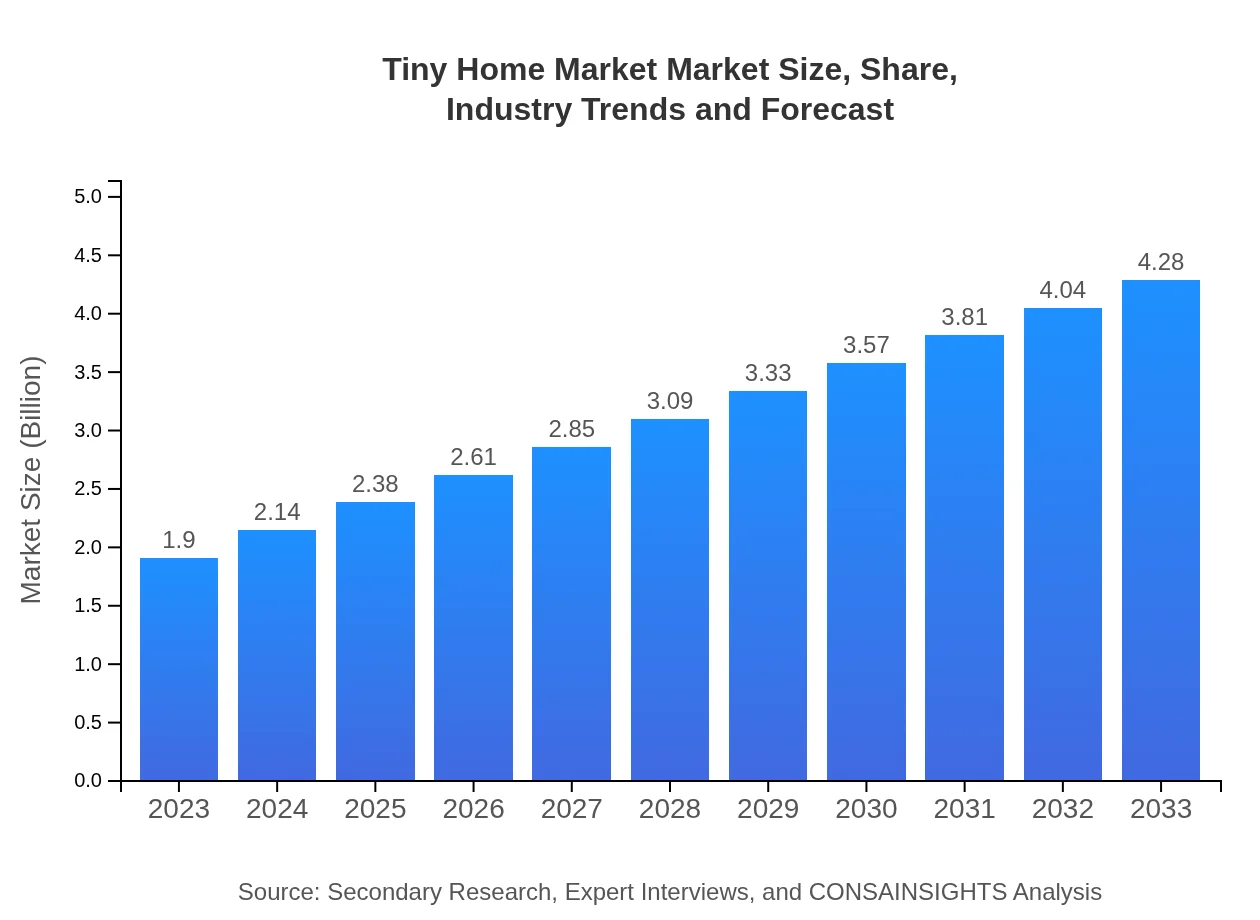
Tiny Home Market Market — USD $1.9 Billion in 2023, Growing to USD 4.28null by 2033 at 8.2% CAGR
This report provides an in-depth analysis of the Tiny Home Market from 2023 to 2033, covering market size, growth rate, regional insights, industry trends, segmentation, and forecasts. It aims to offer valuable insights for stakeholders and investors in this burgeoning market.
Key Takeaways
- Global market expands from $1.90 Billion in 2023 to $4.28 Billion by 2033, reflecting an 8.2% CAGR for 2023 to 2033.
- North America is largest regional market, while no single fastest-growing region is stated because regional CAGR differences remain within 0.15 percentage points.
- Europe grows from $0.61 Billion to $1.37 Billion over the forecast period, highlighting sustained interest in compact housing.
- Material and type segmentation shows prominence of wood and both mobile and stationary tiny homes in consumer choices.
- Leading companies active in the sector include Tumbleweed Tiny House Company, Tiny Heirloom, Escape Traveler, and Zyl Vardos.
Tiny Home Market — Executive Summary
North America remains largest market by forecast-period value, while no single fastest-growing region is stated because top regional growth rates are separated by less than 0.15 percentage points. The tiny home sector is experiencing notable expansion as buyers seek affordability, sustainability, and simplified living. Market value increases from $1.90 Billion in 2023 to $4.28 Billion by 2033, with an 8.2% CAGR across the 2023 to 2033 forecast. Growth is fueled by housing cost pressures, interest in minimalism, and technological advances in compact design and materials. Segmentation spans type (mobile, stationary), materials (wood, metal, recycled materials), architecture (modern, traditional, eco-friendly), and target consumers (young professionals, retirees, families). Regional trajectories vary: North America records $0.64 Billion in 2023 and $1.44 Billion in 2033, while Europe moves from $0.61 Billion to $1.37 Billion. The report profiles competitive participants such as Tumbleweed Tiny House Company, Tiny Heirloom, Escape Traveler, and Zyl Vardos, and outlines regulatory and financing considerations that influence adoption and community development.
Key Growth Drivers
- Rising housing affordability pressures prompting demand for lower-cost dwelling alternatives.
- Growing consumer preference for minimalism and reduced environmental footprints supporting compact living solutions.
- Advances in lightweight materials and construction methods enabling greater customization and durability.
- Interest in communal tiny home developments and policy shifts that permit alternative housing models.
- Targeted appeal to diverse consumer groups including young professionals, retirees, and families seeking flexibility.
| Metric | Value |
|---|---|
| Study Period | 2023 - 2033 |
| 2023 Market Size | $1.90 Billion |
| CAGR (2023-2033) | 8.2% |
| 2033 Market Size | $4.28 Billion |
| Top Companies | Tumbleweed Tiny House Company, Tiny Heirloom, Escape Traveler, Zyl Vardos |
| Published Date | 23 February 2025 |
| Last Modified Date | 24 June 2026 |
Tiny Home Market Overview
Customize Tiny Home Market market research report
- ✔ Get in-depth analysis of Tiny Home Market market size, growth, and forecasts.
- ✔ Understand Tiny Home Market's regional dynamics and industry-specific trends.
- ✔ Identify potential applications, end-user demand, and growth segments in Tiny Home Market
What is the Market Size & CAGR of Tiny Home Market market in 2023?
Tiny Home Market Industry Analysis
Tiny Home Market Segmentation and Scope
Tell us your focus area and get a customized research report.
Tiny Home Market Market Analysis Report by Region
Europe Tiny Home Market:
Europe grows from $0.61 Billion in 2023 to $1.37 Billion in 2033. Regional momentum reflects urban housing cost pressures, rising environmental awareness, and design innovation that supports compact living across diverse markets.Asia Pacific Tiny Home Market:
Asia Pacific grows from $0.36 Billion in 2023 to $0.82 Billion in 2033. Growth in the region is influenced by urban density challenges, a search for affordable housing formats, and growing acceptance of minimal-living concepts.North America Tiny Home Market:
North America is largest regional market, rising from $0.64 Billion in 2023 to $1.44 Billion in 2033. Local drivers include demand for affordable housing alternatives, regulatory environments that in some areas permit tiny dwellings, and strong consumer interest in downsizing and sustainability.South America Tiny Home Market:
Latin America grows from $0.1 Billion in 2023 to $0.23 Billion in 2033. Drivers include affordability considerations, interest in alternative housing models, and emerging market adoption of compact living solutions.Middle East & Africa Tiny Home Market:
Middle East and Africa grows from $0.19 Billion in 2023 to $0.42 Billion in 2033. Factors supporting expansion include housing affordability needs, increasing sustainability focus, and gradual regulatory openness to nontraditional housing types.Tell us your focus area and get a customized research report.
Research Methodology
Tiny Home Market Market Analysis By Type
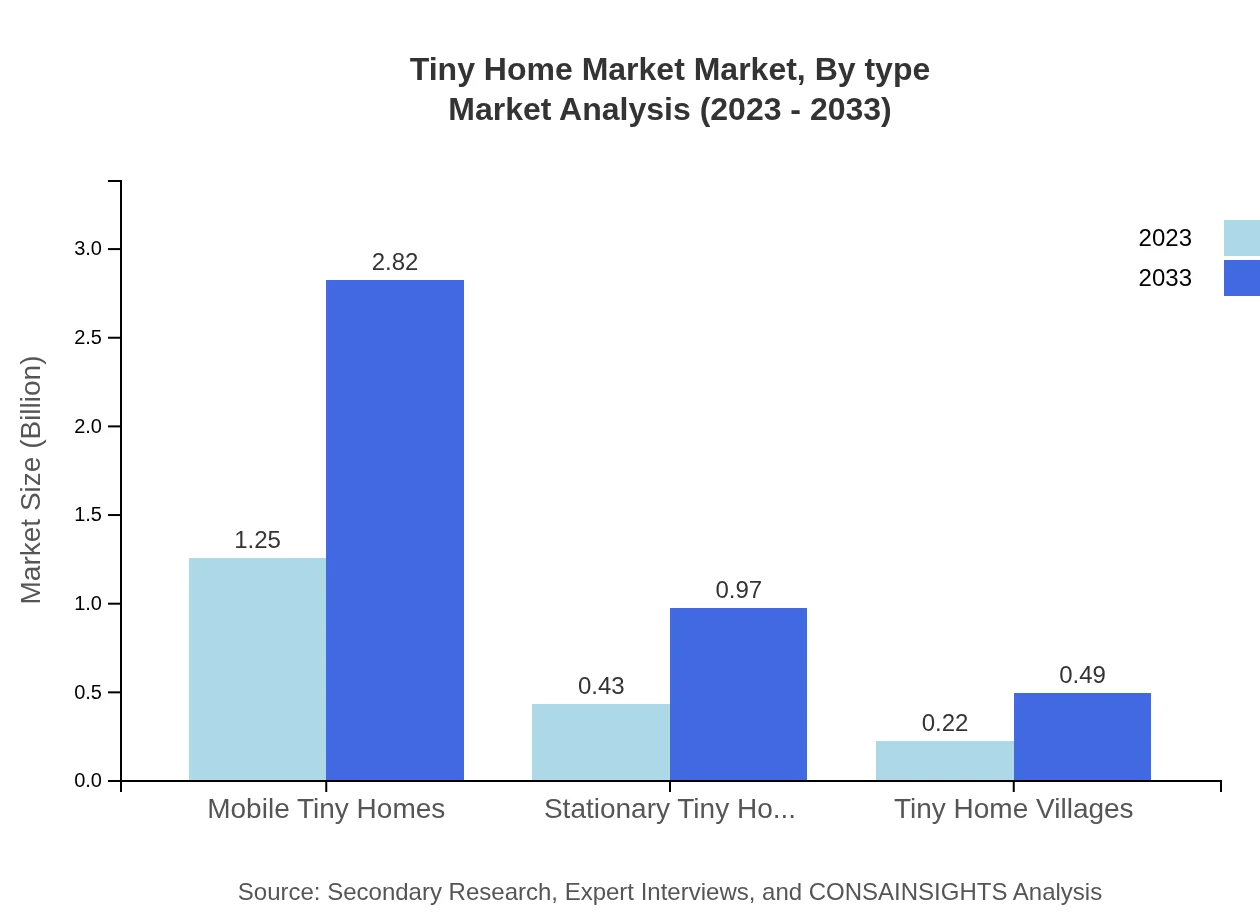
The market is segmented into mobile and stationary tiny homes. Mobile tiny homes hold a significant share of the market, valued at $1.25 billion in 2023 and projected to reach $2.82 billion by 2033, making up about 65.81% of the overall type market share. Stationary tiny homes, at $0.43 billion in 2023, are expected to grow to $0.97 billion by 2033, capturing 22.68% share. Tiny home villages also contribute, valued at $0.22 billion in 2023 and projected to grow to $0.49 billion by 2033, representing 11.51% of the market.
Tiny Home Market Market Analysis By Architecture Style
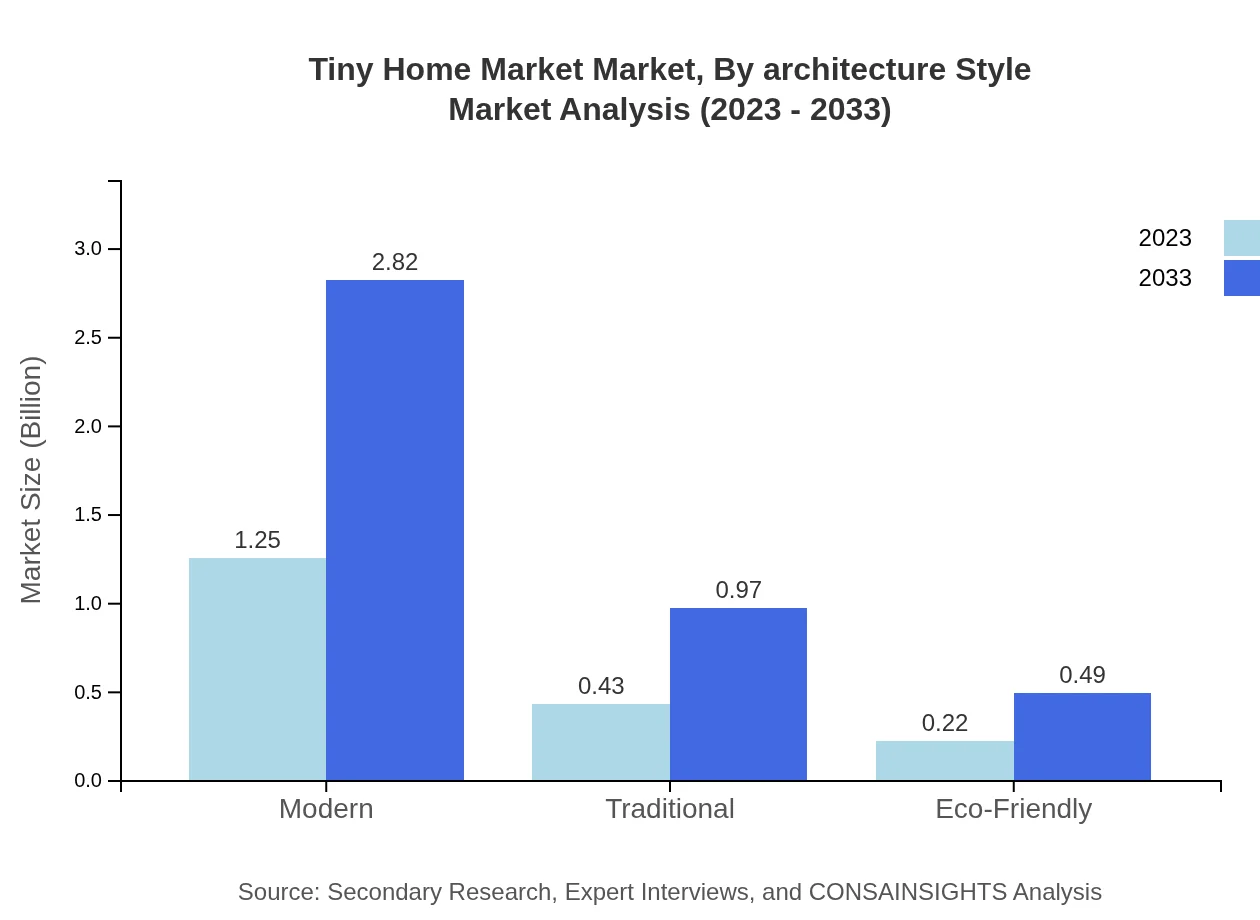
In terms of architecture style, modern tiny homes are the most popular, accounting for a market size of $1.25 billion in 2023, expected to rise to $2.82 billion by 2033 (65.81% market share). Traditional homes cater to a specific consumer base, valued at $0.43 billion in 2023 and projected to reach $0.97 billion by 2033 (22.68% share). Eco-friendly designs are gaining traction with a market increasing from $0.22 billion to $0.49 billion, representing 11.51% of the market.
Tiny Home Market Market Analysis By Material
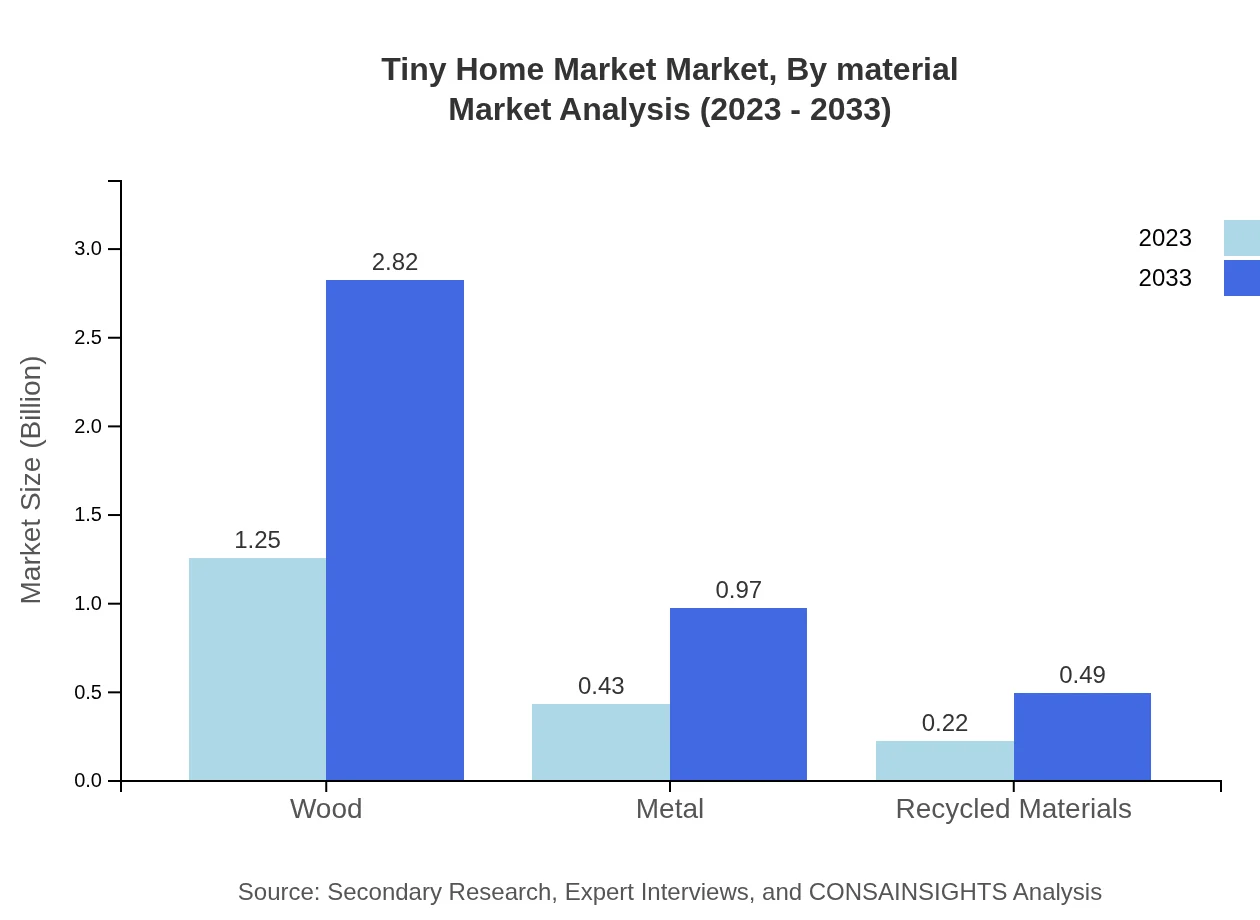
The material segment shows wood as the leading choice for construction, valued at $1.25 billion in 2023 with an anticipation of $2.82 billion by 2033 (65.81% market share). Metal and recycled materials are also significant, with metal homes valued at $0.43 billion in 2023 and projected to grow to $0.97 billion (22.68% share), while recycled materials are expected to expand from $0.22 billion to $0.49 billion by 2033, making up 11.51% of the market.
Tiny Home Market Market Analysis By Target Consumer
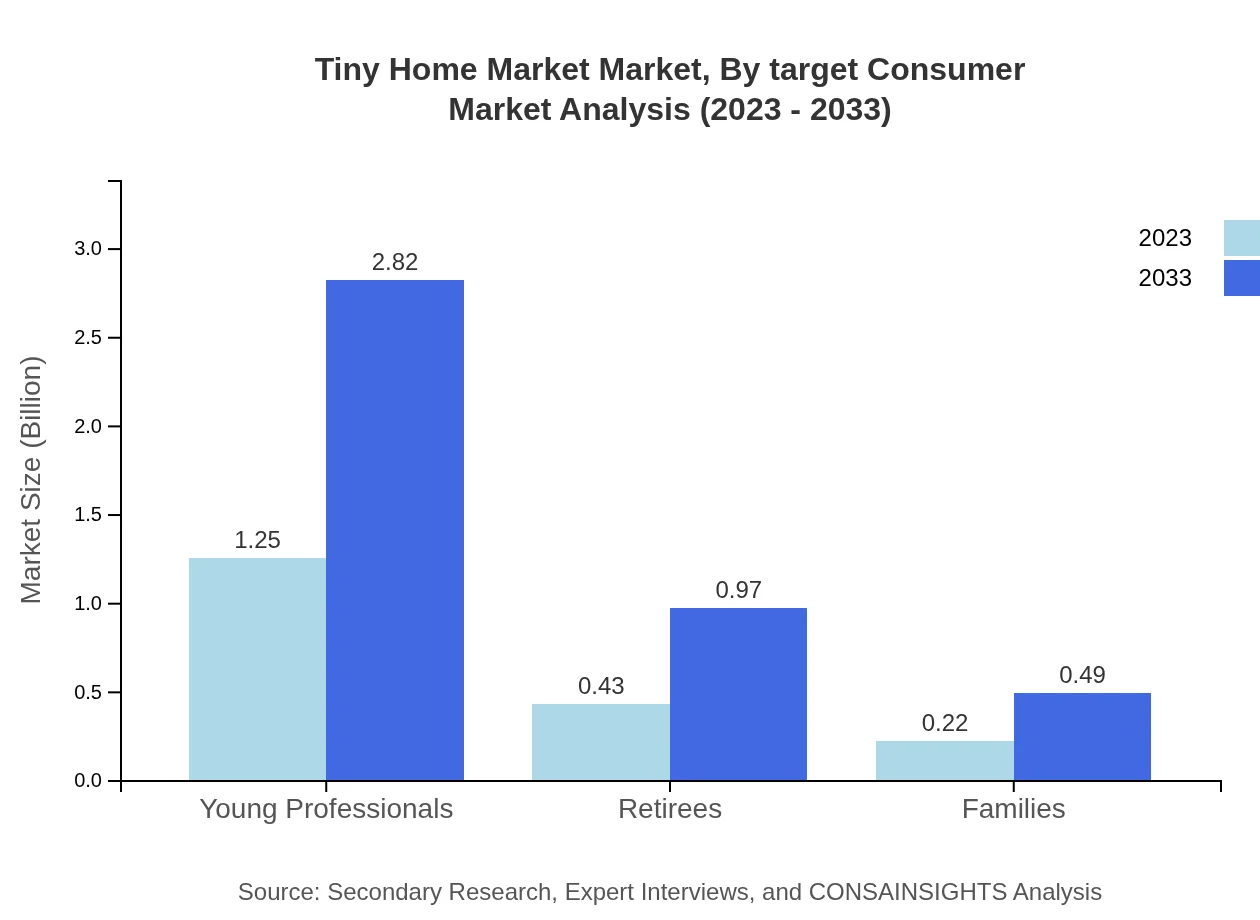
The target consumer segment identifies young professionals as the largest demographic, with a market size of $1.25 billion in 2023 expected to reach $2.82 billion by 2033 (65.81% share). Retirees represent a growing market segment, moving from $0.43 billion to $0.97 billion (22.68% share). Families are also joining the trend, with a market size increasing from $0.22 billion to $0.49 billion, accounting for 11.51% of the market.
Tiny Home Market Trends and Future Forecast
Tell us your focus area and get a customized research report.
Global Market Leaders and Top Companies in Tiny Home Market Industry
Tumbleweed Tiny House Company:
Known for its innovative designs, Tumbleweed offers a range of tiny homes that are both functional and aesthetically pleasing, catering to a growing market of eco-conscious consumers.Tiny Heirloom:
Tiny Heirloom specializes in luxurious tiny homes, blending modern technology with traditional craftsmanship, popular among affluent customers seeking downsized living without compromising comfort.Escape Traveler:
Escape Traveler focuses on providing sustainable and stylish tiny homes designed for mobility, appealing to consumers interested in a nomadic lifestyle.Zyl Vardos:
Zyl Vardos creates unique, handcrafted tiny homes that emphasize artistry and environmental sustainability, attracting buyers who prioritize aesthetic individuality.We're grateful to work with incredible clients.









FAQs
What is the market size of the Tiny Home Market in 2023?
The market size in 2023 is $1.90 Billion, based on provided market figures for the sector.
How big will the market be in 2033?
Projected market value for 2033 is $4.28 Billion according to the report's forecast data for the period 2023 to 2033.
What is CAGR for the forecast period?
The compound annual growth rate (CAGR) for 2023 to 2033 is 8.2% as stated in the provided market figures.
Is there a single fastest Growing region in the Tiny Home Market market?
No single fastest-growing region is stated for the Tiny Home Market market because the top regional implied CAGR values are within 0.15 percentage points of each other, making the ranking too close to call reliably.
Which companies are highlighted in the report?
Top companies mentioned include Tumbleweed Tiny House Company, Tiny Heirloom, Escape Traveler, and Zyl Vardos as notable market participants.
What are common material types used in tiny homes?
Materials cited include wood, metal, and recycled materials, reflecting trends toward durability, cost-efficiency, and sustainability in construction.
Who are primary target consumers for tiny homes?
Target consumers listed are young professionals, retirees, and families, indicating a broad demographic interest in compact housing options.
What are typical architecture styles in this sector?
Architecture styles referenced include modern, traditional, and eco-friendly designs that cater to varying aesthetic and sustainability preferences.
How does segmentation by type appear in the report?
Type segmentation covers mobile tiny homes and stationary tiny homes, plus tiny home villages as a community-based offering within the market.
What research approaches were used for this report?
Methodology relied on primary interviews with industry experts, secondary company reports and publications, plus data triangulation and internal validation.