

Uropathy Treatment Market Report
First published: 08 October 2024 | Last updated: 28 May 2026 | Report Code: uropathy-treatment
Uropathy Treatment Market — USD 2.5 billion in 2023, Growing to USD 4.63B by 2033 at 6.2% CAGR
This report provides an in-depth analysis of the uropathy treatment market from 2023 to 2033. It includes insights into market size, growth forecasts, key players, and evolving trends that affect this healthcare sector.
Key Takeaways
- Global market expands from $2.50 Billion in 2023 to $4.63 Billion by 2033 at a 6.2% CAGR.
- North America is largest regional market, while no single fastest-growing region is stated because regional CAGR differences remain within 0.15 percentage points.
- Europe grows from $0.78 Billion in 2023 to $1.44 Billion in 2033, reflecting steady clinical demand.
- Asia Pacific increases from $0.46 Billion in 2023 to $0.86 Billion in 2033 amid rising awareness and healthcare access.
- Top industry names include Johnson & Johnson, Bristol-Myers Squibb, GlaxoSmithKline, and AstraZeneca.
Uropathy Treatment Market Report — Executive Summary
North America remains largest market by forecast-period value, while no single fastest-growing region is stated because top regional growth rates are separated by less than 0.15 percentage points. The Uropathy Treatment Market Report outlines market expansion driven by higher prevalence of urinary and renal disorders, an aging population, and advances in therapeutic and surgical options. The market is valued at $2.50 Billion in 2023 and is expected to reach $4.63 Billion by 2033, reflecting a 6.2% CAGR over the 2023 to 2033 forecast period. Key trends include increased adoption of medications, growing use of surgical interventions, and a shift toward home care and remote monitoring approaches. Regional patterns show North America as the largest market, while Europe and Asia Pacific also register notable gains. The competitive environment features established pharmaceutical players such as Johnson & Johnson, Bristol-Myers Squibb, GlaxoSmithKline, and AstraZeneca, focusing on treatment innovation and partnerships. The report segments the market by treatment type, drug class, disease condition, and end user, providing stakeholders with actionable intelligence on demand drivers and investment opportunities.
Key Growth Drivers
- Rising prevalence of bladder and kidney disorders increasing demand for treatments and interventions.
- Aging demographics elevating incidence rates and long-term management needs.
- Advances in pharmaceutical therapies and surgical techniques improving patient outcomes.
- Growth in home care services and remote patient monitoring expanding treatment delivery channels.
| Metric | Value |
|---|---|
| Study Period | 2023 - 2033 |
| 2023 Market Size | $2.50 Billion |
| CAGR (2023-2033) | 6.2% |
| 2033 Market Size | $4.63 Billion |
| Top Companies | Johnson & Johnson, Bristol-Myers Squibb, GlaxoSmithKline, AstraZeneca |
| Published Date | 08 October 2024 |
| Last Modified Date | 28 May 2026 |

Uropathy Treatment Market Overview
Customize Uropathy Treatment Market Report market research report
- ✔ Get in-depth analysis of Uropathy Treatment market size, growth, and forecasts.
- ✔ Understand Uropathy Treatment's regional dynamics and industry-specific trends.
- ✔ Identify potential applications, end-user demand, and growth segments in Uropathy Treatment
What is the Market Size & CAGR of Uropathy Treatment Market Report market in 2023?
Uropathy Treatment Industry Analysis
Uropathy Treatment Market Segmentation and Scope
Tell us your focus area and get a customized research report.
Uropathy Treatment Market Report Market Analysis Report by Region
Europe Uropathy Treatment Market Report:
Europe grows from $0.78 Billion in 2023 to $1.44 Billion in 2033. The region’s progress is supported by heightened clinical awareness of urinary and renal conditions, established care pathways, and increasing uptake of both pharmacological and surgical interventions.Asia Pacific Uropathy Treatment Market Report:
Asia Pacific grows from $0.46 Billion in 2023 to $0.86 Billion in 2033. Growth is linked to improving healthcare access, rising disease awareness, and expanding treatment availability in hospitals, clinics, and home care settings across the region.North America Uropathy Treatment Market Report:
North America is largest regional market, rising from $0.89 Billion in 2023 to $1.66 Billion in 2033. This expansion reflects strong healthcare infrastructure, broad treatment adoption, and investment by leading pharmaceutical companies that drive access to advanced therapies.South America Uropathy Treatment Market Report:
Latin America grows from $0.14 Billion in 2023 to $0.25 Billion in 2033. Regional growth is shaped by greater diagnostic activity, expanding healthcare services, and gradual adoption of therapeutic and supportive care options for uropathy patients.Middle East & Africa Uropathy Treatment Market Report:
Middle East and Africa grows from $0.23 Billion in 2023 to $0.42 Billion in 2033. Drivers include incremental improvements in healthcare infrastructure, growing recognition of uropathy conditions, and expanded access to medications and clinical procedures.Tell us your focus area and get a customized research report.
Research Methodology
Uropathy Treatment Market Analysis By Treatment Type
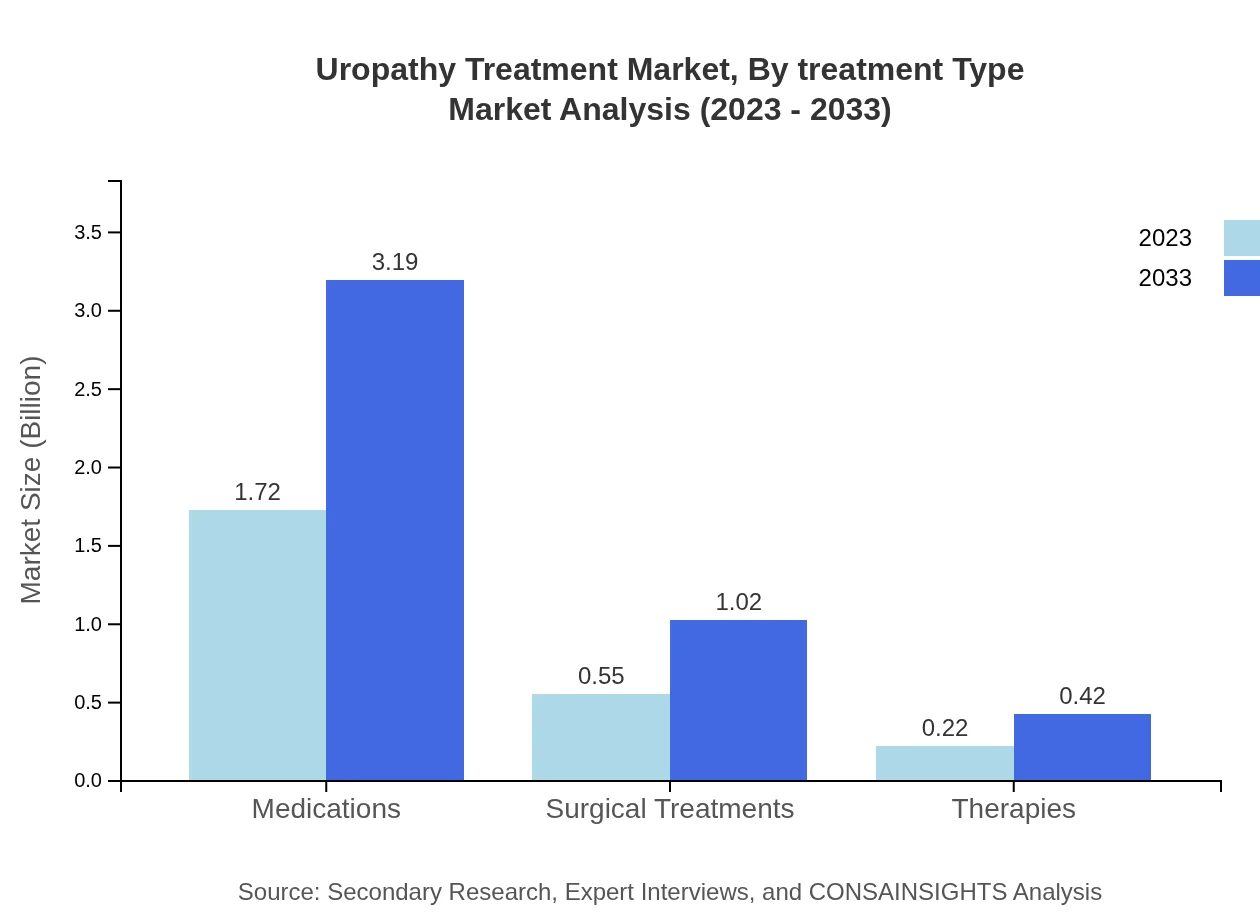
By 2033, the market for antibiotic drugs, a leading segment, is projected to grow from $1.72 billion in 2023 to $3.19 billion, constituting 68.96% of the market. Other treatment segments include surgical treatments and therapies, representing critical therapeutic pathways for patients. For instance, surgical treatments are expected to grow from $0.55 billion to $1.02 billion, while therapies will grow from $0.22 billion to $0.42 billion, illustrating their vital roles in the treatment landscape.
Uropathy Treatment Market Analysis By End User
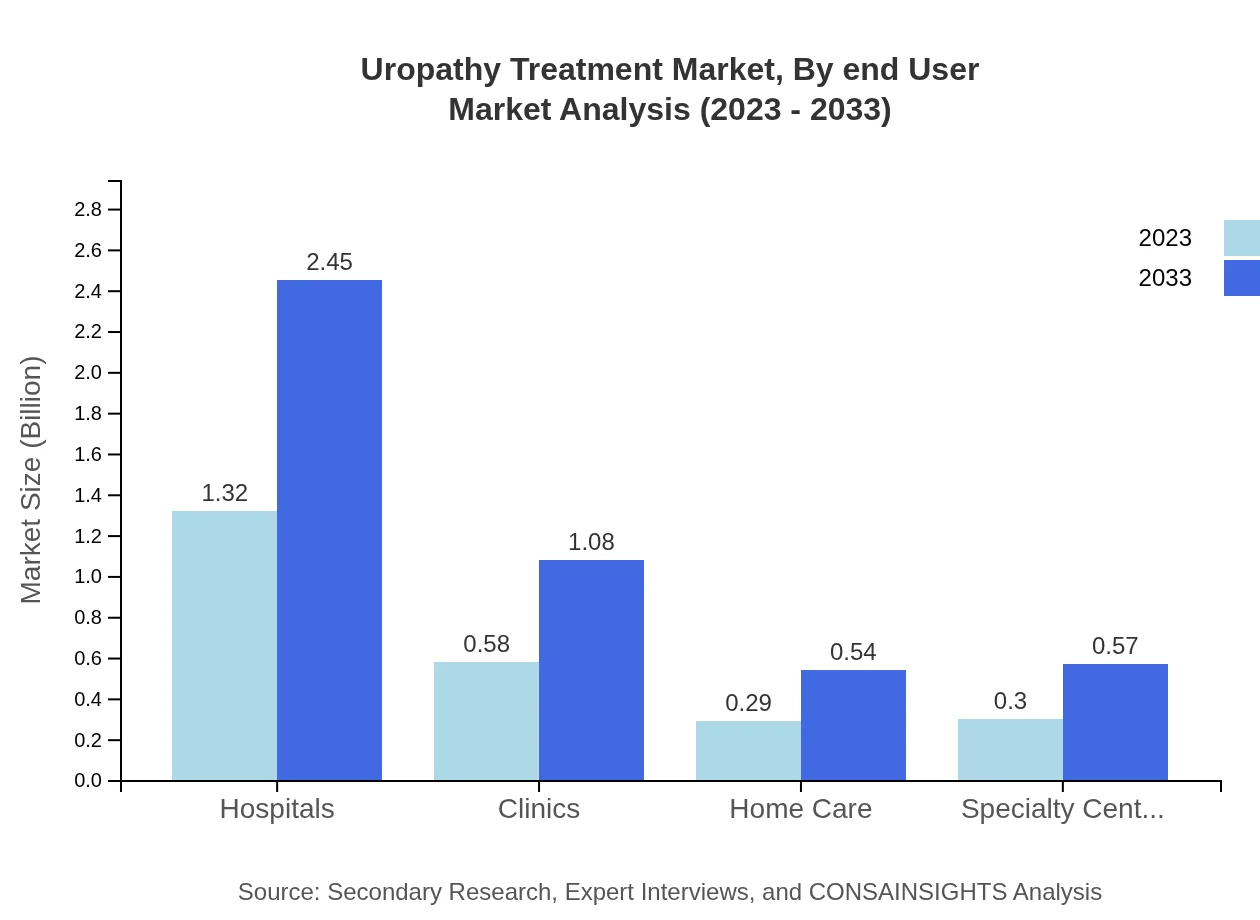
The uropathy treatment market is primarily driven by hospitals, accounting for over 52% of the total market share. Hospitals' market size is forecasted to grow from $1.32 billion in 2023 to $2.45 billion by 2033. Clinics are also significant, with a projected increase from $0.58 billion to $1.08 billion. Home care settings are developing as crucial avenues for treatment, witnessing growth from $0.29 billion to $0.54 billion, addressing patients' needs for at-home care.
Uropathy Treatment Market Analysis By Disease Condition
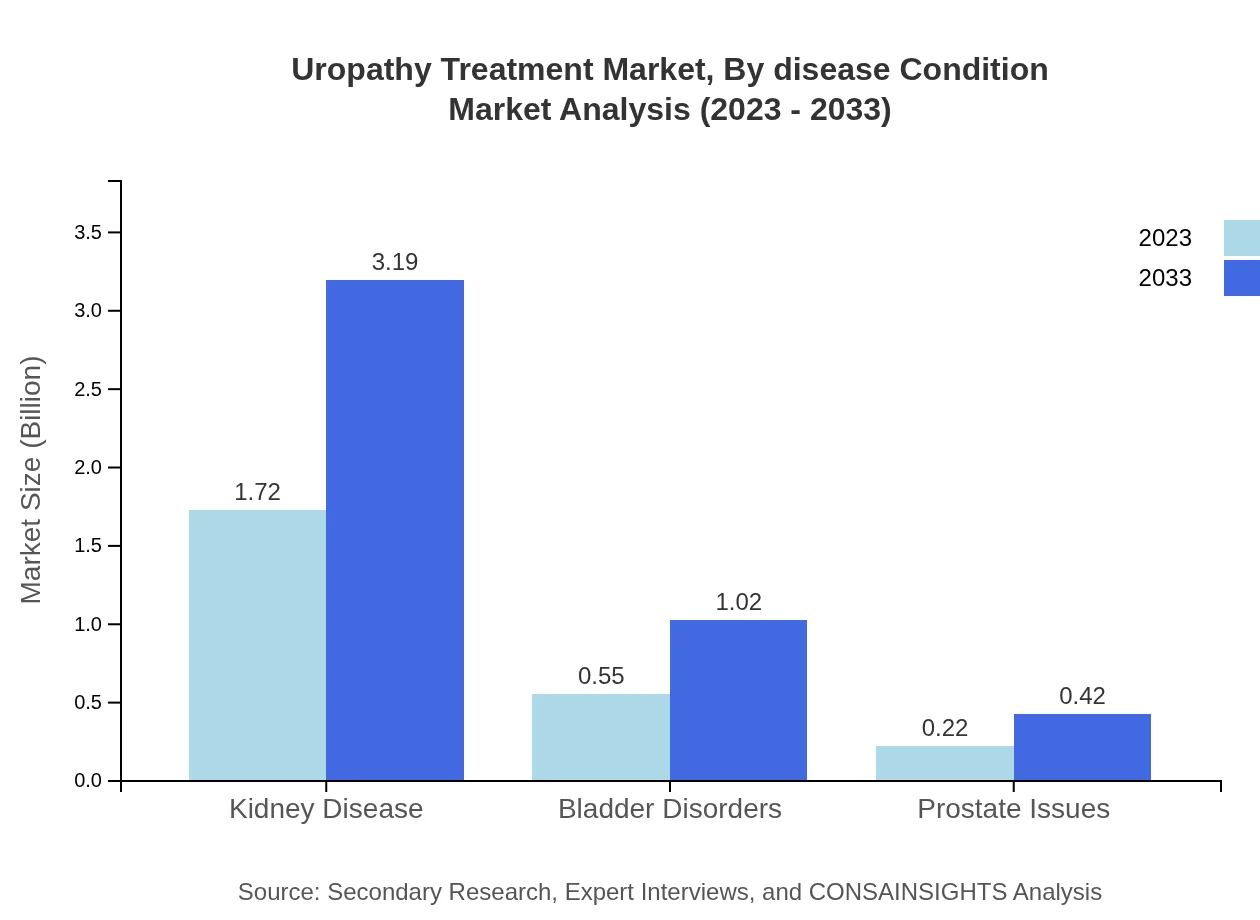
The market is predominantly influenced by kidney diseases, projected to grow from $1.72 billion in 2023 to $3.19 billion by 2033, holding a significant market share of 68.96%. Bladder disorders and prostate issues follow, with anticipated increases from $0.55 billion to $1.02 billion and from $0.22 billion to $0.42 billion, respectively. This segmentation indicates the need for comprehensive treatment options across various uropathy conditions.
Uropathy Treatment Market Analysis By Drug Class
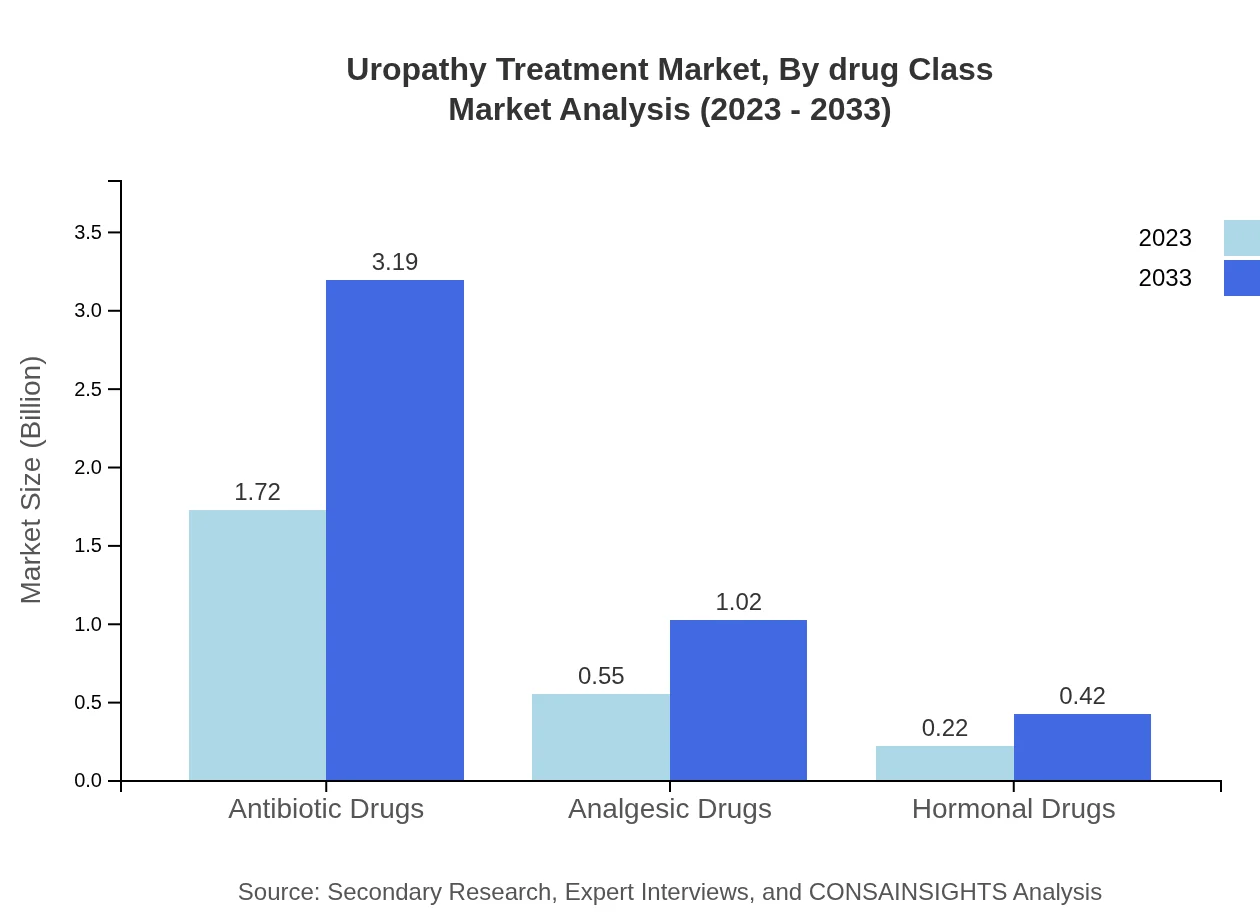
The uropathy treatment market is categorized by drug classes, with medications (including antibiotic drugs) dominating, accounting for 68.96% of the market size. The antibiotic drug segment is expected to expand significantly, affirming its critical role in uropathy treatments. Other drug classes, such as analgesics and hormonal drugs, are also essential, with analgesics expected to rise from $0.55 billion to $1.02 billion, highlighting diverse treatment options available for patients.
Uropathy Treatment Market Trends and Future Forecast
Tell us your focus area and get a customized research report.
Global Market Leaders and Top Companies in Uropathy Treatment Industry
Johnson & Johnson:
Johnson & Johnson is a global leader in healthcare products, specializing in surgical and therapeutic innovations for uropathy treatment through extensive research and development.Bristol-Myers Squibb:
Bristol-Myers Squibb is renowned for its commitment to the development of therapeutic solutions targeting uropathy conditions, combining biopharmaceutical class treatments with extensive service strategies.GlaxoSmithKline:
GlaxoSmithKline offers a diverse portfolio of healthcare products, including advanced medications for uropathy treatment, and emphasizes innovation and patient care in its approach.AstraZeneca:
AstraZeneca is focused on research-driven approaches to developing novel treatments for uropathy, positioning itself as a leader in innovative healthcare solutions.We're grateful to work with incredible clients.







FAQs
What is the market size of the Uropathy treatment market in 2023?
The market size for the Uropathy treatment market in 2023 is $2.50 Billion, based on reported 2023 valuations used throughout the study and comparative regional breakdowns.
How big will the market be in 2033?
By 2033 the market is projected to reach $4.63 Billion according to the report’s forecast figures for the 2023 to 2033 period.
What is CAGR for the forecast period?
The compound annual growth rate (CAGR) for the 2023 to 2033 forecast period is 6.2%, as specified in the report’s market projection data.
Is there a single fastest Growing region in the Uropathy Treatment Market Report market?
No single fastest-growing region is stated for the Uropathy Treatment Market Report market because the top regional implied CAGR values are within 0.15 percentage points of each other, making the ranking too close to call reliably.
Which companies are highlighted in the competitive landscape?
Top companies named in the report include Johnson & Johnson, Bristol-Myers Squibb, GlaxoSmithKline, and AstraZeneca for their roles in therapeutic development and market presence.
What are the main treatment categories covered?
The report covers medications, surgical treatments, and therapies as primary treatment categories, reflecting the range of clinical approaches used to manage uropathy conditions.
How big is the Europe market in 2023 and 2033?
Europe is reported at $0.78 Billion in 2023 and grows to $1.44 Billion by 2033, driven by clinical demand and increasing diagnostic awareness across healthcare systems.
Who contributed to the research methodology?
Primary interviews with industry experts and secondary research via company reports and publications were used, supplemented by data triangulation and internal validation for reliability.