

Veterinary Artificial Insemination Market Report
First published: 10 October 2024 | Last updated: 28 May 2026 | Report Code: veterinary-artificial-insemination
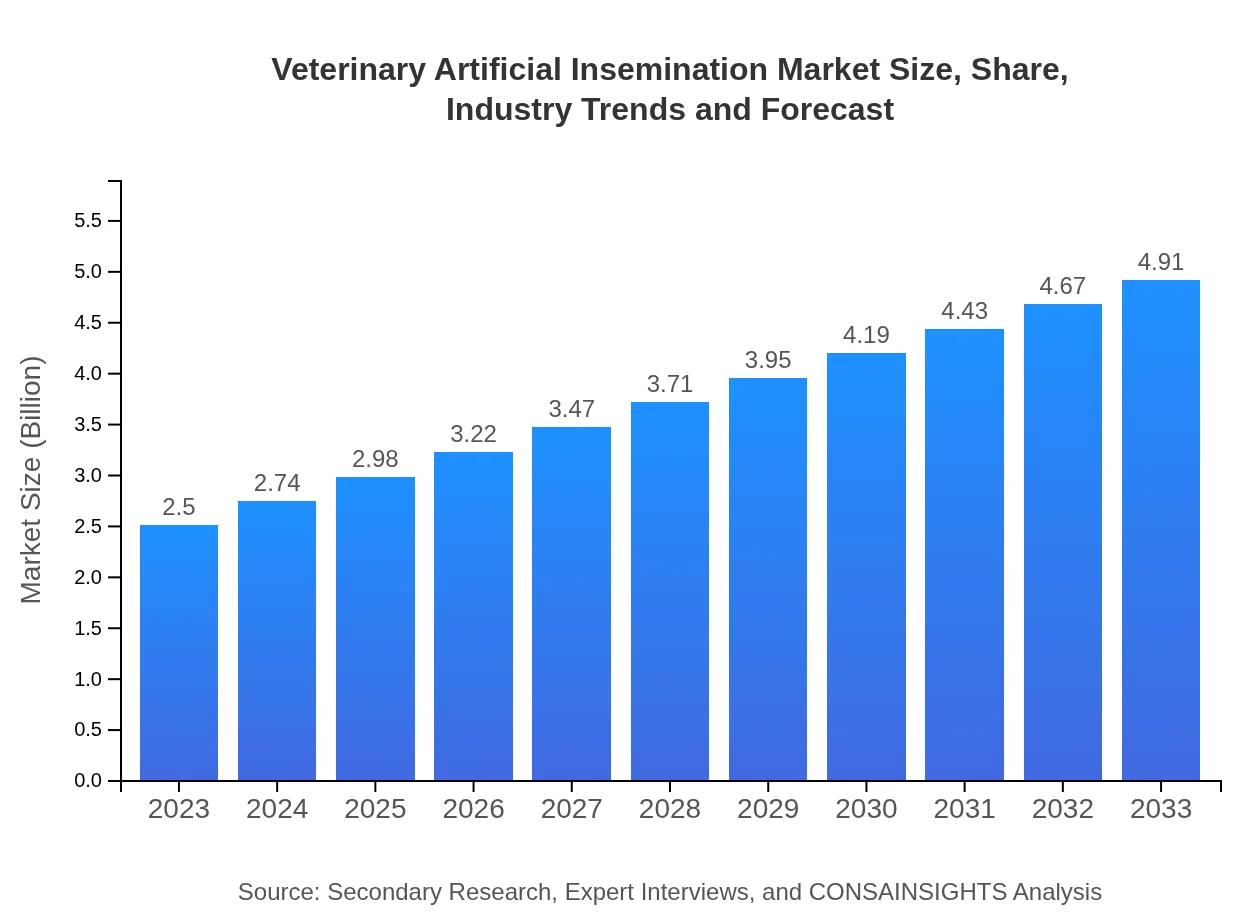
Veterinary Artificial Insemination Market — USD 2.5 billion in 2023, Growing to USD 4.91B by 2033 at 6.8% CAGR
This report provides a comprehensive analysis of the Veterinary Artificial Insemination market, exploring key trends, market size, segmentation, industry dynamics, and forecasts from 2023 to 2033.
Key Takeaways
- Global market expands from $2.50 Billion in 2023 to $4.91 Billion in 2033 at a 6.8% CAGR.
- North America is largest regional market, while no single fastest-growing region is stated because regional CAGR differences remain within 0.15 percentage points.
- Europe grows from $0.72 Billion in 2023 to $1.42 Billion in 2033, supported by technology adoption and regulatory frameworks.
- Asia Pacific advances from $0.48 Billion in 2023 to $0.95 Billion in 2033 driven by livestock sector modernization.
- Key market participants include Genus plc, Zoetis Inc., Select Sires Inc., and Minitube GmbH.
Veterinary Artificial Insemination Market Report — Executive Summary
North America remains largest market by forecast-period value, while no single fastest-growing region is stated because top regional growth rates are separated by less than 0.15 percentage points. The Veterinary Artificial Insemination market is projected to progress from $2.50 Billion in 2023 to $4.91 Billion by 2033 at a 6.8% CAGR over the forecast period 2023 to 2033. Growth is supported by rising demand for genetic improvement in livestock, broader adoption of frozen-semen techniques, and ongoing investments in reproductive healthcare infrastructure. North America represents the largest regional market, while Europe and Asia Pacific show meaningful expansions tied to regulatory support and modernization of animal husbandry. Competitive activity centers on technology development and service provision, with companies such as Genus plc, Zoetis Inc., Select Sires Inc., and Minitube GmbH playing prominent roles. The report synthesizes primary interviews and secondary sources to map trends, market structure, and opportunity areas for stakeholders.
Key Growth Drivers
- Rising demand for genetic enhancement and improved livestock productivity drives adoption of artificial insemination solutions.
- Advances in semen storage and handling, including frozen semen, expand practical application across species and geographies.
- Increasing awareness of animal health and welfare supports investment in reproductive technologies and veterinary services.
- Modernization of breeding infrastructure in developing markets boosts uptake of professional insemination services and equipment.
- Ongoing R&D by major firms enhances technique reliability and broadens species-specific offerings.
| Metric | Value |
|---|---|
| Study Period | 2023 - 2033 |
| 2023 Market Size | $2.50 Billion |
| CAGR (2023-2033) | 6.8% |
| 2033 Market Size | $4.91 Billion |
| Top Companies | Genus plc, Zoetis Inc., Select Sires Inc., Minitube GmbH |
| Published Date | 10 October 2024 |
| Last Modified Date | 28 May 2026 |
Veterinary Artificial Insemination Market Overview
Customize Veterinary Artificial Insemination Market Report market research report
- ✔ Get in-depth analysis of Veterinary Artificial Insemination market size, growth, and forecasts.
- ✔ Understand Veterinary Artificial Insemination's regional dynamics and industry-specific trends.
- ✔ Identify potential applications, end-user demand, and growth segments in Veterinary Artificial Insemination
What is the Market Size & CAGR of Veterinary Artificial Insemination Market Report market in 2023?
Veterinary Artificial Insemination Industry Analysis
Veterinary Artificial Insemination Market Segmentation and Scope
Tell us your focus area and get a customized research report.
Veterinary Artificial Insemination Market Report Market Analysis Report by Region
Europe Veterinary Artificial Insemination Market Report:
Europe grows from $0.72 Billion in 2023 to $1.42 Billion in 2033. This expansion is supported by regulatory frameworks, investments in animal health, and increased implementation of modern breeding and semen preservation practices.Asia Pacific Veterinary Artificial Insemination Market Report:
Asia Pacific grows from $0.48 Billion in 2023 to $0.95 Billion in 2033. Growth reflects modernization of livestock production, rising awareness of genetic improvement, and expanding access to AI services and related technologies.North America Veterinary Artificial Insemination Market Report:
North America is largest regional market, rising from $0.91 Billion in 2023 to $1.78 Billion in 2033. Regional momentum is driven by established breeding systems, high uptake of reproductive technologies, and strong veterinary service networks supporting AI adoption.South America Veterinary Artificial Insemination Market Report:
Latin America grows from $0.1 Billion in 2023 to $0.2 Billion in 2033. Regional gains are connected to growing livestock sectors, gradual infrastructure upgrades, and increasing adoption of organized breeding solutions.Middle East & Africa Veterinary Artificial Insemination Market Report:
Middle East and Africa grows from $0.29 Billion in 2023 to $0.57 Billion in 2033. Growth is influenced by investment in animal productivity, demand for high-quality animal products, and expanding veterinary support services.Tell us your focus area and get a customized research report.
Research Methodology
Veterinary Artificial Insemination Market Analysis By Technique
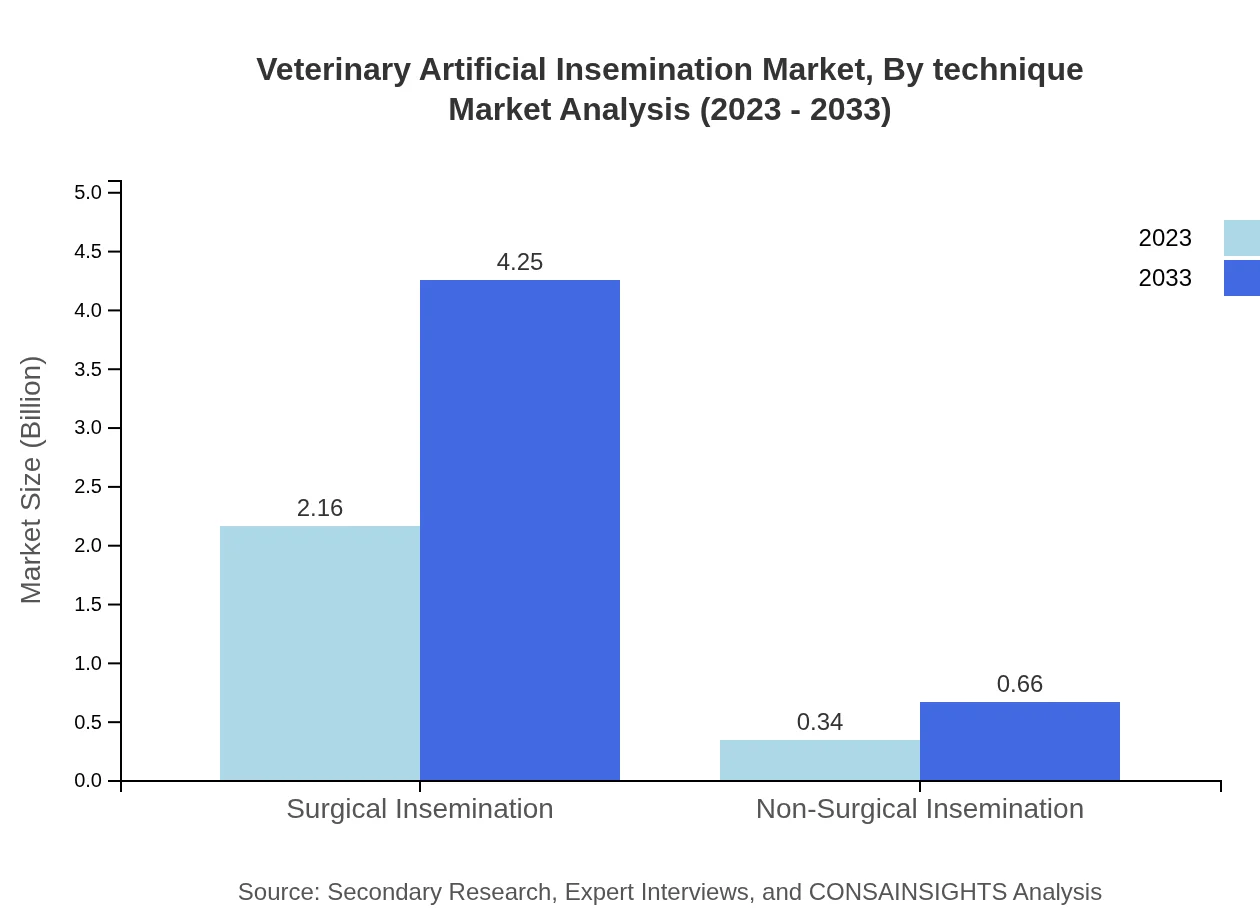
In 2023, surgical insemination accounts for a dominant market share, significantly contributing to the overall market size of $2.16 billion, continuing to grow to $4.25 billion by 2033. Non-surgical insemination, though smaller in share, shows promising growth from $0.34 billion to $0.66 billion in the same period, owing to its increasing acceptance due to its less invasive nature and convenience.
Veterinary Artificial Insemination Market Analysis By Species
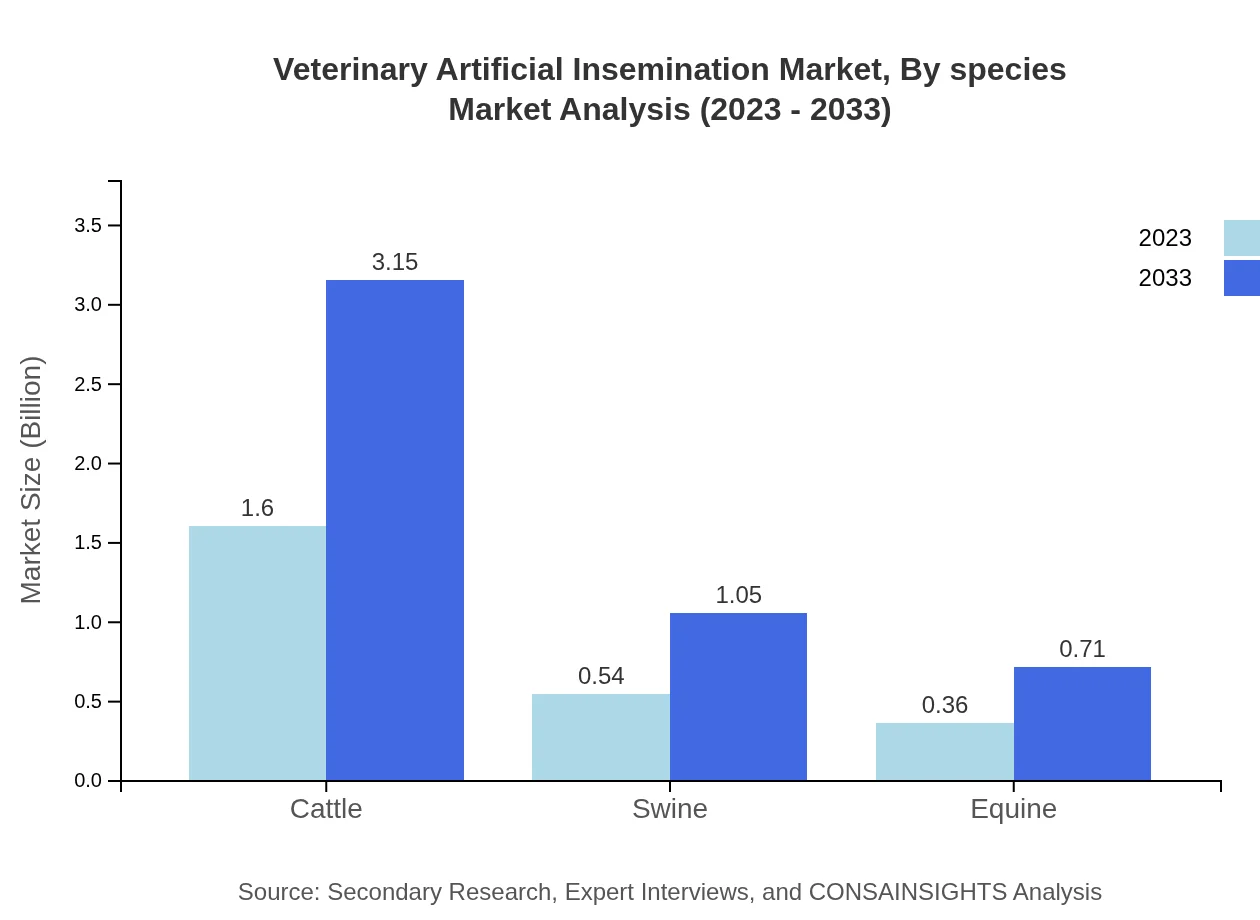
Cattle remain the leading segment, expected to grow from $1.60 billion in 2023 to $3.15 billion by 2033, capturing over 64% market share, driven by the dairy industry demands. Swine and equine segments also show growth; swine increasing from $0.54 billion to $1.05 billion, and equine from $0.36 billion to $0.71 billion asserting their niche in the market.
Veterinary Artificial Insemination Market Analysis By Application
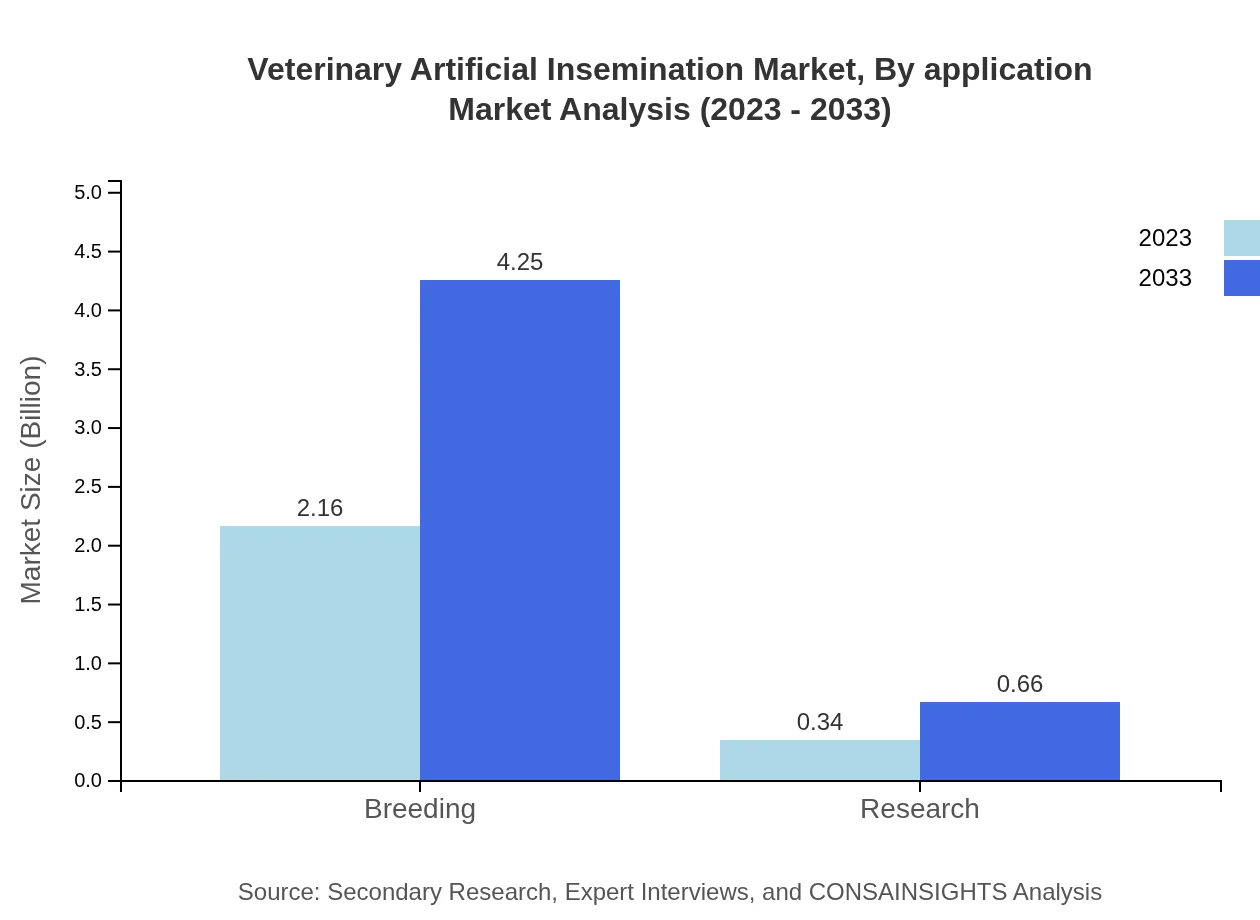
Veterinary clinics represent a significant market segment, driving growth from $2.16 billion in 2023 to $4.25 billion by 2033, indicating their vital role in AI technologies. Research and breeding applications are also of importance, with contributions of $0.34 billion and an expected growth trajectory matching other segments as they support enhanced breeding efforts and animal health.
Veterinary Artificial Insemination Market Analysis By End User
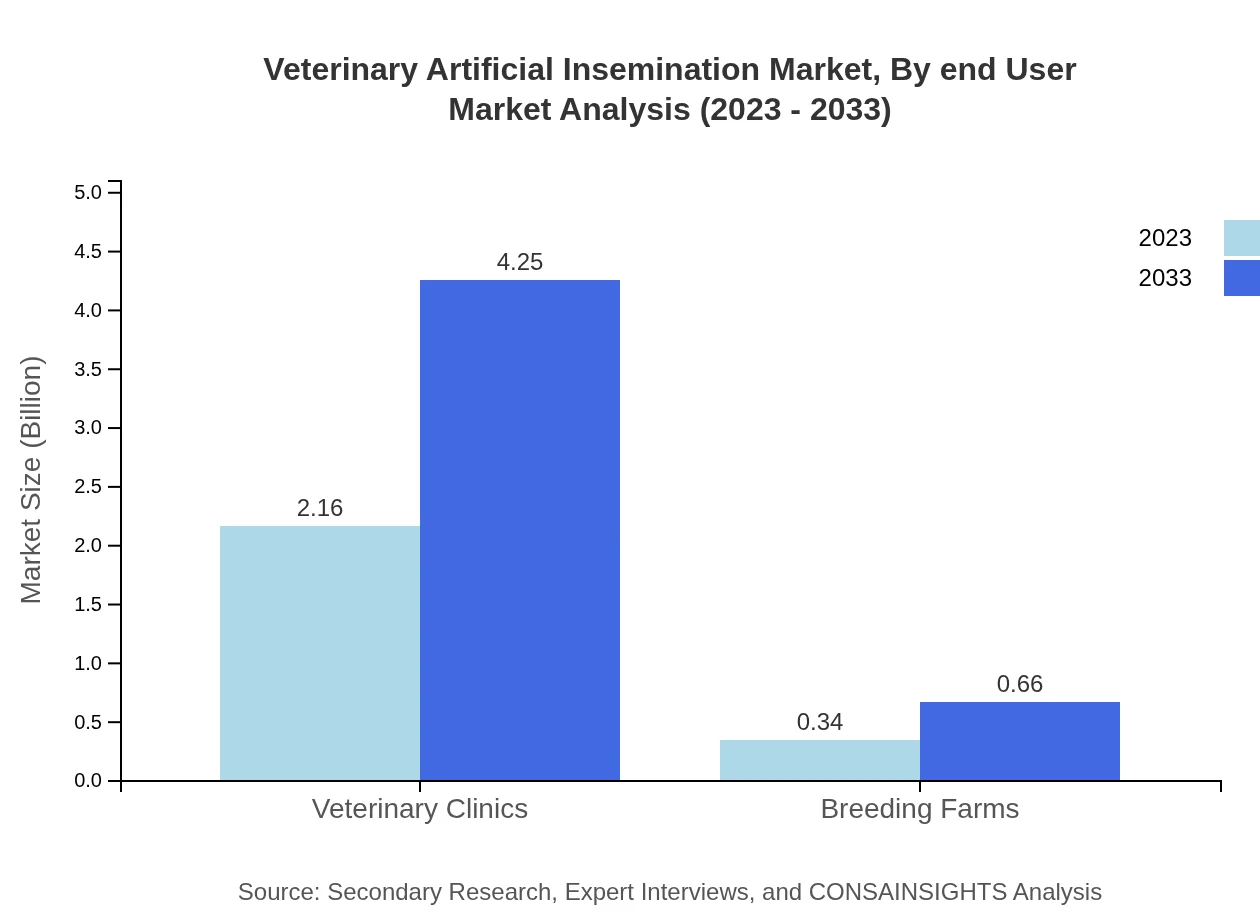
Veterinary clinics, being the primary users of artificial insemination services, account for the largest share, growing from $2.16 billion to $4.25 billion by 2033. Breeding farms parallel this trend, increasing their market size from $0.34 billion to $0.66 billion, driving up the overall market engagement within the Veterinary Artificial Insemination sector.
Veterinary Artificial Insemination Market Trends and Future Forecast
Tell us your focus area and get a customized research report.
Global Market Leaders and Top Companies in Veterinary Artificial Insemination Industry
Genus plc:
A global leader in animal genetics, Genus focuses on developing genetics through AI techniques to enhance swine and cattle productivity through innovative breeding solutions.Zoetis Inc.:
Zoetis is a prominent veterinary medicine company that provides innovative solutions for animal health, focusing on effective reproductive technologies and AI services.Select Sires Inc.:
Specializing in cattle reproductive technologies, Select Sires offers a variety of AI products and solutions aimed at improving herd genetics and productivity.Minitube GmbH:
Minitube is a Germany-based company providing high-quality reproductive technologies and equipment, particularly in AI for cattle and equine.We're grateful to work with incredible clients.








FAQs
What is the current market size of the Veterinary Artificial Insemination Market Report?
The market size was $2.50 Billion in 2023, based on the provided report data for the global veterinary artificial insemination sector.
How big will the market be in 2033?
According to the report figures, the market is projected to reach $4.91 Billion by 2033, reflecting growth across multiple regions and applications.
What is CAGR for the forecast period?
The report states a compounded annual growth rate (CAGR) of 6.8% for the forecast period 2023 to 2033.
Is there a single fastest Growing region in the Veterinary Artificial Insemination Market Report market?
No single fastest-growing region is stated for the Veterinary Artificial Insemination Market Report market because the top regional implied CAGR values are within 0.15 percentage points of each other, making the ranking too close to call reliably.
Which companies are noted as key players?
Top companies listed include Genus plc, Zoetis Inc., Select Sires Inc., and Minitube GmbH as significant contributors to market activity.
What are the main drivers for market growth?
Primary growth drivers include genetic improvement demand, improved semen storage methods, increased animal health focus, and expanding breeding infrastructure investments.
How big is the Europe market in 2023 and 2033?
Europe’s market value is reported as $0.72 Billion in 2023, increasing to $1.42 Billion in 2033, reflecting steady regional expansion.
What research methods supported the report findings?
The report is based on primary interviews with industry experts, secondary research from company reports and publications, data triangulation, and expert-led trend analysis.
Who are the primary end users identified?
End users include veterinary clinics and breeding farms, which are noted as principal channels for artificial insemination services and products.
Why is technique innovation important for this market?
Technique improvements, such as enhanced non-surgical methods and frozen semen use, increase success rates, expand species applicability, and support market adoption.