
Reports >
Life Sciences
>
Wound Care Biologics Market Report

Wound Care Biologics Market Report
First published: 08 October 2024 | Last updated: 28 May 2026 | Report Code: wound-care-biologics
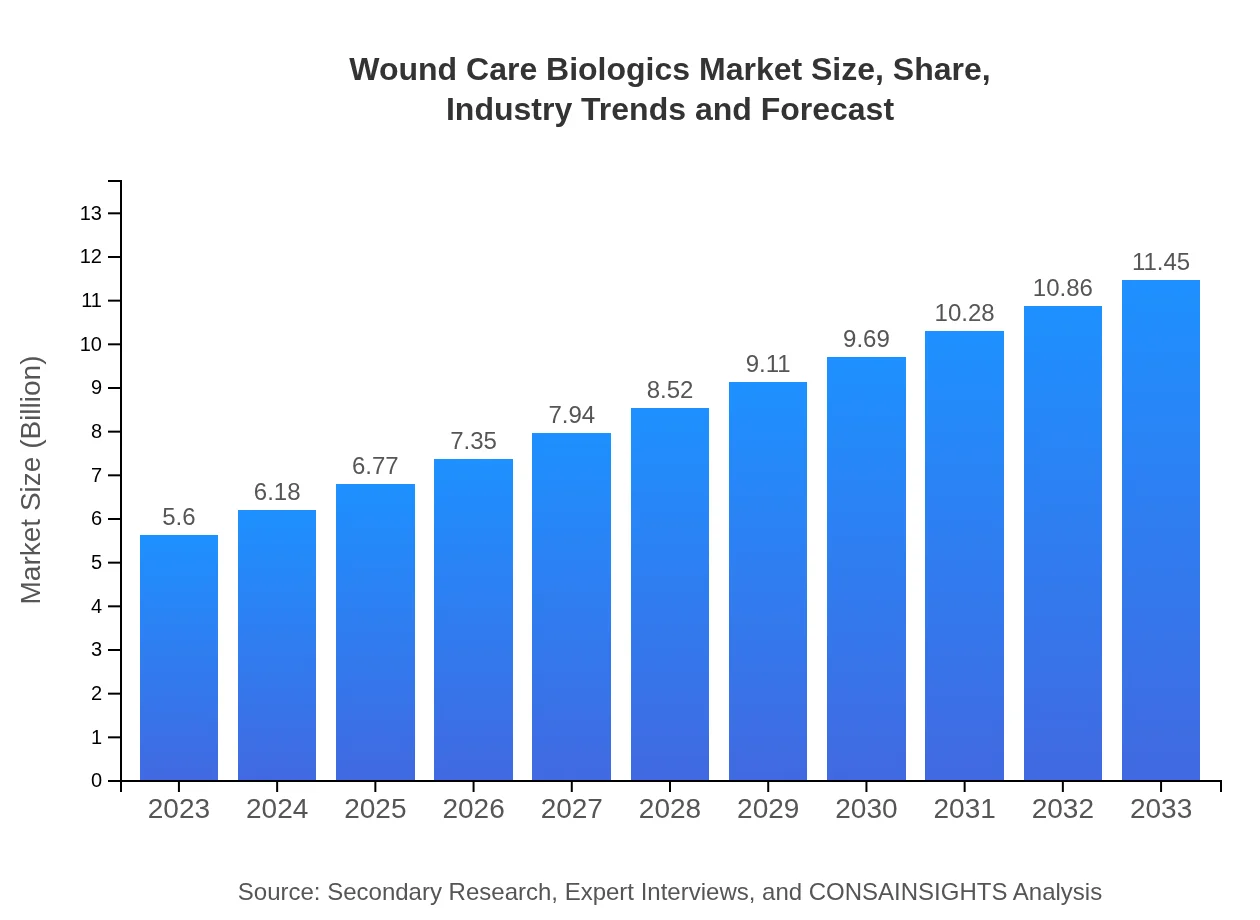
Wound Care Biologics Market — USD 5.6 billion in 2023, Growing to USD 11.45B by 2033 at 7.2% CAGR
This report provides a comprehensive analysis of the Wound Care Biologics market, including key trends, market size, and forecast data for 2023-2033. It aims to offer insights into the evolving landscape of wound care solutions influenced by technology and consumer demand.
Key Takeaways
- Global market expands from $5.60 Billion in 2023 to $11.45 Billion in 2033 at a 7.2% CAGR through 2023 to 2033.
- North America is largest regional market, while no single fastest-growing region is stated because regional CAGR differences remain within 0.15 percentage points.
- North America is the largest region, increasing from $2.16 Billion in 2023 to $4.42 Billion in 2033.
- Europe grows from $1.72 Billion in 2023 to $3.51 Billion in 2033, reflecting steady adoption across care settings.
- Asia Pacific advances from $0.97 Billion in 2023 to $1.98 Billion in 2033 amid rising clinical research and technology uptake.
- Key product groups include Skin Grafts, Biologics, and Advanced Dressings serving Hospitals, Home Care, and Specialty Clinics.
Wound Care Biologics Market Report — Executive Summary
North America remains largest market by forecast-period value, while no single fastest-growing region is stated because top regional growth rates are separated by less than 0.15 percentage points. The Wound Care Biologics Market Report examines market expansion driven by higher incidence of chronic wounds, aging populations, and continued investment in regenerative approaches. The global market is forecast to reach $11.45 Billion by 2033 from $5.60 Billion in 2023 at a 7.2% CAGR for 2023 to 2033. Regional performance varies: North America remains the largest market, while Europe and Asia Pacific show notable gains. The report dissects product types such as Skin Grafts, Biologics, and Advanced Dressings and end-use channels including Hospitals, Home Care, and Specialty Clinics. It highlights technology trends like cell-based techniques, tissue engineering, bioprinting, and biochemical approaches, and profiles key companies including Smith & Nephew, MediWound, Acelity, and Organogenesis. Stakeholders can use the analysis to prioritize R&D, commercialization, and partnerships to address clinical needs and regulatory environments.
Key Growth Drivers
- Rising prevalence of chronic wounds and comorbidities boosting demand for biologic solutions.
- Growing elderly populations increasing long-term care needs and treatment volumes.
- Ongoing R&D and clinical studies accelerating product innovation and adoption of regenerative technologies.
- Favorable reimbursement trends and industry collaborations supporting commercialization of advanced wound therapies.
| Metric | Value |
|---|---|
| Study Period | 2023 - 2033 |
| 2023 Market Size | $5.60 Billion |
| CAGR (2023-2033) | 7.2% |
| 2033 Market Size | $11.45 Billion |
| Top Companies | Smith & Nephew, MediWound, Acelity, Organogenesis |
| Published Date | 08 October 2024 |
| Last Modified Date | 28 May 2026 |
Wound Care Biologics Market Overview
Customize Wound Care Biologics Market Report market research report
- ✔ Get in-depth analysis of Wound Care Biologics market size, growth, and forecasts.
- ✔ Understand Wound Care Biologics's regional dynamics and industry-specific trends.
- ✔ Identify potential applications, end-user demand, and growth segments in Wound Care Biologics
What is the Market Size & CAGR of Wound Care Biologics Market Report market in 2023?
Wound Care Biologics Industry Analysis
Wound Care Biologics Market Segmentation and Scope
Tell us your focus area and get a customized research report.
Wound Care Biologics Market Report Market Analysis Report by Region
Europe Wound Care Biologics Market Report:
Europe grows from $1.72 Billion in 2023 to $3.51 Billion in 2033. The region’s expansion is supported by increased clinical trials, growing demand in hospitals and specialty clinics, and ongoing product innovation within established healthcare systems.Asia Pacific Wound Care Biologics Market Report:
Asia Pacific grows from $0.97 Billion in 2023 to $1.98 Billion in 2033. The rise reflects expanding clinical research, improving access to advanced therapies, and growing attention to chronic wound management amid demographic shifts.North America Wound Care Biologics Market Report:
North America is largest regional market, rising from $2.16 Billion in 2023 to $4.42 Billion in 2033. Regional momentum is linked to robust clinical adoption, investment in regenerative technologies, and strong presence of established suppliers and research activity.South America Wound Care Biologics Market Report:
Latin America grows from $0.44 Billion in 2023 to $0.9 Billion in 2033. Regional growth is driven by rising healthcare investment, greater access to advanced wound care options, and efforts to address chronic wound burdens across care settings.Middle East & Africa Wound Care Biologics Market Report:
Middle East and Africa grows from $0.31 Billion in 2023 to $0.64 Billion in 2033. The market gains traction through expanding healthcare infrastructure, increased adoption of innovative treatments, and focus on improving wound care outcomes.Tell us your focus area and get a customized research report.
Research Methodology
Wound Care Biologics Market Analysis By Product
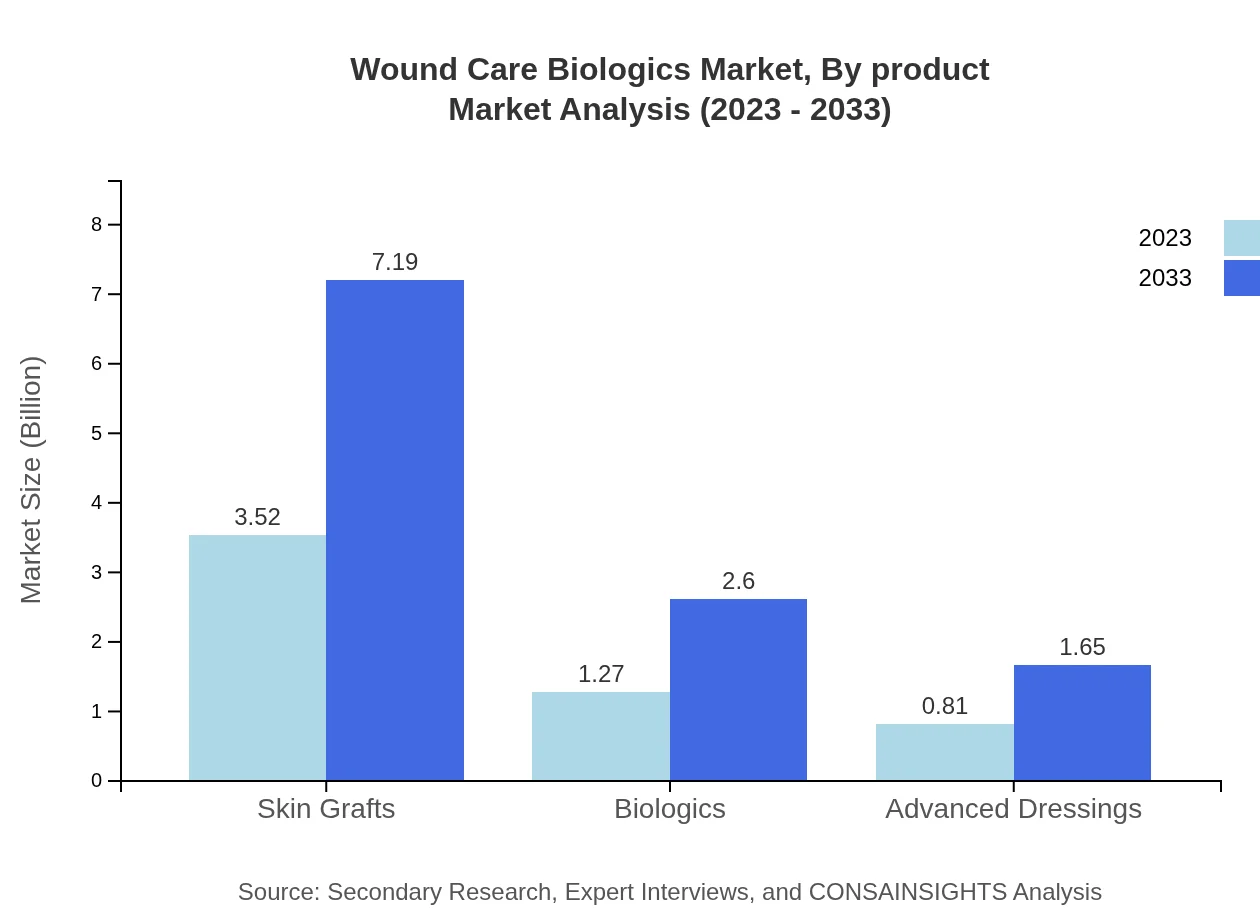
The product segment is dominated by Skin Grafts, expected to grow from USD 3.52 billion in 2023 to USD 7.19 billion in 2033, holding a share of 62.83%. Advanced Dressings and Biologics are also significant contributors, with expected increases to USD 1.65 billion and USD 2.60 billion respectively by 2033.
Wound Care Biologics Market Analysis By Application
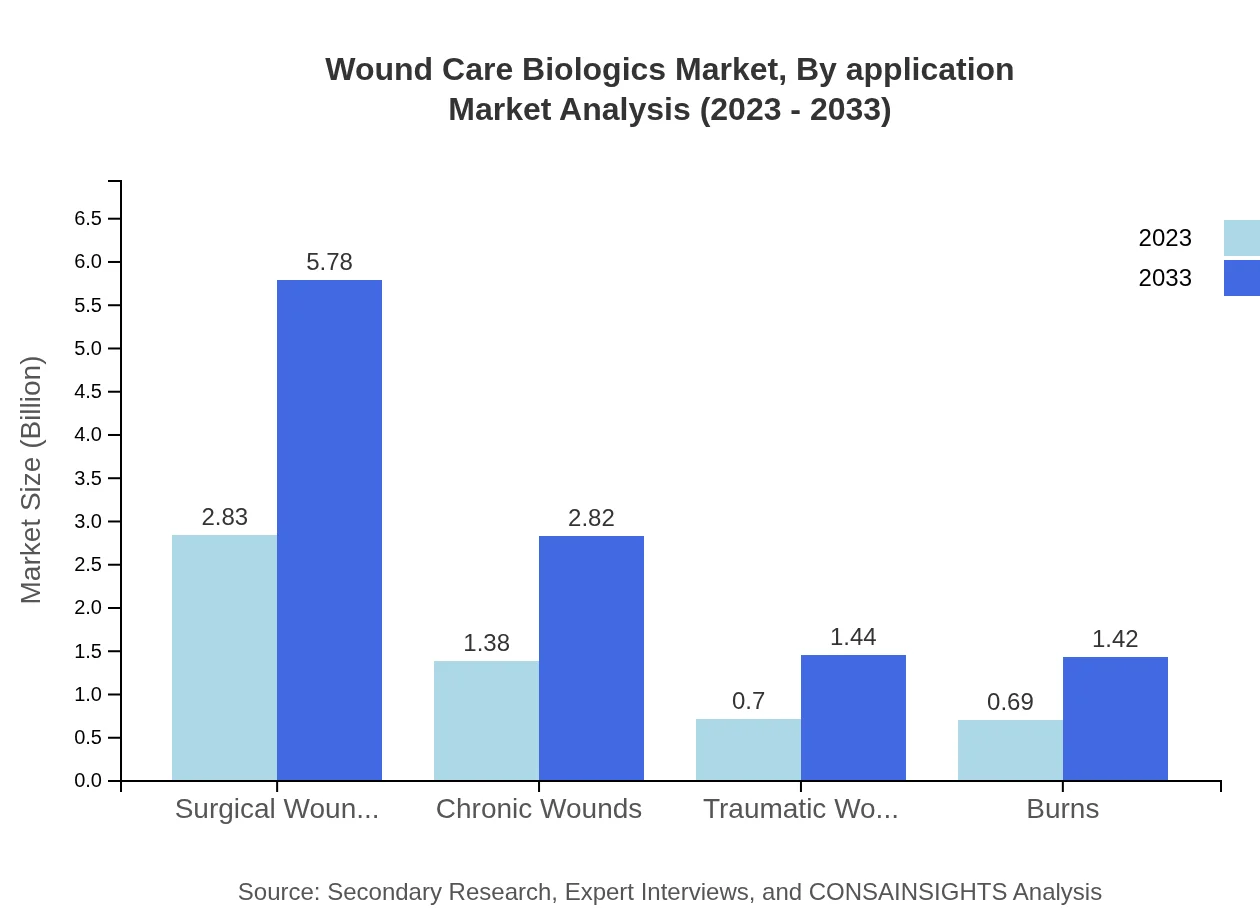
Application segments differentiate between Surgical Wounds and Chronic Wounds. Surgical Wounds will grow from USD 2.83 billion in 2023 to USD 5.78 billion by 2033, while Chronic Wounds are expected to grow from USD 1.38 billion to USD 2.82 billion, indicative of rising surgical procedures and chronic illness prevalence.
Wound Care Biologics Market Analysis By End Use
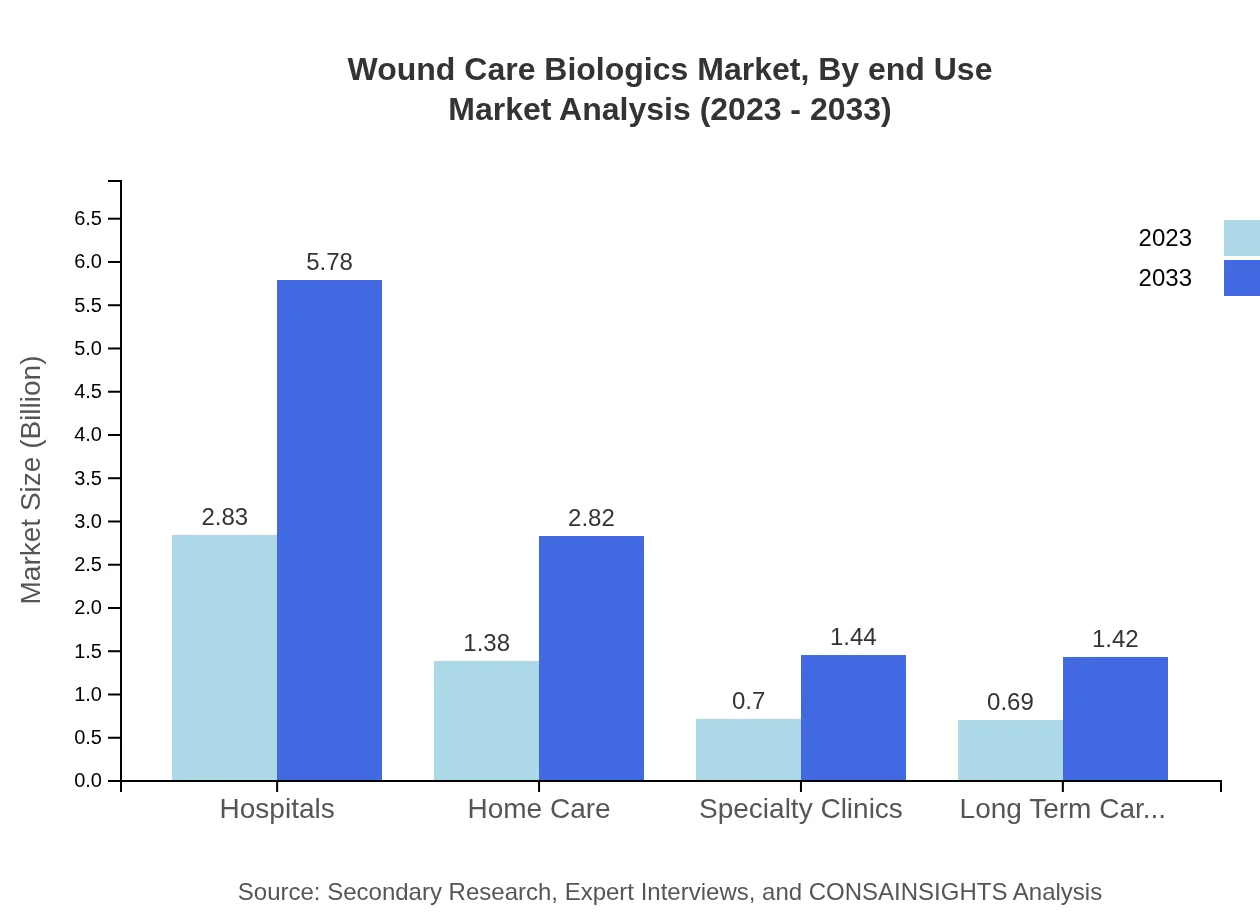
Major end-users include Hospitals, which dominate with USD 2.83 billion in 2023, and are expected to remain stable at 50.45% market share through 2033. Home Care facilities are also evolving as crucial end-users, anticipated to reach USD 2.82 billion by 2033.
Wound Care Biologics Market Analysis By End User
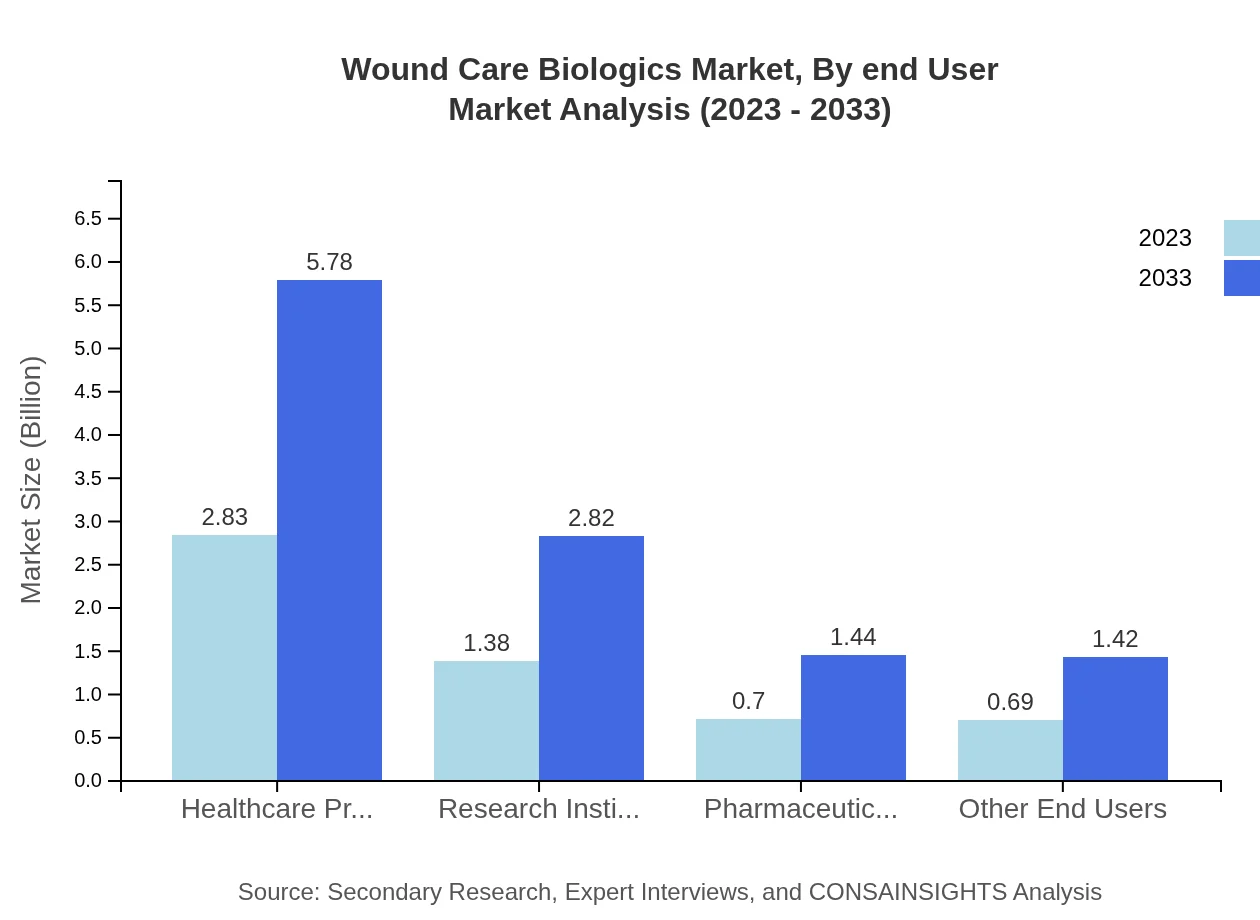
End-users include Healthcare Providers, Research Institutes, and Pharmaceutical Companies. Healthcare Providers currently hold a significant market size expected to reach USD 5.78 billion by 2033, maintaining a 50.45% share throughout this period.
Wound Care Biologics Market Trends and Future Forecast
Tell us your focus area and get a customized research report.
Global Market Leaders and Top Companies in Wound Care Biologics Industry
Smith & Nephew:
A leading medical technology company specializing in advanced wound management and tissue repair solutions.MediWound:
A biopharmaceutical company focused on innovative therapeutics for wound care, with a robust pipeline of biologic products.Acelity:
A key player in wound care that develops advanced healing solutions including negative pressure wound therapy and advanced dressings.Organogenesis:
A leader in the development of regenerative medicine products for wound healing using innovative biologics.We're grateful to work with incredible clients.









FAQs
What is the market size of the Wound Care Biologics Market Report in 2023?
The market size in 2023 is $5.60 Billion as stated in the report's base-year valuation for the global market.
How big is the market projected to be in 2033?
The market is projected to reach $11.45 Billion by 2033, according to the forecast figures provided for the report.
What is CAGR of the market for the forecast period?
The report specifies a compound annual growth rate (CAGR) of 7.2% for the forecast period 2023 to 2033.
Is there a single fastest Growing region in the Wound Care Biologics Market Report market?
No single fastest-growing region is stated for the Wound Care Biologics Market Report market because the top regional implied CAGR values are within 0.15 percentage points of each other, making the ranking too close to call reliably.
Which product categories are covered in the segmentation?
Product segmentation includes Skin Grafts, Biologics, and Advanced Dressings, each mapped to clinical use cases across care settings.
Who are some top companies featured in the report?
Key companies listed include Smith & Nephew, MediWound, Acelity, and Organogenesis as prominent market participants.
What end Use channels does the report analyze?
The report examines end-use channels such as Hospitals, Home Care, Specialty Clinics, and Long Term Care Facilities across global markets.
How are technology trends represented in the report?
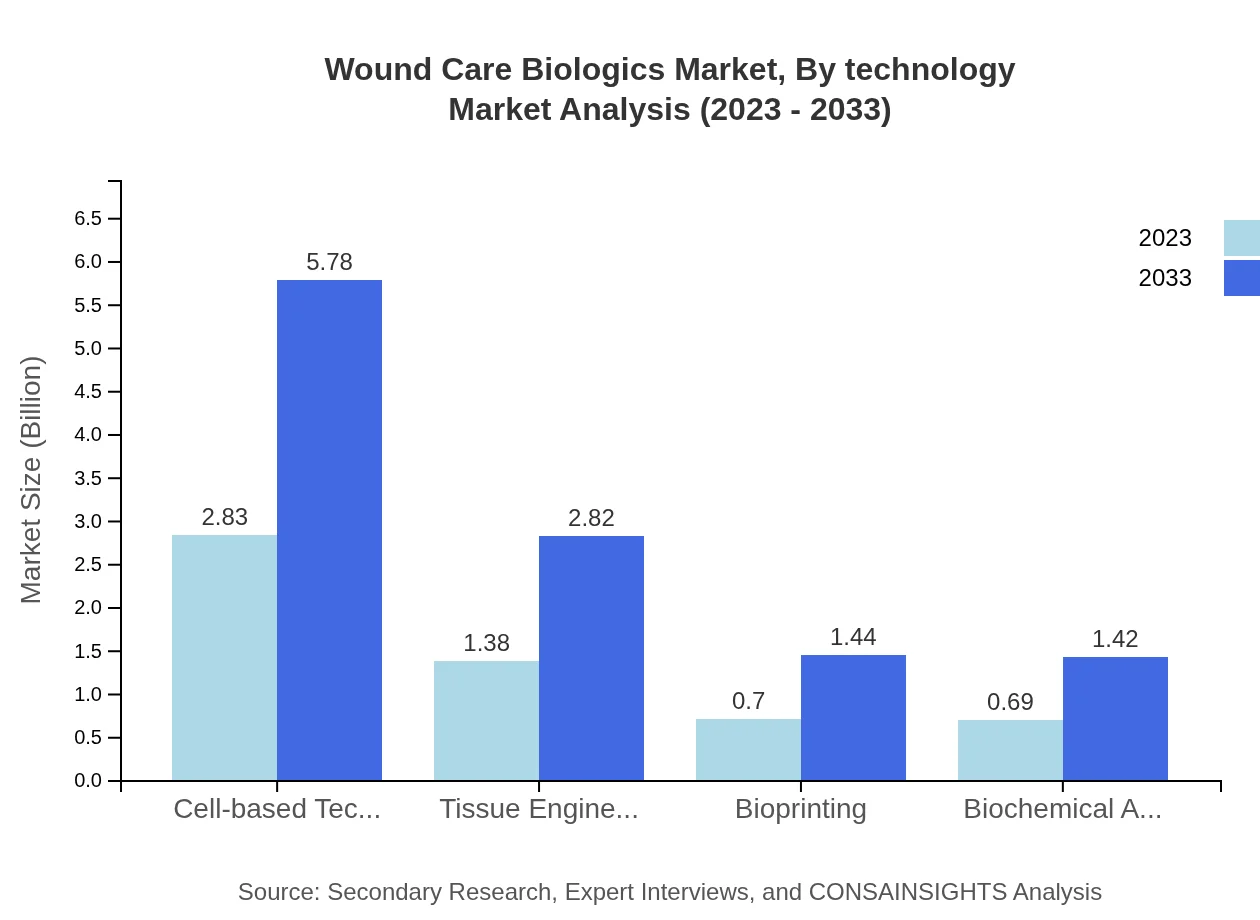
Technology segmentation covers Cell-based Techniques, Tissue Engineering, Bioprinting, and Biochemical Approaches, highlighting innovation paths in wound biologics.