
Reports >
Life Sciences
>
Aminoglycosides Market Report

Aminoglycosides Market Report
First published: 21 October 2024 | Last updated: 25 May 2026 | Report Code: aminoglycosides
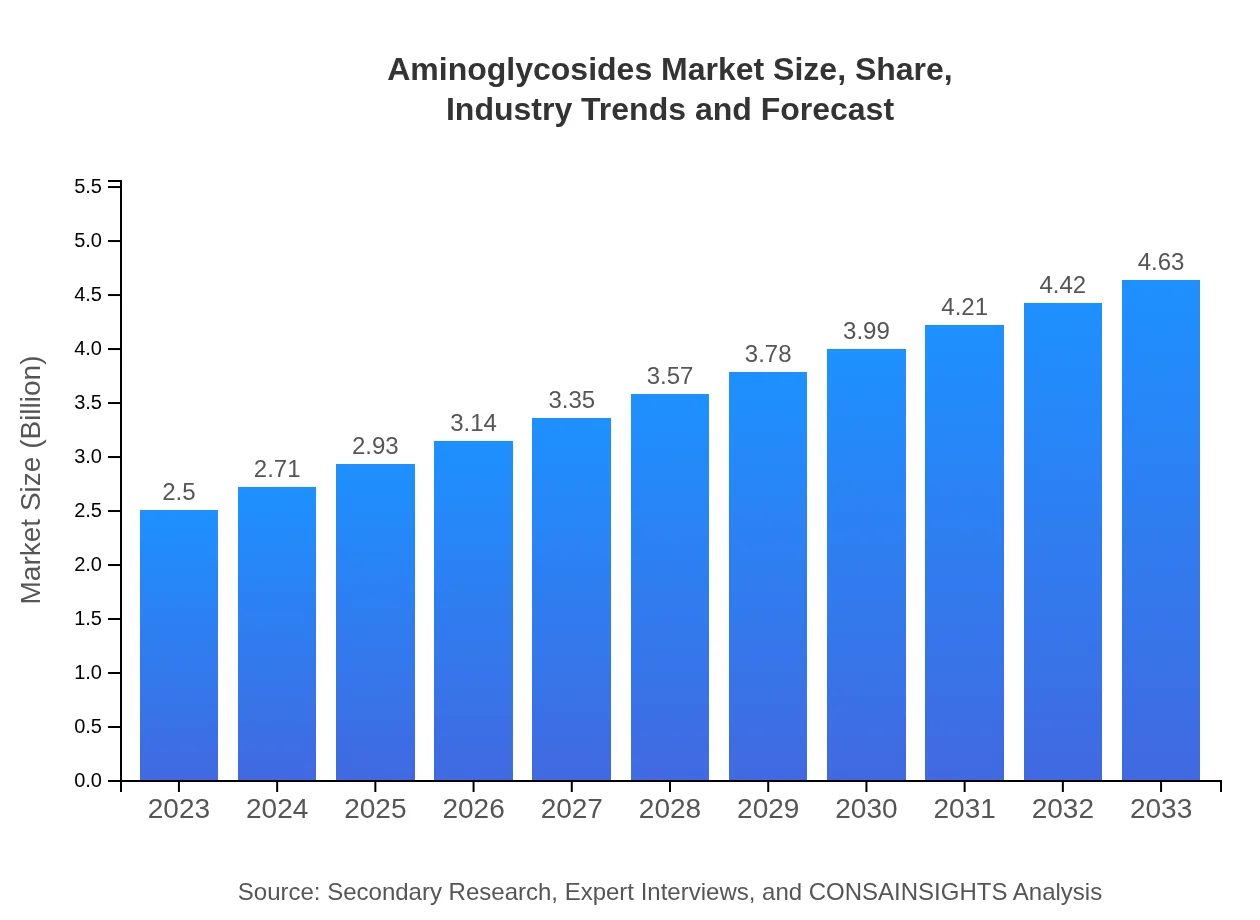
Aminoglycosides Market — USD 2.5 billion in 2023, Growing to USD 4.63B by 2033 at 6.2% CAGR
This report provides a detailed analysis of the Aminoglycosides market from 2023 to 2033, covering market trends, size, and regional insights while highlighting the key players and future forecasts.
Key Takeaways
- Global market increases from $2.50 Billion in 2023 to $4.63 Billion in 2033 at a 6.2% CAGR.
- North America is largest regional market, while no single fastest-growing region is stated because regional CAGR differences remain within 0.15 percentage points.
- North America is the largest region, rising from $0.9 Billion in 2023 to $1.66 Billion in 2033.
- Europe grows from $0.7 Billion in 2023 to $1.3 Billion in 2033, reflecting steady therapeutic demand.
- Asia Pacific expands from $0.49 Billion in 2023 to $0.9 Billion in 2033 amid increasing access and treatment needs.
- Leading companies include Bristol-Myers Squibb, Pfizer Inc., and Sandoz.
Aminoglycosides Market Report — Executive Summary
North America remains largest market by forecast-period value, while no single fastest-growing region is stated because top regional growth rates are separated by less than 0.15 percentage points. This report examines the Aminoglycosides market between 2023 and 2033, where value rises from $2.50 Billion to $4.63 Billion at a 6.2% CAGR. Growth is supported by higher incidence of bacterial infections and demand for effective antimicrobial therapies, alongside pharmaceutical research into formulations and delivery methods. Regional performance varies, with North America holding the largest end-market value in 2033. Competitive activity is concentrated among established pharma firms such as Bristol-Myers Squibb, Pfizer Inc., and Sandoz, who are investing in development and distribution. Regulatory emphasis on antibiotic stewardship and technological advances in drug delivery are shaping product strategies. The report covers market segmentation by product, application, end user and distribution channel, and presents a regional breakdown to guide commercialization and investment decisions.
Key Growth Drivers
- Rising prevalence of bacterial infections increasing demand for aminoglycoside therapies.
- Ongoing pharmaceutical R&D targeting new formulations and improved delivery systems.
- Regulatory focus on antibiotic stewardship influencing responsible use and market offerings.
- Expansion of healthcare access in key regions supporting broader adoption in hospitals and clinics.
- Continued investment by major firms such as Bristol-Myers Squibb, Pfizer Inc., and Sandoz.
| Metric | Value |
|---|---|
| Study Period | 2023 - 2033 |
| 2023 Market Size | $2.50 Billion |
| CAGR (2023-2033) | 6.2% |
| 2033 Market Size | $4.63 Billion |
| Top Companies | Bristol-Myers Squibb, Pfizer Inc., Sandoz |
| Published Date | 21 October 2024 |
| Last Modified Date | 25 May 2026 |
Aminoglycosides Market Overview
Customize Aminoglycosides Market Report market research report
- ✔ Get in-depth analysis of Aminoglycosides market size, growth, and forecasts.
- ✔ Understand Aminoglycosides's regional dynamics and industry-specific trends.
- ✔ Identify potential applications, end-user demand, and growth segments in Aminoglycosides
What is the Market Size & CAGR of Aminoglycosides Market Report market in 2023?
Aminoglycosides Industry Analysis
Aminoglycosides Market Segmentation and Scope
Tell us your focus area and get a customized research report.
Aminoglycosides Market Report Market Analysis Report by Region
Europe Aminoglycosides Market Report:
Europe grows from $0.7 Billion in 2023 to $1.3 Billion in 2033. Regional growth reflects steady therapeutic demand, regulatory oversight on antibiotics, and continued research activity supporting new formulations and clinical applications.Asia Pacific Aminoglycosides Market Report:
Asia Pacific grows from $0.49 Billion in 2023 to $0.9 Billion in 2033. Expansion is tied to broader healthcare access, increasing treatment rates for bacterial infections, and rising pharmaceutical development and distribution in the region.North America Aminoglycosides Market Report:
North America is largest regional market, rising from $0.9 Billion in 2023 to $1.66 Billion in 2033. This region is the largest market by 2033, reflecting established healthcare infrastructure, significant clinical demand in hospital settings, and ongoing investments from leading pharmaceutical firms.South America Aminoglycosides Market Report:
Latin America grows from $0.11 Billion in 2023 to $0.2 Billion in 2033. Market progression aligns with improving healthcare access, growing hospital and clinic utilization, and increased availability of aminoglycoside therapies.Middle East & Africa Aminoglycosides Market Report:
Middle East and Africa grows from $0.31 Billion in 2023 to $0.57 Billion in 2033. Growth drivers include expanding clinical services, demand for effective antimicrobials, and investments in regional healthcare delivery systems.Tell us your focus area and get a customized research report.
Research Methodology
Aminoglycosides Market Analysis By Product
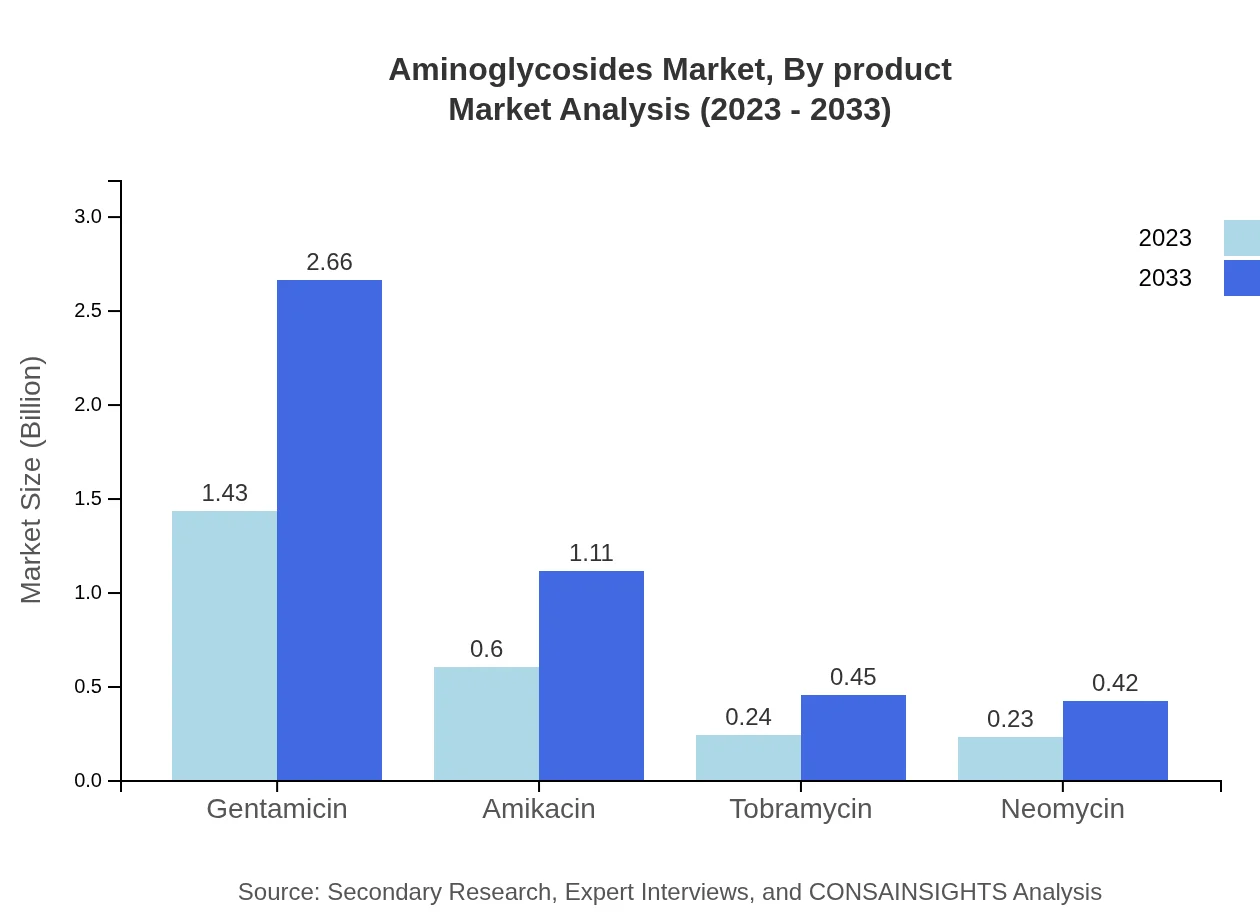
Among the major products, Gentamicin dominates the market due to its broad-spectrum activity, with a market size expected to increase from USD 1.43 billion in 2023 to USD 2.66 billion by 2033. Amikacin and Tobramycin follow, driven by their effectiveness against resistant strains, with growth rates reflecting increased usage in severe infections.
Aminoglycosides Market Analysis By Application
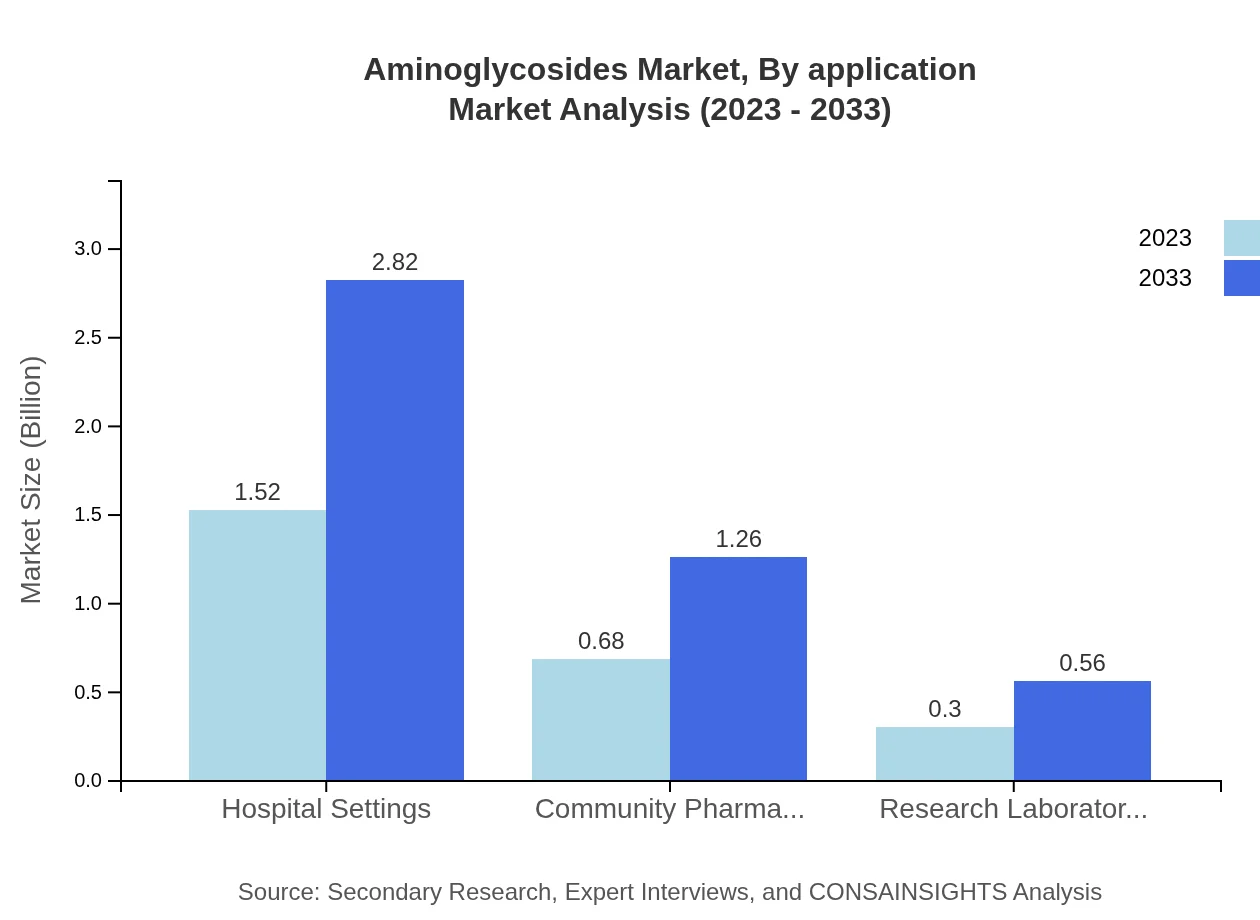
Hospital settings remain the leading application segment, with a size projected to rise from USD 1.52 billion in 2023 to USD 2.82 billion by 2033, as hospitals are primary providers for critical patients requiring intensive care. Clinics and pharmacies also demonstrate significant growth, benefitting from increasing outpatient treatments.
Aminoglycosides Market Analysis By End User
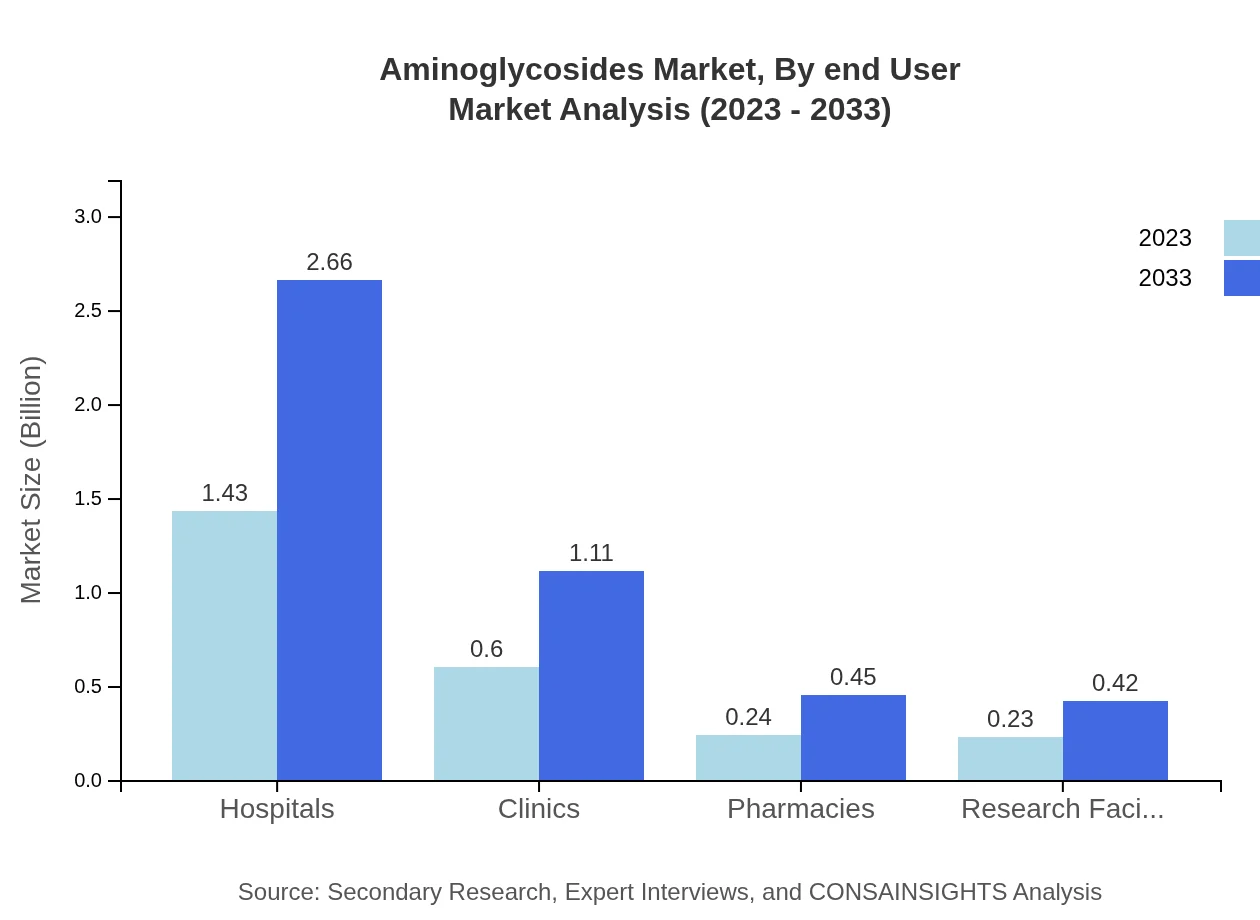
End-users of Aminoglycosides include hospitals, clinics, pharmacies, and research facilities, contributing significantly to market growth. The hospital sector is anticipated to maintain the largest share of 60.87% in 2033, reflecting the vital role they play in managing severe infections.
Aminoglycosides Market Analysis By Distribution Channel
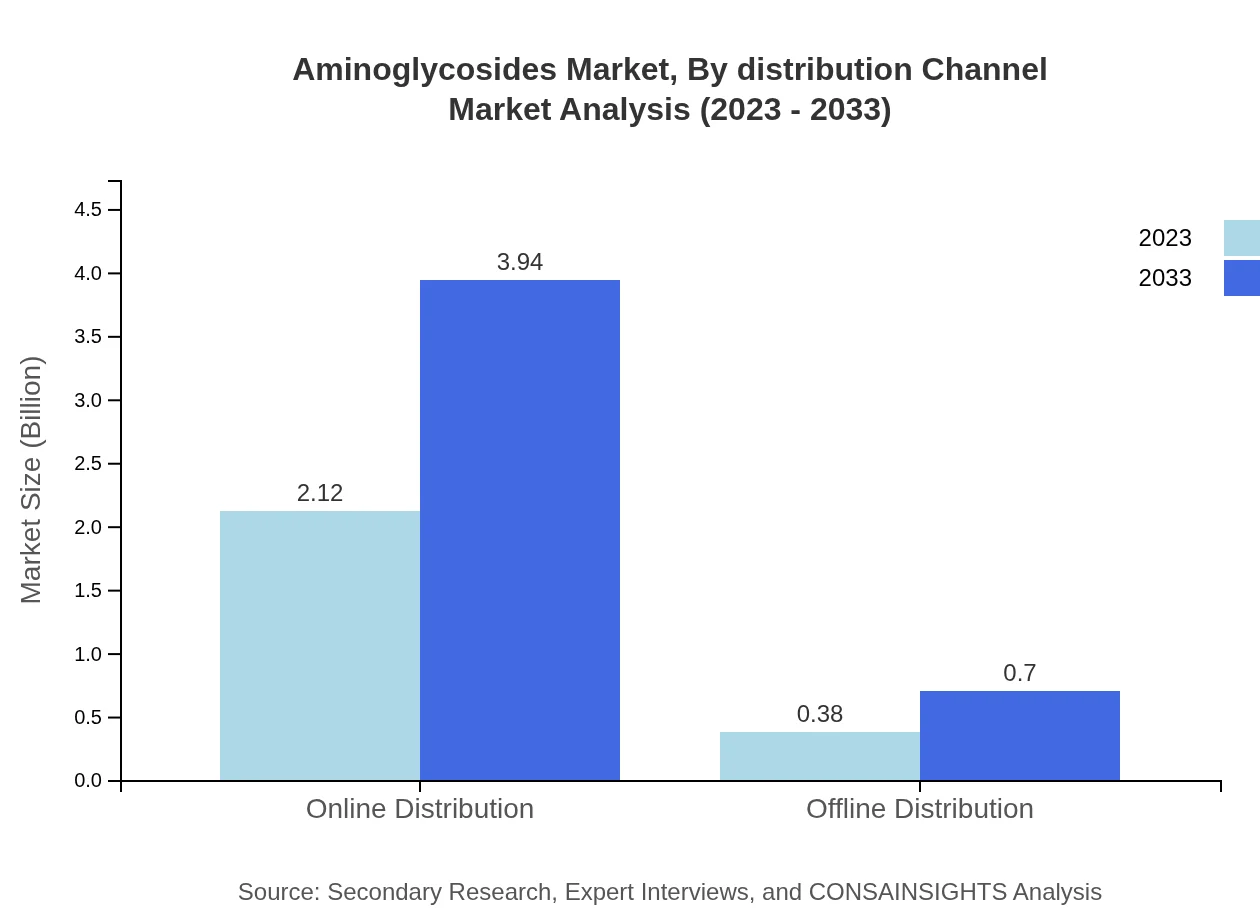
Online distribution channels are becoming increasingly popular in the Aminoglycosides market due to their convenience, with a size anticipated to grow from USD 2.12 billion in 2023 to USD 3.94 billion by 2033. Offline channels, while retaining a smaller share, still play an essential role in traditional pharmacy interactions.
Aminoglycosides Market Trends and Future Forecast
Tell us your focus area and get a customized research report.
Global Market Leaders and Top Companies in Aminoglycosides Industry
Bristol-Myers Squibb:
Bristol-Myers Squibb is a prominent player in the pharmaceutical industry known for its innovative antibiotic treatments and strong research capabilities in developing new aminoglycosides.Pfizer Inc.:
Pfizer is a global leader in the pharmaceutical sector, involved in the development and production of various aminoglycosides, leveraging its extensive network for distribution and accessibility.Sandoz:
Sandoz, a division of Novartis, focuses extensively on generics and biosimilars in the antibiotics space, including aminoglycosides, helping to reduce treatment costs while maintaining quality.We're grateful to work with incredible clients.







FAQs
What is the market size of the Aminoglycosides Market Report in 2023?
The market size in 2023 is $2.50 Billion, as stated in the report's baseline year data.
How big is the Aminoglycosides Market Report expected to be in 2033?
The market is projected to reach $4.63 Billion by 2033 according to the provided forecast figures.
What is CAGR of the Aminoglycosides Market Report for 2023 to 2033?
The compound annual growth rate for the forecast period 2023 to 2033 is 6.2% as specified in the input data.
Is there a single fastest Growing region in the Aminoglycosides Market Report market?
No single fastest-growing region is stated for the Aminoglycosides Market Report market because the top regional implied CAGR values are within 0.15 percentage points of each other, making the ranking too close to call reliably.
Which companies are highlighted in the Aminoglycosides market?
Top companies listed in the input data include Bristol-Myers Squibb, Pfizer Inc., and Sandoz.
What are common end users for aminoglycosides?
End users noted include hospitals, clinics, pharmacies, and research facilities as primary channels for clinical and research applications.
How big is the Europe market for aminoglycosides in 2023?
Europe's market is stated as $0.7 Billion in 2023, growing to $1.3 Billion by 2033 per the regional facts.
What drives demand for aminoglycosides according to the report?
Demand is driven by the need to treat serious bacterial infections, continued R&D, and enhancements in delivery and formulation approaches.
Who contributed to the research methodology for this market report?
The methodology includes primary interviews with industry experts, secondary research in company reports and publications, and data triangulation with internal validation.
Which distribution channels are included in the segmentation?
Distribution channels described include online distribution and offline distribution for product delivery and supply.