

Anemia Treatment Market Report
First published: 12 October 2024 | Last updated: 25 May 2026 | Report Code: anemia-treatment
Anemia Treatment Market — USD 10 billion in 2023, Growing to USD 16.46B by 2033 at 5% CAGR
This report provides an in-depth analysis of the anemia treatment market from 2023 to 2033, covering market size, trends, regional insights, and forecasts. Key segments including treatment types and distribution channels are explored to deliver comprehensive data-driven insights.
Key Takeaways
- Global market grows from $10.00 Billion in 2023 to $16.46 Billion by 2033 at a 5% CAGR.
- North America is largest regional market, while no single fastest-growing region is stated because regional CAGR differences remain within 0.15 percentage points.
- Europe increases from $2.92 Billion to $4.80 Billion between 2023 and 2033, reflecting steady demand.
- Asia Pacific expands from $1.99 Billion to $3.27 Billion to 2033, driven by improving healthcare access.
- Top companies include Pfizer Inc., Amgen Inc., Bristol-Myers Squibb, and Hemogenyx Pharmaceuticals PLC.
Anemia Treatment Market Report — Executive Summary
North America remains largest market by forecast-period value, while no single fastest-growing region is stated because top regional growth rates are separated by less than 0.15 percentage points. The report examines market forces behind anemia treatment growth over the 2023 to 2033 forecast. Rising prevalence tied to nutritional shortfalls, chronic illnesses and aging populations is a core demand driver. Advances in therapies, expanded access in emerging markets, and ongoing R&D support product innovation and wider availability. The competitive landscape features established pharmaceutical firms — including Pfizer Inc., Amgen Inc., Bristol-Myers Squibb and Hemogenyx Pharmaceuticals PLC — pursuing portfolio expansion and new formulations. Coverage spans treatment types, distribution channels, patient groups and regional performance, providing stakeholders with a structured view of market dynamics and strategic considerations.
Key Growth Drivers
- Increasing prevalence of anemia due to dietary deficiencies and chronic diseases raising treatment demand.
- Aging populations creating sustained need for long-term management and therapeutic interventions.
- Technological progress and new formulations facilitating improved treatment efficacy and patient adherence.
- Expanded healthcare access in emerging markets enabling broader distribution and uptake of therapies.
- Ongoing R&D and collaborations among pharma and research institutions driving innovation in treatment options.
| Metric | Value |
|---|---|
| Study Period | 2023 - 2033 |
| 2023 Market Size | $10.00 Billion |
| CAGR (2023-2033) | 5% |
| 2033 Market Size | $16.46 Billion |
| Top Companies | Pfizer Inc., Amgen Inc., Bristol-Myers Squibb, Hemogenyx Pharmaceuticals PLC |
| Published Date | 12 October 2024 |
| Last Modified Date | 25 May 2026 |
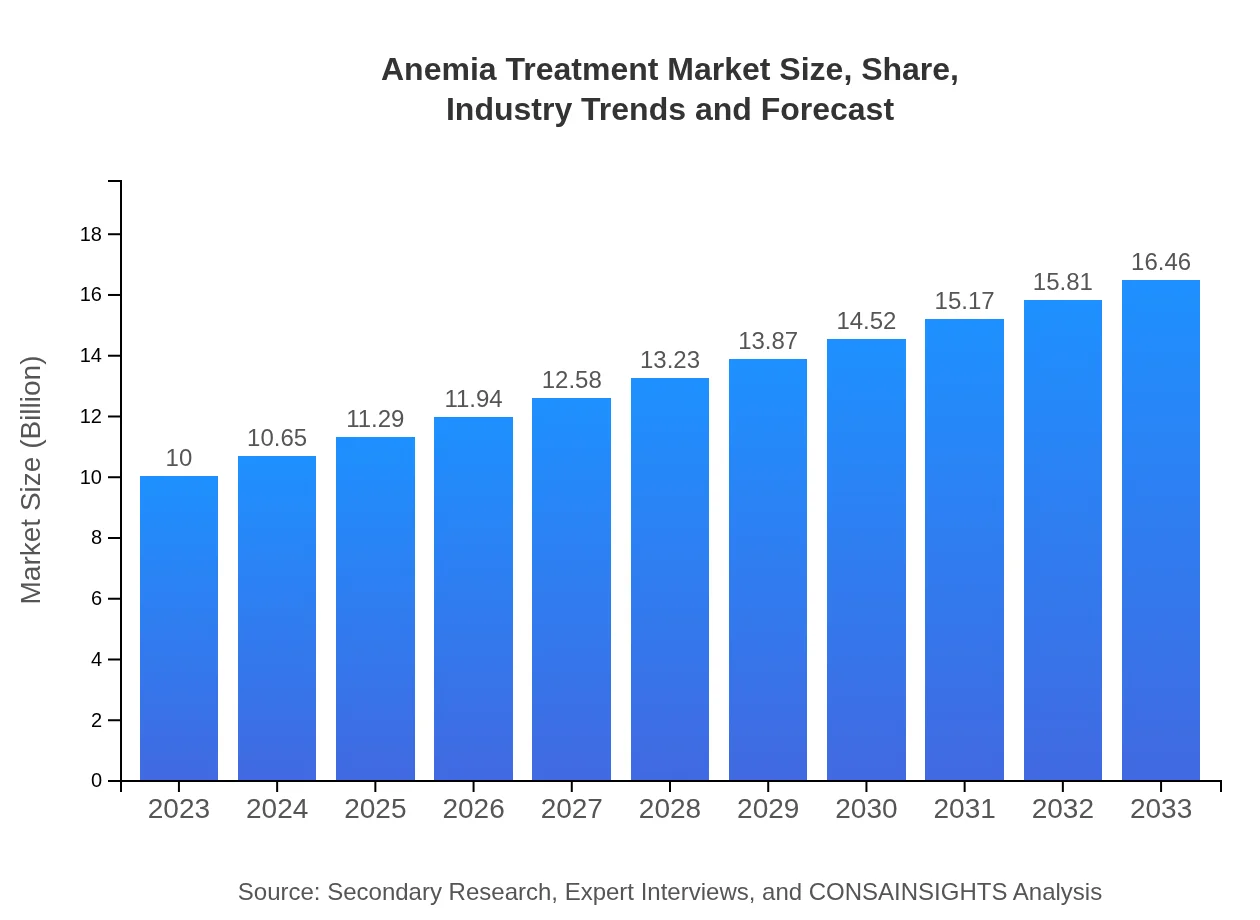
Anemia Treatment Market Overview
Customize Anemia Treatment Market Report market research report
- ✔ Get in-depth analysis of Anemia Treatment market size, growth, and forecasts.
- ✔ Understand Anemia Treatment's regional dynamics and industry-specific trends.
- ✔ Identify potential applications, end-user demand, and growth segments in Anemia Treatment
What is the Market Size & CAGR of Anemia Treatment Market Report market in 2023?
Anemia Treatment Industry Analysis
Anemia Treatment Market Segmentation and Scope
Tell us your focus area and get a customized research report.
Anemia Treatment Market Report Market Analysis Report by Region
Europe Anemia Treatment Market Report:
Europe grows from $2.92 Billion in 2023 to $4.8 Billion in 2033. Regional drivers include aging demographics, structured chronic disease management programs, and sustained investment in treatment development and distribution channels.Asia Pacific Anemia Treatment Market Report:
Asia Pacific grows from $1.99 Billion in 2023 to $3.27 Billion in 2033. Expansion stems from improved healthcare access, rising clinical awareness of anemia, and adoption of both traditional and emerging treatment modalities.North America Anemia Treatment Market Report:
North America is largest regional market, rising from $3.33 Billion in 2023 to $5.48 Billion in 2033. This trajectory reflects established treatment infrastructure, high adoption rates of therapeutic options, and robust pharmaceutical activity supporting availability and innovation.South America Anemia Treatment Market Report:
Latin America grows from $0.53 Billion in 2023 to $0.88 Billion in 2033. Growth here is linked to expanding healthcare services, greater availability of treatments, and increasing attention to nutritional and chronic disease-related anemia.Middle East & Africa Anemia Treatment Market Report:
Middle East and Africa grows from $1.23 Billion in 2023 to $2.02 Billion in 2033. Drivers include broader healthcare reach, heightened screening and diagnosis, and incremental adoption of therapies as access improves.Tell us your focus area and get a customized research report.
Research Methodology
Anemia Treatment Market Analysis By Treatment Type
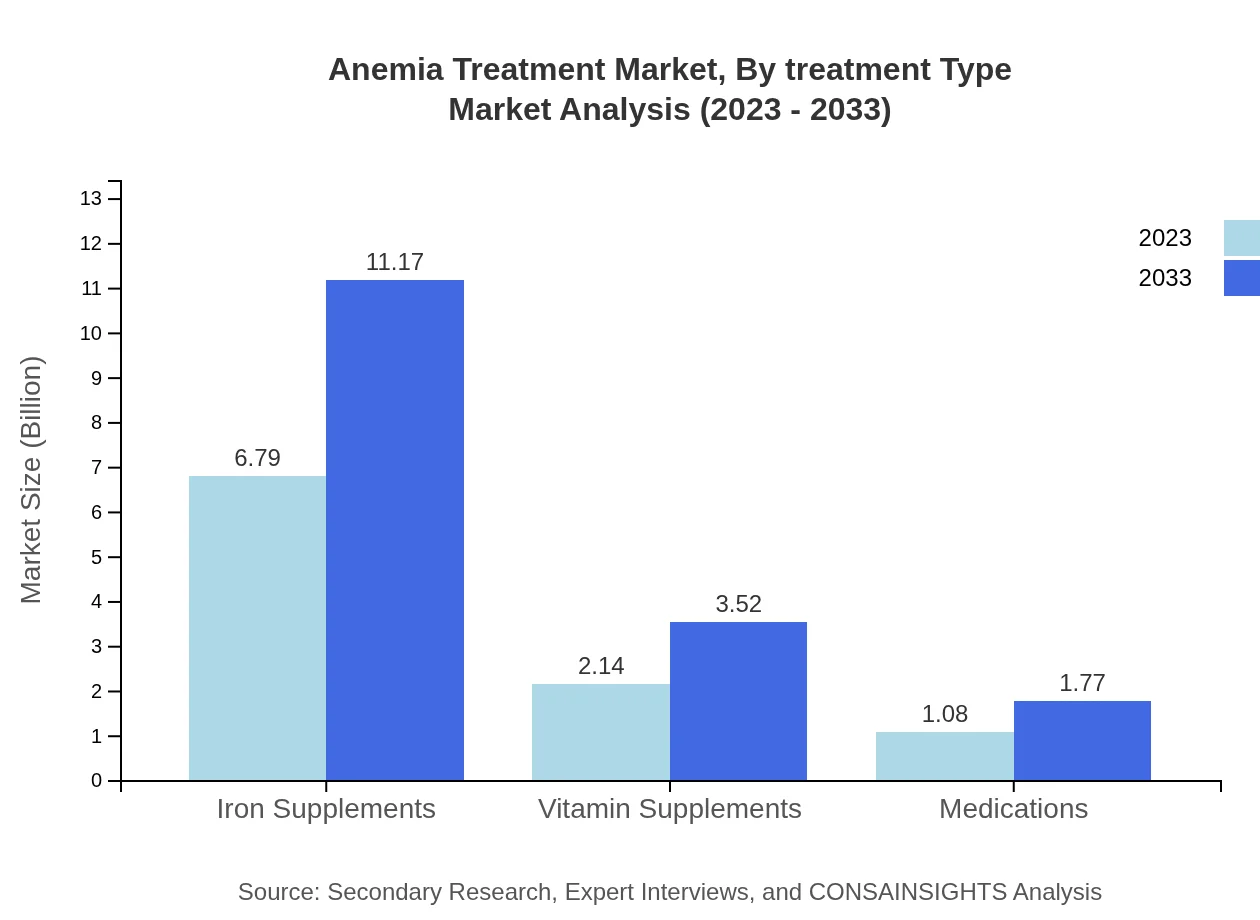
The anemia treatment market by treatment type shows traditional methods dominating the market with a size of $8.89 billion in 2023, expected to grow to $14.64 billion by 2033. New technologies are also gaining traction, with market values moving from $1.11 billion to $1.82 billion in the same timeframe, representing a growing trend towards innovative treatment options.
Anemia Treatment Market Analysis By Application
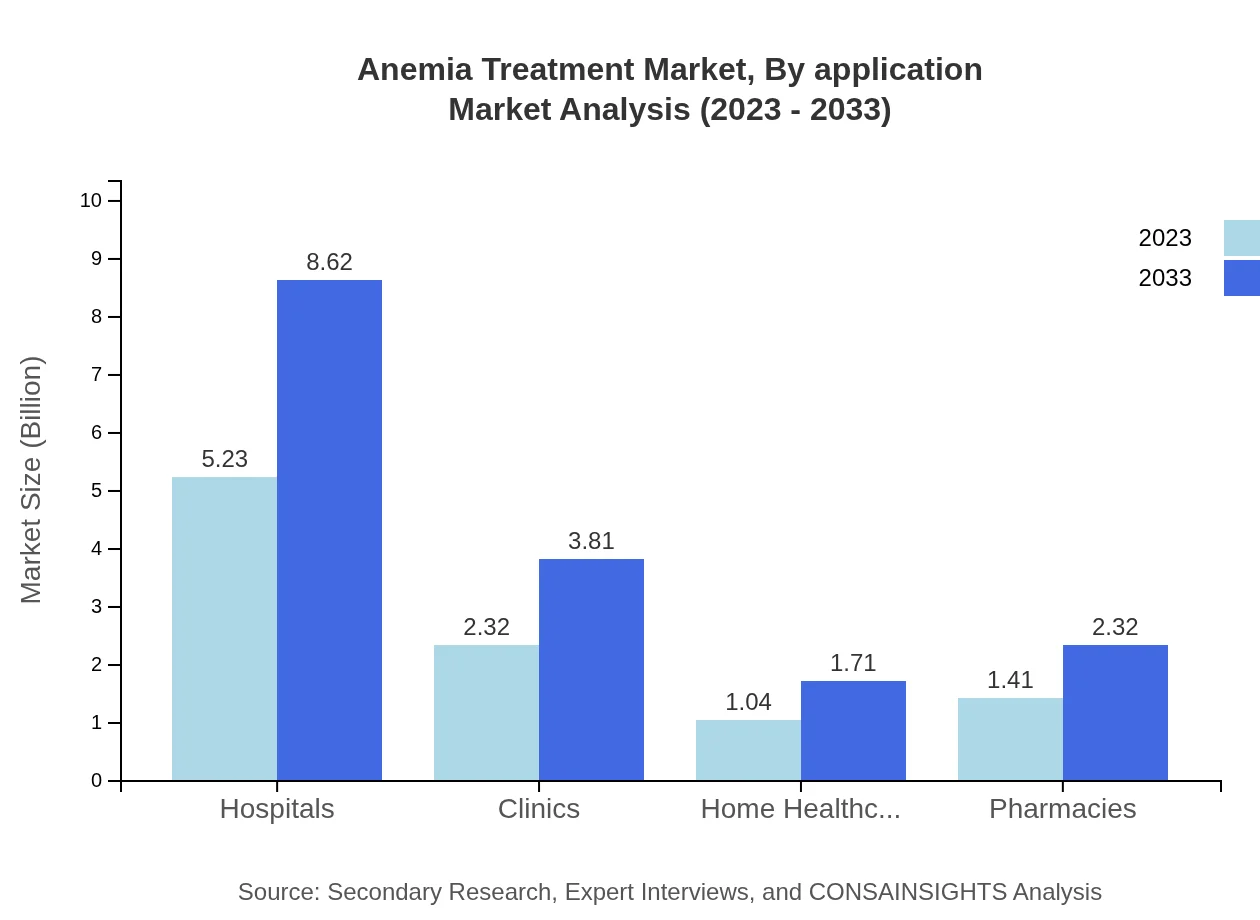
In terms of application, hospitals lead the segment with a market size of $5.23 billion in 2023, projected to increase to $8.62 billion by 2033. Clinics follow with a size of $2.32 billion expected to rise to $3.81 billion, while home healthcare and pharmacies collectively play critical roles in improving access to anemia treatments.
Anemia Treatment Market Analysis By Patient Group
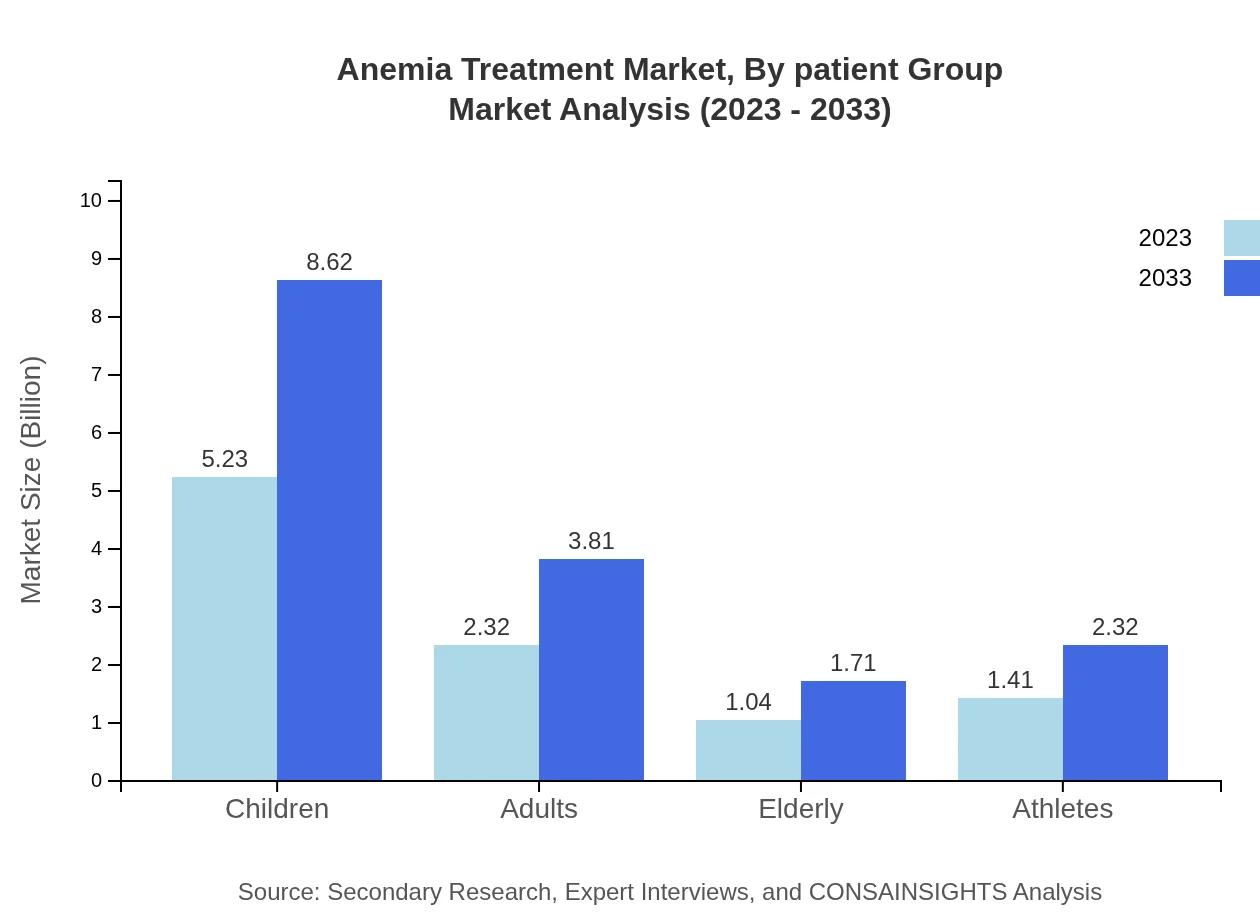
The patient group segmentation shows children as the largest demographic, holding $5.23 billion in 2023 and set to rise to $8.62 billion by 2033. Adults and elderly populations are also important segments, expected to grow significantly due to increasing awareness and healthcare access.
Anemia Treatment Market Analysis By Distribution Channel
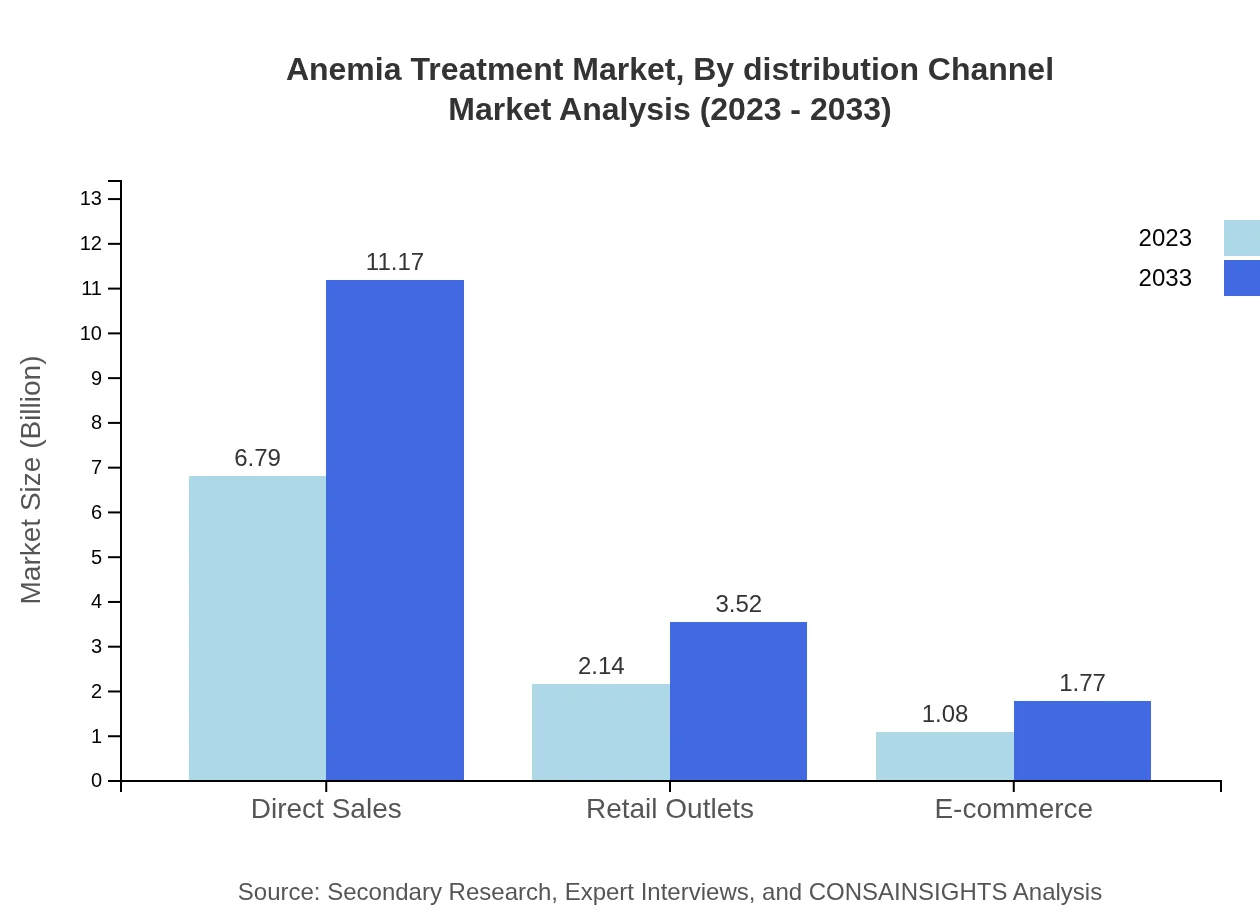
In the distribution channel analysis, direct sales dominate with a size of $6.79 billion in 2023, anticipated to rise to $11.17 billion by 2033. Retail outlets and e-commerce are crucial for increasing accessibility, showing significant potential for growth in the coming years.
Anemia Treatment Market Analysis By Technology
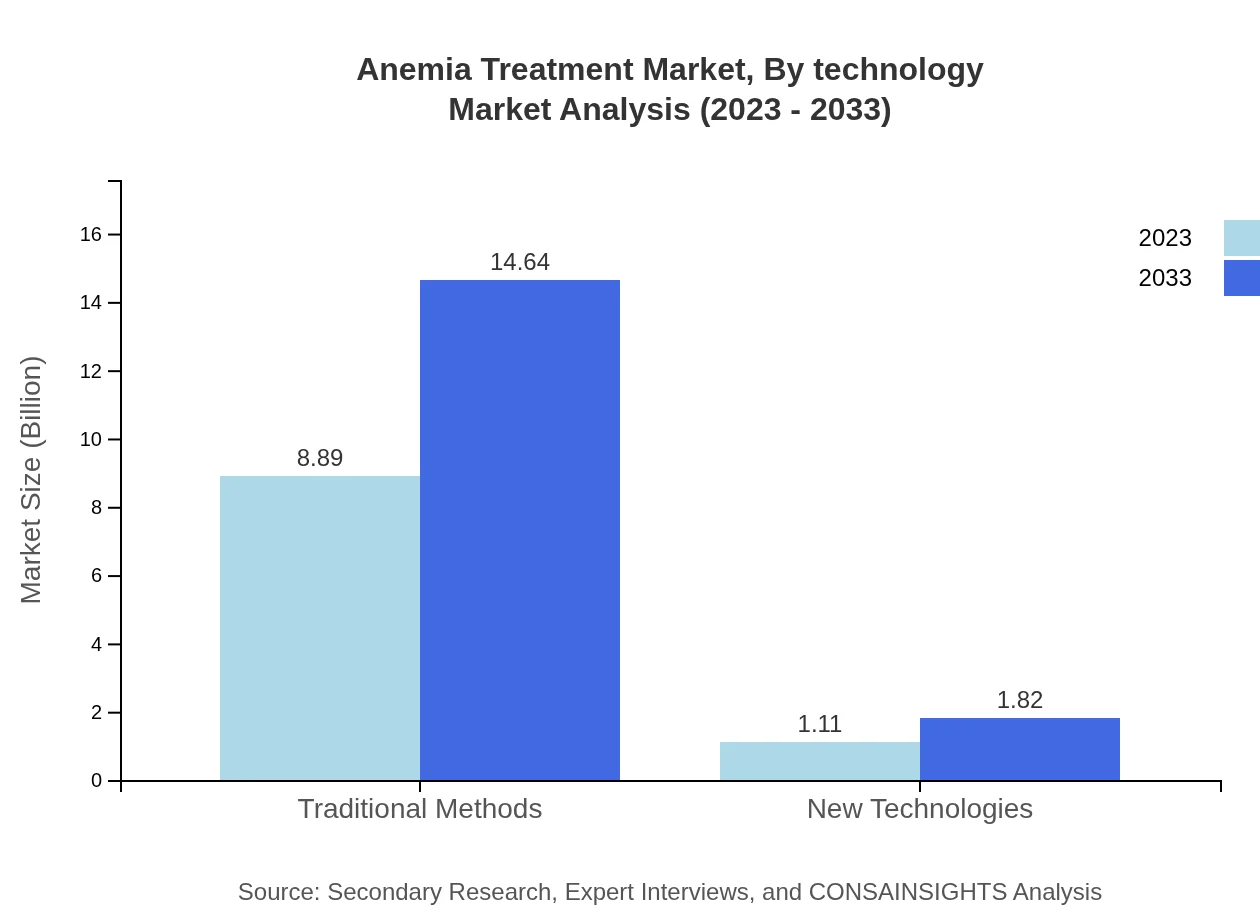
The technology segment is marked by rapid innovations influencing treatment delivery and effectiveness. Continued advancements in formulations and digital health technologies are expected to shape the future landscape of anemia treatment, focusing on personalized healthcare solutions.
Anemia Treatment Market Trends and Future Forecast
Tell us your focus area and get a customized research report.
Global Market Leaders and Top Companies in Anemia Treatment Industry
Pfizer Inc.:
A leading global pharmaceutical company that develops innovative medications for diverse health conditions, including anemia. Their robust portfolio features several iron supplementation products that address various demographics.Amgen Inc.:
A biotechnology firm known for its biologic treatments and therapies targeting anemia, particularly in patients with chronic kidney disease, contributing to advancements in the treatment landscape.Bristol-Myers Squibb:
This company focuses on developing and delivering innovative therapies for serious diseases, including treatments for anemia resulting from cancer or chemotherapy.Hemogenyx Pharmaceuticals PLC:
An emerging biopharmaceutical company focused on developing advanced therapies for blood disorders, including novel treatments for anemia.We're grateful to work with incredible clients.




FAQs
What is the current market size of the Anemia Treatment Market Report?
The market size is $10.00 Billion in 2023 according to the report, reflecting the baseline for projections and comparative regional analysis through the forecast period.
How big will the market be in 2033?
The report projects the market to reach $16.46 Billion by 2033, based on the stated forecast period and documented growth assumptions in the analysis.
What is CAGR of the Anemia Treatment Market Report?
The compound annual growth rate (CAGR) for the forecast period 2023 to 2033 is reported as 5%, applied consistently across the market-level projection.
Is there a single fastest Growing region in the Anemia Treatment Market Report market?
No single fastest-growing region is stated for the Anemia Treatment Market Report market because the top regional implied CAGR values are within 0.15 percentage points of each other, making the ranking too close to call reliably.
Which companies lead the competitive landscape?
Top companies listed include Pfizer Inc., Amgen Inc., Bristol-Myers Squibb and Hemogenyx Pharmaceuticals PLC, representing major pharmaceutical involvement in the sector.
What regional trends affect Europe’s market trajectory?
Europe’s market expands from $2.92 Billion in 2023 to $4.80 Billion in 2033, influenced by aging populations, chronic disease management and continued therapeutic development.
Who benefits from improved access in Asia Pacific?
Asia Pacific, moving from $1.99 Billion in 2023 to $3.27 Billion by 2033, benefits through enhanced healthcare access, growing awareness and adoption of established and novel treatments.
Why are treatment innovations important?
Innovations improve efficacy and adherence, support differentiated therapies, and help address varied patient needs, which in turn underpin market expansion and competitive positioning.