

Anti Infective Drugs Market Report
First published: 21 October 2024 | Last updated: 25 May 2026 | Report Code: anti-infective-drugs
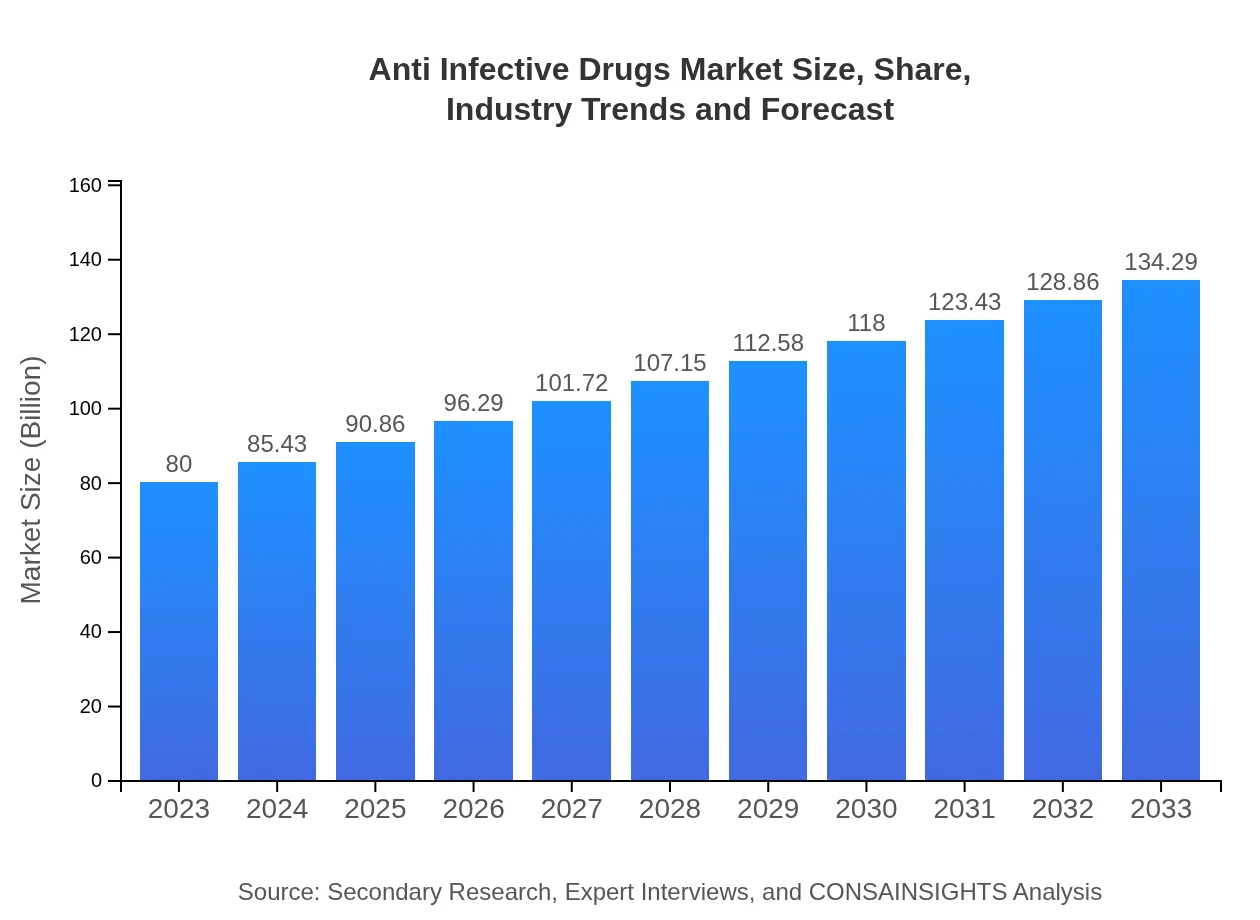
Anti Infective Drugs Market — USD 80 billion in 2023, Growing to USD 134.29B by 2033 at 5.2% CAGR
This report offers a comprehensive overview of the Anti Infective Drugs market, detailing market size, growth forecasts, industry analysis, segmentation, and regional insights from 2023 to 2033.
Key Takeaways
- Global market expansion from $80.00 Billion in 2023 to $134.29 Billion by 2033, reflecting a 5.2% CAGR over 2023 to 2033.
- North America is largest regional market, while no single fastest-growing region is stated because regional CAGR differences remain within 0.15 percentage points.
- Segment coverage includes antibiotics, antivirals, antifungals and multiple routes, formulations, and distribution channels.
- Leading industry players include Pfizer, Johnson & Johnson, and Merck & Co., active across product development and distribution.
- Supply-side innovation and rising infection prevalence are principal growth catalysts influencing demand and new formulations.
Anti Infective Drugs Market Report — Executive Summary
North America remains largest market by forecast-period value, while no single fastest-growing region is stated because top regional growth rates are separated by less than 0.15 percentage points. The report outlines drivers shaping the anti-infective drugs landscape through 2033. Market value rises from $80.00 Billion in 2023 to $134.29 Billion in 2033, tracking a 5.2% CAGR for 2023 to 2033. Demand is influenced by increasing infectious disease incidence, reformulation and delivery innovations, and heightened R&D activity. The study segments the market by drug class (antibiotics, antivirals, antifungals), formulation, route of administration, distribution channels and end users such as hospitals, clinics and homecare. Regional chapters detail performance across North America, Europe, Asia Pacific, Latin America and Middle East & Africa, with North America cited as the largest regional market. Competitive review highlights major firms including Pfizer, Johnson & Johnson and Merck & Co. Methodology combines primary interviews with industry specialists and secondary analysis of corporate reports and publications, with data triangulation and expert validation informing trend interpretation.
Key Growth Drivers
- Rising prevalence of infectious diseases increases demand for anti-infective therapies and sustained market consumption.
- Ongoing research and development efforts enable novel formulations and targeted treatments that broaden therapeutic options.
- Regulatory and patent dynamics shift market composition toward generics and biosimilars, affecting pricing and access.
- Expanded healthcare infrastructure and distribution networks in multiple regions support greater product reach and uptake.
- Focus on pandemic preparedness and surveillance investments stimulates funding for anti-infective innovation.
| Metric | Value |
|---|---|
| Study Period | 2023 - 2033 |
| 2023 Market Size | $80.00 Billion |
| CAGR (2023-2033) | 5.2% |
| 2033 Market Size | $134.29 Billion |
| Top Companies | Pfizer , Johnson & Johnson, Merck & Co. |
| Published Date | 21 October 2024 |
| Last Modified Date | 25 May 2026 |
Anti Infective Drugs Market Overview
Customize Anti Infective Drugs Market Report market research report
- ✔ Get in-depth analysis of Anti Infective Drugs market size, growth, and forecasts.
- ✔ Understand Anti Infective Drugs's regional dynamics and industry-specific trends.
- ✔ Identify potential applications, end-user demand, and growth segments in Anti Infective Drugs
What is the Market Size & CAGR of Anti Infective Drugs Market Report market in 2023?
Anti Infective Drugs Industry Analysis
Anti Infective Drugs Market Segmentation and Scope
Tell us your focus area and get a customized research report.
Anti Infective Drugs Market Report Market Analysis Report by Region
Europe Anti Infective Drugs Market Report:
Europe grows from $21.55 Billion in 2023 to $36.18 Billion in 2033. Drivers include strong clinical research activity, widespread healthcare coverage that supports access to therapies, and evolving regulatory and pricing environments influencing market dynamics.Asia Pacific Anti Infective Drugs Market Report:
Asia Pacific grows from $15.54 Billion in 2023 to $26.09 Billion in 2033. Expansion is supported by rising healthcare spending, larger patient populations, growing diagnostic capabilities and incremental investments in pharmaceutical manufacturing and distribution.North America Anti Infective Drugs Market Report:
North America is largest regional market, rising from $25.93 Billion in 2023 to $43.52 Billion in 2033. Regional demand is driven by advanced healthcare infrastructure, significant R&D investment, robust pharmaceutical pipelines and established distribution systems supporting product access.South America Anti Infective Drugs Market Report:
Latin America grows from $7.32 Billion in 2023 to $12.29 Billion in 2033. Market growth reflects expanding healthcare access, greater awareness of infectious disease management, and improvements in supply chains and pharmacy networks.Middle East & Africa Anti Infective Drugs Market Report:
Middle East and Africa grows from $9.66 Billion in 2023 to $16.21 Billion in 2033. Factors include investments in healthcare infrastructure, disease surveillance programs, and strengthening procurement and distribution channels across public and private sectors.Tell us your focus area and get a customized research report.
Research Methodology
Anti Infective Drugs Market Analysis By Drug Class
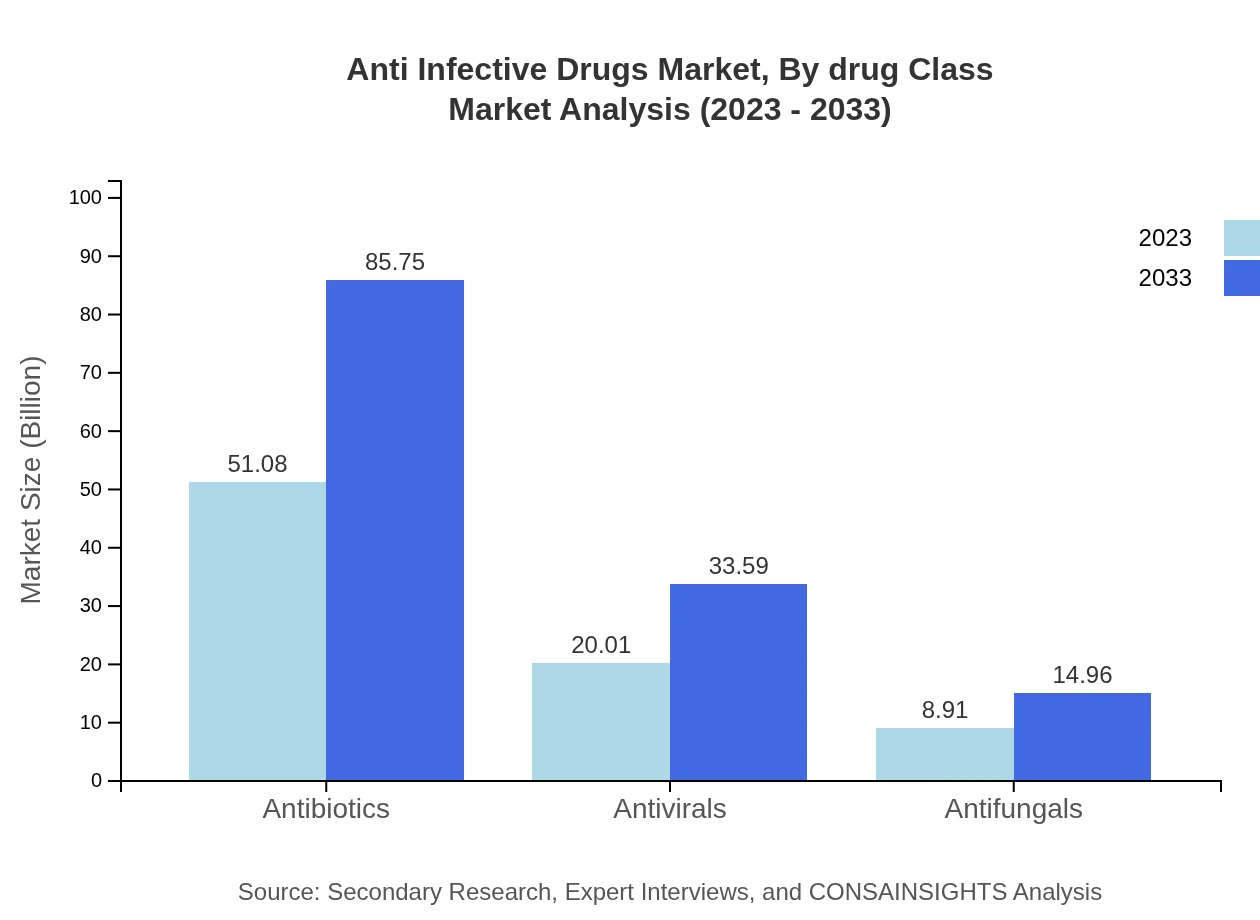
The Anti-Infective Drugs market is dominated by antibiotics, accounting for 63.85% market share in 2023. Antivirals and antifungals follow, with growing relevance due to changing disease patterns. The growing incidence of viral infections has increased investments in antiviral drug development, while antifungal therapies are gaining prominence due to rising awareness of fungal infections.
Anti Infective Drugs Market Analysis By Formulation
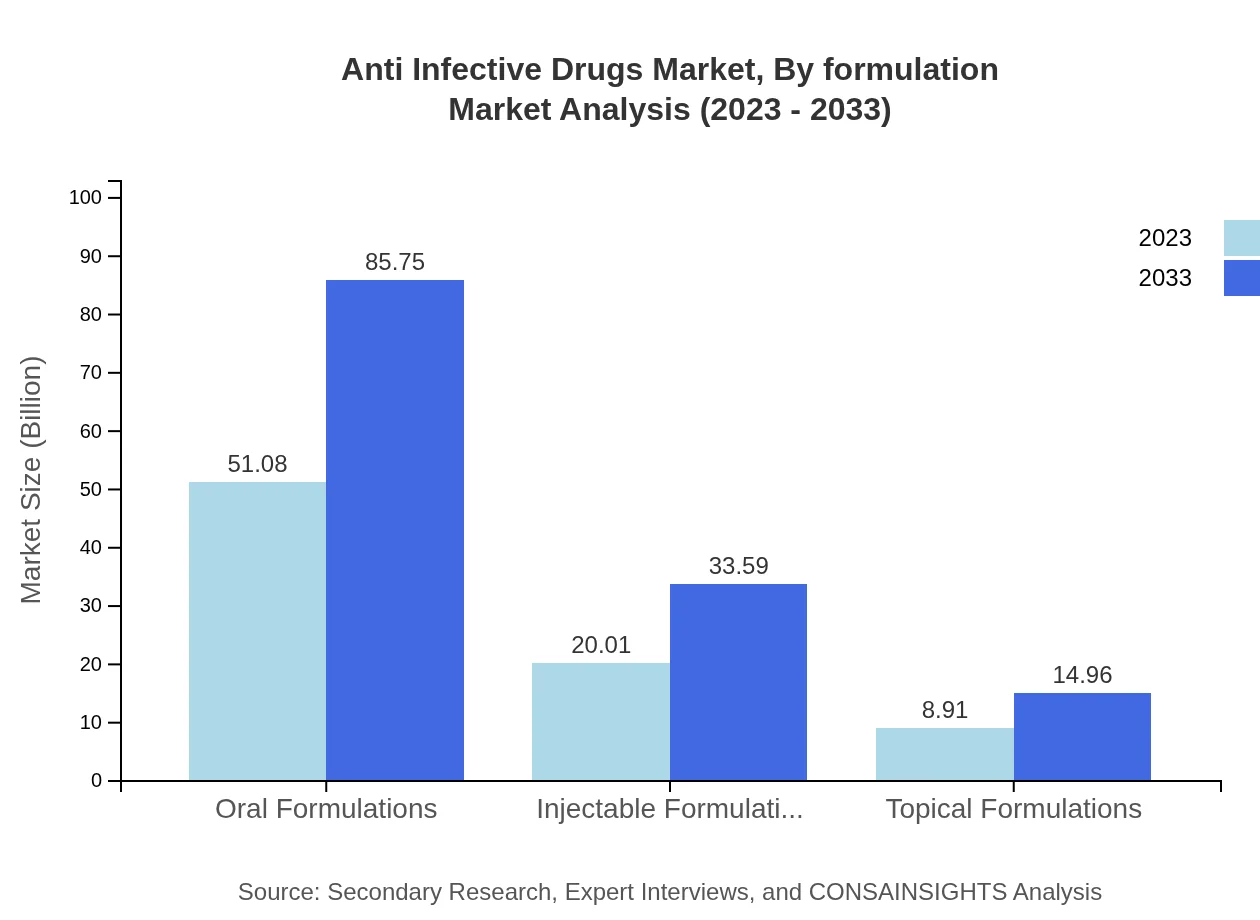
In terms of formulation, oral formulations hold the largest market share, accounting for approximately 63.85% in 2023. Injectable and topical formulations are also significant, particularly in hospital settings. The preference for oral formulations is primarily due to patient compliance and ease of use.
Anti Infective Drugs Market Analysis By Route Of Administration
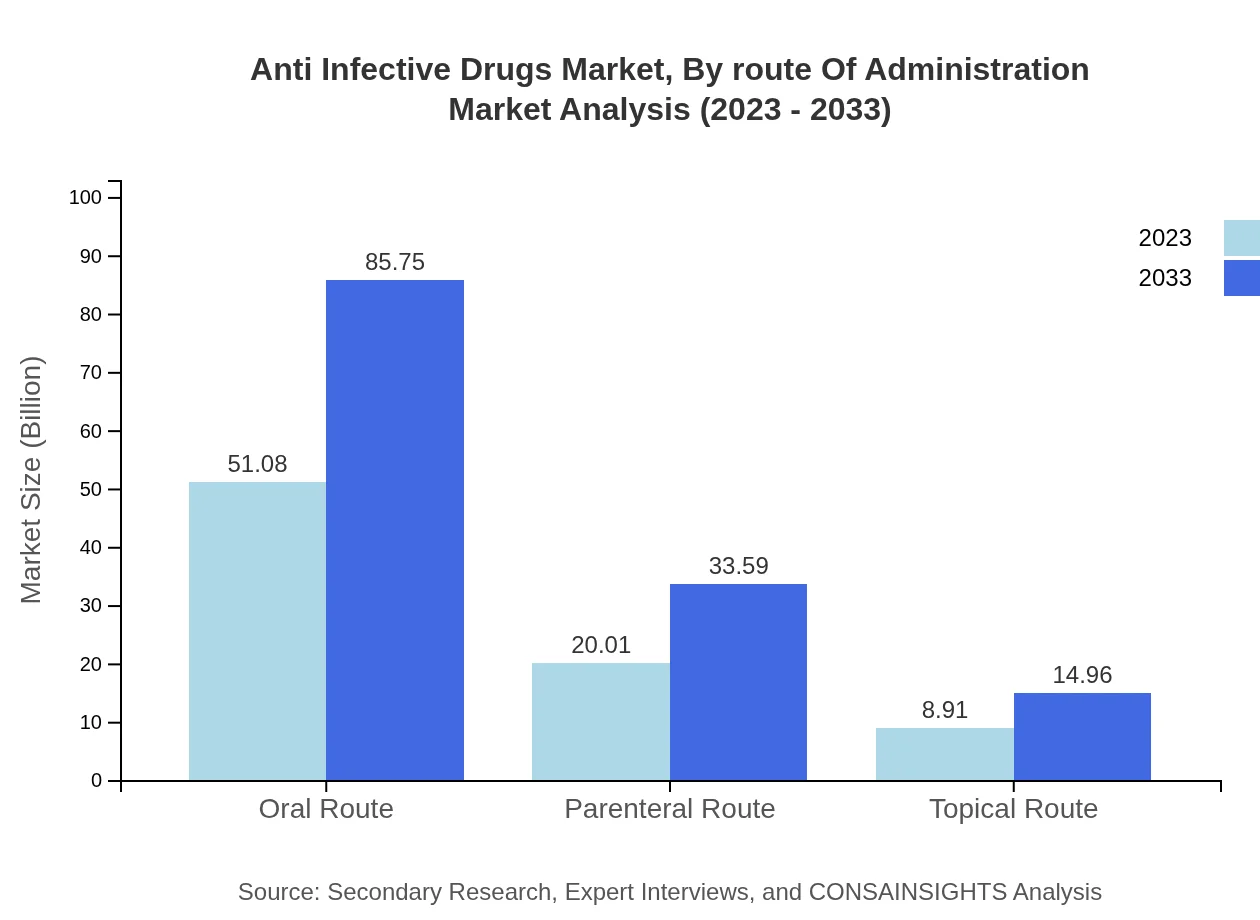
The oral route of administration is the most preferred, occupying 63.85% of the market share in 2023. However, parenteral routes are crucial in acute care settings, especially for severe infections requiring immediate intervention.
Anti Infective Drugs Market Analysis By Distribution Channel
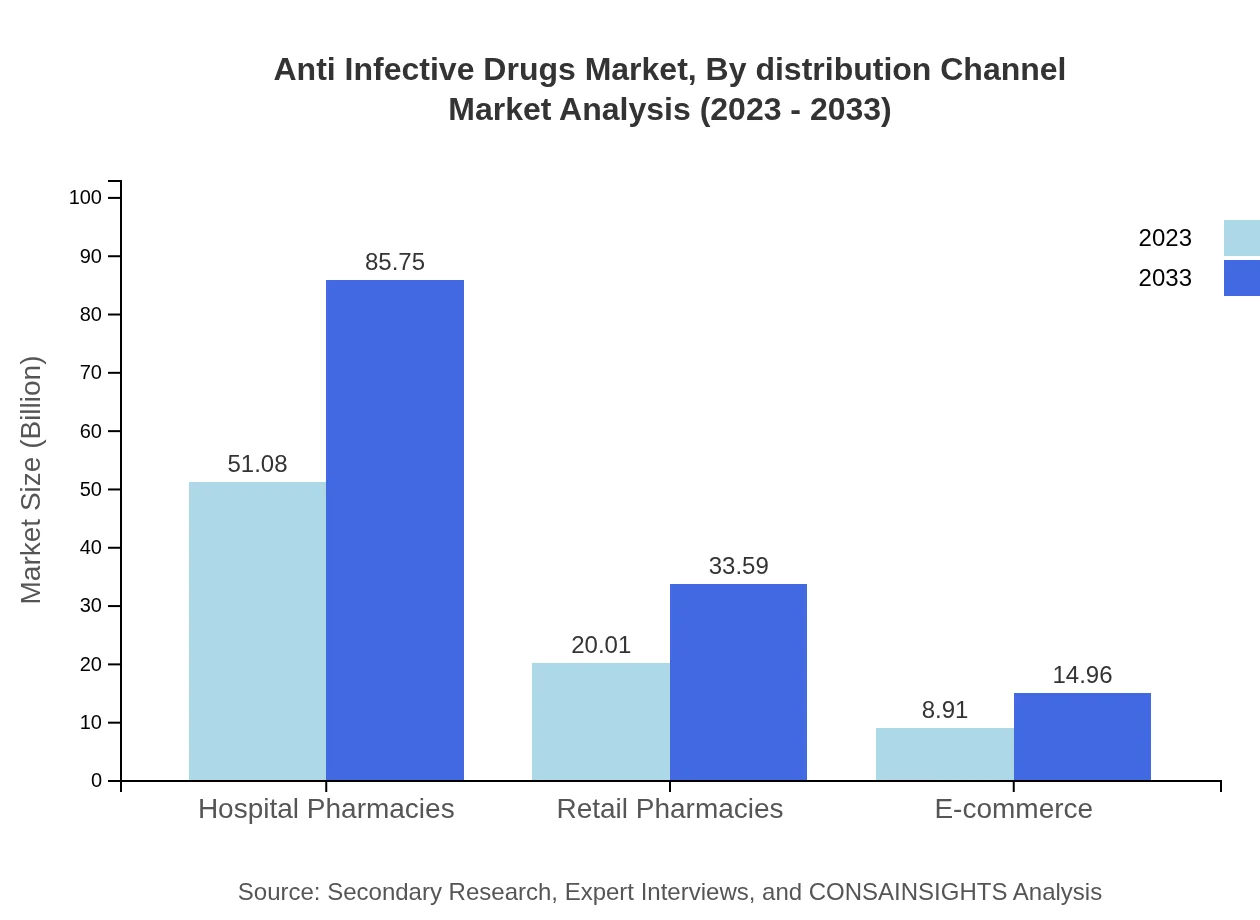
Hospitals dominate the distribution channels, contributing to 63.85% share in the market. Retail and online pharmacies are also growing in importance, driven by changes in consumer behavior post-pandemic.
Anti Infective Drugs Market Trends and Future Forecast
Tell us your focus area and get a customized research report.
Global Market Leaders and Top Companies in the Anti Infective Drugs Industry
Pfizer :
A leading global biopharmaceutical company, Pfizer has made significant contributions to the anti-infective market, famous for its innovative antibiotic treatments and extensive research on infectious diseases.Johnson & Johnson:
Known for its broad portfolio of healthcare solutions, Johnson & Johnson actively engages in the development of anti-infective medications, focusing on novel treatments and strategic partnerships in research.Merck & Co.:
Merck is recognized for its pioneering antibiotic and antiviral therapies, playing a crucial role in combatting infectious diseases through continuous innovation and extensive clinical trials.We're grateful to work with incredible clients.



FAQs
What is the market size of the Anti Infective Drugs Market Report in 2023?
The market size in 2023 is $80.00 Billion, as reported for the anti-infective drugs sector in the provided dataset.
How big will the market be in 2033?
By 2033 the market is projected to reach $134.29 Billion according to the provided forecast figures.
What is CAGR of the market for the forecast period?
The compound annual growth rate for the period 2023 to 2033 is 5.2% as stated in the input data.
Is there a single fastest Growing region in the Anti Infective Drugs Market Report market?
No single fastest-growing region is stated for the Anti Infective Drugs Market Report market because the top regional implied CAGR values are within 0.15 percentage points of each other, making the ranking too close to call reliably.
Which drug classes are covered in the segmentation?
Segmentation includes antibiotics, antivirals and antifungals as the primary drug-class categories in the dataset.
Who are the top companies listed in the report?
The leading companies noted are Pfizer, Johnson & Johnson, and Merck & Co., as provided in the input.
How is the market divided by end user?
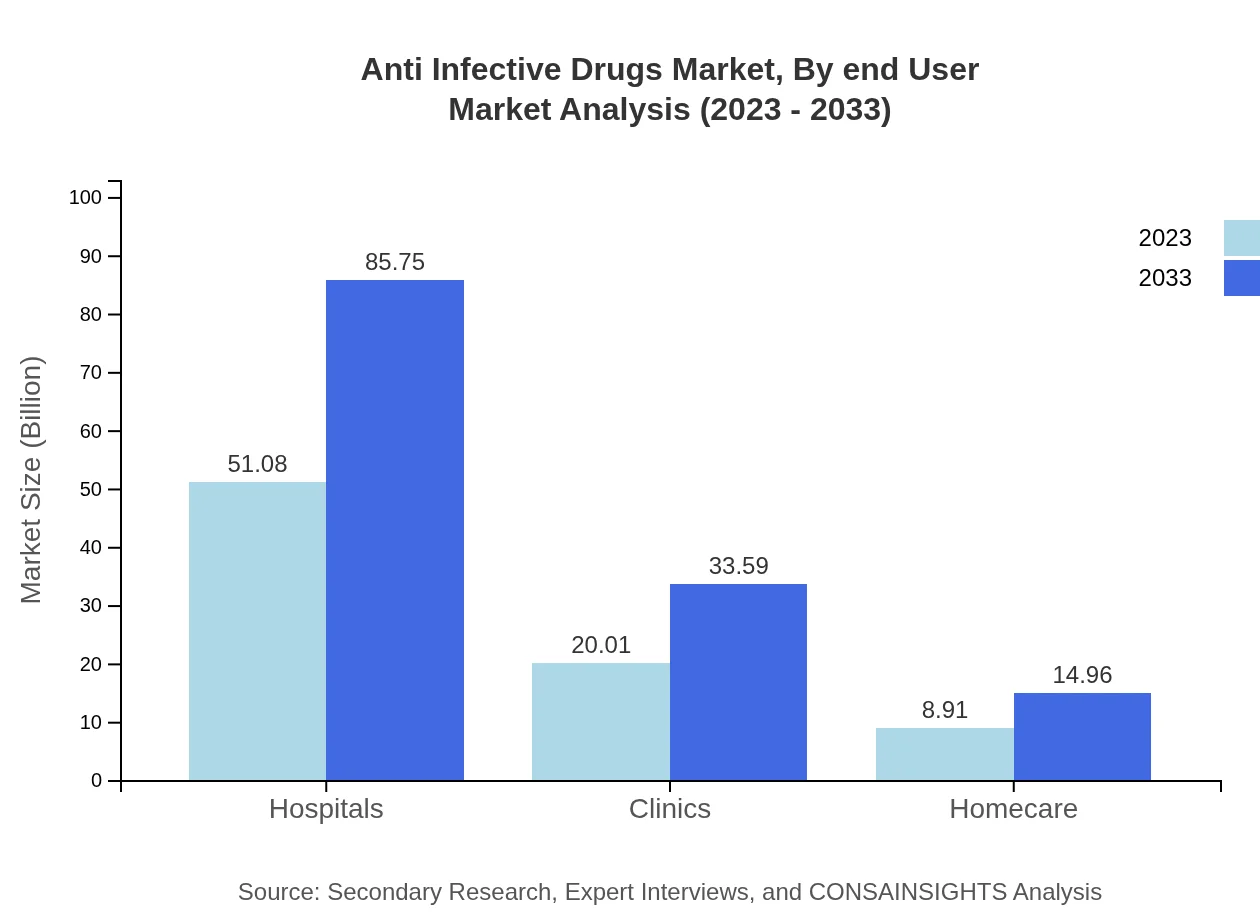
End-user segmentation comprises hospitals, clinics and homecare as the specified subsegments in the dataset.
What distribution channels are included in the analysis?
Distribution channels covered are hospital pharmacies, retail pharmacies and e-commerce according to the input.
Why does the report highlight formulation variety?
Formulations such as oral, injectable and topical forms are emphasized because they affect administration, compliance and therapeutic suitability.
How was the research conducted for this report?
Research combined primary interviews with industry experts and secondary review of company reports and publications, with triangulation and internal validation.