

Anti Inflammatory Drugs Market Report
First published: 20 October 2024 | Last updated: 25 May 2026 | Report Code: anti-inflammatory-drugs
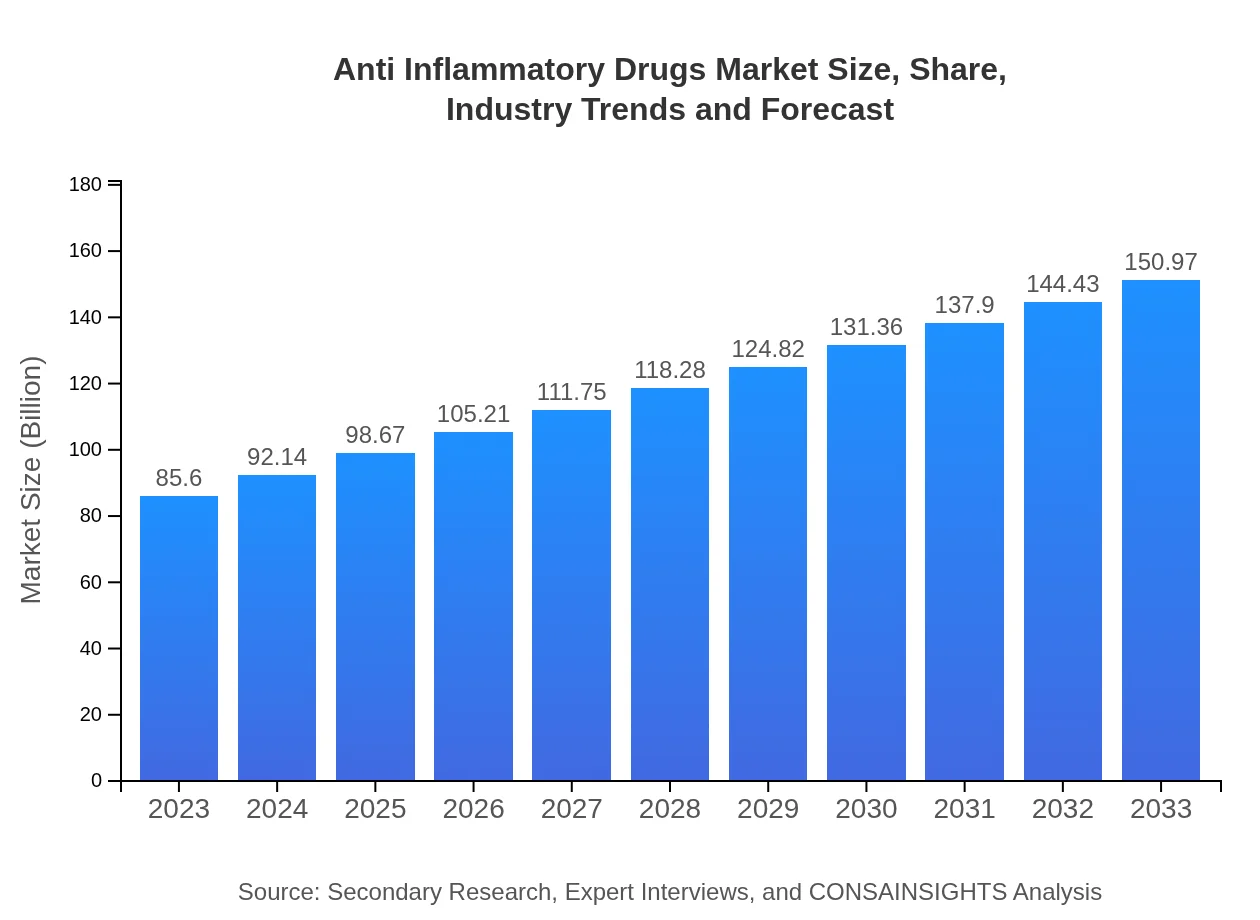
Anti Inflammatory Drugs Market — USD 85.6 billion in 2023, Growing to USD 150.97B by 2033 at 5.7% CAGR
This report provides a comprehensive analysis of the Anti Inflammatory Drugs market, covering insights from 2023 to 2033. It delves into market size, growth trends, segmentation, regional performances, technology impacts, and profiles of leading companies, offering stakeholders vital information for strategic planning.
Key Takeaways
- Global market expands from $85.60 Billion in 2023 to $150.97 Billion in 2033 at a 5.7% CAGR.
- North America is largest regional market, while no single fastest-growing region is stated because regional CAGR differences remain within 0.15 percentage points.
- North America leads regionally, rising from $30.45 Billion in 2023 to $53.7 Billion in 2033.
- NSAIDs, corticosteroids, and DMARDs remain core drug-type segments with strong hospital and clinic demand.
- Formulation and delivery innovations plus outpatient care growth underpin sustained market momentum.
Anti Inflammatory Drugs Market Report — Executive Summary
North America remains largest market by forecast-period value, while no single fastest-growing region is stated because top regional growth rates are separated by less than 0.15 percentage points. The Anti Inflammatory Drugs market is projected to grow from $85.60 Billion in 2023 to $150.97 Billion by 2033 at a 5.7% CAGR. Demand is supported by increasing prevalence of inflammatory and autoimmune conditions and expanding care in hospital and outpatient settings. NSAIDs continue to dominate due to wide availability and established use, while corticosteroids and DMARDs address chronic inflammatory indications. Product and delivery innovation, such as improved formulations and patient-centric administration routes, are shaping competitive approaches. Major pharmaceutical firms including Pfizer, Johnson & Johnson, Merck & Co., and AbbVie remain central to the landscape, competing alongside generics. Regulatory dynamics and pricing pressures present ongoing challenges, while clinical research and digital health integration offer opportunities for differentiation. The report’s structure examines drug-type, application, route of administration, and end-user segments, and provides regional breakdowns and company-level activity to support strategic planning.
Key Growth Drivers
- Rising incidence of inflammatory and autoimmune disorders increasing treatment demand.
- Widespread use and OTC availability of NSAIDs sustain high-volume consumption.
- Expansion of hospital and outpatient services raising institutional procurement of anti-inflammatory therapies.
- Advances in formulations and delivery methods improving patient adherence and therapeutic profiles.
- Ongoing clinical research and biologic development broadening treatment options for chronic inflammation.
| Metric | Value |
|---|---|
| Study Period | 2023 - 2033 |
| 2023 Market Size | $85.60 Billion |
| CAGR (2023-2033) | 5.7% |
| 2033 Market Size | $150.97 Billion |
| Top Companies | Pfizer , Johnson & Johnson, Merck & Co., AbbVie |
| Published Date | 20 October 2024 |
| Last Modified Date | 25 May 2026 |
Anti Inflammatory Drugs Market Overview
Customize Anti Inflammatory Drugs Market Report market research report
- ✔ Get in-depth analysis of Anti Inflammatory Drugs market size, growth, and forecasts.
- ✔ Understand Anti Inflammatory Drugs's regional dynamics and industry-specific trends.
- ✔ Identify potential applications, end-user demand, and growth segments in Anti Inflammatory Drugs
What is the Market Size & CAGR of Anti Inflammatory Drugs Market Report market in 2023?
Anti Inflammatory Drugs Industry Analysis
Anti Inflammatory Drugs Market Segmentation and Scope
Tell us your focus area and get a customized research report.
Anti Inflammatory Drugs Market Report Market Analysis Report by Region
Europe Anti Inflammatory Drugs Market Report:
Europe grows from $24.3 Billion in 2023 to $42.86 Billion in 2033. Demand is driven by structured care pathways for inflammatory and autoimmune diseases, adoption of proven therapies, and innovation in formulations to address safety and efficacy.Asia Pacific Anti Inflammatory Drugs Market Report:
Asia Pacific grows from $16.5 Billion in 2023 to $29.11 Billion in 2033. Expansion is supported by rising disease prevalence, improving access to healthcare services, and increasing use of both prescription and OTC anti-inflammatory medicines.North America Anti Inflammatory Drugs Market Report:
North America is largest regional market, rising from $30.45 Billion in 2023 to $53.7 Billion in 2033. Regional strength reflects advanced healthcare infrastructure, high therapeutic uptake, and significant institutional procurement in hospitals and clinics.South America Anti Inflammatory Drugs Market Report:
Latin America grows from $6.34 Billion in 2023 to $11.19 Billion in 2033. Market progress is underpinned by growing awareness of inflammatory conditions, expanding outpatient care, and broader availability of established drug types.Middle East & Africa Anti Inflammatory Drugs Market Report:
Middle East and Africa grows from $8 Billion in 2023 to $14.12 Billion in 2033. Growth factors include improving healthcare delivery, rising treatment adoption for inflammatory diseases, and increased access to a range of anti-inflammatory therapies.Tell us your focus area and get a customized research report.
Research Methodology
Anti Inflammatory Drugs Market Analysis By Drug Type
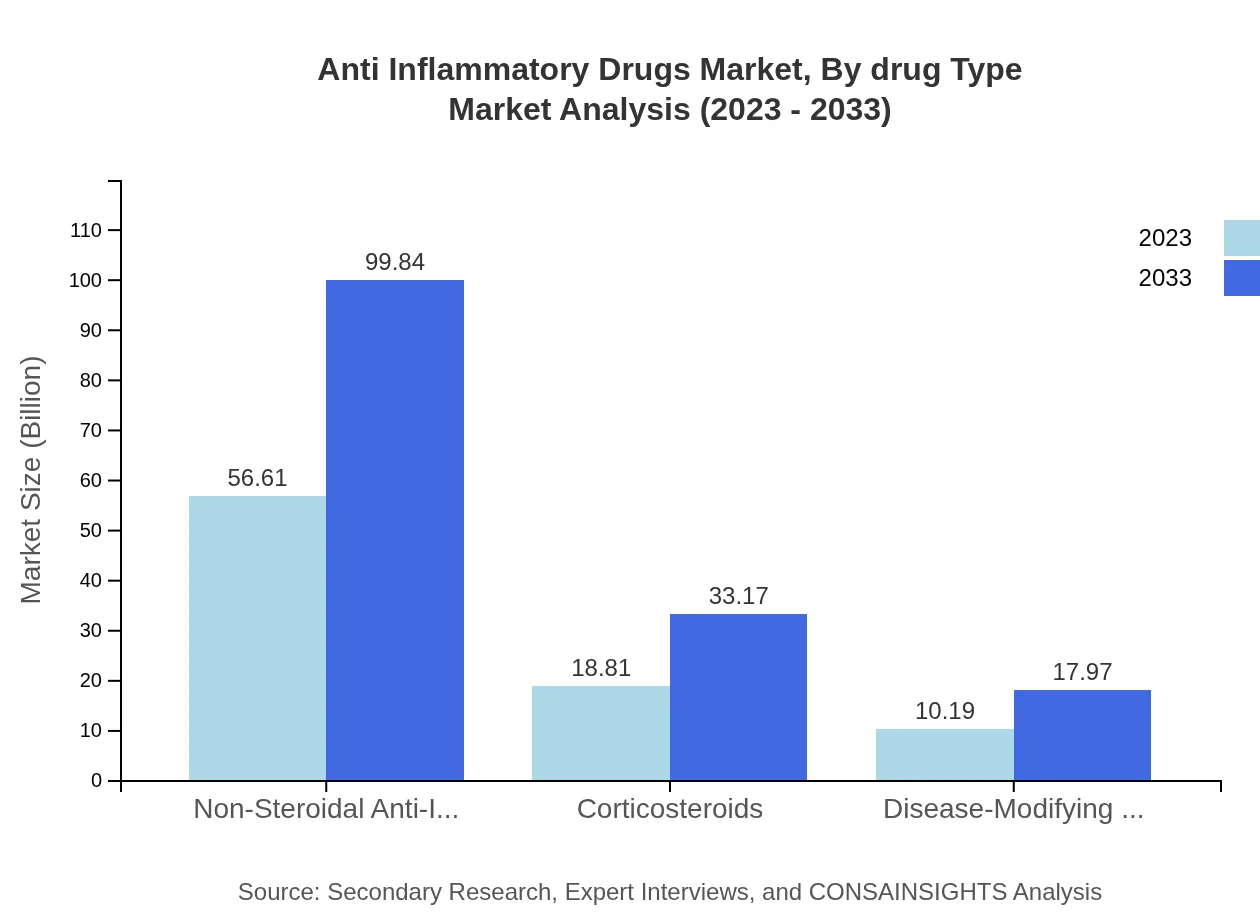
The Non-Steroidal Anti-Inflammatory Drugs (NSAIDs) segment accounts for the largest market share, valued at approximately $56.61 billion in 2023 and projected to reach over $99.84 billion by 2033. Corticosteroids and DMARDs also play significant roles, catering to specific inflammatory conditions.
Anti Inflammatory Drugs Market Analysis By Application
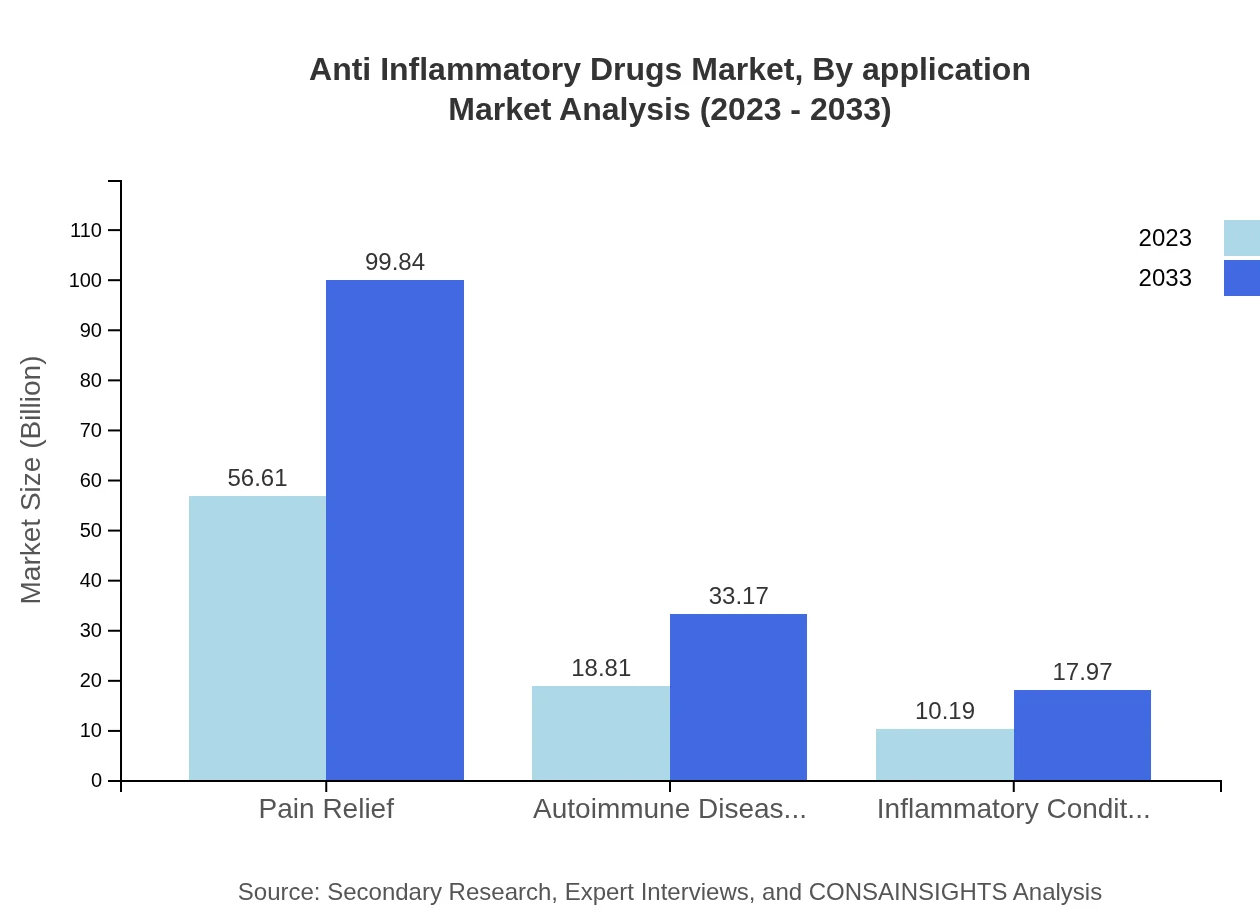
Anti Inflammatory Drugs are primarily used for pain relief, with this segment valued at $56.61 billion in 2023, expected to grow to $99.84 billion by 2033. Other applications include autoimmune diseases and inflammatory conditions, reflecting diverse therapeutic needs.
Anti Inflammatory Drugs Market Analysis By Route Of Administration
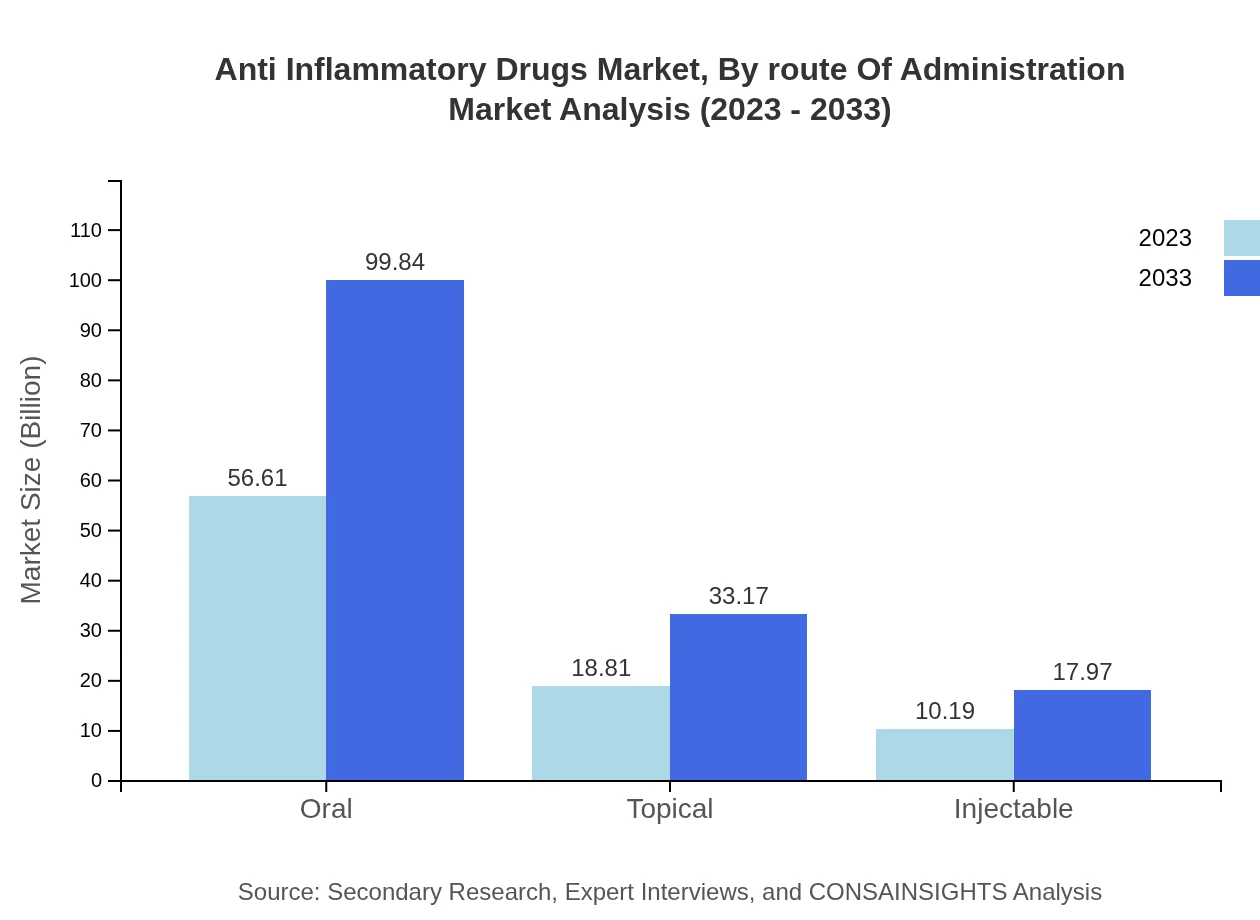
Oral administration leads the way in the Anti Inflammatory Drugs market, valued at $56.61 billion in 2023 and forecasted to reach $99.84 billion by 2033. Topical and injectable routes are also important, especially in acute care settings.
Anti Inflammatory Drugs Market Trends and Future Forecast
Tell us your focus area and get a customized research report.
Global Market Leaders and Top Companies in Anti Inflammatory Drugs Industry
Pfizer :
A leading pharmaceutical company known for its extensive portfolio in pain management and anti-inflammatory therapies, including renowned NSAIDs like Ibuprofen.Johnson & Johnson:
A key player in the anti-inflammatory market, known for innovative products and a strong focus on consumer health and pharmaceuticals.Merck & Co.:
Merck actively develops treatments targeting various inflammatory conditions, incorporating advanced drug delivery technologies.AbbVie:
Known for its breakthroughs in biologics for autoimmune conditions, AbbVie is pivotal in the evolution of anti-inflammatory treatments.We're grateful to work with incredible clients.



FAQs
What is the current market size of the Anti Inflammatory Drugs market?
The market size in 2023 is $85.60 Billion, reflecting global demand across prescription and OTC anti-inflammatory medicines used in pain relief and inflammatory condition management.
How big will the market be in 2033?
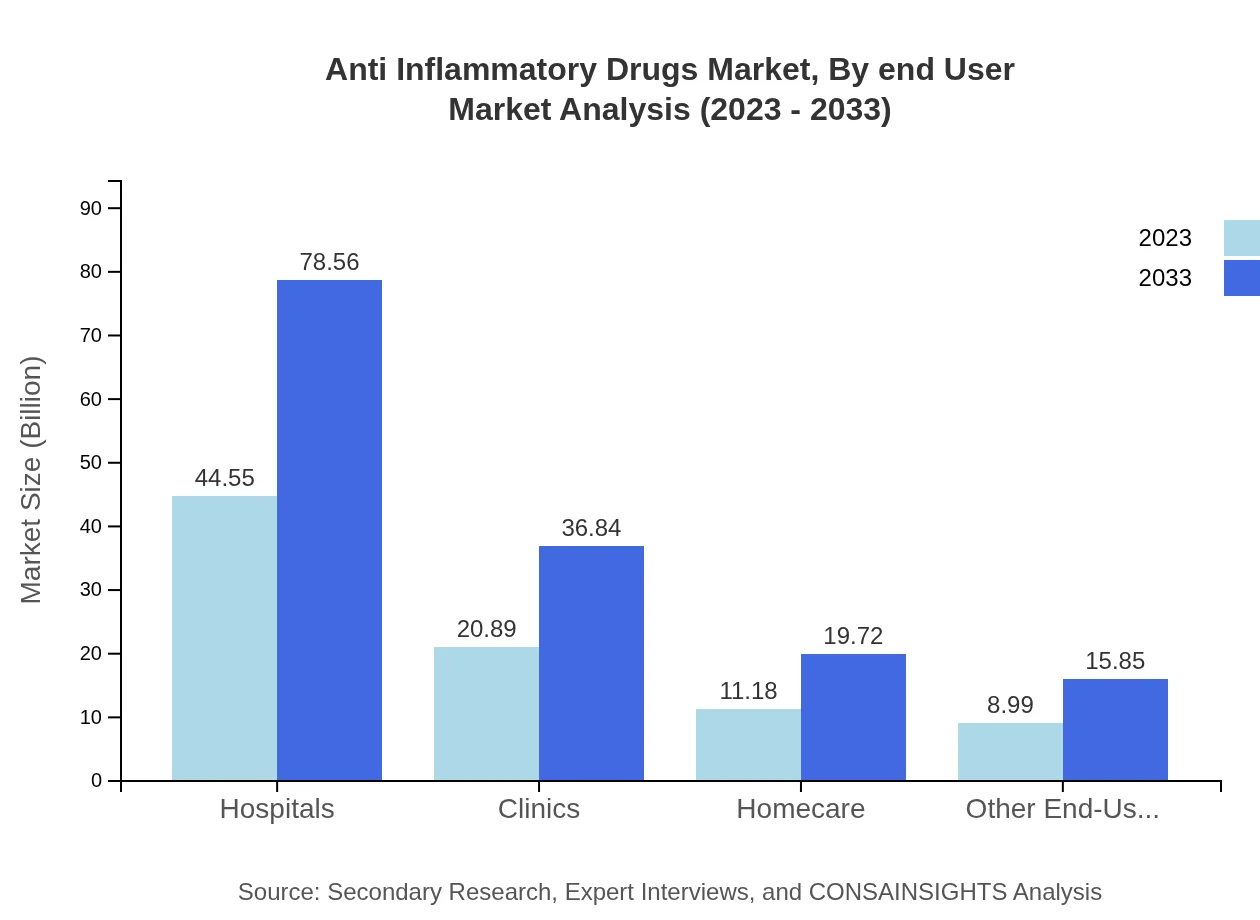
The market is projected to reach $150.97 Billion by 2033, reflecting continued uptake across hospitals, clinics, and homecare settings and ongoing product innovation.
What is CAGR for the forecast period?
The market is forecast to grow at a compound annual growth rate (CAGR) of 5.7% over the 2023 to 2033 period, driven by rising disease burden and treatment access.
Is there a single fastest Growing region in the Anti Inflammatory Drugs Market Report market?
No single fastest-growing region is stated for the Anti Inflammatory Drugs Market Report market because the top regional implied CAGR values are within 0.15 percentage points of each other, making the ranking too close to call reliably.
Which companies lead the Anti Inflammatory Drugs market?
Key participants include Pfizer, Johnson & Johnson, Merck & Co., and AbbVie, reflecting the role of established pharmaceutical firms in drug development and commercialization.
What are the primary applications driving demand?
Primary applications include pain relief, autoimmune disease management, and treatment of inflammatory conditions, each contributing to steady clinical and OTC consumption across care settings.
How do drug types segment the market?
The market is segmented by drug type into NSAIDs, corticosteroids, and DMARDs, each addressing distinct therapeutic needs from acute pain relief to chronic autoimmune management.
What end Users consume anti Inflammatory drugs?
End-users encompass hospitals, clinics, homecare providers, and other channels, with institutional buyers like hospitals representing substantial procurement volumes.