

Anticoagulation Therapy Market Report
First published: 14 October 2024 | Last updated: 25 May 2026 | Report Code: anticoagulation-therapy
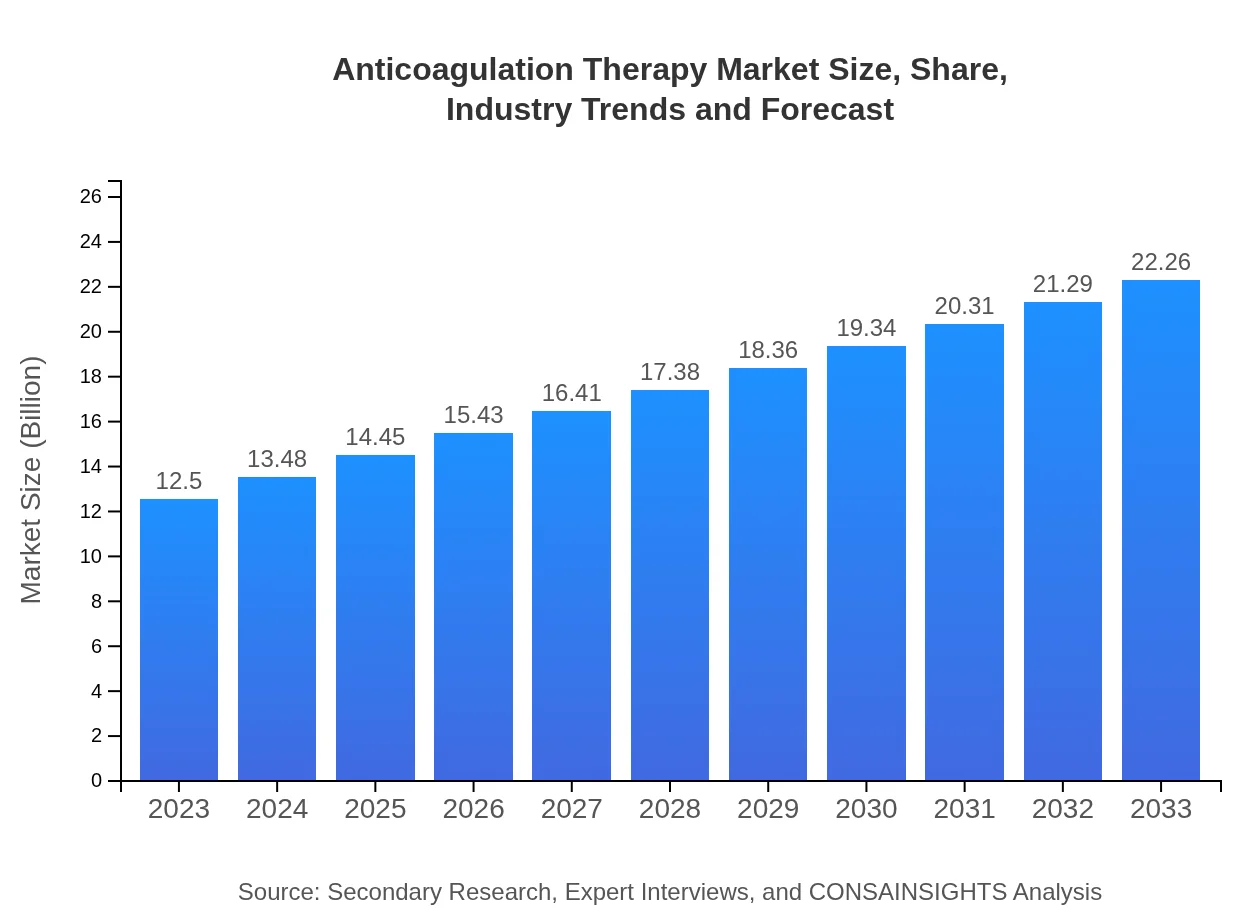
Anticoagulation Therapy Market — USD 12.5 billion in 2023, Growing to USD 22.26B by 2033 at 5.8% CAGR
This report provides a comprehensive analysis of the anticoagulation therapy market, covering market trends, size, growth forecasts, and segmentation from 2023 to 2033. Insights into regional performance and key players are included to guide stakeholders in their strategic decision-making.
Key Takeaways
- Global market projected to increase from $12.50 Billion in 2023 to $22.26 Billion by 2033 at a 5.8% CAGR.
- North America is largest regional market, while no single fastest-growing region is stated because regional CAGR differences remain within 0.15 percentage points.
- Europe, Asia Pacific, Latin America, and Middle East & Africa all show growth between 2023 and 2033.
- Leading companies operating in the space include Bristol-Myers Squibb, Bayer AG, Johnson & Johnson, and AstraZeneca.
- Market expansion is supported by rising prevalence of thromboembolic conditions and therapeutic innovation in anticoagulant formulations.
Anticoagulation Therapy Market Report — Executive Summary
North America remains largest market by forecast-period value, while no single fastest-growing region is stated because top regional growth rates are separated by less than 0.15 percentage points. This report examines the Anticoagulation Therapy market across product types, drug classes, applications, routes of administration, and end users. Key growth factors include increasing incidence of atrial fibrillation, deep vein thrombosis, and pulmonary embolism, along with advances in oral and injectable anticoagulant therapies. The analysis reviews regional performance, noting North America as the largest market, and profiles major participants such as Bristol-Myers Squibb, Bayer AG, Johnson & Johnson, and AstraZeneca. The study synthesizes primary interviews with industry experts and secondary sources to map trends, adoption patterns, and product strategies shaping the market through the 2023 to 2033 forecast period.
Key Growth Drivers
- Higher prevalence of thromboembolic disorders driving demand for anticoagulant therapies and monitoring.
- Ongoing formulation and delivery innovations improving patient adherence and expanding therapeutic options.
- Greater awareness and early diagnosis initiatives by healthcare providers increasing treatment uptake.
- Investment by major pharmaceutical players in research, development, and strategic partnerships to broaden offerings.
- Expansion of outpatient care and home-based monitoring enabling wider access to anticoagulation management.
| Metric | Value |
|---|---|
| Study Period | 2023 - 2033 |
| 2023 Market Size | $12.50 Billion |
| CAGR (2023-2033) | 5.8% |
| 2033 Market Size | $22.26 Billion |
| Top Companies | Bristol-Myers Squibb, Bayer AG, Johnson & Johnson, AstraZeneca |
| Published Date | 14 October 2024 |
| Last Modified Date | 25 May 2026 |
Anticoagulation Therapy Market Overview
Customize Anticoagulation Therapy Market Report market research report
- ✔ Get in-depth analysis of Anticoagulation Therapy market size, growth, and forecasts.
- ✔ Understand Anticoagulation Therapy's regional dynamics and industry-specific trends.
- ✔ Identify potential applications, end-user demand, and growth segments in Anticoagulation Therapy
What is the Market Size & CAGR of Anticoagulation Therapy Market Report market in 2023?
Anticoagulation Therapy Industry Analysis
Anticoagulation Therapy Market Segmentation and Scope
Tell us your focus area and get a customized research report.
Anticoagulation Therapy Market Report Market Analysis Report by Region
Europe Anticoagulation Therapy Market Report:
Europe grows from $3.45 Billion in 2023 to $6.15 Billion in 2033. Regional growth is supported by aging populations, enhanced screening programs, and ongoing approvals and adoption of new anticoagulant formulations.Asia Pacific Anticoagulation Therapy Market Report:
Asia Pacific grows from $2.42 Billion in 2023 to $4.31 Billion in 2033. Market momentum is driven by rising disease prevalence, improving access to care, and increased investment in pharmaceutical development and distribution networks.North America Anticoagulation Therapy Market Report:
North America is largest regional market, rising from $4.41 Billion in 2023 to $7.86 Billion in 2033. Expansion is influenced by established healthcare infrastructures, higher diagnosis rates of thromboembolic conditions, and strong presence of major pharmaceutical firms.South America Anticoagulation Therapy Market Report:
Latin America grows from $0.68 Billion in 2023 to $1.21 Billion in 2033. Growth factors include greater awareness, improved diagnostic capabilities, and broader availability of anticoagulation therapies across care settings.Middle East & Africa Anticoagulation Therapy Market Report:
Middle East and Africa grows from $1.53 Billion in 2023 to $2.73 Billion in 2033. Uptake is aided by enhanced healthcare services, adoption of modern treatment protocols, and growing investment in region-specific healthcare initiatives.Tell us your focus area and get a customized research report.
Research Methodology
Anticoagulation Therapy Market Analysis By Product
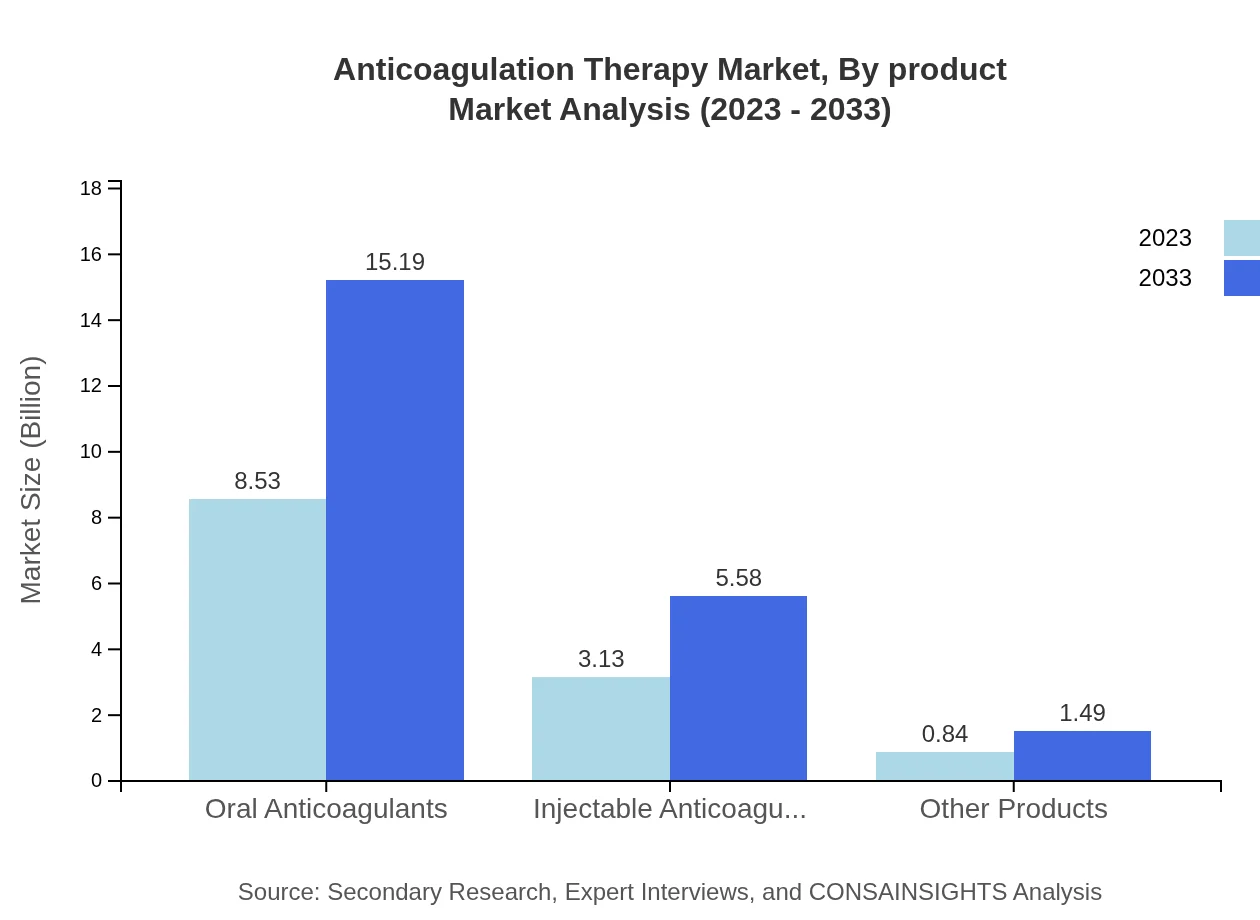
Oral anticoagulants dominate the market, expected to reach $15.19 billion by 2033 from $8.53 billion in 2023, maintaining a consistent market share of approximately 68.23%. Injectable anticoagulants are also significant, with a projected growth from $3.13 billion to $5.58 billion. Other configurable products, though smaller in market size, contribute positively with a growing share reflecting evolving physician practices.
Anticoagulation Therapy Market Analysis By Application
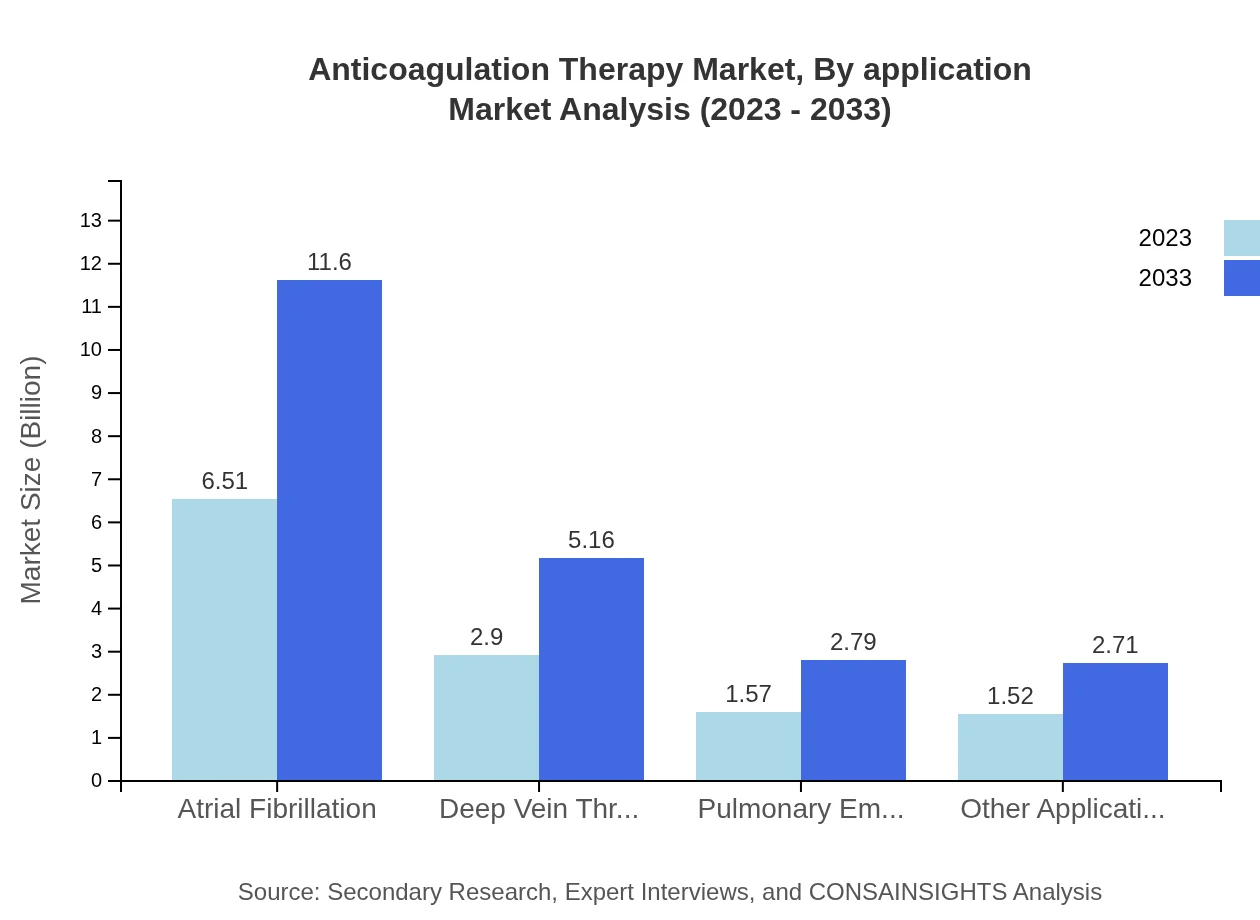
The Atrial Fibrillation segment comprises a significant share of the application market, expanding from $6.51 billion in 2023 to $11.60 billion in 2033. Other applications like Deep Vein Thrombosis and Pulmonary Embolism are also expanding, indicating broad therapeutic usage of anticoagulation products across diverse patient populations.
Anticoagulation Therapy Market Analysis By End User
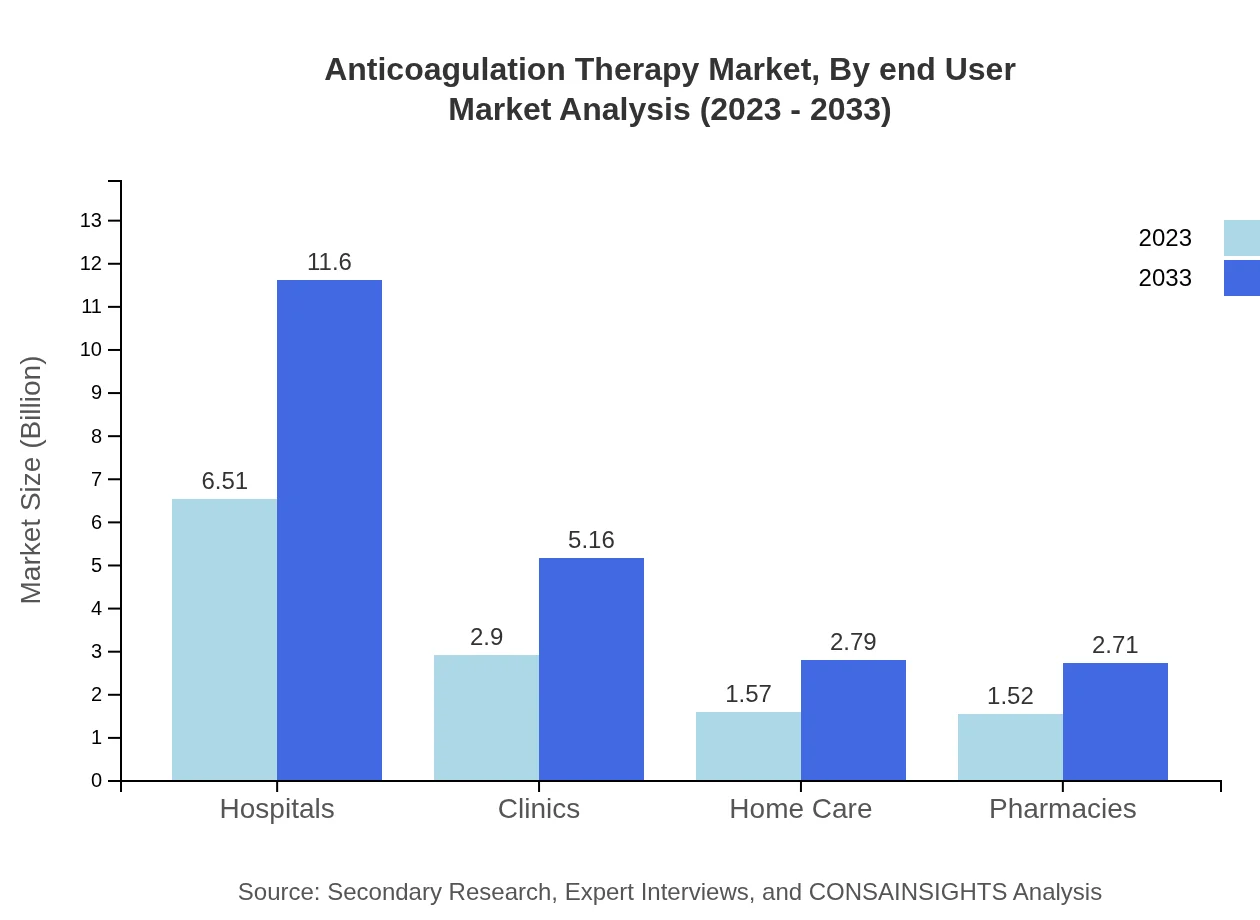
Hospitals remain the predominant end-user segment, valued at $6.51 billion in 2023 and expected to grow to $11.60 billion. Clinics and pharmacies are also critical end-users, reflecting trends toward outpatient and home care settings for anticoagulation management.
Anticoagulation Therapy Market Analysis By Route Of Administration
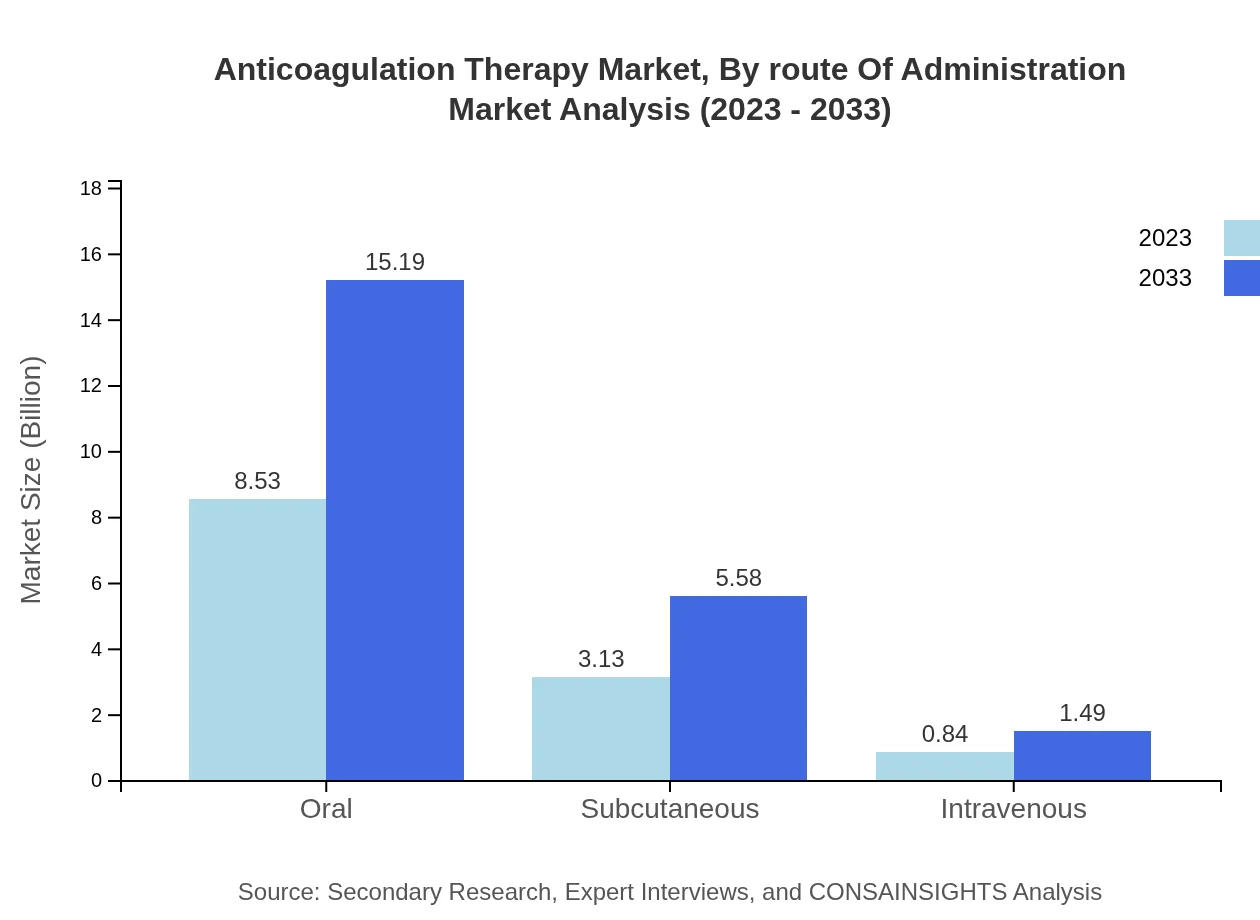
Oral administration is the most prevalent route, showing growth from $8.53 billion in 2023 to $15.19 billion by 2033, holding strong market shares. Injectable administration is also significant, reflecting growing prescriptions in acute care settings.
Anticoagulation Therapy Market Analysis By Drug Class
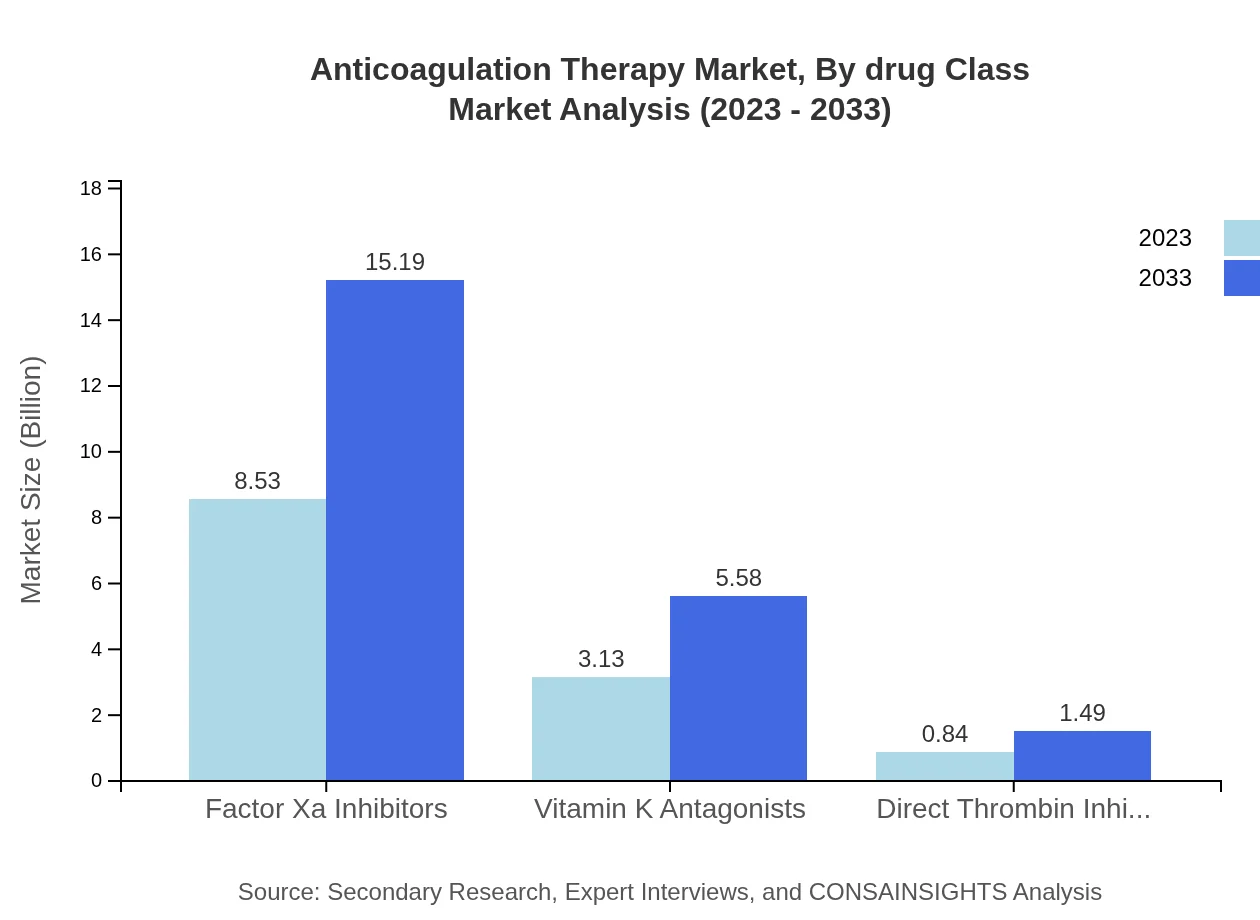
Factor Xa inhibitors lead the market, expected to grow from $8.53 billion to $15.19 billion. Vitamin K antagonists and Direct Thrombin Inhibitors follow closely, offering varied options for healthcare providers to tailor therapies to individual patient needs.
Anticoagulation Therapy Market Trends and Future Forecast
Tell us your focus area and get a customized research report.
Global Market Leaders and Top Companies in Anticoagulation Therapy Industry
Bristol-Myers Squibb:
Bristol-Myers Squibb is a global pharmaceutical company known for innovation in anticoagulation therapies, offering market-leading products such as Eliquis, which have transformed patient care in atrial fibrillation.Bayer AG:
Bayer AG is a key player in the anticoagulation market, offering products like Xarelto, which have set the standard for effectiveness in disease management and prevention.Johnson & Johnson:
Johnson & Johnson has made significant contributions with products like Xarelto, focusing on patient-centric solutions and improving therapeutic outcomes for anticoagulation therapies.AstraZeneca:
AstraZeneca is recognized for its extensive portfolio in anticoagulation, with innovative agents that are enhancing treatment strategies for thromboembolic disorders.We're grateful to work with incredible clients.




FAQs
What is the current market size of the Anticoagulation Therapy market?
The market size for 2023 is $12.50 Billion, reflecting the baseline measurement used to assess growth and compare regional market contributions during the 2023 to 2033 forecast period.
How big will the Anticoagulation Therapy market be in 2033?
By 2033 the market is projected to reach $22.26 Billion, representing the end-point value for the 2023 to 2033 forecast period used in this report.
What is CAGR of the Anticoagulation Therapy market?
The report cites a compound annual growth rate of 5.8% for the Anticoagulation Therapy market over the 2023 to 2033 forecast period.
Is there a single fastest Growing region in the Anticoagulation Therapy Market Report market?
No single fastest-growing region is stated for the Anticoagulation Therapy Market Report market because the top regional implied CAGR values are within 0.15 percentage points of each other, making the ranking too close to call reliably.
Which companies are featured as key players?
Top companies listed in the report include Bristol-Myers Squibb, Bayer AG, Johnson & Johnson, and AstraZeneca, reflecting significant industry participation and R&D activity.
What are primary clinical applications covered in the report?
The study addresses major applications such as atrial fibrillation, deep vein thrombosis, pulmonary embolism, and other anticoagulation indications across care settings.
How does product segmentation appear in the report?
Product segmentation includes oral and injectable anticoagulants plus other products, with further breakdowns by drug class, application, route, and end user to guide market positioning.
What research methods supported this report?
The analysis is based on primary interviews with industry experts and secondary research via company reports and publications, combined with data triangulation and internal validation.
What regional markets are analyzed in the report?
Regional coverage includes North America, Europe, Asia Pacific, Latin America, and Middle East and Africa, each assessed for 2023 and 2033 market values and local drivers.
Why are trends important for stakeholders?
Identifying therapy innovation, monitoring solutions, and care delivery shifts helps stakeholders prioritize investment, product development, and partnerships during the 2023 to 2033 period.