

Pulmonary Arterial Hypertension Market Report
First published: 14 October 2024 | Last updated: 25 May 2026 | Report Code: pulmonary-arterial-hypertension
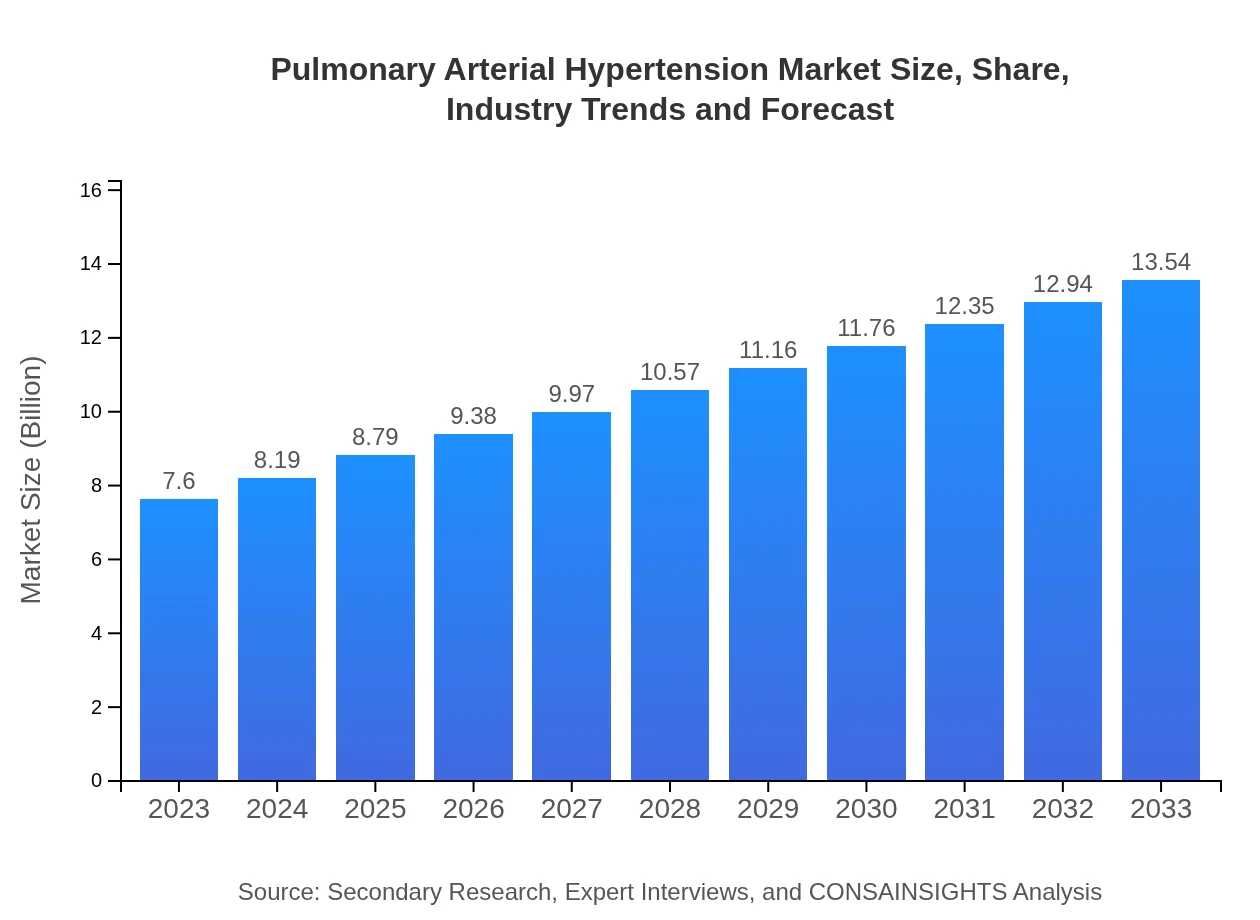
Pulmonary Arterial Hypertension Market — USD 7.6 billion in 2023, Growing to USD 13.54B by 2033 at 5.8% CAGR
This report provides a comprehensive analysis of the Pulmonary Arterial Hypertension market from 2023 to 2033, detailing market dynamics, size, segmentation, regional insights, and key players contributing to the industry landscape.
Key Takeaways
- Global market expands from $7.60 Billion in 2023 to $13.54 Billion in 2033 at a 5.8% CAGR.
- North America is largest regional market, while no single fastest-growing region is stated because regional CAGR differences remain within 0.15 percentage points.
- Europe increases from $2.35 Billion in 2023 to $4.19 Billion in 2033, reflecting sustained demand for PAH therapies.
- Asia Pacific grows from $1.52 Billion in 2023 to $2.71 Billion in 2033 amid rising treatment access and awareness.
- Key product classes include Endothelin Receptor Antagonists, Phosphodiesterase-5 Inhibitors, and Prostacyclin Analogs; leading companies include Boehringer Ingelheim and United Therapeutics.
Pulmonary Arterial Hypertension Market Report — Executive Summary
North America remains largest market by forecast-period value, while no single fastest-growing region is stated because top regional growth rates are separated by less than 0.15 percentage points. This report examines the Pulmonary Arterial Hypertension market over the 2023 to 2033 forecast window, during which global revenue is projected to increase from $7.60 Billion to $13.54 Billion at a compound annual growth rate of 5.8%. Growth is driven by heightened disease recognition, therapeutic innovation, and investment in drug development and delivery methods. The analysis includes segmentation by drug type, therapy approach, patient profile, distribution channel, and route of administration, and profiles major participants such as Boehringer Ingelheim, United Therapeutics, Pfizer, GSK, and Novartis. Regional dynamics are detailed with North America identified as the largest regional market based on end-period value. The methodology relies on expert interviews, company publications, and triangulated data to ensure robust findings and trend identification. Strategic implications for manufacturers and stakeholders are presented to support decision-making across product planning, market entry, and commercialization pathways.
Key Growth Drivers
- Improved diagnostic awareness and earlier detection increasing treatment uptake and patient identification.
- Ongoing pharmaceutical research and development introducing novel formulations and combination therapies.
- Greater focus on personalized treatment approaches and advanced drug delivery techniques.
- Rising healthcare investment and expanded access in key regional markets supporting therapy adoption.
- Active participation by major industry players, including Boehringer Ingelheim and Pfizer, driving clinical innovation.
| Metric | Value |
|---|---|
| Study Period | 2023 - 2033 |
| 2023 Market Size | $7.60 Billion |
| CAGR (2023-2033) | 5.8% |
| 2033 Market Size | $13.54 Billion |
| Top Companies | Boehringer Ingelheim, United Therapeutics, Pfizer , GSK, Novartis |
| Published Date | 14 October 2024 |
| Last Modified Date | 25 May 2026 |
Pulmonary Arterial Hypertension Market Overview
Customize Pulmonary Arterial Hypertension Market Report market research report
- ✔ Get in-depth analysis of Pulmonary Arterial Hypertension market size, growth, and forecasts.
- ✔ Understand Pulmonary Arterial Hypertension's regional dynamics and industry-specific trends.
- ✔ Identify potential applications, end-user demand, and growth segments in Pulmonary Arterial Hypertension
What is the Market Size & CAGR of Pulmonary Arterial Hypertension Market Report market in 2023?
Pulmonary Arterial Hypertension Industry Analysis
Pulmonary Arterial Hypertension Market Segmentation and Scope
Tell us your focus area and get a customized research report.
Pulmonary Arterial Hypertension Market Report Market Analysis Report by Region
Europe Pulmonary Arterial Hypertension Market Report:
Europe grows from $2.35 Billion in 2023 to $4.19 Billion in 2033. The region benefits from strong clinical research, regulatory frameworks, and increasing awareness among healthcare providers that promote wider access to PAH treatments.Asia Pacific Pulmonary Arterial Hypertension Market Report:
Asia Pacific grows from $1.52 Billion in 2023 to $2.71 Billion in 2033. Expanding healthcare access, rising diagnosis rates, and greater emphasis on chronic disease management contribute to region-specific demand for PAH therapies.North America Pulmonary Arterial Hypertension Market Report:
North America is largest regional market, rising from $2.53 Billion in 2023 to $4.51 Billion in 2033. Regional momentum reflects high clinical activity, healthcare investment, and established treatment infrastructure that support adoption of new therapies.South America Pulmonary Arterial Hypertension Market Report:
Latin America grows from $0.22 Billion in 2023 to $0.39 Billion in 2033. Growth is supported by improving healthcare infrastructure, growing awareness, and gradual expansion of treatment availability across key markets.Middle East & Africa Pulmonary Arterial Hypertension Market Report:
Middle East and Africa grows from $0.98 Billion in 2023 to $1.74 Billion in 2033. Enhanced diagnostic capabilities, increasing healthcare spending, and efforts to broaden treatment reach drive market progression in the region.Tell us your focus area and get a customized research report.
Research Methodology
Pulmonary Arterial Hypertension Market Analysis By Drug Type
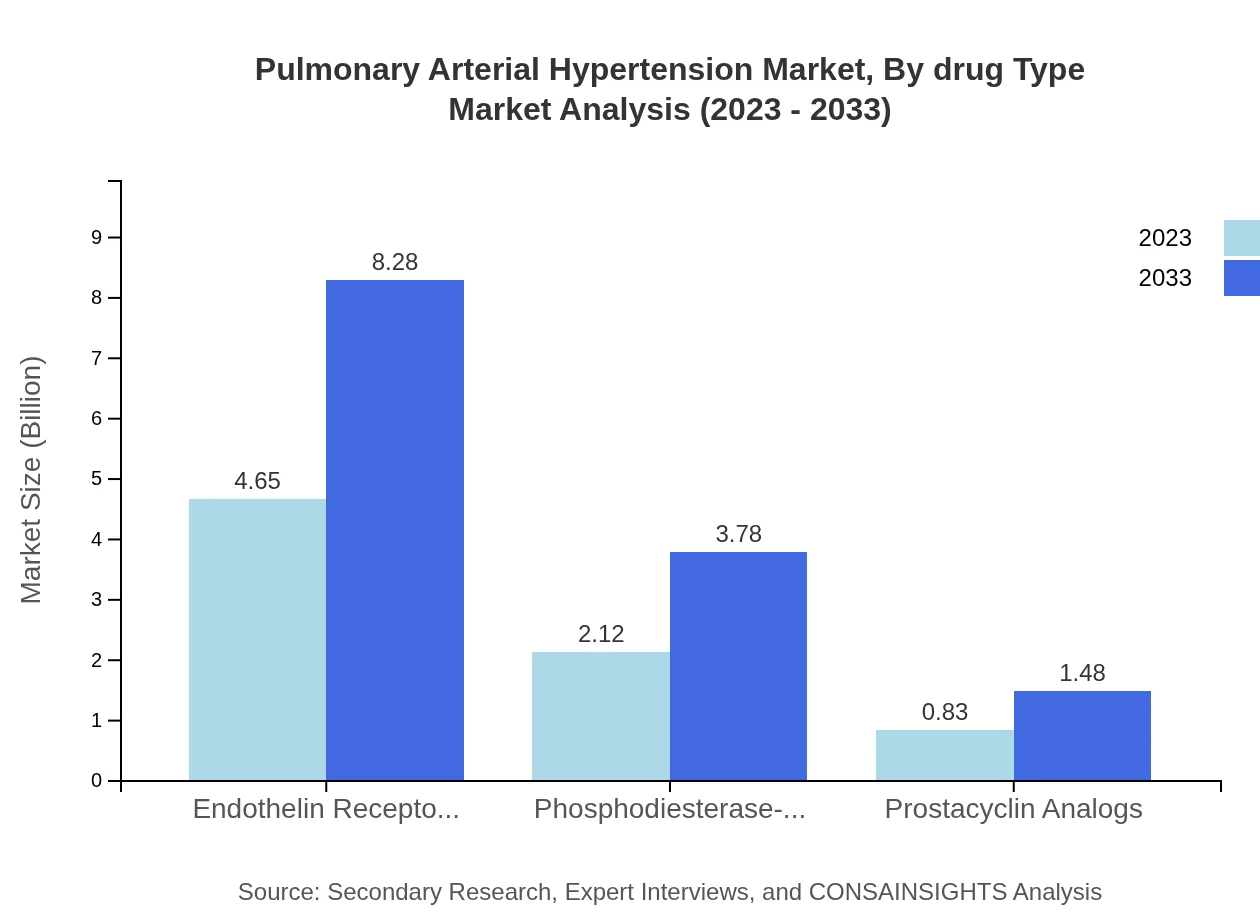
Endothelin Receptor Antagonists are projected to dominate the market, growing from $4.65 billion in 2023 to $8.28 billion in 2033, holding a consistent market share of 61.13%. Phosphodiesterase-5 inhibitors and Prostacyclin analogs also contribute to the market, with respective growth rates reflecting changing treatment preferences. Monotherapy remains the preferred therapeutic approach, while combination therapy is gaining traction among healthcare providers.
Pulmonary Arterial Hypertension Market Analysis By Route Of Administration
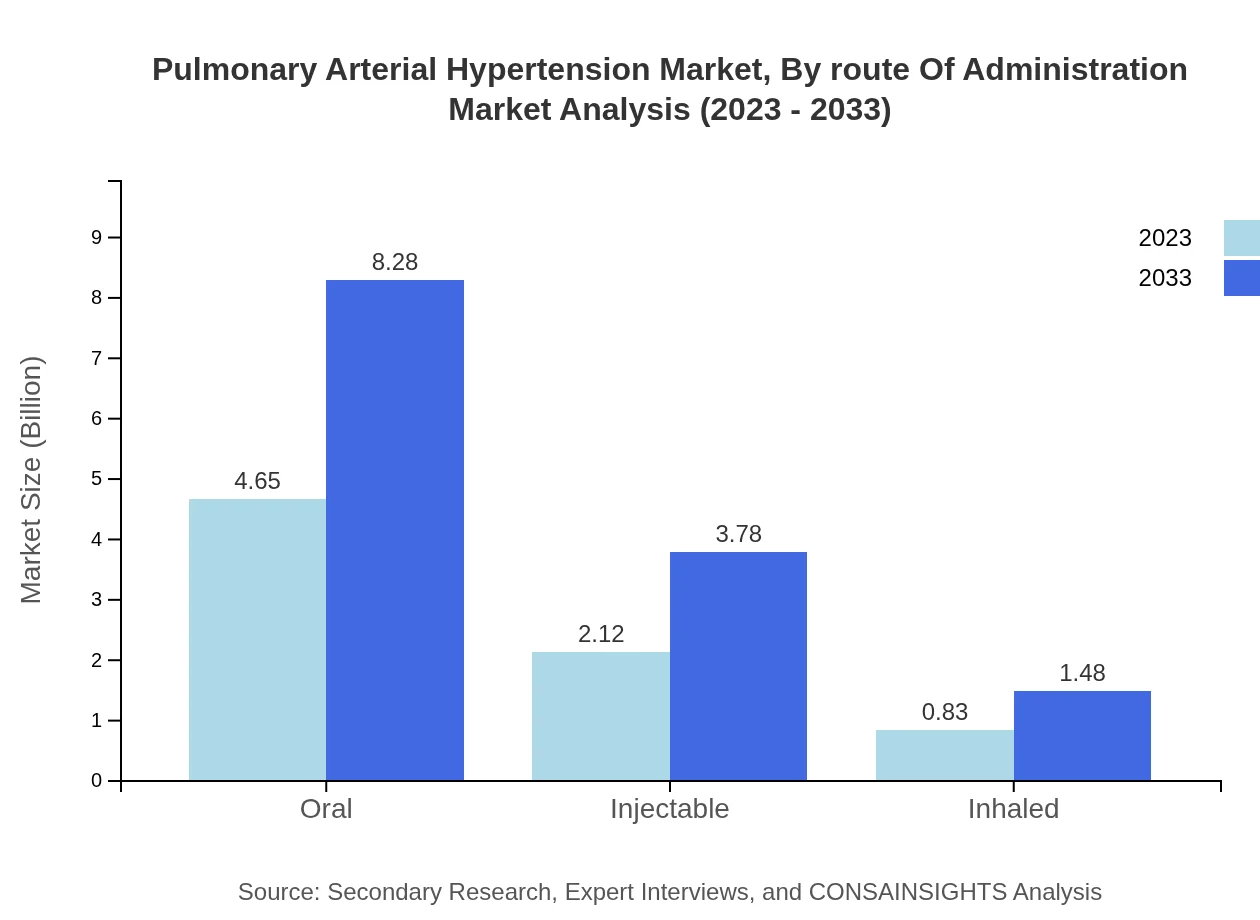
The oral route is expected to lead the market at $4.65 billion in 2023, projected to grow to $8.28 billion by 2033 with a stable share of 61.13%. Injectable and inhaled routes show growth trends as well, each gaining significant traction from patient and physician preferences. The choice of administration route is critical in ensuring patient adherence to treatment regimens.
Pulmonary Arterial Hypertension Market Analysis By Therapy Type
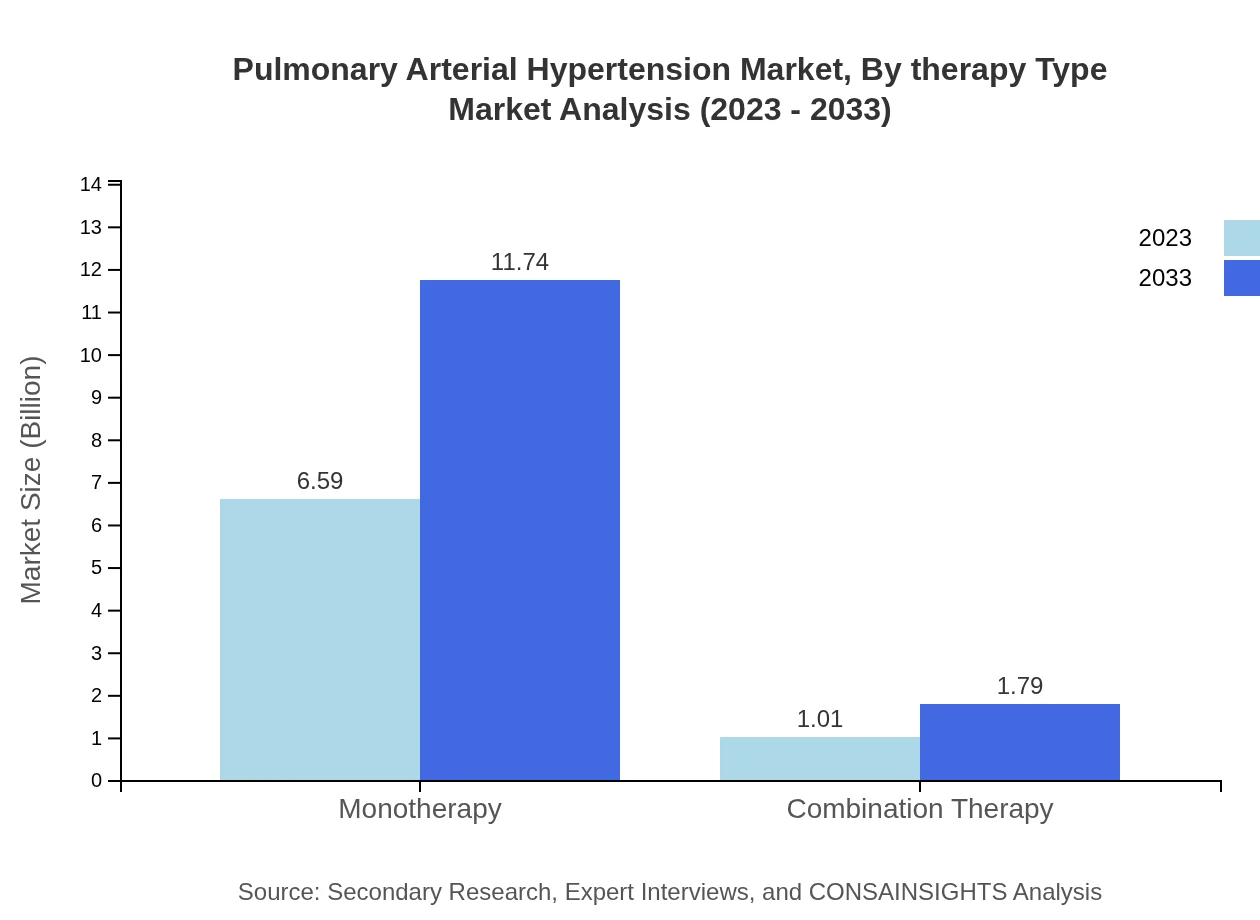
Monotherapy is the dominant approach, expected to grow from $6.59 billion in 2023 to $11.74 billion by 2033, representing 86.74% of the market share. Combination therapy is also gaining recognition, projected at $1.01 billion in 2023 to $1.79 billion by 2033, accounting for 13.26% of market share as providers explore tailored strategies for effective treatment.
Pulmonary Arterial Hypertension Market Analysis By Patient Profile
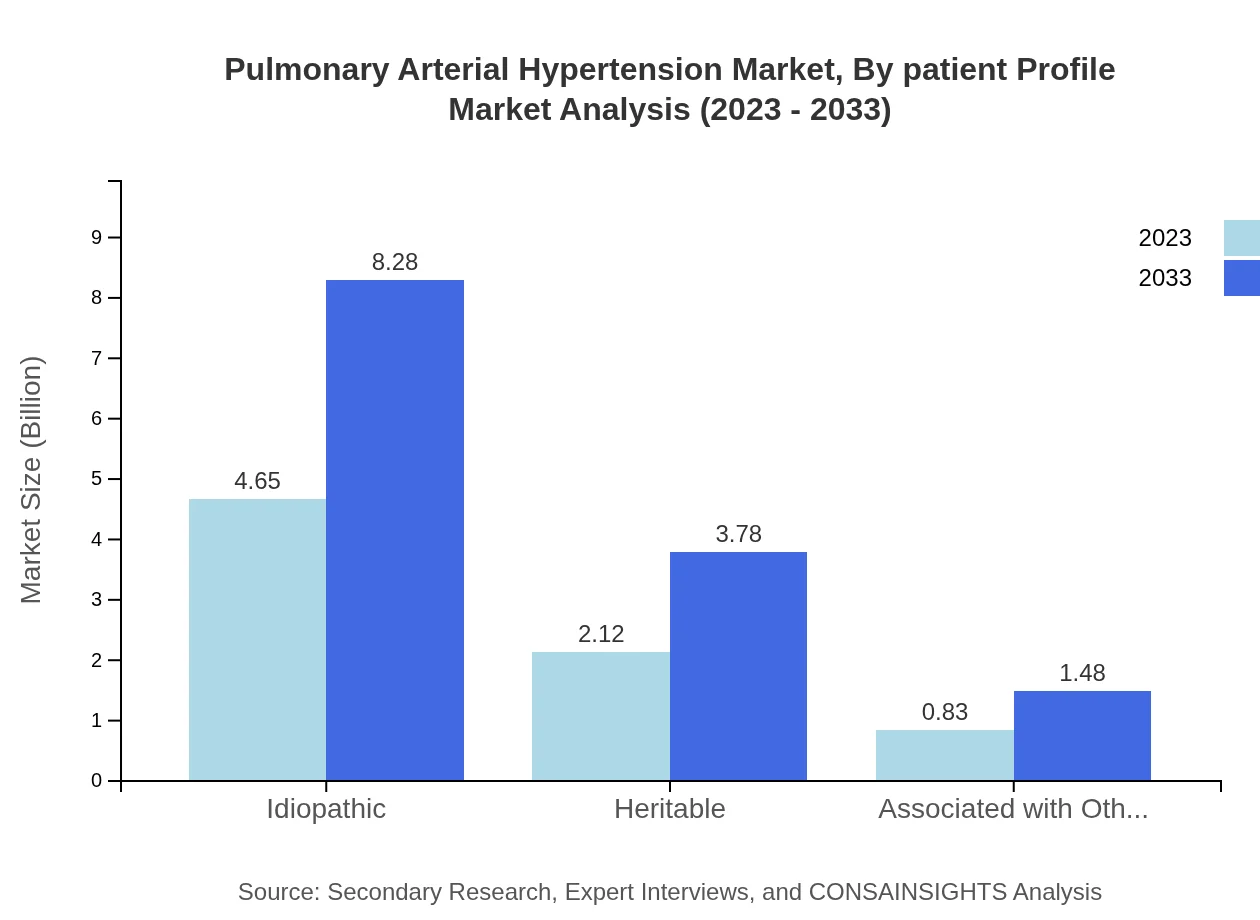
The idiopathic form of PAH represents the largest segment, expected to grow from $4.65 billion in 2023 to $8.28 billion by 2033, making up 61.13% of the market. Heritable and associated PAH types are also crucial segments, addressing a diverse patient base with targeted therapeutic approaches.
Pulmonary Arterial Hypertension Market Analysis By Distribution Channel
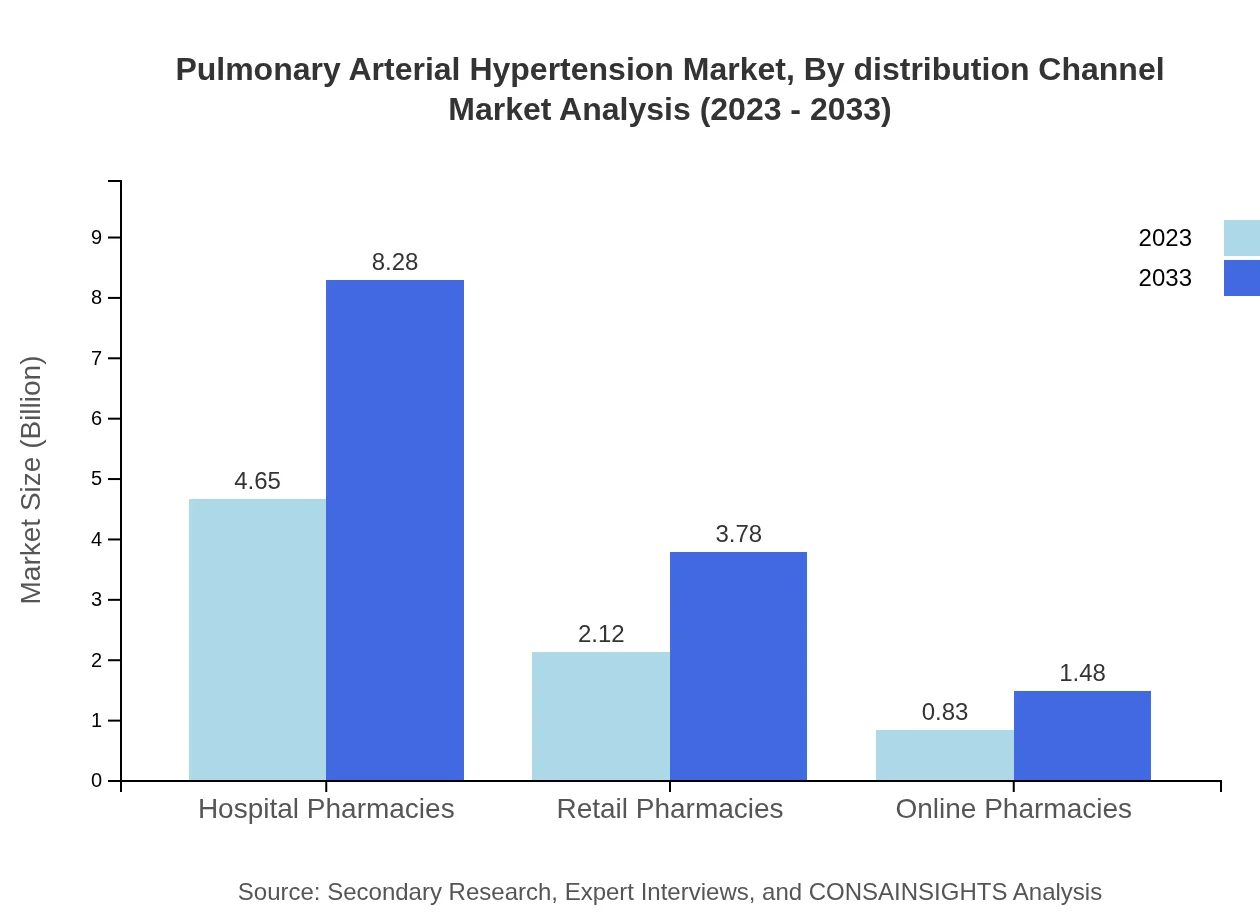
Hospital pharmacies lead the distribution channel segment, expected to maintain a $4.65 billion market share in 2023, projected to rise to $8.28 billion by 2033, representing 61.13%. Retail and online pharmacies are also critical channels, showcasing the importance of multi-channel strategies in improving patient access to necessary medications.
Pulmonary Arterial Hypertension Market Trends and Future Forecast
Tell us your focus area and get a customized research report.
Global Market Leaders and Top Companies in Pulmonary Arterial Hypertension Industry
Boehringer Ingelheim:
Boehringer Ingelheim is a leader in the pharmaceutical industry known for developing innovative therapies for PAH, with a strong focus on endpoint-driven studies and personalized patient care.United Therapeutics:
United Therapeutics specializes in advanced treatments for pulmonary diseases, including various PAH therapies like prostacyclin analogs, contributing significantly to the segment's growth.Pfizer :
Pfizer is a global pharmaceutical giant that has played a pivotal role in developing PDE5 inhibitors for PAH, enhancing treatment access and patient outcomes.GSK:
GlaxoSmithKline (GSK) has a rich pipeline of PAH therapies focusing on innovative solutions and comprehensive patient care.Novartis:
Novartis is recognized for its commitment to advancing PAH treatments and invests heavily in R&D to bring new medicines to market.We're grateful to work with incredible clients.







FAQs
What is the market size of the Pulmonary Arterial Hypertension market in 2023?
The market size in 2023 is $7.60 Billion as reported for the Pulmonary Arterial Hypertension market.
How big will the Pulmonary Arterial Hypertension market be in 2033?
By 2033 the market is projected to reach $13.54 Billion based on the provided forecast figures.
What is CAGR of the Pulmonary Arterial Hypertension market for 2023 to 2033?
The forecast period 2023 to 2033 shows a compound annual growth rate (CAGR) of 5.8% for the market.
Is there a single fastest Growing region in the Pulmonary Arterial Hypertension Market Report market?
No single fastest-growing region is stated for the Pulmonary Arterial Hypertension Market Report market because the top regional implied CAGR values are within 0.15 percentage points of each other, making the ranking too close to call reliably.
Which drug classes are prominent in the Pulmonary Arterial Hypertension market?
Major drug classes include Endothelin Receptor Antagonists, Phosphodiesterase-5 Inhibitors, and Prostacyclin Analogs as indicated in the segmentation.
Who are some of the top companies in this market?
Top companies listed in the report include Boehringer Ingelheim, United Therapeutics, Pfizer, GSK, and Novartis.
What distribution channels are covered in the analysis?
The report covers Hospital Pharmacies, Retail Pharmacies, and Online Pharmacies as the primary distribution channels.
How does patient profiling appear in the segmentation?
Patient profiles in the segmentation include Idiopathic, Heritable, and Associated with Other Diseases categories.
What routes of administration are included in the report?
Routes of administration analyzed comprise Oral, Injectable, and Inhaled delivery forms.
Why is the fastest Growing region not named?
A regional growth market is not specified because the top regional growth rates are within 0.15 percentage points, so no single region is designated.