
Artificial Intelligence In Tourism
First published: 23 December 2025 | Last updated: 31 January 2026 | Report Code: artificial-intelligence-in-tourism
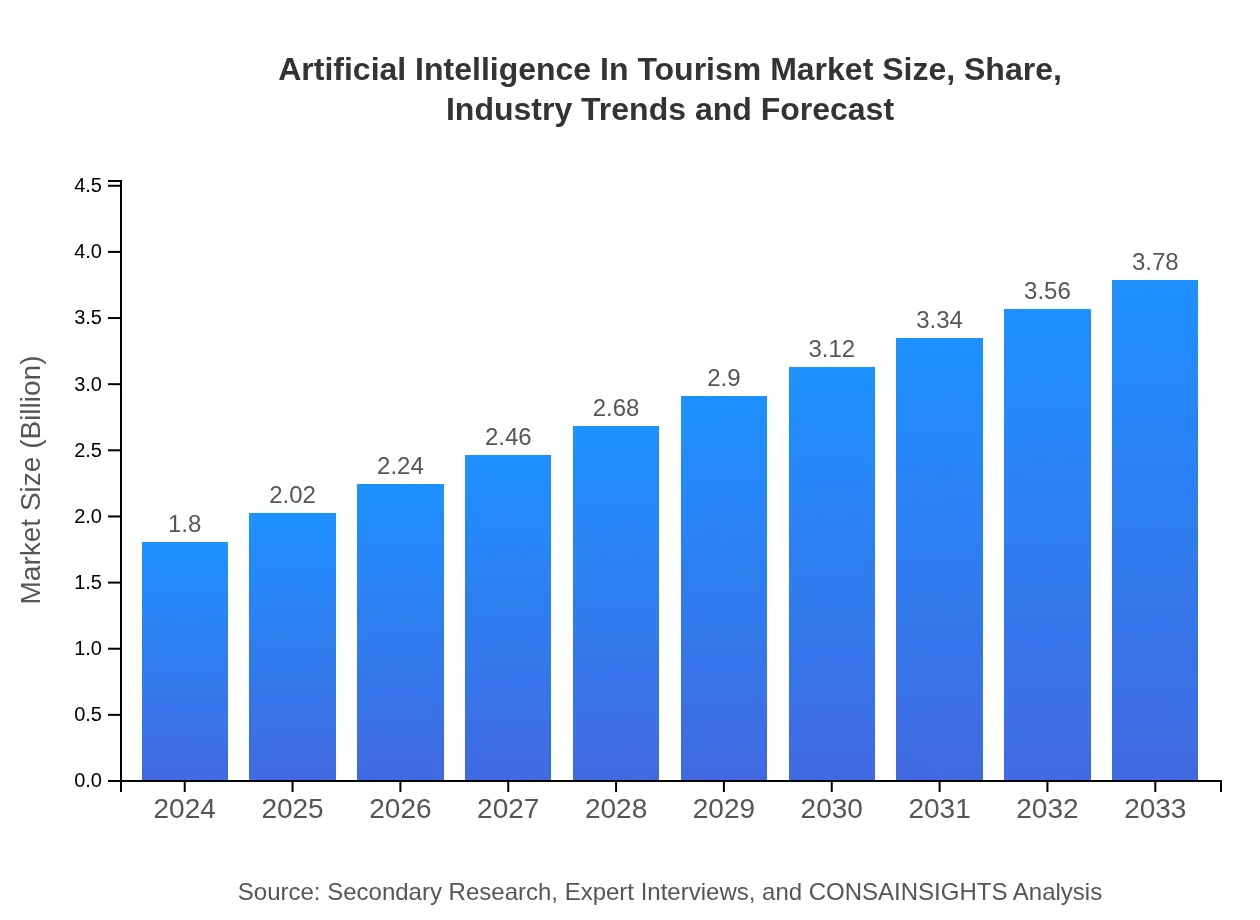
Artificial Intelligence In Tourism Market — USD $1.8 Billion in 2024, Growing to USD 3.78 by 2033 at 8.3% CAGR
This report presents a concise and thoughtful exploration of the Artificial Intelligence in Tourism market. It covers a market overview, size and CAGR analysis, in-depth industry and segmentation analysis, regional performance, and detailed insights by application, technology, end-user, and benefit. Forecasts and trends for 2024 to 2033 are also examined to guide strategic decision‐making.
| Metric | Value |
|---|---|
| Study Period | 2024 - 2033 |
| 2024 Market Size | $1.80 Billion |
| CAGR (2024-2033) | 8.3% |
| 2033 Market Size | $3.78 Billion |
| Top Companies | TechTour Solutions, Innovate AI Travel |
| Published Date | 23 December 2025 |
| Last Modified Date | 31 January 2026 |
Artificial Intelligence In Tourism Market Overview
Customize Artificial Intelligence In Tourism market research report
- ✔ Get in-depth analysis of Artificial Intelligence In Tourism market size, growth, and forecasts.
- ✔ Understand Artificial Intelligence In Tourism's regional dynamics and industry-specific trends.
- ✔ Identify potential applications, end-user demand, and growth segments in Artificial Intelligence In Tourism
What is the Market Size & CAGR of Artificial Intelligence In Tourism market in 2024?
Artificial Intelligence In Tourism Industry Analysis
Artificial Intelligence In Tourism Market Segmentation and Scope
Tell us your focus area and get a customized research report.
Artificial Intelligence In Tourism Market Analysis Report by Region
Europe Artificial Intelligence In Tourism:
Europe’s market reflects significant developments with an expansion from 0.51 in 2024 to 1.07 in 2033. Strong digital policies, high technology penetration, and a mature tourism framework underpin this growth, making Europe a key region for AI-driven tourism innovations.Asia Pacific Artificial Intelligence In Tourism:
In Asia Pacific, the market is forecast to expand from a size of 0.39 in 2024 to 0.81 in 2033. This growth is fueled by rapid urbanization, increased digital adoption, and supportive governmental policies promoting technological integration in tourism.North America Artificial Intelligence In Tourism:
North America continues to be a leader in integrating AI into tourism, with market size increasing from 0.63 in 2024 to 1.33 in 2033. Advanced technological infrastructure, consumer readiness, and high investment in AI research drive this robust expansion.South America Artificial Intelligence In Tourism:
South America is witnessing a gradual yet steady market expansion, growing from 0.18 in 2024 to 0.37 by 2033. The region benefits from emerging tech investments and a recovering tourism sector post-economic adjustments, laying the foundation for long-term growth.Middle East & Africa Artificial Intelligence In Tourism:
Although smaller in scale, the Middle East and Africa region shows promising growth from 0.10 in 2024 to 0.20 in 2033. Increasing investments in digital infrastructure and a growing focus on enhancing tourist experiences are key factors contributing to this upward trend.Tell us your focus area and get a customized research report.
Artificial Intelligence In Tourism Market Analysis By Application
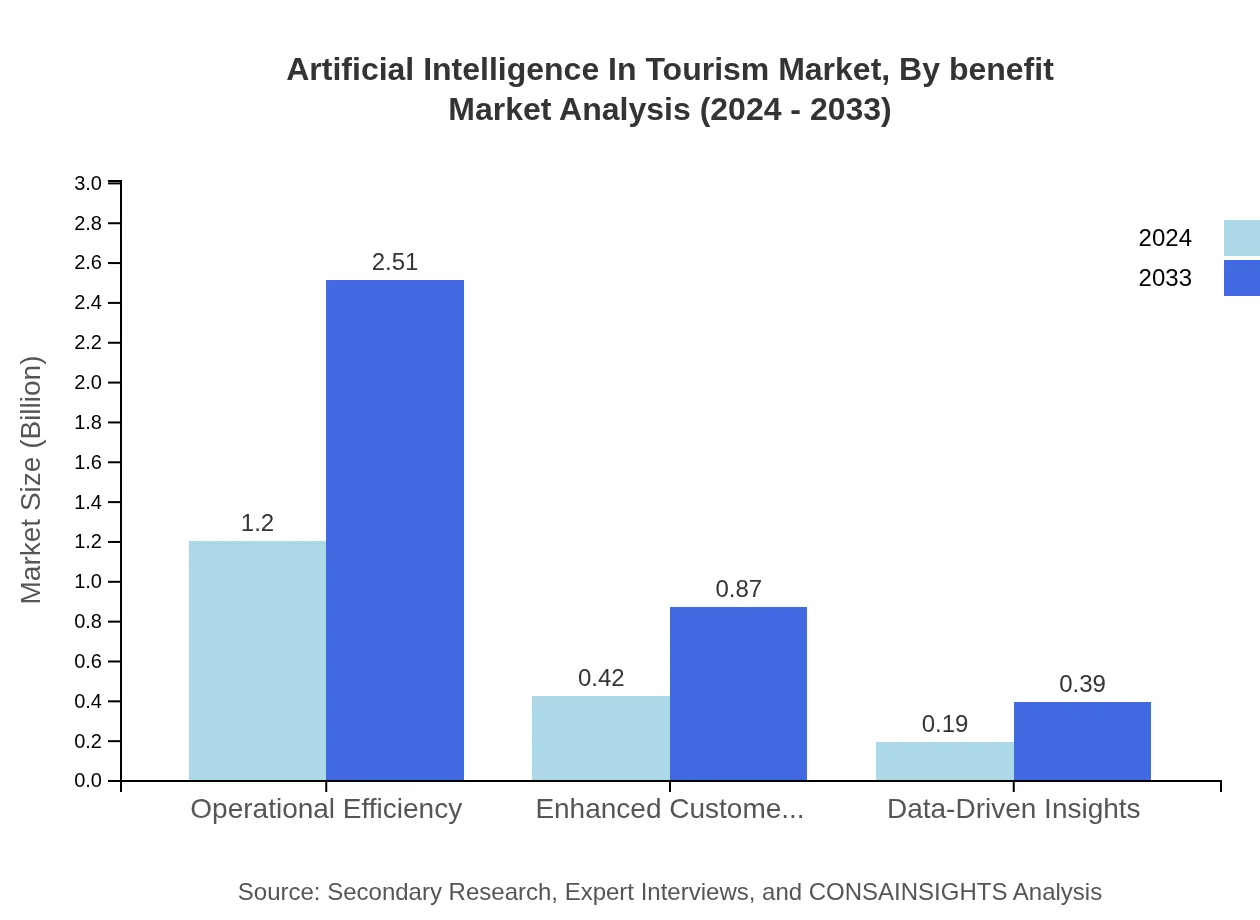
Within the application segment, operational efficiency, enhanced customer experience, and data-driven insights are pivotal in reshaping the tourism landscape. Operational efficiency has grown from 1.20 to 2.51 and maintains a dominant 66.52% share, reflecting the critical role of AI-driven automation in reducing costs and improving service operations. Enhanced customer experience, seeing an increase from 0.42 to 0.87, and data-driven insights, growing from 0.19 to 0.39, further support the segment’s overall impact. Combined, these metrics indicate that companies are investing more in solutions that not only streamline backend operations but also create personalized and engaging traveler experiences.
Artificial Intelligence In Tourism Market Analysis By Technology
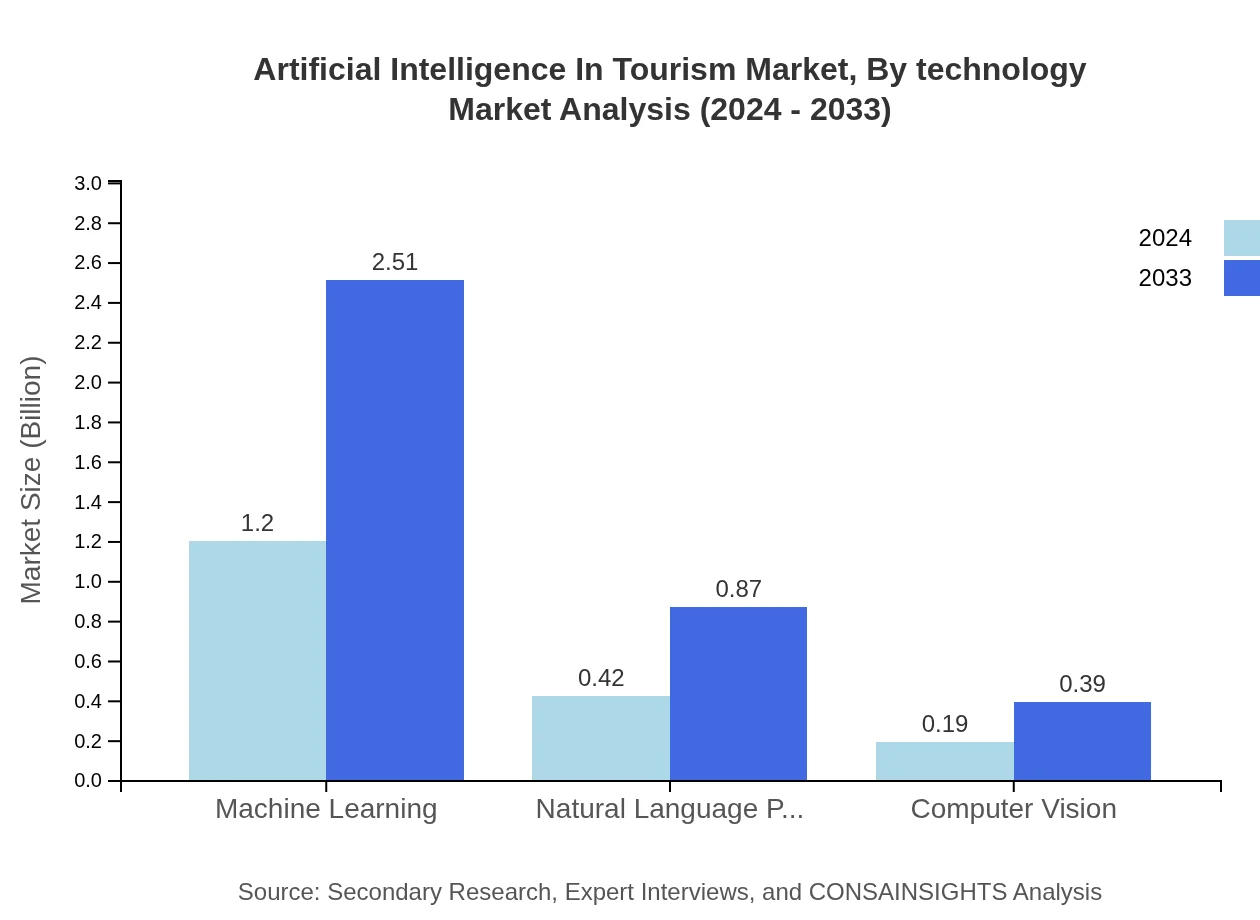
The technology-focused analysis examines the backbone of AI advancements impacting tourism. Machine learning, which has expanded from 1.20 to 2.51 with a stable 66.52% share, leads the technological revolution. Natural language processing has also seen significant contributions, growing from 0.42 to 0.87 and maintaining a 23.07% share, thereby enabling real-time language translation and customer interaction improvements. Additionally, computer vision, though smaller in scale growing from 0.19 to 0.39, carries a 10.41% share and enhances image recognition capabilities in security and personalized marketing. Together, these technologies are critical in driving efficiency and elevating the consumer experience within the tourism industry.
Artificial Intelligence In Tourism Market Analysis By End User
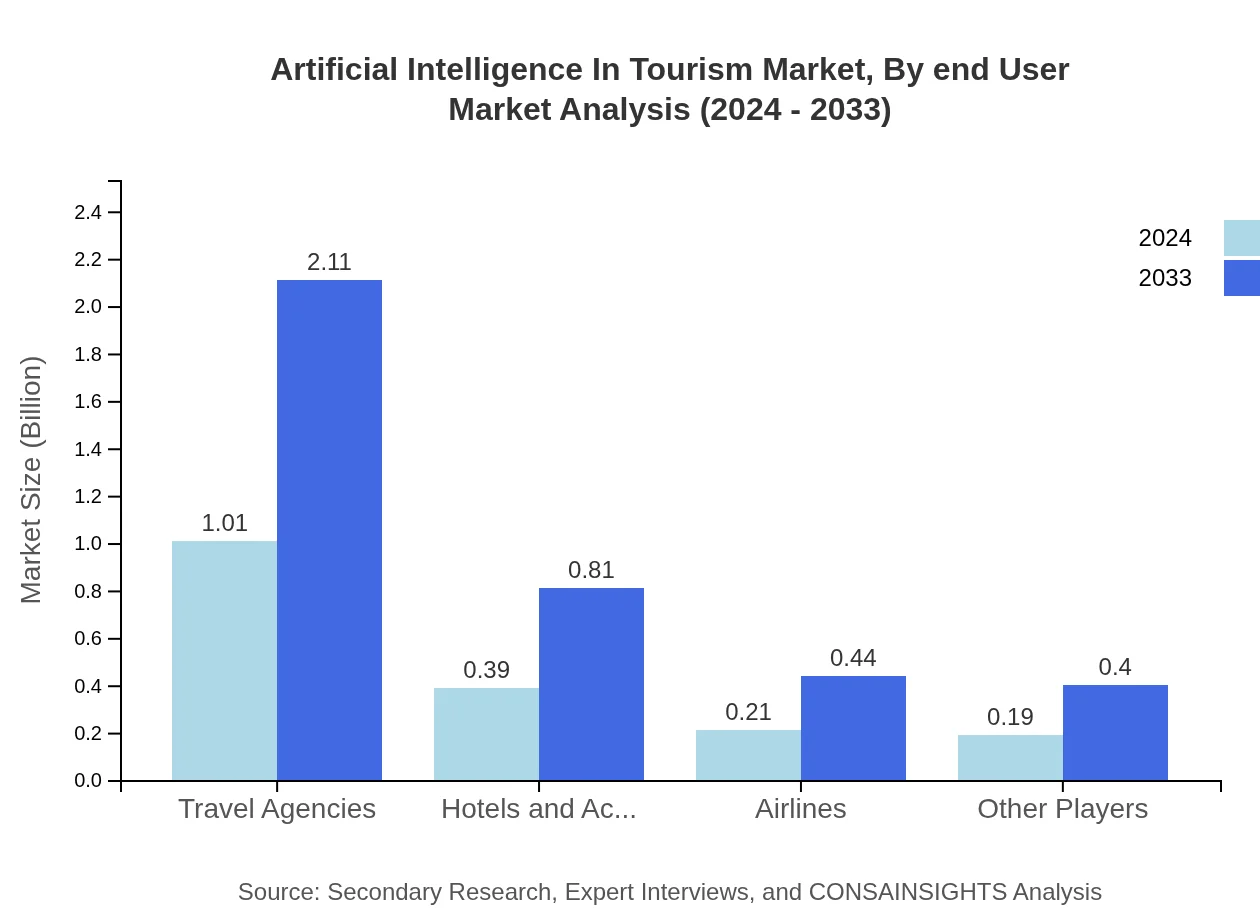
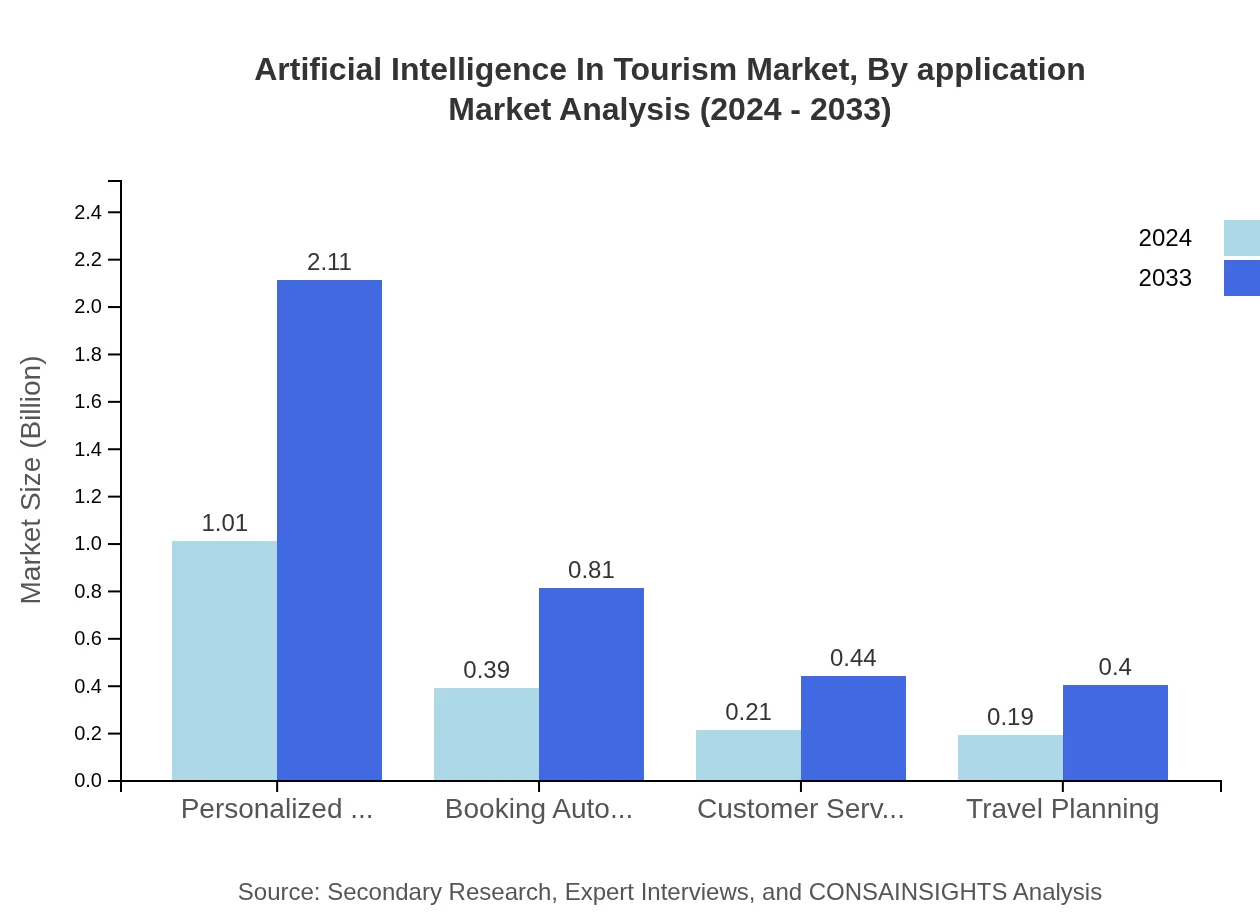
The end-user segmentation focuses on the primary beneficiaries of AI implementations within tourism. Travel agencies show a substantial market growth from 1.01 to 2.11 with a 56.01% share, highlighting their role in integrating digital booking and customer relationship management tools. Hotels and accommodations, expanding from 0.39 to 0.81 and capturing a 21.53% share, are leveraging AI for personalized guest experiences and operational management. Airlines have also embraced these technologies, growing from 0.21 to 0.44 with an 11.76% share, while other players contribute with a growth from 0.19 to 0.40 and a 10.70% share. These advancements underscore the tailored applications of AI that address the distinct needs of each market segment.
Artificial Intelligence In Tourism Market Analysis By Benefit
Analyzing the benefits derived from AI, personalized marketing, booking automation, customer service enhancements, and travel planning emerge as significant factors influencing market dynamics. Personalized marketing shows impressive growth from 1.01 to 2.11 and commands a 56.01% share, reflecting its importance in delivering targeted promotional strategies. Booking automation, which has risen from 0.39 to 0.81 with a 21.53% share, demonstrates how streamlined processes are reducing manual intervention. Customer service benefits, growing from 0.21 to 0.44 (11.76% share), enhance responsiveness and client satisfaction, while travel planning, with growth from 0.19 to 0.40 and a 10.70% share, supports a seamless travel experience. Overall, these benefits highlight how AI is reshaping service delivery and operational models in the tourism industry.
Artificial Intelligence In Tourism Market Trends and Future Forecast
Tell us your focus area and get a customized research report.
Global Market Leaders and Top Companies in Artificial Intelligence In Tourism Industry
TechTour Solutions:
TechTour Solutions is at the forefront of integrating innovative AI applications within the tourism industry. With a focus on data-driven customer engagement, the company leverages advanced machine learning and natural language processing to create personalized travel solutions. Their commitment to research and development has positioned them as a key player in driving operational efficiency and revolutionizing the travel experience.Innovate AI Travel:
Innovate AI Travel specializes in delivering comprehensive AI-powered travel services that enhance both customer satisfaction and backend efficiency. The company has made significant strides in developing cutting-edge booking automation and travel planning tools, while also investing in emerging AI technologies. Their proactive approach to digital innovation and strong market presence make them a leading force in the global Artificial Intelligence in Tourism landscape.We're grateful to work with incredible clients.