

Artificial Pancreas Device System Apds Market Report
First published: 22 October 2024 | Last updated: 28 May 2026 | Report Code: artificial-pancreas-device-system-apds
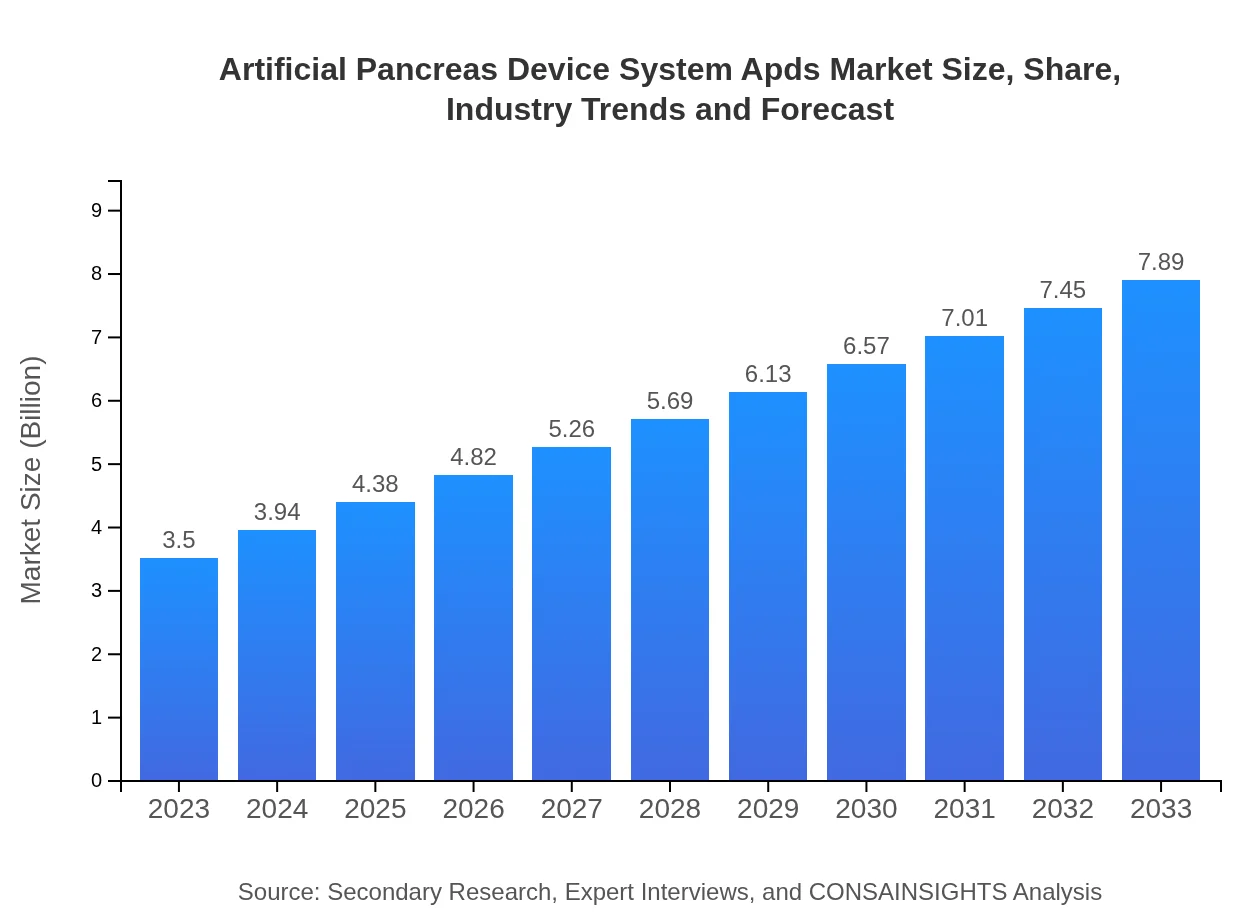
Artificial Pancreas Device System Apds Market — USD 3.5 billion in 2023, Growing to USD 7.89B by 2033 at 8.2% CAGR
This report provides an in-depth analysis of the Artificial Pancreas Device System (APDS) market, encompassing market size, growth forecasts, technological advancements, and competitive landscape insights for the forecast period from 2023 to 2033.
Key Takeaways
- Global market valued at $3.50 Billion in 2023 and projected to reach $7.89 Billion by 2033 at an 8.2% CAGR.
- North America is largest regional market; Latin America is regional market region based on implied CAGR across 2023 to 2033.
- Latin America is noted as the regional market region, moving from $0.13 Billion in 2023 to $0.3 Billion in 2033 at an implied 8.72% CAGR.
- Europe, Asia Pacific, and Middle East & Africa show steady expansion with Europe increasing from $1 Billion to $2.25 Billion between 2023 and 2033.
- Leading industry players include Medtronic, Dexcom, Roche, Insulet Corporation, and Abbot Laboratories, driving product innovation and adoption.
Artificial Pancreas Device System Apds Market Report — Executive Summary
Regional analysis shows North America as largest market and Latin America as fastest-growing region by implied CAGR. The Artificial Pancreas Device System Apds Market Report tracks expansion from $3.50 Billion in 2023 to $7.89 Billion by 2033, supported by an overall 8.2% CAGR over the 2023 to 2033 forecast period. Growth is propelled by rising diabetes prevalence, heightened R&D investment, and greater integration of advanced device technologies into diabetes management. Regional dynamics vary: North America is the largest market, while Latin America registers the highest implied growth rate. Product and service offerings span hardware and software, continuous glucose monitoring, closed-loop and hybrid systems, and address hospital, homecare, and research end-users. Competitive activity from firms such as Medtronic, Dexcom, Roche, Insulet Corporation, and Abbot Laboratories is shaping product roadmaps and market access strategies. The market outlook emphasizes innovation, regulatory navigation, and broader clinical adoption as key themes for the next decade.
Key Growth Drivers
- Increasing global diabetes prevalence driving sustained demand for automated insulin delivery solutions.
- Ongoing R&D and investments improving device accuracy, integration, and user experience.
- Adoption of continuous glucose monitoring and closed-loop technologies enabling more effective care.
- Growing emphasis on outpatient and homecare management expanding addressable end-user environments.
- Strategic initiatives and product launches by established medical device companies accelerating market availability.
| Metric | Value |
|---|---|
| Study Period | 2023 - 2033 |
| 2023 Market Size | $3.50 Billion |
| CAGR (2023-2033) | 8.2% |
| 2033 Market Size | $7.89 Billion |
| Top Companies | Medtronic , Dexcom, Roche, Insulet Corporation, Abbot Laboratories |
| Published Date | 22 October 2024 |
| Last Modified Date | 28 May 2026 |
Artificial Pancreas Device System Apds Market Overview
Customize Artificial Pancreas Device System Apds Market Report market research report
- ✔ Get in-depth analysis of Artificial Pancreas Device System Apds market size, growth, and forecasts.
- ✔ Understand Artificial Pancreas Device System Apds's regional dynamics and industry-specific trends.
- ✔ Identify potential applications, end-user demand, and growth segments in Artificial Pancreas Device System Apds
What is the Market Size & CAGR of Artificial Pancreas Device System Apds Market Report market in 2023?
Artificial Pancreas Device System Apds Industry Analysis
Artificial Pancreas Device System Apds Market Segmentation and Scope
Tell us your focus area and get a customized research report.
Artificial Pancreas Device System Apds Market Report Market Analysis Report by Region
Europe Artificial Pancreas Device System Apds Market Report:
Europe grows from $1 Billion in 2023 to $2.25 Billion in 2033. Expansion reflects regulatory approvals, investment in diabetes care technologies, and an emphasis on integrating continuous monitoring and automated delivery systems into clinical practice.Asia Pacific Artificial Pancreas Device System Apds Market Report:
Asia Pacific grows from $0.76 Billion in 2023 to $1.72 Billion in 2033. This progression is linked to rising disease burden, expanding healthcare access, and growing interest in advanced diabetes management solutions across diverse healthcare settings.North America Artificial Pancreas Device System Apds Market Report:
North America is largest regional market, rising from $1.13 Billion in 2023 to $2.55 Billion in 2033. Regional growth is supported by robust healthcare infrastructure, early adoption of device technologies, and active participation by major manufacturers in product innovation and clinical programs.South America Artificial Pancreas Device System Apds Market Report:
Latin America is fastest-growing region by implied CAGR, increasing from $0.13 Billion in 2023 to $0.3 Billion in 2033. 13 Billion in 2023 to $0.3 Billion in 2033 and is noted as the regional growth market with an implied 8.72% CAGR. Market expansion is influenced by improving healthcare delivery, increased awareness of diabetes technologies, and rising investments in medical devices.Middle East & Africa Artificial Pancreas Device System Apds Market Report:
Middle East and Africa grows from $0.48 Billion in 2023 to $1.08 Billion in 2033. Growth drivers include expanding clinical infrastructure, greater focus on chronic disease management, and increased adoption of monitoring and insulin delivery technologies.Tell us your focus area and get a customized research report.
Research Methodology
Artificial Pancreas Device System Apds Market Analysis By Product
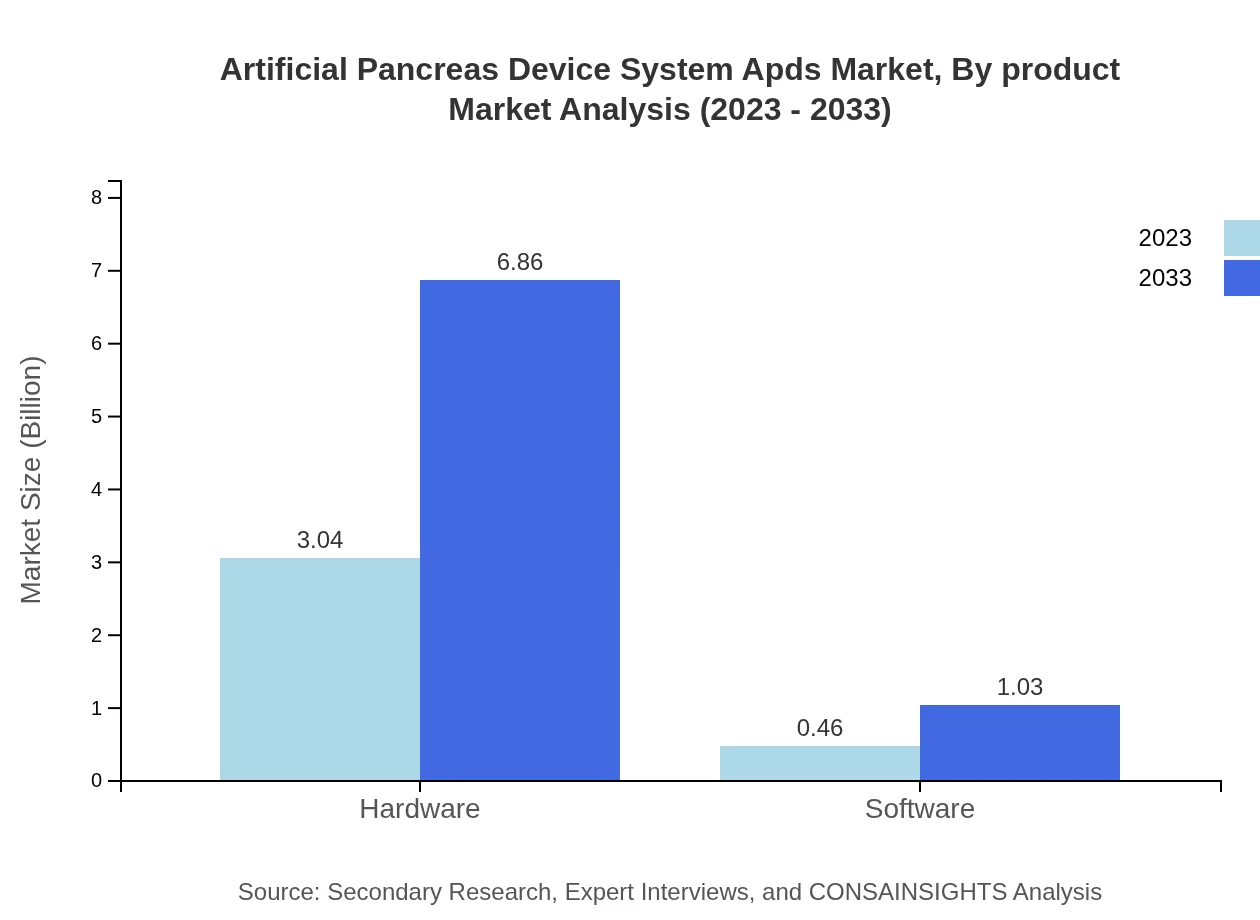
The APDS market is largely driven by Hardware, which encompasses integrated devices for automated glucose monitoring and insulin delivery systems. In 2023, the hardware segment accounts for $3.04 billion, growing to $6.86 billion by 2033. In contrast, the Software segment, which includes diabetes management platforms, generated $0.46 billion in 2023 with expectations of $1.03 billion by 2033.
Artificial Pancreas Device System Apds Market Analysis By Therapy Type
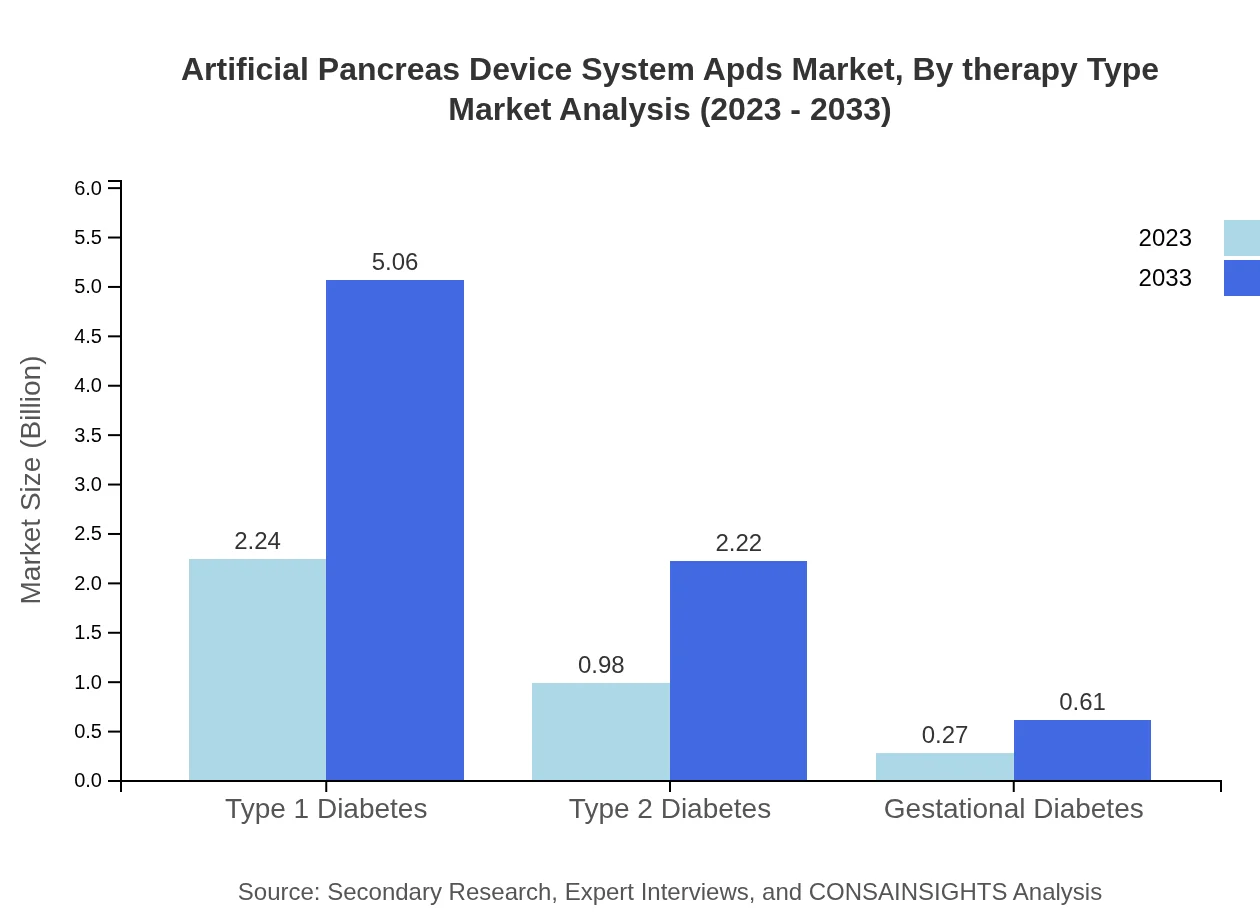
The market is dominated by Type 1 Diabetes products, projected to grow from $2.24 billion in 2023 to $5.06 billion by 2033. Type 2 Diabetes solutions are also significant, estimated at $0.98 billion in 2023 and expected to rise to $2.22 billion by 2033, reflecting the adaptation of APDS technologies for a wider range of diabetes situations.
Artificial Pancreas Device System Apds Market Analysis By End User
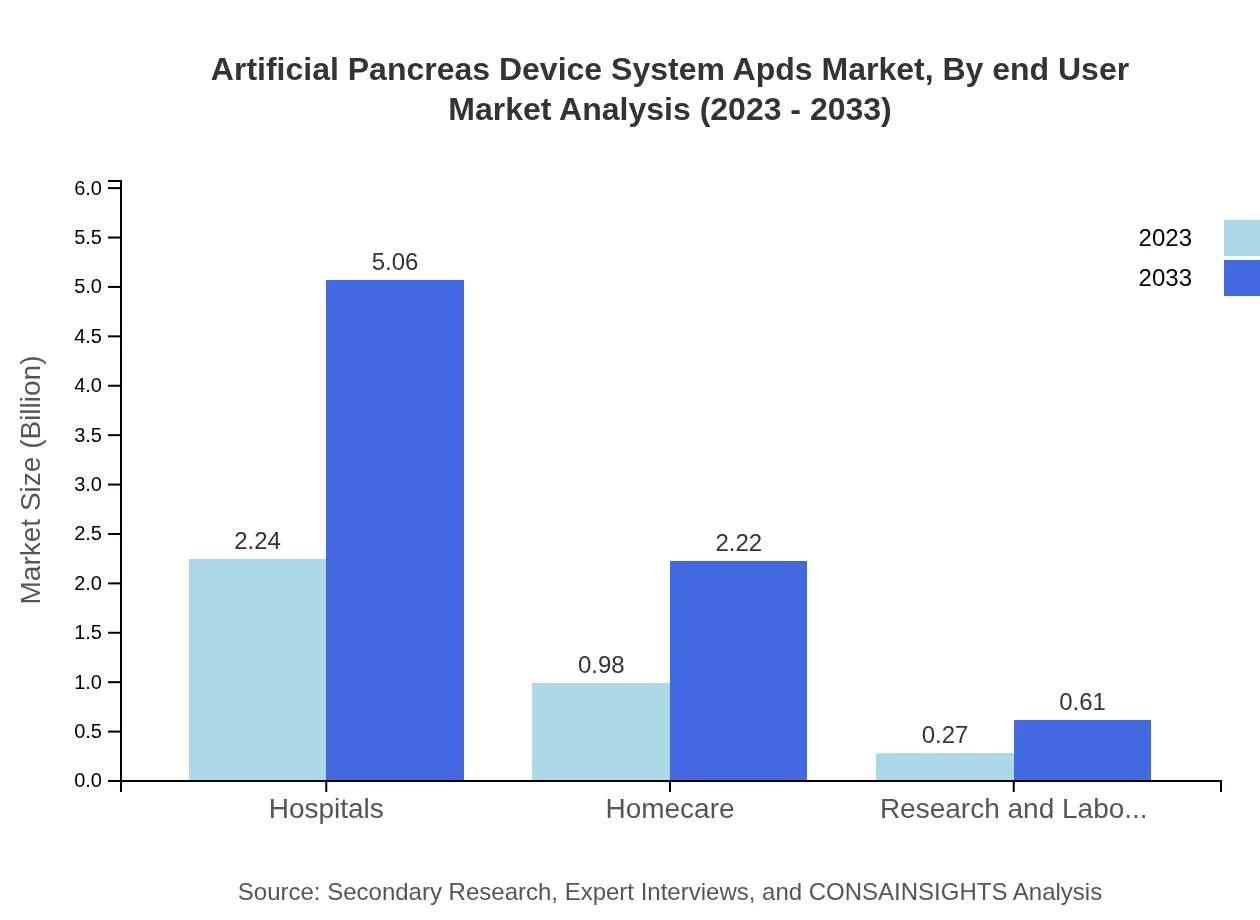
End-user segmentation shows Hospitals as the primary consumers, with market sizes of $2.24 billion in 2023 and forecasted to grow to $5.06 billion by 2033. Homecare solutions are also gaining traction from $0.98 billion in 2023 to $2.22 billion by 2033, driven by a shift towards greater patient independence in diabetes management.
Artificial Pancreas Device System Apds Market Analysis By Technology
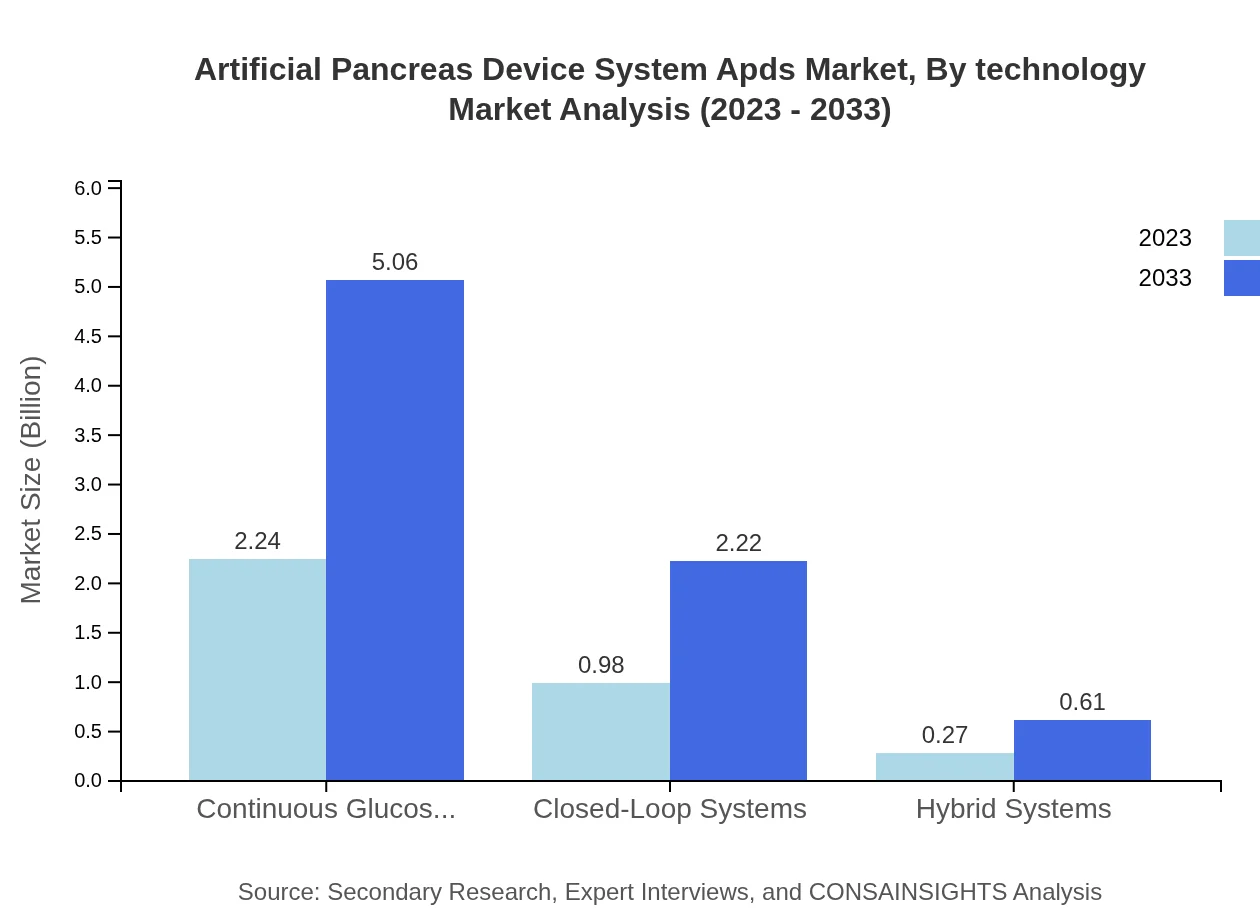
The technology landscape for APDS is evolving, with Continuous Glucose Monitoring Systems leading the market at $2.24 billion in 2023, which is projected to grow to $5.06 billion by 2033. Closed-Loop systems are gaining popularity, particularly among patients seeking automated insulin delivery solutions, moving from $0.98 billion in 2023 to $2.22 billion by 2033.
Artificial Pancreas Device System Apds Market Trends and Future Forecast
Tell us your focus area and get a customized research report.
Global Market Leaders and Top Companies in Artificial Pancreas Device System Apds Industry
Medtronic :
A leader in diabetes management technology and known for its groundbreaking MiniMed system, Medtronic continues to innovate in closed-loop insulin delivery systems.Dexcom:
Specializing in continuous glucose monitoring technologies, Dexcom provides critical data that enhances the effectiveness of various APDS solutions in patient management.Roche:
Roche is committed to advancing diabetes care with its integrated systems that combine glucose monitoring and insulin delivery, improving overall patient outcomes.Insulet Corporation:
Known for its Omnipod insulin management system, Insulet is at the forefront of innovation in wearable diabetes technology.Abbot Laboratories:
Abbot offers the Freestyle Libre glucose monitoring systems, contributing to the accessibility of diabetes management solutions globally.We're grateful to work with incredible clients.









FAQs
What is the market size of the APDS market in 2023?
The market size for 2023 is $3.50 Billion, as reported for the Artificial Pancreas Device System Apds Market Report and used as the base year for the 2023 to 2033 forecast period.
How big will the market be in 2033?
The projected market value for 2033 is $7.89 Billion according to the report’s forecast covering 2023 to 2033, reflecting technology adoption and expanding patient needs.
What is CAGR for the forecast period?
The report states an overall CAGR of 8.2% for the 2023 to 2033 forecast period, representing the expected annualized growth rate over that decade.
Which region is the fastest Growing in the Artificial Pancreas Device System Apds Market Report market?
Latin America is the fastest-growing region, projected to expand from $0.13 Billion in 2023 to $0.3 Billion in 2033, reflecting an implied 8.72% CAGR over the forecast period.
Which region is the fastest Growing?
Latin America is reported as the regional market region with an implied 8.72% CAGR, increasing from $0.13 Billion in 2023 to $0.3 Billion in 2033.
Who are the top companies in this market?
Top companies listed include Medtronic, Dexcom, Roche, Insulet Corporation, and Abbot Laboratories, which are active in device development and market expansion.
What are the primary technology segments?
Primary technology segments include Continuous Glucose Monitoring Systems, Closed-Loop Systems, and Hybrid Systems, reflecting the types of integrated device approaches in the market.
How are end User segments classified?
End-user categories include Hospitals, Homecare, and Research and Laboratories, covering clinical, consumer, and investigational applications for APDS products.