
Reports >
Life Sciences
>
Bacteriological Testing Market Report

Bacteriological Testing Market Report
First published: 21 October 2024 | Last updated: 28 May 2026 | Report Code: bacteriological-testing
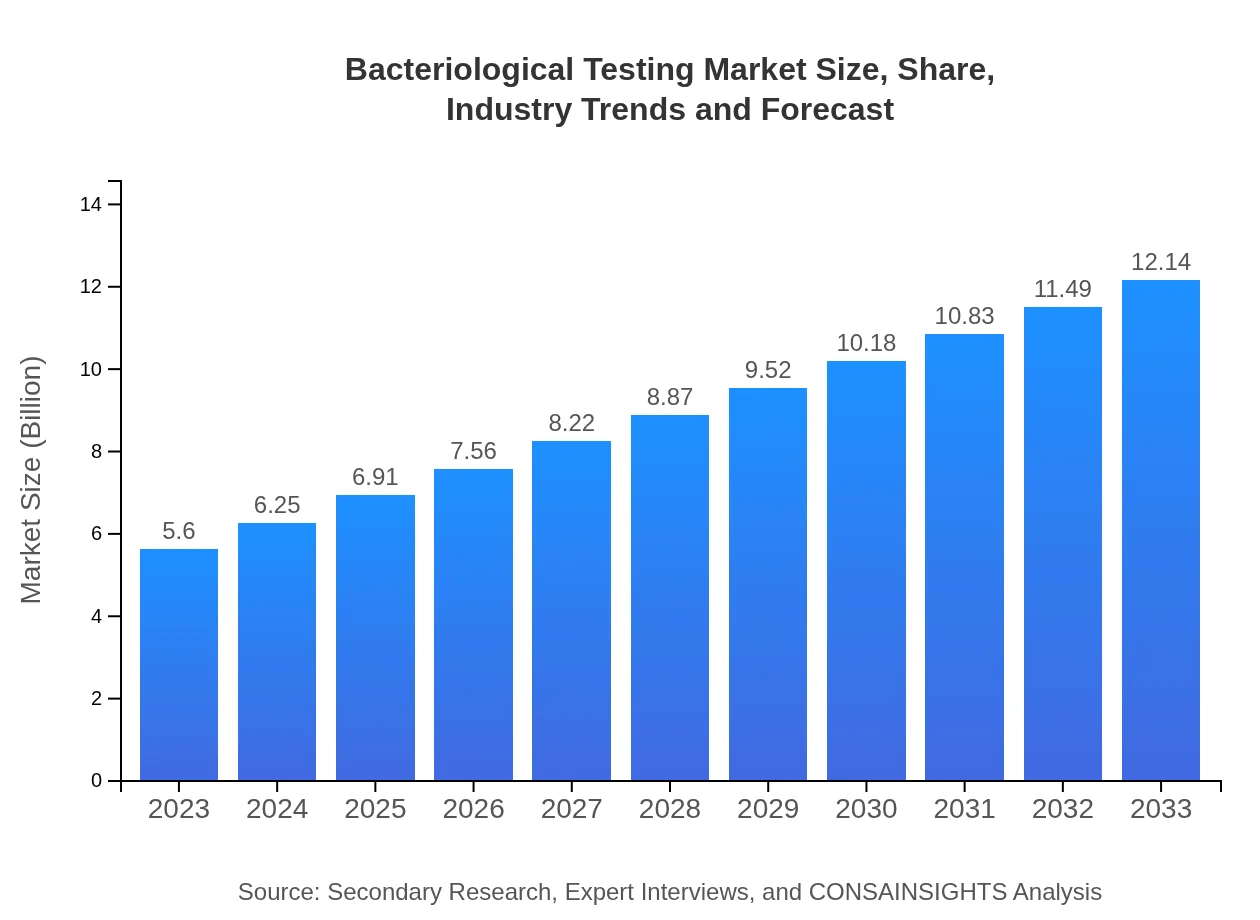
Bacteriological Testing Market — USD 5.6 billion in 2023, Growing to USD 12.14B by 2033 at 7.8% CAGR
This report delves into the Bacteriological Testing market, providing a thorough analysis of market dynamics, size, and growth trends from 2023 to 2033, including insights into regional performances and technological advancements.
Key Takeaways
- Global market value increases from $5.60 Billion in 2023 to $12.14 Billion in 2033 at a 7.8% CAGR.
- North America is largest regional market; Latin America is regional market region based on implied CAGR across 2023 to 2033.
- Latin America is identified as the regional market region, rising from $0.06 Billion to $0.14 Billion with an implied 8.84% CAGR.
- Europe and Asia Pacific show significant expansion—Europe: $1.75 Billion to $3.79 Billion; Asia Pacific: $1.03 Billion to $2.23 Billion.
Bacteriological Testing Market Report — Executive Summary
Regional analysis shows North America as largest market and Latin America as fastest-growing region by implied CAGR. This report provides a decade-long view of the bacteriological testing market, detailing market expansion, technological evolution and regulatory influences. Growth is supported by heightened disease awareness, stricter food and water quality requirements, and adoption of rapid testing and molecular methods. The analysis covers product categories including consumables, instruments and software, and method breakdowns such as traditional, molecular and rapid testing. Regional performance is mapped from 2023 baselines to 2033 projections, highlighting North America as the largest region and Latin America as the regional market. Leading firms profiled include Thermo Fisher Scientific, Merck KGaA, BioMérieux and Abbott Laboratories. The report aims to help stakeholders identify investment opportunities and operational priorities in a shifting testing landscape.
Key Growth Drivers
- Rising regulatory scrutiny for food and water safety driving demand for routine bacteriological assays and compliance testing.
- Growing public and clinical awareness of infectious disease detection increasing adoption of diagnostics in healthcare settings.
- Technological progress in molecular and rapid testing methods shortening time-to-result and expanding use cases across industries.
- Investment by major vendors in R&D and automation improving throughput and accuracy of testing workflows.
| Metric | Value |
|---|---|
| Study Period | 2023 - 2033 |
| 2023 Market Size | $5.60 Billion |
| CAGR (2023-2033) | 7.8% |
| 2033 Market Size | $12.14 Billion |
| Top Companies | Thermo Fisher Scientific, Merck KGaA, BioMérieux, Abbott Laboratories |
| Published Date | 21 October 2024 |
| Last Modified Date | 28 May 2026 |
Bacteriological Testing Market Overview
Customize Bacteriological Testing Market Report market research report
- ✔ Get in-depth analysis of Bacteriological Testing market size, growth, and forecasts.
- ✔ Understand Bacteriological Testing's regional dynamics and industry-specific trends.
- ✔ Identify potential applications, end-user demand, and growth segments in Bacteriological Testing
What is the Market Size & CAGR of Bacteriological Testing Market Report market in 2023?
Bacteriological Testing Industry Analysis
Bacteriological Testing Market Segmentation and Scope
Tell us your focus area and get a customized research report.
Bacteriological Testing Market Report Market Analysis Report by Region
Europe Bacteriological Testing Market Report:
Europe grows from $1.75 Billion in 2023 to $3.79 Billion in 2033. Expansion is driven by stringent food and water safety standards, growing clinical diagnostics demand and adoption of molecular and rapid testing techniques across public health and industrial sectors.Asia Pacific Bacteriological Testing Market Report:
Asia Pacific grows from $1.03 Billion in 2023 to $2.23 Billion in 2033. Market progression reflects rising healthcare investment, increased surveillance for infectious diseases and growing implementation of faster testing methodologies.North America Bacteriological Testing Market Report:
North America is largest regional market, rising from $2.11 Billion in 2023 to $4.56 Billion in 2033. Regional expansion is linked to established clinical infrastructure, regulatory compliance requirements and investment in laboratory automation and advanced testing platforms.South America Bacteriological Testing Market Report:
Latin America is fastest-growing region by implied CAGR, increasing from $0.06 Billion in 2023 to $0.14 Billion in 2033. 06 Billion in 2023 to $0.14 Billion in 2033, and is identified as the regional growth market with an implied 8.84% CAGR. Growth factors include expanding diagnostic access, strengthening regulatory frameworks and uptake of newer testing methods.Middle East & Africa Bacteriological Testing Market Report:
Middle East and Africa grows from $0.66 Billion in 2023 to $1.42 Billion in 2033. Regional demand is influenced by investments in public health infrastructure, emphasis on water and food safety, and gradual adoption of modern testing solutions.Tell us your focus area and get a customized research report.
Research Methodology
Bacteriological Testing Market Analysis By Methodology
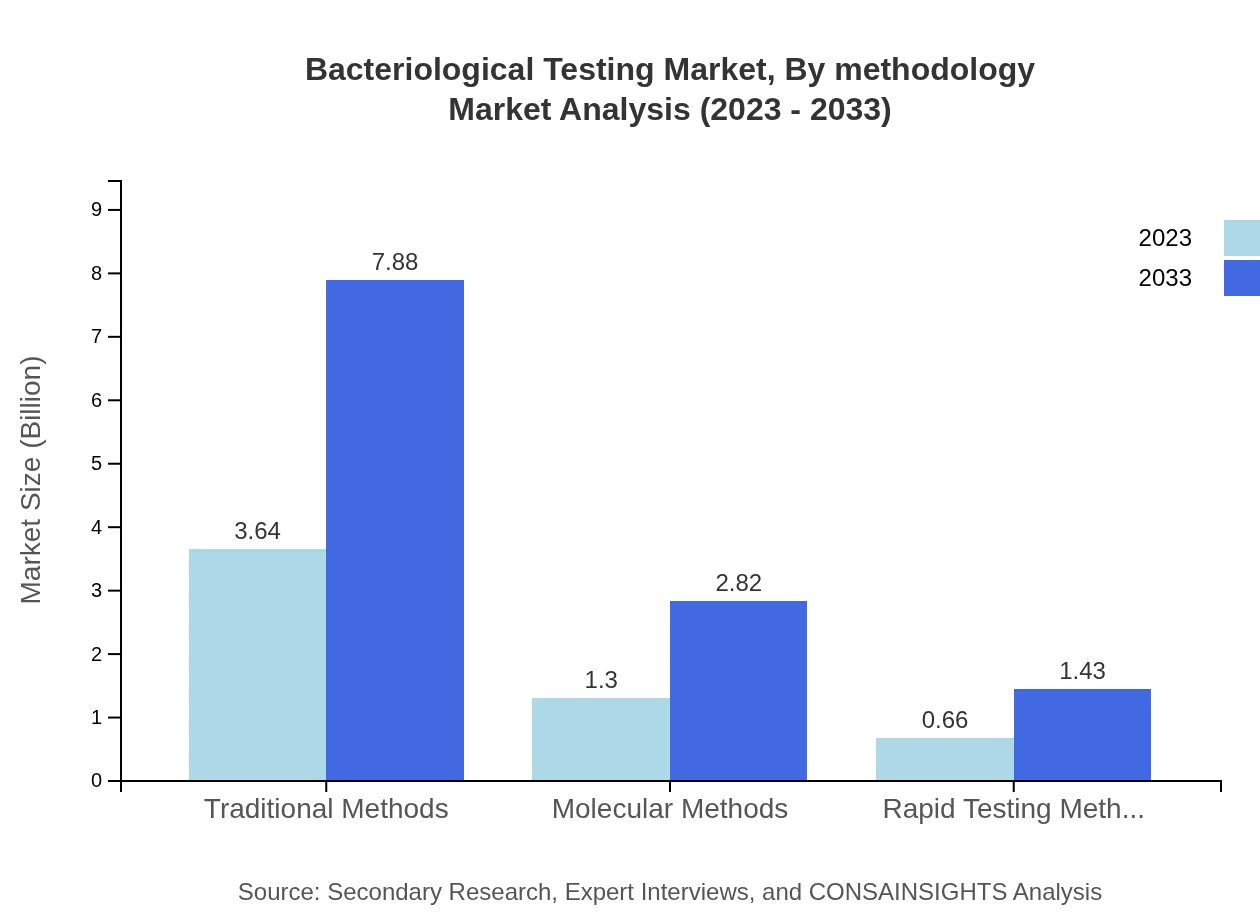
The Bacteriological Testing market, segmented by methodology, includes traditional methods, molecular methods, and rapid testing methods. The traditional methods remain dominant due to their established reliability, accounting for approximately 64.92% of the market in 2023. Molecular techniques, offering greater accuracy and speed, are also gaining traction and projected to increase their market share significantly over the forecast period. Rapid testing methods are witnessing robust growth as consumer demand for quick results rises.
Bacteriological Testing Market Analysis By Application
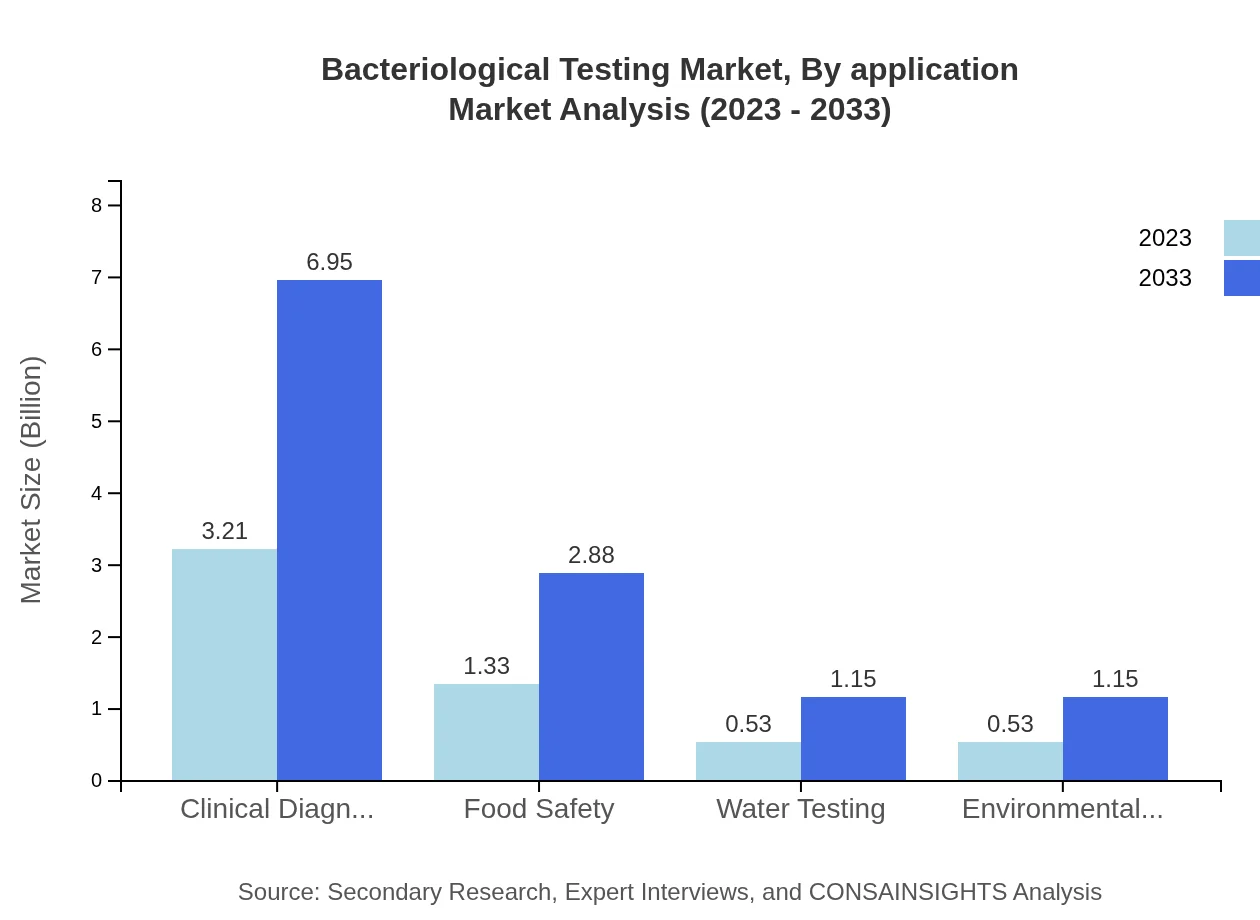
Key applications for bacteriological testing include clinical diagnostics, food safety, environmental testing, and research. Clinical diagnostics lead the market, capturing around 57.29% of the market share in 2023, driven by rising health awareness and preventive measures. Food safety testing is also expected to see substantial growth driven by regulatory requirements and standards governing food quality across regions.
Bacteriological Testing Market Analysis By Product Type
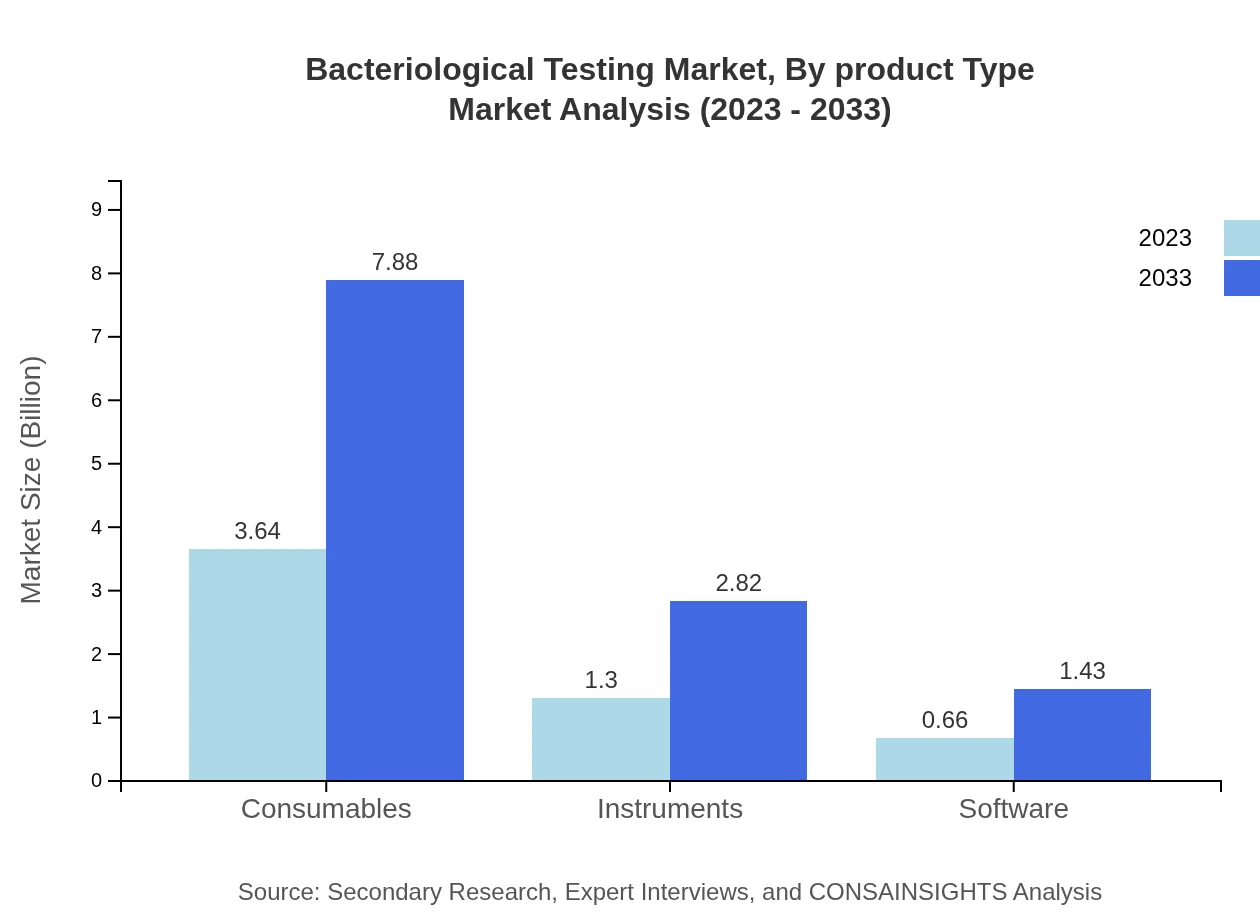
In terms of product types, consumables, instruments, and software play critical roles in the Bacteriological Testing market. Consumables dominate with a market share of approximately 64.92% in 2023, as they are essential for ongoing testing processes. Instruments and software also contribute significantly, facilitating laboratory operations and accuracy in testing.
Bacteriological Testing Market Analysis By End User
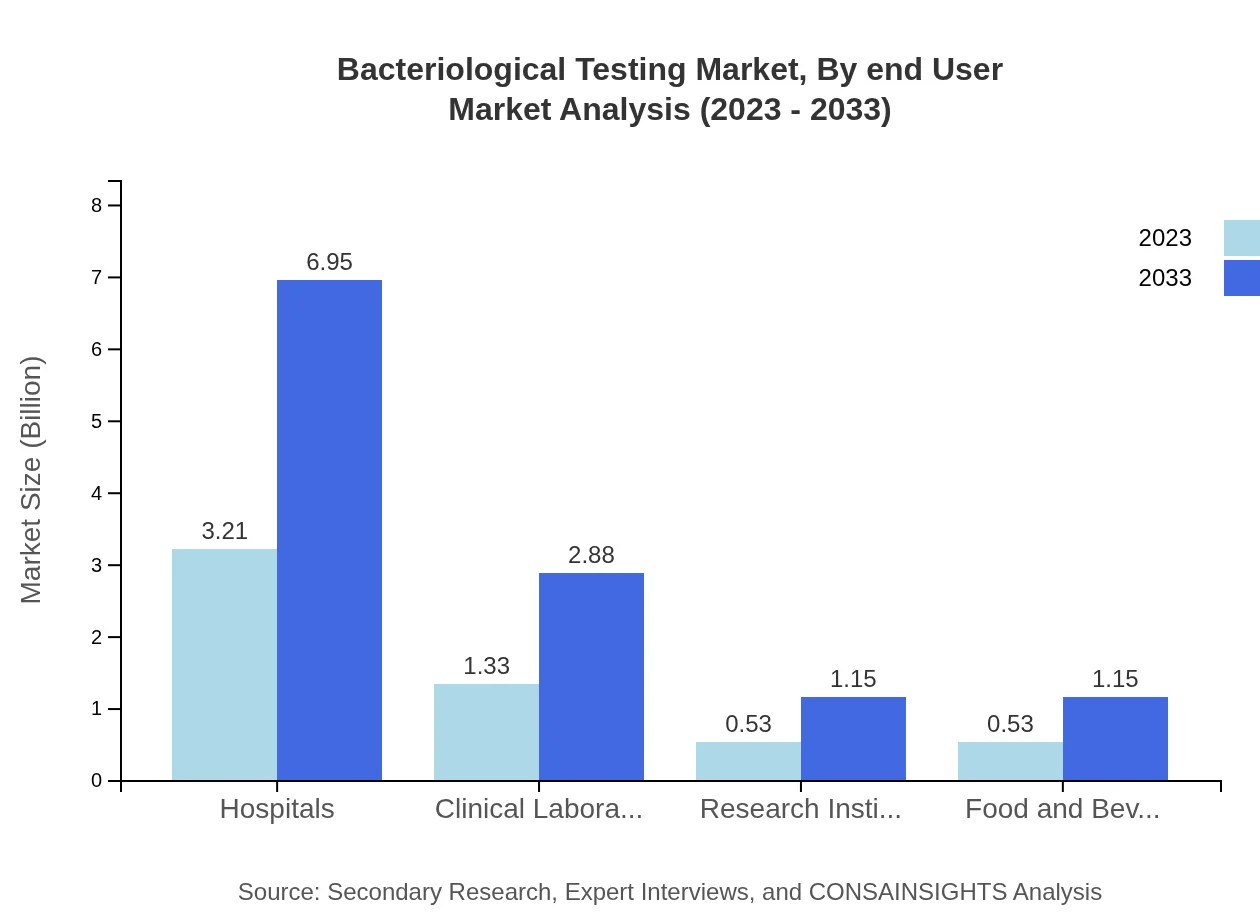
The market is further segmented by end-users such as hospitals, clinical laboratories, research institutes, and food and beverage industries. Hospitals represent the largest end-user segment with a market share of 57.29% in 2023, driven by the increasing demand for diagnostic testing. Clinical laboratories and research institutes are also critical contributors to the market due to their vital roles in testing and safety assurance.
Bacteriological Testing Market Analysis By Region
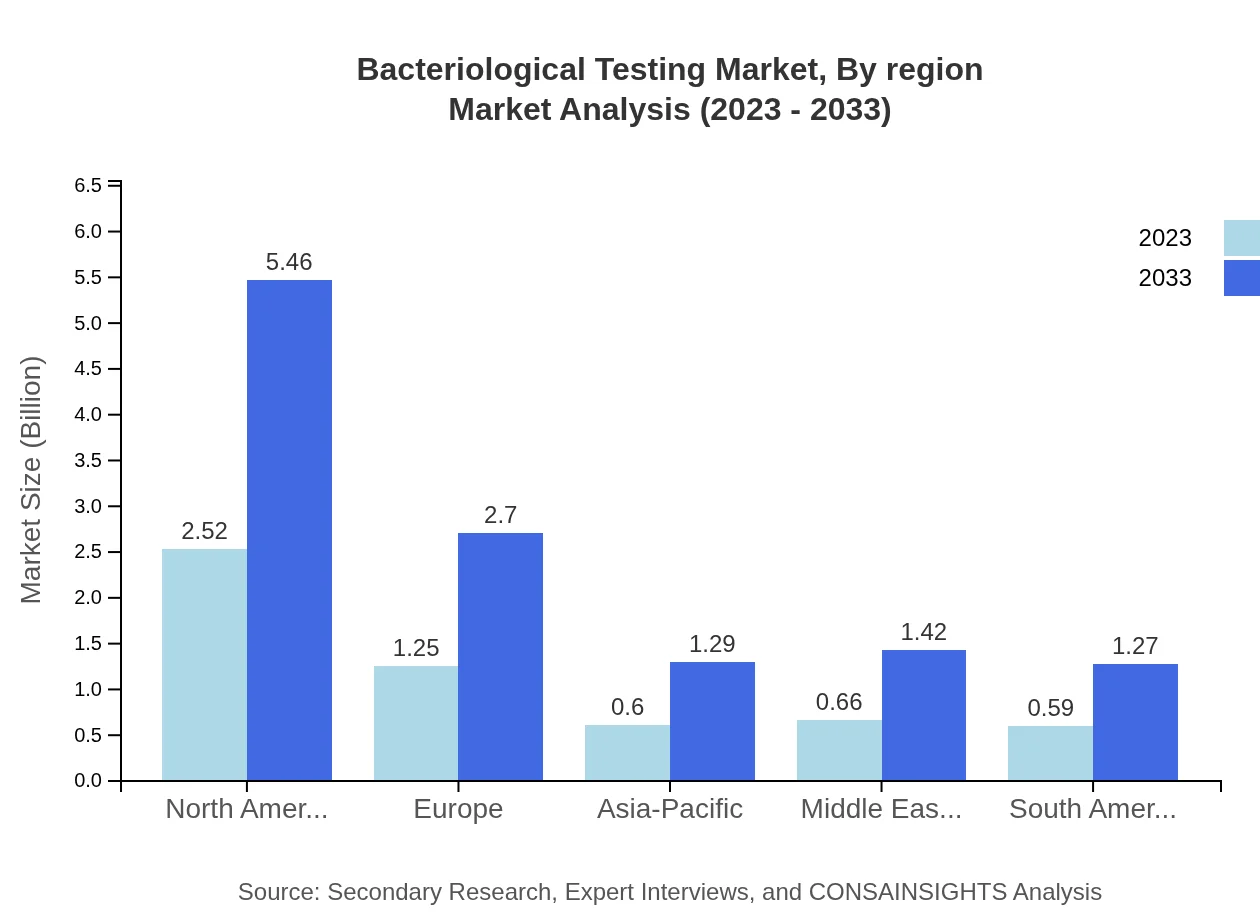
The market spans various regions, each contributing uniquely. North America remains a leader in both market size and share, influenced by advanced healthcare capabilities. Europe and Asia-Pacific are also important markets, with stringent regulations and increasing health consciousness driving demand. The Middle East and Africa, while smaller in market size, are expanding at notable rates due to rising health initiatives.
Bacteriological Testing Market Trends and Future Forecast
Tell us your focus area and get a customized research report.
Global Market Leaders and Top Companies in Bacteriological Testing Industry
Thermo Fisher Scientific:
A global leader in serving science, Thermo Fisher provides innovative laboratory equipment and reagents, playing a pivotal role in the bacteriological testing segment through advanced technologies.Merck KGaA:
A prominent player in the life science sector, Merck KGaA offers a wide range of products and solutions aimed at enhancing the accuracy and efficiency of microbiological testing.BioMérieux:
Specializing in in vitro diagnostics, BioMérieux is recognized for its innovative solutions in bacteriological testing, focusing on healthcare and environmental protections.Abbott Laboratories:
Abbott Laboratories excels in point-of-care testing involving bacteriological assays, significantly impacting clinical diagnostics and patient care.We're grateful to work with incredible clients.








FAQs
What is the market size of the bacteriological testing market in 2023?
The market size in 2023 is $5.60 Billion, as reported for the global bacteriological testing market baseline.
How big is the forecasted market in 2033?
The market is projected to reach $12.14 Billion by 2033 according to the provided forecast figures.
What is CAGR for the forecast period?
The reported compound annual growth rate for 2023 to 2033 is 7.8% for the bacteriological testing market.
Which region is the fastest Growing in the Bacteriological Testing Market Report market?
Latin America is the fastest-growing region, projected to expand from $0.06 Billion in 2023 to $0.14 Billion in 2033, reflecting an implied 8.84% CAGR over the forecast period.
Which region is the fastest Growing?
Latin America is noted as the regional market region with an implied 8.84% CAGR, increasing from $0.06 Billion in 2023 to $0.14 Billion in 2033.
Who are the top companies active in this market?
Top companies listed include Thermo Fisher Scientific, Merck KGaA, BioMérieux and Abbott Laboratories as leading market participants.
What methodologies are covered in the market segmentation?
Methodologies cited include Traditional Methods, Molecular Methods and Rapid Testing Methods as primary categories for testing approaches.
Which product types are included in the report?
Product segmentation includes Consumables, Instruments and Software as distinct product-type categories addressed in the market.