
Reports >
Life Sciences
>
Bioelectric Medicine Market Report

Bioelectric Medicine Market Report
First published: 15 October 2024 | Last updated: 25 May 2026 | Report Code: bioelectric-medicine
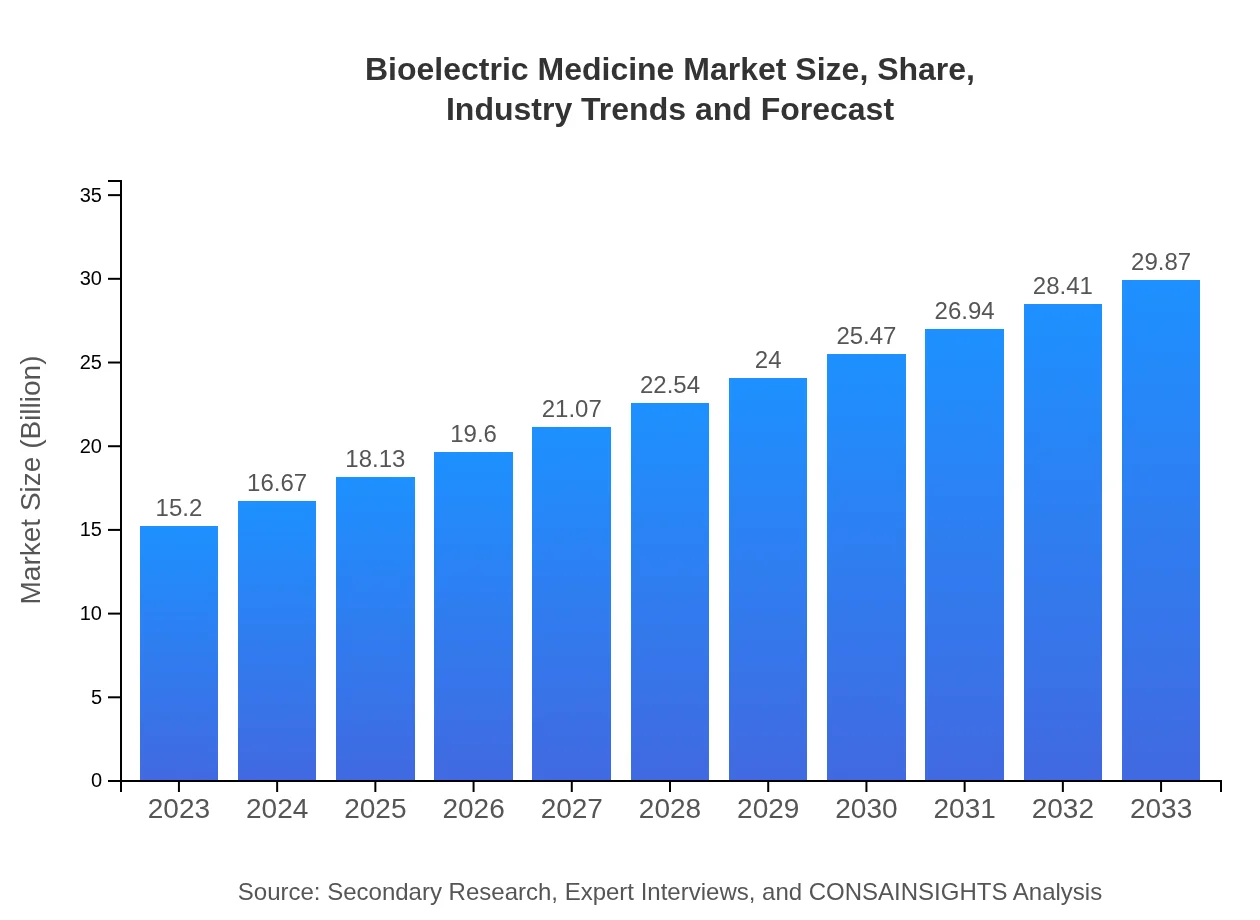
Bioelectric Medicine Market — USD 15.2 billion in 2023, Growing to USD 29.87B by 2033 at 6.8% CAGR
This report provides an in-depth analysis of the Bioelectric Medicine market, encompassing current trends, future forecasts from 2023 to 2033, and insights into market dynamics, including growth drivers and challenges.
Key Takeaways
- Global market expands from $15.20 Billion in 2023 to $29.87 Billion in 2033 driven by device and therapy innovation.
- CAGR stands at 6.8% over the 2023 to 2033 forecast period, reflecting steady adoption of bioelectric treatments.
- North America is largest regional market, while no single fastest-growing region is stated because regional CAGR differences remain within 0.15 percentage points.
- Europe grows from $4.47 Billion to $8.78 Billion between 2023 and 2033, supported by clinical adoption and regulatory evolution.
- Primary industry players include Medtronic, Boston Scientific, Abbott Laboratories, NeuroMetrix and Zynex Medical.
Bioelectric Medicine Market Report — Executive Summary
North America remains largest market by forecast-period value, while no single fastest-growing region is stated because top regional growth rates are separated by less than 0.15 percentage points. The Bioelectric Medicine Market Report outlines market expansion propelled by technological progress in implantable and wearable devices, broader use in chronic disease management, and increasing healthcare spending. Key segments examined include devices, therapies, stimulation and sensing technologies, and end users such as hospitals, clinics, home healthcare and research institutes. North America remains largest market by forecast-period value, while no single fastest-growing region is stated because top regional growth rates are separated by less than 0.15 percentage points. The study profiles leading vendors including Medtronic, Boston Scientific, Abbott Laboratories, NeuroMetrix and Zynex Medical, and assesses regulatory and innovation trends shaping product development. Forecasts incorporate primary interviews, company literature and validation to map growth pathways through 2033.
Key Growth Drivers
- Rising prevalence of chronic conditions increasing demand for neuromodulation and bioelectric therapies.
- Advances in implantable and wearable device technologies enabling broader clinical and home use.
- Greater healthcare expenditure and investment in personalized treatment approaches.
- Regulatory clarity and clinical evidence supporting wider adoption in pain, neurological and cardiovascular applications.
| Metric | Value |
|---|---|
| Study Period | 2023 - 2033 |
| 2023 Market Size | $15.20 Billion |
| CAGR (2023-2033) | 6.8% |
| 2033 Market Size | $29.87 Billion |
| Top Companies | Medtronic , Boston Scientific, Abbott Laboratories, NeuroMetrix, Zynex Medical |
| Published Date | 15 October 2024 |
| Last Modified Date | 25 May 2026 |
Bioelectric Medicine Market Overview
Customize Bioelectric Medicine Market Report market research report
- ✔ Get in-depth analysis of Bioelectric Medicine market size, growth, and forecasts.
- ✔ Understand Bioelectric Medicine's regional dynamics and industry-specific trends.
- ✔ Identify potential applications, end-user demand, and growth segments in Bioelectric Medicine
What is the Market Size & CAGR of Bioelectric Medicine Market Report market in 2023?
Bioelectric Medicine Industry Analysis
Bioelectric Medicine Market Segmentation and Scope
Tell us your focus area and get a customized research report.
Bioelectric Medicine Market Report Market Analysis Report by Region
Europe Bioelectric Medicine Market Report:
Europe grows from $4.47 Billion in 2023 to $8.78 Billion in 2033. Regional drivers include regulatory adaptation, growing clinical evidence for neuromodulation and increased deployment of implantable and wearable devices in chronic disease management.Asia Pacific Bioelectric Medicine Market Report:
Asia Pacific grows from $2.7 Billion in 2023 to $5.3 Billion in 2033. Key local factors are rising healthcare expenditure, wider access to advanced medical technologies and a growing focus on non-invasive treatment options for chronic conditions.North America Bioelectric Medicine Market Report:
North America is largest regional market, rising from $5.85 Billion in 2023 to $11.5 Billion in 2033. Regional expansion reflects strong clinical uptake, investment in device R&D and established reimbursement pathways that support adoption of bioelectric therapies.South America Bioelectric Medicine Market Report:
Latin America grows from $0.66 Billion in 2023 to $1.3 Billion in 2033. Market progress is influenced by expanding healthcare infrastructure, adoption of non-invasive therapies and growing interest in bioelectric solutions for pain and neurological care.Middle East & Africa Bioelectric Medicine Market Report:
Middle East and Africa grows from $1.53 Billion in 2023 to $3 Billion in 2033. Regional growth is supported by improving healthcare services, investments in medical device availability and interest in therapeutic and diagnostic bioelectric applications.Tell us your focus area and get a customized research report.
Research Methodology
Bioelectric Medicine Market Analysis By Product
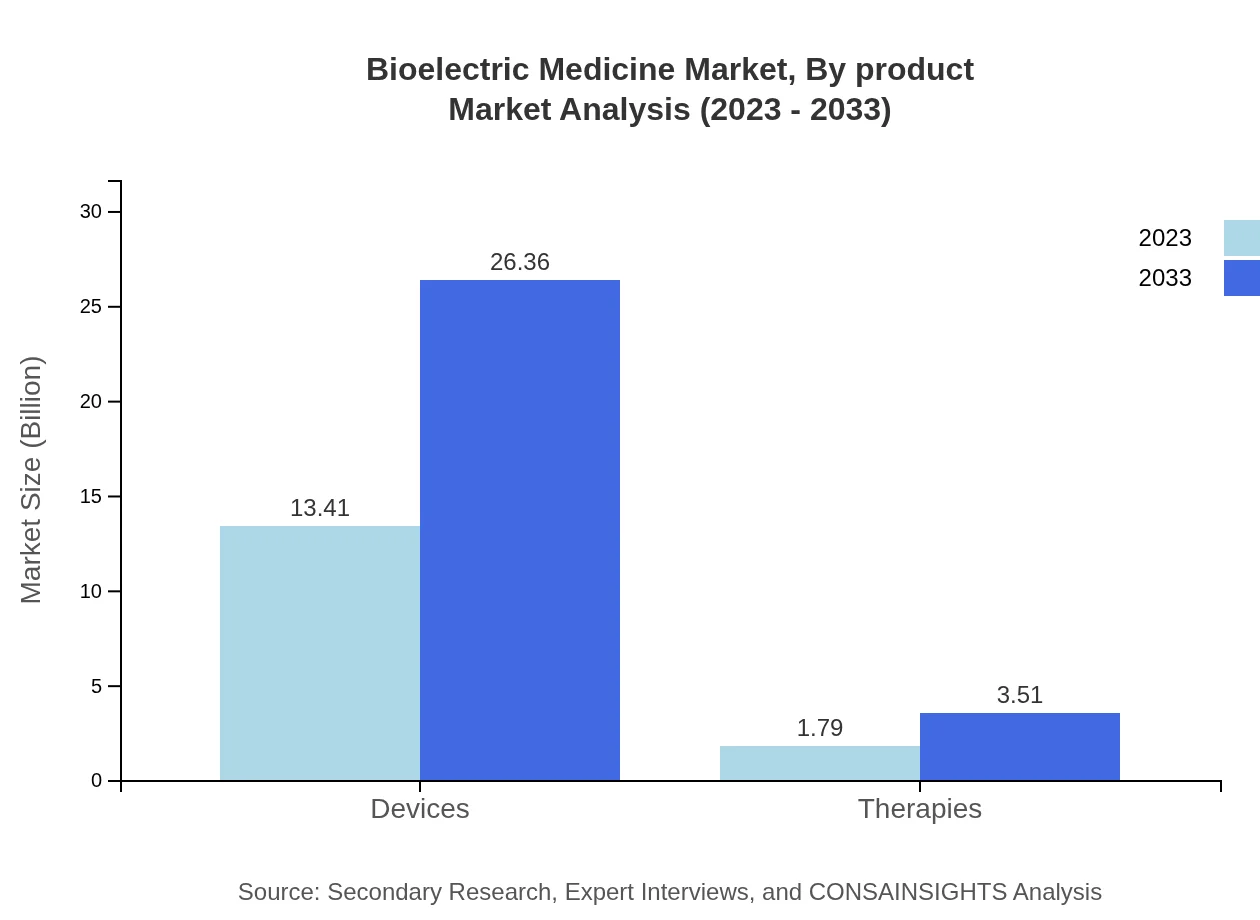
The devices segment dominates the Bioelectric Medicine market, representing a size of $13.41 billion in 2023 with an expected growth to $26.36 billion by 2033. This segment holds an 88.25% share of the market due to the increased demand for wearable devices and implantable stimulators. The therapies segment, primarily focused on managing chronic conditions, shows growth from $1.79 billion in 2023 to $3.51 billion in 2033, capturing an 11.75% market share.
Bioelectric Medicine Market Analysis By Application
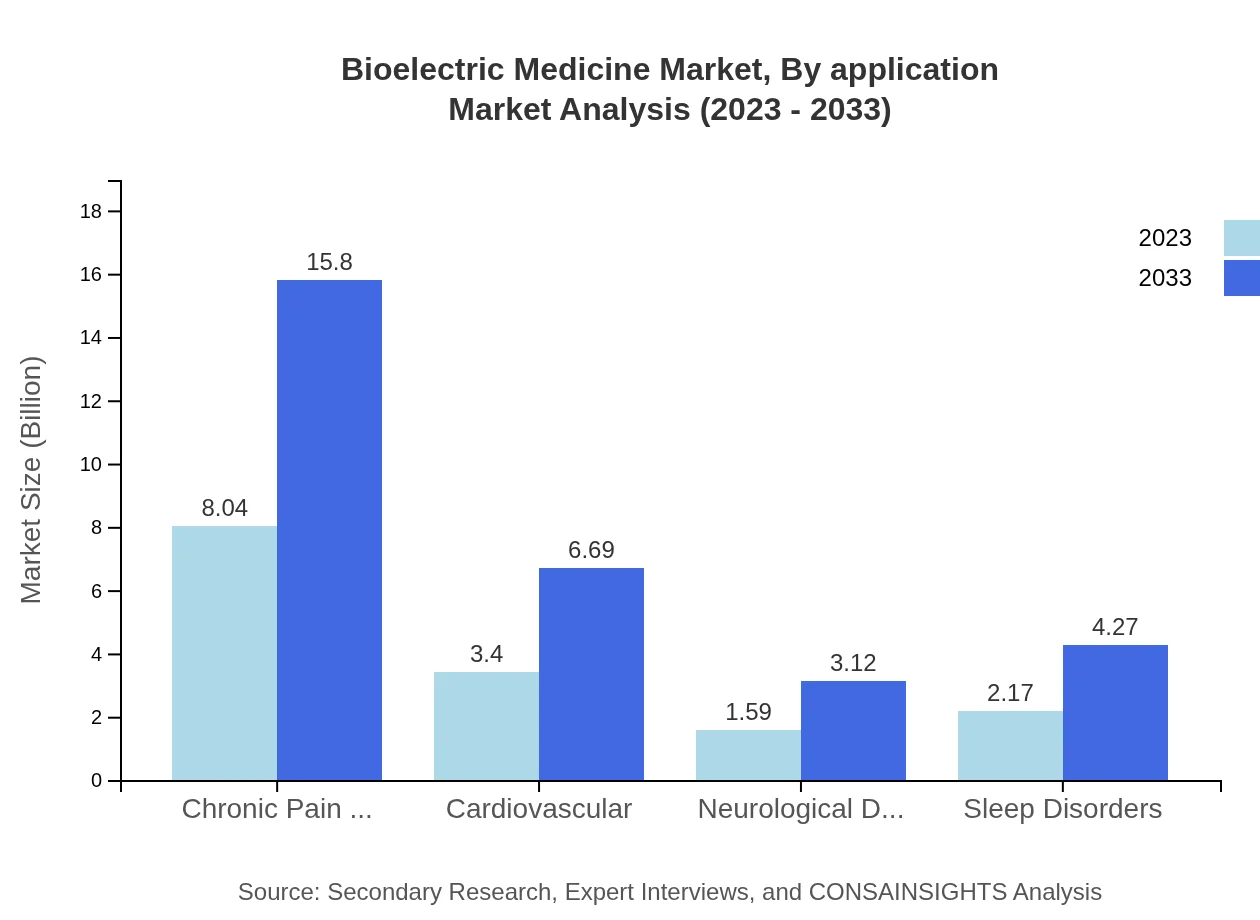
The application of bioelectrical devices in chronic pain management leads with a market size of $8.04 billion in 2023 and projected growth to $15.80 billion by 2033, accounting for 52.89% of the overall market. Other applications, including cardiovascular treatment and neurological disorders, are expected to grow steadily as advancements in therapy customization are further developed.
Bioelectric Medicine Market Analysis By End User
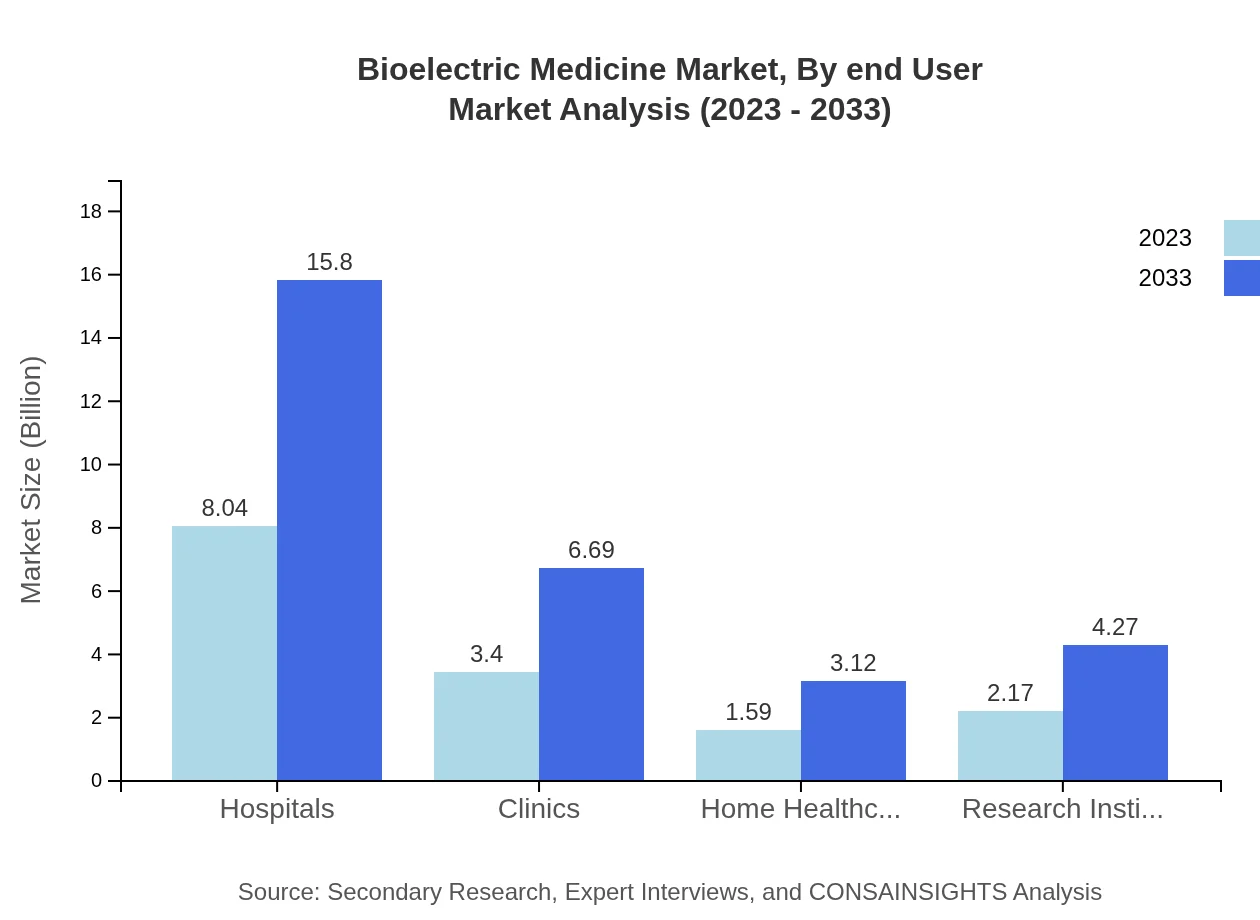
Hospitals remain the primary end-user for bioelectric medical devices, with an expected increase from $8.04 billion in 2023 to $15.80 billion in 2033, representing a significant 52.89% market share. Clinics and home healthcare are also critical users, ensuring access to therapies in diverse healthcare settings.
Bioelectric Medicine Market Analysis By Region Functionality
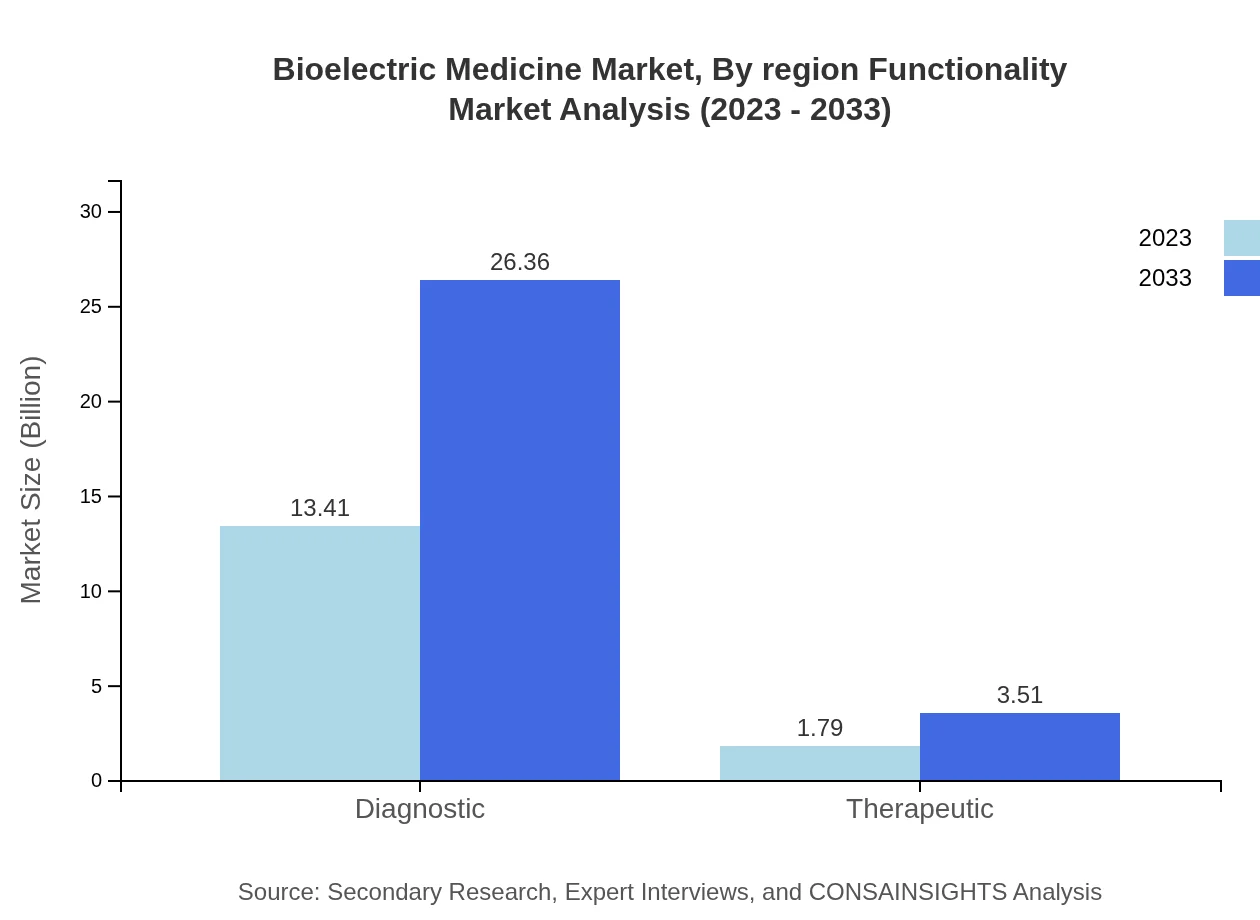
The market functionality analysis indicates that stimulation remains the leading functional application, holding a size of $13.41 billion in 2023 and anticipated to reach $26.36 billion by 2033, maintaining an 88.25% share. Sensing technology also finds its place, correlating with the increased interest in diagnostic applications across healthcare pathways.
Bioelectric Medicine Market Analysis By Technology
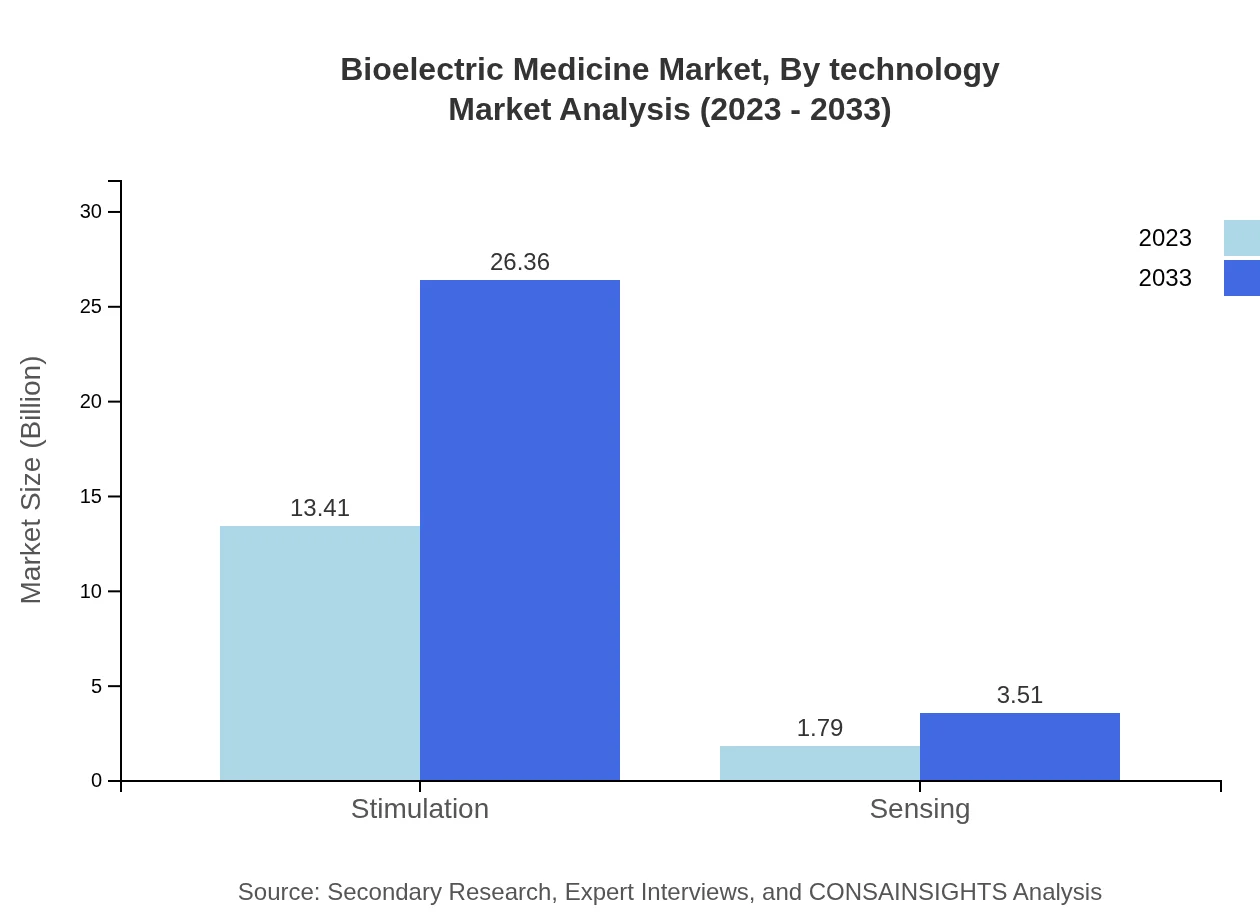
The Bioelectric Medicine market is being significantly influenced by technological advancements. Innovations in implantable devices and improvements in telemedicine practices contribute to market growth. AI and machine learning are enhancing personalized therapies, while wearable technologies are gaining traction in monitoring health conditions, indicating a strong future outlook for the biosensors segment.
Bioelectric Medicine Market Trends and Future Forecast
Tell us your focus area and get a customized research report.
Global Market Leaders and Top Companies in Bioelectric Medicine Industry
Medtronic :
A leading company specializing in medical devices, Medtronic is renowned for its advancements in bioelectric medicine, particularly in the areas of cardiac devices and pain management tools.Boston Scientific:
Boston Scientific plays a key role in developing bioelectric therapies, with innovative products aimed at managing chronic pain and treating cardiovascular diseases.Abbott Laboratories:
Abbott is a major player in bioelectrical devices with a focus on neuromodulation and cardiovascular applications, contributing to the advancement of therapeutic approaches.NeuroMetrix:
NeuroMetrix specializes in pain management through advanced neurostimulation devices, providing comprehensive solutions for chronic pain conditions.Zynex Medical:
Zynex focuses on electrotherapy products targeted at rehabilitation and pain management, enhancing recovery through innovative bioelectric solutions.We're grateful to work with incredible clients.









FAQs
What is the market size of Bioelectric Medicine Market Report in 2023?
The market size in 2023 is $15.20 Billion, as stated in the report data for the Bioelectric Medicine Market Report.
How big will the market be in 2033?
By 2033 the market is projected to reach $29.87 Billion according to the provided forecast figures for the Bioelectric Medicine Market Report.
What is the CAGR for the forecast period?
The reported compound annual growth rate for 2023 to 2033 is 6.8%, reflecting the market expansion over the stated forecast period.
Who are the top companies in this market?
Top companies listed in the input include Medtronic, Boston Scientific, Abbott Laboratories, NeuroMetrix and Zynex Medical as principal industry participants.
Is there a single fastest Growing region in the Bioelectric Medicine Market Report market?
No single fastest-growing region is stated for the Bioelectric Medicine Market Report market because the top regional implied CAGR values are within 0.15 percentage points of each other, making the ranking too close to call reliably.
Which subsegments are covered by product type?
By-product subsegments provided in the data include Devices and Therapies as the listed categories within the report scope.
What is the forecast period for the report?
The forecast period specified in the input is 2023 to 2033 for assessing market trends and projections.
How is regional growth represented?
Regional growth is presented with start and end values for each region, such as Europe rising from $4.47 Billion in 2023 to $8.78 Billion in 2033.
What is the primary technology segmentation?
Technology subsegments in the provided data include Stimulation and Sensing as the principal technological categories.
Why are home healthcare applications relevant?
Home healthcare is included as an end-user subsegment, reflecting the shift toward non-invasive and wearable bioelectric solutions suitable for at-home management.