
Reports >
Life Sciences
>
Biosensors Market Report

Biosensors Market Report
First published: 15 October 2024 | Last updated: 25 May 2026 | Report Code: biosensors
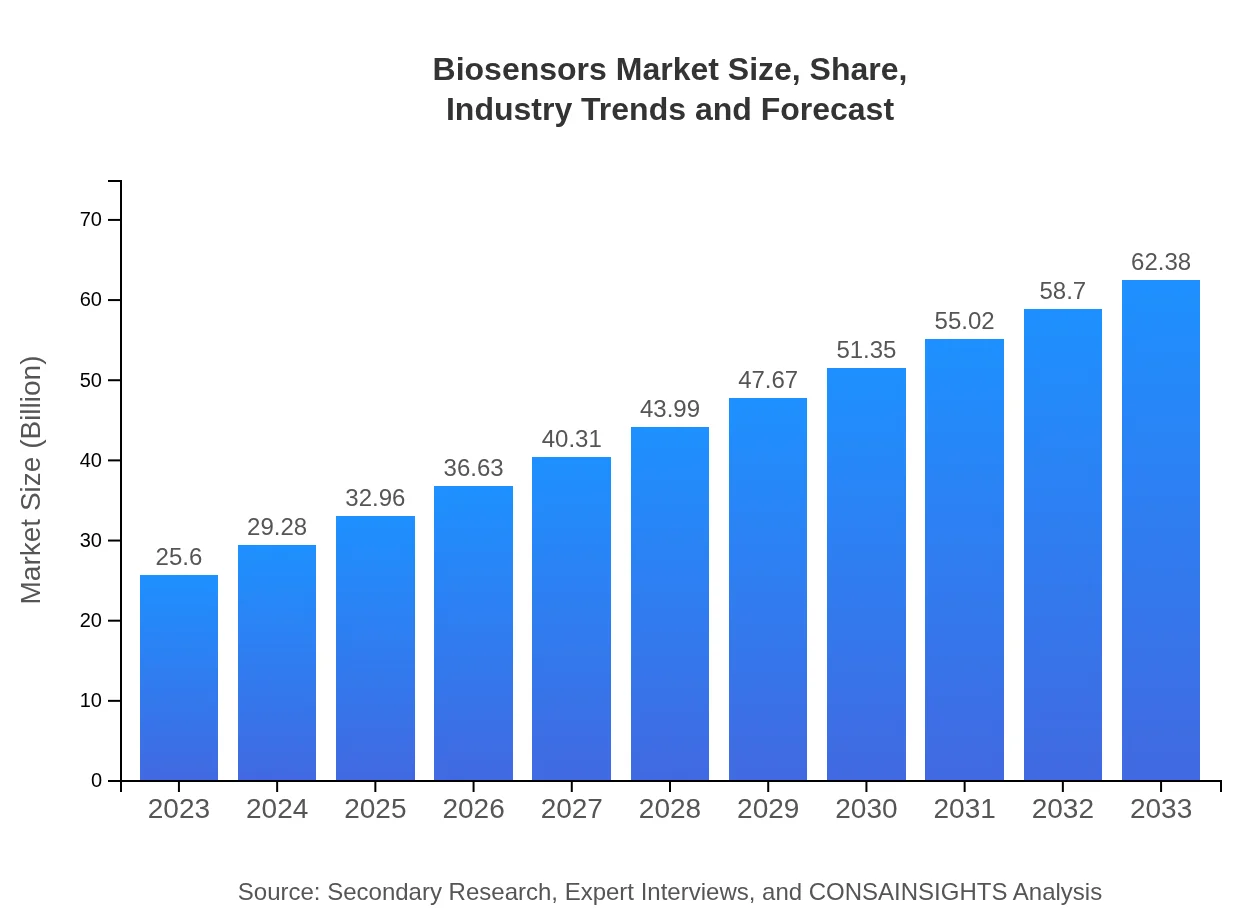
Biosensors Market — USD 25.6 billion in 2023, Growing to USD 62.38B by 2033 at 9% CAGR
This report presents an in-depth analysis of the biosensors market, encapsulating market trends, size estimates, and forecasts from 2023 to 2033. It also delves into key segments, regional insights, leading companies, and technological advancements affecting the industry.
Key Takeaways
- Global market expands from $25.60 Billion in 2023 to $62.38 Billion in 2033, with a 9% CAGR over 2023 to 2033.
- North America is largest regional market, while no single fastest-growing region is stated because regional CAGR differences remain within 0.15 percentage points.
- Europe grows from $7.58 Billion to $18.46 Billion between 2023 and 2033, reflecting strong adoption across medical and research applications.
- Asia Pacific rises from $4.73 Billion in 2023 to $11.52 Billion in 2033, supported by expanding diagnostic and environmental monitoring needs.
- Top firms covered include Abbott Laboratories, Medtronic, Bio-Rad Laboratories and Roche Diagnostics.
Biosensors Market Report — Executive Summary
North America remains largest market by forecast-period value, while no single fastest-growing region is stated because top regional growth rates are separated by less than 0.15 percentage points. This report examines the biosensors market dynamics and forecasts a rise from $25.60 Billion in 2023 to $62.38 Billion by 2033 at a 9% CAGR for the 2023 to 2033 period. Growth is driven by rising demand for rapid diagnostics, expanded environmental and food-safety monitoring, and integration of smart sensing technologies. North America remains largest market by forecast-period value, while no single fastest-growing region is stated because top regional growth rates are separated by less than 0.15 percentage points. The study profiles key participants such as Abbott Laboratories, Medtronic, Bio-Rad Laboratories and Roche Diagnostics, and evaluates segments by type, technology, application and end-use. Research combines expert interviews, company literature and triangulated data to present trend-led insights that support strategic planning and market entry decisions.
Key Growth Drivers
- Increased demand for point-of-care and rapid diagnostic tools supporting healthcare prevention and chronic disease monitoring.
- Greater deployment of biosensors for environmental monitoring and food safety, expanding non-clinical end-use opportunities.
- Advances in smart sensing and integration with wireless systems improving usability and remote data collection.
- Rising investment from medical and pharmaceutical sectors to support development and commercialization of novel sensor platforms.
- Collaborations between research institutions and industry accelerating innovation and product introductions.
| Metric | Value |
|---|---|
| Study Period | 2023 - 2033 |
| 2023 Market Size | $25.60 Billion |
| CAGR (2023-2033) | 9% |
| 2033 Market Size | $62.38 Billion |
| Top Companies | Abbott Laboratories, Medtronic , Bio-Rad Laboratories, Roche Diagnostics |
| Published Date | 15 October 2024 |
| Last Modified Date | 25 May 2026 |
Biosensors Market Overview
Customize Biosensors Market Report market research report
- ✔ Get in-depth analysis of Biosensors market size, growth, and forecasts.
- ✔ Understand Biosensors's regional dynamics and industry-specific trends.
- ✔ Identify potential applications, end-user demand, and growth segments in Biosensors
What is the Market Size & CAGR of Biosensors Market Report market in 2023?
Biosensors Industry Analysis
Biosensors Market Segmentation and Scope
Tell us your focus area and get a customized research report.
Biosensors Market Report Market Analysis Report by Region
Europe Biosensors Market Report:
Europe grows from $7.58 Billion in 2023 to $18.46 Billion in 2033. Regional expansion is supported by healthcare modernization, regulatory approvals for diagnostics and growing deployment in environmental and food-safety monitoring.Asia Pacific Biosensors Market Report:
Asia Pacific grows from $4.73 Billion in 2023 to $11.52 Billion in 2033. Growth drivers include expanding diagnostic services, rising public health initiatives and increasing adoption of smart sensing technologies in diverse markets.North America Biosensors Market Report:
North America is largest regional market, rising from $9.57 Billion in 2023 to $23.33 Billion in 2033. The region’s scale reflects intensive clinical use, research investment and commercial activity that support diagnostics, wearable sensors and laboratory applications.South America Biosensors Market Report:
Latin America grows from $2.3 Billion in 2023 to $5.6 Billion in 2033. Regional demand is linked to improving healthcare infrastructure, increased focus on food safety and gradual uptake of point-of-care diagnostic solutions.Middle East & Africa Biosensors Market Report:
Middle East and Africa grows from $1.43 Billion in 2023 to $3.47 Billion in 2033. Adoption is influenced by investments in healthcare systems, environmental monitoring needs and growing interest in diagnostic and research capabilities.Tell us your focus area and get a customized research report.
Research Methodology
Biosensors Market Analysis By Type
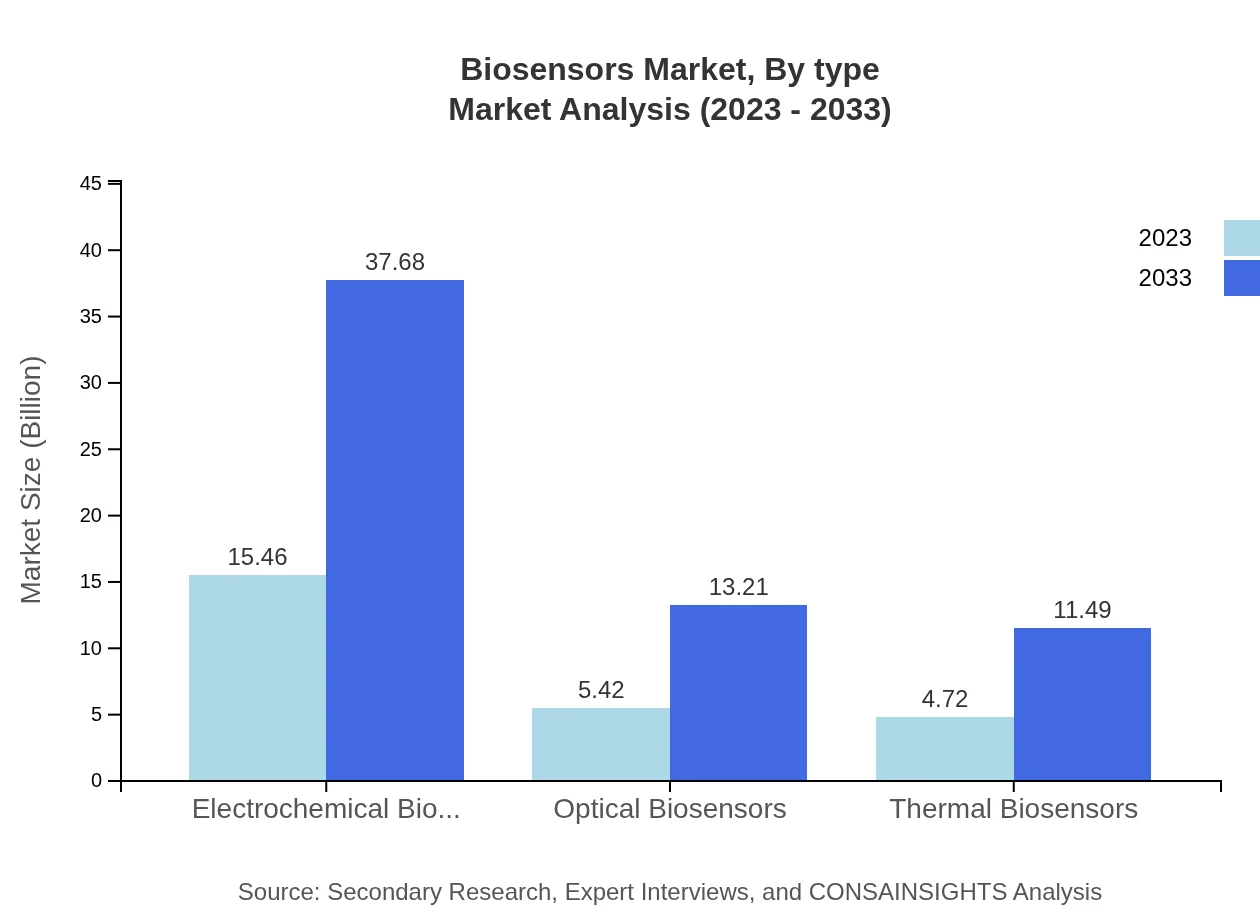
The biosensors market can be categorized into several types, including: - Electrochemical Biosensors: $15.46 billion in 2023, projected to reach $37.68 billion by 2033. Dominates the market due to extensive use in clinical diagnostics. - Optical Biosensors: Expected to grow from $5.42 billion to $13.21 billion in the same period, significant for its applications in environmental monitoring. - Thermal Biosensors: From $4.72 billion in 2023 to approximately $11.49 billion by 2033, primarily used in various clinical and research applications. - Traditional Biosensors: Forecasted to grow from $21.15 billion to $51.53 billion, maintaining a dominant share of 82.6% owing to their established presence in medical diagnostics. - Smart Biosensors: Growth anticipated from $4.45 billion to $10.85 billion, driven by innovations in wearable technologies.
Biosensors Market Analysis By Application
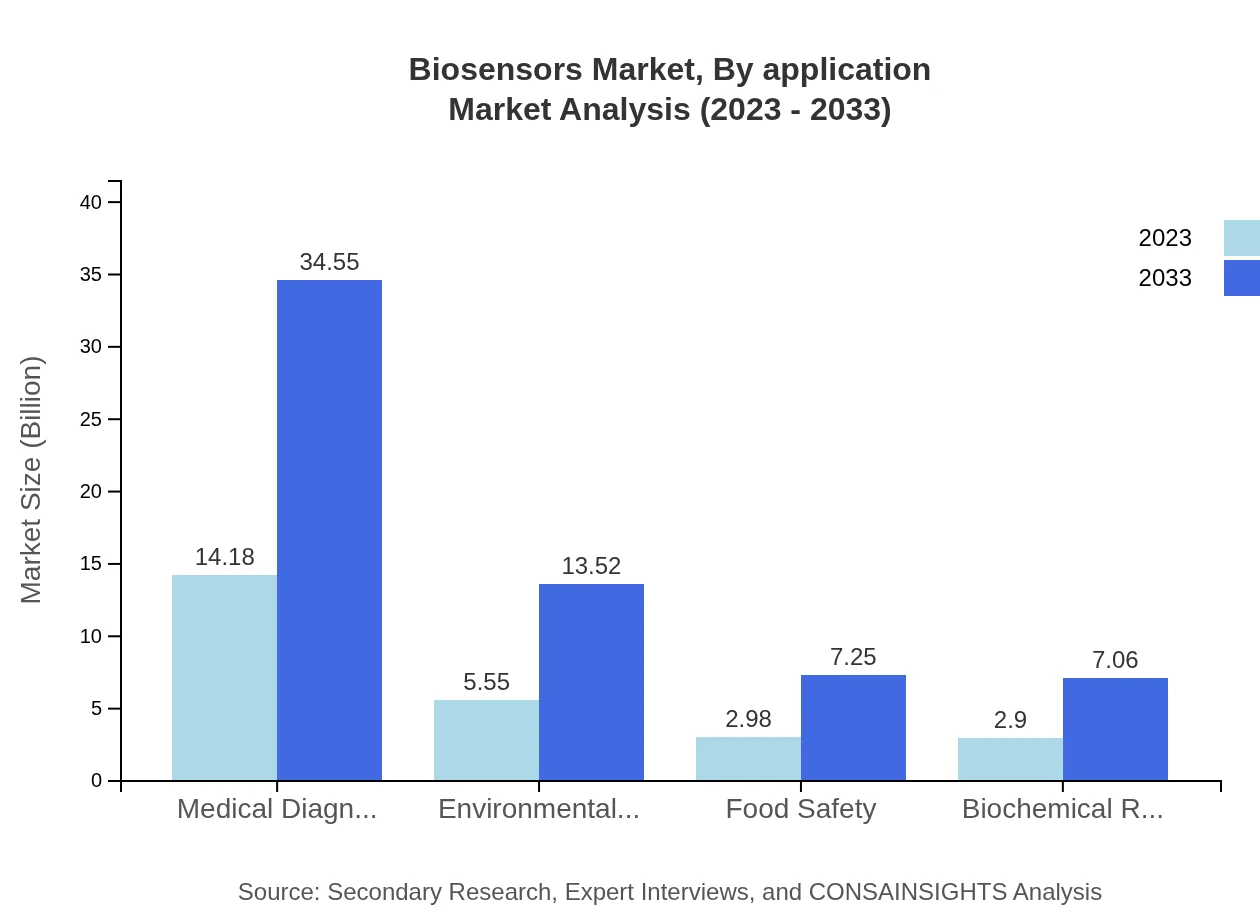
The applications of biosensors are broad-ranging, including: - Medical Diagnostics: $14.18 billion in 2023 to $34.55 billion by 2033, with a significant focus on point-of-care testing. - Environmental Monitoring: Expected to expand from $5.55 billion to $13.52 billion, highlighting the necessity for pollution control and food safety standards. - Food Safety: Projected to grow from $2.98 billion to $7.25 billion, driven by increasing consumer awareness regarding food quality.
Biosensors Market Analysis By End Use Industry
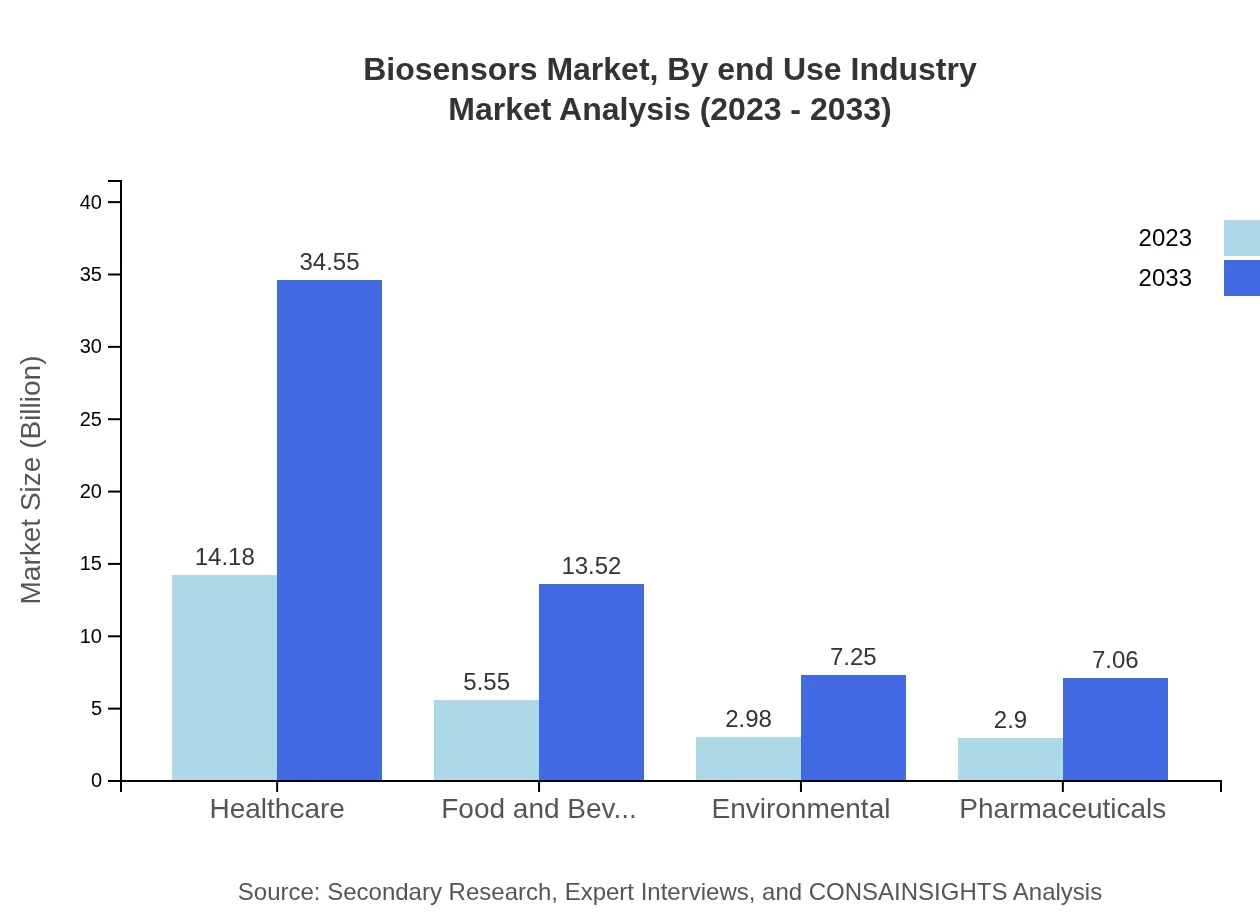
Biosensors find applications across diverse industries such as: - Healthcare: The segment valued at $14.18 billion in 2023, expected to increase to $34.55 billion. - Pharmaceuticals: Projected to grow from $2.90 billion to $7.06 billion, with increased focus on drug delivery systems. - Food and Beverage: Anticipated growth from $5.55 billion to $13.52 billion, driven by strict regulatory compliance and consumer safety.
Biosensors Market Analysis By Technology
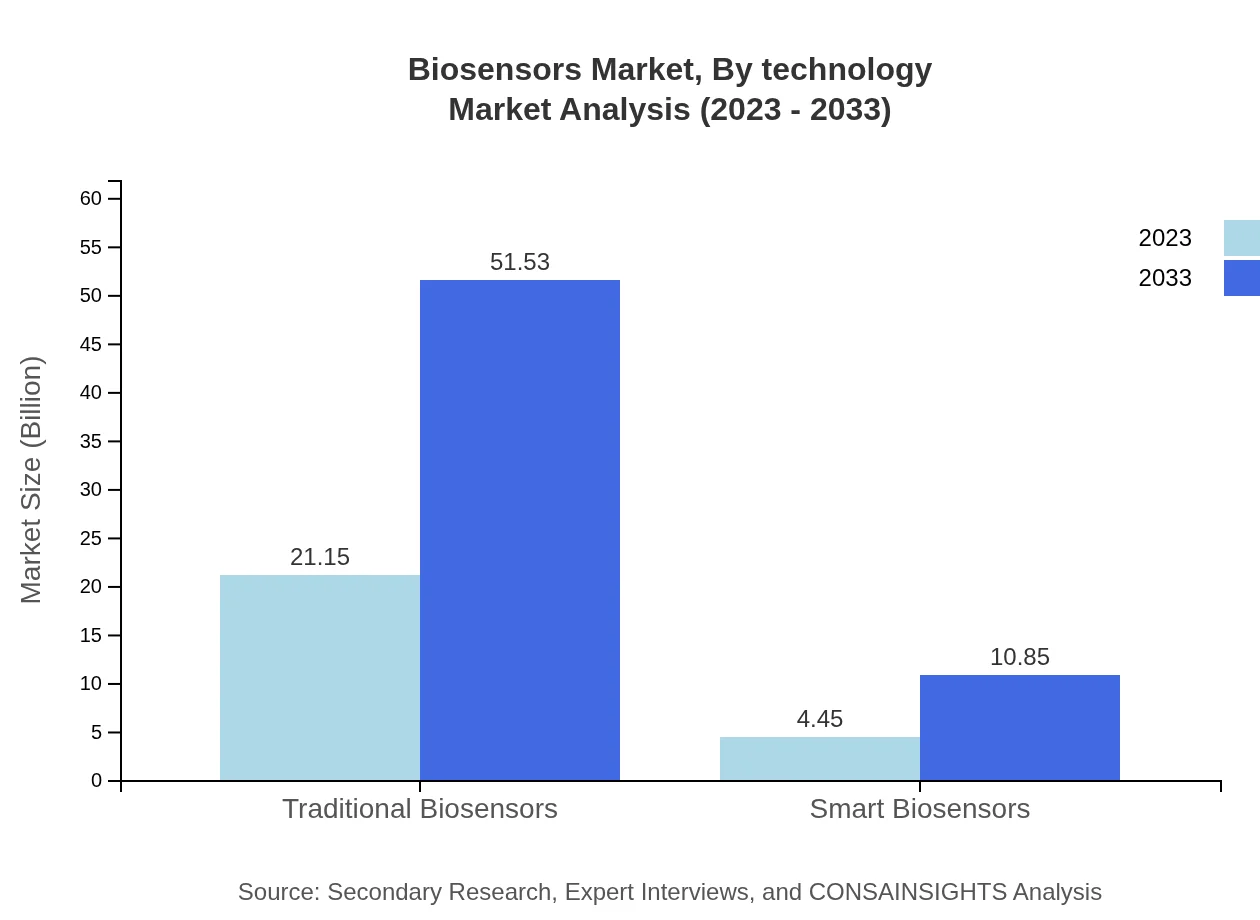
Technological advancements remain the backbone of the biosensors market, categorized into: - Electrochemical Biosensors maintaining a stronghold with a market share of 60.41%. - Optical Biosensors and their advances in detection sensitivity are accounting for approximately 21.17% market share. - Thermal Biosensors hold 18.42%, focusing on precise thermal measurements in assays.
Biosensors Market Analysis By Region
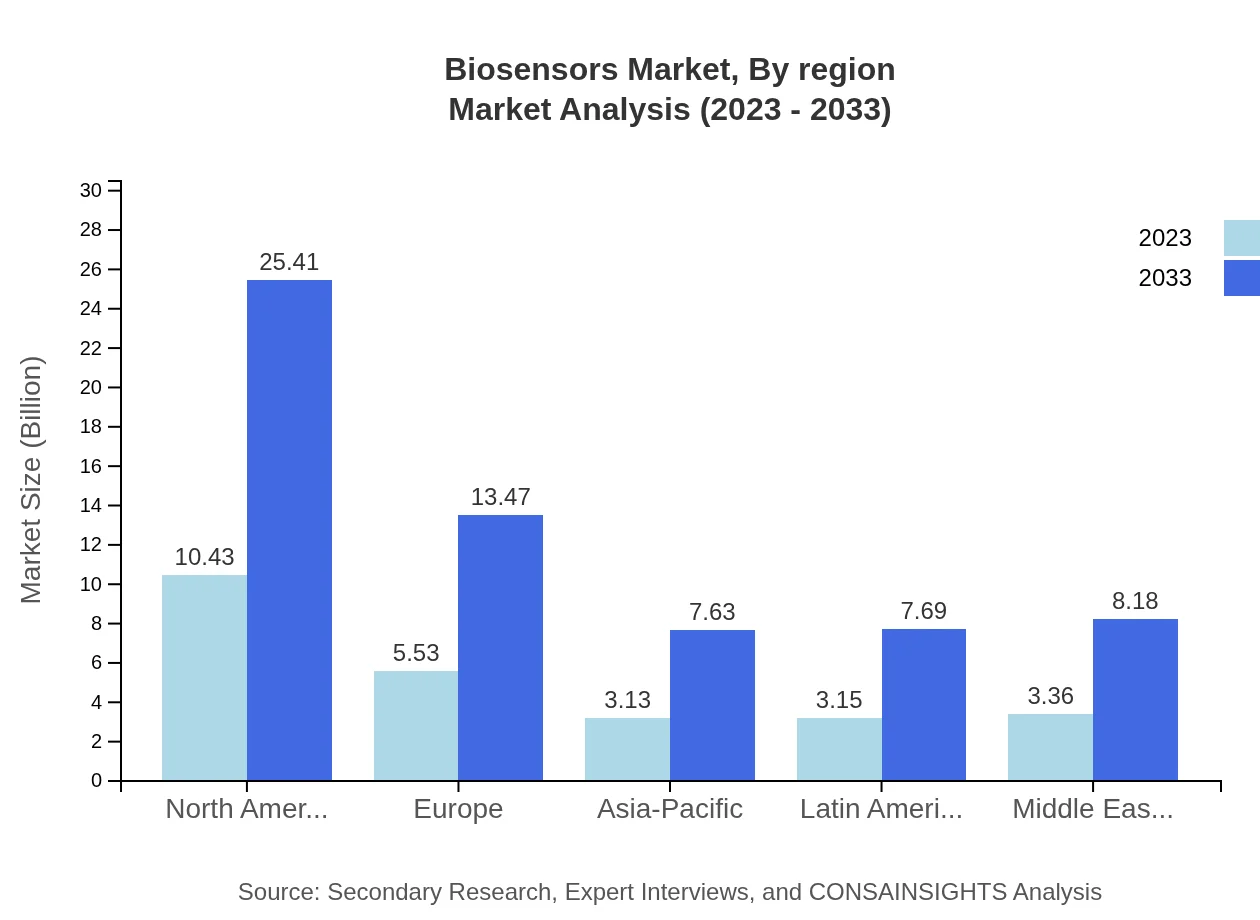
Regionally, the biosensors market shows varied growth rates: North America displays the largest share at 40.74%, with Europe at 21.59% and Asia-Pacific at 12.23% based on market value. Companies are increasingly exploring growth opportunities in emerging markets, led by technological innovations and rising healthcare demands.
Biosensors Market Trends and Future Forecast
Tell us your focus area and get a customized research report.
Global Market Leaders and Top Companies in Biosensors Industry
Abbott Laboratories:
A leader in the healthcare space, Abbott focuses on advancing medical diagnostics through innovative biosensing technologies, enabling rapid disease detection.Medtronic :
Known for its pioneering technologies in the medical field, Medtronic significantly contributes to the biosensors industry with its cutting-edge glucose monitoring systems.Bio-Rad Laboratories:
Global leader in biotechnology, Bio-Rad develops advanced biosensors for research and clinical diagnostics, enhancing the accuracy of testing methodologies.Roche Diagnostics:
Roche provides innovative diagnostic solutions, and its biosensor systems are integral to personalized medicine, helping in timely interventions for various health conditions.We're grateful to work with incredible clients.









FAQs
What is the market size of the biosensors market in 2023?
The market size for biosensors in 2023 is $25.60 Billion, as reported in the input data for the 2023 baseline year.
How big will the biosensors market be in 2033?
By 2033 the biosensors market is projected to reach $62.38 Billion according to the provided forecast figures for the period 2023 to 2033.
What is CAGR of the biosensors market for the forecast period?
The compound annual growth rate (CAGR) for the biosensors market over the 2023 to 2033 forecast period is 9%, per the supplied data.
Is there a single fastest Growing region in the Biosensors Market Report market?
No single fastest-growing region is stated for the Biosensors Market Report market because the top regional implied CAGR values are within 0.15 percentage points of each other, making the ranking too close to call reliably.
Which companies are listed as key players in the report?
Top companies named in the report include Abbott Laboratories, Medtronic, Bio-Rad Laboratories and Roche Diagnostics as principal industry participants.
What are primary applications highlighted for biosensors?
Primary applications include medical diagnostics, environmental monitoring, food safety and biochemical research, as listed among the report subsegments.
How was the market research conducted?
Research included primary interviews with industry experts, secondary review of company reports and publications, data triangulation and internal validation.
What segmentation dimensions are covered in the report?
Segmentation covers type, technology, application, end-use industry and region, with subsegments identified for detailed market breakdown.