

Cell Surface Markers Detection Market Report
First published: 15 October 2024 | Last updated: 28 May 2026 | Report Code: cell-surface-markers-detection
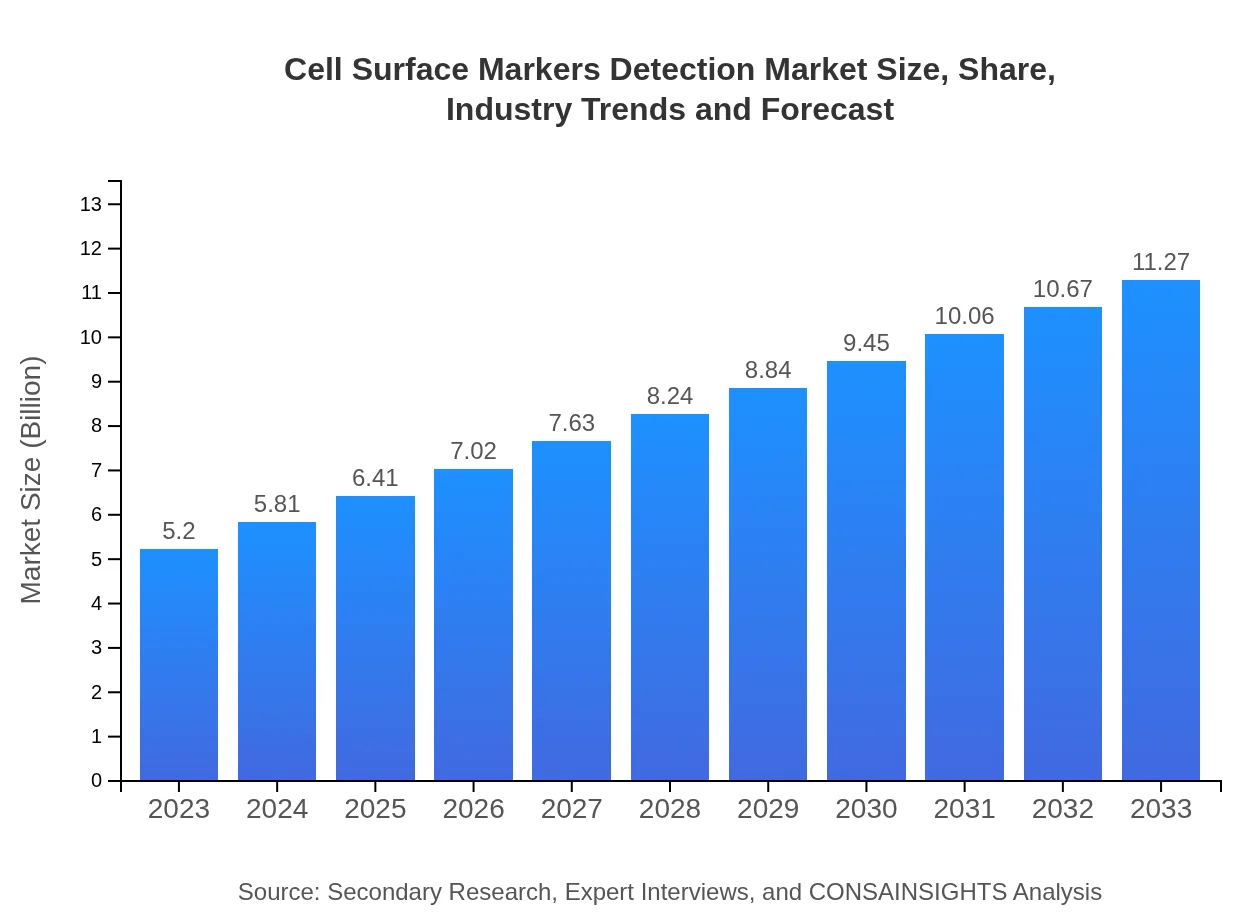
Cell Surface Markers Detection Market — USD 5.2 billion in 2023, Growing to USD 11.27B by 2033 at 7.8% CAGR
This report delves into the Cell Surface Markers Detection market, providing insights into size, growth trends, and forecasts from 2023 to 2033, as well as comprehensive analyses of key segments and regional performance.
Key Takeaways
- Global market projected to grow from $5.20 Billion in 2023 to $11.27 Billion in 2033 at a 7.8% CAGR.
- North America is largest regional market; Latin America is regional market region based on implied CAGR across 2023 to 2033.
- Latin America is identified as the regional market region, rising from $0.09 Billion in 2023 to $0.2 Billion in 2033.
- Europe and Asia Pacific show substantial expansion: Europe from $1.59 Billion to $3.45 Billion, Asia Pacific from $0.96 Billion to $2.09 Billion.
- Key vendors include Thermo Fisher Scientific, BD Biosciences, Merck KGaA, and Beckman Coulter, serving diagnostics and research markets.
Cell Surface Markers Detection Market Report — Executive Summary
Regional analysis shows North America as largest market and Latin America as fastest-growing region by implied CAGR. The Cell Surface Markers Detection market is driven by technological improvements in detection techniques and rising demand for targeted therapies and personalized diagnostics. Market size grows from $5.20 Billion in 2023 to $11.27 Billion in 2033 at a 7.8% CAGR, reflecting adoption across research and clinical settings. Regional dynamics highlight North America as the largest market and Latin America as the regional market region. Segmentation spans technologies such as flow cytometry, mass cytometry, and immunohistochemistry, with end users including academic institutes, hospitals, biotechnology and pharmaceutical companies, and contract research organizations. Reagents, instruments, and consumables form the primary product classes supporting laboratory workflows. Competitive activity involves established firms—Thermo Fisher Scientific, BD Biosciences, Merck KGaA, and Beckman Coulter—focusing on product innovation and service integration. The report synthesizes primary interviews, company disclosures, and secondary literature to map trends, regional patterns, and opportunities for stakeholders in diagnostics and research markets.
Key Growth Drivers
- Advances in detection technologies improving sensitivity and throughput for marker identification.
- Growing emphasis on personalized medicine and targeted therapies increasing demand for precise cell-surface profiling.
- Expansion of research activities in academic and industry labs fueling purchases of reagents, instruments, and consumables.
- Rising prevalence of chronic and oncological diseases driving diagnostic and biomarker discovery efforts.
- Broader adoption of automated and high-content analysis platforms in clinical and research settings.
| Metric | Value |
|---|---|
| Study Period | 2023 - 2033 |
| 2023 Market Size | $5.20 Billion |
| CAGR (2023-2033) | 7.8% |
| 2033 Market Size | $11.27 Billion |
| Top Companies | Thermo Fisher Scientific, BD Biosciences, Merck KGaA, Beckman Coulter |
| Published Date | 15 October 2024 |
| Last Modified Date | 28 May 2026 |
Cell Surface Markers Detection Market Overview
Customize Cell Surface Markers Detection Market Report market research report
- ✔ Get in-depth analysis of Cell Surface Markers Detection market size, growth, and forecasts.
- ✔ Understand Cell Surface Markers Detection's regional dynamics and industry-specific trends.
- ✔ Identify potential applications, end-user demand, and growth segments in Cell Surface Markers Detection
What is the Market Size & CAGR of Cell Surface Markers Detection Market Report market in 2023?
Cell Surface Markers Detection Industry Analysis
Cell Surface Markers Detection Market Segmentation and Scope
Tell us your focus area and get a customized research report.
Cell Surface Markers Detection Market Report Market Analysis Report by Region
Europe Cell Surface Markers Detection Market Report:
Europe grows from $1.59 Billion in 2023 to $3.45 Billion in 2033. Growth is underpinned by robust research programs, clinical trial activity, and uptake of technologies such as flow cytometry and immunohistochemistry in diagnostics and biomarker studies.Asia Pacific Cell Surface Markers Detection Market Report:
Asia Pacific grows from $0.96 Billion in 2023 to $2.09 Billion in 2033. Regional momentum reflects increasing research capacity, rising healthcare investment, and broader application of cell analysis techniques in both academic and industry settings.North America Cell Surface Markers Detection Market Report:
North America is largest regional market, rising from $1.89 Billion in 2023 to $4.09 Billion in 2033. Expansion is fueled by established clinical research infrastructure, high adoption of advanced detection platforms, and significant investment in diagnostics and targeted therapy development.South America Cell Surface Markers Detection Market Report:
Latin America is fastest-growing region by implied CAGR, increasing from $0.09 Billion in 2023 to $0.2 Billion in 2033. The region is noted as the fastest-growing market, supported by expanding research initiatives and growing demand for diagnostic and biomarker discovery capabilities.Middle East & Africa Cell Surface Markers Detection Market Report:
Middle East and Africa grows from $0.67 Billion in 2023 to $1.45 Billion in 2033. Growth drivers include strengthening research institutions, increased healthcare spending, and adoption of modern laboratory technologies.Tell us your focus area and get a customized research report.
Research Methodology
Cell Surface Markers Detection Market Analysis By Technology
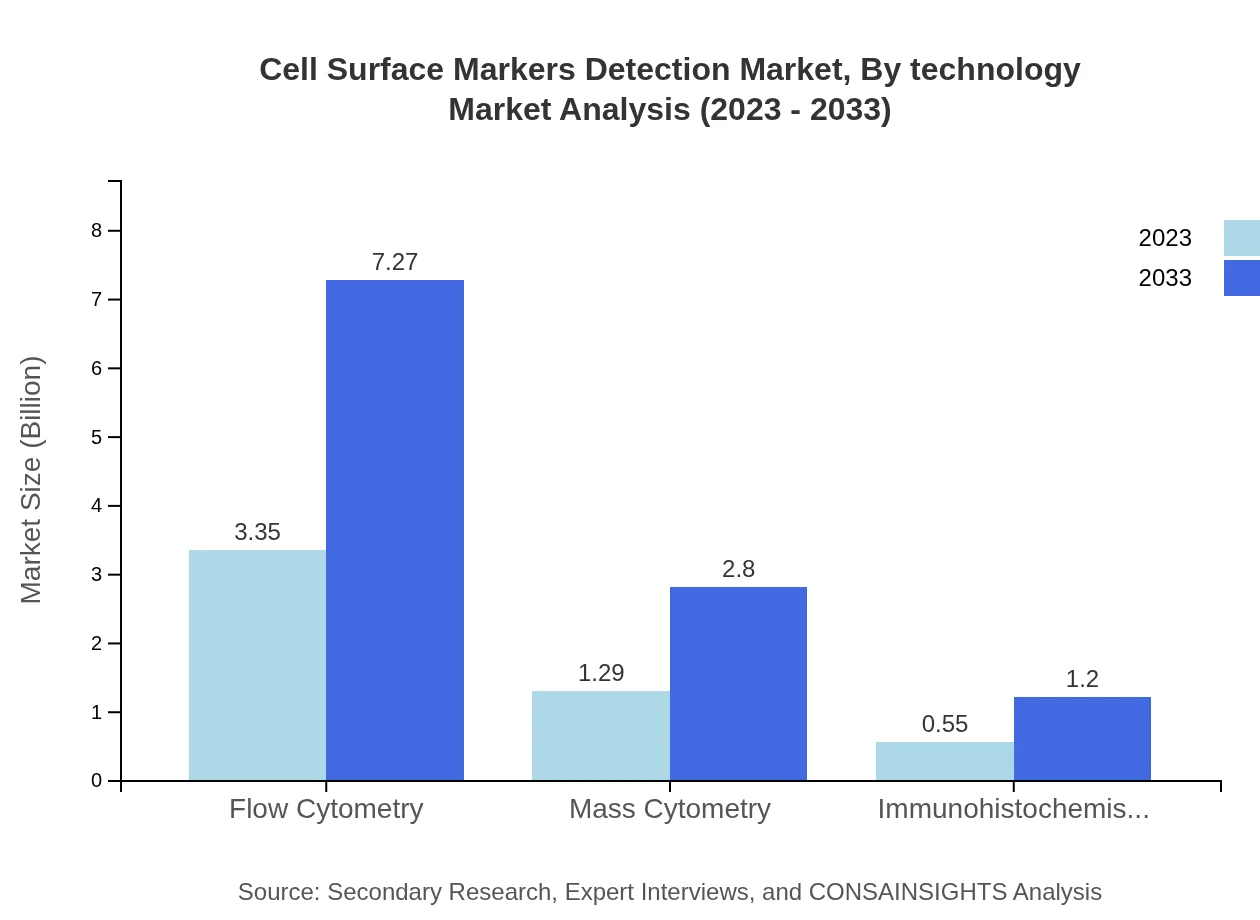
Technologies like Flow Cytometry and Mass Cytometry dominate the market. Flow Cytometry is particularly popular due to its high throughput and accuracy, representing around 64.49% market share in 2023. Mass Cytometry offers advanced capabilities, garnering a substantial market segment for more complex analyses.
Cell Surface Markers Detection Market Analysis By Application
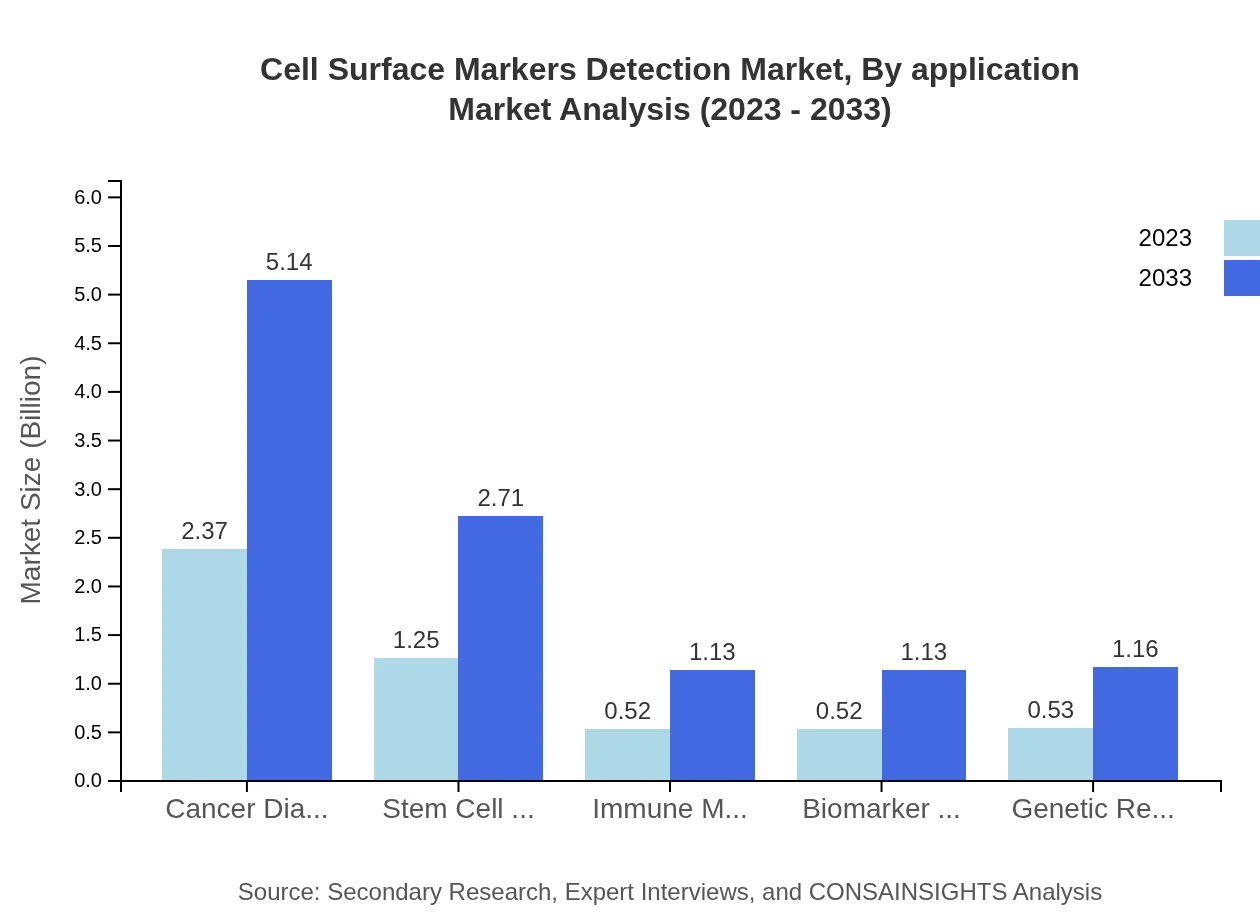
Among applications, Cancer Diagnosis is notably prominent, expected to account for 45.61% of the market share in 2023. Stem Cell Research follows closely with significant investment in biologic therapies, reflecting growing interest and funding in regenerative medicine.
Cell Surface Markers Detection Market Analysis By End User
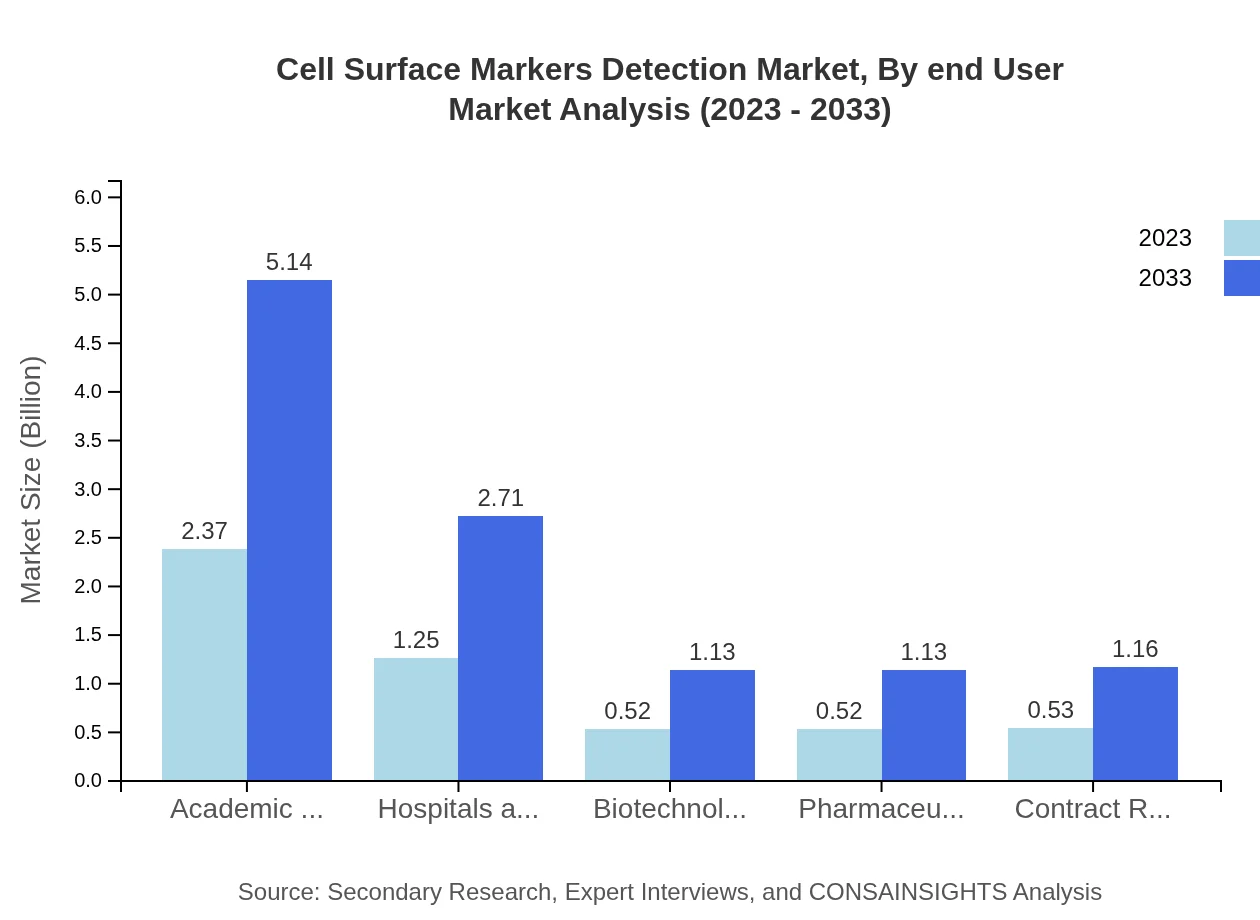
Academic Research Institutes represent a substantial user segment in the market, expected to hold around 45.61% in 2023, reflecting the significant reliance on advanced detection technologies for research purposes. Hospitals and clinics also represent a critical segment, focusing on diagnostic applications.
Cell Surface Markers Detection Market Analysis By Region And Market Type
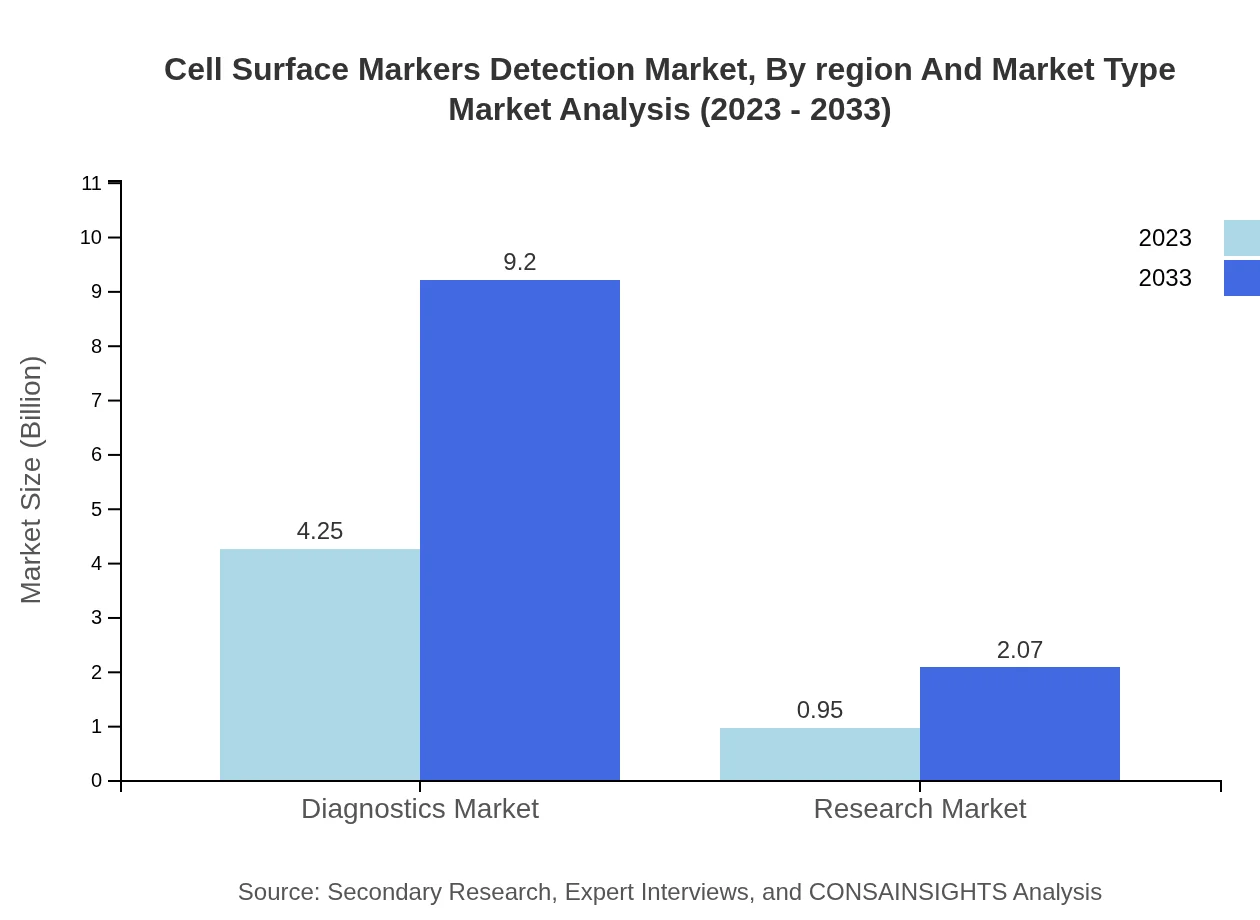
The analysis of market types across various regions highlights North America as the largest market, driven by advanced healthcare systems, while Asia Pacific is emerging rapidly due to increased research funding and healthcare investments.
Cell Surface Markers Detection Market Trends and Future Forecast
Tell us your focus area and get a customized research report.
Global Market Leaders and Top Companies in Cell Surface Markers Detection Industry
Thermo Fisher Scientific:
A global leader in serving science, Thermo Fisher specializes in developing advanced tools and technologies for the life sciences, including products for cell surface marker detection.BD Biosciences:
BD Biosciences is renowned for its flow cytometry and cell analysis products, providing innovative solutions for researchers and healthcare professionals in cell surface marker analysis.Merck KGaA:
Merck KGaA, Darmstadt, Germany, offers a wide range of products for biomolecular research, including high-quality reagents for cell surface marker detection, contributing significantly to the market growth.Beckman Coulter:
Beckman Coulter provides a range of laboratory instruments and reagents that are widely used in clinical laboratories and research settings for cell analysis and diagnostics.We're grateful to work with incredible clients.









FAQs
What is the market size of the Cell Surface Markers Detection Market Report in 2023?
The market size in 2023 is $5.20 Billion, based on the report's reported valuation for the global Cell Surface Markers Detection market in that year.
How big will the market be in 2033?
By 2033 the market is projected to reach $11.27 Billion, reflecting growth across diagnostic and research applications over the forecast period.
What is CAGR for the forecast period?
The report states a compound annual growth rate (CAGR) of 7.8% for the 2023 to 2033 forecast period across the global market.
Which region is the fastest Growing in the Cell Surface Markers Detection Market Report market?
Latin America is the fastest-growing region, projected to expand from $0.09 Billion in 2023 to $0.2 Billion in 2033, reflecting an implied 8.31% CAGR over the forecast period.
Which region is the fastest Growing?
Latin America is cited as the regional market region, increasing from $0.09 Billion in 2023 to $0.2 Billion in 2033 at an implied 8.31% CAGR.
Who are the top companies in this market?
Top companies named include Thermo Fisher Scientific, BD Biosciences, Merck KGaA, and Beckman Coulter, which supply instruments, reagents, and related services.
What applications drive demand for cell surface marker detection?
Applications such as cancer diagnosis, stem cell research, immune mapping, biomarker discovery, and genetic research are cited as primary uses driving demand.
Which product categories are covered in the market?
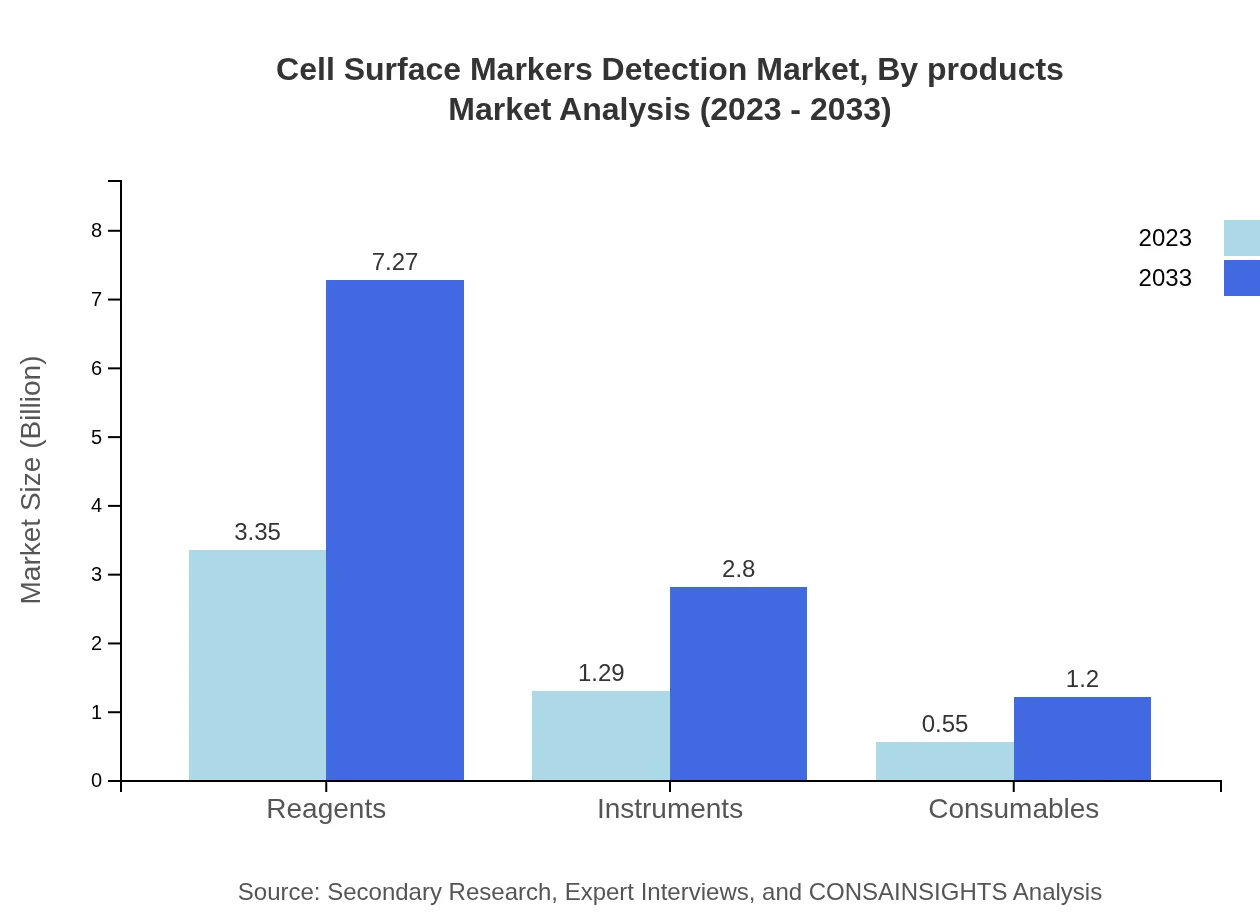
The report covers reagents, instruments, and consumables as the principal product categories supporting detection workflows in diagnostics and research.
What are the common end users for these technologies?
End users include academic research institutes, hospitals and clinics, biotechnology companies, pharmaceutical companies, and contract research organizations.
How are regional markets segmented by market type?
Regional segmentation includes Diagnostics Market and Research Market classifications, reflecting clinical and investigational demand patterns.