

Hair Restoration Market Report
First published: 15 October 2024 | Last updated: 25 May 2026 | Report Code: hair-restoration
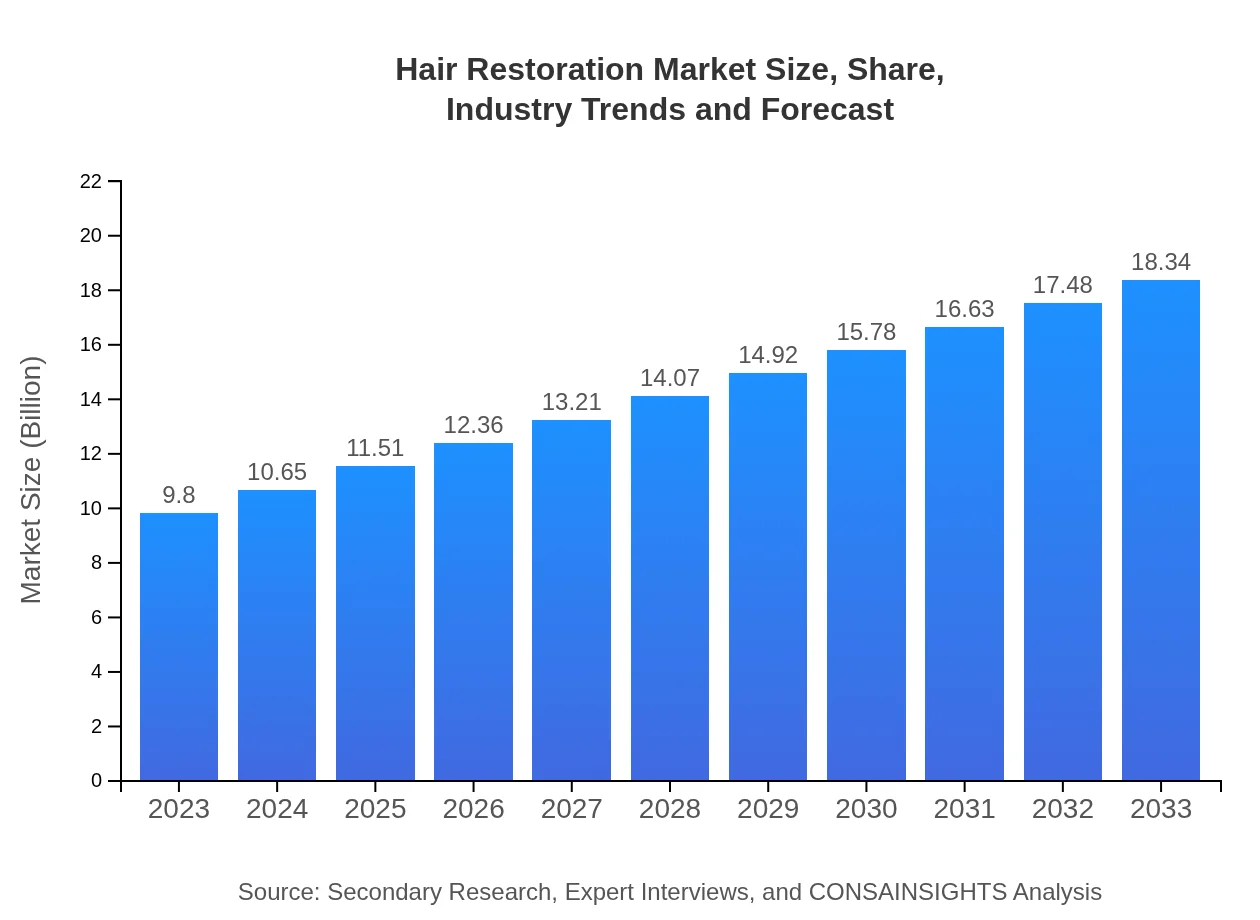
Hair Restoration Market — USD 9.8 billion in 2023, Growing to USD 18.34B by 2033 at 6.3% CAGR
This report provides a comprehensive analysis of the Hair Restoration market, highlighting trends, opportunities, and insights from 2023 to 2033. It includes data on market size, growth rates, regional analysis, and key players in the industry.
Key Takeaways
- Global market expands from $9.80 Billion in 2023 to $18.34 Billion in 2033 at a 6.3% CAGR.
- North America is largest regional market, while no single fastest-growing region is stated because regional CAGR differences remain within 0.15 percentage points.
- Europe grows from $2.83 Billion in 2023 to $5.29 Billion in 2033, driven by procedural adoption and clinical advancements.
- Robotic systems, non-surgical therapies, and online channels are notable sub-segments shaping offerings and access.
- Top companies include Bosley, HairClub, DHI Global Medical Group, and L’Oreal, reflecting a mix of clinical and consumer-facing players.
Hair Restoration Market Report — Executive Summary
North America remains largest market by forecast-period value, while no single fastest-growing region is stated because top regional growth rates are separated by less than 0.15 percentage points. The report outlines the Hair Restoration market’s trajectory through 2033, with the global market increasing from $9.80 Billion in 2023 to $18.34 Billion by 2033 at a 6.3% CAGR. Growth is supported by technology improvements, rising consumer awareness, and broader acceptance of aesthetic procedures. The market structure covers technology types, product categories, treatment methods, distribution channels, and demographic targets, identifying surgical, non-surgical and extension offerings alongside robotic and non-robotic systems. Regional dynamics feature North America as the largest market. The competitive landscape profiles Bosley, HairClub, DHI Global Medical Group, and L’Oreal. Methodology combines expert interviews, company documentation, and triangulated data validation to ensure reliable insights for strategic planning.
Key Growth Drivers
- Advances in restoration technologies improving procedure outcomes and reducing recovery time.
- Growing consumer awareness and social acceptance of aesthetic interventions across broader age groups.
- Expansion of minimally invasive and non-surgical options increasing market accessibility and adoption.
- Online channels and digital consultation models widening patient reach and service booking.
- Rising demand from diverse demographics prompting tailored solutions for men, women, and children.
| Metric | Value |
|---|---|
| Study Period | 2023 - 2033 |
| 2023 Market Size | $9.80 Billion |
| CAGR (2023-2033) | 6.3% |
| 2033 Market Size | $18.34 Billion |
| Top Companies | Bosley, HairClub, DHI Global Medical Group, L’Oreal |
| Published Date | 15 October 2024 |
| Last Modified Date | 25 May 2026 |
Hair Restoration Market Overview
Customize Hair Restoration Market Report market research report
- ✔ Get in-depth analysis of Hair Restoration market size, growth, and forecasts.
- ✔ Understand Hair Restoration's regional dynamics and industry-specific trends.
- ✔ Identify potential applications, end-user demand, and growth segments in Hair Restoration
What is the Market Size & CAGR of Hair Restoration Market Report market in 2023?
Hair Restoration Industry Analysis
Hair Restoration Market Segmentation and Scope
Tell us your focus area and get a customized research report.
Hair Restoration Market Report Market Analysis Report by Region
Europe Hair Restoration Market Report:
Europe grows from $2.83 Billion in 2023 to $5.29 Billion in 2033. Growth in the region is driven by increasing procedural uptake, clinical innovation, and rising patient awareness of restoration options.Asia Pacific Hair Restoration Market Report:
Asia Pacific grows from $1.89 Billion in 2023 to $3.54 Billion in 2033. Market development is supported by growing acceptance of aesthetic treatments, younger demographic demand, and expanding availability of less invasive procedures.North America Hair Restoration Market Report:
North America is largest regional market, rising from $3.6 Billion in 2023 to $6.73 Billion in 2033. Regional expansion is linked to higher adoption of advanced procedures, wide clinical networks, and robust consumer demand for restorative solutions.South America Hair Restoration Market Report:
Latin America grows from $0.88 Billion in 2023 to $1.66 Billion in 2033. Regional drivers include improving access to treatments, rising consumer interest in cosmetic procedures, and gradual expansion of clinical services.Middle East & Africa Hair Restoration Market Report:
Middle East and Africa grows from $0.6 Billion in 2023 to $1.13 Billion in 2033. Market stimulus stems from increasing acceptance of aesthetic care, investments in clinical infrastructure, and growing consumer awareness.Tell us your focus area and get a customized research report.
Research Methodology
Hair Restoration Market Analysis By Product Type
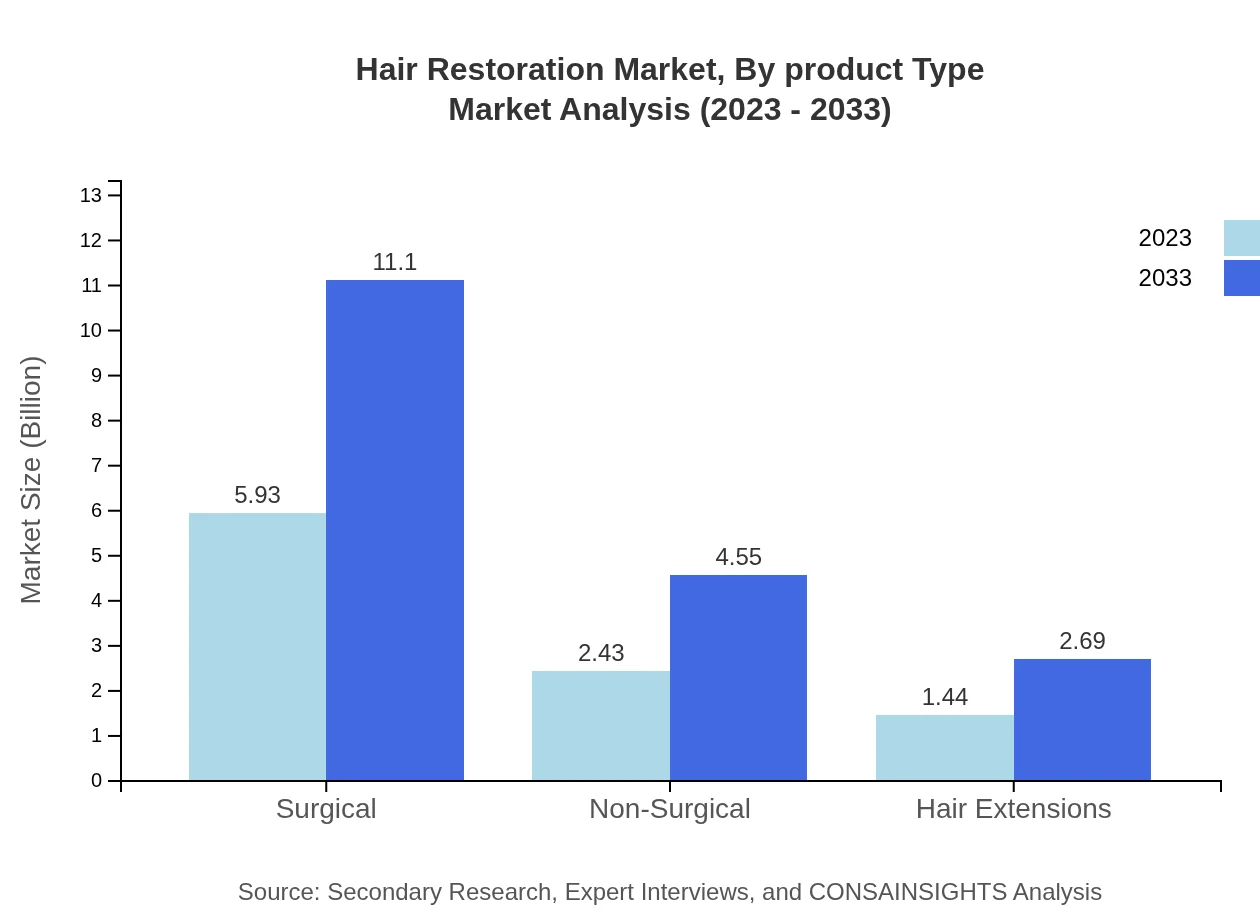
The Hair Restoration market by product type is led by Robotic Systems, which are expected to grow from USD 8.18 billion in 2023 to USD 15.30 billion by 2033, accounting for 83.44% market share in both years. Non-Robotic Devices follow with a smaller share, projecting growth from USD 1.62 billion to USD 3.04 billion. Surgical methods represent a significant portion of the market, expected to rise from USD 5.93 billion to USD 11.10 billion, showcasing a 60.55% share, while Non-Surgical procedures will see growth from USD 2.43 billion to USD 4.55 billion.
Hair Restoration Market Analysis By Consumer Demographics
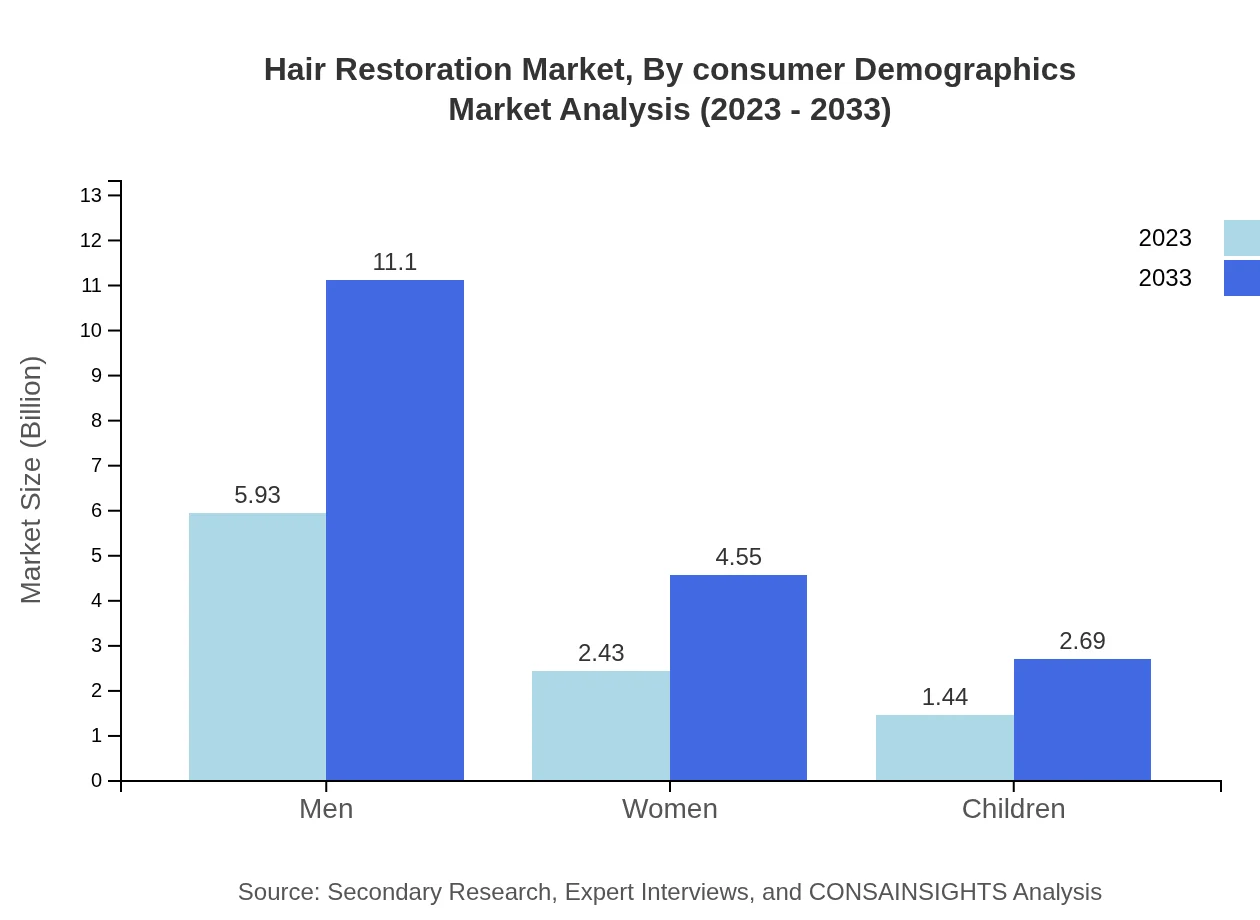
Market segmentation by consumer demographics indicates that men are the primary consumers in this sector, with expenditure growth from USD 5.93 billion in 2023 to USD 11.10 billion by 2033, holding a share of 60.55%. Women will contribute significantly, growing from USD 2.43 billion to USD 4.55 billion, while children represent a smaller but growing segment from USD 1.44 billion to USD 2.69 billion.
Hair Restoration Market Analysis By Treatment Method
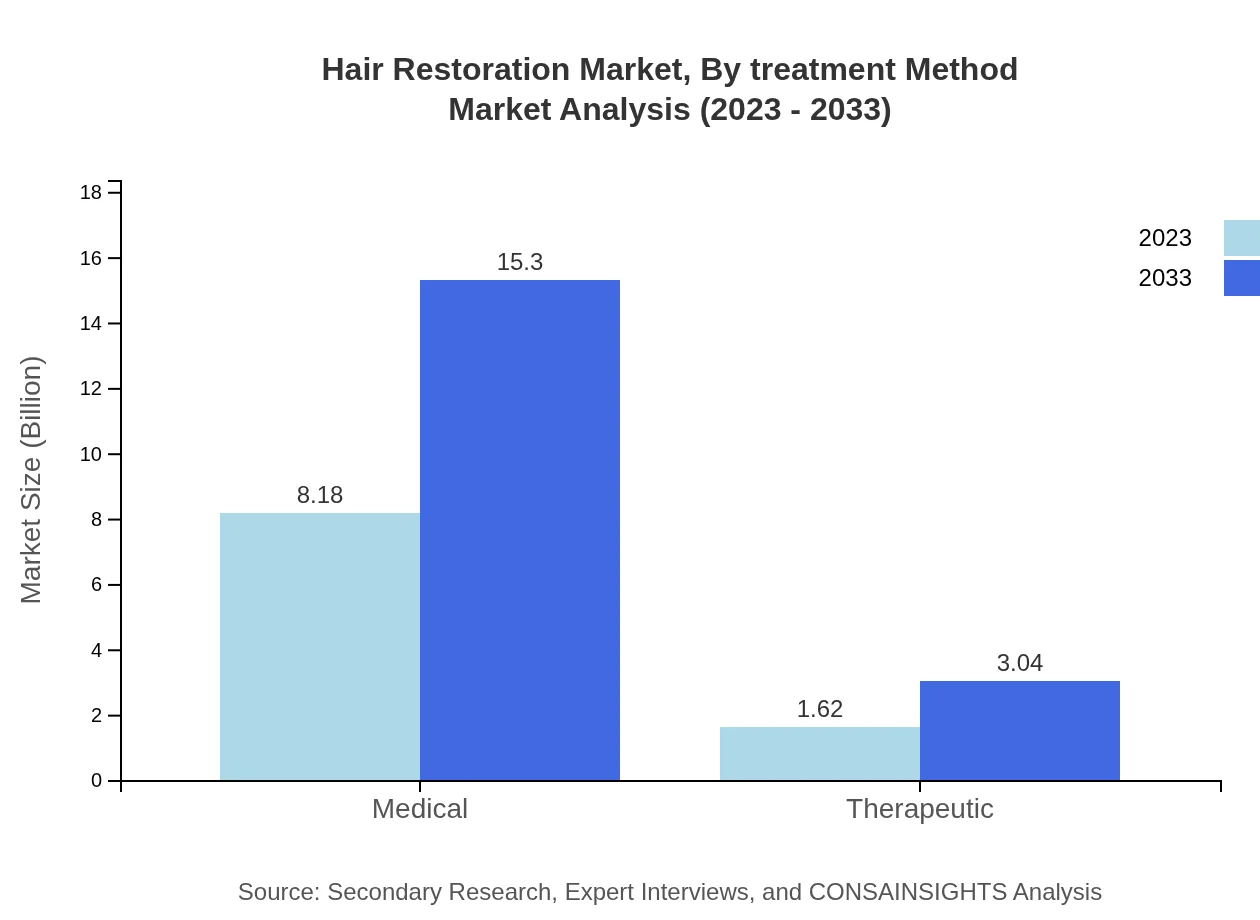
The market by treatment method shows surgical options dominating with expected revenues ramping from USD 5.93 billion to USD 11.10 billion. Non-surgical alternatives are rising in popularity, with a projected increase from USD 2.43 billion to USD 4.55 billion, addressing consumer concerns who are not ready for invasive procedures.
Hair Restoration Market Analysis By Market Channel
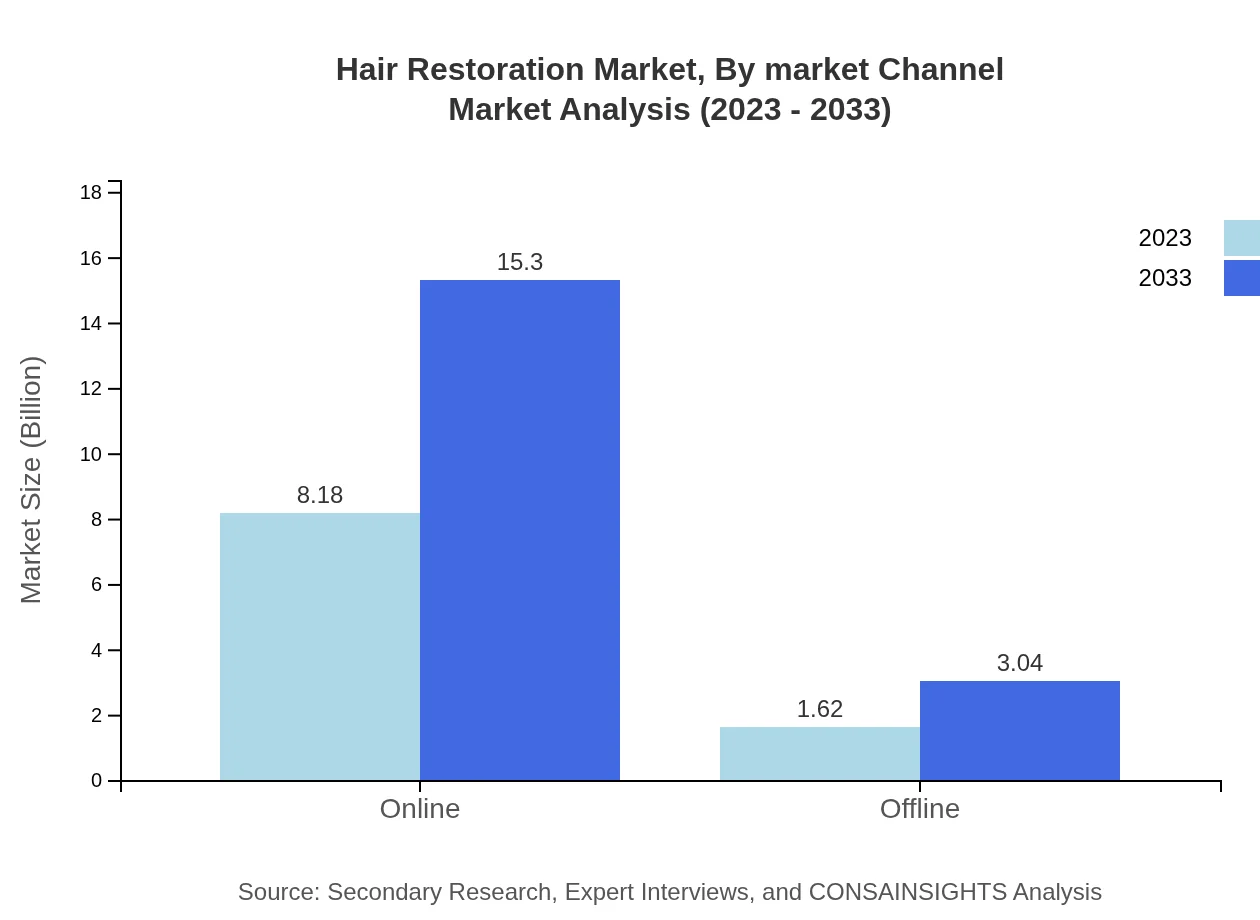
Online distribution channels for Hair Restoration solutions are leading, anticipated to grow from USD 8.18 billion to USD 15.30 billion, retaining around 83.44% of the market share. Offline channels also see growth, from USD 1.62 billion to USD 3.04 billion, reflecting the importance of traditional retail in product distribution.
Hair Restoration Market Analysis By Technology
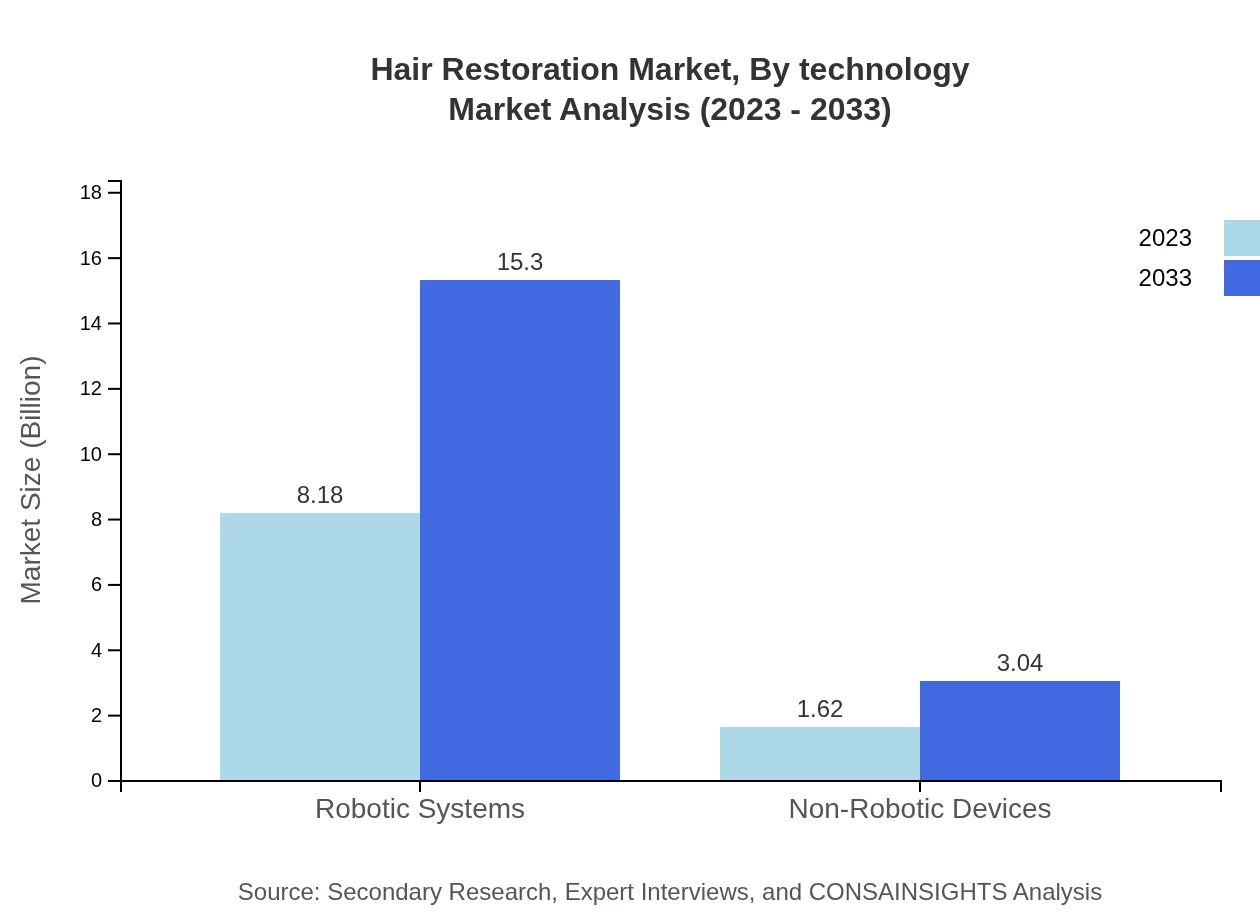
The technological advancements in the Hair Restoration market are particularly evident in robotic systems, expanding from USD 8.18 billion to USD 15.30 billion in the upcoming decade. This growth reflects innovations aimed at enhancing precision in hair restoration procedures and improving patient satisfaction.
Hair Restoration Market Trends and Future Forecast
Tell us your focus area and get a customized research report.
Global Market Leaders and Top Companies in Hair Restoration Industry
Bosley:
Bosley is a leading hair restoration brand offering a variety of surgical and non-surgical procedures. They are known for their customized treatment plans and extensive network of clinics.HairClub:
HairClub provides a range of hair loss solutions, including non-surgical options. The company focuses on personalized care and innovative treatments.DHI Global Medical Group:
DHI specializes in direct hair implantation techniques, promoting non-invasive solutions with a global presence and a strong reputation for quality.L’Oreal:
As a major player in the beauty industry, L’Oreal integrates hair restoration products with its cosmetic offerings, enhancing accessibility to consumers globally.We're grateful to work with incredible clients.








FAQs
What is the market size of the Hair Restoration market in 2023?
The market size for 2023 is $9.80 Billion, as reported in the study, reflecting the baseline for the 2023 to 2033 forecast period and industry planning.
How big will the Hair Restoration market be in 2033?
By 2033 the market is projected to reach $18.34 Billion according to the provided forecast, indicating the anticipated scale at the end of the 2023 to 2033 period.
What is CAGR for the Hair Restoration market over the forecast period?
The report states a compound annual growth rate of 6.3% for the forecast period 2023 to 2033, summarizing expected average annual expansion.
Is there a single fastest Growing region in the Hair Restoration Market Report market?
No single fastest-growing region is stated for the Hair Restoration Market Report market because the top regional implied CAGR values are within 0.15 percentage points of each other, making the ranking too close to call reliably.
Which companies are highlighted in the competitive landscape?
Top companies named in the report include Bosley, HairClub, DHI Global Medical Group, and L’Oreal, representing clinical service providers and consumer-facing firms.
Who are the primary consumers targeted by market offerings?
Consumer demographics covered include men, women, and children, with tailored solutions across surgical and non-surgical treatment methods to meet varying needs.
How are distribution channels categorized in the report?
Market channels are split into online and offline avenues, acknowledging the role of digital consultations alongside traditional clinic and retail-based service delivery.
What drives demand for non Surgical treatments?
Demand for non-surgical options is supported by preferences for minimally invasive procedures, shorter recovery times, and growing availability through clinical and online channels.
What is covered under technology segmentation?
Technology segmentation includes robotic systems and non-robotic devices, reflecting distinctions in automation and mechanized assistance used in restoration procedures.
Which product types does the report include?
Product categories detailed are surgical, non-surgical, and hair extensions, covering the primary solutions available across clinical and consumer markets.