

Bipolar Disorder Manic Depression Market Report
First published: 11 October 2024 | Last updated: 25 May 2026 | Report Code: bipolar-disorder-manic-depression
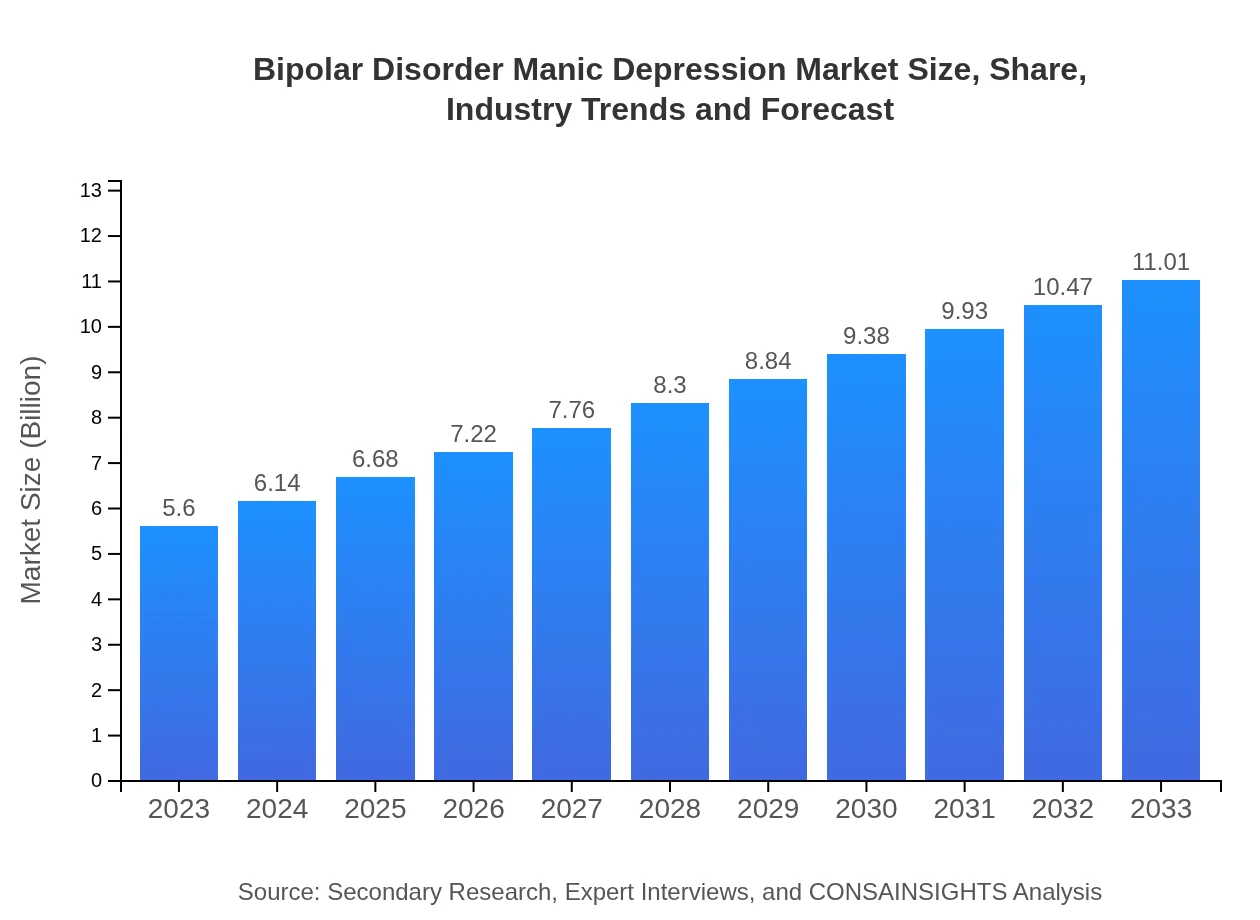
Bipolar Disorder Manic Depression Market — USD 5.6 billion in 2023, Growing to USD 11.01B by 2033 at 6.8% CAGR
This report covers the market insights, trends, and forecasts for Bipolar Disorder and Manic Depression from 2023 to 2033, including industry size, growth rates, regional performance, market segmentation, and analysis of key players.
Key Takeaways
- Global market projected to grow from $5.60 Billion in 2023 to $11.01 Billion by 2033 at a 6.8% CAGR.
- North America is largest regional market, while no single fastest-growing region is stated because regional CAGR differences remain within 0.15 percentage points.
- Regional expansion reflects increased awareness, improved diagnostics, and evolving treatment approaches including pharmacotherapy and psychotherapy.
- Top industry participants include Johnson & Johnson, Pfizer Inc., and Eli Lilly and Company, influencing treatment development and market activity.
Bipolar Disorder Manic Depression Market Report — Executive Summary
North America remains largest market by forecast-period value, while no single fastest-growing region is stated because top regional growth rates are separated by less than 0.15 percentage points. The Bipolar Disorder Manic Depression Market Report analyzes a market that increases from $5.60 Billion in 2023 to $11.01 Billion by 2033 at a 6.8% CAGR. Growth is supported by heightened diagnostic rates, advances in pharmacotherapy and psychotherapy, and growing investment from major firms such as Johnson & Johnson, Pfizer Inc., and Eli Lilly and Company. The market structure spans inpatient, outpatient and home-based care; age groups from adolescents to the elderly; and treatment types including pharmacotherapy, psychotherapy and lifestyle modifications. Route-of-administration options cover oral, injectable and transdermal therapies. Regional performance varies, with North America holding the largest share. Research combines primary interviews with industry experts and secondary analysis of company reports, with data triangulation to validate findings and identify key opportunities in therapeutic development and patient-centric care.
Key Growth Drivers
- Rising diagnosis and treatment uptake increasing demand for pharmacological and behavioral therapies.
- Advances in therapeutic research and clinical development led by major pharmaceutical firms.
- Greater acceptance of mental health care and integration of personalized care approaches.
- Expansion of outpatient and home-based care models improving access and continuity of treatment.
| Metric | Value |
|---|---|
| Study Period | 2023 - 2033 |
| 2023 Market Size | $5.60 Billion |
| CAGR (2023-2033) | 6.8% |
| 2033 Market Size | $11.01 Billion |
| Top Companies | Johnson & Johnson, Pfizer Inc., Eli Lilly and Company |
| Published Date | 11 October 2024 |
| Last Modified Date | 25 May 2026 |
Bipolar Disorder Manic Depression Market Overview
Customize Bipolar Disorder Manic Depression Market Report market research report
- ✔ Get in-depth analysis of Bipolar Disorder Manic Depression market size, growth, and forecasts.
- ✔ Understand Bipolar Disorder Manic Depression's regional dynamics and industry-specific trends.
- ✔ Identify potential applications, end-user demand, and growth segments in Bipolar Disorder Manic Depression
What is the Market Size & CAGR of Bipolar Disorder Manic Depression Market Report market in 2023?
Bipolar Disorder Manic Depression Industry Analysis
Bipolar Disorder Manic Depression Market Segmentation and Scope
Tell us your focus area and get a customized research report.
Bipolar Disorder Manic Depression Market Report Market Analysis Report by Region
Europe Bipolar Disorder Manic Depression Market Report:
Europe grows from $1.82 Billion in 2023 to $3.57 Billion in 2033. Expansion is driven by improved mental health awareness, broader access to combined pharmacotherapy and psychotherapy, and ongoing clinical development across the region.Asia Pacific Bipolar Disorder Manic Depression Market Report:
Asia Pacific grows from $0.93 Billion in 2023 to $1.83 Billion in 2033. Growth factors include rising healthcare investment, expanding diagnostic capabilities, and greater uptake of therapies across diverse care settings.North America Bipolar Disorder Manic Depression Market Report:
North America is largest regional market, rising from $2.04 Billion in 2023 to $4.01 Billion in 2033. Regional growth is supported by advanced healthcare infrastructure, higher diagnosis rates, and significant R&D and commercialization activity by leading pharmaceutical companies.South America Bipolar Disorder Manic Depression Market Report:
Latin America grows from $0.09 Billion in 2023 to $0.17 Billion in 2033. Market progression reflects growing recognition of mental health needs, gradual expansion of treatment access, and incremental increases in healthcare services.Middle East & Africa Bipolar Disorder Manic Depression Market Report:
Middle East and Africa grows from $0.73 Billion in 2023 to $1.43 Billion in 2033. Drivers include expanding mental health services, increased public health initiatives, and improved availability of pharmacological and therapeutic interventions.Tell us your focus area and get a customized research report.
Research Methodology
Bipolar Disorder Manic Depression Market Analysis By Treatment Type
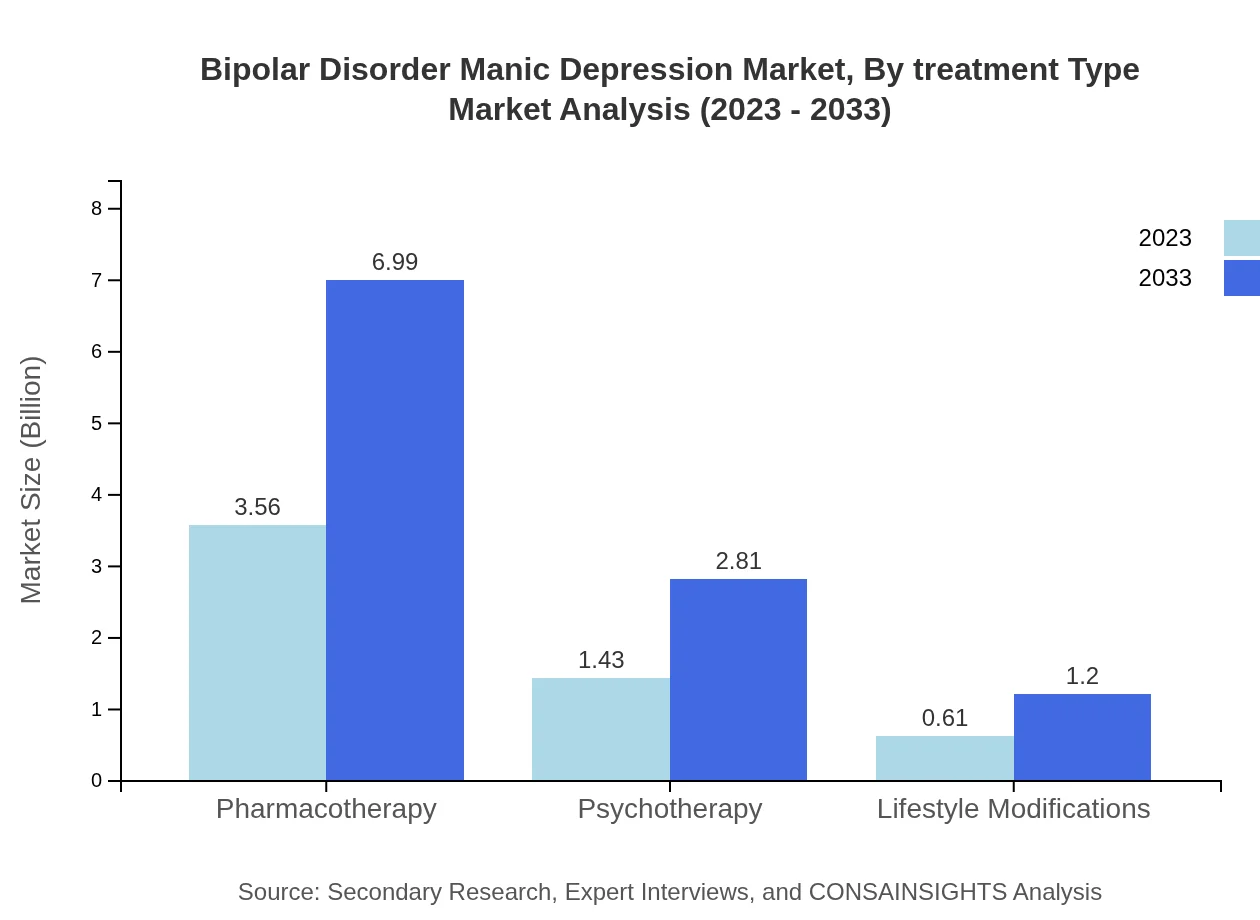
The treatment landscape for Bipolar Disorder is broadly categorized into Pharmacotherapy, Psychotherapy, and Lifestyle Modifications. As of 2023, the market size for Pharmacotherapy is valued at 3.56 billion USD, contributing to 63.53% of the overall treatment market. Psychotherapy follows with a market size of 1.43 billion USD (25.55% share) and Lifestyle Modifications accounting for 0.61 billion USD (10.92% share). These percentages are projected to remain consistent with comparable growth rates by 2033.
Bipolar Disorder Manic Depression Market Analysis By Age Group
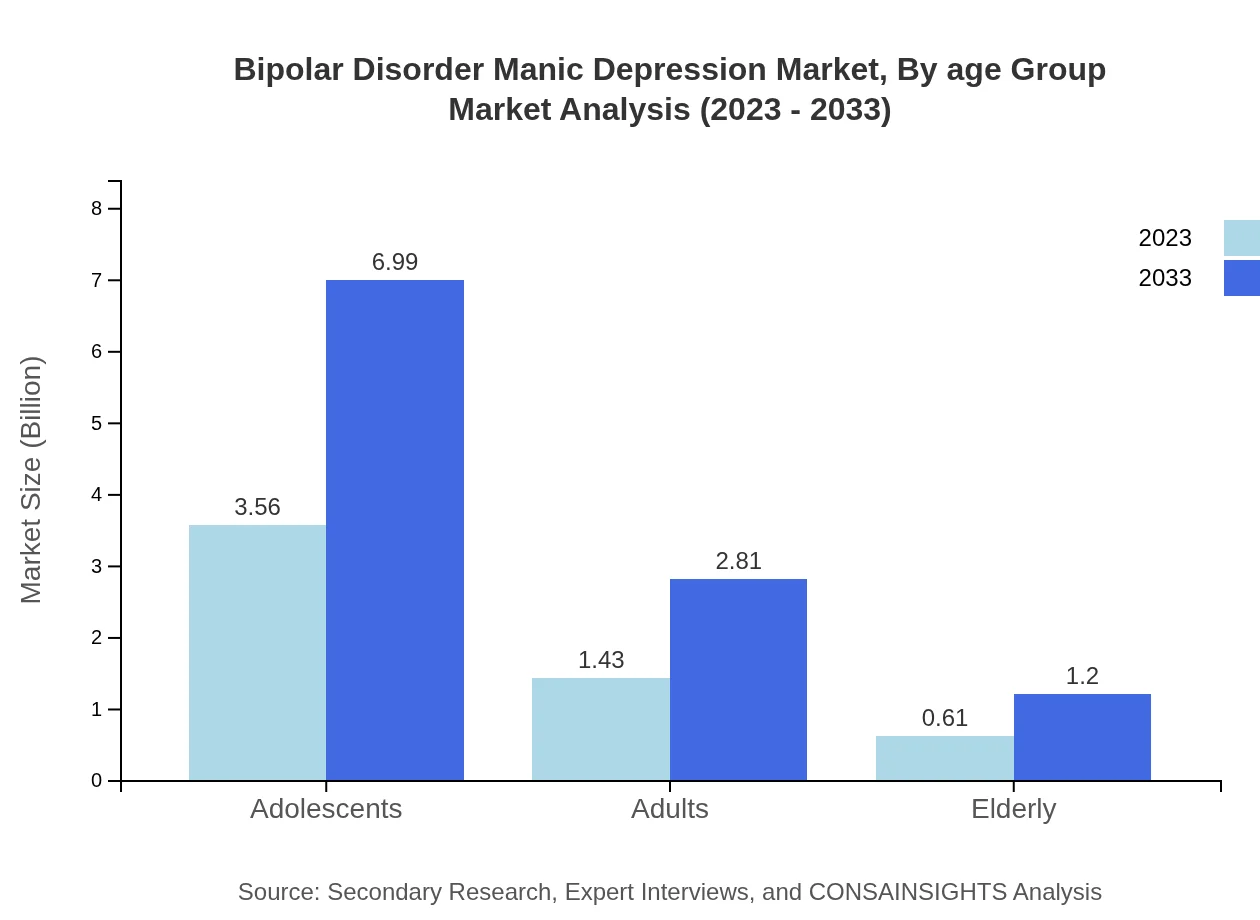
Market allocation by age groups reveals significant segments. Adolescents hold the largest share of 3.56 billion USD, representing 63.53% of the market in 2023, while adults are valued at 1.43 billion USD (25.55%), and the elderly segment is at 0.61 billion USD (10.92%). Projected expansions will see these figures increase to 6.99 billion USD, 2.81 billion USD, and 1.20 billion USD respectively by 2033.
Bipolar Disorder Manic Depression Market Analysis By Therapeutic Area
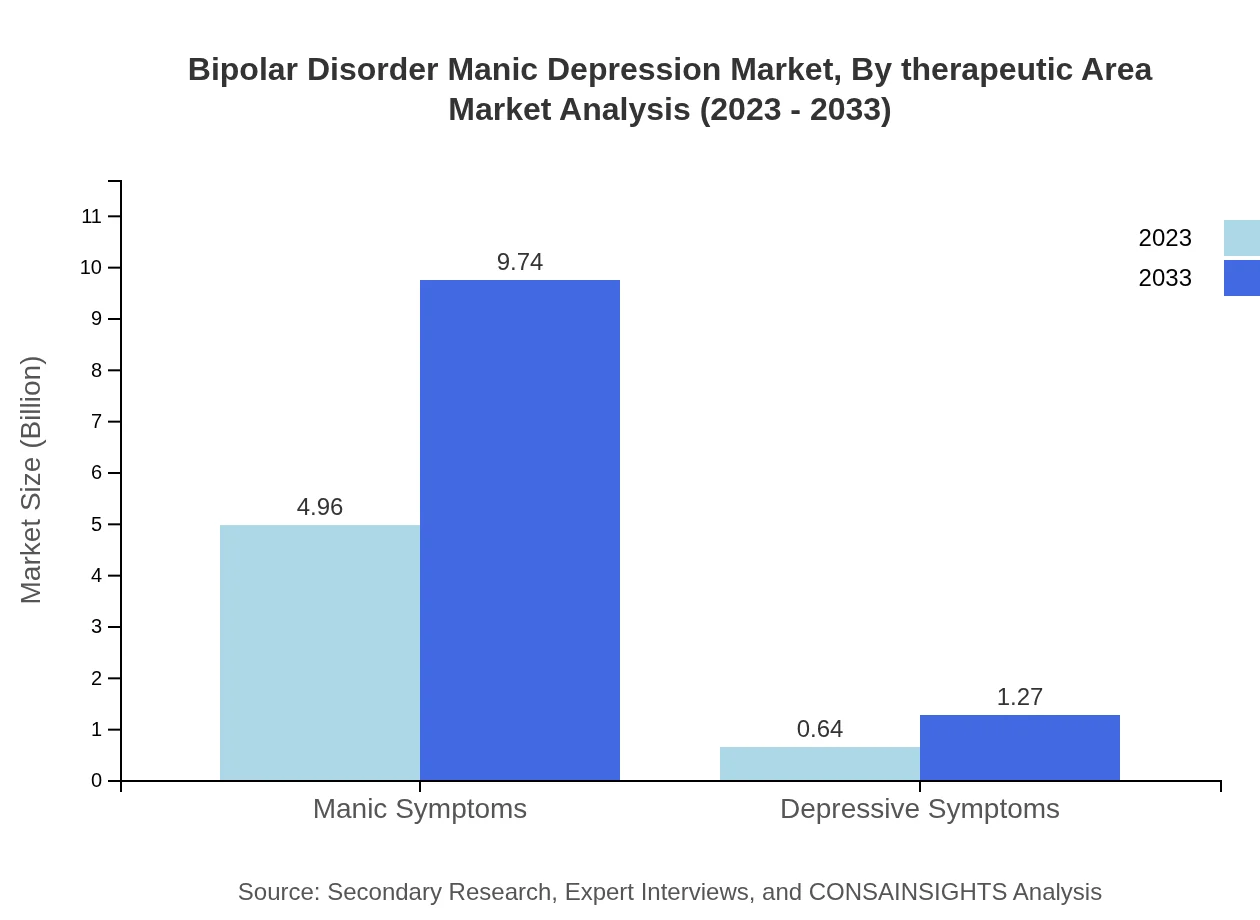
The market based on therapeutic areas bifurcates into two main categories: Manic Symptoms and Depressive Symptoms. Manic Symptoms constitute the heavier revenue contributor, with an estimated size of 4.96 billion USD in 2023, projected to reach 9.74 billion USD by 2033. Depressive Symptoms follow, with 0.64 billion USD in 2023 and expected to grow to 1.27 billion USD by 2033.
Bipolar Disorder Manic Depression Market Analysis By Setting
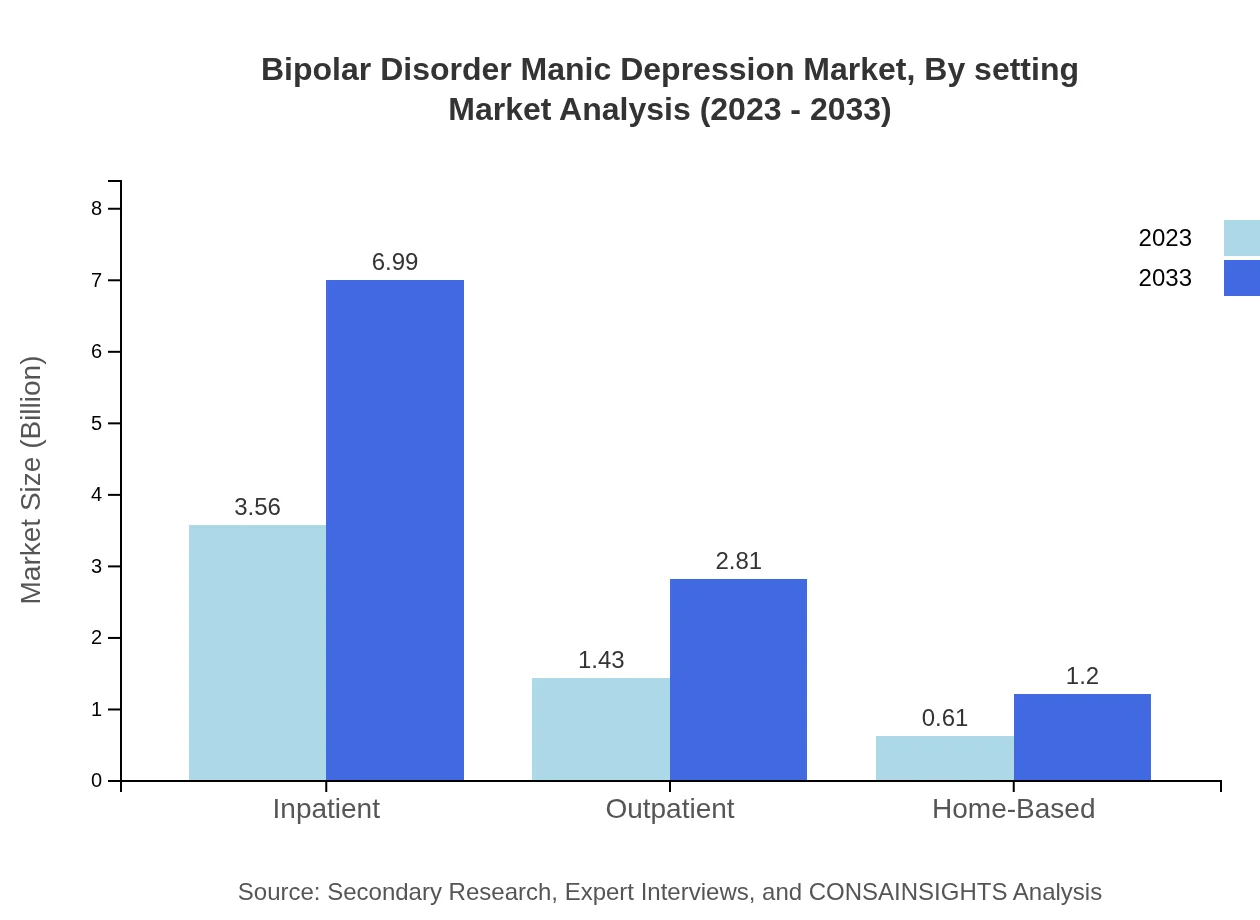
Inpatient settings dominate the Bipolar Disorder market with a valuation of 3.56 billion USD in 2023 and a consistent share of 63.53%. Outpatient settings contribute 1.43 billion USD (25.55% share) and home-based care accounts for 0.61 billion USD (10.92%). These segments are forecasted to experience substantial growth, aligning with overall market trends by 2033.
Bipolar Disorder Manic Depression Market Analysis By Route Of Administration
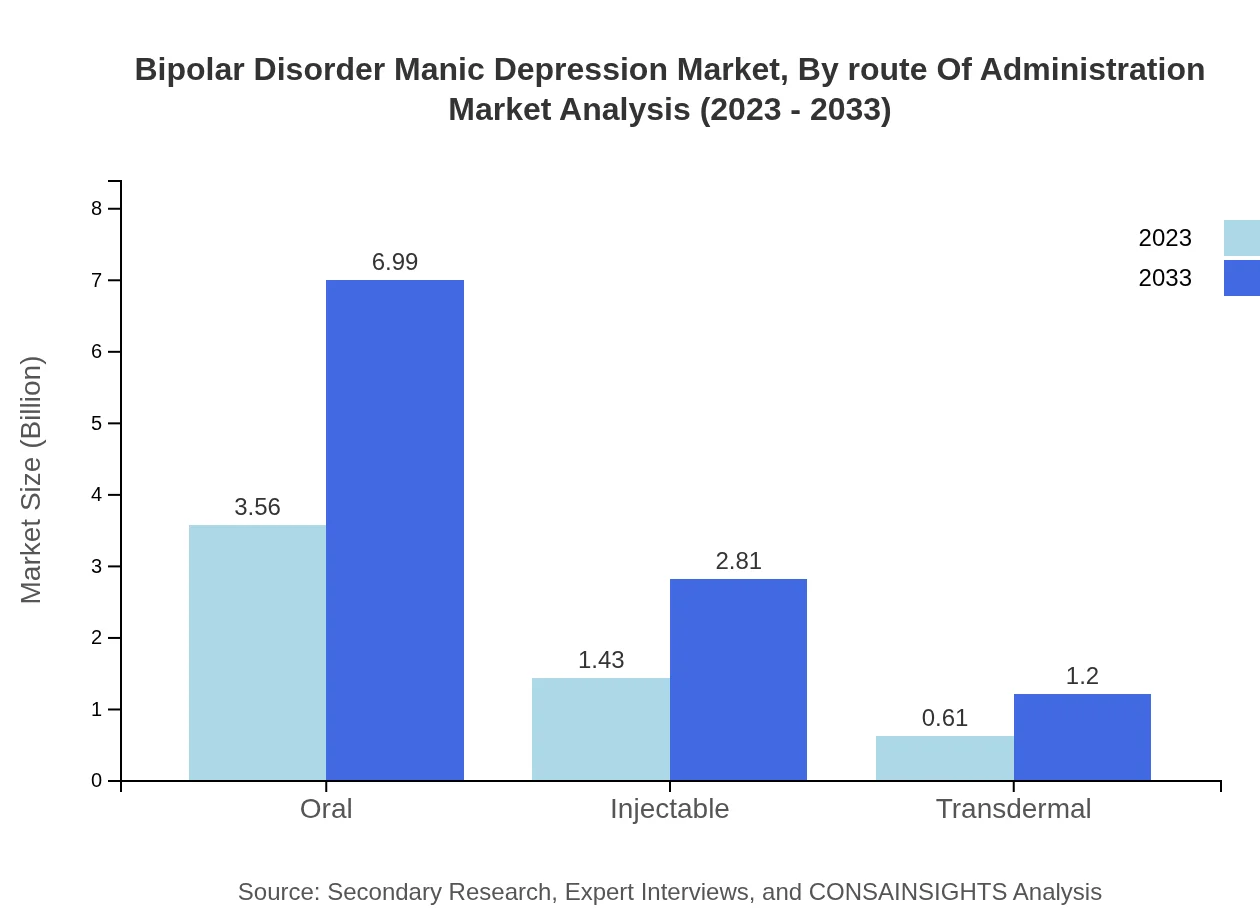
The route of administration segmentation includes Oral, Injectable, and Transdermal methods. Oral medications lead with 3.56 billion USD and a share of 63.53% in 2023, followed by Injectables at 1.43 billion USD (25.55%), and Transdermal therapies at 0.61 billion USD (10.92%). This structure will likely maintain similar trends through 2033, with gradual enhancements in effectiveness and availability.
Bipolar Disorder Manic Depression Market Trends and Future Forecast
Tell us your focus area and get a customized research report.
Global Market Leaders and Top Companies in Bipolar Disorder Manic Depression Industry
Johnson & Johnson:
A leading pharmaceutical company focusing on mental health innovations, with a strong portfolio of drugs approved for bipolar disorder treatment.Pfizer Inc.:
Known for its wide range of medications, Pfizer is a significant contributor in the bipolar treatment area, emphasizing both pharmacotherapy and mental health awareness.Eli Lilly and Company:
With a dedicated focus on mental health, Lilly's therapies for bipolar disorder, including antipsychotics and mood stabilizers, make it a key player in this market.We're grateful to work with incredible clients.








FAQs
What is the market size in 2023?
The market size in 2023 is $5.60 Billion, as reported for the Bipolar Disorder Manic Depression segment.
How big will the market be in 2033?
The market is projected to reach $11.01 Billion by 2033 according to the forecast data provided.
What is CAGR for the forecast period?
The compound annual growth rate (CAGR) for 2023 to 2033 is 6.8%.
Who are the top companies in this market?
Top companies listed include Johnson & Johnson, Pfizer Inc., and Eli Lilly and Company as leading contributors to market development.
What are common treatment categories included?
Treatment categories include pharmacotherapy, psychotherapy, and lifestyle modifications as primary approaches for bipolar disorder management.
Is there a single fastest Growing region in the Bipolar Disorder Manic Depression Market Report market?
No single fastest-growing region is stated for the Bipolar Disorder Manic Depression Market Report market because the top regional implied CAGR values are within 0.15 percentage points of each other, making the ranking too close to call reliably.
Which care settings are covered in the segmentation?
Care settings include inpatient, outpatient, and home-based models to address varying patient needs and treatment pathways.
What is the forecast period for the report?
The forecast period covered by the report spans 2023 to 2033.
How is route of administration categorized?
Route-of-administration categories recorded are oral, injectable, and transdermal formulations.
What research methods were used?
Research used primary interviews with industry experts, secondary company reports and publications, and data triangulation with internal validation.