

Cardiac Arrhythmia Therapeutics Market Report
First published: 14 October 2024 | Last updated: 25 May 2026 | Report Code: cardiac-arrhythmia-therapeutics
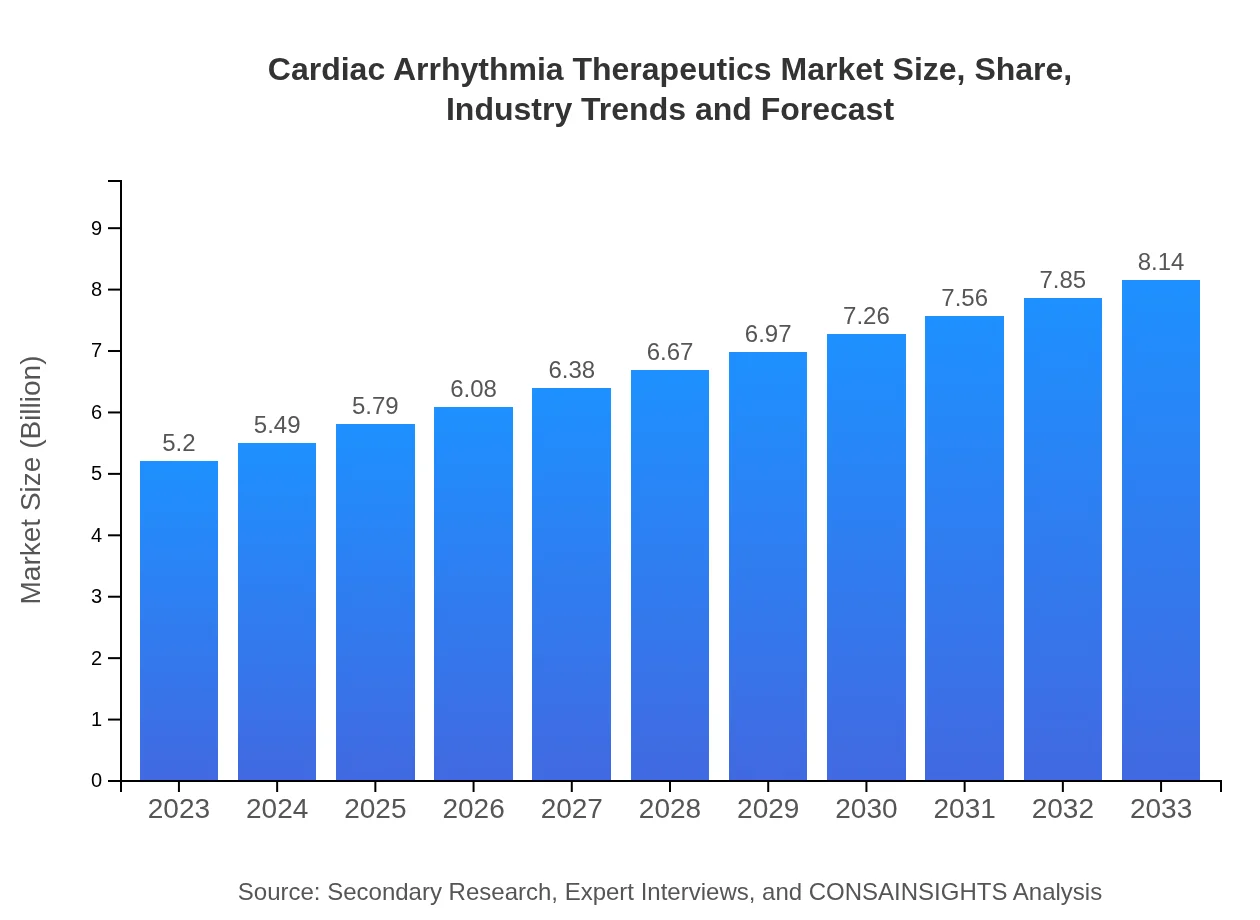
Cardiac Arrhythmia Therapeutics Market — USD 5.2 billion in 2023, Growing to USD 8.14B by 2033 at 4.5% CAGR
This report offers a comprehensive analysis of the Cardiac Arrhythmia Therapeutics market, covering industry trends, growth forecasts, and market size projections from 2023 to 2033. Insightful data on segmentation, regional performance, and leading companies are also included.
Key Takeaways
- Global market grows from $5.20 Billion in 2023 to $8.14 Billion in 2033 at a 4.5% CAGR.
- North America is largest regional market, while no single fastest-growing region is stated because regional CAGR differences remain within 0.15 percentage points.
- Europe expands from $1.28 Billion in 2023 to $2.00 Billion in 2033, reflecting sustained demand for therapeutic options.
- Asia Pacific rises from $0.99 Billion in 2023 to $1.55 Billion in 2033, driven by expanding healthcare access and innovation.
- Top companies covered include Boehringer Ingelheim, Bristol-Myers Squibb, Johnson & Johnson, Abbott Laboratories, and Medtronic.
Cardiac Arrhythmia Therapeutics Market Report — Executive Summary
North America remains largest market by forecast-period value, while no single fastest-growing region is stated because top regional growth rates are separated by less than 0.15 percentage points. The Cardiac Arrhythmia Therapeutics market is forecasted to expand from $5.20 Billion in 2023 to $8.14 Billion by 2033 at a 4.5% CAGR. Growth is supported by rising prevalence of arrhythmias, an aging population, and parallel advancement of pharmacological and non-pharmacological treatment options. Regional trajectories vary: North America holds the largest end-market value, while Europe and Asia Pacific show notable expansion. The report examines segmentation by indication, formulation, distribution channel, and therapeutic approach, and profiles leading companies including Boehringer Ingelheim, Bristol-Myers Squibb, Johnson & Johnson, Abbott Laboratories, and Medtronic. Strategic themes include intensified R&D, ongoing clinical evaluations, and collaborative efforts across pharma and medical-device sectors. This analysis combines primary expert interviews and secondary literature to map market dynamics, risks, and opportunities for stakeholders across the value chain.
Key Growth Drivers
- Increasing prevalence of cardiac rhythm disorders and an aging global population raise demand for therapeutic interventions.
- Ongoing clinical research and product development expand both pharmacological and device-based treatment options.
- Collaboration between pharmaceutical firms and medical-device manufacturers accelerates innovation and market introductions.
- Improved healthcare access in several regions supports wider adoption of arrhythmia therapies across care settings.
- Regulatory approvals and reimbursement developments influence market uptake and commercialization timelines.
| Metric | Value |
|---|---|
| Study Period | 2023 - 2033 |
| 2023 Market Size | $5.20 Billion |
| CAGR (2023-2033) | 4.5% |
| 2033 Market Size | $8.14 Billion |
| Top Companies | Boehringer Ingelheim, Bristol-Myers Squibb, Johnson & Johnson, Abbott Laboratories, Medtronic |
| Published Date | 14 October 2024 |
| Last Modified Date | 25 May 2026 |
Cardiac Arrhythmia Therapeutics Market Overview
Customize Cardiac Arrhythmia Therapeutics Market Report market research report
- ✔ Get in-depth analysis of Cardiac Arrhythmia Therapeutics market size, growth, and forecasts.
- ✔ Understand Cardiac Arrhythmia Therapeutics's regional dynamics and industry-specific trends.
- ✔ Identify potential applications, end-user demand, and growth segments in Cardiac Arrhythmia Therapeutics
What is the Market Size & CAGR of Cardiac Arrhythmia Therapeutics Market Report market in 2023?
Cardiac Arrhythmia Therapeutics Industry Analysis
Cardiac Arrhythmia Therapeutics Market Segmentation and Scope
Tell us your focus area and get a customized research report.
Cardiac Arrhythmia Therapeutics Market Report Market Analysis Report by Region
Europe Cardiac Arrhythmia Therapeutics Market Report:
Europe grows from $1.28 Billion in 2023 to $2 Billion in 2033. This progression is supported by active clinical research, reimbursement frameworks facilitating access, and continued innovation across pharmacological and interventional treatments.Asia Pacific Cardiac Arrhythmia Therapeutics Market Report:
Asia Pacific grows from $0.99 Billion in 2023 to $1.55 Billion in 2033. Growth is linked to improving healthcare coverage, rising diagnostic capabilities, and adoption of newer therapeutic options in several national markets.North America Cardiac Arrhythmia Therapeutics Market Report:
North America is largest regional market, rising from $1.7 Billion in 2023 to $2.67 Billion in 2033. Regional expansion reflects established clinical infrastructure, high adoption of advanced therapies, and significant industry investment in devices and pharmaceuticals.South America Cardiac Arrhythmia Therapeutics Market Report:
Latin America grows from $0.51 Billion in 2023 to $0.79 Billion in 2033. Market gains reflect gradual improvements in healthcare delivery, increasing awareness of cardiac conditions, and incremental access to arrhythmia therapies.Middle East & Africa Cardiac Arrhythmia Therapeutics Market Report:
Middle East and Africa grows from $0.72 Billion in 2023 to $1.13 Billion in 2033. Progress is influenced by investments in healthcare infrastructure, growing clinical capacity, and uptake of both drug and device interventions.Tell us your focus area and get a customized research report.
Research Methodology
Cardiac Arrhythmia Therapeutics Market Analysis By Indication
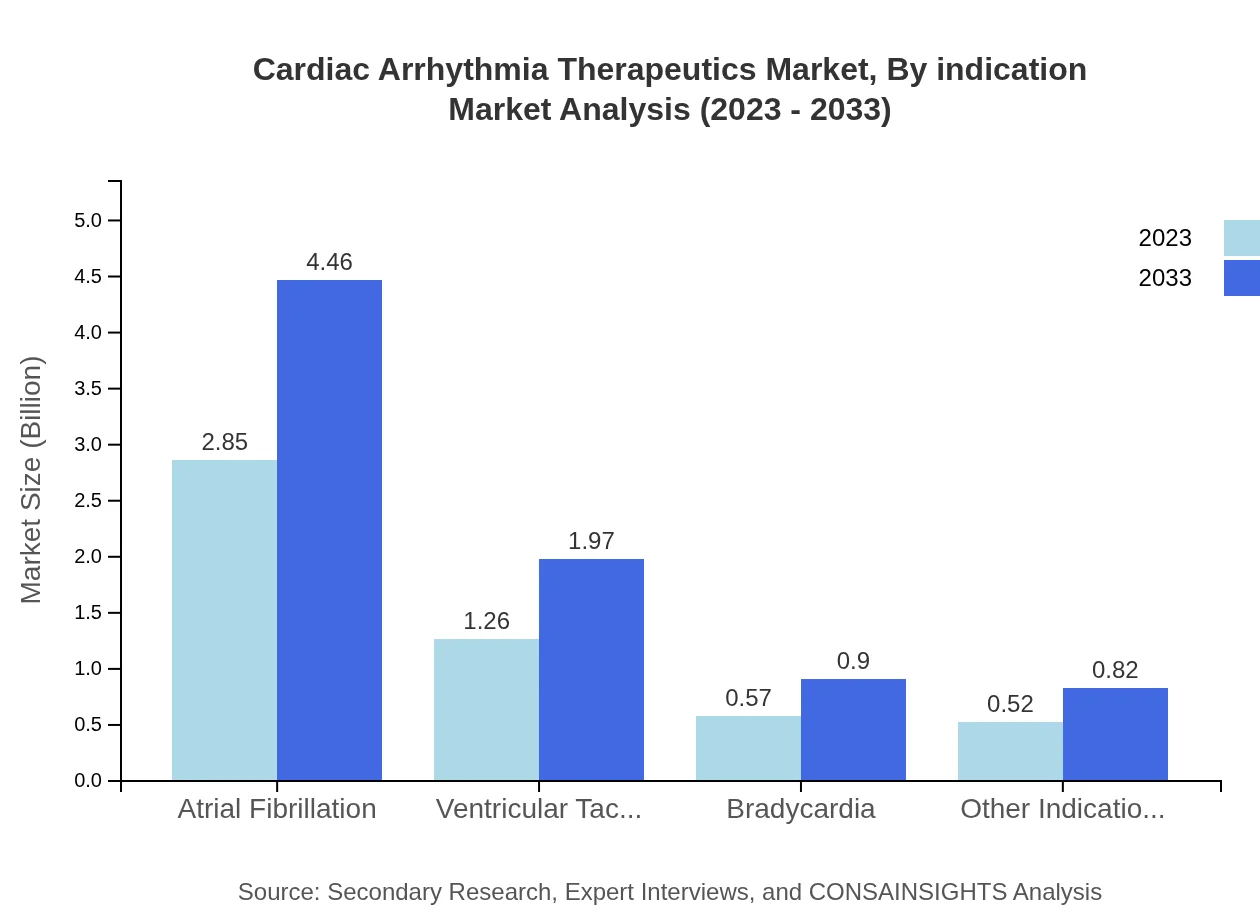
The market by indication segment indicates that Atrial Fibrillation represents the largest share, growing from $2.85 billion in 2023 to $4.46 billion in 2033, constituting 54.75% of the overall market in both years. Following this, Ventricular Tachycardia shows a market increase from $1.26 billion to $1.97 billion, while Bradycardia and other indications also contribute notably to market growth.
Cardiac Arrhythmia Therapeutics Market Analysis By Therapeutic Approach
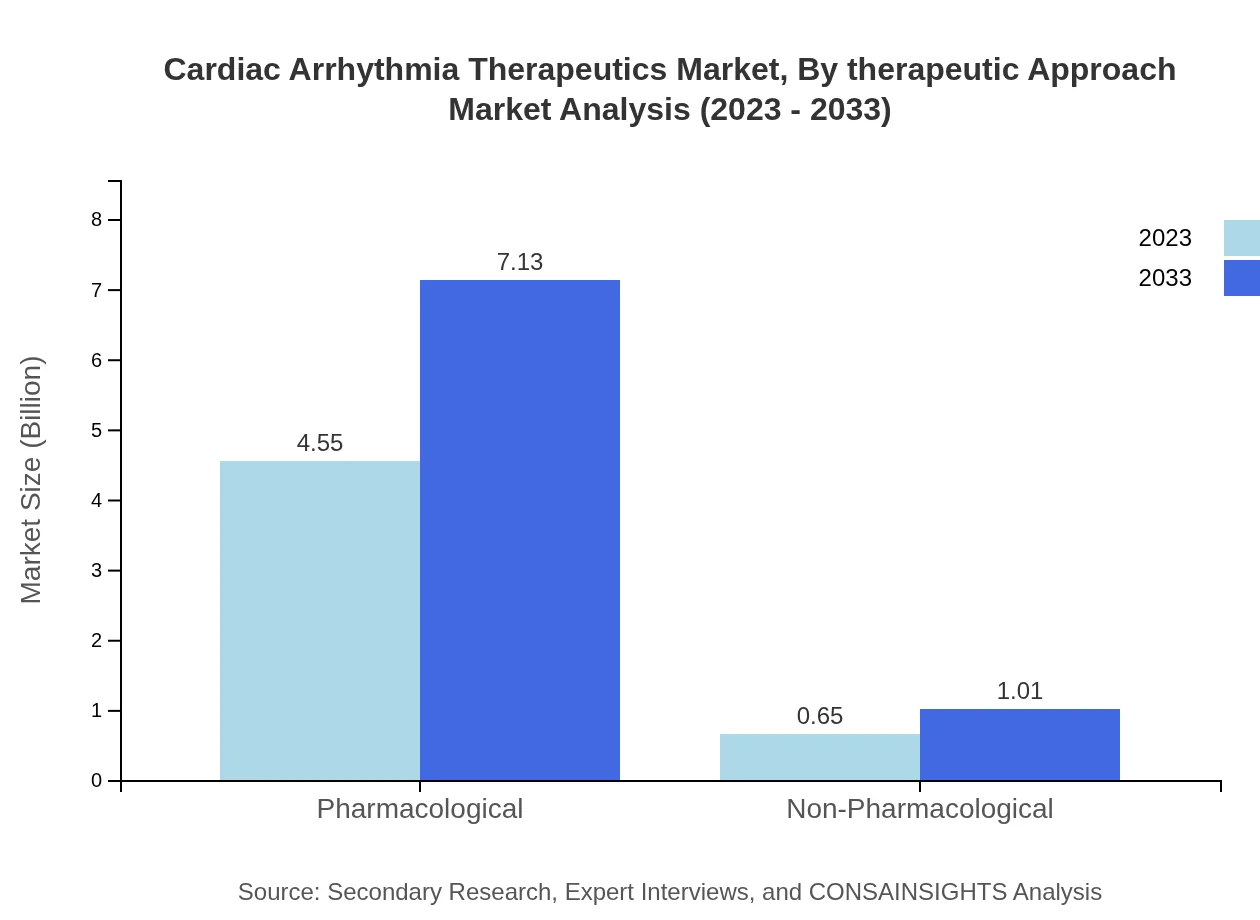
This segment reflects a significant focus on pharmacological treatments, which command a market share of 87.56% in 2023, growing to 87.56% in 2033. Non-pharmacological treatment options are anticipated to grow steadily, especially with advancements in device-based therapies.
Cardiac Arrhythmia Therapeutics Market Analysis By Distribution Channel
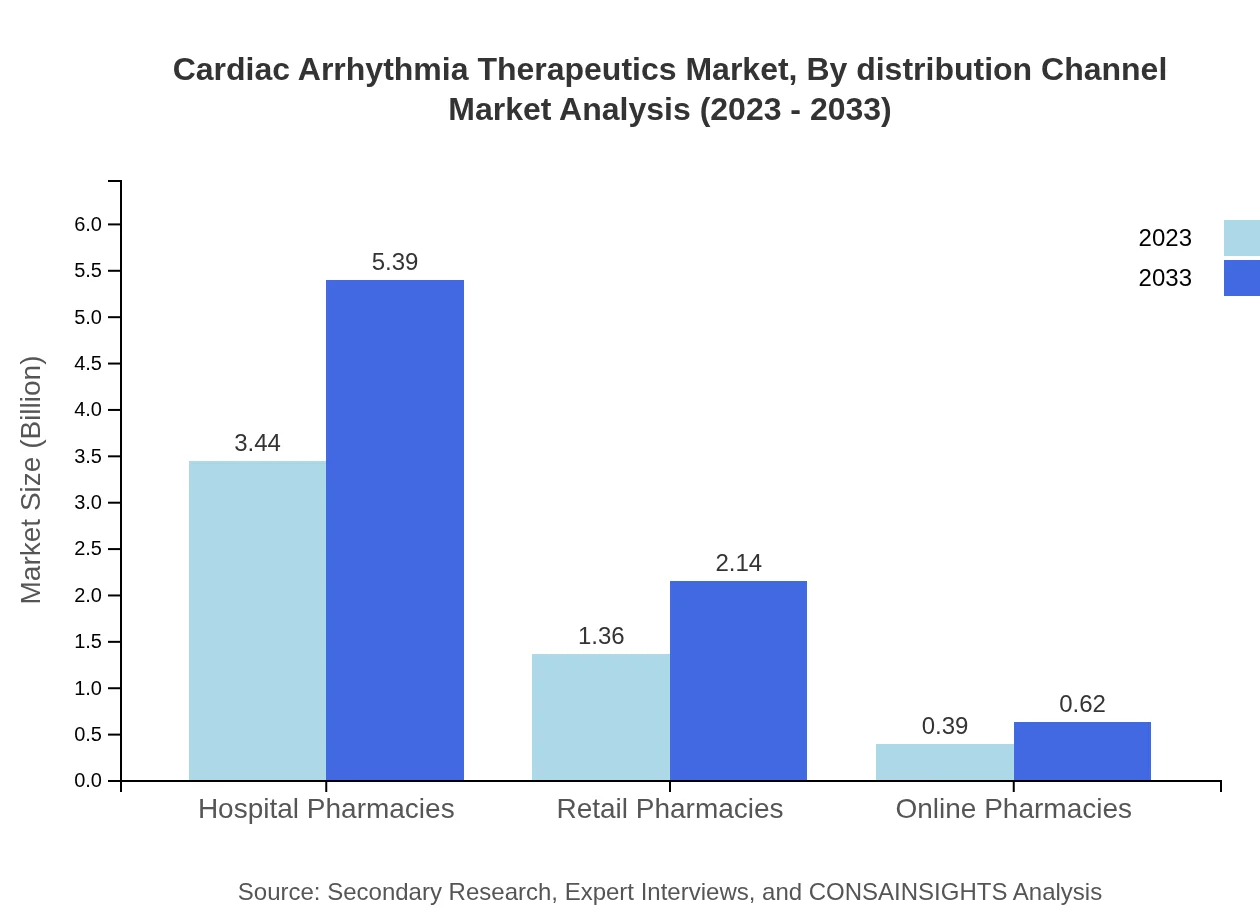
Distribution channels such as hospital pharmacies dominate the market, projected to rise from $3.44 billion in 2023 to $5.39 billion in 2033, while retail and online pharmacies are also gaining traction, with expected growth rates of 26.23% for retail and 7.59% for online options.
Cardiac Arrhythmia Therapeutics Market Analysis By Formulation
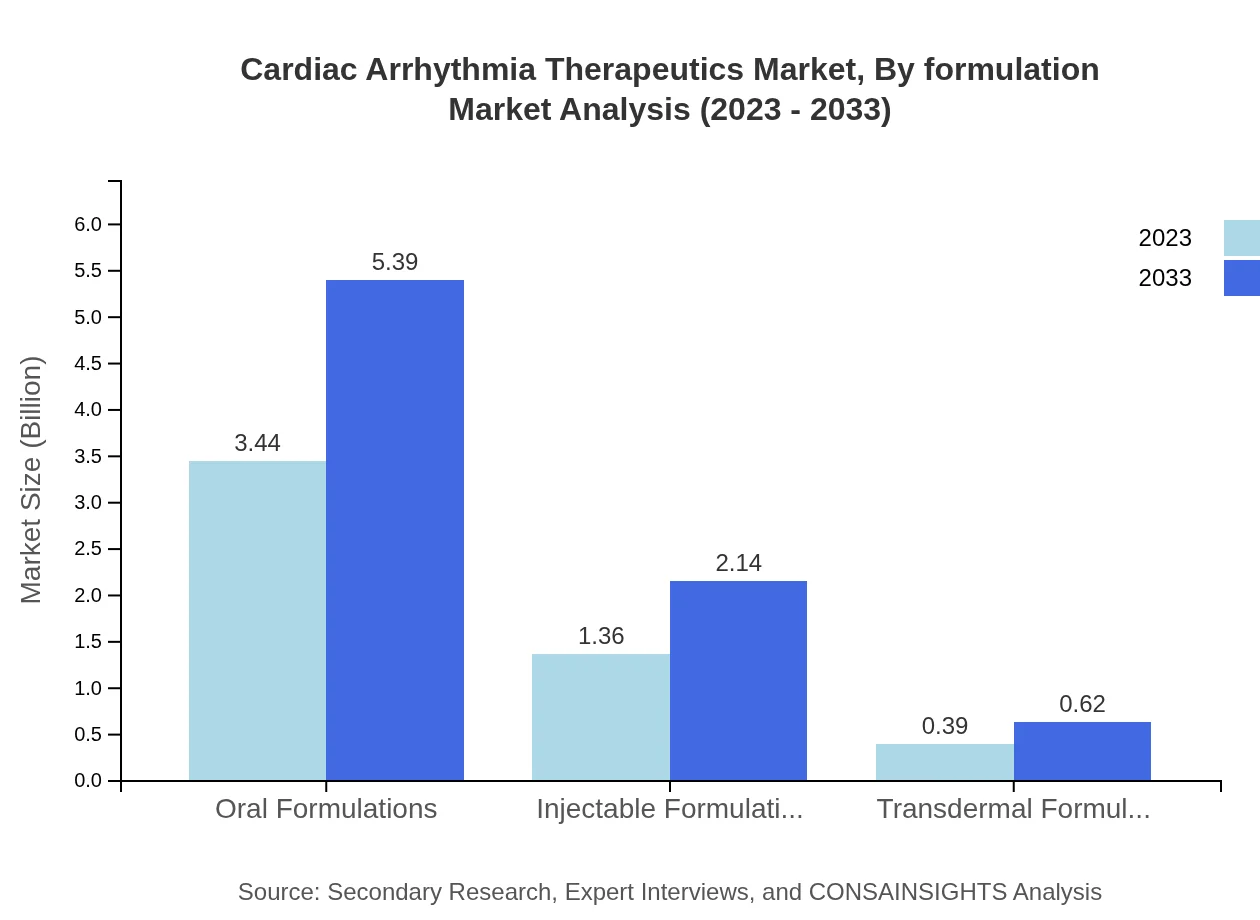
The formulation segment reveals that oral formulations account for a significant share, going from $3.44 billion in 2023 to $5.39 billion in 2033, while injectable and transdermal formulations are expected to see moderate growth, emphasizing the ongoing focus on patient-friendly delivery methods.
Cardiac Arrhythmia Therapeutics Market Trends and Future Forecast
Tell us your focus area and get a customized research report.
Global Market Leaders and Top Companies in Cardiac Arrhythmia Therapeutics Industry
Boehringer Ingelheim:
A leading global pharmaceutical company, Boehringer Ingelheim focuses on innovative therapeutic solutions, particularly in cardiology, contributing significantly to the development of arrhythmia therapies.Bristol-Myers Squibb:
Bristol-Myers Squibb is a major player in the cardiovascular market, engaged in research and development of numerous drugs targeting arrhythmias and associated conditions.Johnson & Johnson:
With a strong portfolio, Johnson & Johnson explores cutting-edge technology and pharmacological responses to cardiac issues, including arrhythmias, enhancing patient outcomes worldwide.Abbott Laboratories:
Abbott Labs invests heavily in arrhythmia management devices and therapeutic solutions, focusing on innovative approaches to cardiac health and patient care.Medtronic :
Medtronic specializes in high-technology devices for arrhythmia therapies, including implantable cardioverter-defibrillators, leading the market with innovative solutions.We're grateful to work with incredible clients.








FAQs
What is the market size of the Cardiac Arrhythmia Therapeutics market in 2023?
The market size in 2023 is $5.20 Billion, based on the provided market data for the Cardiac Arrhythmia Therapeutics sector.
How big will the market be in 2033?
The projected market value for 2033 is $8.14 Billion, as stated in the report's forecast for the period 2023 to 2033.
What is CAGR for the forecast period?
The compound annual growth rate (CAGR) for 2023 to 2033 is 4.5%, according to the supplied forecast figures.
Is there a single fastest Growing region in the Cardiac Arrhythmia Therapeutics Market Report market?
No single fastest-growing region is stated for the Cardiac Arrhythmia Therapeutics Market Report market because the top regional implied CAGR values are within 0.15 percentage points of each other, making the ranking too close to call reliably.
Which companies are listed as top players?
Top companies named in the report include Boehringer Ingelheim, Bristol-Myers Squibb, Johnson & Johnson, Abbott Laboratories, and Medtronic.
What are the main therapeutic approaches covered?
The report distinguishes pharmacological and non-pharmacological therapeutic approaches, covering drug therapies as well as device-based interventions.
How big is the European market in 2023 and 2033?
Europe is valued at $1.28 Billion in 2023 and is projected to reach $2.00 Billion by 2033, per the regional figures provided.
What drives growth in Asia Pacific?
Asia Pacific expands from $0.99 Billion in 2023 to $1.55 Billion in 2033, supported by growing healthcare access and adoption of new therapies.
Who conducted the research for this report?
Research methodology includes primary interviews with industry experts, secondary company reports and publications, and internal data validation.
Why are both pharmacological and non Pharmacological options important?
Both approaches address different clinical needs: drugs manage arrhythmia biochemistry while device-based therapies offer procedural solutions for complex rhythm disorders.