

Cell Lysis Cell Fractionation Market Report
First published: 12 October 2024 | Last updated: 25 May 2026 | Report Code: cell-lysis-cell-fractionation
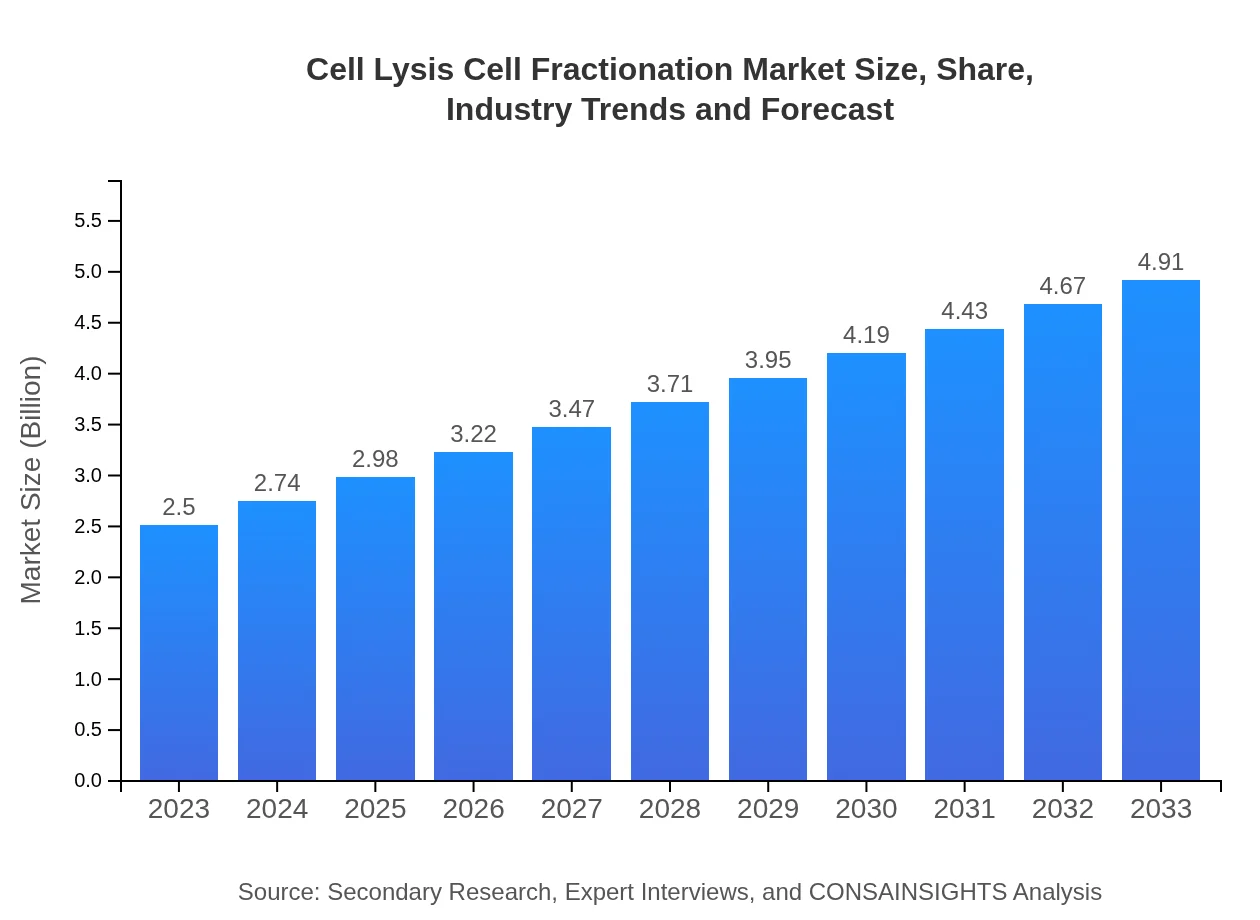
Cell Lysis Cell Fractionation Market — USD 2.5 billion in 2023, Growing to USD 4.91B by 2033 at 6.8% CAGR
This report provides an in-depth analysis of the Cell Lysis Cell Fractionation market, covering key insights, trends, and future forecasts for the period 2023-2033, along with comprehensive data on market size, regional analysis, segmentation, and leading companies.
Key Takeaways
- Global market to grow from $2.50 Billion in 2023 to $4.91 Billion in 2033 at a 6.8% CAGR.
- Europe is largest regional market, while no single fastest-growing region is stated because regional CAGR differences remain within 0.15 percentage points.
- North America shows substantial expansion from $0.82 Billion to $1.61 Billion between 2023 and 2033.
- Products include lysis kits, cell fractionation kits and instruments serving clinical laboratories, academia, pharma and biotech.
- Top companies active in the space include Thermo Fisher Scientific, Merck KGaA, Bio-Rad Laboratories and Qiagen.
Cell Lysis Cell Fractionation Market Report — Executive Summary
Europe remains largest market by forecast-period value, while no single fastest-growing region is stated because top regional growth rates are separated by less than 0.15 percentage points. Demand for cell lysis and fractionation solutions is driven by intensified research activity, biopharmaceutical development and increased clinical laboratory workflows. The market is projected to expand from $2.50 Billion in 2023 to $4.91 Billion in 2033 at a 6.8% CAGR. Key trends include adoption of mechanical, chemical and physical lysis technologies, a shift toward automated and high-throughput platforms, and growing uptake of kits and instruments in academic and industry laboratories. Product segmentation encompasses lysis kits, cell fractionation kits and instruments, while end users span clinical laboratories, academic institutes, pharmaceutical and biotechnology firms, and diagnostic companies. Competitive dynamics feature established life-science companies such as Thermo Fisher Scientific, Merck KGaA, Bio-Rad Laboratories and Qiagen investing in portfolio expansion and innovation. Market participants focus on improving workflow efficiency and reproducibility to address evolving R&D and diagnostic needs through the forecast period.
Key Growth Drivers
- Rising R&D investments in molecular biology and drug discovery increasing demand for lysis and fractionation tools.
- Growth in clinical research and diagnostics fueling purchases of validated kits and laboratory instruments.
- Technological progress toward automation and high-throughput systems improving sample processing efficiency.
- Wider adoption by pharmaceutical and biotechnology companies for biopharmaceutical development and cell therapy workflows.
- Expansion of academic research programs supporting sustained requirement for reagents and instruments.
| Metric | Value |
|---|---|
| Study Period | 2023 - 2033 |
| 2023 Market Size | $2.50 Billion |
| CAGR (2023-2033) | 6.8% |
| 2033 Market Size | $4.91 Billion |
| Top Companies | Thermo Fisher Scientific, Merck KGaA, Bio-Rad Laboratories, Qiagen |
| Published Date | 12 October 2024 |
| Last Modified Date | 25 May 2026 |
Cell Lysis Cell Fractionation Market Overview
Customize Cell Lysis Cell Fractionation Market Report market research report
- ✔ Get in-depth analysis of Cell Lysis Cell Fractionation market size, growth, and forecasts.
- ✔ Understand Cell Lysis Cell Fractionation's regional dynamics and industry-specific trends.
- ✔ Identify potential applications, end-user demand, and growth segments in Cell Lysis Cell Fractionation
What is the Market Size & CAGR of Cell Lysis Cell Fractionation Market Report market in 2023?
Cell Lysis Cell Fractionation Industry Analysis
Cell Lysis Cell Fractionation Market Segmentation and Scope
Tell us your focus area and get a customized research report.
Cell Lysis Cell Fractionation Market Report Market Analysis Report by Region
Europe Cell Lysis Cell Fractionation Market Report:
Europe is largest regional market, rising from $0.85 Billion in 2023 to $1.67 Billion in 2033. 85 Billion in 2023 to $1.67 Billion in 2033 and is identified as the largest regional market. Growth is supported by robust research infrastructure, active academic and commercial R&D, and adoption of advanced laboratory workflows.Asia Pacific Cell Lysis Cell Fractionation Market Report:
Asia Pacific grows from $0.47 Billion in 2023 to $0.92 Billion in 2033. Expansion reflects rising life-science research investments, growing biotech and pharmaceutical sectors, and increasing uptake of automated technologies and kits.North America Cell Lysis Cell Fractionation Market Report:
North America grows from $0.82 Billion in 2023 to $1.61 Billion in 2033. Regional drivers include strong pharmaceutical and biotech activity, extensive clinical research, and demand for validated instruments and kits in laboratories.South America Cell Lysis Cell Fractionation Market Report:
Latin America grows from $0.22 Billion in 2023 to $0.44 Billion in 2033. Market advancement is linked to expanding diagnostic services, academic research programs and gradual adoption of standardized sample-preparation solutions.Middle East & Africa Cell Lysis Cell Fractionation Market Report:
Middle East and Africa grows from $0.14 Billion in 2023 to $0.28 Billion in 2033. Regional momentum is associated with developing research capabilities, growing clinical testing demand and selective investments in laboratory infrastructure.Tell us your focus area and get a customized research report.
Research Methodology
Cell Lysis Cell Fractionation Market Analysis By Product
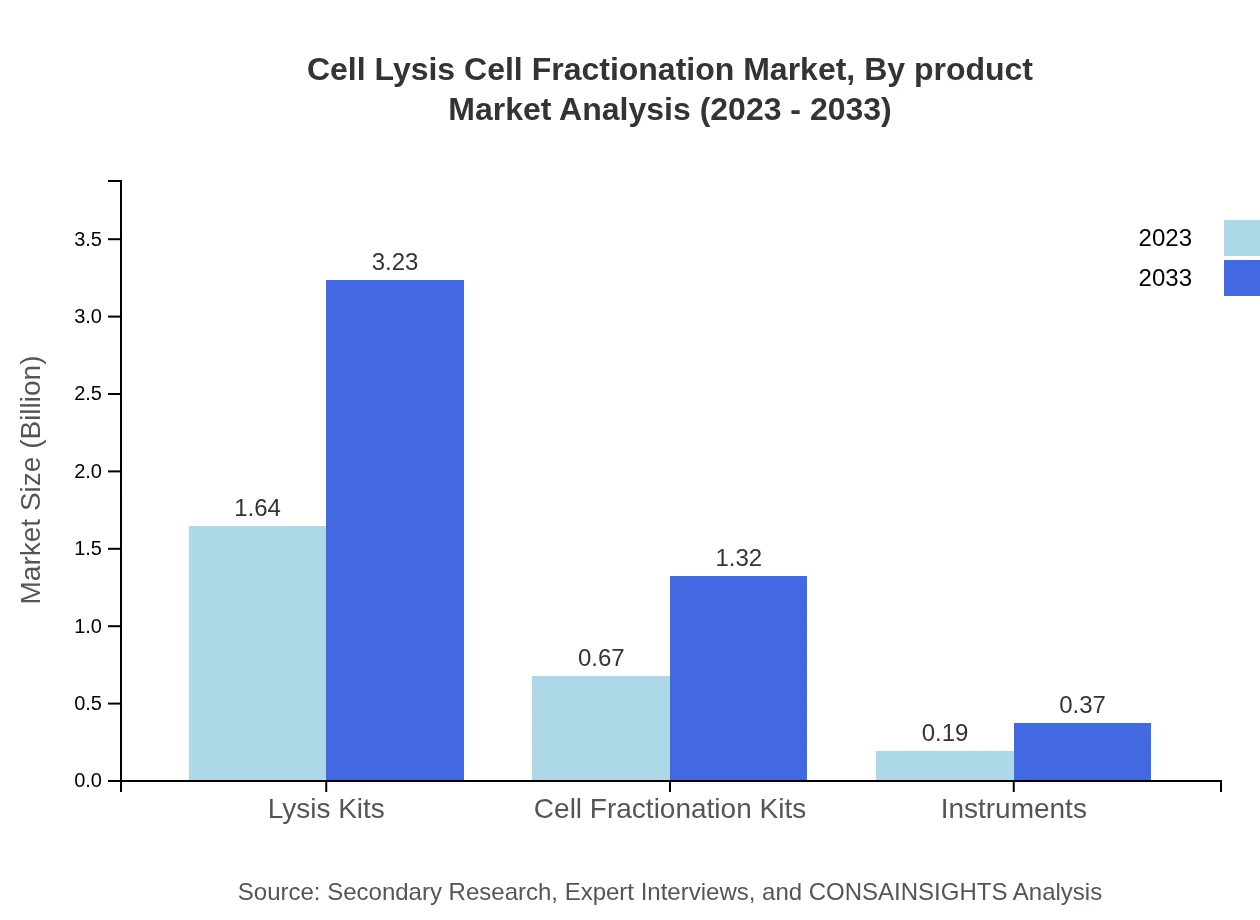
The market for lysis kits is projected to expand significantly, growing from $1.64 billion in 2023 to $3.23 billion by 2033, maintaining a market share of 65.65%. Cell fractionation kits also reflect strong growth, increasing from $0.67 billion in 2023 to $1.32 billion by 2033, with a share of 26.89%. Instruments in this segment will see a rise, from $0.19 billion in 2023 to $0.37 billion in 2033.
Cell Lysis Cell Fractionation Market Analysis By Technology
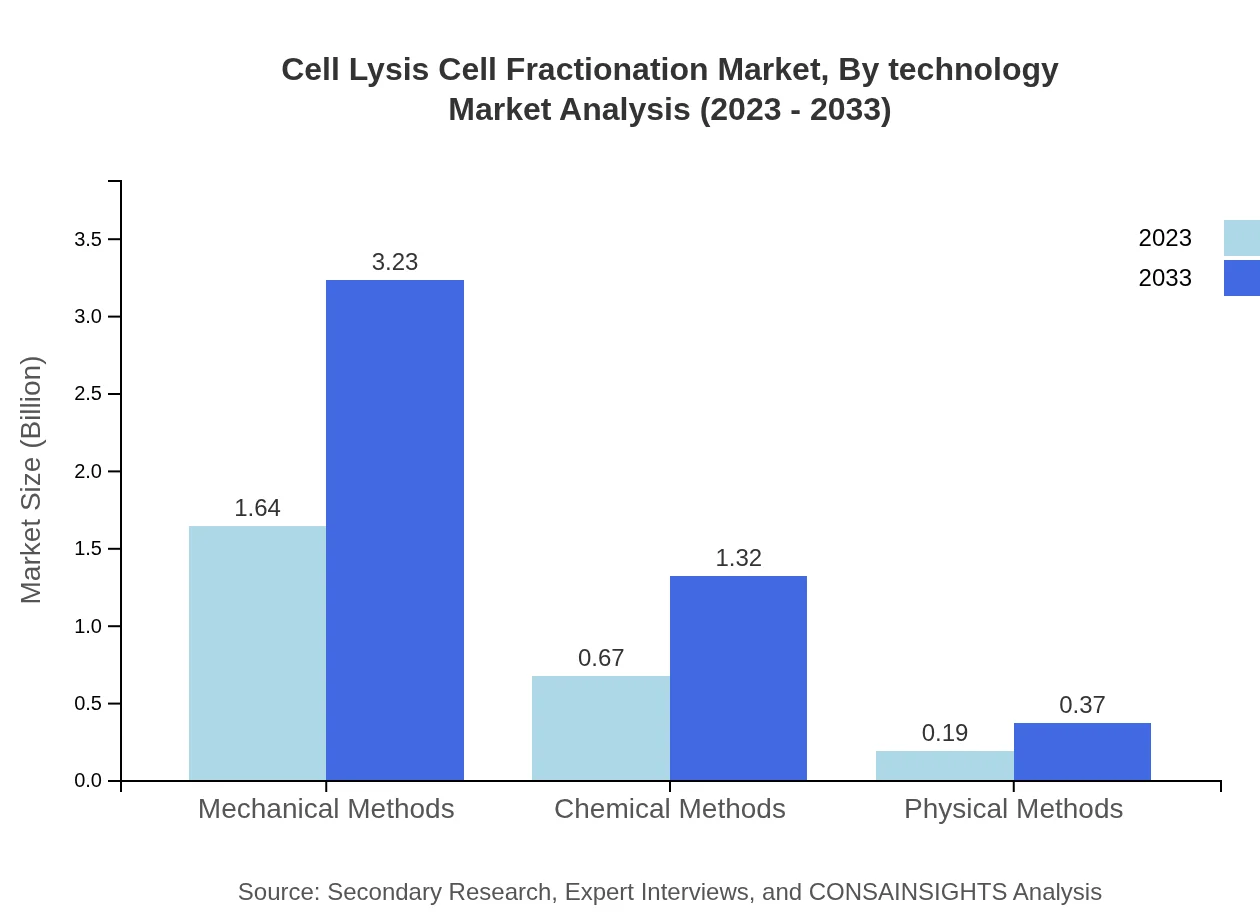
Mechanical methods represent the dominant technology in the cell lysis market, with a projected growth from $1.64 billion in 2023 to $3.23 billion by 2033, capturing a market share of 65.65%. Chemical methods will grow from $0.67 billion to $1.32 billion during the same period, while physical methods are expected to increase modestly from $0.19 billion to $0.37 billion.
Cell Lysis Cell Fractionation Market Analysis By Application
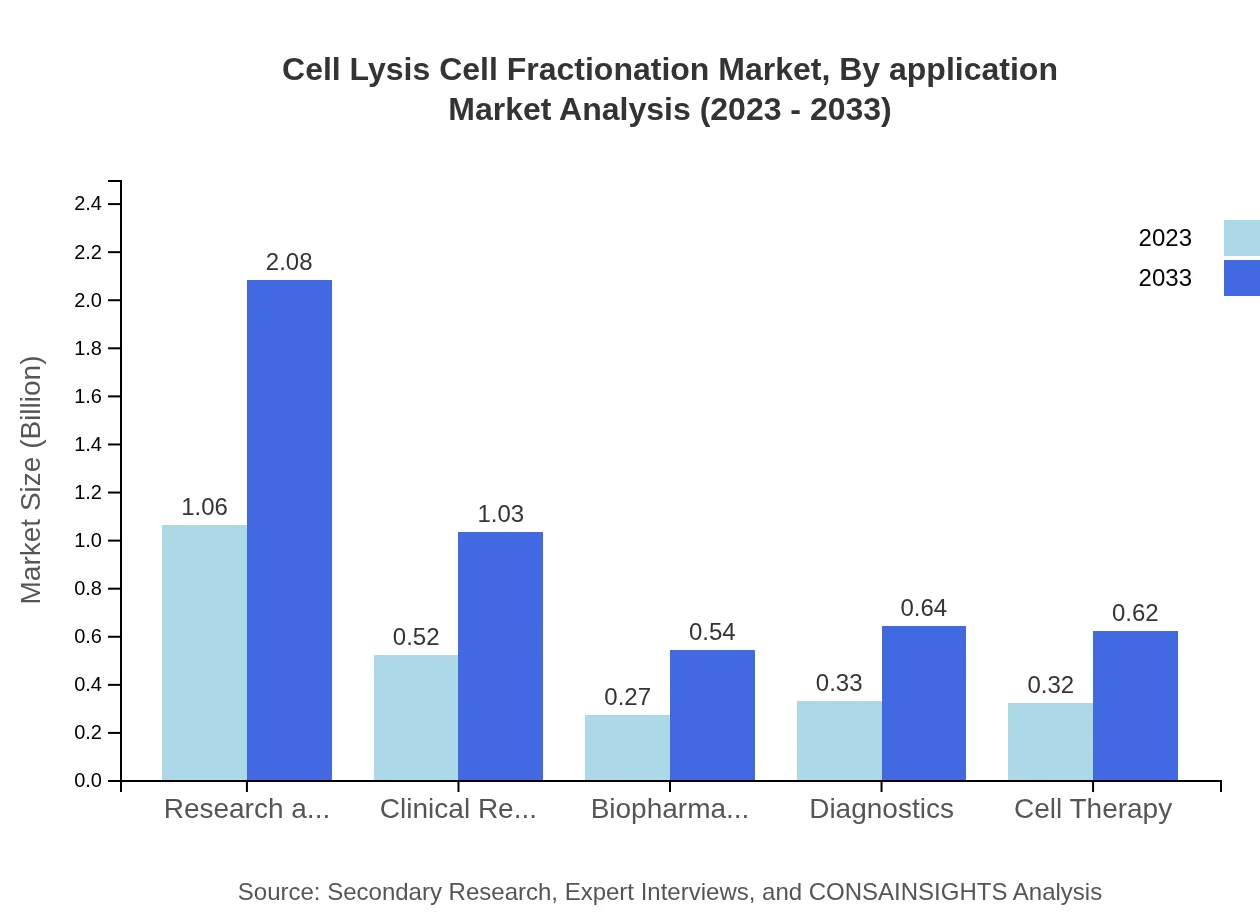
The clinical applications of cell lysis and fractionation are crucial, with the market set to grow from $1.06 billion in 2023 to $2.08 billion by 2033, holding a 42.35% market share in clinical laboratories. Academic institutions also play a significant role, increasing from $0.52 billion to $1.03 billion, capturing 20.87% of the market.
Cell Lysis Cell Fractionation Market Analysis By End User
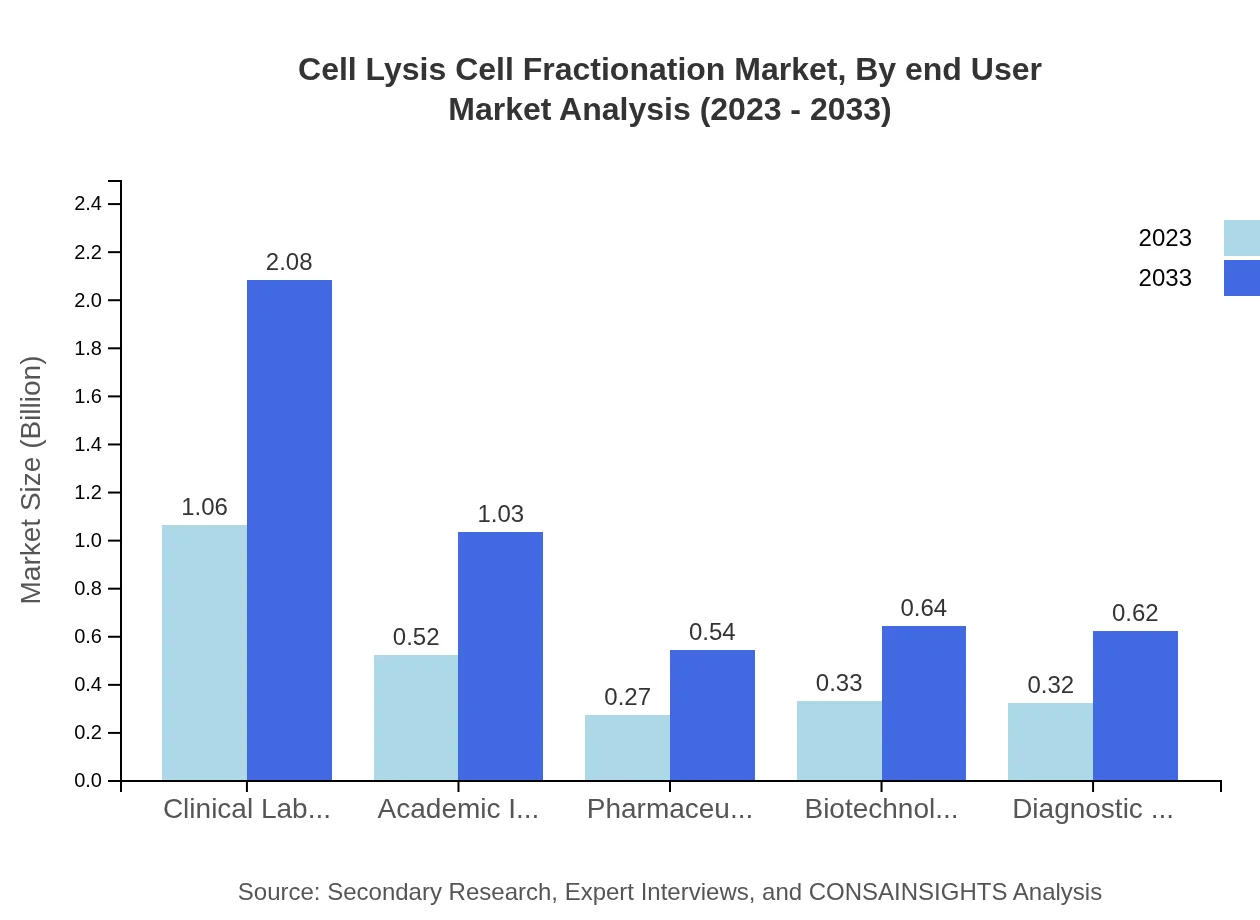
The biopharmaceutical segment will see growth from $0.27 billion in 2023 to $0.54 billion by 2033, representing a 10.95% market share. Similarly, diagnostic companies are anticipated to grow from $0.32 billion to $0.62 billion, maintaining a 12.71% market share over the analysis period.
Cell Lysis Cell Fractionation Market Trends and Future Forecast
Tell us your focus area and get a customized research report.
Global Market Leaders and Top Companies in Cell Lysis Cell Fractionation Industry
Thermo Fisher Scientific:
A leader in the life sciences industry, Thermo Fisher provides a range of products and solutions for cell lysis and fractionation, advancing biotechnology research.Merck KGaA:
Known for its extensive portfolio in scientific research, Merck offers innovative lysis kits and fractionation solutions that cater to various research applications.Bio-Rad Laboratories:
Bio-Rad is a prominent supplier of laboratory instruments and reagents, contributing significantly to advancements in cell lysis and analysis technologies.Qiagen :
Qiagen specializes in sample and assay technologies, providing essential tools for molecular biology research, including cell lysis and fractionation.We're grateful to work with incredible clients.








FAQs
What is the market size of the market in 2023?
The market size for 2023 is $2.50 Billion, as reported in the dataset, reflecting the combined value of products and instruments used in cell lysis and fractionation.
How big will the market be in 2033?
The market is reported to reach $4.91 Billion in 2033, based on the provided forecast, representing projected expansion over the 2023 to 2033 period.
What is CAGR for the forecast period?
The stated compound annual growth rate for 2023 to 2033 is 6.8%, which underlies the projected rise from $2.50 Billion to $4.91 Billion.
Is there a single fastest Growing region in the Cell Lysis Cell Fractionation Market Report market?
No single fastest-growing region is stated for the Cell Lysis Cell Fractionation Market Report market because the top regional implied CAGR values are within 0.15 percentage points of each other, making the ranking too close to call reliably.
Which companies are leading the landscape?
Top companies named in the input are Thermo Fisher Scientific, Merck KGaA, Bio-Rad Laboratories and Qiagen, noted for product portfolios and industry presence.
What are the primary product segments?
Product subsegments listed include lysis kits, cell fractionation kits and instruments, which together address preparation and separation needs across applications.
Who are the main end users?
End users specified include clinical laboratories, academic institutes, pharmaceutical companies, biotechnology companies and diagnostic companies.
How do technology types break down?
Technology subsegments detailed are mechanical methods, chemical methods and physical methods, representing the principal approaches to disrupting and separating cellular components.