

Chronic Gonadotropin Market Report
First published: 21 October 2024 | Last updated: 25 May 2026 | Report Code: chronic-gonadotropin
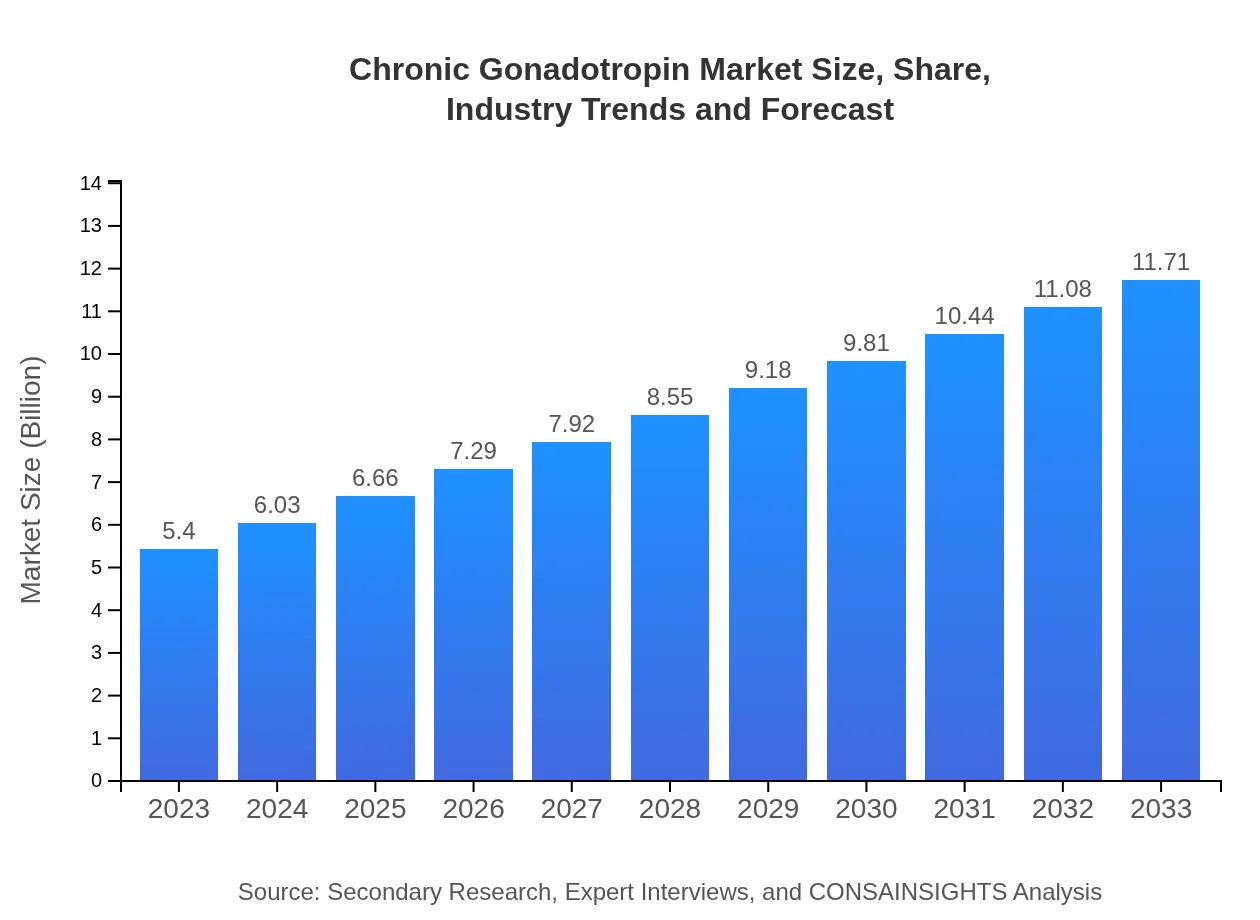
Chronic Gonadotropin Market — USD 5.4 billion in 2023, Growing to USD 11.71B by 2033 at 7.8% CAGR
This report provides an extensive analysis of the Chronic Gonadotropin market, including insights into market size, CAGR forecasts from 2023 to 2033, industry trends, segmentation, regional performance, and key market players.
Key Takeaways
- Global market grows from $5.40 Billion in 2023 to $11.71 Billion in 2033 at a 7.8% CAGR.
- North America is largest regional market, while no single fastest-growing region is stated because regional CAGR differences remain within 0.15 percentage points.
- Europe advances from $1.52 Billion in 2023 to $3.28 Billion in 2033, supported by evolving reproductive health services.
- Asia Pacific increases from $1.12 Billion in 2023 to $2.42 Billion in 2033, reflecting rising demand for fertility treatments.
Chronic Gonadotropin Market Report — Executive Summary
North America remains largest market by forecast-period value, while no single fastest-growing region is stated because top regional growth rates are separated by less than 0.15 percentage points. This report examines the Chronic Gonadotropin market across product, application, end-user, formulation, and distribution-channel segments. The market is estimated at $5.40 Billion in 2023 and is forecast to reach $11.71 Billion by 2033, reflecting a 7.8% CAGR from 2023 to 2033. Growth is driven by increased utilization in fertility treatments and hormone therapy, ongoing innovation in formulations, and expanding access to assisted reproductive technologies. Regional dynamics vary, with North America reported as the largest market. Key companies featured include Ferring Pharmaceuticals, Merck KGaA, Serono, HCG Pharmacy, and Eisai Co. Ltd. The competitive environment centers on product innovation, strategic partnerships, and expanded distribution networks. Stakeholders should consider end-user channels such as hospitals, fertility clinics, and pharmacies when planning market entry or expansion.
Key Growth Drivers
- Rising utilization of gonadotropin therapies in assisted reproductive procedures increases medical demand.
- Advances in reproductive technologies and improved diagnostic capabilities facilitate broader treatment adoption.
- Greater healthcare spending and reimbursement support in multiple regions expand patient access to therapies.
- Product innovation in formulations and delivery methods enhances patient convenience and treatment adherence.
| Metric | Value |
|---|---|
| Study Period | 2023 - 2033 |
| 2023 Market Size | $5.40 Billion |
| CAGR (2023-2033) | 7.8% |
| 2033 Market Size | $11.71 Billion |
| Top Companies | Ferring Pharmaceuticals, Merck KGaA, Serono, HCG Pharmacy, Eisai Co. Ltd. |
| Published Date | 21 October 2024 |
| Last Modified Date | 25 May 2026 |
Chronic Gonadotropin Market Overview
Customize Chronic Gonadotropin Market Report market research report
- ✔ Get in-depth analysis of Chronic Gonadotropin market size, growth, and forecasts.
- ✔ Understand Chronic Gonadotropin's regional dynamics and industry-specific trends.
- ✔ Identify potential applications, end-user demand, and growth segments in Chronic Gonadotropin
What is the Market Size & CAGR of Chronic Gonadotropin Market Report market in 2023?
Chronic Gonadotropin Industry Analysis
Chronic Gonadotropin Market Segmentation and Scope
Tell us your focus area and get a customized research report.
Chronic Gonadotropin Market Report Market Analysis Report by Region
Europe Chronic Gonadotropin Market Report:
Europe grows from $1.52 Billion in 2023 to $3.28 Billion in 2033. Expansion is supported by advancements in reproductive health services, growing clinical adoption of hormone therapies, and increased focus on fertility diagnostics and treatment accessibility.Asia Pacific Chronic Gonadotropin Market Report:
Asia Pacific grows from $1.12 Billion in 2023 to $2.42 Billion in 2033. Regional momentum is driven by rising demand for fertility care, improving healthcare infrastructure, and broader availability of reproductive technologies and related services.North America Chronic Gonadotropin Market Report:
North America is largest regional market, rising from $1.88 Billion in 2023 to $4.07 Billion in 2033. Growth reflects elevated uptake of assisted reproductive procedures, established healthcare infrastructure, and concentrated commercial activity by leading companies.South America Chronic Gonadotropin Market Report:
Latin America grows from $0.35 Billion in 2023 to $0.77 Billion in 2033. Market gains are linked to growing awareness of reproductive treatments, expanding clinical services, and gradual increases in healthcare investment across the region.Middle East & Africa Chronic Gonadotropin Market Report:
Middle East and Africa grows from $0.53 Billion in 2023 to $1.15 Billion in 2033. Progress is attributed to expanding access to reproductive healthcare, targeted investments, and gradual improvements in diagnostic and treatment capabilities.Tell us your focus area and get a customized research report.
Research Methodology
Chronic Gonadotropin Market Analysis By Product
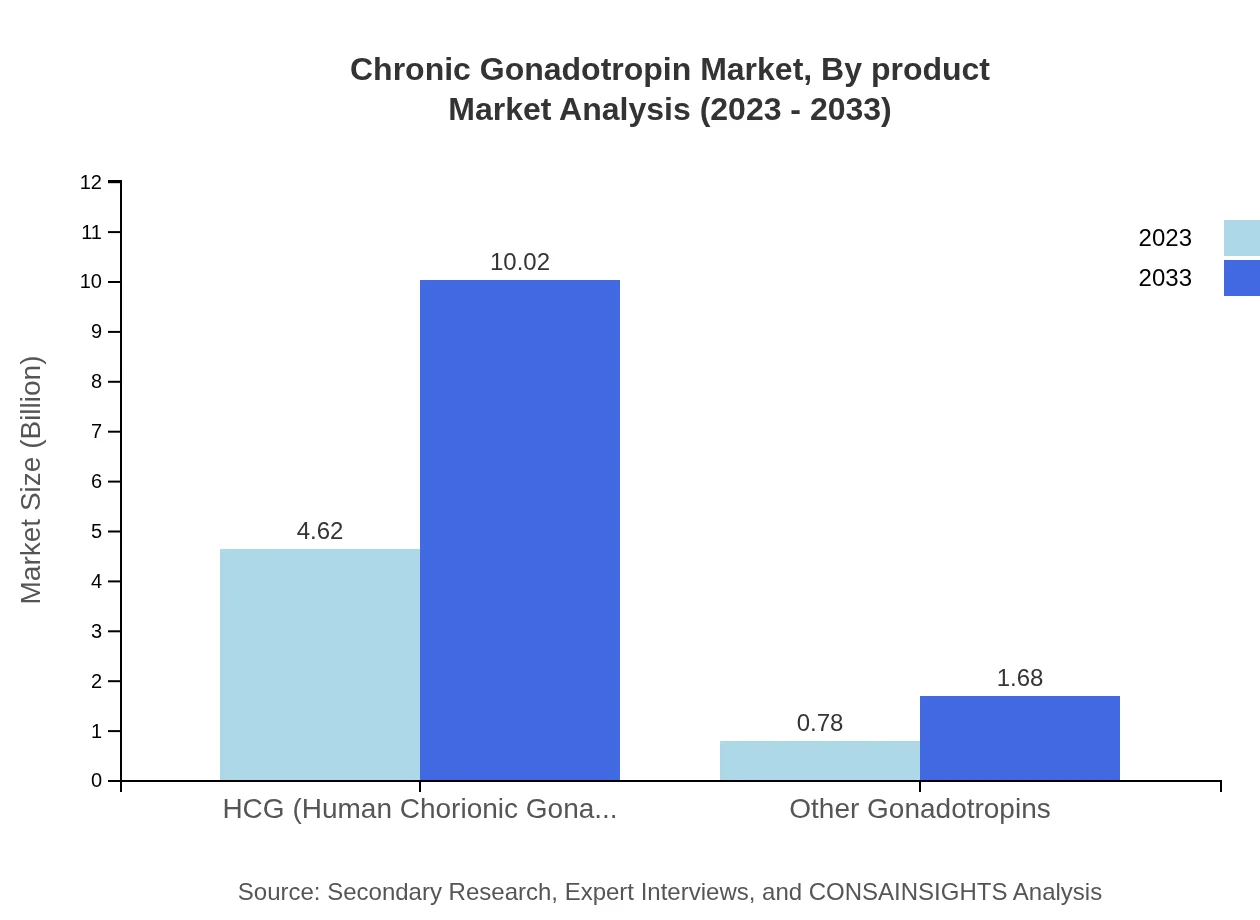
The market is dominated by HCG (Human Chorionic Gonadotropin), which is expected to grow from USD 4.62 billion in 2023 to USD 10.02 billion by 2033, capturing a market share of 85.61%. Other gonadotropins hold a smaller market share of 14.39%, expanding from USD 0.78 billion in 2023 to USD 1.68 billion by 2033.
Chronic Gonadotropin Market Analysis By Application
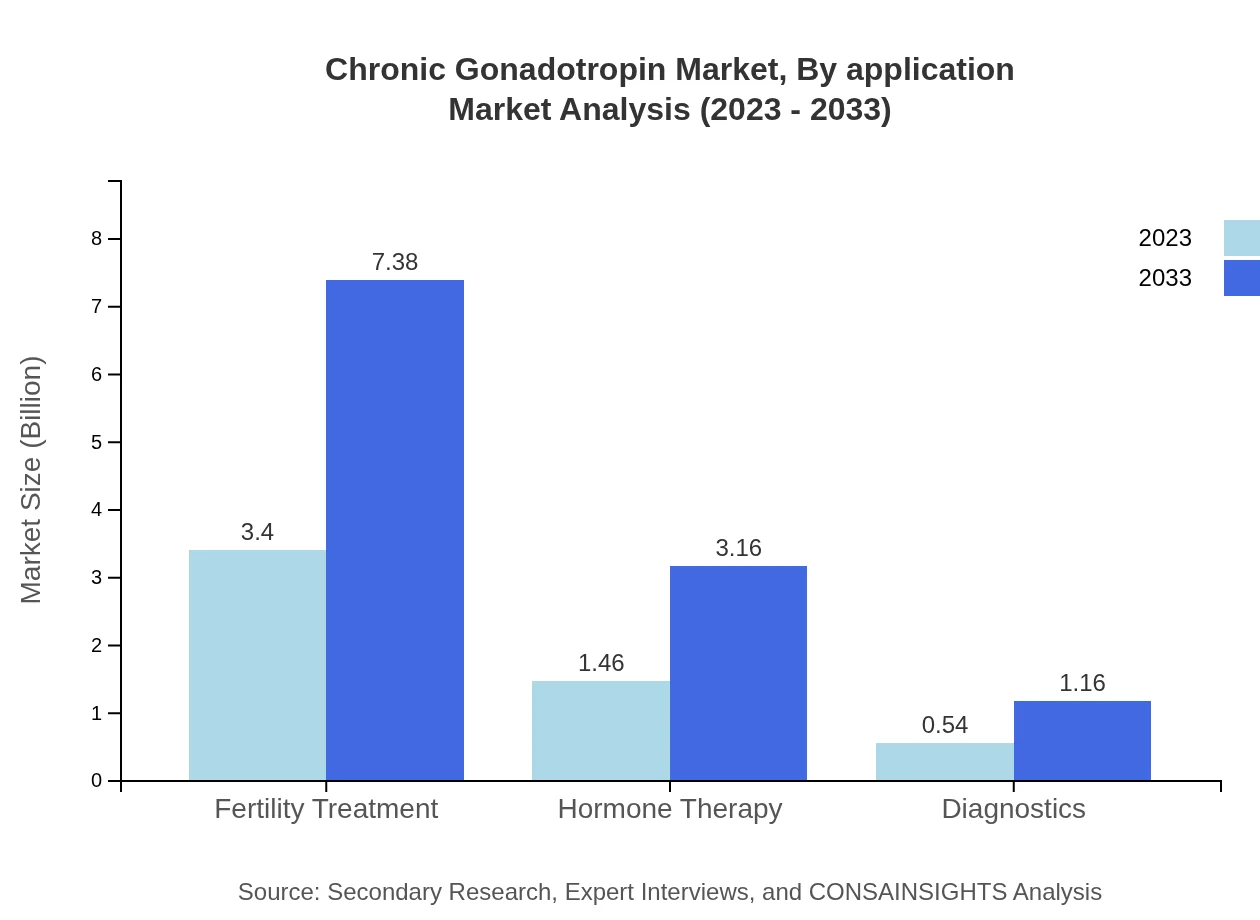
Applications in fertility treatment are the primary market driver, expected to grow from USD 3.40 billion in 2023 to USD 7.38 billion by 2033, capturing 63.05% of market share. Hormone therapy applications are also significant, projected to grow from USD 1.46 billion in 2023 to USD 3.16 billion, indicating a market share of 27.02%.
Chronic Gonadotropin Market Analysis By End User
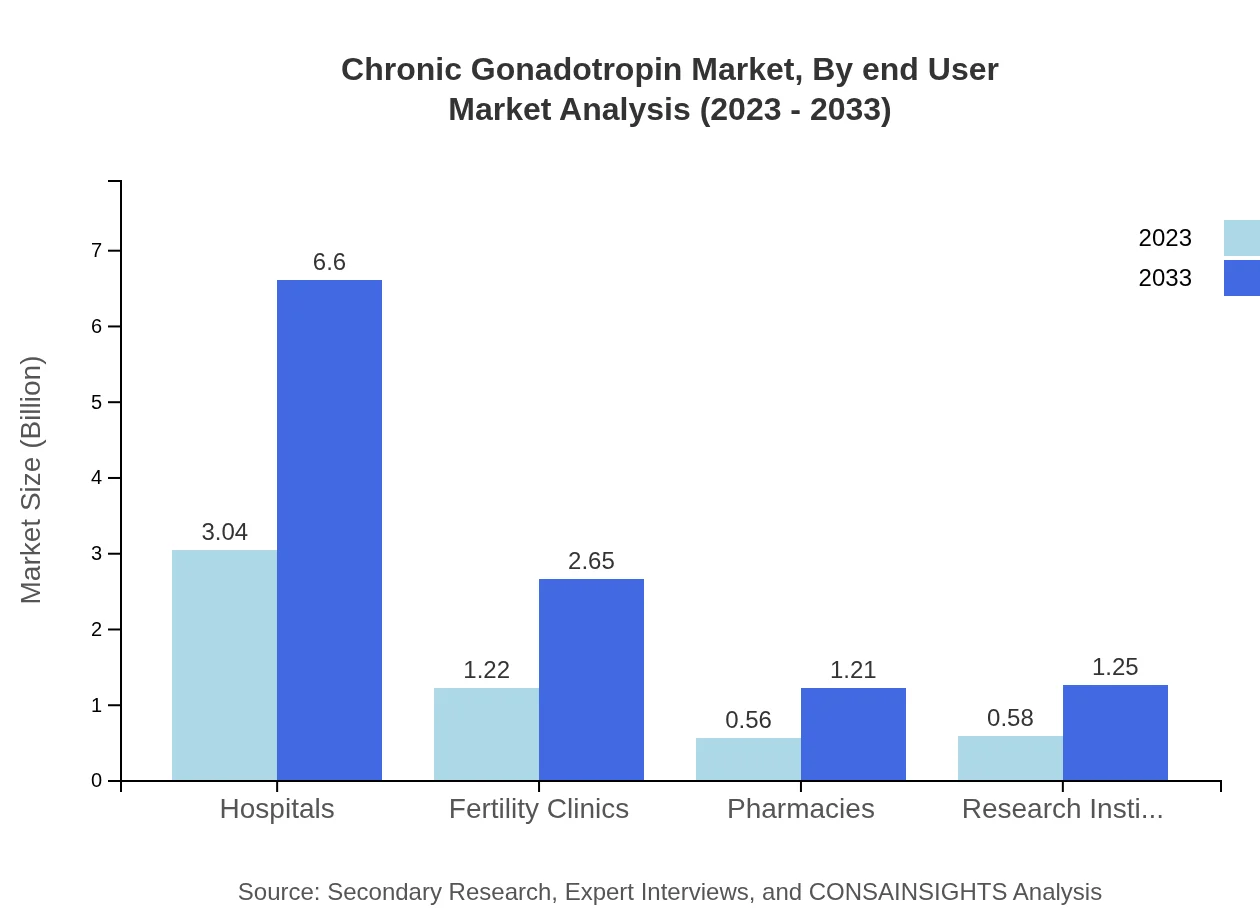
The Chronic Gonadotropin market sees hospitals as the largest end-user, expected to grow from USD 3.04 billion in 2023 to USD 6.60 billion by 2033, holding a 56.34% market share. Fertility clinics and pharmacies also represent vital sectors, with shares of 22.62% and 10.32%, respectively.
Chronic Gonadotropin Market Analysis By Distribution Channel
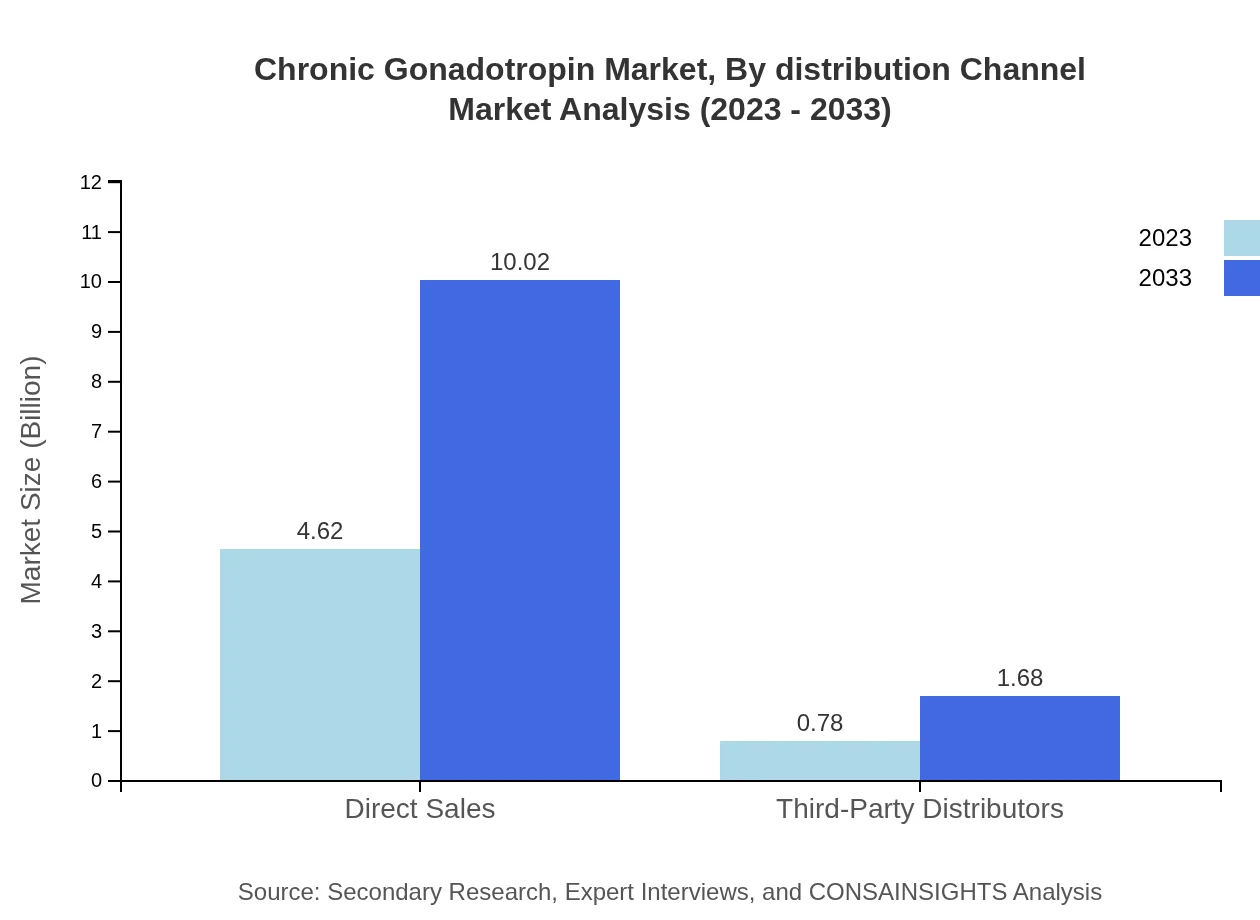
Direct sales dominate the distribution landscape, anticipated to grow from USD 4.62 billion in 2023 to USD 10.02 billion by 2033, reflecting a share of 85.61%. Third-party distributors hold a smaller market share of 14.39%, expanding from USD 0.78 billion to USD 1.68 billion.
Chronic Gonadotropin Market Analysis By Formulation
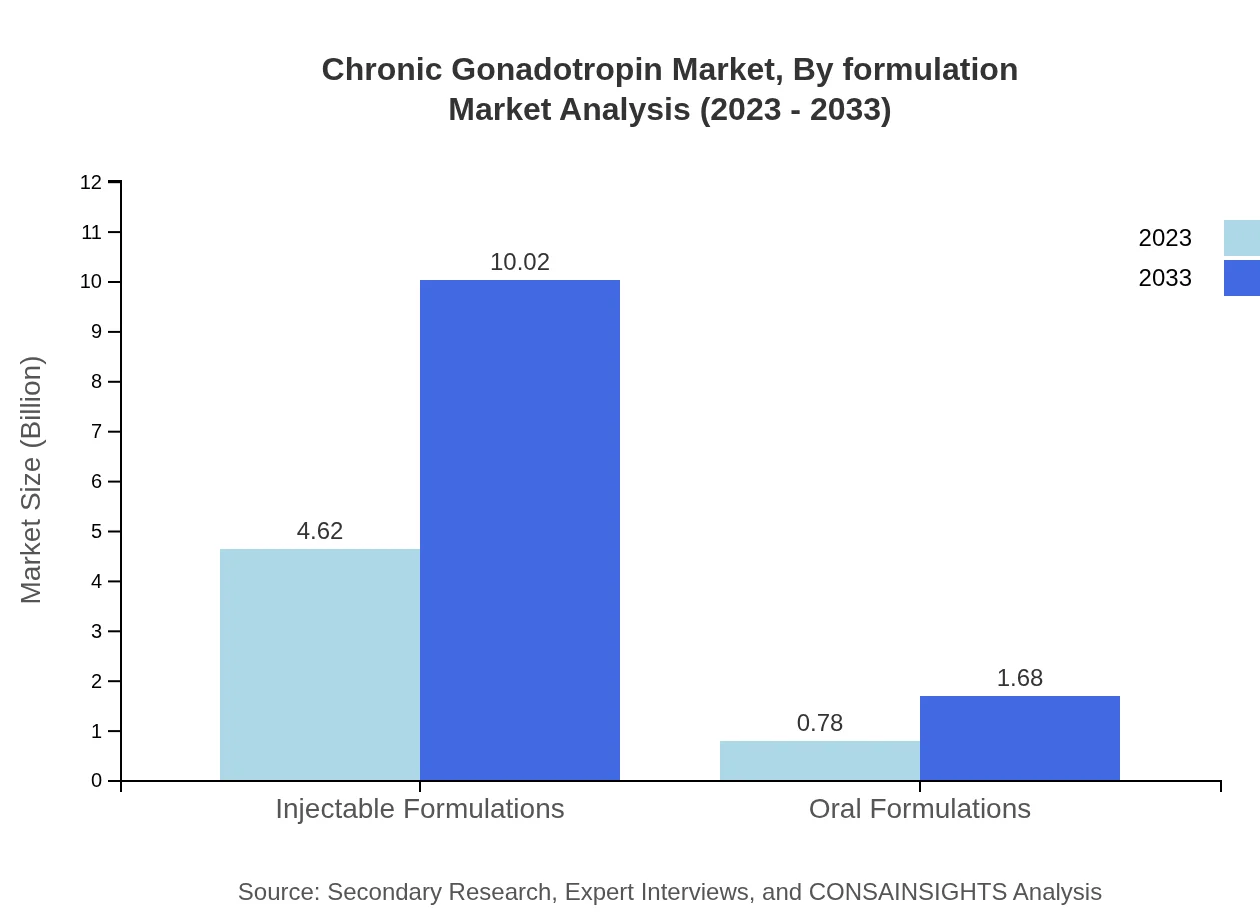
Injectable formulations are the primary mode of delivery, projected to expand significantly from USD 4.62 billion in 2023 to USD 10.02 billion by 2033, holding 85.61% market share. Oral formulations, while less common, are expected to grow from USD 0.78 billion to USD 1.68 billion, capturing a 14.39% share.
Chronic Gonadotropin Market Trends and Future Forecast
Tell us your focus area and get a customized research report.
Global Market Leaders and Top Companies in Chronic Gonadotropin Industry
Ferring Pharmaceuticals:
Ferring is a global leader in reproductive health, renowned for its innovative products in fertility treatments, including a range of Chronic Gonadotropin medications.Merck KGaA:
Merck is a key player in the healthcare sector, offering innovative solutions in fertility, with extensive scientific research backing their Chronic Gonadotropin product lines.Serono:
Serono, now part of Merck KGaA, specializes in endocrinology and offers a comprehensive range of products including Chronic Gonadotropin for infrastructure in reproductive health.HCG Pharmacy:
HCG Pharmacy is a specialized compounding pharmacy focused on reproductive health treatments, highlighting a commitment to tailored solutions for patients requiring Chronic Gonadotropin.Eisai Co. Ltd.:
Eisai is known for its comprehensive research in hormonal therapies and has developed several Chronic Gonadotropin formulations for fertility treatments.We're grateful to work with incredible clients.








FAQs
What is the market size of the Chronic Gonadotropin market in 2023?
The market size for 2023 is $5.40 Billion, as reported in the input data, representing the baseline for the 2023 to 2033 forecast period.
How big will the Chronic Gonadotropin market be by 2033?
By 2033 the market is projected to reach $11.71 Billion according to the provided forecast, reflecting expected expansion over the decade.
What is CAGR for the Chronic Gonadotropin market over 2023 to 2033?
The compound annual growth rate for the forecast period 2023 to 2033 is 7.8%, as specified in the input information.
Is there a single fastest Growing region in the Chronic Gonadotropin Market Report market?
No single fastest-growing region is stated for the Chronic Gonadotropin Market Report market because the top regional implied CAGR values are within 0.15 percentage points of each other, making the ranking too close to call reliably.
Which companies are listed as top players in the market?
Top companies cited include Ferring Pharmaceuticals, Merck KGaA, Serono, HCG Pharmacy, and Eisai Co. Ltd., as provided in the source data.
Who are the primary end users for chronic gonadotropin products?
Primary end users include hospitals, fertility clinics, pharmacies, and research institutes, reflecting clinical and outpatient applications.
What key applications drive market demand?
Fertility treatment and hormone therapy are principal applications cited, supported by diagnostics and broader reproductive health needs.
How is the market segmented by formulation and distribution?
Formulation segments include injectable and oral formulations; distribution channels include direct sales and third-party distributors, per the input segmentation facts.